
intel core ultra

intel-shores-up-its-desktop-cpu-lineup-with-boosted-core-ultra-200s-plus-chips

Intel shores up its desktop CPU lineup with boosted Core Ultra 200S Plus chips

Intel’s Core Ultra 200S desktop chips, codenamed “Arrow Lake,” first launched in late 2024, and they were the most significant updates to Intel’s desktop CPU lineup in years. But that didn’t mean they were always improvements over what came before: while they’re power-efficient and run cooler than older 13th- and 14th-generation Core CPUs, they sometimes struggled to match those older chips’ gaming performance. And for gaming systems in particular, they’ve always had to live in the shadow of AMD’s Ryzen 7000 and 9000-series X3D processors, chips with extra L3 cache that disproportionately benefits games.

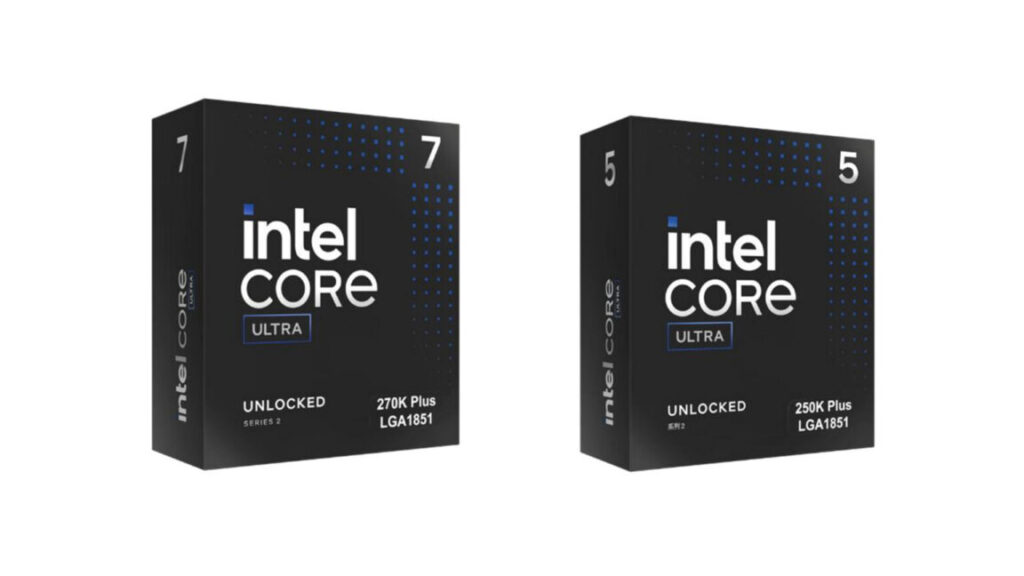
Intel doesn’t have a next-generation upgrade available for desktops yet, but it is shoring up its desktop lineup with a pair of upgraded chips. The Core Ultra 200S Plus processors (also referred to as Arrow Lake Refresh, in some circles) add more processor cores, boost clock speeds, add support for faster memory, and speed up the internal communication between different parts of the processor. Collectively, Intel says these improvements will boost gaming performance by an average of 15 percent.

The Core Ultra 7 270K Plus and 270KF Plus (a real mouthful, all of these names are getting to be) add four more efficiency cores compared to the Core Ultra 7 265K, bringing the total number of cores to 24 (8 P-cores and 16 E-cores). If you wanted that many CPU cores previously, you would have had to spring for a Core Ultra 9 chip. The Core Ultra 5 250K Plus and 250KF Plus also get four more E-cores than the 245K, bringing its total to 6 P-cores and 12 E-cores.

Intel shores up its desktop CPU lineup with boosted Core Ultra 200S Plus chips Read More »
intel-is-testing-bios-updates-to-fix-performance-of-its-new-core-ultra-200s-cpus

Intel is testing BIOS updates to fix performance of its new Core Ultra 200S CPUs

Without tuned power profiles, a separate but related feature called the Intel Application Performance Optimizer (APO) couldn’t kick in, reducing performance by between 2 and 14 percent.

Current BIOS updates for motherboards contain optimized performance and power settings that “were not consistently toggled” in early BIOS versions for those boards. This could also affect performance by between 2 and 14 percent.

The fifth and final fix for the issues Intel has identified is coming in a later BIOS update that the company plans to release “in the first half of January 2025.” The microcode updates in that BIOS update should provide “another modest performance improvement in the single-digit range,” based on Intel’s performance testing across 35 games. When that microcode update (version 0x114) has been released, Intel says it plans to release another support document with more detailed performance comparisons.

If a long Intel support document detailing a multi-stage series of fixes for elusive performance issues is giving you deja vu, you’re probably thinking about this other, more serious problem with 13th- and 14th-generation Core CPUs from earlier this year. In that case, the issue was that the CPU could request more voltage than it could handle, eventually leading to degraded performance and crashes.

These voltage requests could permanently damage the silicon, so Intel extended the warranties of most 13th- and 14th-gen Core CPUs from three years to five. The company also worked with motherboard makers to release a string of BIOS updates to keep the problems from happening again. A similar string of BIOS updates will be necessary to fix the problems with the Core Ultra 200S chips.

Intel is testing BIOS updates to fix performance of its new Core Ultra 200S CPUs Read More »