health

with-us-out,-who-director-says-it’s-running-on-budget-of-a-local-hospital

With US out, WHO director says it’s running on budget of a local hospital

After a recent investment round and with the assumption that member states allow an increase in dues, the WHO is confident it will have more than $2.6 billion in funding, or about 60 percent of the reduced budget goal for 2026–2027, Tedros said. That leaves an anticipated budget gap of $1.7 billion.

“Extremely difficult”

Tedros was determined to keep working to fill that gap and dismissed concerns that even the $4.2 billion budget was a stretch.

“US$ 4.2 billion dollars—or US$ 2.1 billion a year—is not ambitious,” Tedros said, noting that the organization works on the ground in more than 150 countries.

“At current exchange rates, the HUG hospital here in Geneva operates on the same budget—slightly larger than WHO, in fact, Tedros noted. “How can WHO be expected to serve the whole world on the same budget as one hospital in a mid-sized European city? Especially at a time when many countries are facing severe disruptions to health services due to a sudden and sharp drop in official development assistance.”

In a January press release, HUG reported an annual budget of 1.9 billion Swiss francs, which would currently be around US$2.27 billion. For context, the 2024 operating expenses of Mass General Brigham in the US was $20.5 billion.

Tedros went on to list the agency’s top leadership who have survived the cuts, describing it as an “extremely difficult and painful decision for me.” Absent from the list was Irish-born epidemiologist Michael Ryan, who most recently served as executive director of WHO’s Health Emergencies Program and became a prominent global figure amid the COVID-19 pandemic.

In a letter to WHO staff obtained by the Irish Times, Tedros wrote that Ryan’s “dedication to emergency response has changed how we work, helping us face unprecedented challenges with compassion and effectiveness. … His steady presence has been instrumental during our toughest times, especially during the Covid-19 pandemic.”

Also gone is Canadian epidemiologist Bruce Aylward, previously an assistant director-general, who led a joint mission in China in the early days of the pandemic.

With US out, WHO director says it’s running on budget of a local hospital Read More »

a-dangerous-e.-coli-strain-has-emerged;-a-small-mutation-may-explain-its-rise

A dangerous E. coli strain has emerged; a small mutation may explain its rise

Small change

The CDC researchers identified the EspW mutation by comparing the genetic sequences of 729 isolates of the new E. coli strain—dubbed REPEXH01—to genetic sequences of 2,027 other E. coli O157:H7 isolates. Of the 729 REPEXH01 strains, all but two had a single nucleotide deletion in EspW (the remaining two had ambiguous sequences), while the deletion was present in less than 4 percent of the non-REPEXH01 E. coli strains. The finding suggests the tiny change could be a genetic signature of the strain, and its persistence in a key disease protein may offer the strain an advantage.

For now, it’s unclear what that advantage might be. The deletion of a single DNA base (an adenine) shifts the frame of the three-sequence protein code for the rest of EspW. This could result in a shorter protein. It could also cause the molecular machinery that translates the genetic code to slip, leading to proteins of various lengths. In any case, the deletion is likely to result in a less fully functional EspW protein.

The CDC researchers suggest this could help E. coli when it’s on lettuce and other produce. For example, EspW might spur an immune response from an infected plant that causes stomata—pores on the surfaces of leaves—to close, blocking the bacteria’s ability to invade. Thus, cutting back EspW may help E. coli sneak in—an adaptation in the ongoing arms race between the bacteria and its host. Another possibility is that EspW could function like HopW1, leading to more severe infection in plant tissues, which could lower the chances that those infected leaves are harvested and make it to grocery stores and atop burgers. Thus, cutting back on EspW could help E. coli move to its human victims.

Ultimately, additional research will be needed to understand what’s going on. As the CDC researchers conclude: “the role of the single base pair mutation in this strain’s colonization and survival on leafy vegetables could yield valuable insights.”

A dangerous E. coli strain has emerged; a small mutation may explain its rise Read More »

germ-theory-skeptic-rfk-jr.-goes-swimming-in-sewage-tainted-water

Germ-theory skeptic RFK Jr. goes swimming in sewage-tainted water

When you don’t believe in germ theory, the world is your oyster—or maybe your bathtub.

Over the weekend, America’s top health official, Robert F. Kennedy Jr., shared pictures on social media of himself fully submerged in the sewage-tinged waters of Rock Creek in Washington, DC. His grandchildren were also pictured playing in the water.

The creek is known for having a sewage overflow problem and posing a health hazard to any who enter it. The National Park Service, which manages the Rock Creek Park, strictly bars all swimming and wading in Rock Creek and the park’s other waterways due to the contamination, specifically “high levels of bacteria.”

A notice on the NPS website advises “Stay Dry, Stay Safe,” warning, “Rock Creek has high levels of bacteria and other infectious pathogens that make swimming, wading, and other contact with the water a hazard to human (and pet) health. Please protect yourself and your pooches by staying on trails and out of the creek. All District waterways are subject to a swim ban—this means wading, too!”

In images shared on social media, Kennedy can be seen getting fully underwater, including his head, and then splashing around with several of his grandchildren. Kennedy, who does not have any background in medicine or science, was a long-time anti-vaccine advocate before President Trump appointed him to be health secretary. In a 2021 book, Kennedy indicated that he does not believe in germ theory, the fundamental concept that microscopic pathogens, such as those abundant in sewage, are the cause of disease.

Germ-theory skeptic RFK Jr. goes swimming in sewage-tainted water Read More »

when-doctors-describe-your-brain-scan-as-a-“starry-sky,”-it’s-not-good

When doctors describe your brain scan as a “starry sky,” it’s not good

A starry sky can be stunning—even inside a hospital emergency room.

But instead of celestial bodies sparkling in the night, doctors in South Korea were gazing at bright brain lesions punctuating a magnetic resonance imaging (MRI) scan. The resulting pattern, called a “starry sky,” meant that their 57-year-old patient had a dangerous form of tuberculosis. The doctors report the case in this week’s issue of the New England Journal of Medicine.

The man had previously been treated for the infection in his lungs but came into the hospital’s emergency department after two weeks of unexplained headaches, neck pain, and tingling in his right hand. The MRI and Computed-Tomography (CT) scans clearly revealed the problem: rare nodules and lesions, called tuberculomas, speckling his lungs and central nervous system, including both cerebral hemispheres, the basal ganglia deep inside the brain, the cerebellum at the back of the brain, the brain stem, and the upper spinal cord.

Magnetic resonance imaging (MRI) of the head with gadolinium enhancement revealed numerous small, spherical, peripherally enhancing nodules in the cerebral hemispheres (Panels A and B), basal ganglia, cerebellum, and brain stem, as well as in the upper spinal cord with surrounding edema (Panel C). Credit: NEJM, 2025

The condition, called CNS tuberculoma, is a relatively rare manifestation of tuberculosis, which typically infects the lungs but can invade any part of the body. It’s unclear exactly how tuberculomas form, but evidence suggests that the bacteria that cause tuberculosis—Mycobacterium tuberculosis—can spread around the body via the blood. M. tuberculosis can get past the blood-brain barrier, possibly by hiding inside a type of white blood cell called a macrophage, in a “Trojan horse” mechanism or by breaking through the barrier. Tuberculomas are thought to form when bacteria and macrophages clump together into masses that may contain calcifications or cheese-like dead tissue called caseum.

When doctors describe your brain scan as a “starry sky,” it’s not good Read More »

new-rsv-vaccine,-treatment-linked-to-dramatic-fall-in-baby-hospitalizations

New RSV vaccine, treatment linked to dramatic fall in baby hospitalizations

For the new study, CDC researchers looked at RSV hospitalization rates across two different RSV surveillance networks of hospitals and medical centers (called RSV-NET and NVSN). They compared the networks’ hospitalization rates in the 2024–2025 RSV season to their respective rates in pre-pandemic seasons between 2018 and 2020. The analysis found that among newborns (0–2 months), RSV hospitalizations fell 52 percent in RSV-NET and 45 percent in NVSN compared with the rates from the 2018–2020 period. However, when the researcher excluded data from NVSN’s surveillance site in Houston—where the 2024–2035 RSV season started before the vaccine and treatment were rolled out—there was a 71 percent decline in hospitalizations in NVSN.

For a broader group of infants—0 to 7 months old—RSV-NET showed a 43 percent drop in hospitalizations in the 2024–2025 RSV season, and NVSN saw a 28 percent drop. Again, when Houston was excluded from the NVSN data, there was a 56 percent drop.

Lastly, the researchers looked at hospitalization rates for toddlers and children up to 5 years old, who wouldn’t have been protected by the new products. There, they saw RSV hospitalization rates were actually higher in the 2024–2025 season than in the pre-pandemic years. That suggests that the latest RSV season was more severe, and the drops in infant hospitalizations may be underestimates.

New RSV vaccine, treatment linked to dramatic fall in baby hospitalizations Read More »

trump-admin-picks-covid-critic-to-be-top-fda-vaccine-regulator

Trump admin picks COVID critic to be top FDA vaccine regulator

Oncologist Vinay Prasad, a divisive critic of COVID-19 responses, will be the next top vaccine regulator at the Food and Drug Administration, agency Commissioner Martin Makary announced on social media Tuesday.

Prasad will head the FDA’s Center for Biologics Evaluation and Research (CBER), which is in charge of approving and regulating vaccines and other biologics products, such as gene therapies and blood products.

“Dr. Prasad brings the kind of scientific rigor, independence, and transparency we need at CBER—a significant step forward,” Makary wrote on social media.

Prasad, a professor in the department of epidemiology and biostatistics at the University of California, San Francisco, is perhaps best known for his combative social media postings and criticism of the mainstream medical community. He gained notoriety amid the COVID-19 pandemic for assailing public health responses, such as masking and vaccine mandates.

In an October 2021 newsletter, titled “How Democracy Ends,” Prasad compared the country’s pandemic responses to the rise of Adolf Hitler’s Third Reich. The post led New York University bioethicist Arthur Caplan to rebuke Prasad, writing in The Cancer Letter that the comparison is “ludicrous, dangerous, and offensive,” before adding “imbecilic.”

Prasad has also criticized the FDA for approving COVID-19 booster vaccines. Last year, he accused his predecessor as the head of the CBER, Peter Marks, of being “either incompetent or corrupt” for allowing the approvals.

“Absurd”

More recently, Prasad has heaped praise on new FDA Commissioner Makary, while continuing to criticize Marks. In early March, Prasad called Makary “smart, thoughtful, and disciplined” and “exactly what we need at the FDA.” Later in the month, he continued to take shots at Marks, writing: “You could replace Peter Marks with a bobblehead doll that just stamps approval and you would have the same outcome at FDA with lower administrative fees. Maybe something DOGE should consider.”

Trump admin picks COVID critic to be top FDA vaccine regulator Read More »

heartbreaking-video-shows-deadly-risk-of-skipping-measles-vaccine

Heartbreaking video shows deadly risk of skipping measles vaccine

Once SSPE develops, it moves through progressive stages, starting with mood swings, personality changes, depression, lethargy, and possibly fever and headache. This first stage can last up to six months. Then stage two involves jerking movement, spasms, loss of vision, dementia, and seizures. The third stage sees the jerking turn to writhing and rigidity. In the last stage, autonomic failure sets in—heart rate, blood pressure, and breathing become unregulated. Then comes coma and death. About 95 percent of SSPE cases are fatal.

Tragic ending

In the boy’s case, his parents don’t know when he was infected with measles. When doctors saw him, his parents recalled that in the prior six months, he had started having jerky movements, falls, and progressive cognitive decline. Before that, he had been healthy at birth and had been hitting all of his developmental milestones.

In some ways, his decline was an unmistakable case of SSPE. Imaging showed lesions in his brain. He had elevated anti-measles antibodies in his cerebrospinal fluid. An electroencephalography (EEG) showed brain waves consistent with SSPE. Then, of course, there were the jerking motions and the cognitive decline.

What stood out, though, was his rolling and swirling eyes. Vision problems are not uncommon with SSPE—sometimes the condition damages the retina and/or optic nerve. Some patients develop complete vision loss. But, in the boy’s case, he developed rapid, repetitive, erratic, multidirectional eye movements, a condition called opsoclonus. Doctors often see it in brain cancer patients, but brain inflammation from some infections can also cause the movements. Experts hypothesize that the root cause is a loss of specialized neurons involved in coordinated movement, namely Purkinje cells and omnipause cells.

The boy’s neurologists believe this is the first time opsoclonus associated with SSPE has been caught on video. They treated the boy with an antiviral drug and drugs to reduce convulsions, but his condition continued to worsen.

Heartbreaking video shows deadly risk of skipping measles vaccine Read More »

screwworms-are-coming—and-they’re-just-as-horrifying-as-they-sound

Screwworms are coming—and they’re just as horrifying as they sound

We’re on the verge of being screwwormed.

The biological barrier was breached, they’re slithering toward our border, and the US Department of Agriculture is now carpet-bombing parts of Mexico with weaponized flies to stave off an invasion.

This is not a drill. Screwworms are possibly the most aptly named parasites imaginable, both literally and figuratively. Screwworms—technically, New World Screwworms—are flies that lay eggs on the mucous membranes, orifices, and wounds of warm-blooded animals. Wounds are the most common sites, and even a prick as small as a tick bite can be an invitation for the savage insects.

Once beckoned, females lay up to 400 eggs at a time. Within about a day, ravenous flesh-eating larvae erupt, which both look and act like literal screws. They viciously and relentlessly bore and twist into their victim, feasting on the living flesh for about seven days. The result is a gaping ulcer writhing with maggots, which attracts yet more adult female screwworms that can lay hundreds more eggs, deepening the putrid, festering lesion. The infection, called myiasis, is intensely painful and life-threatening. Anyone who falls victim to screwworms is figuratively—well, you know.

Adult screwworm flies. Credit: USDA

Previous victories

Screwworms aren’t a new foe for the US. Decades ago, they were endemic to southern areas of the country, as well as the whole of Central America, parts of the Caribbean, and northern areas of South America. While they’re a threat to many animals, including humans, they are a bane to livestock, causing huge economic losses in addition to the carnage.

In the 1950s, the US began an intensive effort to eradicate screwworms. The successful endeavor required carefully inspecting animals and monitoring livestock movements. But most importantly, it relied on a powerful method to kill off the flies.

The ploy—called the Sterile Insect Technique—throws a wrench into the unique life cycle of screwworms. After the larvae feast on flesh, they fall to the ground to develop into adults, a process that takes another seven days or so during warm weather. Once adults emerge, they can live for around two weeks, again depending on the weather. In that time, females generally only mate once, but don’t worry—they make the most of the one-night stand by retaining sperm for multiple batches of eggs. While females lay up to 400 eggs at once, they can lay up to 2,800 in their lives.

Screwworms are coming—and they’re just as horrifying as they sound Read More »

health-care-company-says-trump-tariffs-will-cost-it-$60m–$70m-this-year

Health care company says Trump tariffs will cost it $60M–$70M this year

In the call, Grade noted that only a small fraction of Baxter’s total sales are in China. But, “given the magnitude of the tariffs that have been enacted between the two countries, these tariffs now account for nearly half of the total impact,” he said.

The Tribune reported that Baxter is now looking into ways to dampen the financial blow from the tariffs, including carrying additional inventory, identifying alternative suppliers, alternative shipping routes, and “targeted pricing actions.” Baxter is also working with trade organizations to lobby for exemptions.

In general, the health care and medical sector, including hospitals, is bracing for price increases and shortages from the tariffs. The health care supply chain in America is woefully fragile, which became painfully apparent amid the COVID-19 pandemic.

Baxter isn’t alone in announcing heavy tariff tolls. Earlier this week, GE Healthcare Technologies Inc. said the tariffs would cost the company around $500 million this year, according to financial service firm Morningstar. And in April, Abbott Laboratories said it expects the tariffs to cost “a few hundred million dollars,” according to the Tribune.

Health care company says Trump tariffs will cost it $60M–$70M this year Read More »

texas-goes-after-toothpaste-in-escalating-fight-over-fluoride

Texas goes after toothpaste in escalating fight over fluoride

Texas Attorney General Ken Paxton is investigating two leading toothpaste makers over their use of fluoride, suggesting that they are “illegally marketing” the teeth cleaners to parents and kids “in ways that are misleading, deceptive, and dangerous.”

The toothpaste makers in the crosshairs are Colgate-Palmolive Company, maker of Colgate toothpastes, and Proctor & Gamble Manufacturing Co., which makes Crest toothpastes. In an announcement Thursday, Paxton said he has sent Civil Investigative Demands (CIDs) to the companies.

The move is an escalation in an ongoing battle over fluoride, which effectively prevents dental cavities and improves oral health. Community water fluoridation has been hailed by health and dental experts as one of the top 10 great public health interventions for advancing oral health across communities, regardless of age, education, or income. But, despite the success, fluoride has always had detractors—from conspiracy theorists in the past suggesting the naturally occurring mineral is a form of communist mind control, to more recent times, in which low-quality, controversial studies have suggested that high doses may lower IQ in children.

The debate was renewed earlier this year when the National Toxicology Program at the National Institute of Environmental Health Sciences finally published a particularly contentious study after years of failed scientific reviews. The study claims to find a link between high levels of fluoride exposure and slightly lower IQs in children living in areas outside the US, mostly in China and India. But the study’s methodology, statistical rigor, risk of bias, and lack of data transparency continue to draw criticism.

Texas goes after toothpaste in escalating fight over fluoride Read More »

rfk-jr.-rejects-cornerstone-of-health-science:-germ-theory

RFK Jr. rejects cornerstone of health science: Germ theory


In his 2021 book vilifying Anthony Fauci, RFK Jr. lays out support for an alternate theory.

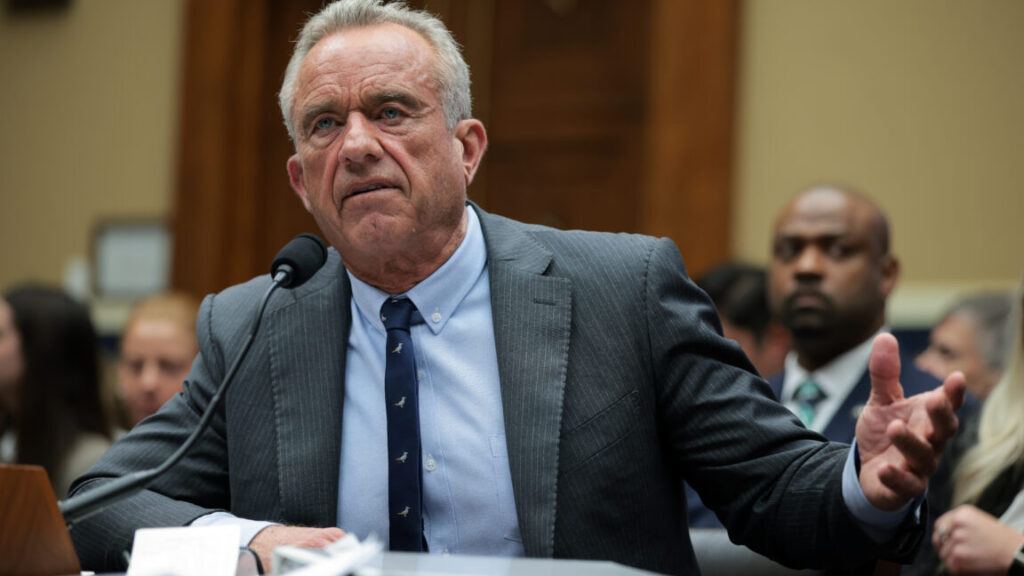
Health and Human Services Secretary Robert F. Kennedy Jr. speaks at a news conference on removing synthetic dyes from America’s food supply, at the Health and Human Services Headquarters in Washington, DC on April 22, 2025. Credit: Getty | Nathan Posner

With the rise of Robert F. Kennedy Jr., brain worms have gotten a bad rap.

A year ago, the long-time anti-vaccine advocate and current US health secretary famously told The New York Times that a parasitic worm “got into my brain and ate a portion of it and then died.” The startling revelation is now frequently referenced whenever Kennedy says something outlandish, false, or offensive—which is often. For those who have followed his anti-vaccine advocacy, it’s frightfully clear that, worm-infested or not, Kennedy’s brain is marinated in wild conspiracy theories and dangerous misinformation.

While it’s certainly possible that worm remnants could impair brain function, it remains unknown if the worm is to blame for Kennedy’s cognitive oddities. For one thing, he was also diagnosed with mercury poisoning, which can cause brain damage, too. As prominent infectious disease expert Anthony Fauci said last June in a conversation with political analyst David Axelrod: “I don’t know what’s going on in [Kennedy’s] head, but it’s not good.”

The trouble is that now that Kennedy is the country’s top health official, his warped ideas are contributing to the rise of a dystopian reality. Federal health agencies are spiraling into chaos, and critical public health services for Americans have been brutally slashed, dismantled, or knee-capped—from infectious disease responses, the lead poisoning team, and Meals on Wheels to maternal health programs and anti-smoking initiatives, just to name a few. The health of the nation is at stake; the struggle to understand what goes on in Kennedy’s head is vital.

While we may never have definitive answers on his cognitive situation, one thing is plain: Kennedy’s thoughts and actions make a lot more sense when you realize he doesn’t believe in a foundational scientific principle: germ theory.

Dueling theories

Germ theory is, of course, the 19th-century proven idea that microscopic germs—pathogenic viruses, bacteria, parasites, and fungi—cause disease. It supplanted the leading explanation of disease at the time, the miasma theory, which suggests that diseases are caused by miasma, that is, noxious mists and vapors, or simply bad air arising from decaying matter, such as corpses, sewage, or rotting vegetables. While the miasma theory was abandoned, it is credited with spurring improvements in sanitation and hygiene—which, of course, improve health because they halt the spread of germs, the cause of diseases.

Germ theory also knocks back a lesser-known idea called the terrain theory, which we’ve covered before. This is a somewhat ill-defined theory that generally suggests diseases stem from imbalances in the internal “terrain” of the body, such as malnutrition or the presence of toxic substances. The theory is linked to ideas by French scientist Antoine Béchamp and French physiologist Claude Bernard.

Béchamp, considered a bitter crank and rival to famed French microbiologist Louis Pasteur, is perhaps best known for wrongly suggesting the basic unit of organisms is not the cell, but nonexistent microanatomical elements he called “microzyma.” While the idea was largely ignored by the scientific community, Béchamp suggested that disruptions to microzyma are a predisposition to disease, as is the state of the body’s “terrain.” French physiologist Claude Bernard, meanwhile, came up with an idea of balance or stability of the body’s internal environment (milieu intérieur), which was a precursor to the concept of homeostasis. Ideas from the two figures came together to create an ideology that has been enthusiastically adopted by modern-day germ theory denialists, including Kennedy.

It’s important to note here that our understanding of Kennedy’s disbelief in germ theory isn’t based on speculation or deduction; it’s based on Kennedy’s own words. He wrote an entire section on it in his 2021 book vilifying Fauci, titled The Real Anthony Fauci. The section is titled “Miasma vs. Germ Theory,” in the chapter “The White Man’s Burden.”

But, we did reach out to Health and Human Services to ask how Kennedy’s disbelief in germ theory influences his policy decisions. HHS did not respond.

Kennedy’s beliefs

In the chapter, Kennedy promotes the “miasma theory” but gets the definition completely wrong. Instead of actual miasma theory, he describes something more like terrain theory. He writes: “‘Miasma theory’ emphasizes preventing disease by fortifying the immune system through nutrition and by reducing exposures to environmental toxins and stresses.”

Kennedy contrasts his erroneous take on miasma theory with germ theory, which he derides as a tool of the pharmaceutical industry and pushy scientists to justify selling modern medicines. The abandonment of miasma theory, Kennedy bemoans, realigned health and medical institutions to “the pharmaceutical paradigm that emphasized targeting particular germs with specific drugs rather than fortifying the immune system through healthy living, clean water, and good nutrition.”

According to Kennedy, germ theory gained popularity, not because of the undisputed evidence supporting it, but by “mimicking the traditional explanation for disease—demon possession—giving it a leg up over miasma.”

To this day, Kennedy writes, a “$1 trillion pharmaceutical industry pushing patented pills, powders, pricks, potions, and poisons, and the powerful professions of virology and vaccinology led by ‘Little Napoleon’ himself, Anthony Fauci, fortify the century-old predominance of germ theory.”

In all, the chapter provides a clear explanation of why Kennedy relentlessly attacks evidence-based medicines; vilifies the pharmaceutical industry; suggests HIV doesn’t cause AIDS and antidepressants are behind mass shootings; believes that vaccines are harmful, not protective; claims 5G wireless networks cause cancer; suggests chemicals in water are changing children’s gender identities; and is quick to promote supplements to prevent and treat diseases, such as recently recommending vitamin A for measles and falsely claiming children who die from the viral infection are malnourished.

A religious conviction

For some experts, the chapter was like a light bulb going on. “I thought ‘it now all makes sense’… I mean, it all adds up,” Paul Offit, pediatrician and infectious disease expert at Children’s Hospital of Philadelphia, told Ars Technica. It’s still astonishing, though, he added. “It’s so unbelievable, because you can’t imagine that someone who’s the head of Health and Human Services doesn’t believe that specific viruses or bacteria cause specific diseases, and that the prevention or treatment of them is lifesaving.”

Offit has a dark history with Kennedy. Around 20 years ago, Kennedy called Offit out of the blue to talk with him about vaccine safety. Offit knows a lot about it—he’s not only an expert on vaccines, he’s the co-inventor of one. The vaccine he co-developed, RotaTeq, protects against rotaviruses, which cause deadly diarrheal disease in young children and killed an estimated 500,000 people worldwide each year before vaccines were available. RotaTeq has been proven safe and effective and is credited with saving tens of thousands of lives around the world each year.

Kennedy and Offit spent about an hour talking, mostly about thimerosal, an ethylmercury-containing preservative that was once used in childhood vaccines but was mostly abandoned by 2001 as a precautionary measure. RotaTeq doesn’t and never did contain thimerosal—because it’s a live, attenuated viral vaccine, it doesn’t contain any preservatives. But Kennedy has frequently used thimerosal as a vaccine bogeyman over the years, claiming it causes harms (there is no evidence for this).

After their conversation, Kennedy published a story in Rolling Stone and Salon.com titled “Deadly Immunity,” which erroneously argued that thimerosal-containing vaccines cause autism. The article was riddled with falsehoods and misleading statements. It described Offit as “in the pocket” of the pharmaceutical industry and claimed RotaTeq was “laced” with thimerosal. Rolling Stone and Salon amended some of the article’s problems, but eventually Salon retracted it and Rolling Stone deleted it.

Looking back, Offit said he was sandbagged. “He’s a liar. He lied about who he was; he lied about what he was doing. He was just wanting to set me up,” Offit said.

Although that was the only time they had ever spoken, Kennedy has continued to disparage and malign Offit over the years. In his book dedicated to denigrating Fauci, Kennedy spends plenty of time spitting insults at Offit, calling him a “font of wild industry ballyhoo, prevarication, and outright fraud.” He also makes the wildly false claim that RotaTeq “almost certainly kills and injures more children in the United States than the rotavirus disease.”

Inconvincible

Understanding that Kennedy is a germ theory denialist and terrain theory embracer makes these attacks easier to understand—though no less abhorrent or dangerous.

“He holds these beliefs like a religious conviction,” Offit said. “There is no shaking him from that,” regardless of how much evidence there is to prove him wrong. “If you’re trying to talk him out of something that he holds with a religious conviction—that’s never going to happen. And so any time anybody disagrees with him, he goes, ‘Well, of course, they’re just in the pocket of industry; that’s why they say that.'”

There are some aspects of terrain theory that do have a basis in reality. Certainly, underlying medical conditions—which could be considered a disturbed bodily “terrain”—can make people more vulnerable to disease. And, with recent advances in understanding the microbiome, it has become clear that imbalances in the microbial communities in our gastrointestinal tracts can also predispose people to infections.

But, on the whole, the evidence against terrain theory is obvious and all around us. Terrain theorists consider disease a symptom of an unhealthy internal state, suggesting that anyone who gets sick is unhealthy and that all disease-causing germs are purely opportunistic. This is nonsense: Plenty of people fall ill while being otherwise healthy. And many germs are dedicated pathogens, with evolved, specialized virulence strategies such as toxins, and advanced defense mechanisms such as antibacterial resistance. They are not opportunists.

(There are some terrain theory devotees who do not believe in the existence of microbes at all—but Kennedy seems to accept that bacteria and viruses are real.)

Terrain theory applied

Terrain theory’s clash with reality has become painfully apparent amid Kennedy’s handling—or more accurately, mishandling—of the current measles situation in the US.

Most health experts would consider the current measles situation in the US akin to a five-alarm fire. An outbreak that began at the end of January in West Texas is now the largest and deadliest the country has seen in a quarter-century. Three people have died, including two unvaccinated young children who were otherwise healthy. The outbreak has spread to at least three other states, which also have undervaccinated communities where the virus can thrive. There’s no sign of the outbreak slowing, and the nation’s overall case count is on track to be the highest since the mid-1990s, before measles was declared eliminated in 2000. Modeling indicates the country will lose its elimination status and that measles will once again become endemic in the US.

Given the situation, one might expect a vigorous federal response—one dominated by strong and clear promotion of the highly effective, safe measles vaccine. But of course, that’s not the case.

“When those first two little girls died of measles in West Texas, he said immediately—RFK Jr.—that they were malnourished. It was the doctors that stood up and said ‘No, they had no risk factors. They were perfectly well-nourished,'” Offit points out.

Kennedy has also heavily pushed the use of vitamin A, a fat-soluble vitamin that accumulates in the body and can become toxic with large or prolonged doses. It does not prevent measles and is mainly used as supportive care for measles in low-income countries where vitamin A deficiency is common. Nevertheless, vaccine-hesitant communities in Texas have embraced it, leading to reports from doctors that they have had to treat children for vitamin A toxicity.

Poisons

Despite the raging outbreak, Kennedy spent part of last week drumming up fanfare for a rickety plan to rid American foods of artificial food dyes, which are accused of making sugary processed foods more appealing to kids, in addition to posing their own health risks. It’s part of his larger effort to improve Americans’ nutrition, a tenet of terrain theory. Though Kennedy has organized zero news briefings on the measles outbreak, he appeared at a jubilant press conference on removing the dyes.

The conference was complete with remarks from people who seem to share similar beliefs as Kennedy, including famed pseudoscience-peddler Vani Hari, aka “Food Babe,” and alternative-medicine guru and fad diet promoter Mark Hyman. Wellness mogul and special government employee Cally Meads also took to the podium to give a fury-filled speech in which he claimed that 90 percent of FDA’s spending is because we are “poisoning our children,” echoing a claim Kennedy has also made.

Kennedy, for his part, declared that “sugar is poison,” though he acknowledged that the FDA can’t ban it. While the conference was intended to celebrate the removal of artificial food dyes, he also acknowledged that there is no ban, nor forthcoming regulations, or even an agreement with food companies to remove the dyes. Kennedy instead said he simply had “an understanding” with food companies. FDA Commissioner Marty Makary explained the plan by saying: “I believe in love, and let’s start in a friendly way and see if we can do this without any statutory or regulatory changes.” Bloomberg reported the next day that food industry lobbyists said there is no agreement to remove the dyes.

However feeble the move, a focus on banning colorful cereal during a grave infectious disease outbreak makes a lot of sense if you know that Kennedy is a germ theory denialist.

But then again, there’s also the brain worm.

Photo of Beth Mole

Beth is Ars Technica’s Senior Health Reporter. Beth has a Ph.D. in microbiology from the University of North Carolina at Chapel Hill and attended the Science Communication program at the University of California, Santa Cruz. She specializes in covering infectious diseases, public health, and microbes.

RFK Jr. rejects cornerstone of health science: Germ theory Read More »

seasonal-covid-shots-may-no-longer-be-possible-under-trump-admin

Seasonal COVID shots may no longer be possible under Trump admin

Under President Trump, the Food and Drug Administration may no longer approve seasonal COVID-19 vaccines updated for the virus variants circulating that year, according to recent statements by Trump administration officials.

Since the acute phase of the pandemic, vaccine manufacturers have been subtly updating COVID-19 shots annually to precisely target the molecular signatures of the newest virus variants, which continually evolve to evade our immune responses. So far, the FDA has treated these tweaked vaccines the same way it treats seasonal flu shots, which have long been updated annually to match currently circulating strains of flu viruses.

The FDA does not consider seasonal flu shots brand-new vaccines. Rather, they’re just slightly altered versions of the approved vaccines. As such, the regulator does not require companies to conduct lengthy, expensive vaccine trials to prove that each slightly changed version is safe and effective. If they did, generating annual vaccines would be virtually impossible. Each year, from late February to early March, the FDA, the Centers for Disease Control and Prevention, and the World Health Organization direct flu shot makers on what tweaks they should make to shots for the upcoming flu season. That gives manufacturers just enough time to develop tweaks and start manufacturing massive supplies of doses in time for the start of the flu season.

So far, COVID-19 vaccines have been treated the exact same way, save for the fact that the vaccines that use mRNA technology do not need as much lead time for manufacturing. In recent years, the FDA decided on formulations for annual COVID shots around June, with doses rolled out in the fall alongside flu shots.

However, this process is now in question based on statements from Trump administration officials. The statements come amid a delay in a decision on whether to approve the COVID-19 vaccine made by Novavax, which uses a protein-based technology, not mRNA. The FDA was supposed to decide whether to grant the vaccine full approval by April 1. To this point, the vaccine has been used under an emergency use authorization by the agency.

Seasonal COVID shots may no longer be possible under Trump admin Read More »