Notre Dame cathedral first to use iron reinforcements in 12th century
On the twelfth day of Christmas —
Devastating 2019 fire gave scholars access to previously hidden parts of the cathedral.
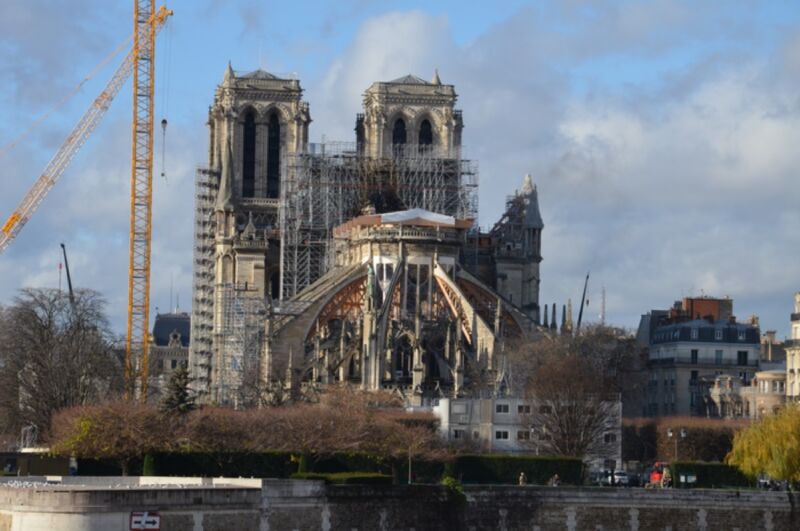
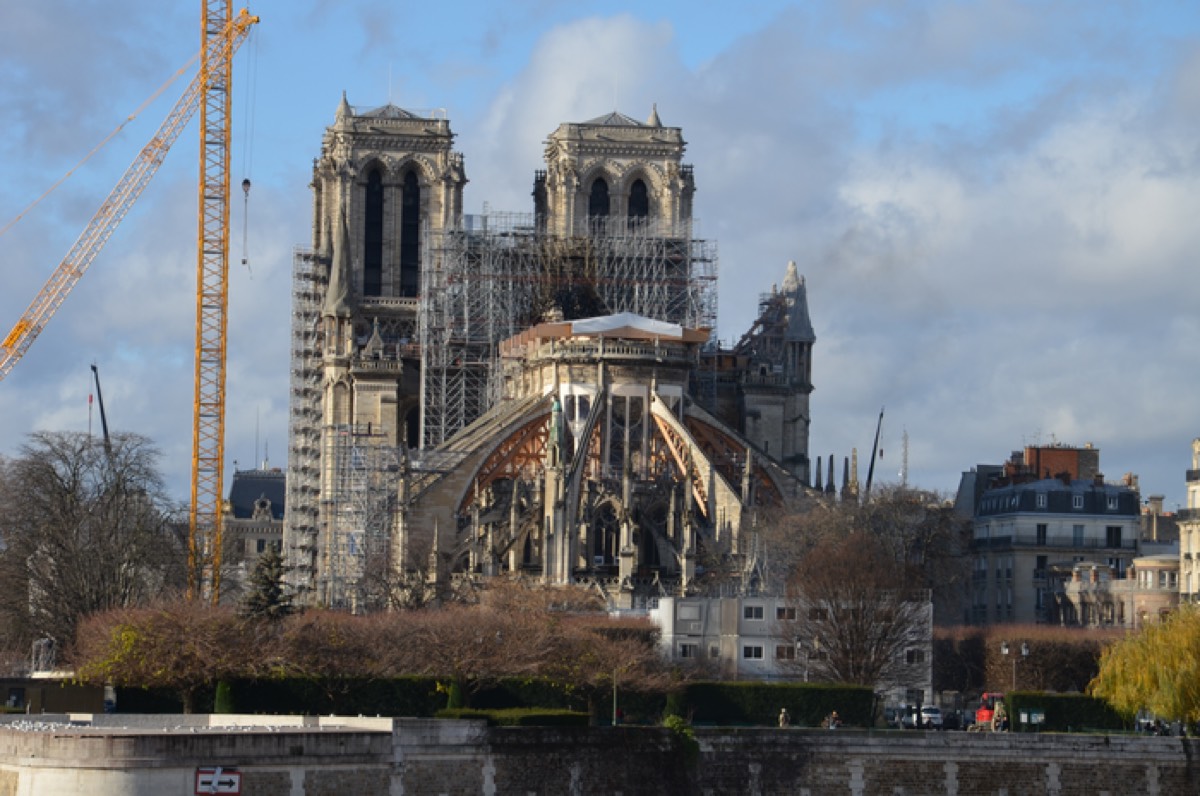
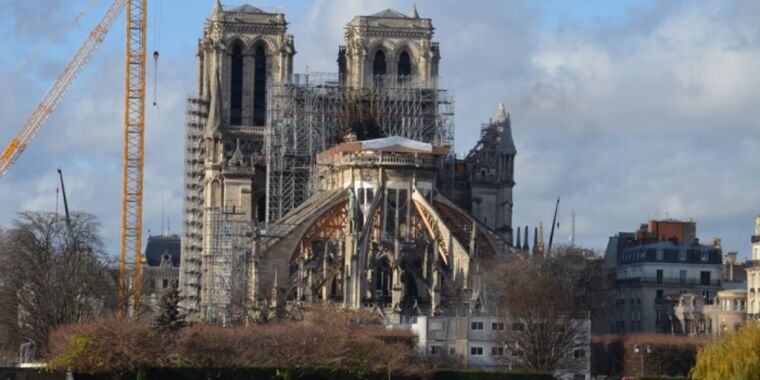
Enlarge / The Notre-Dame de Paris has been under restoration since a devastating fire destroyed the main spire and roof in April 2019.
There’s rarely time to write about every cool science-y story that comes our way. So this year, we’re once again running a special Twelve Days of Christmas series of posts, highlighting one science story that fell through the cracks in 2023, each day from December 25 through January 5. Today: The Notre Dame cathedral in Paris has been undergoing extensive renovation in the wake of a devastating 2019 fire. Previously hidden portions of its structure have revealed the use of iron reinforcements in the earliest phases of the cathedral’s construction, making it the earliest known building of its type to do so.
On April 15, 2019, the world watched in collective horror as the famed Notre Dame cathedral in Paris was engulfed in flames. The magnificent cathedral’s roof and its support structure of 800-year-old oak timbers were destroyed when the main spire—750 tons of oak lined with lead—collapsed in flames, landing on the wooden roof. French President Emmanuel Macron vowed to rebuild the cathedral, and that work has continued steadily in the ensuing years; the current planned re-opening will occur on December 8, 2024.
If there is a silver lining to the destruction, it’s that the damage has revealed parts of the cathedral’s structure that were previously inaccessible, telling archaeologists and conservationists more about the materials originally used to construct Notre Dame in the mid-12th century. According to a March 2023 paper published in the journal PLoS ONE, the original builders used iron reinforcements during the initial phases, making Notre Dame the earliest building of its type to do so.
“The fire has shed light on certain uses of iron, such as the staples on the top of the upper walls which were totally hidden by the framework,” co-author Maxime L’Héritier of Université Paris told Gizmodo. “We could not have seen them without the blaze or a huge restoration. We believed that [the] great building yards of the 13th century had invented these construction processes using iron armatures, but now it seems that it all occurred at Notre Dame.”
Although no original plans for Notre Dame Cathedral exist, a couple of centuries after Notre Dame’s construction, other building projects left behind documents called building accounts or fabric accounts, which include information like materials purchases and payments to masons. But in the late 12th century, written documents weren’t yet widely used. In the early 1800s, the cathedral was crumbling, and architects Eugène Viollet-le-Duc and Jean-Baptiste-Antoine Lassus received a royal contract to restore the medieval structure. Working with relatively simple tools, Viollet-le-Duc left behind detailed, accurate drawings of the original architecture and his own restoration work.
Two hundred years later, art historian Stephen Murray and the late architectural historian Andrew Tallon of Vassar College carried laser scanners through the entire cathedral, including the space above the vault and several out-of-the-way spiral staircases, passages, and other hidden spaces. As for the cathedral’s much-praised acoustics, a group of French acousticians made detailed measurements of Notre Dame’s “soundscape” a few years before the fire. All of that data has been instrumental in helping architects and conservationists reconstruct the cathedral.
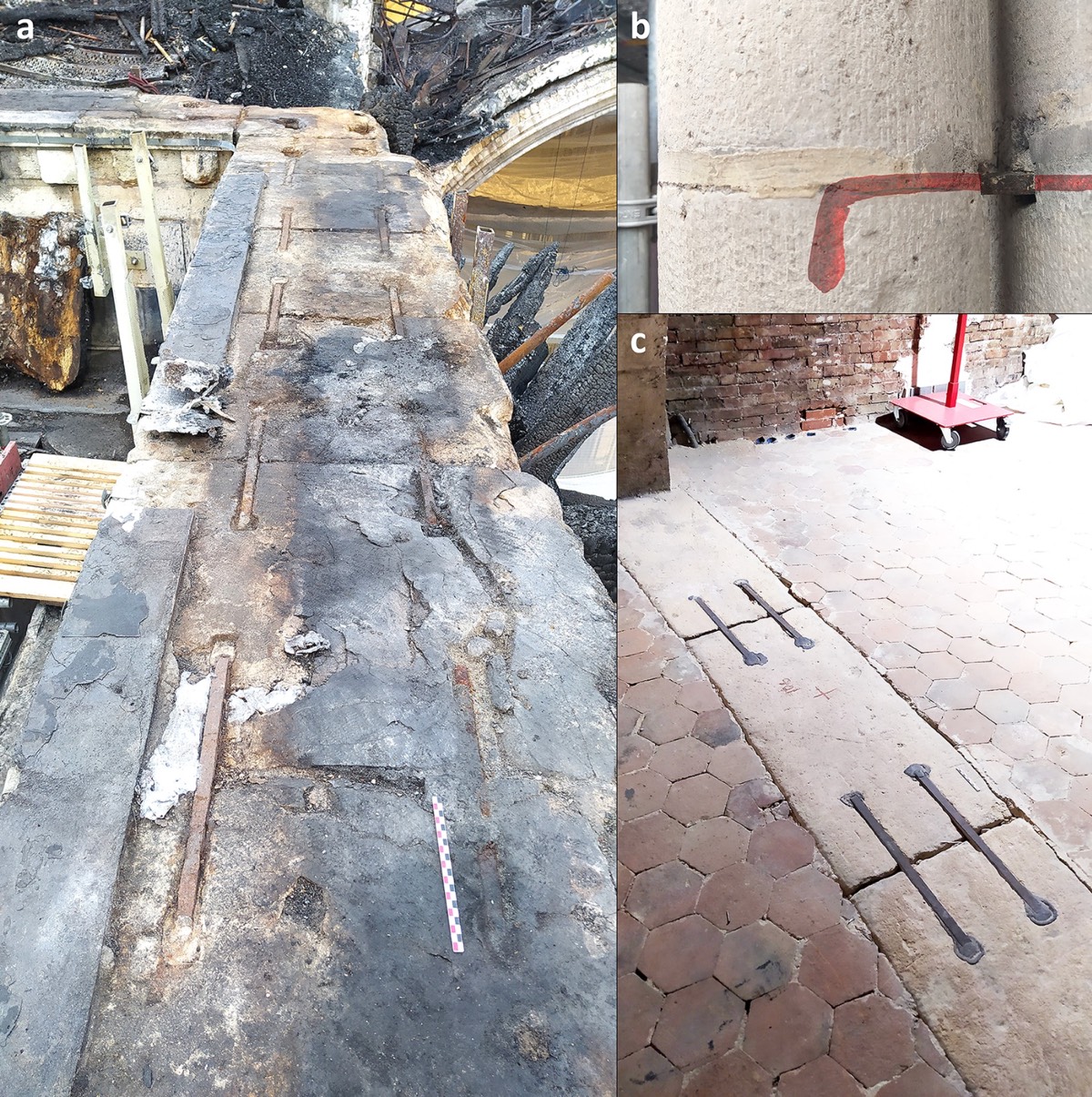
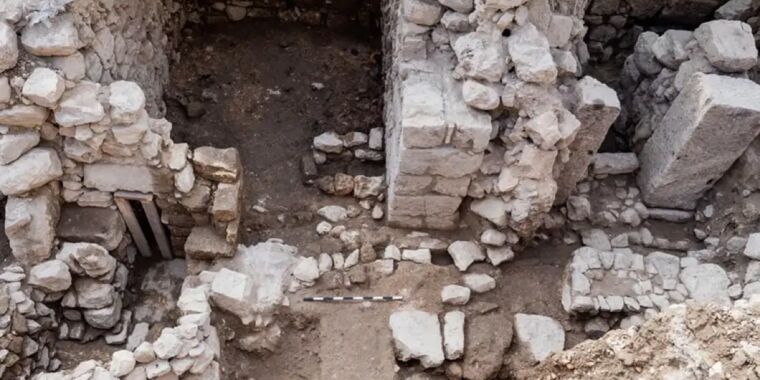
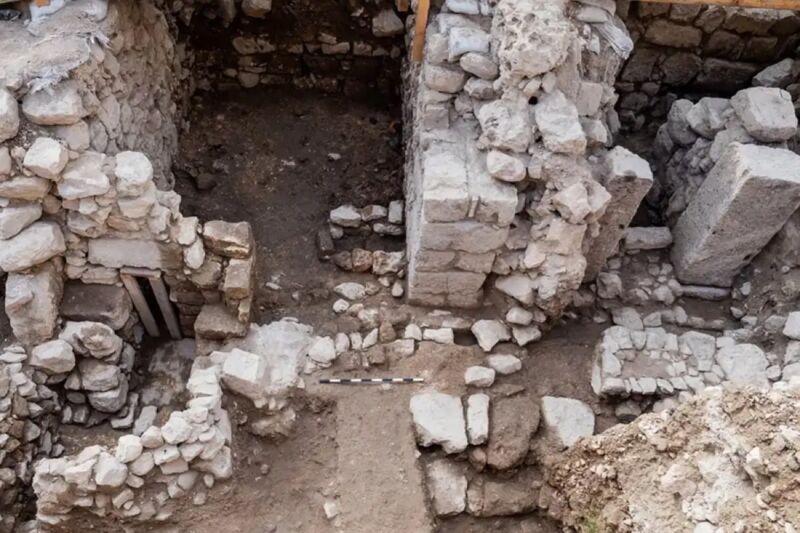
Enlarge / The 2019 fire exposed iron staples in the top walls, inside a column in the nave, and in the tribunes of the choir.
M. L’Heritier et al. 2023
Other medieval French cathedrals built after Notre Dame, such as in Chartres, Bourges, or Reims, all used iron armatures, tie-rods, and chains. But until now, it hasn’t been clear to what extent the original builders of Notre Dame used iron in its construction. Harnessing and scaffolding gave researchers access to the upper parts of the cathedral, although some parts remained inaccessible. Still, L’Héritier et al. found extensive use of iron staples at different levels, with the lowest being two rows of staples in the floors of the second-level tribunes above the arches, as well as in the nave and choir.
Per the authors, some iron reinforcements clearly dated back to reconstruction efforts during the 19th century, most notably iron chains and tie rods in the top walls of the choir and above its upper vaults. The real question was just how old the other iron staples might be. The team mapped and measured all those that were accessible, totaling roughly 170 staples for the upper walls and 100 for the tribunes. They also took samples for the metallographic analysis from iron staples that were already broken or damaged by the fire. The team used a new method for characterizing metal, combined with radiocarbon dating, to determine the age and possible provenance of those samples.
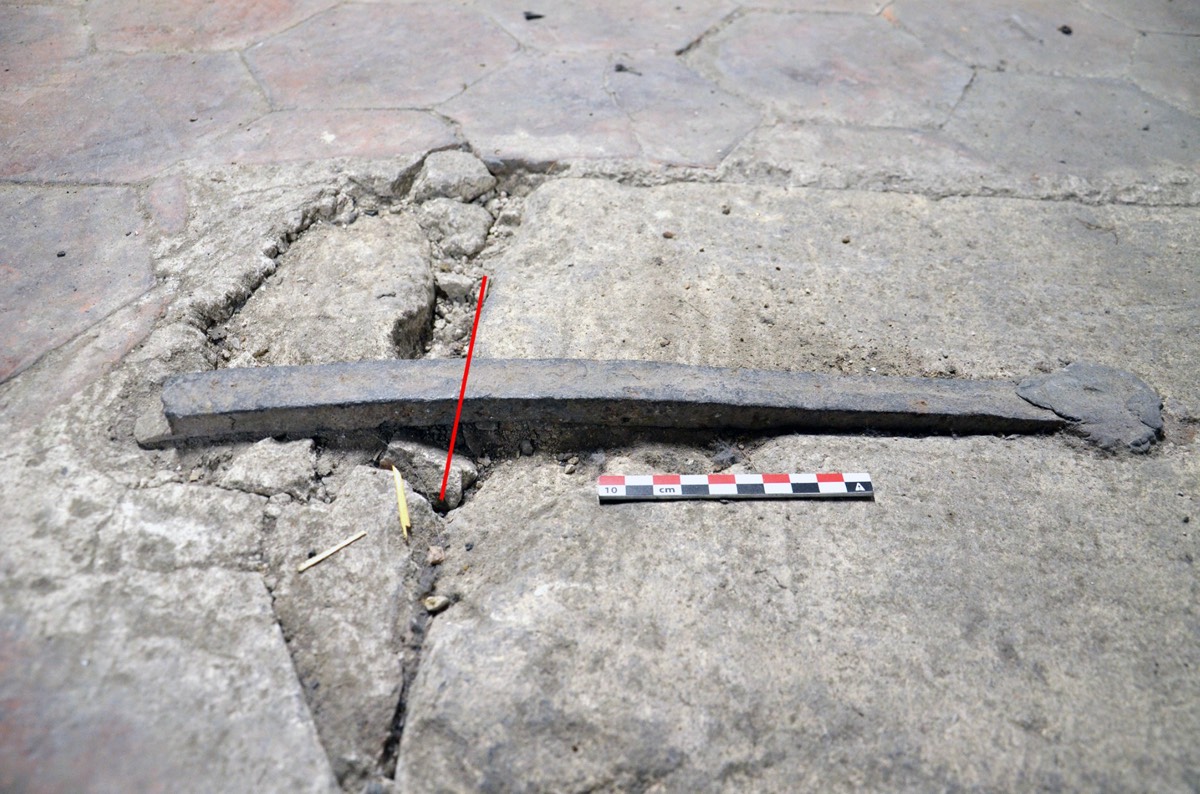
Enlarge / Broken iron staple in the tribunes.
M. L’Heritier et al. 2023
L’Héritier et al. concluded that the iron staples in the floor of the tribunes dated back to the early 1160s, i.e., the earliest phases of construction. “So far, these series of staples are the earliest known example of iron armatures used in the initial design of a Gothic monument,” they wrote, a good 40 years before the iron reinforcements used to build the Chartres or Bourges cathedrals. The staples found at the top of the great lateral walls date to the early 13th century, indicating that the architects of that period also relied on iron reinforcements.
As for the iron itself, the metal analysis showed that the iron alloys used to make the staples were common to the Middle Ages and of similar quality to those found at Chartres, Troyes, and similar cathedrals. What makes the Notre Dame staples unusual is the presence of welding lines, indicating that several pieces of iron of different provenances were welded together to form each staple. Tracking those supply sources could shed light on the iron trade, circulation, and forging in 12th and 13th century Paris.
“Compared to other cathedrals, such as Reims, the structure of Notre Dame in Paris is light and elegant,” Jennifer Feltman of the University of Alabama, who was not involved in the research, told New Scientist. “This study confirms that use of iron made this lighter structure at Paris possible and thus the use of this material was crucial to the design of the first Gothic architect of Notre Dame.”
PLoS ONE, 2023. DOI: 10.1371/journal.pone.0280945 (About DOIs).
Notre Dame cathedral first to use iron reinforcements in 12th century Read More »