education

immersive-inspiration:-why-extended-reality-learning-holds-multi-sector-potential

Immersive Inspiration: Why Extended Reality Learning Holds Multi-Sector Potential

The vast potential of extended reality cannot be underestimated. Used as something of an umbrella term to encompass “all real-and-virtual combined environments and human-machine interactions,” XR has become a buzzword that’s closely associated with other popular terms like virtual reality, augmented reality, spatial computing, ubiquitous computing, and the metaverse – and deep into this litany of jargon lies the next frontier for digital learning.

Although the edtech sector has grown significantly in voracity since the emergence of the COVID-19 pandemic, it’s extended reality that holds the key to unprecedented levels of immersiveness.
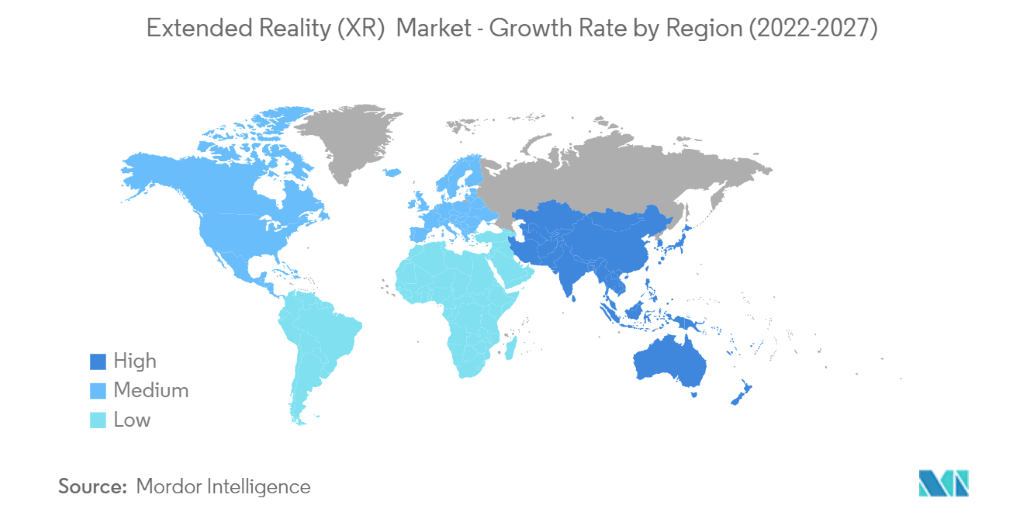
Extended Reality XR Market - Growth Rate by Region 2022-2027 - Mordor Intelligence

Furthermore, Mordor Intelligence data suggests that the XR market is growing globally, and experiencing particularly high levels of growth in Asia and Oceania. With both Europe and North America also experiencing notable XR growth, it’s likely that XR learning platforms and initiatives will gather momentum at a significant rate over the coming years.

With this in mind, let’s take a deeper look at why extended reality holds such vast potential for the future of learning across the world of education and many other sectors.

Unprecedented Immersion

When it comes to education, the challenge of delivering an immersive learning experience to all students and pupils can be a profoundly difficult one.

According to a Udemy survey, 74% of Millennials and Gen-Z claimed that they would become easily distracted in the workplace. This means that educators must find new ways to keep modern students engaged for as long as possible.

Through embracing extended reality, we’re already seeing more immersive experiences delivered to students, and platforms like GigXR can help users to engage in real-time with digitally rendered content.

Such platforms are excellent for learning via accurately rendered 3D graphics for topics like human anatomy and medicine–carrying its functionality beyond classrooms and into medical training for industry professionals.

Although embracing XR can seem like a daunting prospect, its potential applications within the world of learning are vast, including:

  • Refreshing the range of learning techniques available to students in order to deliver foundational learning;
  • Delivering more customized and personalized learning experience for students exploring complex topics;
  • Better defining competencies and assessment criteria for student experiences;
  • Offering data that can be utilized to deliver more focused interactive lessons for students that can incorporate better collaboration as well as engagement.

While this can go some way in showing the potential possibilities of XR, these applications also have the power to fundamentally change education over the course of the decade. As a future within the age of Web3 and the metaverse continues to redefine how far reality technology can evolve, the prospective applications for the future of learning appear to be endless.

Inspiring Curiosity

Crucially, a recent survey conducted by the XR Association in collaboration with the International Society for Technology in Education (ISTE) found that many current educators are optimistic about the prospect of a future built on extended reality learning experiences.

Of 1,400 high school teachers surveyed, some 82% of respondents stated that they believed the quality of AR/VR learning activities has improved in recent years–with 70% expressing their hope that XR tools can become more commonplace in schools moving forward. In total, 94% of respondents were happy to highlight the importance of aligning XR-driven curricula to academic standards.

The study also found that 77% of those surveyed believed that XR technology “inspires curiosity,” and that the tools can help to address issues in maintaining student motivation and well-being which have been impacted by the COVID-19 pandemic.

“To get a good sense of XR’s potential in schools, you have to ask the teachers and staff who will be administering this technology. The survey’s results suggest that VR, AR and MR technology is well positioned to become an essential teaching tool in school classrooms across the country,” explained Stephanie Montgomery, VP of Research at the XR Association.

Extending XR Into the Workplace

Beyond the traditional education sector, XR-based learning can also pay dividends when it comes to workplace training and recruitment.

The potential of VR onboarding is vast across a number of industries, and it can be an essential tool when it comes to upskilling and combatting turnover challenges among existing workforces.

Through the potential of extended reality, trainees and candidates alike can collaborate with human resource departments to undertake virtual interviews–which can provide real-time metrics and behavioral analysis for more accurate and unbiased assessments of competencies.

By combining XR technology with artificial intelligence, companies can actively spot knowledge gaps among existing employees and automatically enroll them in new tailor-suited courses to enhance their skill sets.

Extended reality can also help in a number of practical training scenarios. In practice, this is best illustrated within the healthcare industry, where The Johns Hopkins School of Nursing has become one of many providers to implement comprehensive VR training programs ranging from doctoral to prelicensure nursing.

Delivering experiences via Meta Quest headsets and an Alienware computer, Johns Hopkins has managed to deliver multiplayer VR learning experiences that can render practice scenarios capable of accommodating up to 100 learners.

“We make decisions based on what’s going on — time-critical decisions,” said Kristen Brown, Assistant Professor at the Johns Hopkins School of Nursing and the Simulation Strategic Projects Lead at the Johns Hopkins Medicine Simulation Center. “So one of the important components was that there was some sort of AI that’s really adapting to what we’re doing.”

The beauty of extended reality in terms of training, is that it can provide a platform for learners to build their competencies in high-risk or highly sensitive areas without having to worry about high margins for errors to take place.

In surgery scenarios, for instance, XR experiences can place students into a virtual operating theater with a 3D subject to deliver a true-to-life simulation of an operation. Similar experiences have been continually growing in quality within industries like aviation.

Achieving Immersive Learning Within the Decade

The rapid growth of the extended reality market means that we’re likely to see comprehensive learning technologies become commonplace sooner rather than later. This will undoubtedly delight the 70% of teachers surveyed in the aforementioned XR Association’s survey, but it has the potential to resonate across multiple sectors.

From providing more immersive and comprehensive learning to students, to helping employees to gain a better quality of work experience during their onboarding and training processes, the arrival of XR learning can bring profound improvements to countless lives.

Better onboarding programs can help to improve job satisfaction and to lower turnover rates, while competencies will improve immeasurably as more impactful learning experiences emerge. With this in mind, extended reality is well placed to improve the lives of learners of all ages, and across a number of industries.

Guest Post


About the Guest Author(s)

Dmytro Spilka

Dmytro Spilka

Dmytro is a tech and finance writer based in London. Founder of Solvid and Pridicto. His work has been published in Nasdaq, Kiplinger, VentureBeat, Financial Express, and The Diplomat.

Immersive Inspiration: Why Extended Reality Learning Holds Multi-Sector Potential Read More »

xra-survey:-teachers-pin-hopes-on-xr-for-better-classroom-engagement

XRA Survey: Teachers Pin Hopes on XR for Better Classroom Engagement

Incorporating XR—the umbrella term for virtual, augmented, and mixed reality—in classroom education can make learning more fun. It can also motivate students to take their studies more seriously.  A recent survey by XR Association (XRA) and the International Society for Technology in Education (ISTE) presented this conclusion based on a poll of over 1,400 high school teachers across 50 US states. Let’s look at the survey results.

Optimism High for XR’s Classroom Use

Foremost of the highlights in the nationwide poll was the finding that 77% of educators believe in the power of extended reality to ignite curiosity and engagement in class. This is especially important given that student motivation and morale are reported to have dropped in the 2020-2021 school year.

As Sean Wybrant, a computer science teacher at Colorado Spring’s William J. Palmer High School, put it: “Imagine how much better a student will understand what happens in Othello if they could actually step into the play and see it. Imagine how much better we could tell historical narratives if we could put people in recreations of famous situations based on documentation of those time periods.”

Secondly, XR doesn’t only make students eager to learn. Seventy-seven percent of teachers also see its potential in spurring interaction and building empathy among classmates. XRA says in its report that creating immersive worlds allows students to exchange ideas and understand each other in new ways.

Thirdly, 67% of respondents agree with XRA’s advocacy to incorporate extended reality technology into the curricula. Educators teaching the following subjects believe that course-specific XR experiences would be beneficial for students:

  • Earth sciences (94%)
  • Physics and space science (91%)
  • Math (89%)
  • English language (86%)
  • World languages (87%)
  • History and social studies (90%)
  • Social sciences (91%)
  • Computer science (91%)
  • Visual and performing arts (91%)
  • Physical education (88%)
  • Career and technical education (91%)

“To get a good sense of XR’s potential in schools, you have to ask the teachers and staff who will be administering this technology,” said Stephanie Montgomery, the XRA Vice President of Research and Best Practices. “The survey’s results suggest that VR, AR, and MR technology is well-positioned to become an essential teaching tool in school classrooms across the country.”

At the same time, 58% of the survey respondents said that teachers should get training for XR classroom use. Moreover, 62% believe in developing XR standards before integrating the technologies into regular curricula.

XR Association CEO Elizabeth Hyman believes in the extensive ripple effect that will result from making educators XR-ready. “If teachers understand XR technology and are empowered to contribute to the way in which it is incorporated into the curriculum, everyone—students, their guardians, and the surrounding community—will be able to take advantage of its benefits,” she said.

However, despite the positive outlook, 57% of teachers recognize the costs of using AR and VR devices and admit that access to funds will determine access to such technology. Nevertheless, poll participants believe XR’s benefits will extend beyond the classroom. Seventy-seven percent of teachers said the technology helps equip students with skills they can apply in their chosen careers, especially since, according to forecasts, jobs in extended reality may reach 23 million by 2030.

Myths About XR Classroom Use Debunked

The XRA-ISTE survey dispelled several myths about extended reality’s acceptance in education. One of these misconceptions is that XR is only for gaming. The poll results and teachers’ comments reveal that they are aware of the usefulness of this technology in geography, math, history, and other subjects.

Moreover, the survey response from educators refutes the popular notion that XR technology would not be the “best fit” for the classroom. Seventy-eight percent of respondents believe in the benefits of extended reality technologies in class.

Finally, the belief that XR will distract students from learning only got a 15% vote among the survey participants. The majority support the opportunities that come with extended reality when incorporated into lessons.

Teens Excited About XR 

Earlier last year, XRA also conducted a separate survey that sought teens’ views on current use cases for XR and their expectations for this technology. The results released in May 2022 revealed that 40% of teens have used either AR or VR in school and 50% describe their experience with these technologies as positive. Thirty-eight percent would like to own a headset in the future.

Even though there are potential concerns around immersive technologies, which teens are aware of, they are still excited about using XR in education, in a responsible way. Almost 4 in 5 teens think extended reality can impact lives positively. They believe that XR can improve their lives in the areas of fun (67%), creativity (61%), and learning (48%). Moreover, 52% of respondents expressed interest in taking a college course with extended reality integrated into its curriculum.

Read the Latest Addition to the XRA Developers’ Guide

XRA is proactively advancing XR application in classroom learning. It recently launched a new chapter in its Developers Guide on designing immersive lessons for high schoolers. The fresh chapter discusses current classroom needs, successful use cases, and industry-backed best practices for promoting safe and inclusive classroom learning through extended reality that addresses parent, teacher, and student concerns.

XRA Survey: Teachers Pin Hopes on XR for Better Classroom Engagement Read More »

learning-in-ar:-bring-textbooks-to-life-with-ludenso

Learning in AR: Bring Textbooks to Life With Ludenso


Augmented reality is exciting. It’s interactive and can be a great visual aid for information that might otherwise be difficult to visualize or that might be just plain dull in 2D. As such, it has huge potential for educators. Unfortunately, good AR content can also be difficult to make for people who aren’t experts. That’s where Ludenso comes in.

Ludenso works with textbook publishers, educators, and tech experts to create an app for augmenting textbooks with an easy-to-use interface. I talked with co-founder and Chief Marketing Officer, Ingrid Skrede, to learn more.

What Is Ludenso?

Ludenso gives educators low-and-no-code tools to bring augmented reality into the classroom. The company can and does work with educators and publishers to create models in-house, but they also make libraries of educational 3D assets available in a drag-and-drop interface.

“Bringing AR [textbooks] to life on mobile is not new. What’s new is the ability to view it and update it without technical expertise,” said Skrede. “We put the studio’s creative power into the hands of content experts, not just our development team.”

Ludenso AR app for learning

With a few keystrokes, educators with no AR development experience can add their own notations to existing 3D models that launch when a phone with the Ludenso Explore app recognizes images in a textbook. They can also add images, videos, or links – whether to more resources, online quizzes, or something else.

I saw this process in a screen share during a demo with Skrede but spent most of my time on the user side of the app. The app recognizes the target images instantly. Manipulating the model to scale and rotate it is easy, as is finding the annotations and contextual information that the educator (played by Skrede) attributed to it.

The app doesn’t only feature image detection, it also features planar detection. So, I can view a mini 3D model on the textbook page with the context of the words around it. I can also switch my view to place a 3D model in my office and scale it up as much as I want.

What’s more, once I’ve opened the models associated with a textbook, I can place them in my environment without the image target. So, a student could study the 3D models in a textbook chapter even if they left their textbook at school.

How Ludenso Inspires Learning

Of course, Ludenso isn’t just for educators – as no educational service should be. The application is also for students. Over the course of our remote interview, Skrede brought up numerous studies showing that AR helps students maintain attention and retain information.

More than that, Skrede says that working with Ludenso has put her in numerous positions to see “underperforming” students drawn into their lessons in ways that shocked their teachers.

“When we’re born, we want to learn. But, we have sixteen thousand hours of learning ahead of us and that’s a long time to sit and learn what everyone else is learning,” said Skrede. “When using AR, you’re challenging the perceptions teachers have and what it means to be a strong student.”

Living and Learning

Ludenso has been around for a couple of years now. The Oslo-based company is finally starting to get the buzz that it deserves, as well as a recently-cleared $1M funding round.

One of the pillars of Ludenso’s philosophy is that the best educational content is going to be made by educators – not by tech moguls. As a result, they started out working with schools directly. This was a great way to work directly with educators, as they wanted, but it came with its own challenges.

AR app for learning - Ludenso

“We saw how excited the students were, and how excited the teachers were,” said Skrede. “We also realized that it’s challenging to scale in the school sector.”

Working with individual schools meant that Ludenso was working with individual curricula. What the company enabled one school to make might only work for that one school. Some of the tools that make the current (and upcoming) iteration of Ludenso possible were developed at this time, but the company’s outreach structure changed.

“We were rather fortunate to get in touch with a publishing house here,” said Skrede. The company is currently partnered with three major textbook publishers, which serve as a distribution channel for educators. “We’re interested in building a learning platform.”

Using textbooks to launch the experience also helps educators implement the technology that they might not be familiar with – particularly as a part of a structured curriculum.

“We go with textbooks because teachers want to use AR but they need a tool that they can come back to over and over,” said Skrede.

As this article was being written, Ludenso also announced a partnership with Cambridge University Press & Assessment. The partnership allows Cambridge University to carry Ludenso content and gives Ludenso global exposure with a renowned publishing company.

Where Was This a Decade Ago?

One of the most challenging things about covering emerging technology is seeing an application like Ludenso that would have been great to have when I was in school. At the same time, it helps to remind us why emerging technologies are so exciting. Most readers might have been born too late for this particular app, but there’s a whole generation that’s just in time.

Learning in AR: Bring Textbooks to Life With Ludenso Read More »