
don pettit

what’s-it-like-to-be-70-years-old-in-space?-“all-those-little-aches-and-pains-heal-up.”

What’s it like to be 70 years old in space? “All those little aches and pains heal up.”

Not many people celebrate their birthday by burning a fiery arc through the atmosphere, pulling 4.4gs in freefall back to planet Earth, thudding into the ground, and emptying their stomach on the steppes of Kazakhstan.

No one has ever done it on their 70th birthday.

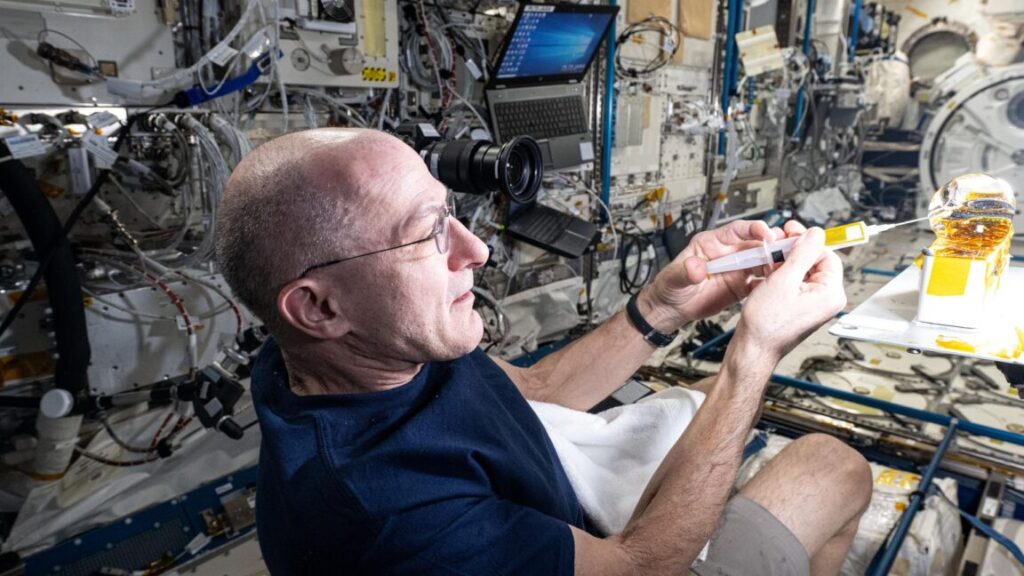
Perhaps this is appropriate because NASA astronaut Don Pettit is a singular individual. His birthday is April 20, and when the Soyuz spacecraft carrying him landed at dawn in Kazakhstan, the calendar had turned over to that date. John Glenn, then 77, was older when he went to space. But no one as old as Pettit had spent as long as he had in orbit, 220 days, on a mission.

On Monday, a little more than a week after returning from orbit, Pettit met with reporters at Johnson Space Center. “It’s good to be back on planet Earth,” he said. “As much as I love exploring space, going into the frontier, and making observations, you do reach a time when it’s time to come home.”

Flying in space at 70 years old

Pettit first went into space at the age of 47 for his first of three long-duration missions to the International Space Station. Since then, he has flown a shorter shuttle mission and two more space station increments. All told, he has lived in space for 590 days, the third-most all-time among NASA astronauts.

“I’ve got a few creaks and groans in my body, but basically I feel the same as I did 20 years ago, and coming back to gravity is provocative,” he said.

After every one of his missions, Pettit said the readjustment to gravity for him has been a challenge. He added that the surprising thing about spaceflight is that it’s not so much your large muscles that ache, but the smaller ones.

What’s it like to be 70 years old in space? “All those little aches and pains heal up.” Read More »
nasa’s-oldest-active-astronaut-is-also-one-of-the-most-curious-humans

NASA’s oldest active astronaut is also one of the most curious humans

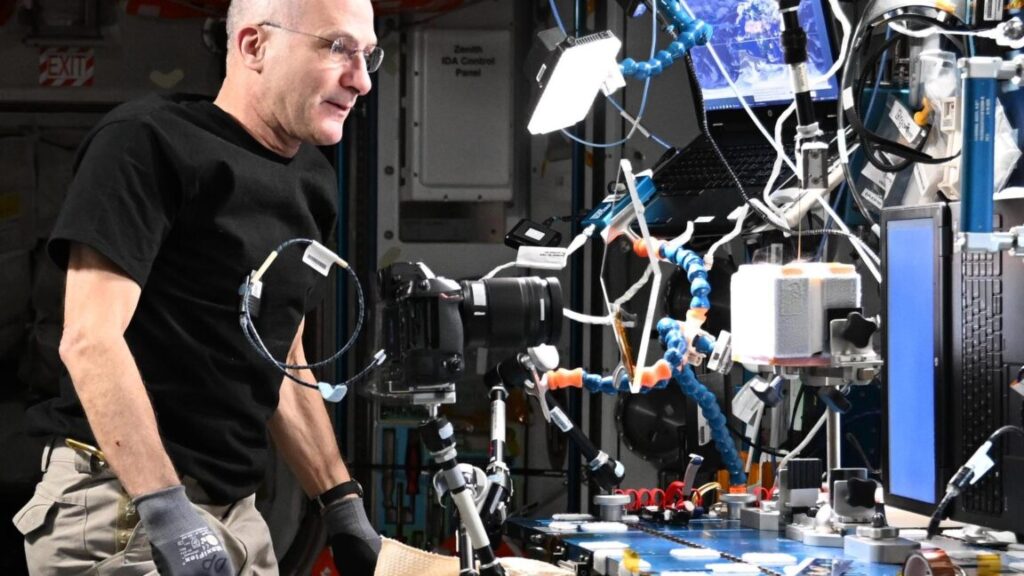
For his most recent trip to the International Space Station, in lieu of bringing coffee or some other beverage in his “personal drink bag” allotment for the stay, NASA astronaut Don Pettit asked instead for a couple of bags of unflavored gelatin.

This was not for cooking purposes but rather to perform scientific experiments. How many of us would give up coffee for science?

Well, Donald Roy Pettit is not like most of us.

At the age of 69, Pettit is NASA’s oldest active astronaut and began his third long-duration stay on the space station last month. A lifelong tinkerer and gifted science communicator, he already is performing wonders up there, and we’ll get to his current activities in a moment. But just so you understand who we’re dealing with, the thing to know about Pettit is that he is insatiably curious, and wants to share the wonder of science and the natural world with others.

Here’s just one small example. During his last six-month increment in orbit, from late 2011 to the middle of 2012, Pettit had some Lego blocks he’d been using for student demonstrations. After the final one, he asked if he could use the Legos for a science experiment. He turned them into a belts-and-rollers-type Van de Graaff generator and produced groundbreaking work in electric fluids. This research was published in Physical Review Letters after Pettit returned to Earth. Most of us probably could not even spell Van de Graaff generator, and this dude is up there, in space, building them out of toys.

The way Pettit, a chemical engineer by training, explains things is that he has the “programmatic” scientific research he does for NASA, and then there’s everything else, often done during his limited free time.

“This is well-planned, well thought out, peer-reviewed, and uplinked to station with the supplies needed,” he said of programmatic research. “And then you have what I call science of opportunity. This is science which comes to mind while you are there, simply because you are there, and you can do it because you can. The scientific disciplines that I’ve dabbled in on the International Space Station include fluid physics, classic physics, chemistry, biology, plant growth, and Earth observations.”

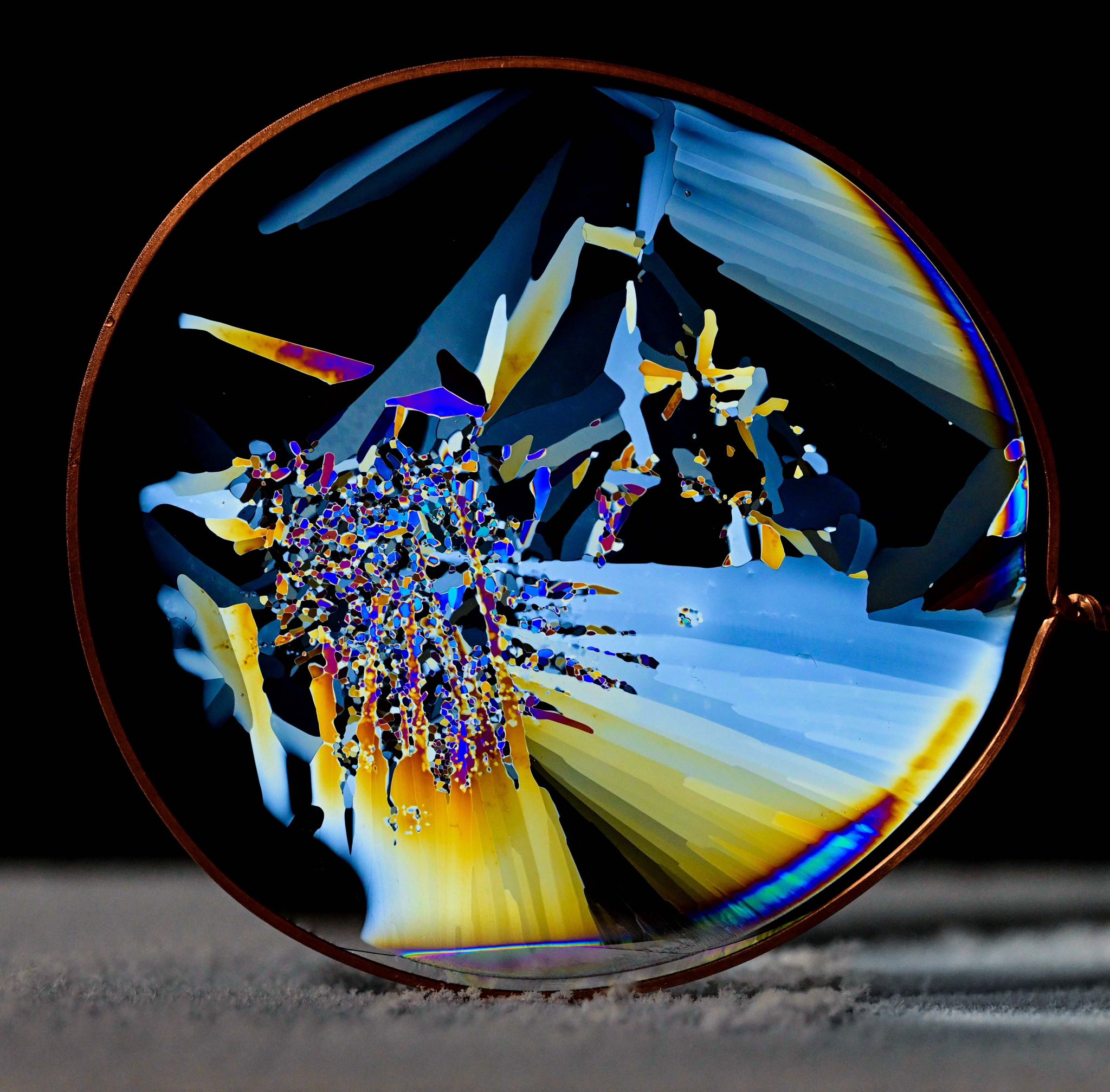
Wafers of water ice. Credit: Don Pettit/NASA

NASA’s oldest active astronaut is also one of the most curious humans Read More »