COVID-19

covid-shots-protect-against-covid-related-strokes,-heart-attacks,-study-finds

COVID shots protect against COVID-related strokes, heart attacks, study finds

stay up to date —

Data provides more evidence older people should stay up to date on COVID vaccines.

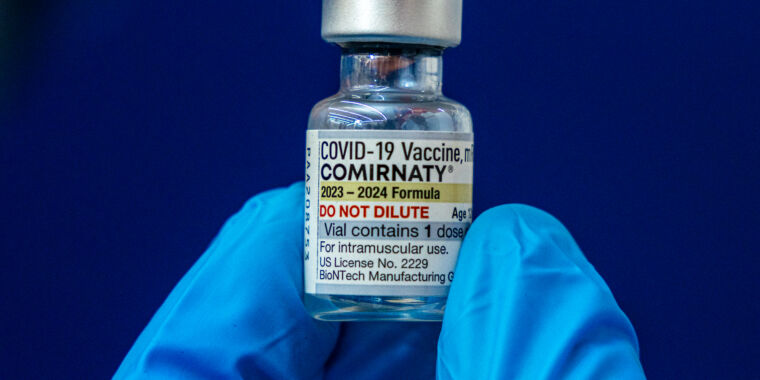
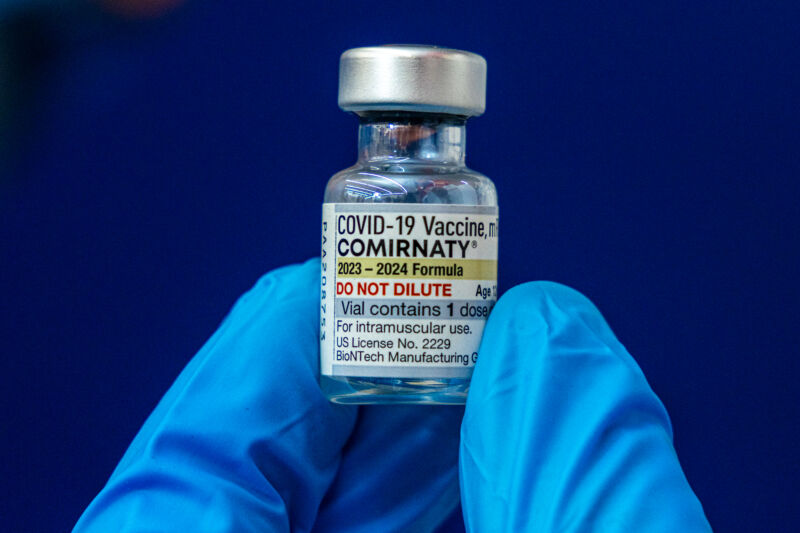
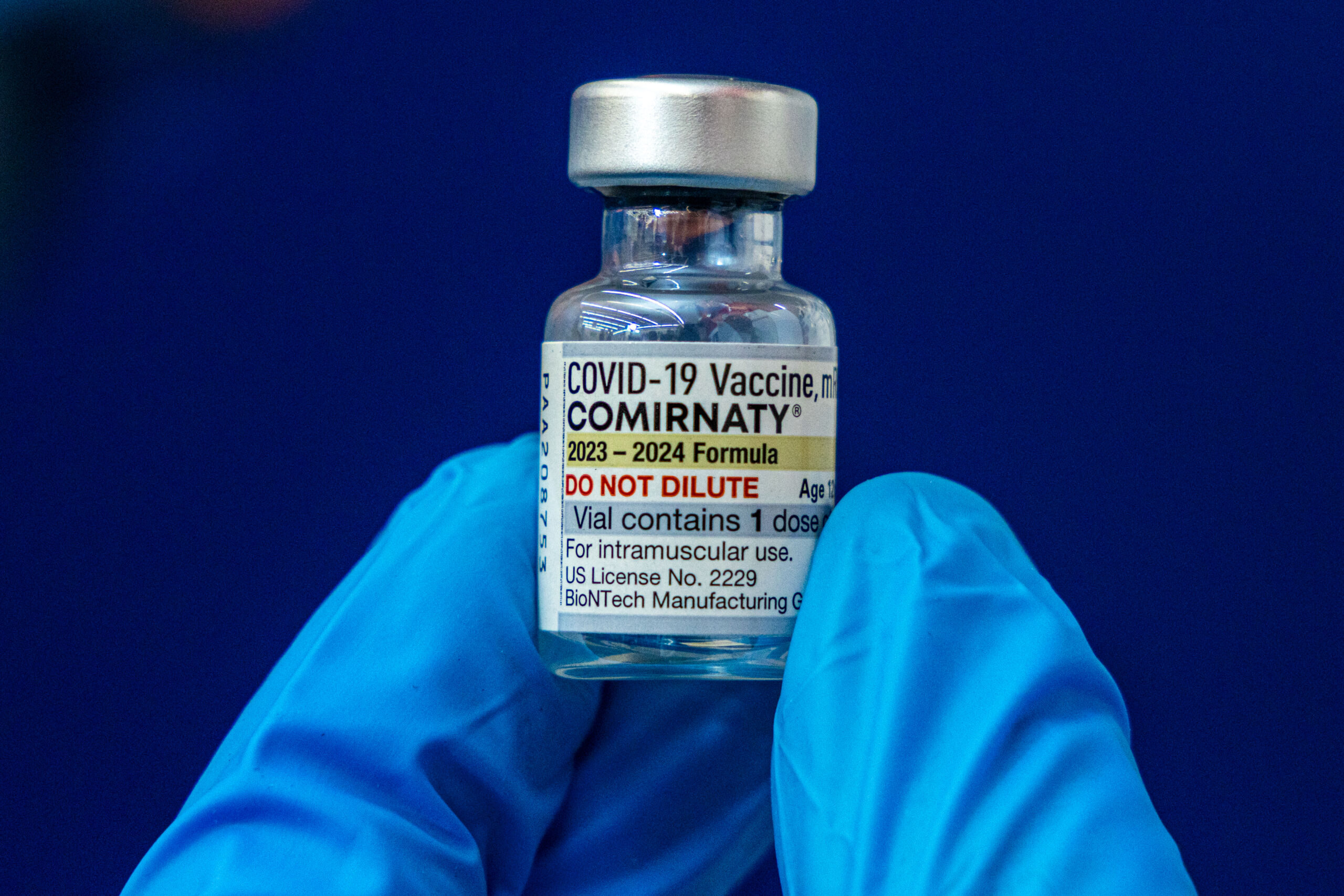
A vial of the updated 2023-2024 formula of Pfizer's COVID-19 vaccine at a CVS Pharmacy in Eagle Rock, California, on September 14, 2023.

Enlarge / A vial of the updated 2023-2024 formula of Pfizer’s COVID-19 vaccine at a CVS Pharmacy in Eagle Rock, California, on September 14, 2023.

Staying up to date on COVID-19 vaccines can cut the risk of COVID-related strokes, blood clots, and heart attacks by around 50 percent in people ages 65 years or older and in those with a condition that makes them more vulnerable to those events, according to a new study from the Centers for Disease Control and Prevention.

The finding, published this week in the CDC’s Morbidity and Mortality Weekly Report, should help ease concerns that the shots may conversely increase the risk of those events—collectively called thromboembolic events. In January 2023, the CDC and the Food and Drug Administration jointly reported a preliminary safety signal from their vaccine-monitoring systems that indicated mRNA COVID-19 vaccines may increase the risk of strokes in the 21 days after vaccination of people ages 65 and older. Since that initial report, that signal decreased, becoming statistically insignificant. Other vaccine monitoring systems, including international systems, have not picked up such a signal. Further studies (summarized here) have not produced clear or consistent data pointing to a link to strokes.

In May, the FDA concluded that the evidence does not support any safety concern and reported that “scientists believe factors other than vaccination might have contributed to the initial finding.”

But, the statistical blip could potentially cause lingering concerns. While clinicians had noted lower rates of thromboembolic events among vaccinated people, the authors of the new study noted that, until now, there were no rigorous estimates of how effective COVID-19 vaccines are at preventing those events.

For their analysis, they primarily looked at two groups of patients: A group of 12.7 million Medicare beneficiaries ages 65 and older and a group of around 78,600 Medicare beneficiaries ages 18 and older with end-stage renal disease (ESRD) on dialysis, a condition that increases their risk for thromboembolic events, including COVID-19-related thromboembolic events. Using medical claims records from September 2022 to March 2023, the researchers compared rates of thromboembolic events among the people in those groups that had gotten a bivalent COVID-19 booster dose and those who had only gotten the original monovalent COVID-19 vaccine in the past. To be considered a COVID-related thromboembolic event, the event had to occur within a week of or a month after a COVID-19 diagnosis.

Protective effect

In the group of 12.7 million patients ages 65 and older, about 5.7 million (45 percent) had gotten the bivalent booster, making them up to date on their COVID-19 vaccinations at the time. The remaining 7 million (55 percent) had only gotten the original vaccine.

During the study period, 17,746 patients who were not up to date on their COVID shots got COVID-19 and experienced a COVID-related thromboembolic event. Of the bivalent boosted patients, there were 4,255 COVID-related thromboembolic events. The researchers adjusted for confounding factors, such as age, race, and time of vaccination, and estimated that the bivalent booster was overall 47 percent effective at preventing COVID-related thromboembolic events, which again include strokes, blood clots, and heart attacks.

A sub-analysis including the time since vaccination indicated that the estimated effectiveness waned about two months after receipt of the vaccine, dropping early effectiveness of 54 percent down to 42 percent at 60 days or more.

Among the 78,600 patients ages 18 and up with ESRD, 23,229 (29.5 percent) received a bivalent dose and thus were up to date on their COVID-19 vaccines. The remaining patients (70.5 percent) had only received an original vaccine, and of those, 917 experienced a COVID-19-related thromboembolic event after getting the pandemic virus. Among the up-to-date patients, there were only 123 events. After adjustments, the researchers estimated that the vaccines’ effectiveness against thromboembolic events was 51 percent in this group, which also waned slightly over time.

The study has limitations, such as that it can’t account for previous COVID-19 infections, which could alter people’s risk of developing complications from COVID-19, including thromboembolic events. It relied on medical claims, which have limitations, and it’s possible there are other confounding factors, such as the use of Paxlovid and behavioral differences. Last, Medicare beneficiaries are not representative of the whole population.

But, given the data available, the study authors concluded that it appears the bivalent vaccine dose “helped provide protection against COVID-19–related thromboembolic events compared with more distant receipt of original monovalent doses alone.” The authors recommend that, “to prevent COVID-19–related complications, including thromboembolic events, adults should stay up to date with recommended COVID-19 vaccination.”

The CDC currently estimates that only 21 percent of adults ages 18 and up have received the latest COVID-19 booster dose, including 41.5 percent of adults ages 65 and up.

COVID shots protect against COVID-related strokes, heart attacks, study finds Read More »

contact-tracing-software-could-accurately-gauge-covid-19-risk

Contact-tracing software could accurately gauge COVID-19 risk

As it turns out, epidemiology works —

Time spent with infected individuals is a key determinant of risk.

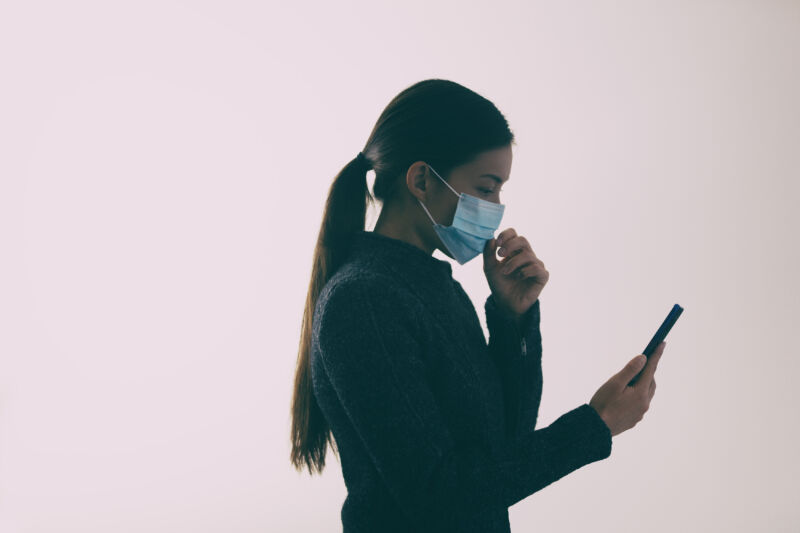
A woman wearing a face mask and checking her phone.

It’s summer 2021. You rent a house in the countryside with a bunch of friends for someone’s birthday. The weather’s gorgeous that weekend, so mostly you’re all outside—pool, firepit, hammock, etc.—but you do all sleep in the same house. And then on Tuesday, you get an alert on your phone that you’ve been exposed to SARS-CoV-2, the virus that causes COVID-19. How likely are you to now have it?

To answer that question, a group of statisticians, data scientists, computer scientists, and epidemiologists in the UK analyzed 7 million people who were notified that they were exposed to COVID-19 by the NHS COVID-19 app in England and Wales between April 2021 and February 2022. They wanted to know if—and how—these app notifications correlated to actual disease transmission. Analyses like this can help ensure that an app designed for the next pathogen could retain efficacy while minimizing social and economic burdens. And it can tell us more about the dynamics of SARS-CoV-2 transmission.

Over 20 million quarantine requests

The NHS COVID-19 app was active on 13 to 18 million smartphones per day in 2021. It used Bluetooth signals to estimate the proximity between those smartphones while maintaining privacy and then alerted people who spent 15 minutes or more at a distance of 2 meters or less from a confirmed case. This led to over 20 million such alerts, each of which came with a request to quarantine—quite a burden.

The researchers found that the app did, in fact, accurately translate the duration and proximity of a COVID-19 exposure to a relevant epidemiological risk score. The app assessed a contact’s risk by multiplying the length of contact, the proximity of contact, and the infectiousness of the index case as determined by how long it had been since the index case started showing symptoms or tested positive.

There was an increasing probability of reported infection as the app’s risk score increased: more contacts whom the app deemed were at a high transmission risk did go on to test positive for COVID-19 within the following two weeks than those who were notified but had lower risk levels. (That’s positive tests that were reported by using the app. Some of the high-risk people probably did not test at all, did not report their test results, or did not report them within the allotted time. So this is an underestimation of the correlation between notification of risk and infection.)

More exposure = higher risk

When the researchers separated the factors contributing to the risk of an exposure, they found that duration was the most important indicator. Household exposures accounted for 6 percent of all contacts but 41 percent of transmissions.

One caveat: The app didn’t record any contextual variables that are known to impact transmission risk, like if people live in an urban or rural area, was the meeting indoors or outdoors, was it during the week or over the weekend, was anyone vaccinated, etc. Including such data could make risk assessment more accurate.

Based on their work, the researchers suggest that an “Amber Alert” stage could have been introduced to the app, in which people deemed to have an interim degree of risk would be guided to get a PCR test rather than immediately jumping to quarantine. Including this intermediate Amber Alert population could have significantly reduced the socioeconomic costs of contact tracing while retaining its epidemiological impact or could have increased its effectiveness for a similar cost. Performing analyses like this early on in the next pandemic to determine how it is transmitted might minimize illness and strain on society.

Nature, 2023.  DOI:  10.1038/s41586-023-06952-2

Contact-tracing software could accurately gauge COVID-19 risk Read More »