
climate lawsuit

estate-of-woman-who-died-in-2021-heat-dome-sues-big-oil-for-wrongful-death

Estate of woman who died in 2021 heat dome sues Big Oil for wrongful death


At least 100 heat-related deaths in Washington state came during the unprecedented heat wave.

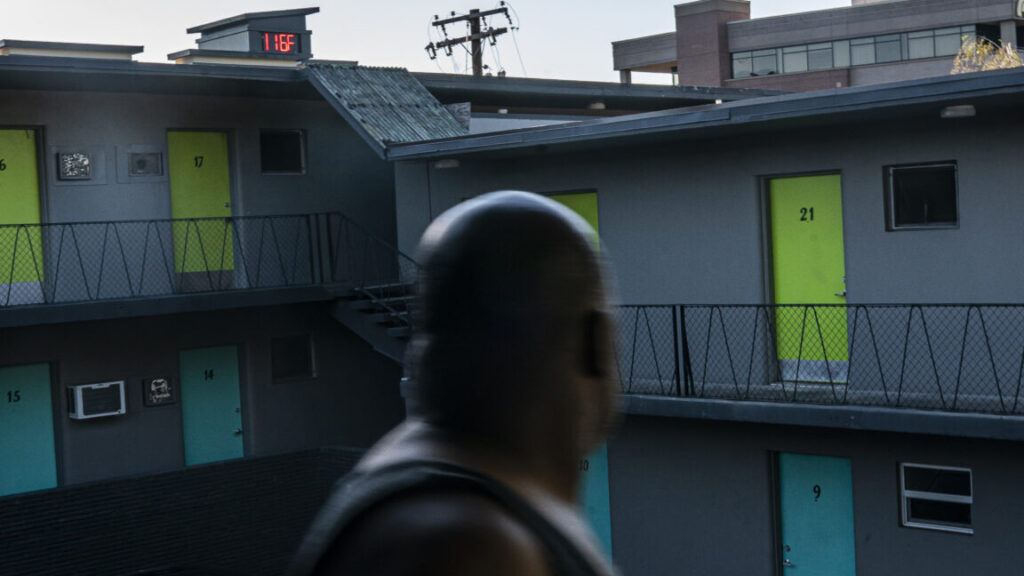
Everett Clayton looks at a digital thermometer on a nearby building that reads 116 degrees while walking to his apartment on June 27, 2021 in Vancouver, Washington. Credit: Nathan Howard/Getty Images

This article originally appeared on Inside Climate News, a nonprofit, non-partisan news organization that covers climate, energy, and the environment. Sign up for their newsletter here.

The daughter of a woman who was killed by extreme heat during the 2021 Pacific Northwest heat dome has filed a first-of-its-kind lawsuit against major oil companies claiming they should be held responsible for her death.

The civil lawsuit, filed on May 29 in King County Superior Court in Seattle, is the first wrongful death case brought against Big Oil in the US in the context of climate change. It attempts to hold some of the world’s biggest fossil fuel companies liable for the death of Juliana Leon, who perished from overheating during the heat dome event, which scientists have determined would have been virtually impossible absent human-caused climate change.

“The extreme heat that killed Julie was directly linked to fossil fuel-driven alteration of the climate,” the lawsuit asserts. It argues that fossil fuel defendants concealed and misrepresented the climate change risks of their products and worked to delay a transition to cleaner energy alternatives. Furthermore, oil companies knew decades ago that their conduct would have dangerous and deadly consequences, the case alleges.

“Defendants have known for all of Julie’s life that their affirmative misrepresentations and omissions would claim lives,” the complaint claims. Leon’s daughter, Misti, filed the suit on behalf of her mother’s estate.

At 65, Juliana Leon was driving home from a medical appointment in Seattle on June 28, 2021, a day when the temperature peaked at 108° Fahrenheit (42.2° Celsius). She had the windows rolled down since the air conditioner in her car wasn’t working, but with the oven-like outdoor temperatures she quickly succumbed to the stifling heat. A passerby found her unresponsive in her car, which was pulled over on a residential street. Emergency responders were unable to revive her. The official cause of death was determined to be hyperthermia, or overheating.

There were at least 100 heat-related deaths in the state from June 26 to July 2, 2021, according to the Washington State Department of Health. That unprecedented stretch of scorching high temperatures was the deadliest weather-related event in Washington’s history. Climate change linked to the burning of fossil fuels intensified this extreme heat event, scientists say.

Misti Leon’s complaint argues that big oil companies “are responsible” for her mother’s climate change-related death. “Through their failure to warn, marketing, distribution, extraction, refinement, transport, and sale of fossil fuels, defendants each bear responsibility for the spike in atmospheric CO2 levels that have resulted in climate change, and thus the occurrence of a virtually impossible weather event and the extreme temperatures of the Heat Dome,” the suit alleges.

Defendants include ExxonMobil, BP, Chevron, Shell, ConocoPhillips, and Phillips 66. Phillips 66 declined to comment; the rest of the companies did not respond to requests for comment.

The plaintiff is represented by the Bechtold Law Firm, based in Missoula, Montana. The lawsuit brings state tort law claims of wrongful death, failure to warn, and public nuisance, and seeks relief in the form of damages as well as a public education campaign to “rectify defendants’ decades of misinformation.”

Major oil and gas companies are currently facing more than two dozen climate damages and deception cases brought by municipal, state, and tribal governments, including a case filed in 2023 by Multnomah County, Oregon, centered around the 2021 Pacific Northwest heat dome. The Leon case, however, is the first climate liability lawsuit filed by an individual against the fossil fuel industry.

“This is the first case that is directly making the connection between the misconduct and lies of big oil companies and a specific, personalized tragedy, the death of Julie Leon,” said Aaron Regunberg, accountability director for Public Citizen’s climate program.

“It puts a human face on it,” Pat Parenteau, emeritus professor of law at Vermont Law and Graduate School, told Inside Climate News.

Climate accountability advocates say the lawsuit could open up a new front for individuals suffering from climate change-related harms to pursue justice against corporate polluters who allegedly lied about the risks of their products.

“Big Oil companies have known for decades that their products would cause catastrophic climate disasters that would become more deadly and destructive if they didn’t change their business model. But instead of warning the public and taking steps to save lives, Big Oil lied and deliberately accelerated the problem,” Richard Wiles, president of the Center for Climate Integrity, said in a statement. “This latest case—the first filed on behalf of an individual climate victim—is another step toward accountability.”

“It’s a model for victims of climate disasters all across the country,” said Regunberg. “Anywhere there’s an extreme weather event with strong attribution science connecting it to climate change, families experiencing a tragedy can file a very similar case.”

Regunberg and several other legal experts have argued that Big Oil could face criminal prosecution for crimes such as homicide and reckless endangerment in the context of climate change, particularly given evidence of internal industry documents suggesting companies like Exxon knew that unabated fossil fuel use could result in “catastrophic” consequences and deaths. A 1996 presentation from an Exxon scientist, for example, outlines projected human health impacts stemming from climate change, including “suffering and death due to thermal extremes.”

The Leon case could “help lay the groundwork” for potential climate homicide cases, Regunberg said. “Wrongful death suits are important. They provide a private remedy to victims of wrongful conduct that causes a death. But we also think there’s a need for public justice, and that’s the role that criminal prosecution is supposed to have,” he told Inside Climate News.

The lawsuit is likely to face a long uphill battle in the courts. Other climate liability cases against these companies brought by government entities have been tied up in procedural skirmishes, some for years, and no case has yet made it to trial.

“In this case we have a grieving woman going up against some of the most powerful corporations in the world, and we’ve seen all the legal firepower they are bringing to bear on these cases,” Regunberg said.

But if the case does eventually make it to trial, it could be a game-changer. “That’s going to be a jury in King County, Washington, of people who probably experienced and remember the Pacific heat dome event, and maybe they know folks who were impacted. I think that’s going to be a compelling case that has a good chance of getting an outcome that provides some justice to this family,” Regunberg said.

Even if it doesn’t get that far, the lawsuit still “marks a significant development in climate liability,” according to Donald Braman, an associate professor of criminal law at Georgetown University and co-author of a paper explaining the case for prosecuting Big Oil for climate homicide.

“As climate attribution science advances, linking specific extreme weather events to anthropogenic climate change with greater confidence, the legal arguments for liability are strengthening. This lawsuit, being the first of its kind for wrongful death in this context, will be closely watched and could set important precedents, regardless of its ultimate outcome,” he said. “It reflects a growing societal demand for accountability for climate-related harms.”

Photo of Inside Climate News

Estate of woman who died in 2021 heat dome sues Big Oil for wrongful death Read More »
montana’s-republican-legislators-fight-back-after-successful-youth-climate-lawsuit

Montana’s Republican legislators fight back after successful youth climate lawsuit


Montana Environmental Policy Act

Republican backlash could lead to changes in Montana’s courts and environmental laws.

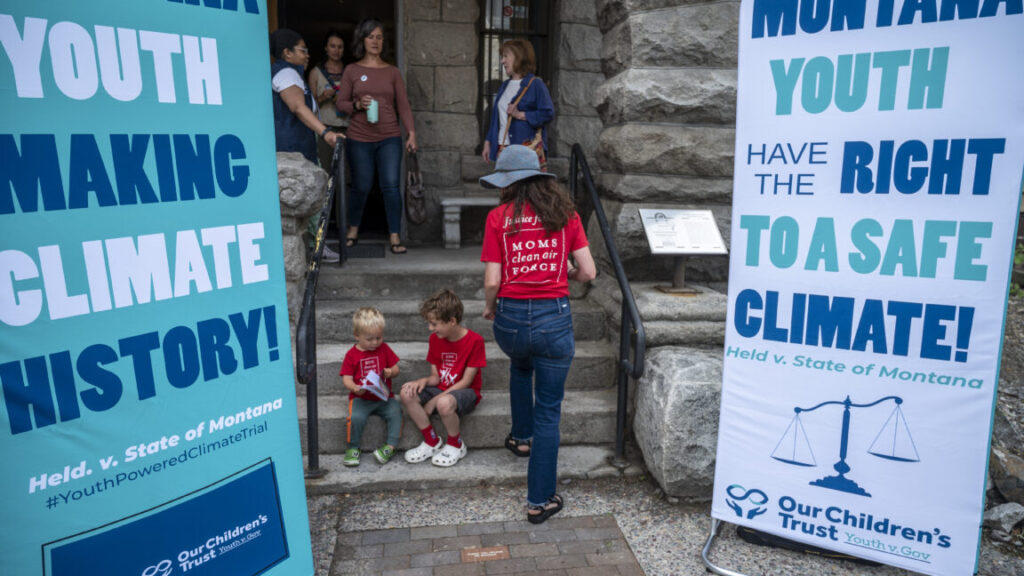
Supporters gather at a theater next to the court house to watch the court proceedings for the nation’s first youth climate change trial at Montana’s First Judicial District Court on June 12, 2023 in Helena, Montana. Credit: William Campbell via Getty Images

This article originally appeared on Inside Climate News, a nonprofit, non-partisan news organization that covers climate, energy, and the environment. Sign up for their newsletter here.

In the wake of a high-profile court decision that upended the state of Montana’s climate policy, Republican lawmakers in the state are pushing a suite of bills that could gut the state’s ability to reduce greenhouse gas emissions.

The full-court legislative press targets the state’s environmental analysis, air quality regulation, and judicial system. It stems from the Held v. Montana case in which 16 young people sued the state over its contributions to climate change, claiming its fossil fuel-centric approach to energy violated the state constitution’s guarantee of a “clean and healthful environment.” The plaintiffs won, and in December 2024, the Montana Supreme Court upheld their victory.

The case “didn’t just make headlines,” Montana Republican Representative Greg Oblander, a sponsor of one of the bills that could hobble climate action in the state, said in a press conference. “It sent shockwaves through the Montana economy.”

He said the case “was an open invitation for activists to weaponize our environmental laws against the very industries that keep Montana running and Montanans employed.”

The fallout of the Held decision animated the breadth of the state’s 90-day legislative session, poised to end by early May, and bills weakening the state’s bedrock environmental policy are almost certain to be signed into law by the state’s Republican governor. Nonetheless, the battle is likely to continue in the courts.

A clean and healthful environment

The Held decision hinged on Montana’s constitutional protections of the environment. Framers in the state’s 1972 Constitutional Convention took the state’s environmental woes seriously. Extractive industries like mining and logging had left a lasting environmental toll on the air, water, and land in the state, and for decades, the Anaconda Copper Mining Company wielded enormous power at the state legislature, resulting in large-scale mining, logging, and other extractive industry. Today, Montana is home to the largest complex of Superfund sites, or government toxic waste cleanups, in the country.

In response to that environmental degradation, Montana ultimately enshrined some of the strongest environmental protections in the country in its constitution, culminating in the right to “a clean and healthful environment.”

That right played a central role in the Held case. During the trial in the summer of 2023, the state argued that Montana’s contribution to greenhouse gases is but a fraction of a fraction of the world’s pool of emissions.

“Montana’s emissions are simply too minuscule to make any difference,” the state’s attorney argued. “Climate change is a global issue that effectively relegates Montana’s role to that of the spectator.” Meanwhile, the attorney for the young plaintiffs argued that the state’s contributions were equivalent to that of entire countries like the Netherlands, Pakistan, or Argentina, and was actively degrading Montana’s environment.

When the plaintiffs won the case, the state appealed to the Montana Supreme Court. In December 2024, that court also ruled against the state. “Montana’s right to a clean and healthful environment and environmental life support system includes a stable climate system,” Judge Kathy Seeley wrote in the court’s decision.

That decision also hinged on what the state considers when it conducts environmental review.

In 2011, the Montana legislature barred analyses required by the Montana Environmental Policy Act, or MEPA, from considering impacts outside the state. In 2023 the legislature honed MEPA’s focus even more, passing a provision that said greenhouse gas emissions could not be considered in the state’s environmental analyses. That limitation, the Supreme Court ruled, was unconstitutional. MEPA analyses, according to the decision, would have to account for projects’ emissions. Less than a month after the Supreme Court’s decision, Republican legislators set to figuring out how to minimize its impact.

Legislation aims to undercut the Montana Environmental Policy Act

“The backlash [to Held] is profound,” said Anne Hedges, executive director of the Montana Environmental Information Center (MEIC), an organization dedicated to protecting the state’s land, air, and water, in an interview. The pushback, in particular, comes from Republicans in the state, who have strong majorities in both chambers of the state legislature. “Their goal is to prevent the state from being able to do anything to address climate change.”

Part of that backlash came in bills that aimed directly at MEPA. One bill, for example, limits the state to looking only at direct, proximate impacts of projects. This would make upstream or downstream impacts outside the scope of environmental analyses.

In, say, a project to expand a coal mine, the direct emissions associated with extracting the coal would be analyzed, according to the bill, but anything that happens next would be left out.

Montana produces about 5 percent of the country’s coal and contains the largest coal reserves in the US, according to the US Energy Information Administration. Colstrip, the largest coal plant in the state—and the dirtiest in the nation—has a footprint larger than the biggest city in Montana. In 2021 alone, the plant emitted about 11 million tons of CO2 into the atmosphere. But, under this particular bill, the emissions from burning that coal would not be considered as part of any required MEPA analysis of the plant or of mines that provide it with fuel.

“The Held decision was a gift-wrapped decision for radical environmental activists, an open door for endless lawsuits designed to shut down Montana’s fossil fuel industry,” the sponsor of that bill, Montana Republican Senator Wylie Galt, said in a press conference. “It had nothing to do with protecting our environment and everything to do with weaponizing the courts to strangle our economy.”

But, to opponents of the legislation, it is an intentional effort to ignore the reality of what’s driving climate change. “There’s never anything else to do with coal,” Hedges said. “You burn coal.”

Another bill strikes language that connects MEPA to Montana’s right to a clean and healthful environment and eliminates the ability of analyses to look at long-term impacts of projects. “Montana is a resource-rich state,” that bill’s sponsor, Republican Representative Brandon Ler, said in a press conference. “We have energy, we have agriculture, and we have timber. These industries aren’t just sectors on a spreadsheet. They fund our schools, support our businesses, and keep families together.” Neither Galt nor Ler responded to interview requests for this article.

A final piece of legislation attacking the state’s climate policy, sponsored by Republican Representative Greg Oblander, prevents Montana from implementing air quality standards stricter than those of the federal government. “It’s about making sure that when businesses want to invest in our state, they can do it without fear of being buried under layers of unnecessary regulations,” Oblander said. “Montana is open for business, but only if we keep it that way.”

Taken together, the bills effectively “wash [the legislature’s] hands of the whole problem and there is no way to enforce our right to a healthy climate,” Hedges said.

Proponents of the suite of bills, including mining and oil organizations, the state’s departments of environmental quality and natural resources, chambers of commerce, and other groups, said the bills offer stability, predictability, and certainty. Montana’s emissions, they argued, are but a drop in the global bucket.

“We all share the same air,” said John Iverson, with the Treasure State Resources Association, in a hearing on the air quality bill. “Making one table in a bar the non-smoking table doesn’t do much to improve the air quality. Making one corner of the pool the non-peeing section doesn’t improve your swimming experience.”

Some lawmakers and defendants also questioned the extent to which human-caused climate change is happening at all. “There is a strong sentiment of climate denial in the Capitol,” Hedges said. “They’ll complain about droughts, they’ll complain about wildfires, they will complain about all of the impacts either caused or exacerbated by climate change… but they won’t admit what the problem is and they refuse to do anything about it.”

Other testimony by lawmakers and lobbyists in House and Senate hearings also focused on the state’s constitutionally ordained rights. Along with a clean and healthful environment, the Montana Constitution also grants rights to pursuing life’s basic necessities, protecting liberties and protecting property. The MEPA bills, their supporters argued, help strike a balance between these rights when they butt heads.

In all the hearings, voices opposing the bills—including those of MEIC; conservation groups like Backcountry Hunters and Anglers, Montana Audubon, and Montana Conservation Voters; physicians organizations; citizens and more—have far outnumbered those in favor of the legislation. Testimony focused on the real-time health and environmental impacts of climate change, the importance of the MEPA process and the environmental protections in the Montana constitution.

One additional bill, put forth by a coalition of Democrats, would have revised MEPA to follow the court’s ruling in the Held decision, but it was killed in committee.

Politicizing the judiciary

While legislation directly reacting to Held focused on MEPA and other statutes, another legislative push from Republicans took aim at the branch of government responsible for the decision: the judiciary. Republican frustration with the court system had been building for years, fueled by the Held saga along with other court decisions that blocked laws passed by the legislature rolling back rights for transgender people and abortion access.

After the Held decision, Montana’s Republican Gov. Greg Gianforte put out a statement: “This Court continues to step outside of its lane to tread on the right of the Legislature, the elected representatives of the people, to make policy. This decision does nothing more than declare open season on Montana’s all-of-the-above approach to energy.”

An interim committee of Republican lawmakers put forth more than 27 bills to reform the judiciary ahead of this year’s legislative session. Two could have huge impacts on climate decisions in the courts by politicizing the judiciary. One bill would create a “court of chancery” specifically designed to tackle constitutional questions stemming from legislation. The three judges in that court would be appointed by the governor.

Another bill would politicize the state’s judicial races. Currently, judicial candidates—including state Supreme Court justices—are elected with no official party affiliation. The legislation would make the races partisan, meaning judges can run as Republicans or Democrats. Republican advocates of the legislation contend that through lobbying and campaign contributions, politics have entered the court system already, and this legislation would, as Gianforte argued in his “State of the State” address, “bring light into this darkness” by allowing voters to know the values of the judges for whom they’re voting.

Republican legislators have called the Held plaintiffs and the judges who decided in their favor radicals, activists, even, disparagingly, “little Greta Thunbergs.” Ler, sponsor of one of the MEPA bills, said in a press conference that the judges’ decision in the Held case was driven by an agenda beyond the desire to enforce the constitution’s requirement of a healthy environment. “This isn’t about climate,” he said. “It’s about control.”

Opponents of the judiciary bills—including Montana Supreme Court Chief Justice Cory Swanson—stressed the importance of an independent judicial system as part of the government’s checks and balances.

“You are considering a number of bills that well-respected attorneys are telling you violate the constitutional separation of powers,” Swanson warned lawmakers. “I urge you to listen to those arguments.”

Hedges with the MEIC sees the courts as a scapegoat for those pushing bills to politicize the judiciary. Republican lawmakers, she said, “bitch about the courts on the one hand, but then they give the courts nowhere to turn except to overturn their bills that are unconstitutional. It’s like this little round robin the legislature set up.”

What’s next

All three bills designed to mitigate the impact of Held by limiting the extent to which MEPA can analyze greenhouse gas emissions and the level at which the state can regulate them have passed both chambers of the legislature on party-line votes. Gianforte’s office declined to give an interview about the climate issues being addressed in the legislature, but the governor said in a press conference that he’s looking forward to getting the MEPA bills to his desk.

The bills targeting the judiciary, however, have died—despite being championed by the governor and other powerful Republicans in the legislature. However, things could change. The legislative session will wrap up by early May, and there’s a chance the bills could be revived in another form.

Hedges said the MEPA and air quality bills in particular continue to infringe on Montanans’ right to a clean and healthful environment, and they’re likely to end up in the courts.

“It’s depressing,” she said. “It’s going to take us years to unwind what they’re doing here. And they [Republican lawmakers] know it; to them, that’s a win.”

Photo of Inside Climate News

Montana’s Republican legislators fight back after successful youth climate lawsuit Read More »