CDC

internet-archive-played-crucial-role-in-tracking-shady-cdc-data-removals

Internet Archive played crucial role in tracking shady CDC data removals


Internet Archive makes it easier to track changes in CDC data online.

When thousands of pages started disappearing from the Centers for Disease Control and Prevention (CDC) website late last week, public health researchers quickly moved to archive deleted public health data.

Soon, researchers discovered that the Internet Archive (IA) offers one of the most effective ways to both preserve online data and track changes on government websites. For decades, IA crawlers have collected snapshots of the public Internet, making it easier to compare current versions of websites to historic versions. And IA also allows users to upload digital materials to further expand the web archive. Both aspects of the archive immediately proved useful to researchers assessing how much data the public risked losing during a rapid purge following a pair of President Trump’s executive orders.

Part of a small group of researchers who managed to download the entire CDC website within days, virologist Angela Rasmussen helped create a public resource that combines CDC website information with deleted CDC datasets. Those datasets, many of which were previously in the public domain for years, were uploaded to IA by an anonymous user, “SheWhoExists,” on January 31. Moving forward, Rasmussen told Ars that IA will likely remain a go-to tool for researchers attempting to closely monitor for any unexpected changes in access to public data.

IA “continually updates their archives,” Rasmussen said, which makes IA “a good mechanism for tracking modifications to these websites that haven’t been made yet.”

The CDC website is being overhauled to comply with two executive orders from January 20, the CDC told Ars. The Defending Women from Gender Ideology Extremism and Restoring Biological Truth to the Federal Government requires government agencies to remove LGBTQ+ language that Trump claimed denies “the biological reality of sex” and is likely driving most of the CDC changes to public health resources. The other executive order the CDC cited, the Ending Radical And Wasteful Government DEI Programs And Preferencing, would seemingly largely only impact CDC employment practices.

Additionally, “the Office of Personnel Management has provided initial guidance on both Executive Orders and HHS and divisions are acting accordingly to execute,” the CDC told Ars.

Rasmussen told Ars that the deletion of CDC datasets is “extremely alarming” and “not normal.” While some deleted pages have since been restored in altered versions, removing gender ideology from CDC guidance could put Americans at heightened risk. That’s another emerging problem that IA’s snapshots could help researchers and health professionals resolve.

“I think the average person probably doesn’t think that much about the CDC’s website, but it’s not just a matter of like, ‘Oh, we’re going to change some wording’ or ‘we’re going to remove these data,” Rasmussen said. “We are actually going to retool all the information that’s there to remove critical information about public health that could actually put people in danger.”

For example, altered Mpox transmission data removed “all references to men who have sex with men,” Rasmussen said. “And in the US those are the people who are not the only people at risk, but they’re the people who are most at risk of being exposed to Mpox. So, by removing that DEI language, you’re actually depriving people who are at risk of information they could use to protect themselves, and that eventually will get people hurt or even killed.”

Likely the biggest frustration for researchers scrambling to preserve data is dealing with broken links. On social media, Rasmussen has repeatedly called for help flagging broken links to ensure her team’s archive is as useful as possible.

Rasmussen’s group isn’t the only effort to preserve the CDC data. Some are creating niche archives focused on particular topics, like journalist Jessica Valenti, who created an archive of CDC guidelines on reproductive rights issues, sexual health, intimate partner violence, and other data the CDC removed online.

Niche archives could make it easier for some researchers to quickly survey missing data in their field, but Rasmussen’s group is hoping to take next steps to make all the missing CDC data more easily discoverable in their archive.

“I think the next step,” Rasmussen said, “would be to try to fix anything in there that’s broken, but also look into ways that we could maybe make it more browsable and user-friendly for people who may not know what they’re looking for or may not be able to find what they’re looking for.”

CDC advisers demand answers

The CDC has been largely quiet about the deleted data, only pointing to Trump’s executive orders to justify removals. That could change by February 7. That’s the deadline when a congressionally mandated advisory committee to the CDC’s acting director, Susan Monarez, asked for answers in an open letter to a list of questions about the data removals.

“It has been reported through anonymous sources that the website changes are related to new executive orders that ban the use of specific words and phrases,” their letter said. “But as far as we are aware, these unprecedented actions have yet to be explained by CDC; news stories indicate that the agency is declining to comment.”

At the top of the committee’s list of questions is likely the one frustrating researchers most: “What was the rationale for making these datasets and websites inaccessible to the public?” But the committee also importantly asked what analysis was done “of the consequences of removing access to these datasets and website” prior to the removals. They also asked how deleted data would be safeguarded and when data would be restored.

It’s unclear if the CDC will be motivated to respond by the deadline. Ars reached out to one of the committee members, Joshua Sharfstein—a physician and vice dean for Public Health Practice and Community Engagement at Johns Hopkins University—who confirmed that as of this writing, the CDC has not yet responded. And the CDC did not respond to Ars’ request to comment on the letter.

Rasmussen told Ars that even temporary removals of CDC guidance can disrupt important processes keeping Americans healthy. Among the potentially most consequential pages briefly removed were recommendations from the congressionally mandated Advisory Committee on Immunization Practices (ACIP).

Those recommendations are used by insurance companies to decide who gets reimbursed for vaccines and by physicians to deduce vaccine eligibility, and Rasmussen said they “are incredibly important for the entire population to have access to any kind of vaccination.” And while, for example, the Mpox vaccine recommendations were eventually restored unaltered, Rasmussen told Ars that she suspects that “one of the reasons” preventing interference currently with ACIP is that it’s mandated by Congress.

Seemingly ACIP could be weakened by the new administration, Rasmussen suggested. She warned that Trump’s pick for CDC director, Dave Weldon, “is an anti-vaxxer” (with a long history of falsely linking vaccines to autism) who may decide to replace ACIP committee members with anti-vaccine advocates or move to dissolve ACIP. And any changes in recommendations could mean “insurance companies aren’t going to cover vaccinations [and that] physicians will not recommend vaccination.” And that could mean “vaccination will go down and we’ll start having outbreaks of some of these vaccine-preventable diseases.”

“If there’s a big polio outbreak, that is going to result in permanently disabled children, dead children—it’s really, really serious,” Rasmussen said. “So I think that people need to understand that this isn’t just like, ‘Oh, maybe wear a mask when you’re at the movie theater’ kind of CDC guidance. This is guidance that’s really fundamental to our most basic public health practices, and it’s going to cause widespread suffering and death if this is allowed to continue.”

Seeding deleted data and doing science to fight back

On Bluesky, Rasmussen led one of many charges to compile archived links and download CDC data so that researchers can reference every available government study when advancing public health knowledge.

“These data are public and they are ours,” Rasmussen posted. “Deletion disobedience is one way to fight back.”

As Rasmussen sees it, deleting CDC data is “theft” from the public domain and archiving CDC data is simply taking “back what is ours.” But at the same time, her team is also taking steps to be sure the data they collected can be lawfully preserved. Because the CDC website has not been copied and hosted on a server, they expect their archive should be deemed lawful and remain online.

“I don’t put it past this administration to try to shut this stuff down by any means possible,” Rasmussen told Ars. “And we wanted to make sure there weren’t any sort of legal loopholes that would jeopardize anybody in the group, but also that would potentially jeopardize the data.”

It’s not clear if some data has already been lost. Seemingly the same user who uploaded the deleted datasets to IA posted on Reddit, clarifying that while the “full” archive “should contain all public datasets that were available” before “anything was scrubbed,” it likely only includes “most” of the “metadata and attachments.” So, researchers who download the data may still struggle to fill in some blanks.

To help researchers quickly access the missing data, anyone can help the IA seed the datasets, the Reddit user said in another post providing seeding and mirroring instructions. Currently dozens are seeding it for a couple hundred peers.

“Thank you to everyone who requested this important data, and particularly to those who have offered to mirror it,” the Reddit user wrote.

As Rasmussen works with her group to make their archive more user-friendly, her plan is to help as many researchers as possible fight back against data deletion by continuing to reference deleted data in their research. She suggested that effort—doing science that ignores Trump’s executive orders—is perhaps a more powerful way to resist and defend public health data than joining in loud protests, which many researchers based in the US (and perhaps relying on federal funding) may not be able to afford to do.

“Just by doing things and standing up for science with your actions, rather than your words, you can really make, I think, a big difference,” Rasmussen said.

Photo of Ashley Belanger

Ashley is a senior policy reporter for Ars Technica, dedicated to tracking social impacts of emerging policies and new technologies. She is a Chicago-based journalist with 20 years of experience.

Internet Archive played crucial role in tracking shady CDC data removals Read More »

sick-right-now?-flu-is-resurging-to-yet-a-higher-peak-this-season.

Sick right now? Flu is resurging to yet a higher peak this season.

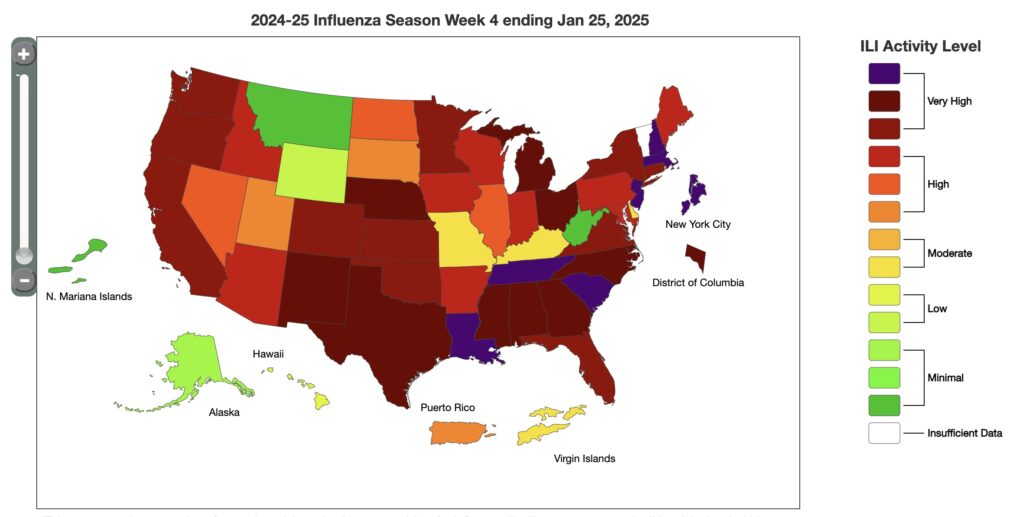
Currently, flu activity is categorized as “very high” in 29 states, and “high” in 15. States in the South are ablaze with flu. Louisiana, Tennessee, and South Carolina are at the highest “very high” level. But parts of the Northeast corridor are also seeing extremely high activity, including Massachusetts, New Hampshire, New Jersey, and New York City.

Credit: CDC

As often is the case in flu seasons, the age group hardest hit this year are children ages 0 to 4. The CDC recorded 16 pediatric deaths linked to flu in week 4 of the season, bringing the season’s total pediatric deaths to 47.

Overall hospitalizations are up. The Centers for Disease Control and Prevention estimates that there have been at least 20 million illnesses, 250,000 hospitalizations, and 11,000 deaths from flu so far this season. About 44 percent of US adults have gotten their flu shot, far below the public health goal of 70 percent.

Laboratory surveillance of influenza cases in week 4 indicates that nearly all of the cases are from influenza A viruses, about an even split between H1N1 and H3N2, which has been the case over the course of the season. Around 2 percent of cases were the influenza B Victoria lineage.

Sick right now? Flu is resurging to yet a higher peak this season. Read More »

china-is-having-standard-flu-season-despite-widespread-hmpv-fears

China is having standard flu season despite widespread HMPV fears

There’s a good chance you’ve seen headlines about HMPV recently, with some touting “what you need to know” about the virus, aka human metapneumovirus. The answer is: not much.

It’s a common, usually mild respiratory virus that circulates every year, blending into the throng of other seasonal respiratory illnesses that are often indistinguishable from one another. (The pack includes influenza virus, respiratory syncytial virus (RSV), adenovirus, parainfluenza virus, common human coronaviruses, bocavirus, rhinovirus, enteroviruses, and Mycoplasma pneumoniae, among others.) HMPV is in the same family of viruses as RSV.

As one viral disease epidemiologist at the US Centers for Disease Control summarized in 2016, it’s usually “clinically indistinguishable” from other bog-standard respiratory illnesses, like seasonal flu, that cause cough, fever, and nasal congestion. For most, the infection is crummy but not worth a visit to a doctor. As such, testing for it is limited. But, like other common respiratory infections, it can be dangerous for children under age 5, older adults, and those with compromised immune systems. It was first identified in 2001, but it has likely been circulating since at least 1958.

The situation in China

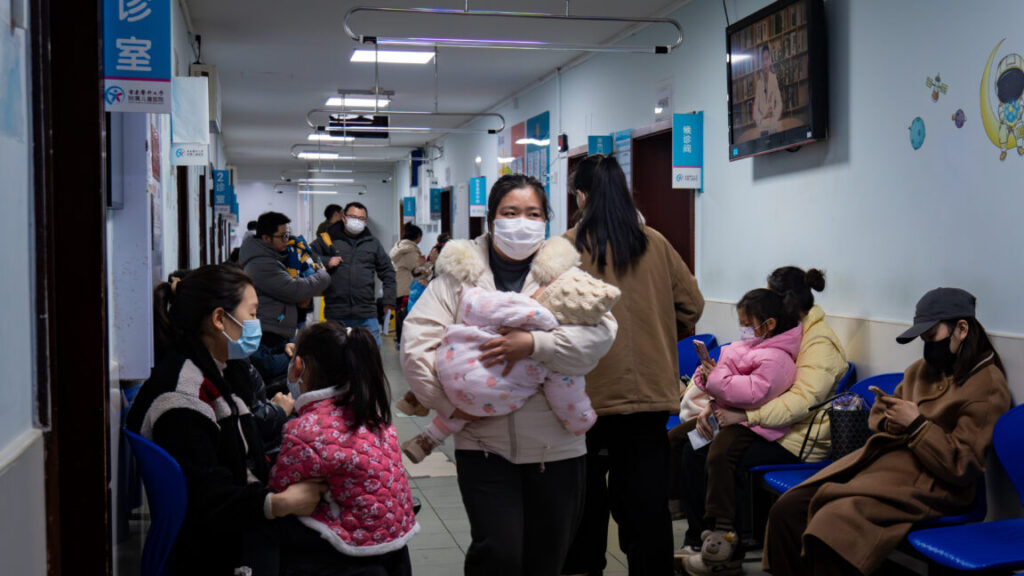
The explosion of interest in HMPV comes after reports of a spike of HMPV infections in China, which allegedly led to hordes of masked patients filling hospitals. But none of that appears to be accurate. While HMPV infections have risen, the increase is not unusual for the respiratory illness season. Further, HMPV is not the leading cause of respiratory illnesses in China right now; the leading cause is seasonal flu. And the surge in seasonal flu is also within the usual levels seen at this time of year in China.

Last week, the Chinese Center for Disease Control and Prevention released its sentinel respiratory illness surveillance data collected in the last week of December. It included the test results of respiratory samples taken from outpatients. Of those, 30 percent were positive for flu (the largest share), a jump of about 6 percent from the previous week (the largest jump). Only 6 percent were positive for HMPV, which was about the same detection rate as in the previous week (there was a 0.1 percent increase).

China is having standard flu season despite widespread HMPV fears Read More »

as-us-marks-first-h5n1-bird-flu-death,-who-and-cdc-say-risk-remains-low

As US marks first H5N1 bird flu death, WHO and CDC say risk remains low

The H5N1 bird flu situation in the US seems more fraught than ever this week as the virus continues to spread swiftly in dairy cattle and birds while sporadically jumping to humans.

On Monday, officials in Louisiana announced that the person who had developed the country’s first severe H5N1 infection had died of the infection, marking the country’s first H5N1 death. Meanwhile, with no signs of H5N1 slowing, seasonal flu is skyrocketing, raising anxiety that the different flu viruses could mingle, swap genetic elements, and generate a yet more dangerous virus strain.

But, despite the seemingly fever-pitch of viral activity and fears, a representative for the World Health Organization today noted that risk to the general population remains low—as long as one critical factor remains absent: person-to-person spread.

“We are concerned, of course, but we look at the risk to the general population and, as I said, it still remains low,” WHO spokesperson Margaret Harris told reporters at a Geneva press briefing Tuesday in response to questions related to the US death. In terms of updating risk assessments, you have to look at how the virus behaved in that patient and if it jumped from one person to another person, which it didn’t, Harris explained. “At the moment, we’re not seeing behavior that’s changing our risk assessment,” she added.

In a statement on the death late Monday, the US Centers for Disease Control and Prevention emphasized that no human-to-human transmission has been identified in the US. To date, there have been 66 documented human cases of H5N1 infections since the start of 2024. Of those, 40 were linked to exposure to infected dairy cows, 23 were linked to infected poultry, two had no clear source, and one case—the fatal case in Louisiana—was linked to exposure to infected backyard and wild birds.

As US marks first H5N1 bird flu death, WHO and CDC say risk remains low Read More »

flu-surges-in-louisiana-as-health-department-barred-from-promoting-flu-shots

Flu surges in Louisiana as health department barred from promoting flu shots

The statement seemed to offer an assurance that other vaccines were not subject to the new restrictions. “Changes regarding seasonal vaccines like COVID and influenza do not change the Department’s policy or messaging regarding childhood immunizations,” it read.

This flu season, the health department has reportedly canceled standard vaccination events and clinics. On social media, the department has avoided mentioning flu shots in posts about the flu, instead advising people to wash their hands and cover their coughs.

While Louisiana is seeing an early surge in influenza, the rest of the country is on an upward trend in what appears to be a normal-looking season so far. Nationally, the percentage of doctor visits that were for ILIs is 3.8 percent, with the upswing in ILI activity similar to what was seen in the 2019–2020 flu season at this point in the year. At the peak of flu seasons, the percentage of visits for ILIs usually tops out around 7 percent to 8 percent.

US ILI activity charted by week across several flu seasons Credit: CDC

Two children died last week of flu, bringing the season’s total pediatric deaths to four. In the 2023–2024 season, 206 children died with influenza-associated disease. Most of the deaths occurred in early 2024.

COVID-19 is also ramping up a winter wave. While standard disease burden indicators—hospitalization and deaths—are low, they’re trending positive. Wastewater surveillance, meanwhile, is showing a steep incline, with levels of the virus being detected at “moderate” levels.

Flu surges in Louisiana as health department barred from promoting flu shots Read More »

louisiana-resident-in-critical-condition-with-h5n1-bird-flu

Louisiana resident in critical condition with H5N1 bird flu

The Louisiana resident infected with H5N1 bird flu is hospitalized in critical condition and suffering from severe respiratory symptoms, the Louisiana health department revealed Wednesday.

The health department had reported the presumptive positive case on Friday and noted the person was hospitalized, as Ars reported. But a spokesperson had, at the time, declined to provide Ars with the patient’s condition or further details, citing patient confidentiality and an ongoing public health investigation.

This morning, the Centers for Disease Control and Prevention announced that it had confirmed the state’s H5N1 testing and determined that the case “marks the first instance of severe illness linked to the virus in the United States.”

In a follow-up, the health department spokesperson Emma Herrock was able to release more information about the case. In addition to being in critical condition with severe respiratory symptoms, the person is reported to be over the age of 65 and has underlying health conditions.

Further, the CDC collected partial genetic data of the H5N1 strain infecting the patient, finding it to be of D1.1. genotype, which has been detected in wild birds and some poultry in the US. Notably, it is the same genotype seen in a Canadian teenager who was also hospitalized in critical condition from the virus last month. The D1.1. genotype is not the same as the one circulating in US dairy cows, which is the B3.13 genotype.

Louisiana resident in critical condition with H5N1 bird flu Read More »

splash-pads-really-are-fountains-of-fecal-material;-cdc-reports-10k-illnesses

Splash pads really are fountains of fecal material; CDC reports 10K illnesses

Once infectious material gets into the water, disinfection systems that aren’t working properly or are inadequate can allow pathogens to gush from every nozzle. Splash pads aren’t unique in having to handle sick children in poopy swim diapers—but they are unique in how they are regulated. That is, in some places, they’re not regulated at all. Splash pads are designed to not have standing water, therefore reducing the risk of young children drowning. But, because they lack standing water, they are sometimes deemed exempt from local health regulations. Before 2000, only 13 states regulated splash pads. Though many states have since added regulations, some did so only after splash pad-linked outbreaks were reported.

Downpour of disease

The primary method for keeping recreational water free of infectious viruses and bacteria is chlorinating it. However, maintaining germ-killing chlorine concentration is especially difficult for splash pads because the jets and sprays aerosolize chlorine, lowering the concentration.

Still, in most splash-pad linked outbreaks, standard chlorine concentrations aren’t enough anyway. The most common pathogen to cause an outbreak at splash pads is the parasite Cryptosporidium, aka Crypto. The parasite’s hardy spores, called oocysts, are extremely tolerant of chlorine, surviving in water with the standard chlorine concentration (1 ppm free chlorine) for over seven days. (Other germs die in minutes.) In splash pads that might not even have that standard chlorine concentration, Crypto flourishes and can cause massive outbreaks.

In 2023, the CDC recommended new health codes that call for “secondary disinfection” methods to keep Crypto at bay, including disinfection systems using ozone or ultraviolet light. Another possible solution is to have “single-pass” splash pads that don’t recirculate water.

In all, to keep splash pads from being geysers of gastrointestinal parasites and pathogens, various changes have to happen, the CDC experts say.

“Prevention of waterborne disease outbreaks at splash pads requires changes in user behavior; recreational venue code updates; and improved venue design, construction, operation, and management of facilities,” they conclude. But it should all start with keeping kids from sitting on jets and drinking the water.

Splash pads really are fountains of fecal material; CDC reports 10K illnesses Read More »

slivered-onions-are-likely-cause-of-mcdonald’s-e.-coli-outbreak,-cdc-says

Slivered onions are likely cause of McDonald’s E. coli outbreak, CDC says

Slivered onions are the likely source of the multi-state E. coli outbreak linked to McDonald’s Quarter Pounder burgers that continues to grow, the Centers for Disease Control and Prevention announced Wednesday.

Onions were one of two primary suspects when the CDC announced the outbreak on October 22, with the other being the beef patties used on the burgers. But onions quickly became the leading suspect. The day after the CDC’s announcement, McDonald’s onion supplier, Taylor Farms, recalled peeled and diced yellow onion products and several other fast food chains took onions off the menu as a precaution. (No other restaurants have been linked to the outbreak to date.)

According to the CDC, traceback information and epidemiological data collected since then have all pointed to the onions and, according to McDonald’s, state and federal testing of the beef patties has all come back negative.

In the CDC’s update Wednesday, the agency reported that 15 more people were identified as sickened in the outbreak, including five who were hospitalized. In all, that brings the outbreak to 90 cases, including 27 hospitalizations and one death, which collectively span 13 states.

All the newly reported illnesses had onsets prior to the October 23 onion recall. The most recent illness onset was October 16. Additional illnesses may be reported, as it can take three to four weeks to link illnesses to an outbreak.

“Due to the product actions taken by McDonald’s and Taylor Farms, the CDC believes the continued risk to the public is very low,” the agency said in a media alert.

McDonald’s says that Quarter Pounders—without onions—will return to the menus of affected restaurants this week. Prior to the recall, 900 restaurants had received onions from Taylor Farms, including in Colorado, Kansas, and Wyoming, as well as portions of Idaho, Iowa, Missouri, Montana, Nebraska, Nevada, New Mexico, Oklahoma, and Utah.

Slivered onions are likely cause of McDonald’s E. coli outbreak, CDC says Read More »

mcdonald’s-e.-coli-outbreak-grows-by-50%-in-3-days-as-lawsuits-mount

McDonald’s E. coli outbreak grows by 50% in 3 days as lawsuits mount

Twenty-six more cases have been identified in a multistate E. coli O157:H7 outbreak linked to McDonald’s Quarter Pounder burgers, the Centers for Disease Control and Prevention announced Friday.

The 26 new cases represent a 50 percent increase in the case count from October 22, bringing the total to 75 cases. With the new cases, health officials also reported 12 more hospitalizations, including one new adult case of hemolytic uremic syndrome (HUS), a severe complication to an E. coli O157:H7 infection. Three more states are also newly affected: Michigan, New Mexico, and Washington.

In all, the outbreak now stands at 75 cases, including 22 hospitalizations and two cases of HUS, across 13 states. The number of deaths linked to the outbreak remains at one. The most recent illness onset for the cases identified so far is October 10.

The states with cases now include: Colorado (26 cases), Montana (13), Nebraska (11), New Mexico (5), Utah (5), Missouri (4), Wyoming (4), and Michigan (2), and one case each in Iowa, Kansas, Oregon, Washington, and Wisconsin.

The source of the outbreak has not yet been confirmed, but investigators have focused on the beef patties and slivered onions used on McDonald’s Quarter Pounders. McDonald’s immediately pulled the popular burger off the menu and paused distribution of the slivered onions from affected restaurants when the CDC announced the outbreak Tuesday. McDonald’s considered the affected areas to be Colorado, Kansas, Utah, and Wyoming, as well as portions of Idaho, Iowa, Missouri, Montana, Nebraska, Nevada, New Mexico, and Oklahoma.

Onions recalled and destroyed

On Wednesday, one of McDonald’s onion suppliers, Taylor Farms, recalled peeled and diced yellow onion products. Taylor Farms told Bloomberg earlier this week that its testing had not turned up E. coli, but that it decided to issue the recall anyway.

McDonald’s E. coli outbreak grows by 50% in 3 days as lawsuits mount Read More »

taco-bell,-kfc,-pizza-hut,-burger-king-pull-onions-amid-mcdonald’s-outbreak

Taco Bell, KFC, Pizza Hut, Burger King pull onions amid McDonald’s outbreak

On Thursday, Yum Brands—owner of KFC, Pizza Hut, and Taco Bell—followed that lead, saying it, too, would remove fresh onions from its chains’ menus at some locations, according to Reuters. Restaurant Brands International, owner of Burger King, also did the same.

“We’ve been told by corporate to not use any onions going forward for the foreseeable future,” Maria Gonzales, the on-duty manager inside a Burger King in Longmont, Colorado, told Reuters on Wednesday. “They’re off our menu.”

As of Thursday, the case count in the E. coli outbreak remained at 49 people in 10 states. Of those, 10 were hospitalized, including a child with a life-threatening complication. One older person in Colorado has died.

The states with cases include: Colorado (26 cases), Nebraska (9), Utah (4), Wyoming (4), and one case each in Iowa, Kansas, Missouri, Montana, Oregon, and Wisconsin.

McDonald’s removed Quarter Pounders and slivered onions from restaurant menus in Colorado, Kansas, Utah, Wyoming, and portions of Idaho, Iowa, Missouri, Montana, Nebraska, Nevada, New Mexico, and Oklahoma. In a statement, McDonald’s said that for these restaurants, its onions are “sourced by a single supplier that serves three distribution centers. The fast-food giant continues to serve other beef burgers and diced onions at impacted locations.

Taco Bell, KFC, Pizza Hut, Burger King pull onions amid McDonald’s outbreak Read More »

bird-flu-hit-a-dead-end-in-missouri,-but-it’s-running-rampant-in-california

Bird flu hit a dead end in Missouri, but it’s running rampant in California

So, in all, Missouri’s case count in the H5N1 outbreak will stay at one for now, and there remains no evidence of human-to-human transmission. Though both the household contact and the index case had evidence of an exposure, their identical blood test results and simultaneous symptom development suggest that they were exposed at the same time by a single source—what that source was, we may never know.

California and Washington

While the virus seems to have hit a dead end in Missouri, it’s still running rampant in California. Since state officials announced the first dairy herd infections at the end of August, the state has now tallied 137 infected herds and at least 13 infected dairy farm workers. California, the country’s largest dairy producer, now has the most herd infections and human cases in the outbreak, which was first confirmed in March.

In the briefing Thursday, officials announced another front in the bird flu fight. A chicken farm in Washington state with about 800,000 birds became infected with a different strain of H5 bird flu than the one circulating among dairy farms. This strain likely came from wild birds. While the chickens on the infected farms were being culled, the virus spread to farmworkers. So far, two workers have been confirmed to be infected, and five others are presumed to be positive.

As of publication time, at least 31 humans have been confirmed infected with H5 bird flu this year.

With the spread of bird flu in dairies and the fall bird migration underway, the virus will continue to have opportunities to jump to mammals and gain access to people. Officials have also expressed anxiety as seasonal flu ramps up, given influenza’s penchant for swapping genetic fragments to generate new viral combinations. The reassortment and exposure to humans increases the risk of the virus adapting to spread from human to human and spark an outbreak.

Bird flu hit a dead end in Missouri, but it’s running rampant in California Read More »

us-vaccinations-fall-again-as-more-parents-refuse-lifesaving-shots-for-kids

US vaccinations fall again as more parents refuse lifesaving shots for kids

Measles, whopping cough, polio, tetanus—devastating and sometimes deadly diseases await comebacks in the US as more and more parents are declining routine childhood vaccines that have proved safe and effective.

The vaccination rates among kindergartners have fallen once again, dipping into the range of 92 percent in the 2023–2024 school year, down from about 93 percent the previous school year and 95 percent in 2019–2020. That’s according to an analysis of the latest vaccination data published today by the Centers for Disease Control and Prevention.

The analysis also found that vaccination exemptions rose to an all-time high of 3.3 percent, up from 3 percent in the previous school year. The rise in exemptions is nearly entirely driven by non-medical exemptions—in other words, religious or philosophical exemptions. Only 0.2 percent of all vaccination exemptions are medically justified.

The new stats mean that more parents are choosing to decline lifesaving vaccines and, for the fourth consecutive year, the US has remained below the 95 percent vaccination target that would keep vaccine-preventable diseases from spreading within communities. In fact, the country continues to slip further away from that target.

Based on data from 49 states plus the District of Columbia (Montana did not report data), 80 percent of jurisdictions saw declines in vaccinations of all four key vaccines assessed: MMR, against measles, mumps, and rubella; DTaP, against diphtheria, tetanus, and pertussis (whooping cough); VAR, against chickenpox; and polio.

Vulnerable kids

Coverage for MMR fell to 92.7 percent in 2023–2024, down from 93.1 percent in the previous school year. That means that about 280,000 (7.3 percent) kindergartners in the US are at risk of measles, mumps, and rubella infections. Likewise, DTaP coverage fell to 92.3 percent, down from 92.7 percent. Polio vaccination fell to 92.6 percent from 93.1 percent, and VAR was down to 92.4 percent from 92.9 percent.

US vaccinations fall again as more parents refuse lifesaving shots for kids Read More »