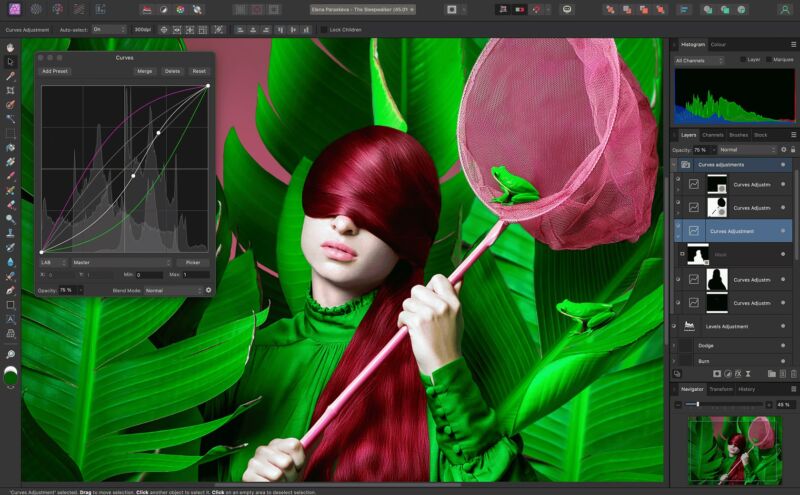
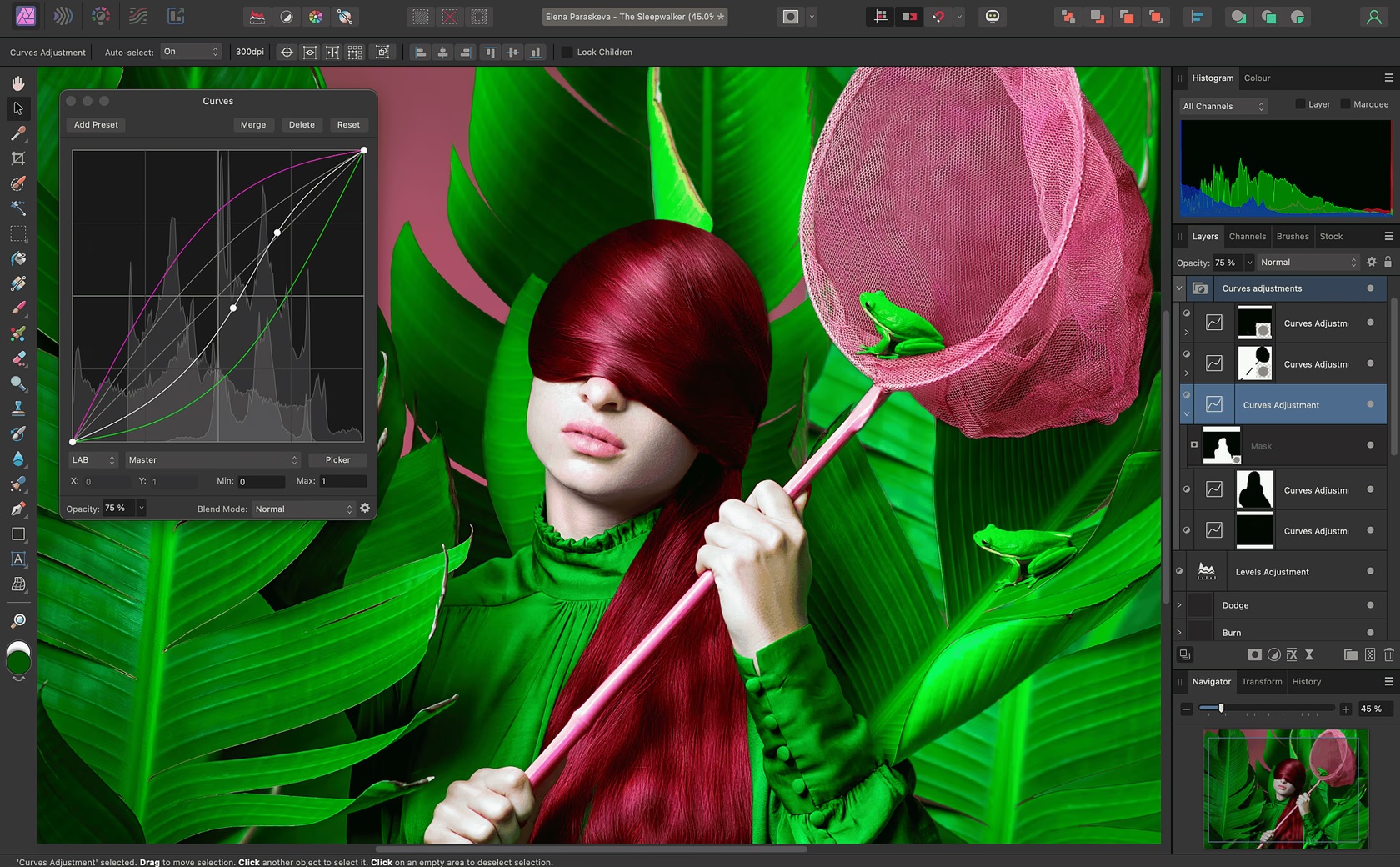
When graphic design platform-provider Canva bought the Affinity image-editing and publishing apps early last year, we had some major questions about how the companies’ priorities and products would mesh. How would Canva serve the users who preferred Affinity’s perpetually licensed apps to Adobe’s subscription-only software suite? And how would Affinity’s strong stance against generative AI be reconciled with Canva’s embrace of those technologies.
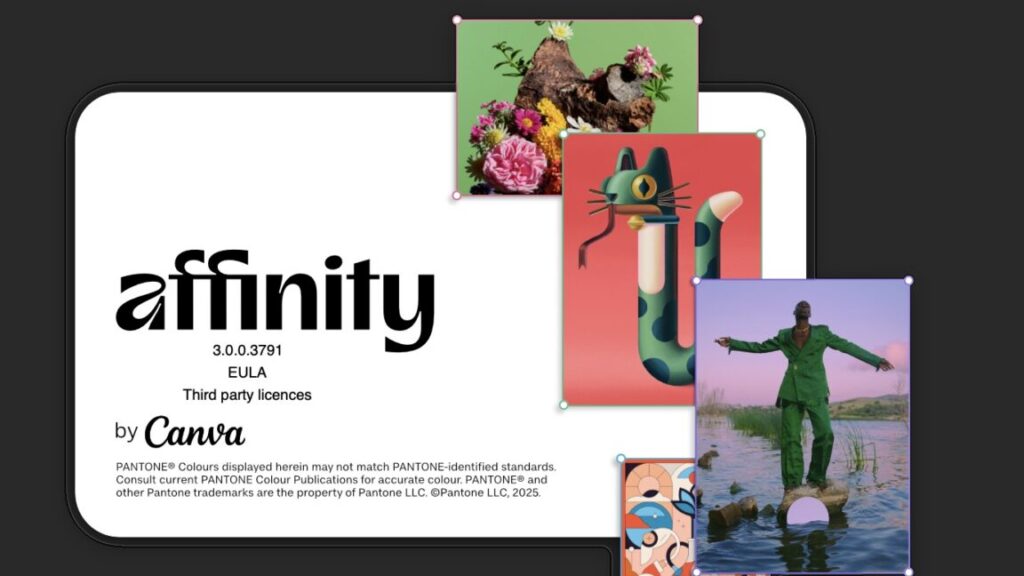
This week, Canva gave us definitive answers to all of those questions: a brand-new unified Affinity app that melds the Photo, Designer, and Publisher apps into a single piece of software called “Affinity by Canva” that is free to use with a Canva user account, but which gates generative AI features behind Canva’s existing paid subscription plans ($120 a year for individuals).
This does seem like mostly good news, in the near to mid term, for existing Affinity app users who admired Affinity’s anti-AI stance: All three apps’ core features are free to use, and the stuff you’re being asked to pay for is stuff you mostly don’t want anyway. But it may come as unwelcome news for those who like the predictability of pay-once-own-forever software or are nervous about where Canva might draw the line between “free” and “premium” features down the line.
The new Affinity app (also labeled internally as version 3) is available for both the x86 and Arm versions of Windows and as a universal app that will run natively on both Apple Silicon and Intel Macs. The app supports macOS versions going back to 10.15 Catalina and Windows 11, as well as the later releases of Windows 10. An iPad release to replace Affinity’s older iPad apps is “coming soon.”
“For ten years, Affinity has been the tool of choice for professionals who care deeply about craft,” wrote Affinity CEO Ash Hewson in a post announcing the update. “Designers who value precision, speed, and control, and who expect their tools to keep up. Now, that legacy enters a new chapter. The all-new Affinity was built in close collaboration with its community of creators, shaped by thousands of conversations, feature requests, and shared ideas. Guided by Canva’s Designer Advisory Board, this release reflects what professionals told us matters most: performance, reliability, and creative freedom.”
While Altman mentioned an “agentic commerce protocol” that will allow app users to enjoy “instant checkout” from within ChatGPT, he later clarified that details on monetization will only be available “soon.”
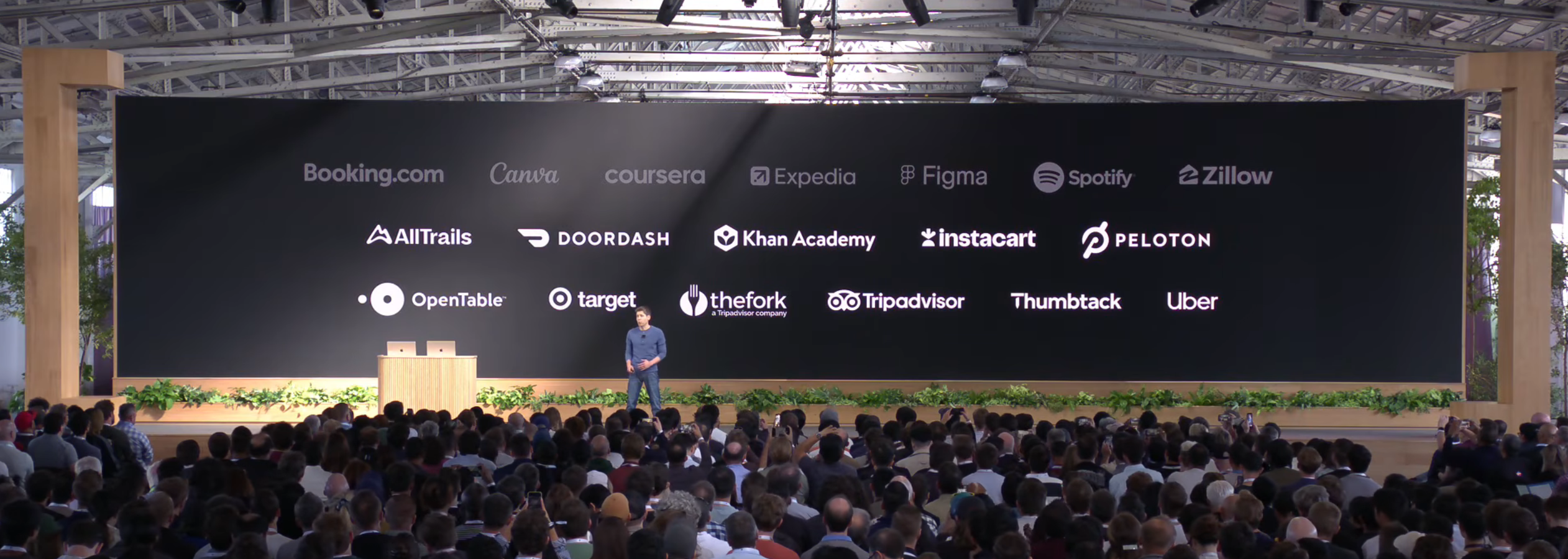
A full list of third-party apps that will be integrated into ChatGPT in the coming weeks.
A full list of third-party apps that will be integrated into ChatGPT in the coming weeks. Credit: OpenAI
In addition to the apps mentioned above, others like Expedia and Booking.com will be available in ChatGPT starting today. Apps from other launch partners including Peloton, Target, Uber, and Doordash will be available inside ChatGPT “in the weeks ahead.”
Other developers can start building with the SDK today before submitting them to OpenAI for review and publication within ChatGPT “later this year.” Altman said that apps that meet a certain set of “developer guidelines” will be listed in a comprehensive directory, while those meeting “higher standards for design and functionality will be featured more prominently.”
AgentKit and API updates
Elsewhere in the keynote, Altman announced AgentKit, a new tool designed to let OpenAI users create specialized interactive chatbots using a simplified building block GUI interface. The new software includes integrated tools for measuring performance and testing workflows from within the ChatKit interface.
In a live demo, OpenAI platform experience specialist Christina Huang gave herself an eight-minute deadline to use AgentKit to create a live, customized question-answering “Ask Froge” chatbot for the Dev Day website. While that demo was done with time to spare, Huang did make use of a lot of pre-built “widgets” and documents full of prepopulated information about the event to streamline the chatbot’s creation.
OpenAI’s Dev Days keynote in full.
The keynote also announced minor updates for OpenAI’s codex coding agent, including integration with Slack and a new SDK to allow for easier integration into existing coding workflows. Altman also announced some recent models would be newly available to users via API, including Sora 2, GPT5-Pro, and a new smaller, cheaper version of the company’s real-time audio interface.
Online graphic design platform provider Canva announced its acquisition of Affinity on Tuesday. The purchase adds tools for creative professionals to the Australian startup’s repertoire, presenting competition for today’s digital design stronghold, Adobe.
The companies didn’t provide specifics about the deal, but Cliff Obrecht, Canva’s co-founder and COO, told Bloomberg that it consists of cash and stock and is worth “several hundred million pounds.”
Canva, which debuted in 2013, has made numerous acquisitions to date, including Flourish, Kaleido, and Pixabay, but its purchase of Affinity is its biggest yet—by both price and headcount (90). Affinity CEO Ashley Hewson said via a YouTube video that Canva approached Affinity about a potential deal two months ago.
Before its Affinity purchase, Canva claimed 175 million users, which interestingly includes 90 million accrued since September 2022, when Canva launched Visual Suite. Without Affinity, though, Canva hasn’t had a way to appeal to the business-to-business market.
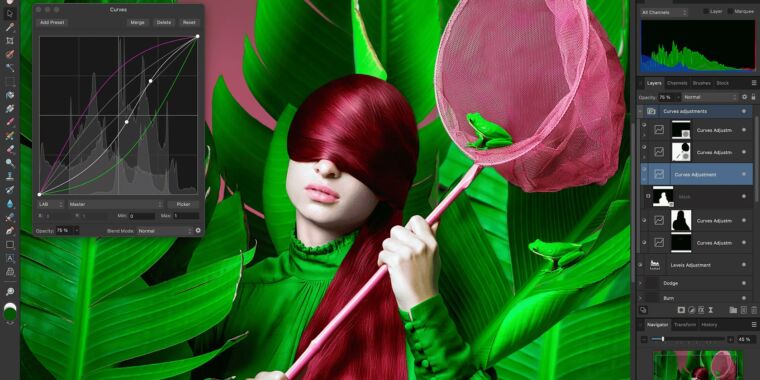
Affinity, which works with iPads, Macs, and Windows PCs, meanwhile, has a creative suite that includes a photo editor, professional page layout software, and Designer, a vector-based graphics software that “thousands” of illustrators, designers, and game developers use, Obrecht said when announcing the acquisition.
Of course, Affinity’s user base isn’t nearly the size of Adobe’s. Affinity claims that 3 million creative professionals use its tools. Adobe hasn’t provided hard numbers recently, but in 2017, it was estimated that Adobe Creative Cloud had 12 million subscribers, and Adobe currently claims to have 50 million members on its Behance online community.
However, Affinity has earned a following among creative professionals seeking an alternative to Adobe. Speaking to Bloomberg, Obrecht was keen to point out that Apple has featured Affinity apps in presentations about creative products, for example.
Perpetual Affinity licenses will still be available
Since being founded in 2014, one of the biggest ways that Affinity has stood out to creatives looking to avoid the costs associated with Adobe, including subscription fees, is perpetual licensing. New owner Canva pledged in an announcement today that one-time purchase fees will always be an option for Affinity users.
“Perpetual licenses will always be offered, and we will always price Affinity fairly and affordably,” an announcement today from Canva and Affinity said.
If Canva ever decides to sell Affinity as a subscription, perpetual licensing will remain available, Canva said, adding: “This fits with enabling Canva users to start adopting Affinity. It could also allow us to offer Affinity users a way to scale their workflows using Canva as a platform to share and collaborate on their Affinity assets, if they choose to.”
As we’ve seen with many other acquisitions, though, it’s common for companies to start changing their minds about how they’re willing to operate an acquired business years or even months after finalizing the purchase. And, of course, Canva’s idea of pricing “fairly and affordably” could differ from those of long-time Affinity users.
What about AI?
Canva also vowed to keep Affinity available as a standalone product and said there will be upcoming free updates to Affinity V2. However, Cameron Adams, Canva’s co-founder, pointed to potential future integration between Canva’s and Affinity’s offerings when speaking with Sydney Morning Herald:
Our product teams have already started chatting and we have some immediate plans for lightweight integration, but we think the products themselves will always be separate. Professional designers have really specific needs.
Canva’s announcement today said that the company plans to accelerate the rollout of “highly requested” Affinity features, “such as variable font support, blend and width tools, auto object selection, multi-page spreads, [and] ePub export.” With Canva, which was valued at $26 billion in 2021 and generates over $2.1 billion in annualized revenue, taking ownership of Affinity, the creative suite is expected to have more resources for improvements and updates than before.
Notably, though, Canva hasn’t revealed to what degree it may try to incorporate AI into Affinity. Canva is fully aboard the generative AI hype train and, as recently as this Monday pushed workers of all types to embrace the technology. Affinity, meanwhile, has said that it won’t make any generative AI tech and is “against anything which undermines human talent or tramples on artists’ IP.” Affinity’s stance could be forced to change one day under its new owner.
To start, though, Canva’s acquisition helps to fill the B2B gap in its portfolio, and it’s expected to use its new appeal to go after some of Adobe’s dominance.
“While our last decade at Canva has focused heavily on the 99 percent of knowledge workers without design training, truly empowering the world to design includes empowering professional designers, too. By joining forces with Affinity, we’re excited to unlock the full spectrum of designers at every level and stage of the design journey,” Obrecht said in Tuesday’s announcement.
Meanwhile, Adobe abandoned its own recent merger and acquisition efforts, a $20 billion purchase of Figma, in December due to regulatory concerns.