BMW iX3

great-handling,-advanced-ev-tech:-we-drive-the-2027-bmw-ix3

Great handling, advanced EV tech: We drive the 2027 BMW iX3


The first of BMW’s clean-sheet “Neue Klasse” EVs hits it out of the park.
A BMW iX3 at sunset with Gibraltar in the background

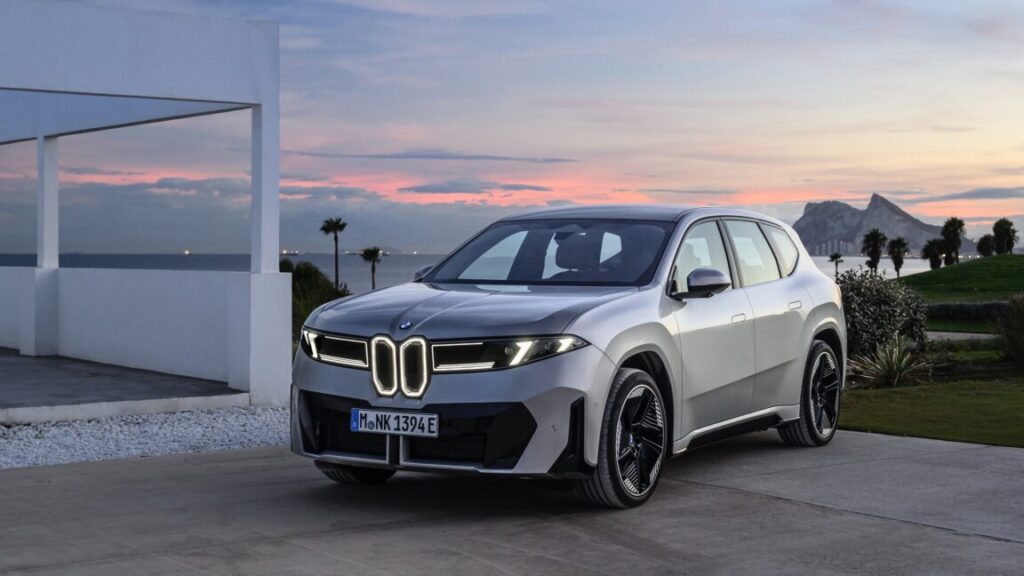
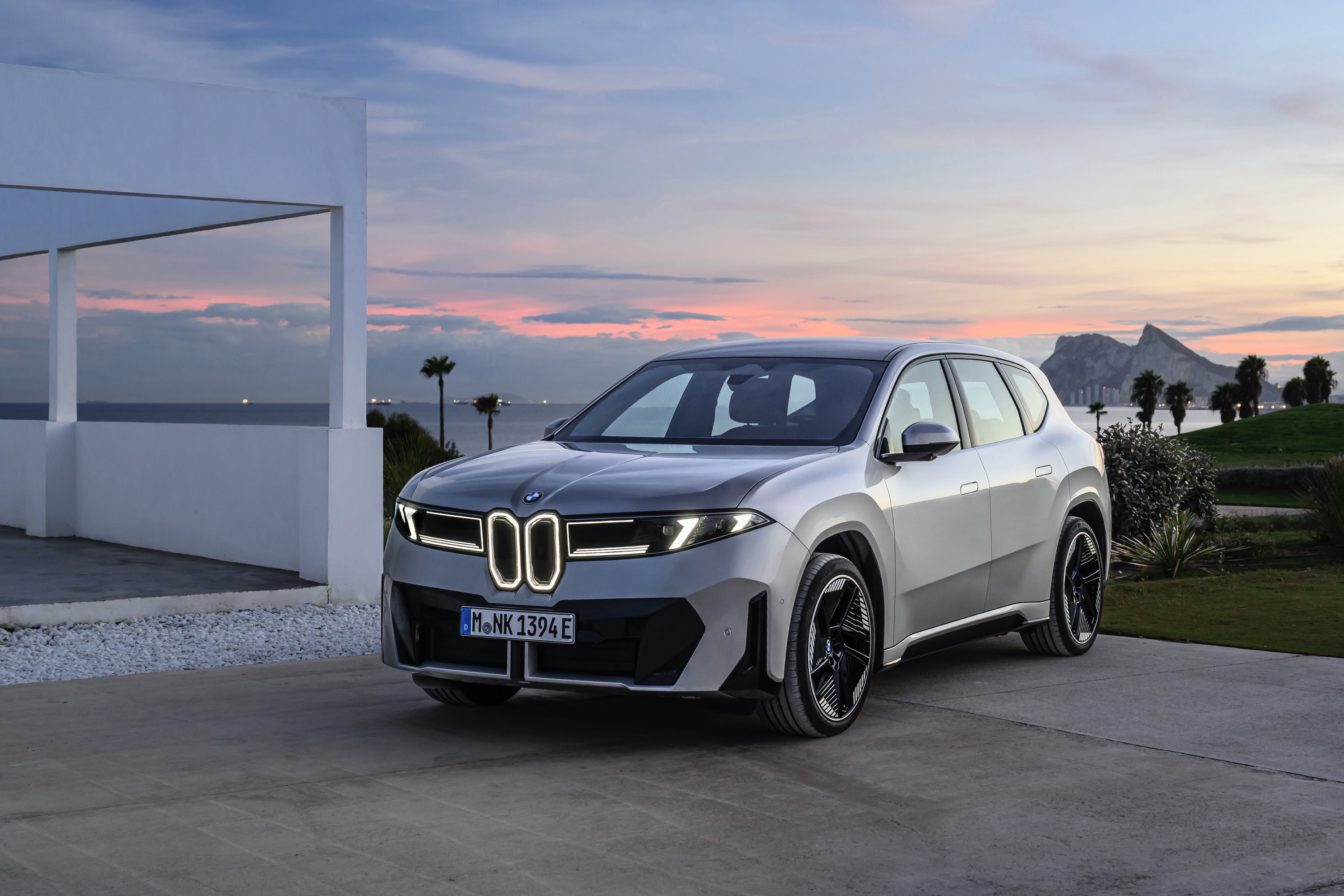
BMW’s new iX3 is a clean-sheet design. It might be the most sustainable BMW ever, and remains decent to drive. Credit: BMW

BMW’s new iX3 is a clean-sheet design. It might be the most sustainable BMW ever, and remains decent to drive. Credit: BMW

The new BMW iX3 is an important car for the automaker. It’s the first of a new series of vehicles that BMW is calling the Neue Klasse, calling back to a range of cars that helped define the brand in the 1960s. Then, as now, propulsion is provided by the best powertrain BMW’s engineers could design and build, wrapped in styling that heralds the company’s new look. Except now, that powertrain is fully electric, and the cabin features technology that would have been scarcely believable to the driver of a new 1962 BMW 1500.

In fact, the iX3 is only half the story when it comes to BMW’s neue look for the Neue Klasse—there’s an all-electric 3 series sedan on the way, too. The sedan will surely appeal to enthusiasts, particularly the version that the M tuning arm has worked its magic upon, but you’ll have to wait until early 2026 to read about that stuff. Which makes sense: crossovers and SUVs—or “sports activity vehicles” in BMW-speak—are what the market wants these days, so that’s what comes first.

The technical stuff

As we learned earlier this summer, BMW leaned heavily into sustainability when it designed the iX3. There’s extensive use of recycled battery minerals, interior plastics, and aluminum, and the automaker has gone for a monomaterial approach where possible to make recycling the car a lot easier. There’s also an all-new EV powertrain, BMW’s sixth-generation. When it goes on sale here next summer, the launch model will be the iX3 50 xDrive, which pairs an asynchronous motor at the front axle and an electrically excited synchronous motor at the rear for a combined output of 463 hp (345 kW) and 475 lb-ft (645 Nm).
A BMW iX3 seen from the rear 3/4s, with Gibraltar in the distance

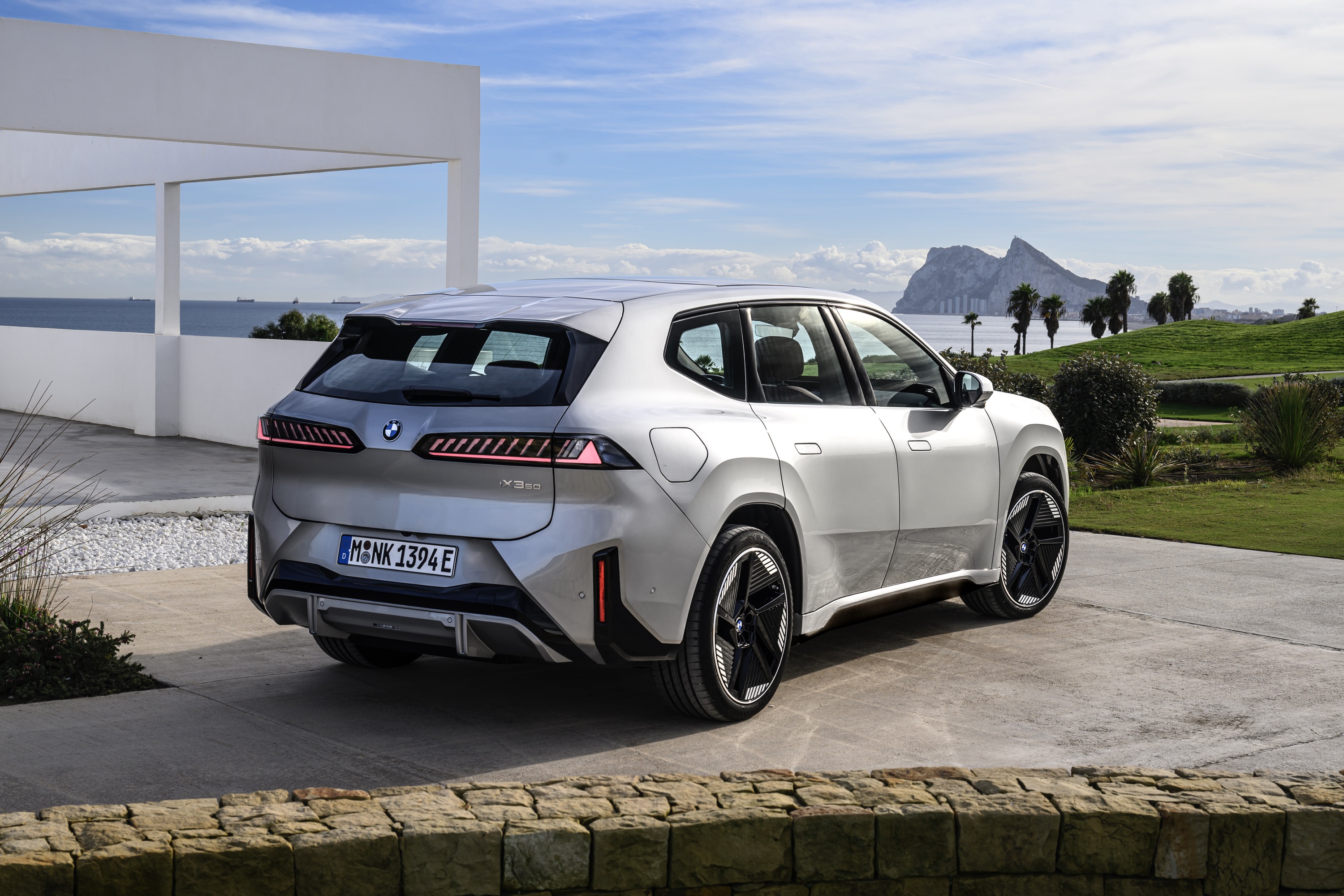
The lighter the paint shade, the better you can see the surface detailing, like the bulging wheel arches. Credit: BMW

Energy to the motors is supplied from a 108.7-kWh (net), 800 V lithium-ion battery pack. BMW abandoned the pouch cell/module approach used in its fifth-gen EV powertrains in favor of new cylindrical cells, which measure 46 mm by 95 mm. Instead of modules, the iX3 uses a cell-to-pack design that saves weight, as well as making the pack cheaper to assemble. And the top of the battery pack forms the floor of the car, with the seats bolting directly onto the pack—this saves yet more weight and space inside the vehicle.

Official EPA efficiency numbers, including the all-important range, will come closer to the iX3’s arrival in dealerships next year. You should expect at least 400 miles (643 km) of range, with 10–80 percent DC fast charges taking as little as 21 minutes on a sufficiently powerful charger. (Maximum DC fast charging is 400 kW.) For road trippers, there’s new route planning integrated into the BMW smartphone app as well as the car, which can project charging costs and even check reviews to tell you what the expected power level might be versus what the station claims.

All US market iX3s will be equipped with the “AC charging professional” option as standard, which allows for AC charging at up to 15.4 kW (which should take 7: 45 hours to fully charge from zero), as well as enabling bidirectional charging, whether that’s powering AC devices (V2L), or sending power to the home in an emergency (V2H), or to the grid on-demand (V2G).

Get in
BMW iX3 interior

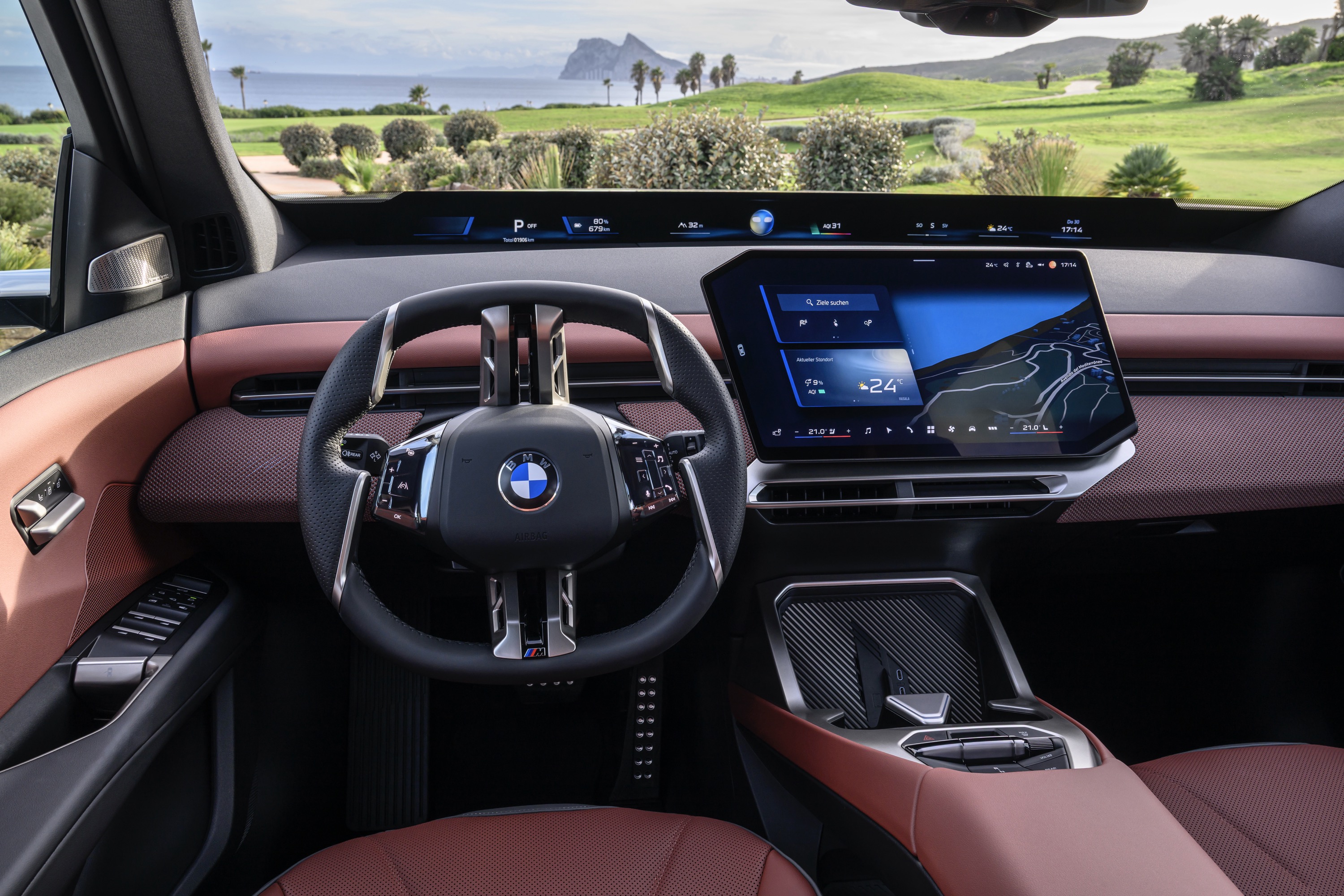
There are two 45 W USB-C ports, as well as wireless charging pads, and Apple CarPlay and Android Auto are available wirelessly. Credit: BMW

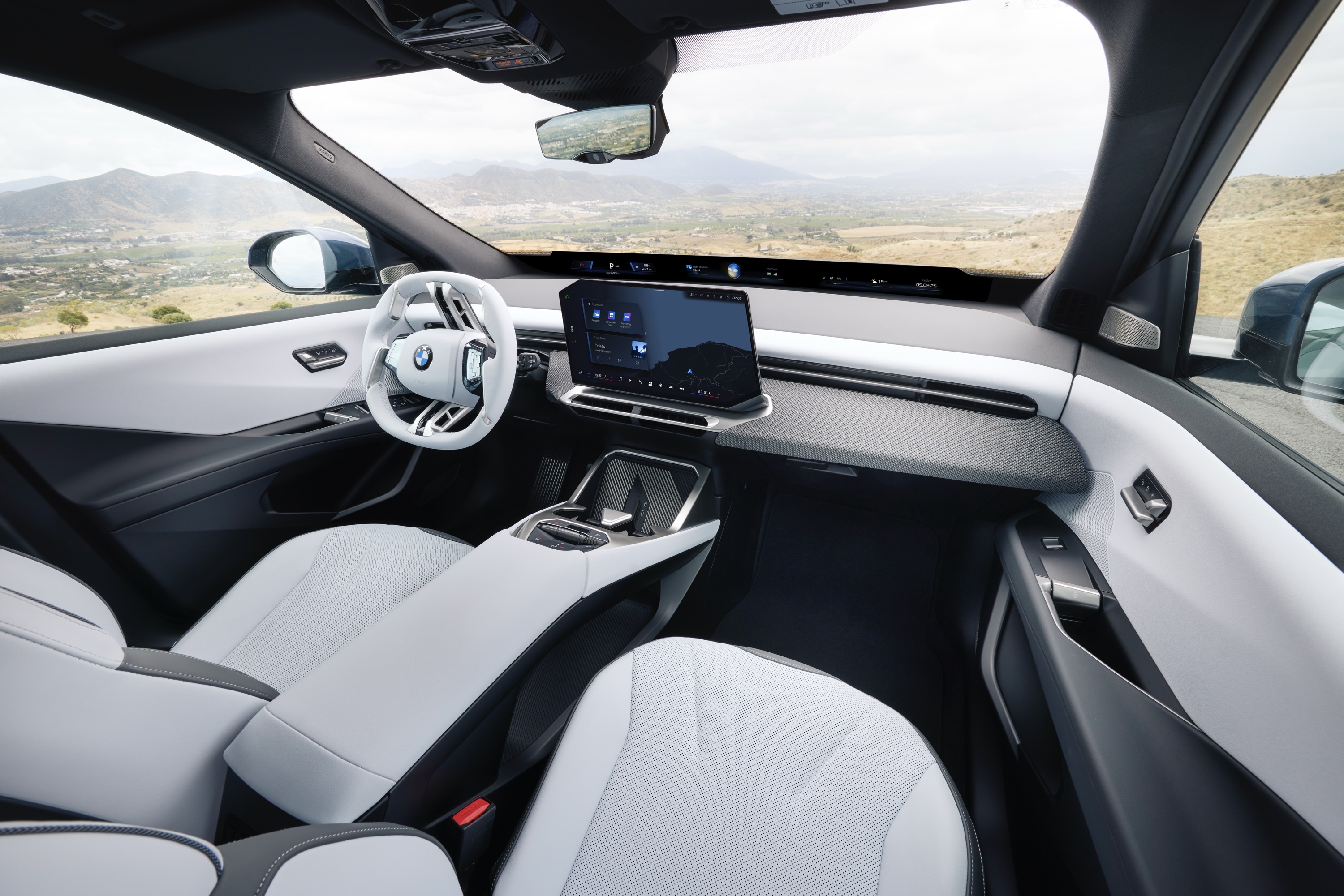
From the driver’s seat, you can clearly see BMW’s new UI/UX paradigm. Forget the classic binnacle with its cluster of gauges. Now, there’s a strip of customizable display at the base of the windscreen that BMW calls “Panoramic Vision.” Lincoln has experimented with something similar, but the effect is far better resolved here as the display appears seamless with the frit of the windshield. I particularly liked the way the focal point for the display is several inches down the hood from the actual surface of the screen, which makes it easier to take in information at a glance and then return your eyes to the road quickly.

The optional full-color head-up display could use a little more brightness, however, and I’m going to call out the iX3’s steering wheel now because it’s the one thing that really lets the whole experience down. There are no horizontal spokes, just fresh air between the thumb grips and the multifunction panels on either side of the airbag, which seems an odd design choice, and it feels a little too fat to grip. The actual multifunction controls aren’t horrid to use, but “this car needed a better wheel” was heard more than once as journalists compared notes.

The rest of the cockpit ergonomics are fine. The materials feel pleasant to the touch, with an interesting contrast between the textured fabric on the dash and the padded plastics. There are plenty of physical buttons and a trapezoidal infotainment screen that keeps controls near the driver’s right hand.

However, there’s no more physical dial controller for the infotainment system, and Alexa has replaced Cerence in supplying the natural language processing and conversational AI. In practice, this feels like a bit of a downgrade, and not only did the AI assistant—that little Ninja-looking face in the middle of the Panoramic Vision display—repeatedly think someone used its trigger word when we hadn’t, but a lot of my requests were met with some variation of “I can’t help you with that.”

The drive impression

The calibration of the one-pedal driving mode—which you toggle on or off with the drive selector on the center console—is very well-judged, and the friction brakes shouldn’t take over unless you’re asking to slow by more than half a G, which means 98 percent of all deceleration events should return energy to the battery pack. It’s a quiet ride, too, as long as you keep it out of sport mode, although the suspension is relatively firm and you’ll feel some road imperfections.

On the road, I found the Efficiency mode plenty, despite this being the most throttled back. When not in one-pedal (D versus B on the drive selector), the iX3 coasts well, and one of the driver assists onboard will read speed limit signs and regeneratively brake you to meet them, if you’re coasting along and the limit decreases. (That’s among the assists you can disable, should you wish.)

It’s nimble enough at changing directions. BMW

The suite of advanced driver assistance systems now runs on its own domain controller, one of four powerful computers that replace the dozens and dozens of black box ECUs that each used to handle a single discrete function. Among the improvements are a new remote parking ability that uses the My BMW App on a smartphone to even better effect than James Bond in Tomorrow Never Dies, and an adaptive cruise control that can tell the difference between a heavy application of brakes—at which point it deactivates—or a light brush, returning to speed after slowing.

Because the necessary sensors are included in all iX3s, future owners will be able to enable the various driver assists even if the original owner chose not to pick those options. For a fee, of course, but it makes the resale proposition slightly better.

That BMW scheduled some of the day at the Ascari circuit was evidence of an automaker confident in its product. On track, we pushed things a little harder. At up to about seven-tenths, the iX3 coped with the undulating circuit with composure. Praise belongs to the brakes, which we got to test in several emergency stops from highway speeds, and I’m not sure I saw anyone knock down a cone through the medium-speed slalom. The steering is well-weighted and has what passes for feel in the 21st century, with the right amount of power assist to make this actually rather heavy vehicle feel more like a featherweight.
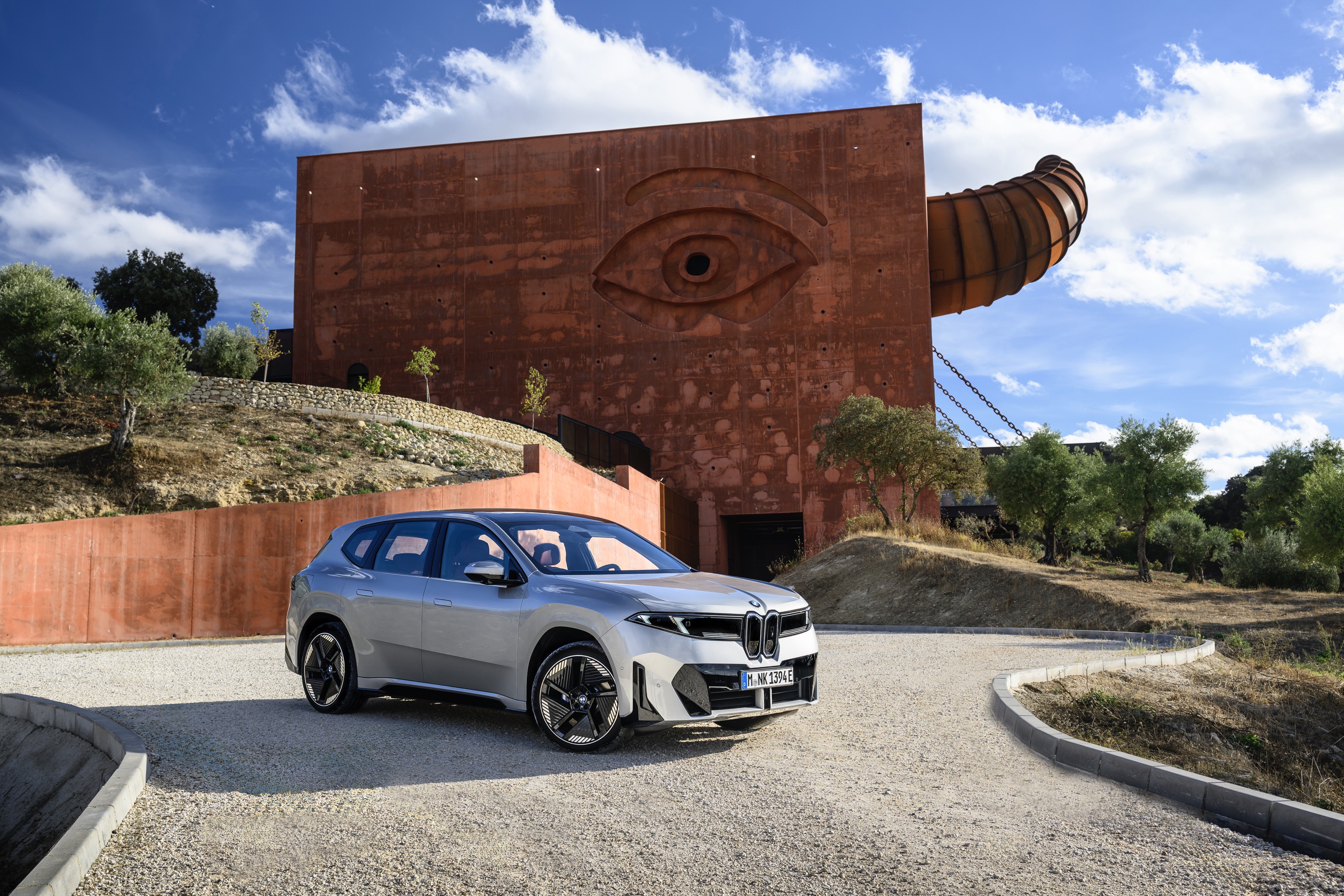
A silver BMW iX3 outside a building with a giant eye on its wall and a horn coming out the side.

Based on our first drive, the iX3 should have what it takes to be a contender in the luxury electric crossover segment. Credit: BMW

Go beyond that, and you really start to hustle the car; unsurprisingly, the result is understeer, accompanied by some screeching tires. That starts to occur at speeds where you’re also more and more aware of the iX3’s roughly two and a half ton curb weight, and so backing off—at which point the nose tightens again—just becomes the natural thing to do.

Like the EPA data, exact US pricing will have to wait until closer to the iX3’s arrival next summer, though we expect it to cost less than $60,000. It’s entering a busy segment of the market, with rivals like the Audi Q6 and Mercedes-Benz GLC with EQ technology, just to name its German competition. Dynamically, the BMW is the one to get. It might even win on price, too.

Photo of Jonathan M. Gitlin

Jonathan is the Automotive Editor at Ars Technica. He has a BSc and PhD in Pharmacology. In 2014 he decided to indulge his lifelong passion for the car by leaving the National Human Genome Research Institute and launching Ars Technica’s automotive coverage. He lives in Washington, DC.

Great handling, advanced EV tech: We drive the 2027 BMW iX3 Read More »
bmw-debuts-6th-generation-ev-powertrain-in-the-all-electric-ix3

BMW debuts 6th-generation EV powertrain in the all-electric iX3


Class-leading efficiency and computer-controlled driving dynamics combine.

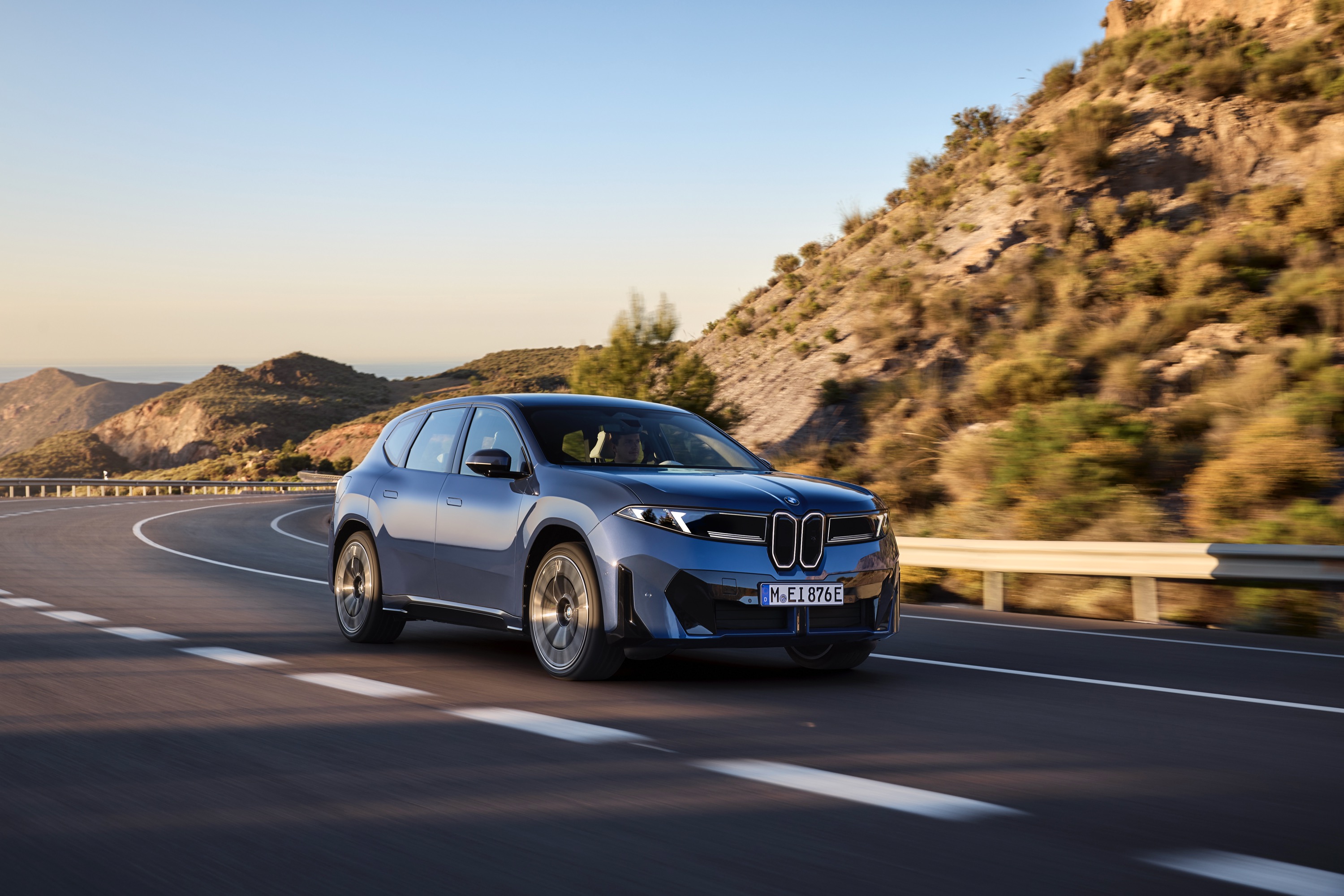
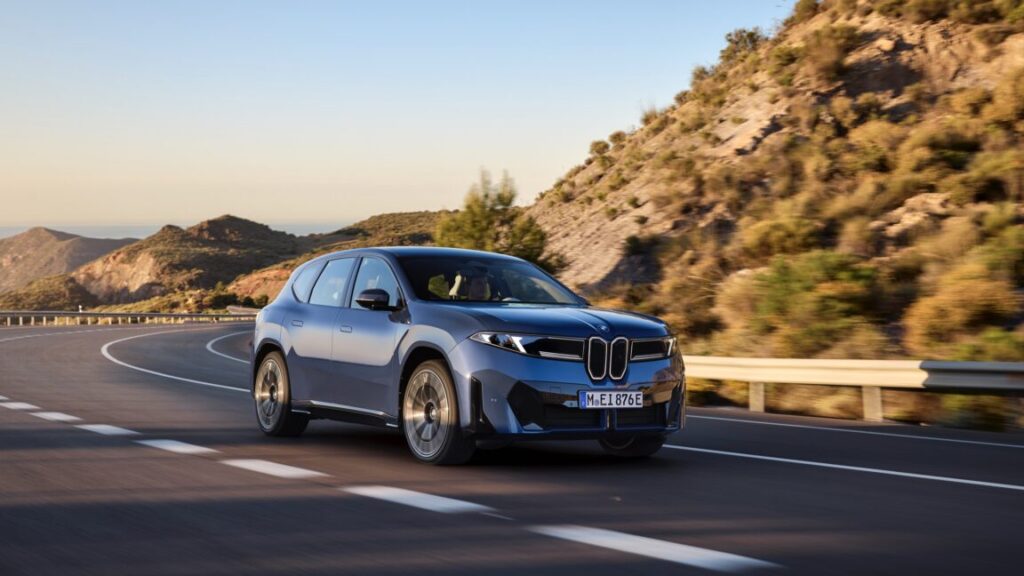
A BMW iX3 drives towards the camera

The new iX3 marks the start of a new design language for BMW SUVs. Credit: BMW

The new iX3 marks the start of a new design language for BMW SUVs. Credit: BMW

BMW has an all-electric replacement for its X3 crossover on the way. When it arrives in mid-2026, it will have the lowest carbon footprint of any BMW yet, thanks to an obsessive approach to sustainability during the design process. But we knew that already; what we couldn’t tell you then, but can now, is everything else we know about the first of the so-called Neue Klasse electric vehicles.

“The Neue Klasse is our biggest future-focused project and marks a huge leap forward in terms of technologies, driving experience, and design,” said BMW chairman Oliver Zipse. “Practically everything about it is new, yet it is also more BMW than ever. Our whole product range will benefit from the innovations brought by the Neue Klasse—whichever drive system technology is employed. What started as a bold vision has now become reality: the BMW iX3 is the first Neue Klasse model to go into series production, kicking off a new era for BMW.”

A new face

The iX3 also debuts a new corporate face for BMW’s SUVs: From now on, these will have tall, narrow kidney grilles like the one you see here, as opposed to the short, wide grille seen on the front of the Neue Klasse sedan (which is almost certainly the next 3 Series). LEDs replace chrome, and there’s a new take on BMW’s usual four headlights, although the illuminated kidney grill is an option, not mandatory. Despite the two-box shape, the iX3 manages a drag coefficient of just 0.24.

Sixth-generation

As befitting a company called the Bavarian Motor Works, BMW has been in the business of designing and building its own electric powertrains for quite some time, in contrast to some rivals that have been buying EV tech from suppliers. In addition to the class-leading manufacturing efficiency, the sixth-generation electric powertrain should be extremely efficient—around 4 miles/kWh (15.5 kWh/100 km) from an SUV-shape, which is 20–25 percent better than current SUV EVs.

The first variant will be the iX3 50 xDrive, which boasts a combined 463 hp (345 kW) and 475 lb-ft (645 Nm) from its pair of motors. The front axle uses an asynchronous motor, with an electrically excited synchronous motor at the rear axle providing most of the power.

There’s 40 percent more regenerative braking than BMW’s current powertrains. We weren’t given an exact threshold where the friction brakes take over, but it should be around 0.5–0.6 G. That means that the iX3 will regeneratively brake for the overwhelming majority of the time—just 5–10 percent of braking events should require the friction brakes, we’re told. And the regen should be smoother and more precise, as well as quieter than before. There’s even some regenerative braking should the ABS trigger.

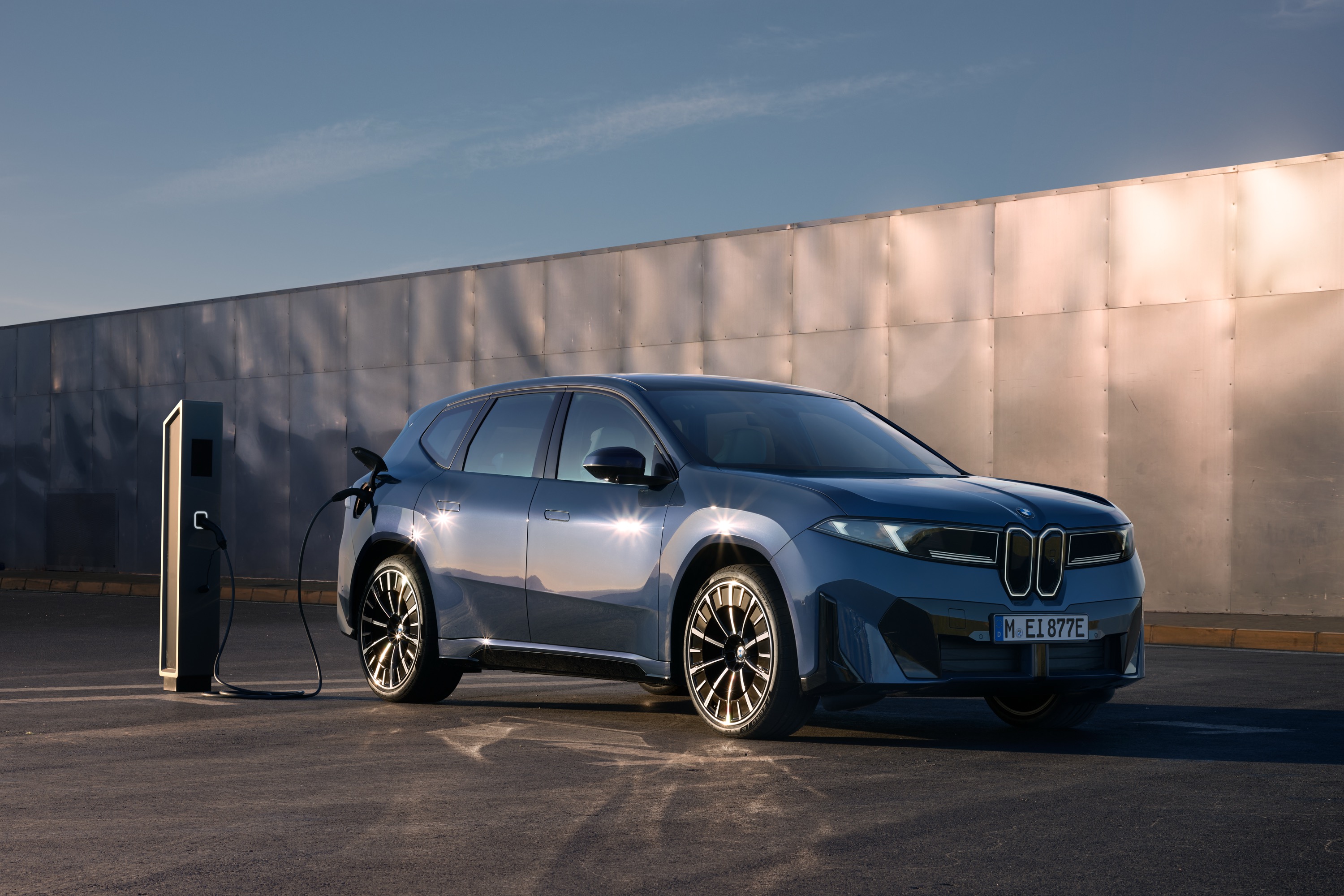
A BMW iX3 is parked, charging

NACS port comes standard, with a CCS1 adapter. Credit: BMW

For the Neue Klasse, BMW has moved to a new 800 V battery, using cylindrical cells rather than the prismatic cells you’d find in an iX or i4. Energy density is 20 percent greater than the current cells, and the pack has a usable capacity of 108 kWh. That means you can expect a range of up to 400 miles, although the official EPA rating will only arrive next year.

The new pack charges a lot faster, too. It can accept up to 400 kW, should you find a charger capable of such power. If so, the 10–80 percent charge should take 21 minutes. (BMW also says it will add 230 miles in 10 minutes.) The iX3 is capable of acting as a mobile power bank (V2L) as well as powering a home or even the grid (this requires a V2H-capable wall box), and North American iX3s will sport NACS charging ports.

Software-defined

The Neue Klasse is a clean-sheet design, and BMW has used this as an opportunity to clear out the legacy cruft that has accumulated over the years. Instead of hundreds of discrete black boxes, each with a single electric control unit (ECU) performing a single job, the iX3 uses four high-performance computers, each in charge of a different domain. Among the benefits of this approach? Almost 2,000 feet (600 m) less wiring and a weight saving of about 30 percent compared to a conventional wiring loom with all its ECUs. Taking single-function controllers out of the loop and replacing them with a domain computer also cuts latency.

The Heart of Joy is the domain controller responsible for driving dynamics and the powertrain, and can cope with up to four electric motors, something we should see in electric M-badged Neue Klasse models in the future. But good driving dynamics require more than just a fancy computer brain. The iX3 is extremely stiff, with the front and rear axles mounted to the battery pack. Weight distribution is a near-perfect 49: 51.

BMW iX3 inteiror

The interior is quite faithful to the concept we saw last year. The black strip at the base of the windshield is the panoramic display. Credit: BMW

A different domain controller is in charge of the advanced driver assistance systems (ADAS). This water-cooled computer is 20 times faster than the processors that control the ADAS in a current BMW, and was developed in-house by BMW. The automaker says the focus is always on the driver’s needs in a way that is smart, symbiotic, and safe. There are AI/ML algorithms for perception and planning, but safety-proven rule-based algorithms always have the final say in the decision-making process.

There’s a hands-free, partially automated driving system that works at up to 85 mph (136 km/h) on premapped divided-lane highways, and an interesting new feature is the cooperative braking and steering during active assistance. Unlike just about every car on the road currently, using the brake will not immediately kill the cruise control, and if you intentionally cross the median or a lane marker and are looking where you’re going, the eye-tracking driver monitoring system sees you and won’t try to correct. (But if you veer across the lane and aren’t looking, the car will steer you back.)

Shy tech

The iX3’s interior is near-identical to the concept we saw last March. BMW calls this approach shy tech, where controls or displays are invisible when inactive. There’s a new multifunction steering wheel—that will surely be divisive—which puts the ADAS controls on its left side, and media controls on the right. The iDrive rotary controller is no more, but there are plenty of physical buttons (not capacitive ones) for things like windows and mirrors.

BMW says the rotary controller wouldn’t have worked well with the new iDrive UI for the trapezoidal touchscreen. (Additionally, it told us that in some regions, drivers never used the rotary controller at all.) The screen is closer to the driver than in current BMWs, and the trapezoidal shape rather effectively means the left side of the screen—which has persistent, common functions—is always close to your right hand. After playing with the system for a while, I think the UI is a lot easier to navigate than the current BMW infotainment system, good though that is.

The multifunction steering wheel looks unconventional. BMW

I’ve often been complimentary about voice recognition in BMWs, and the iX3 has an upgrade here. The natural language processing is now based on Alexa, not Cerence’s tech, and there’s a cartoon visualization for the personal assistant that looks a bit like a ninja, or perhaps an alien. This will make eye contact with the person giving voice commands, so it can discern between driver and passenger.

At the base of the windshield is the new panoramic display. This presents information in zones—you can personalize what shows up in the center and right zones, but the one in front of the driver will always be the critical stuff like your speed and any warnings or alerts. There’s also an optional heads-up display.

BMW says we can expect the iX3 50 eDrive to arrive in the US next summer, starting at around $60,000.

Photo of Jonathan M. Gitlin

Jonathan is the Automotive Editor at Ars Technica. He has a BSc and PhD in Pharmacology. In 2014 he decided to indulge his lifelong passion for the car by leaving the National Human Genome Research Institute and launching Ars Technica’s automotive coverage. He lives in Washington, DC.

BMW debuts 6th-generation EV powertrain in the all-electric iX3 Read More »

bmw’s-next-ev-is-its-most-sustainable-car-yet—here’s-why

BMW’s next EV is its most sustainable car yet—here’s why

Sadly, the US is unlikely to get the Econeer trim, which uses a seat fabric made entirely from recycled PET bottles (instead, we should be getting an eco vinyl option).

Of course, you need to do more than just pick better materials, some of which have been recycled, if you want to seriously dent the carbon footprint of your new vehicle. That’s especially true if it’s electric—for all an EV’s benefits, they remain significantly more energy-intensive to build than a new internal combustion engine vehicle. And automakers do need to make serious dents in their carbon footprints: BMW has to slash its carbon emissions from a 2019 level of 150 million tons down to 109 million tons in 2030. For 2024, it was down to 135 million tons, the company told us.

Fishing nets are turned into plastic granules, then used to make bits of the car.

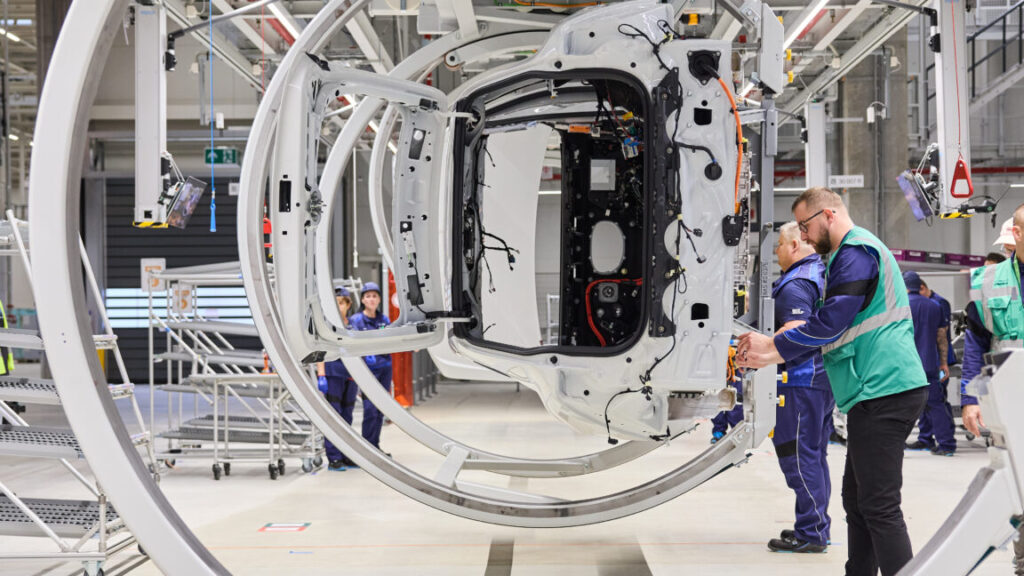
The Neue Klasse is essential to meeting that goal. The factory in Debrecen, Hungary, is powered entirely by renewable energy, including an entirely electric paint shop, and it generates two-thirds the amount of CO2 as one of BMW’s established factories. And the battery pack, which uses an all-new BMW cylindrical cell, has a 42 percent smaller carbon footprint per kWh than the prismatic cells used in BMW’s current 5th-generation EVs.

We can’t say much about the expected efficiency of the new 6th-gen powertrain until later this month, but we can say that BMW calculates that the iX3 can reach its break-even point with an ICE vehicle within just a year. Charge the car with entirely renewable electricity, and within just 10,900 miles (17,500 km), it’s on par with an ICE vehicle; using the normal European energy generation mix, that crossover comes at a little more than 13,300 miles (21,000 km).

At 124,000 miles (200,000 km), the iX3 should have a lifetime carbon footprint of 23 tons (or 14.6 tons exclusively using renewable energy); by contrast, a conventionally powered BMW X3 crossover would have a footprint of 52.8 tons.

Check back on August 25, when we can tell you what else we learned about BMW’s next EV crossover.

BMW’s next EV is its most sustainable car yet—here’s why Read More »