Arduino

arduino’s-new-terms-of-service-worries-hobbyists-ahead-of-qualcomm-acquisition

Arduino’s new terms of service worries hobbyists ahead of Qualcomm acquisition

“The Qualcomm acquisition doesn’t modify how user data is handled or how we apply our open-source principles,” the Arduino blog says.

Arduino’s blog didn’t discuss the company’s new terms around patents, which states:

User will use the Site and the Platform in accordance with these Terms and for the sole purposes of correctly using the Services. Specifically, User undertakes not to: … “use the Platform, Site, or Services to identify or provide evidence to support any potential patent infringement claim against Arduino, its Affiliates, or any of Arduino’s or Arduino’s Affiliates’ suppliers and/or direct or indirect customers.

“No open-source company puts language in their ToS banning users from identifying potential patent issues. Why was this added, and who requested it?” Fried and Torrone said.

Arduino’s new terms include similar language around user-generated content that its ToS has had for years. The current terms say that users grant Arduino the:

non-exclusive, royalty free, transferable, sub-licensable, perpetual, irrevocable, to the maximum extent allowed by applicable law … right to use the Content published and/or updated on the Platform as well as to distribute, reproduce, modify, adapt, translate, publish and make publicly visible all material, including software, libraries, text contents, images, videos, comments, text, audio, software, libraries, or other data (collectively, “Content”) that User publishes, uploads, or otherwise makes available to Arduino throughout the world using any means and for any purpose, including the use of any username or nickname specified in relation to the Content.

“The new language is still broad enough to republish, monetize, and route user content into any future Qualcomm pipeline forever,” Torrone told Ars. He thinks Arduino’s new terms should have clarified Arduino’s intent, narrowed the term’s scope, or explained “why this must be irrevocable and transferable at a corporate level.”

In its blog, Arduino said that the new ToS “clarifies that the content you choose to publish on the Arduino platform remains yours and can be used to enable features you’ve requested, such as cloud services and collaboration tools.”

As Qualcomm works toward completing its Arduino acquisition, there appears to be more work ahead for the smartphone processor and modem vendor to convince makers that Arduino’s open source and privacy principles will be upheld. While the Arduino IDE and its source code will stay on GitHub per the AGPL-3.0 Open-Source License, some users remain worried about Arduino’s future under Qualcomm.

Arduino’s new terms of service worries hobbyists ahead of Qualcomm acquisition Read More »
qualcomm-is-buying-arduino,-releases-new-raspberry-pi-esque-arduino-board

Qualcomm is buying Arduino, releases new Raspberry Pi-esque Arduino board

Smartphone processor and modem maker Qualcomm is acquiring Arduino, the Italian company known mainly for its open source ecosystem of microcontrollers and the software that makes them function. In its announcement, Qualcomm said that Arduino would “[retain] its brand and mission,” including its “open source ethos” and “support for multiple silicon vendors.”

“Arduino will retain its independent brand, tools, and mission, while continuing to support a wide range of microcontrollers and microprocessors from multiple semiconductor providers as it enters this next chapter within the Qualcomm family,” Qualcomm said in its press release. “Following this acquisition, the 33M+ active users in the Arduino community will gain access to Qualcomm Technologies’ powerful technology stack and global reach. Entrepreneurs, businesses, tech professionals, students, educators, and hobbyists will be empowered to rapidly prototype and test new solutions, with a clear path to commercialization supported by Qualcomm Technologies’ advanced technologies and extensive partner ecosystem.”

Qualcomm didn’t disclose what it would pay to acquire Arduino. The acquisition also needs to be approved by regulators “and other customary closing conditions.”

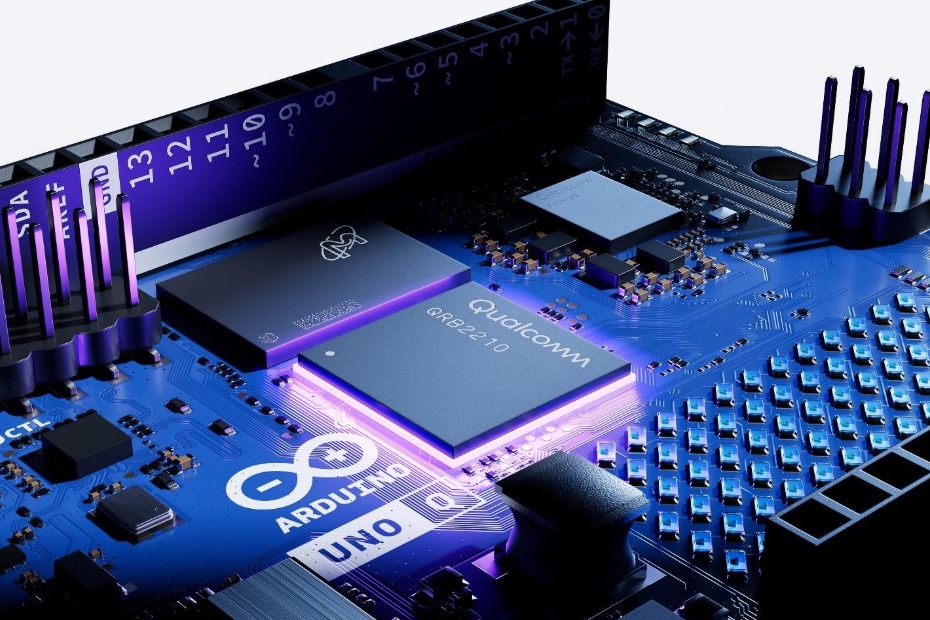
The first fruit of this pending acquisition will be the Arduino Uno Q, a Qualcomm-based single-board computer with a Qualcomm Dragonwing QRB2210 processor installed. The QRB2210 includes a quad-core Arm Cortex-A53 CPU and a Qualcomm Adreno 702 GPU, plus Wi-Fi and Bluetooth connectivity, and combines that with a real-time microcontroller “to bridge high-performance computing with real-time control.”

Qualcomm is buying Arduino, releases new Raspberry Pi-esque Arduino board Read More »

arduino’s-plug-and-make-kit-lets-your-hacking-imagination-run-wild,-sans-solder

Arduino’s Plug and Make Kit lets your hacking imagination run wild, sans solder

Little boards bolted together toward a better future —

Daisy-chain tiny boards into weather stations, game controllers, and way more.

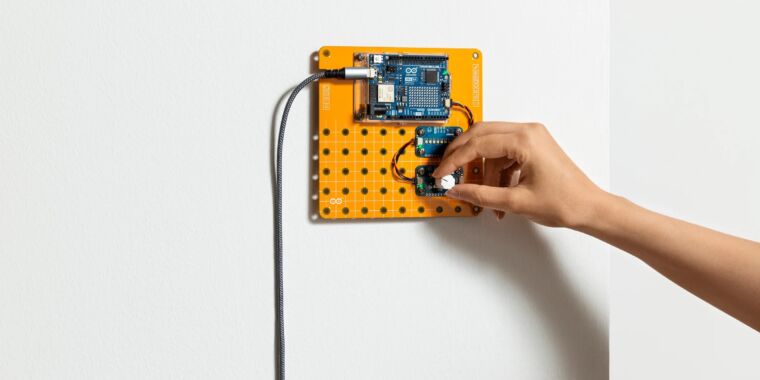
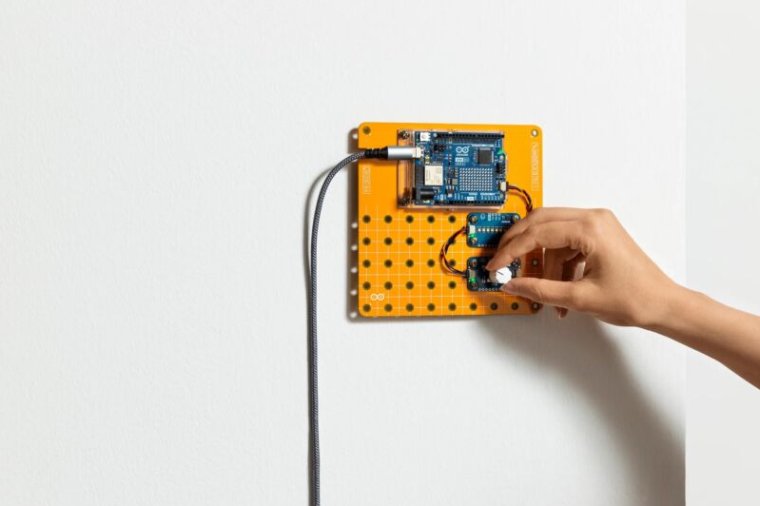
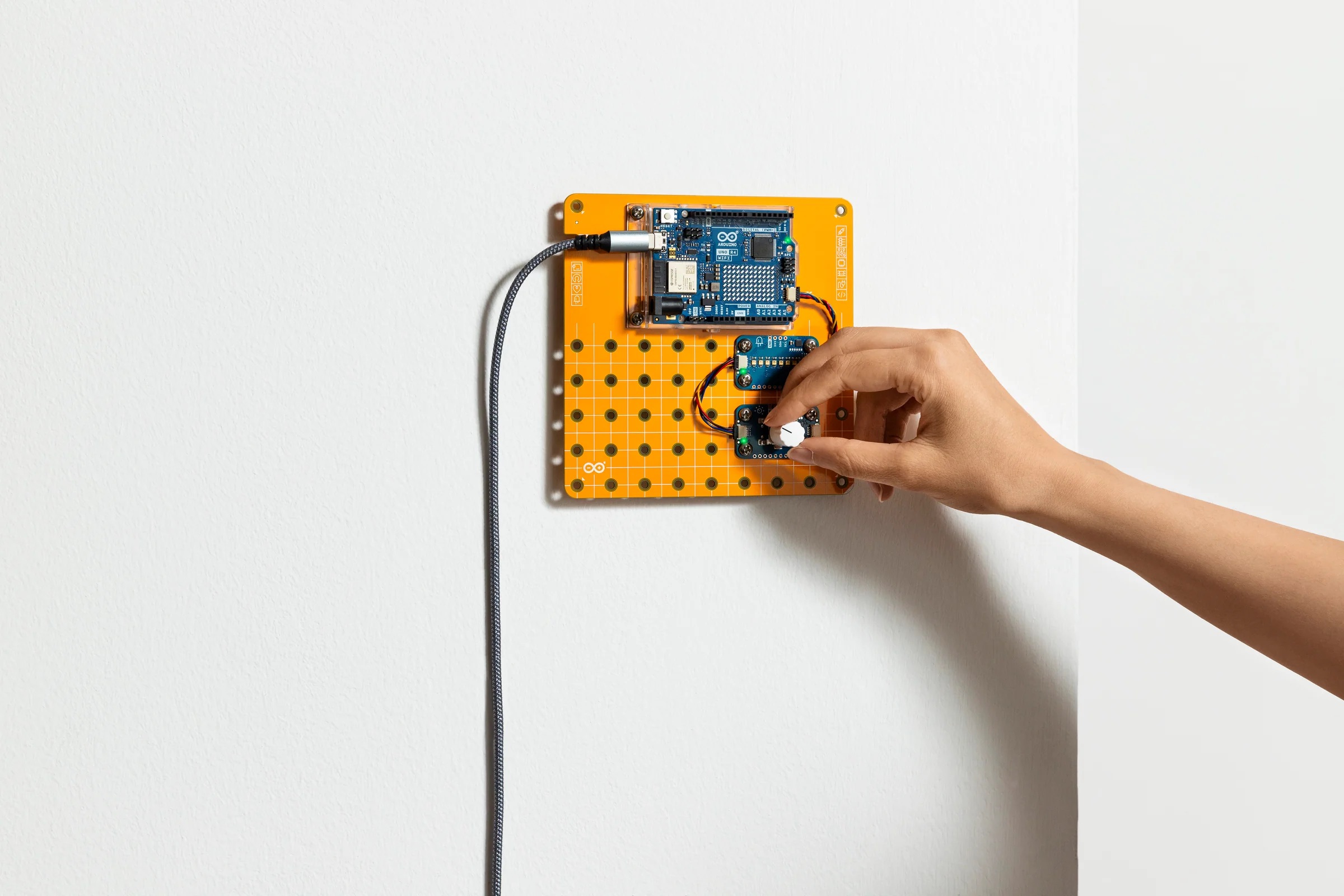
A hand adjusting a button or knob on an Arduino plug and make kit, mounted to a white whall on a yellow bread-board-like backing.

Enlarge / Having this on the wall, right by your front door, would serve the purpose of informing guests where your priorities lie.

Arduino

I know how to solder, but I do not always want to solder, and I think there are a lot of folks like me. Even if the act itself can be done (and undone, and redone), the friction of hauling out the gear, preparing a space, and fine-motor-skilling a perfect shiny blob can put a halt to one’s tinkering ambitions.

Arduino’s Plug and Make Kit official release video.

Arduino, the building block of many off-hours projects, has put the challenge to you, your kids, or anyone you know who just needs the right kit to fall down a rabbit hole, minus a dangerously hot iron. The Arduino Plug and Make Kit has at its core an Arduino UNO R4 board with Wi-Fi, Bluetooth, and a built-in 12×8 LED matrix display. That board gets screwed into the prime lot on a yellow board, and then you pick from among seven other “Modulino” boards to attach. By “attach,” I mean running one of those little push-in-with-your-fingers cables from the main board to a little board, and maybe daisy-chaining from there. All your boards fit onto the larger base with M3 screws and nuts, and the whole thing is powered by a USB-C cable (with USB A or C on the other end).

  • The contents of Arduino’s Plug and Make Kit.

  • The “Modulino” nodes.

  • The wonderful board for the Arduino experiments.

What can you plug in? A knob, eight LEDs, a proximity sensor, a motion sensor, a simple buzzer/speaker, a temperature/humidity sensor, and three simple buttons. With those things, the newcomer can make a low-key weather station, an 8-bit-style synthesizer, a smart lamp controller, and a few other things (registration required). Of course, those are just the starter projects put together by Arduino; on the web, in the corners of GitHub, and inside the curious mind, there are loads of other things to be built.

There’s a little shell case for the main Arduino board included with the kit, which could help with weather-proofing a bit. But whatever project you make with this kit is going to look like a lightly spiffed-up breadboard object. That can be a great thing. The timer I use to try to keep myself working in 25-minute segments is an Adafruit Circuit Playground Express, programmed to light up in a clock-ish ring and then play the Legend of Zelda “discovery” tune after every sprint. There are lots of timers, even Pomodoro-technique-specific models, that are cheaper, smaller, and purpose-built. But I like my goofy little timer specifically because I can see the guts of it.

The Arduino Plug and Make Kit costs $87 at the moment and is still in stock as of this writing.

Arduino’s Plug and Make Kit lets your hacking imagination run wild, sans solder Read More »