
Andy Hertzfeld

the-mac-calculator’s-original-design-came-from-letting-steve-jobs-play-with-menus-for-ten-minutes

The Mac calculator’s original design came from letting Steve Jobs play with menus for ten minutes

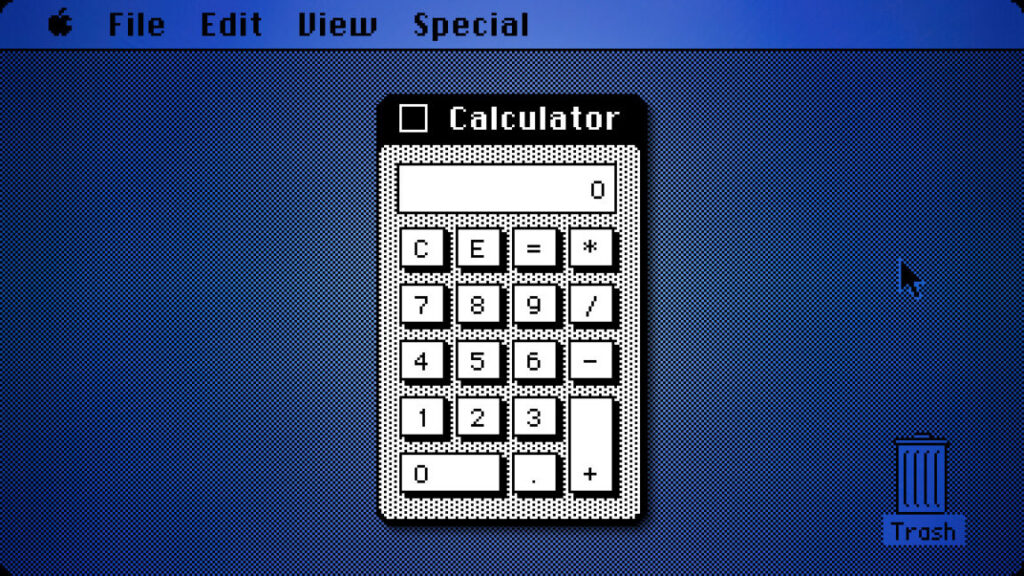
Rather than continue the endless revision cycle, Espinosa took a different approach. According to Hertzfeld, Espinosa created a program that exposed every visual parameter of the calculator through pull-down menus: line thickness, button sizes, background patterns, and more. When Jobs sat down with it, he spent about ten minutes adjusting settings until he found a combination he liked.

The approach worked. When given direct control over the parameters rather than having to articulate his preferences verbally, Jobs quickly arrived at a design he was satisfied with. Hertzfeld notes that he implemented the calculator’s UI a few months later using Jobs’s parameter choices from that ten-minute session, while Donn Denman, another member of the Macintosh team, handled the mathematical functions.

That ten-minute session produced the calculator design that shipped with the Mac in 1984 and remained virtually unchanged through Mac OS 9, when Apple discontinued that OS in 2001. Apple replaced it in Mac OS X with a new design, ending the calculator’s 17-year run as the primary calculator interface for the Mac.

Why it worked

Espinosa’s Construction Set was an early example of what would later become common in software development: visual and parameterized design tools. In 1982, when most computers displayed monochrome text, the idea of letting someone fine-tune visual parameters through interactive controls without programming was fairly forward-thinking. Later, tools like HyperCard would formalize this kind of idea into a complete visual application framework.

The primitive calculator design tool also revealed something about Jobs’s management process. He knew what he wanted when he saw it, but he perhaps struggled to articulate it at times. By giving him direct manipulation ability, Espinosa did an end-run around that communication problem entirely. Later on, when he returned to Apple in the late 1990s, Jobs would famously insist on judging products by using them directly rather than through canned PowerPoint demos or lists of specifications.

The longevity of Jobs’s ten-minute design session suggests the approach worked. The calculator survived nearly two decades of Mac OS updates, outlasting many more elaborate interface elements. What started as a workaround became one of the Mac’s most simple but enduring designs.

By the way, if you want to try the original Mac OS calculator yourself, you can run various antique versions of the operating system in your browser thanks to the Infinite Mac website.
The Mac calculator’s original design came from letting Steve Jobs play with menus for ten minutes Read More »

bill-atkinson,-architect-of-the-mac’s-graphical-soul,-dies-at-74

Bill Atkinson, architect of the Mac’s graphical soul, dies at 74

Using HyperCard, Teachers created interactive lessons, artists built multimedia experiences, and businesses developed custom database applications—all without writing traditional code. The hypermedia environment also had a huge impact on gaming: 1993 first-person adventure hit Myst originally used HyperCard as its game engine.

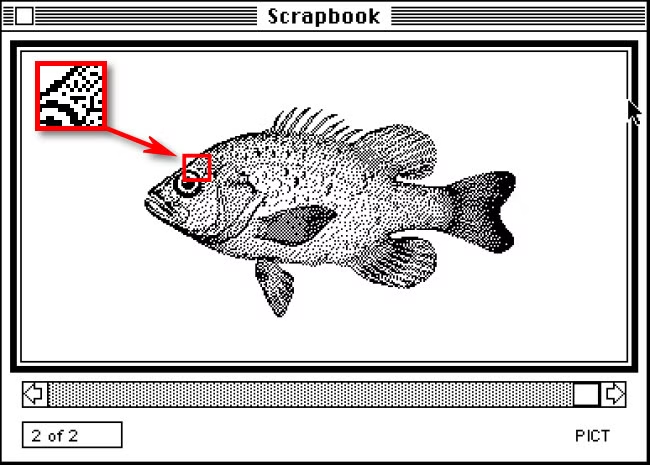
An example of graphical dithering, which allows 1-bit color (black and white only) to imitate grayscale.

An example of graphical dithering, which allows 1-bit color (black and white only) to imitate grayscale. Credit: Benj Edwards / Apple

For the two-color Macintosh (which could only display black or white pixels, with no gradient in between), Atkinson developed an innovative high-contrast dithering algorithm that created the illusion of grayscale images with a characteristic stippled appearance that became synonymous with early Mac graphics. The dithered aesthetic remains popular today among some digital artists and indie game makers, with modern tools like this web converter that allows anyone to transform photos into the classic Atkinson dither style.

Life after Apple

After leaving Apple in 1990, Atkinson co-founded General Magic with Marc Porat and Andy Hertzfeld, attempting to create personal communicators before smartphones existed. Wikipedia notes that in 2007, he joined Numenta, an AI startup, declaring their work on machine intelligence “more fundamentally important to society than the personal computer and the rise of the Internet.”

In his later years, Atkinson pursued nature photography with the same artistry he’d brought to programming. His 2004 book “Within the Stone” featured close-up images of polished rocks that revealed hidden worlds of color and pattern.

Atkinson announced his pancreatic cancer diagnosis in November 2024, writing on Facebook that he had “already led an amazing and wonderful life.” The same disease claimed his friend and collaborator Steve Jobs in 2011.

Given Atkinson’s deep contributions to Apple history, it’s not surprising that Jobs’ successor, Apple CEO Tim Cook, paid tribute to the Mac’s original graphics guru on X on Saturday. “We are deeply saddened by the passing of Bill Atkinson,” Cook wrote. “He was a true visionary whose creativity, heart, and groundbreaking work on the Mac will forever inspire us.”

Bill Atkinson, architect of the Mac’s graphical soul, dies at 74 Read More »