AI jabberwocky

ai-video-just-took-a-startling-leap-in-realism.-are-we-doomed?

AI video just took a startling leap in realism. Are we doomed?


Tales from the cultural singularity

Google’s Veo 3 delivers AI videos of realistic people with sound and music. We put it to the test.

Still image from an AI-generated Veo 3 video of “A 1980s fitness video with models in leotards wearing werewolf masks.” Credit: Google

Last week, Google introduced Veo 3, its newest video generation model that can create 8-second clips with synchronized sound effects and audio dialog—a first for the company’s AI tools. The model, which generates videos at 720p resolution (based on text descriptions called “prompts” or still image inputs), represents what may be the most capable consumer video generator to date, bringing video synthesis close to a point where it is becoming very difficult to distinguish between “authentic” and AI-generated media.

Google also launched Flow, an online AI filmmaking tool that combines Veo 3 with the company’s Imagen 4 image generator and Gemini language model, allowing creators to describe scenes in natural language and manage characters, locations, and visual styles in a web interface.

An AI-generated video from Veo 3: “ASMR scene of a woman whispering “Moonshark” into a microphone while shaking a tambourine”

Both tools are now available to US subscribers of Google AI Ultra, a plan that costs $250 a month and comes with 12,500 credits. Veo 3 videos cost 150 credits per generation, allowing 83 videos on that plan before you run out. Extra credits are available for the price of 1 cent per credit in blocks of $25, $50, or $200. That comes out to about $1.50 per video generation. But is the price worth it? We ran some tests with various prompts to see what this technology is truly capable of.

How does Veo work?

Like other modern video generation models, Veo 3 is built on diffusion technology—the same approach that powers image generators like Stable Diffusion and Flux. The training process works by taking real videos and progressively adding noise to them until they become pure static, then teaching a neural network to reverse this process step by step. During generation, Veo 3 starts with random noise and a text prompt, then iteratively refines that noise into a coherent video that matches the description.

AI-generated video from Veo 3: “An old professor in front of a class says, ‘Without a firm historical context, we are looking at the dawn of a new era of civilization: post-history.'”

DeepMind won’t say exactly where it sourced the content to train Veo 3, but YouTube is a strong possibility. Google owns YouTube, and DeepMind previously told TechCrunch that Google models like Veo “may” be trained on some YouTube material.

It’s important to note that Veo 3 is a system composed of a series of AI models, including a large language model (LLM) to interpret user prompts to assist with detailed video creation, a video diffusion model to create the video, and an audio generation model that applies sound to the video.

An AI-generated video from Veo 3: “A male stand-up comic on stage in a night club telling a hilarious joke about AI and crypto with a silly punchline.” An AI language model built into Veo 3 wrote the joke.

In an attempt to prevent misuse, DeepMind says it’s using its proprietary watermarking technology, SynthID, to embed invisible markers into frames Veo 3 generates. These watermarks persist even when videos are compressed or edited, helping people potentially identify AI-generated content. As we’ll discuss more later, though, this may not be enough to prevent deception.

Google also censors certain prompts and outputs that breach the company’s content agreement. During testing, we encountered “generation failure” messages for videos that involve romantic and sexual material, some types of violence, mentions of certain trademarked or copyrighted media properties, some company names, certain celebrities, and some historical events.

Putting Veo 3 to the test

Perhaps the biggest change with Veo 3 is integrated audio generation, although Meta previewed a similar audio-generation capability with “Movie Gen” last October, and AI researchers have experimented with using AI to add soundtracks to silent videos for some time. Google DeepMind itself showed off an AI soundtrack-generating model in June 2024.

An AI-generated video from Veo 3: “A middle-aged balding man rapping indie core about Atari, IBM, TRS-80, Commodore, VIC-20, Atari 800, NES, VCS, Tandy 100, Coleco, Timex-Sinclair, Texas Instruments”

Veo 3 can generate everything from traffic sounds to music and character dialogue, though our early testing reveals occasional glitches. Spaghetti makes crunching sounds when eaten (as we covered last week, with a nod to the famous Will Smith AI spaghetti video), and in scenes with multiple people, dialogue sometimes comes from the wrong character’s mouth. But overall, Veo 3 feels like a step change in video synthesis quality and coherency over models from OpenAI, Runway, Minimax, Pika, Meta, Kling, and Hunyuanvideo.

The videos also tend to show garbled subtitles that almost match the spoken words, which is an artifact of subtitles on videos present in the training data. The AI model is imitating what it has “seen” before.

An AI-generated video from Veo 3: “A beer commercial for ‘CATNIP’ beer featuring a real a cat in a pickup truck driving down a dusty dirt road in a trucker hat drinking a can of beer while country music plays in the background, a man sings a jingle ‘Catnip beeeeeeeeeeeeeeeeer’ holding the note for 6 seconds”

We generated each of the eight-second-long 720p videos seen below using Google’s Flow platform. Each video generation took around three to five minutes to complete, and we paid for them ourselves. It’s important to note that better results come from cherry-picking—running the same prompt multiple times until you find a good result. Due to cost and in the spirit of testing, we only ran every prompt once, unless noted.

New audio prompts

Let’s dive right into the deep end with audio generation to get a grip on what this technology can do. We’ve previously shown you a man singing about spaghetti and a rapping shark in our last Veo 3 piece, but here’s some more complex dialogue.

Since 2022, we’ve been using the prompt “a muscular barbarian with weapons beside a CRT television set, cinematic, 8K, studio lighting” to test AI image generators like Midjourney. It’s time to bring that barbarian to life.

A muscular barbarian man holding an axe, standing next to a CRT television set. He looks at the TV, then to the camera and literally says, “You’ve been looking for this for years: a muscular barbarian with weapons beside a CRT television set, cinematic, 8K, studio lighting. Got that, Benj?”

The video above represents significant technical progress in AI media synthesis over the course of only three years. We’ve gone from a blurry colorful still-image barbarian to a photorealistic guy that talks to us in 720p high definition with audio. Most notably, there’s no reason to believe technical capability in AI generation will slow down from here.

Horror film: A scared woman in a Victorian outfit running through a forest, dolly shot, being chased by a man in a peanut costume screaming, “Wait! You forgot your wallet!”

Trailer for The Haunted Basketball Train: a Tim Burton film where 1990s basketball star is stuck at the end of a haunted passenger train with basketball court cars, and the only way to survive is to make it to the engine by beating different ghosts at basketball in every car

ASMR video of a muscular barbarian man whispering slowly into a microphone, “You love CRTs, don’t you? That’s OK. It’s OK to love CRT televisions and barbarians.”

1980s PBS show about a man with a beard talking about how his Apple II computer can “connect to the world through a series of tubes”

A 1980s fitness video with models in leotards wearing werewolf masks

A female therapist looking at the camera, zoom call. She says, “Oh my lord, look at that Atari 800 you have behind you! I can’t believe how nice it is!”

With this technology, one can easily imagine a virtual world of AI personalities designed to flatter people. This is a fairly innocent example about a vintage computer, but you can extrapolate, making the fake person talk about any topic at all. There are limits due to Google’s filters, but from what we’ve seen in the past, a future uncensored version of a similarly capable AI video generator is very likely.

Video call screenshot capture of a Zoom chat. A psychologist in a dark, cozy therapist’s office. The therapist says in a friendly voice, “Hi Tom, thanks for calling. Tell me about how you’re feeling today. Is the depression still getting to you? Let’s work on that.”

1960s NASA footage of the first man stepping onto the surface of the Moon, who squishes into a pile of mud and yells in a hillbilly voice, “What in tarnation??”

A local TV news interview of a muscular barbarian talking about why he’s always carrying a CRT TV set around with him

Speaking of fake news interviews, Veo 3 can generate plenty of talking anchor-persons, although sometimes on-screen text is garbled if you don’t specify exactly what it should say. It’s in cases like this where it seems Veo 3 might be most potent at casual media deception.

Footage from a news report about Russia invading the United States

Attempts at music

Veo 3’s AI audio generator can create music in various genres, although in practice, the results are typically simplistic. Still, it’s a new capability for AI video generators. Here are a few examples in various musical genres.

A PBS show of a crazy barbarian with a blonde afro painting pictures of Trees, singing “HAPPY BIG TREES” to some music while he paints

A 1950s cowboy rides up to the camera and sings in country music, “I love mah biiig ooold donkeee”

A 1980s hair metal band drives up to the camera and sings in rock music, “Help me with my huge huge huge hair!”

Mister Rogers’ Neighborhood PBS kids show intro done with psychedelic acid rock and colored lights

1950s musical jazz group with a scat singer singing about pickles amid gibberish

A trip-hop rap song about Ars Technica being sung by a guy in a large rubber shark costume on a stage with a full moon in the background

Some classic prompts from prior tests

The prompts below come from our previous video tests of Gen-3, Video-01, and the open source Hunyuanvideo, so you can flip back to those articles and compare the results if you want to. Overall, Veo 3 appears to have far greater temporal coherency (having a consistent subject or theme over time) than the earlier video synthesis models we’ve tested. But of course, it’s not perfect.

A highly intelligent person reading ‘Ars Technica’ on their computer when the screen explodes

The moonshark jumping out of a computer screen and attacking a person

A herd of one million cats running on a hillside, aerial view

Video game footage of a dynamic 1990s third-person 3D platform game starring an anthropomorphic shark boy

Aerial shot of a small American town getting deluged with liquid cheese after a massive cheese rainstorm where liquid cheese rained down and dripped all over the buildings

Wide-angle shot, starting with the Sasquatch at the center of the stage giving a TED talk about mushrooms, then slowly zooming in to capture its expressive face and gestures, before panning to the attentive audience

Some notable failures

Google’s Veo 3 isn’t perfect at synthesizing every scenario we can throw at it due to limitations of training data. As we noted in our previous coverage, AI video generators remain fundamentally imitative, making predictions based on statistical patterns rather than a true understanding of physics or how the world works.

For example, if you see mouths moving during speech, or clothes wrinkling in a certain way when touched, it means the neural network doing the video generation has “seen” enough similar examples of that scenario in the training data to render a convincing take on it and apply it to similar situations.

However, when a novel situation (or combination of themes) isn’t well-represented in the training data, you’ll see “impossible” or illogical things happen, such as weird body parts, magically appearing clothing, or an object that “shatters” but remains in the scene afterward, as you’ll see below.

We mentioned audio and video glitches in the introduction. In particular, scenes with multiple people sometimes confuse which character is speaking, such as this argument between tech fans.

A 2000s TV debate between fans of the PowerPC and Intel Pentium chips

Bombastic 1980s infomercial for the “Ars Technica” online service. With cheesy background music and user testimonials

1980s Rambo fighting Soviets on the Moon

Sometimes requests don’t make coherent sense. In this case, “Rambo” is correctly on the Moon firing a gun, but he’s not wearing a spacesuit. He’s a lot tougher than we thought.

An animated infographic showing how many floppy disks it would take to hold an installation of Windows 11

Large amounts of text also present a weak point, but if a short text quotation is explicitly specified in the prompt, Veo 3 usually gets it right.

A young woman doing a complex floor gymnastics routine at the Olympics, featuring running and flips

Despite Veo 3’s advances in temporal coherency and audio generation, it still suffers from the same “jabberwockies” we saw in OpenAI’s viral Sora gymnast video—those non-plausible video hallucinations like impossible morphing body parts.

A silly group of men and women cartwheeling across the road, singing “CHEEEESE” and holding the note for 8 seconds before falling over.

A YouTube-style try-on video of a person trying on various corncob costumes. They shout “Corncob haul!!”

A man made of glass runs into a brick wall and shatters, screaming

A man in a spacesuit holding up 5 fingers and counting down to zero, then blasting off into space with rocket boots

Counting down with fingers is difficult for Veo 3, likely because it’s not well-represented in the training data. Instead, hands are likely usually shown in a few positions like a fist, a five-finger open palm, a two-finger peace sign, and the number one.

As new architectures emerge and future models train on vastly larger datasets with exponentially more compute, these systems will likely forge deeper statistical connections between the concepts they observe in videos, dramatically improving quality and also the ability to generalize more with novel prompts.

The “cultural singularity” is coming—what more is left to say?

By now, some of you might be worried that we’re in trouble as a society due to potential deception from this kind of technology. And there’s a good reason to worry: The American pop culture diet currently relies heavily on clips shared by strangers through social media such as TikTok, and now all of that can easily be faked, whole-cloth. Automated generations of fake people can now argue for ideological positions in a way that could manipulate the masses.

AI-generated video by Veo 3: “A man on the street interview about someone who fears they live in a time where nothing can be believed”

Such videos could be (and were) manipulated before through various means prior to Veo 3, but now the barrier to entry has collapsed from requiring specialized skills, expensive software, and hours of painstaking work to simply typing a prompt and waiting three minutes. What once required a team of VFX artists or at least someone proficient in After Effects can now be done by anyone with a credit card and an Internet connection.

But let’s take a moment to catch our breath. At Ars Technica, we’ve been warning about the deceptive potential of realistic AI-generated media since at least 2019. In 2022, we talked about AI image generator Stable Diffusion and the ability to train people into custom AI image models. We discussed Sora “collapsing media reality” and talked about persistent media skepticism during the “deep doubt era.”

AI-generated video with Veo 3: “A man on the street ranting about the ‘cultural singularity’ and the ‘cultural apocalypse’ due to AI”

I also wrote in detail about the future ability for people to pollute the historical record with AI-generated noise. In that piece, I used the term “cultural singularity” to denote a time when truth and fiction in media become indistinguishable, not only because of the deceptive nature of AI-generated content but also due to the massive quantities of AI-generated and AI-augmented media we’ll likely soon be inundated with.

However, in an article I wrote last year about cloning my dad’s handwriting using AI, I came to the conclusion that my previous fears about the cultural singularity may be overblown. Media has always been vulnerable to forgery since ancient times; trust in any remote communication ultimately depends on trusting its source.

AI-generated video with Veo 3: “A news set. There is an ‘Ars Technica News’ logo behind a man. The man has a beard and a suit and is doing a sit-down interview. He says “This is the age of post-history: a new epoch of civilization where the historical record is so full of fabrication that it becomes effectively meaningless.”

The Romans had laws against forgery in 80 BC, and people have been doctoring photos since the medium’s invention. What has changed isn’t the possibility of deception but its accessibility and scale.

With Veo 3’s ability to generate convincing video with synchronized dialogue and sound effects, we’re not witnessing the birth of media deception—we’re seeing its mass democratization. What once cost millions of dollars in Hollywood special effects can now be created for pocket change.

An AI-generated video created with Google Veo-3: “A candid interview of a woman who doesn’t believe anything she sees online unless it’s on Ars Technica.”

As these tools become more powerful and affordable, skepticism in media will grow. But the question isn’t whether we can trust what we see and hear. It’s whether we can trust who’s showing it to us. In an era where anyone can generate a realistic video of anything for $1.50, the credibility of the source becomes our primary anchor to truth. The medium was never the message—the messenger always was.

Photo of Benj Edwards

Benj Edwards is Ars Technica’s Senior AI Reporter and founder of the site’s dedicated AI beat in 2022. He’s also a tech historian with almost two decades of experience. In his free time, he writes and records music, collects vintage computers, and enjoys nature. He lives in Raleigh, NC.

AI video just took a startling leap in realism. Are we doomed? Read More »

2024:-the-year-ai-drove-everyone-crazy

2024: The year AI drove everyone crazy


What do eating rocks, rat genitals, and Willy Wonka have in common? AI, of course.

It’s been a wild year in tech thanks to the intersection between humans and artificial intelligence. 2024 brought a parade of AI oddities, mishaps, and wacky moments that inspired odd behavior from both machines and man. From AI-generated rat genitals to search engines telling people to eat rocks, this year proved that AI has been having a weird impact on the world.

Why the weirdness? If we had to guess, it may be due to the novelty of it all. Generative AI and applications built upon Transformer-based AI models are still so new that people are throwing everything at the wall to see what sticks. People have been struggling to grasp both the implications and potential applications of the new technology. Riding along with the hype, different types of AI that may end up being ill-advised, such as automated military targeting systems, have also been introduced.

It’s worth mentioning that aside from crazy news, we saw fewer weird AI advances in 2024 as well. For example, Claude 3.5 Sonnet launched in June held off the competition as a top model for most of the year, while OpenAI’s o1 used runtime compute to expand GPT-4o’s capabilities with simulated reasoning. Advanced Voice Mode and NotebookLM also emerged as novel applications of AI tech, and the year saw the rise of more capable music synthesis models and also better AI video generators, including several from China.

But for now, let’s get down to the weirdness.

ChatGPT goes insane

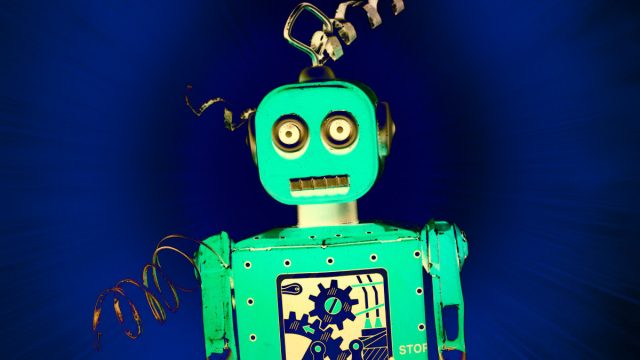
Illustration of a broken toy robot.

Early in the year, things got off to an exciting start when OpenAI’s ChatGPT experienced a significant technical malfunction that caused the AI model to generate increasingly incoherent responses, prompting users on Reddit to describe the system as “having a stroke” or “going insane.” During the glitch, ChatGPT’s responses would begin normally but then deteriorate into nonsensical text, sometimes mimicking Shakespearean language.

OpenAI later revealed that a bug in how the model processed language caused it to select the wrong words during text generation, leading to nonsense outputs (basically the text version of what we at Ars now call “jabberwockies“). The company fixed the issue within 24 hours, but the incident led to frustrations about the black box nature of commercial AI systems and users’ tendency to anthropomorphize AI behavior when it malfunctions.

The great Wonka incident

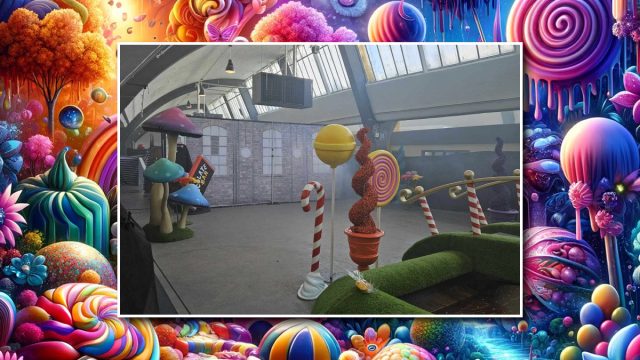
A photo of the Willy's Chocolate Experience, which did not match AI-generated promises.

A photo of “Willy’s Chocolate Experience” (inset), which did not match AI-generated promises, shown in the background. Credit: Stuart Sinclair

The collision between AI-generated imagery and consumer expectations fueled human frustrations in February when Scottish families discovered that “Willy’s Chocolate Experience,” an unlicensed Wonka-ripoff event promoted using AI-generated wonderland images, turned out to be little more than a sparse warehouse with a few modest decorations.

Parents who paid £35 per ticket encountered a situation so dire they called the police, with children reportedly crying at the sight of a person in what attendees described as a “terrifying outfit.” The event, created by House of Illuminati in Glasgow, promised fantastical spaces like an “Enchanted Garden” and “Twilight Tunnel” but delivered an underwhelming experience that forced organizers to shut down mid-way through its first day and issue refunds.

While the show was a bust, it brought us an iconic new meme for job disillusionment in the form of a photo: the green-haired Willy’s Chocolate Experience employee who looked like she’d rather be anywhere else on earth at that moment.

Mutant rat genitals expose peer review flaws

An actual laboratory rat, who is intrigued. Credit: Getty | Photothek

In February, Ars Technica senior health reporter Beth Mole covered a peer-reviewed paper published in Frontiers in Cell and Developmental Biology that created an uproar in the scientific community when researchers discovered it contained nonsensical AI-generated images, including an anatomically incorrect rat with oversized genitals. The paper, authored by scientists at Xi’an Honghui Hospital in China, openly acknowledged using Midjourney to create figures that contained gibberish text labels like “Stemm cells” and “iollotte sserotgomar.”

The publisher, Frontiers, posted an expression of concern about the article titled “Cellular functions of spermatogonial stem cells in relation to JAK/STAT signaling pathway” and launched an investigation into how the obviously flawed imagery passed through peer review. Scientists across social media platforms expressed dismay at the incident, which mirrored concerns about AI-generated content infiltrating academic publishing.

Chatbot makes erroneous refund promises for Air Canada

If, say, ChatGPT gives you the wrong name for one of the seven dwarves, it’s not such a big deal. But in February, Ars senior policy reporter Ashley Belanger covered a case of costly AI confabulation in the wild. In the course of online text conversations, Air Canada’s customer service chatbot told customers inaccurate refund policy information. The airline faced legal consequences later when a tribunal ruled the airline must honor commitments made by the automated system. Tribunal adjudicator Christopher Rivers determined that Air Canada bore responsibility for all information on its website, regardless of whether it came from a static page or AI interface.

The case set a precedent for how companies deploying AI customer service tools could face legal obligations for automated systems’ responses, particularly when they fail to warn users about potential inaccuracies. Ironically, the airline had reportedly spent more on the initial AI implementation than it would have cost to maintain human workers for simple queries, according to Air Canada executive Steve Crocker.

Will Smith lampoons his digital double

The real Will Smith eating spaghetti, parodying an AI-generated video from 2023.

The real Will Smith eating spaghetti, parodying an AI-generated video from 2023. Credit: Will Smith / Getty Images / Benj Edwards

In March 2023, a terrible AI-generated video of Will Smith’s AI doppelganger eating spaghetti began making the rounds online. The AI-generated version of the actor gobbled down the noodles in an unnatural and disturbing way. Almost a year later, in February 2024, Will Smith himself posted a parody response video to the viral jabberwocky on Instagram, featuring AI-like deliberately exaggerated pasta consumption, complete with hair-nibbling and finger-slurping antics.

Given the rapid evolution of AI video technology, particularly since OpenAI had just unveiled its Sora video model four days earlier, Smith’s post sparked discussion in his Instagram comments where some viewers initially struggled to distinguish between the genuine footage and AI generation. It was an early sign of “deep doubt” in action as the tech increasingly blurs the line between synthetic and authentic video content.

Robot dogs learn to hunt people with AI-guided rifles

A still image of a robotic quadruped armed with a remote weapons system, captured from a video provided by Onyx Industries.

A still image of a robotic quadruped armed with a remote weapons system, captured from a video provided by Onyx Industries. Credit: Onyx Industries

At some point in recent history—somewhere around 2022—someone took a look at robotic quadrupeds and thought it would be a great idea to attach guns to them. A few years later, the US Marine Forces Special Operations Command (MARSOC) began evaluating armed robotic quadrupeds developed by Ghost Robotics. The robot “dogs” integrated Onyx Industries’ SENTRY remote weapon systems, which featured AI-enabled targeting that could detect and track people, drones, and vehicles, though the systems require human operators to authorize any weapons discharge.

The military’s interest in armed robotic dogs followed a broader trend of weaponized quadrupeds entering public awareness. This included viral videos of consumer robots carrying firearms, and later, commercial sales of flame-throwing models. While MARSOC emphasized that weapons were just one potential use case under review, experts noted that the increasing integration of AI into military robotics raised questions about how long humans would remain in control of lethal force decisions.

Microsoft Windows AI is watching

A screenshot of Microsoft's new

A screenshot of Microsoft’s new “Recall” feature in action. Credit: Microsoft

In an era where many people already feel like they have no privacy due to tech encroachments, Microsoft dialed it up to an extreme degree in May. That’s when Microsoft unveiled a controversial Windows 11 feature called “Recall” that continuously captures screenshots of users’ PC activities every few seconds for later AI-powered search and retrieval. The feature, designed for new Copilot+ PCs using Qualcomm’s Snapdragon X Elite chips, promised to help users find past activities, including app usage, meeting content, and web browsing history.

While Microsoft emphasized that Recall would store encrypted snapshots locally and allow users to exclude specific apps or websites, the announcement raised immediate privacy concerns, as Ars senior technology reporter Andrew Cunningham covered. It also came with a technical toll, requiring significant hardware resources, including 256GB of storage space, with 25GB dedicated to storing approximately three months of user activity. After Microsoft pulled the initial test version due to public backlash, Recall later entered public preview in November with reportedly enhanced security measures. But secure spyware is still spyware—Recall, when enabled, still watches nearly everything you do on your computer and keeps a record of it.

Google Search told people to eat rocks

This is fine. Credit: Getty Images

In May, Ars senior gaming reporter Kyle Orland (who assisted commendably with the AI beat throughout the year) covered Google’s newly launched AI Overview feature. It faced immediate criticism when users discovered that it frequently provided false and potentially dangerous information in its search result summaries. Among its most alarming responses, the system advised humans could safely consume rocks, incorrectly citing scientific sources about the geological diet of marine organisms. The system’s other errors included recommending nonexistent car maintenance products, suggesting unsafe food preparation techniques, and confusing historical figures who shared names.

The problems stemmed from several issues, including the AI treating joke posts as factual sources and misinterpreting context from original web content. But most of all, the system relies on web results as indicators of authority, which we called a flawed design. While Google defended the system, stating these errors occurred mainly with uncommon queries, a company spokesperson acknowledged they would use these “isolated examples” to refine their systems. But to this day, AI Overview still makes frequent mistakes.

Stable Diffusion generates body horror

An AI-generated image created using Stable Diffusion 3 of a girl lying in the grass.

An AI-generated image created using Stable Diffusion 3 of a girl lying in the grass. Credit: HorneyMetalBeing

In June, Stability AI’s release of the image synthesis model Stable Diffusion 3 Medium drew criticism online for its poor handling of human anatomy in AI-generated images. Users across social media platforms shared examples of the model producing what we now like to call jabberwockies—AI generation failures with distorted bodies, misshapen hands, and surreal anatomical errors, and many in the AI image-generation community viewed it as a significant step backward from previous image-synthesis capabilities.

Reddit users attributed these failures to Stability AI’s aggressive filtering of adult content from the training data, which apparently impaired the model’s ability to accurately render human figures. The troubled release coincided with broader organizational challenges at Stability AI, including the March departure of CEO Emad Mostaque, multiple staff layoffs, and the exit of three key engineers who had helped develop the technology. Some of those engineers founded Black Forest Labs in August and released Flux, which has become the latest open-weights AI image model to beat.

ChatGPT Advanced Voice imitates human voice in testing

An illustration of a computer synthesizer spewing out letters.

AI voice-synthesis models are master imitators these days, and they are capable of much more than many people realize. In August, we covered a story where OpenAI’s ChatGPT Advanced Voice Mode feature unexpectedly imitated a user’s voice during the company’s internal testing, revealed by OpenAI after the fact in safety testing documentation. To prevent future instances of an AI assistant suddenly speaking in your own voice (which, let’s be honest, would probably freak people out), the company created an output classifier system to prevent unauthorized voice imitation. OpenAI says that Advanced Voice Mode now catches all meaningful deviations from approved system voices.

Independent AI researcher Simon Willison discussed the implications with Ars Technica, noting that while OpenAI restricted its model’s full voice synthesis capabilities, similar technology would likely emerge from other sources within the year. Meanwhile, the rapid advancement of AI voice replication has caused general concern about its potential misuse, although companies like ElevenLabs have already been offering voice cloning services for some time.

San Francisco’s robotic car horn symphony

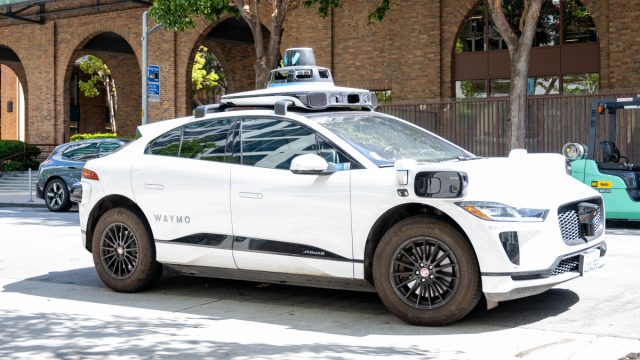
A Waymo self-driving car in front of Google's San Francisco headquarters, San Francisco, California, June 7, 2024.

A Waymo self-driving car in front of Google’s San Francisco headquarters, San Francisco, California, June 7, 2024. Credit: Getty Images

In August, San Francisco residents got a noisy taste of robo-dystopia when Waymo’s self-driving cars began creating an unexpected nightly disturbance in the South of Market district. In a parking lot off 2nd Street, the cars congregated autonomously every night during rider lulls at 4 am and began engaging in extended honking matches at each other while attempting to park.

Local resident Christopher Cherry’s initial optimism about the robotic fleet’s presence dissolved as the mechanical chorus grew louder each night, affecting residents in nearby high-rises. The nocturnal tech disruption served as a lesson in the unintentional effects of autonomous systems when run in aggregate.

Larry Ellison dreams of all-seeing AI cameras

A colorized photo of CCTV cameras in London, 2024.

In September, Oracle co-founder Larry Ellison painted a bleak vision of ubiquitous AI surveillance during a company financial meeting. The 80-year-old database billionaire described a future where AI would monitor citizens through networks of cameras and drones, asserting that the oversight would ensure lawful behavior from both police and the public.

His surveillance predictions reminded us of parallels to existing systems in China, where authorities already used AI to sort surveillance data on citizens as part of the country’s “sharp eyes” campaign from 2015 to 2020. Ellison’s statement reflected the sort of worst-case tech surveillance state scenario—likely antithetical to any sort of free society—that dozens of sci-fi novels of the 20th century warned us about.

A dead father sends new letters home

An AI-generated image featuring Dad's Uppercase handwriting.

An AI-generated image featuring my late father’s handwriting. Credit: Benj Edwards / Flux

AI has made many of us do weird things in 2024, including this writer. In October, I used an AI synthesis model called Flux to reproduce my late father’s handwriting with striking accuracy. After scanning 30 samples from his engineering notebooks, I trained the model using computing time that cost less than five dollars. The resulting text captured his distinctive uppercase style, which he developed during his career as an electronics engineer.

I enjoyed creating images showing his handwriting in various contexts, from folder labels to skywriting, and made the trained model freely available online for others to use. While I approached it as a tribute to my father (who would have appreciated the technical achievement), many people found the whole experience weird and somewhat disturbing. The things we unhinged Bing Chat-like journalists do to bring awareness to a topic are sometimes unconventional. So I guess it counts for this list!

For 2025? Expect even more AI

Thanks for reading Ars Technica this past year and following along with our team coverage of this rapidly emerging and expanding field. We appreciate your kind words of support. Ars Technica’s 2024 AI words of the year were: vibemarking, deep doubt, and the aforementioned jabberwocky. The old stalwart “confabulation” also made several notable appearances. Tune in again next year when we continue to try to figure out how to concisely describe novel scenarios in emerging technology by labeling them.

Looking back, our prediction for 2024 in AI last year was “buckle up.” It seems fitting, given the weirdness detailed above. Especially the part about the robot dogs with guns. For 2025, AI will likely inspire more chaos ahead, but also potentially get put to serious work as a productivity tool, so this time, our prediction is “buckle down.”

Finally, we’d like to ask: What was the craziest story about AI in 2024 from your perspective? Whether you love AI or hate it, feel free to suggest your own additions to our list in the comments. Happy New Year!

Photo of Benj Edwards

Benj Edwards is Ars Technica’s Senior AI Reporter and founder of the site’s dedicated AI beat in 2022. He’s also a tech historian with almost two decades of experience. In his free time, he writes and records music, collects vintage computers, and enjoys nature. He lives in Raleigh, NC.

2024: The year AI drove everyone crazy Read More »

twirling-body-horror-in-gymnastics-video-exposes-ai’s-flaws

Twirling body horror in gymnastics video exposes AI’s flaws


The slithy toves did gyre and gimble in the wabe

Nonsensical jabberwocky movements created by OpenAI’s Sora are typical for current AI-generated video, and here’s why.

A still image from an AI-generated video of an ever-morphing synthetic gymnast. Credit: OpenAI / Deedy

On Wednesday, a video from OpenAI’s newly launched Sora AI video generator went viral on social media, featuring a gymnast who sprouts extra limbs and briefly loses her head during what appears to be an Olympic-style floor routine.

As it turns out, the nonsensical synthesis errors in the video—what we like to call “jabberwockies”—hint at technical details about how AI video generators work and how they might get better in the future.

But before we dig into the details, let’s take a look at the video.

An AI-generated video of an impossible gymnast, created with OpenAI Sora.

In the video, we see a view of what looks like a floor gymnastics routine. The subject of the video flips and flails as new legs and arms rapidly and fluidly emerge and morph out of her twirling and transforming body. At one point, about 9 seconds in, she loses her head, and it reattaches to her body spontaneously.

“As cool as the new Sora is, gymnastics is still very much the Turing test for AI video,” wrote venture capitalist Deedy Das when he originally shared the video on X. The video inspired plenty of reaction jokes, such as this reply to a similar post on Bluesky: “hi, gymnastics expert here! this is not funny, gymnasts only do this when they’re in extreme distress.”

We reached out to Das, and he confirmed that he generated the video using Sora. He also provided the prompt, which was very long and split into four parts, generated by Anthropic’s Claude, using complex instructions like “The gymnast initiates from the back right corner, taking position with her right foot pointed behind in B-plus stance.”

“I’ve known for the last 6 months having played with text to video models that they struggle with complex physics movements like gymnastics,” Das told us in a conversation. “I had to try it [in Sora] because the character consistency seemed improved. Overall, it was an improvement because previously… the gymnast would just teleport away or change their outfit mid flip, but overall it still looks downright horrifying. We hoped AI video would learn physics by default, but that hasn’t happened yet!”

So what went wrong?

When examining how the video fails, you must first consider how Sora “knows” how to create anything that resembles a gymnastics routine. During the training phase, when the Sora model was created, OpenAI fed example videos of gymnastics routines (among many other types of videos) into a specialized neural network that associates the progression of images with text-based descriptions of them.

That type of training is a distinct phase that happens once before the model’s release. Later, when the finished model is running and you give a video-synthesis model like Sora a written prompt, it draws upon statistical associations between words and images to produce a predictive output. It’s continuously making next-frame predictions based on the last frame of the video. But Sora has another trick for attempting to preserve coherency over time. “By giving the model foresight of many frames at a time,” reads OpenAI’s Sora System Card, we’ve solved a challenging problem of making sure a subject stays the same even when it goes out of view temporarily.”

A still image from a moment where the AI-generated gymnast loses her head. It soon re-attaches to her body.

A still image from a moment where the AI-generated gymnast loses her head. It soon reattaches to her body. Credit: OpenAI / Deedy

Maybe not quite solved yet. In this case, rapidly moving limbs prove a particular challenge when attempting to predict the next frame properly. The result is an incoherent amalgam of gymnastics footage that shows the same gymnast performing running flips and spins, but Sora doesn’t know the correct order in which to assemble them because it’s pulling on statistical averages of wildly different body movements in its relatively limited training data of gymnastics videos, which also likely did not include limb-level precision in its descriptive metadata.

Sora doesn’t know anything about physics or how the human body should work, either. It’s drawing upon statistical associations between pixels in the videos in its training dataset to predict the next frame, with a little bit of look-ahead to keep things more consistent.

This problem is not unique to Sora. All AI video generators can produce wildly nonsensical results when your prompts reach too far past their training data, as we saw earlier this year when testing Runway’s Gen-3. In fact, we ran some gymnast prompts through the latest open source AI video model that may rival Sora in some ways, Hunyuan Video, and it produced similar twirling, morphing results, seen below. And we used a much simpler prompt than Das did with Sora.

An example from open source Chinese AI model Hunyuan Video with the prompt, “A young woman doing a complex floor gymnastics routine at the olympics, featuring running and flips.”

AI models based on transformer technology are fundamentally imitative in nature. They’re great at transforming one type of data into another type or morphing one style into another. What they’re not great at (yet) is producing coherent generations that are truly original. So if you happen to provide a prompt that closely matches a training video, you might get a good result. Otherwise, you may get madness.

As we wrote about image-synthesis model Stable Diffusion 3’s body horror generations earlier this year, “Basically, any time a user prompt homes in on a concept that isn’t represented well in the AI model’s training dataset, the image-synthesis model will confabulate its best interpretation of what the user is asking for. And sometimes that can be completely terrifying.”

For the engineers who make these models, success in AI video generation quickly becomes a question of how many examples (and how much training) you need before the model can generalize enough to produce convincing and coherent results. It’s also a question of metadata quality—how accurately the videos are labeled. In this case, OpenAI used an AI vision model to describe its training videos, which helped improve quality, but apparently not enough—yet.

We’re looking at an AI jabberwocky in action

In a way, the type of generation failure in the gymnast video is a form of confabulation (or hallucination, as some call it), but it’s even worse because it’s not coherent. So instead of calling it a confabulation, which is a plausible-sounding fabrication, we’re going to lean on a new term, “jabberwocky,” which Dictionary.com defines as “a playful imitation of language consisting of invented, meaningless words; nonsense; gibberish,” taken from Lewis Carroll’s nonsense poem of the same name. Imitation and nonsense, you say? Check and check.

We’ve covered jabberwockies in AI video before with people mocking Chinese video-synthesis models, a monstrously weird AI beer commercial, and even Will Smith eating spaghetti. They’re a form of misconfabulation where an AI model completely fails to produce a plausible output. This will not be the last time we see them, either.

How could AI video models get better and avoid jabberwockies?

In our coverage of Gen-3 Alpha, we called the threshold where you get a level of useful generalization in an AI model the “illusion of understanding,” where training data and training time reach a critical mass that produces good enough results to generalize across enough novel prompts.

One of the key reasons language models like OpenAI’s GPT-4 impressed users was that they finally reached a size where they had absorbed enough information to give the appearance of genuinely understanding the world. With video synthesis, achieving this same apparent level of “understanding” will require not just massive amounts of well-labeled training data but also the computational power to process it effectively.

AI boosters hope that these current models represent one of the key steps on the way to something like truly general intelligence (often called AGI) in text, or in AI video, what OpenAI and Runway researchers call “world simulators” or “world models” that somehow encode enough physics rules about the world to produce any realistic result.

Judging by the morphing alien shoggoth gymnast, that may still be a ways off. Still, it’s early days in AI video generation, and judging by how quickly AI image-synthesis models like Midjourney progressed from crude abstract shapes into coherent imagery, it’s likely video synthesis will have a similar trajectory over time. Until then, enjoy the AI-generated jabberwocky madness.

Photo of Benj Edwards

Benj Edwards is Ars Technica’s Senior AI Reporter and founder of the site’s dedicated AI beat in 2022. He’s also a tech historian with almost two decades of experience. In his free time, he writes and records music, collects vintage computers, and enjoys nature. He lives in Raleigh, NC.

Twirling body horror in gymnastics video exposes AI’s flaws Read More »