AI development tools

hollywood-studios-target-ai-image-generator-in-copyright-lawsuit

Hollywood studios target AI image generator in copyright lawsuit

The legal action follows similar moves in other creative industries, with more than a dozen major news companies suing AI company Cohere in February over copyright concerns. In 2023, a group of visual artists sued Midjourney for similar reasons.

Studios claim Midjourney knows what it’s doing

Beyond allowing users to create these images, the studios argue that Midjourney actively promotes copyright infringement by displaying user-generated content featuring copyrighted characters in its “Explore” section. The complaint states this curation “show[s] that Midjourney knows that its platform regularly reproduces Plaintiffs’ Copyrighted Works.”

The studios also allege that Midjourney has technical protection measures available that could prevent outputs featuring copyrighted material but has “affirmatively chosen not to use copyright protection measures to limit the infringement.” They cite Midjourney CEO David Holz admitting the company “pulls off all the data it can, all the text it can, all the images it can” for training purposes.

According to Axios, Disney and NBCUniversal attempted to address the issue with Midjourney before filing suit. While the studios say other AI platforms agreed to implement measures to stop IP theft, Midjourney “continued to release new versions of its Image Service” with what Holz allegedly described as “even higher quality infringing images.”

“We are bringing this action today to protect the hard work of all the artists whose work entertains and inspires us and the significant investment we make in our content,” said Kim Harris, NBCUniversal’s executive vice president and general counsel, in a statement.

This lawsuit signals a new front in Hollywood’s conflict over AI. Axios highlights this shift: While actors and writers have fought to protect their name, image, and likeness from studio exploitation, now the studios are taking on tech companies over intellectual property concerns. Other major studios, including Amazon, Netflix, Paramount Pictures, Sony, and Warner Bros., have not yet joined the lawsuit, though they share membership with Disney and Universal in the Motion Picture Association.

Hollywood studios target AI image generator in copyright lawsuit Read More »
company-apologizes-after-ai-support-agent-invents-policy-that-causes-user-uproar

Company apologizes after AI support agent invents policy that causes user uproar

On Monday, a developer using the popular AI-powered code editor Cursor noticed something strange: Switching between machines instantly logged them out, breaking a common workflow for programmers who use multiple devices. When the user contacted Cursor support, an agent named “Sam” told them it was expected behavior under a new policy. But no such policy existed, and Sam was a bot. The AI model made the policy up, sparking a wave of complaints and cancellation threats documented on Hacker News and Reddit.

This marks the latest instance of AI confabulations (also called “hallucinations”) causing potential business damage. Confabulations are a type of “creative gap-filling” response where AI models invent plausible-sounding but false information. Instead of admitting uncertainty, AI models often prioritize creating plausible, confident responses, even when that means manufacturing information from scratch.

For companies deploying these systems in customer-facing roles without human oversight, the consequences can be immediate and costly: frustrated customers, damaged trust, and, in Cursor’s case, potentially canceled subscriptions.

How it unfolded

The incident began when a Reddit user named BrokenToasterOven noticed that while swapping between a desktop, laptop, and a remote dev box, Cursor sessions were unexpectedly terminated.

“Logging into Cursor on one machine immediately invalidates the session on any other machine,” BrokenToasterOven wrote in a message that was later deleted by r/cursor moderators. “This is a significant UX regression.”

Confused and frustrated, the user wrote an email to Cursor support and quickly received a reply from Sam: “Cursor is designed to work with one device per subscription as a core security feature,” read the email reply. The response sounded definitive and official, and the user did not suspect that Sam was not human.

Screenshot:

Screenshot of an email from the Cursor support bot named Sam. Credit: BrokenToasterOven / Reddit

After the initial Reddit post, users took the post as official confirmation of an actual policy change—one that broke habits essential to many programmers’ daily routines. “Multi-device workflows are table stakes for devs,” wrote one user.

Shortly afterward, several users publicly announced their subscription cancellations on Reddit, citing the non-existent policy as their reason. “I literally just cancelled my sub,” wrote the original Reddit poster, adding that their workplace was now “purging it completely.” Others joined in: “Yep, I’m canceling as well, this is asinine.” Soon after, moderators locked the Reddit thread and removed the original post.

Company apologizes after AI support agent invents policy that causes user uproar Read More »

carmack-defends-ai-tools-after-quake-fan-calls-microsoft-ai-demo-“disgusting”

Carmack defends AI tools after Quake fan calls Microsoft AI demo “disgusting”

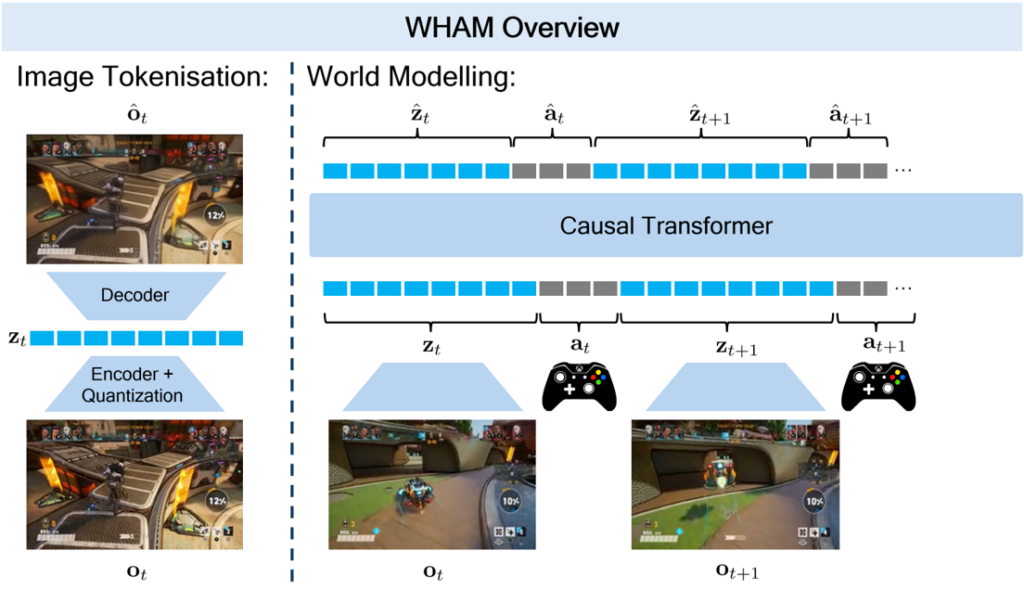
The current generative Quake II demo represents a slight advancement from Microsoft’s previous generative AI gaming model (confusingly titled “WHAM” with only one “M”) we covered in February. That earlier model, while showing progress in generating interactive gameplay footage, operated at 300×180 resolution at 10 frames per second—far below practical modern gaming standards. The new WHAMM demonstration doubles the resolution to 640×360. However, both remain well below what gamers expect from a functional video game in almost every conceivable way. It truly is an AI tech demo.

A Microsoft diagram of the WHAMM system.

A Microsoft diagram of the WHAM system. Credit: Microsoft

For example, the technology faces substantial challenges beyond just performance metrics. Microsoft acknowledges several limitations, including poor enemy interactions, a short context length of just 0.9 seconds (meaning the system forgets objects outside its view), and unreliable numerical tracking for game elements like health values.

Which brings us to another point: A significant gap persists between the technology’s marketing portrayal and its practical applications. While industry veterans like Carmack and Sweeney view AI as another tool in the development arsenal, demonstrations like the Quake II instance may create inflated expectations about AI’s current capabilities for complete game generation.

The most realistic near-term application of generative AI technology remains as coding assistants and perhaps rapid prototyping tools for developers, rather than a drop-in replacement for traditional game development pipelines. The technology’s current limitations suggest that human developers will remain essential for creating compelling, polished game experiences for now. But given the general pace of progress, that might be small comfort for those who worry about losing jobs to AI in the near-term.

Ultimately, Sweeney says not to worry: “There’s always a fear that automation will lead companies to make the same old products while employing fewer people to do it,” Sweeney wrote in a follow-up post on X. “But competition will ultimately lead to companies producing the best work they’re capable of given the new tools, and that tends to mean more jobs.”

And Carmack closed with this: “Will there be more or less game developer jobs? That is an open question. It could go the way of farming, where labor-saving technology allow a tiny fraction of the previous workforce to satisfy everyone, or it could be like social media, where creative entrepreneurship has flourished at many different scales. Regardless, “don’t use power tools because they take people’s jobs” is not a winning strategy.”

Carmack defends AI tools after Quake fan calls Microsoft AI demo “disgusting” Read More »