Author name: Tim Belzer

meet-the-first-person-to-own-over-40,000-paid-steam-games

Meet the first person to own over 40,000 paid Steam games

With those games excluded, SonixLegend’s collection actually encompasses the vast majority of the 45,000 or so “full profile” paid games tracked by SteamDB. But with thousands of new games being released on Steam every year, it might not be long until a badge for 50,000 owned games becomes a real possibility.

So what’s good?

It’s hard to gauge just how much of SonixLegend’s massive Steam collection officially counts as a “backlog” since their private account doesn’t offer a public breakdown of playtime for most individual titles. That said, there are only 261 games for which SonixLegend has earned at least one achievement and only 16 that were good enough to merit a user review (they all ended up as “Recommended”).

The implications of SonixLegend trying to actually work through their Steam backlog can be more than a little intimidating, though. HowLongToBeat data suggests that finishing just the “top 2,500” games in SonixLegend’s Steam collection would take over 2,463 days, or nearly seven years of 24/7 gameplay.

Ironically, SonixLegend’s favorite game isn’t even one that counts toward their record-setting badge. The user’s Steam profile page lists 551 hours spent playing Valve’s 2010 free-to-play overhead shooter Alien Swarm. In a way, it’s nice to know that, even with access to nearly every paid modern PC game in existence, the one game this user keeps coming back to is a 15-year-old title that doesn’t cost a penny.

Meet the first person to own over 40,000 paid Steam games Read More »

us-uncovers-100,000-sim-cards-that-could-have-“shut-down”-nyc-cell-network

US uncovers 100,000 SIM cards that could have “shut down” NYC cell network

The US Secret Service announced this morning that it has located and seized a cache of telecom devices large enough to “shut down the cellular network in New York City.” And it believes a nation-state is responsible.

According to the agency, “more than 300 co-located SIM servers and 100,000 SIM cards” were discovered at multiple locations within the New York City area. Photos of the seized gear show what appear to be “SIM boxes” bristling with antennas and stuffed with SIM cards, then stacked on six-shelf racks. (SIM boxes are often used for fraud.) One photo even shows neatly stacked towers of punched-out SIM card packaging, suggesting that whoever assembled the system invested some quality time in just getting the whole thing set up.

The gear was identified as part of a Secret Service investigation into “anonymous telephonic threats” made against several high-ranking US government officials, but the setup seems designed for something larger than just making a few threats. The Secret Service believes that the system could have been capable of activities like “disabling cell phone towers, enabling denial of services attacks, and facilitating anonymous, encrypted communication between potential threat actors and criminal enterprises.”

So many empty SIM card packages… Secret Service

Analysis of data from so many devices will take time, but preliminary investigation already suggests that “nation-state threat actors” were involved; that is, this is probably some country’s spy hardware. With the UN General Assembly taking place this week in New York, it is possible that the system was designed to spy on or disrupt delegates, but the gear was found in various places up to 35 miles from the UN. BBC reporting suggests that the equipment was “seized from SIM farms at abandoned apartment buildings across more than five sites,” and the ultimate goal remains unclear.

While the gear has been taken offline, no arrests have yet been made, and the investigation continues.

US uncovers 100,000 SIM cards that could have “shut down” NYC cell network Read More »

supreme-court-lets-trump-fire-ftc-democrat-despite-90-year-old-precedent

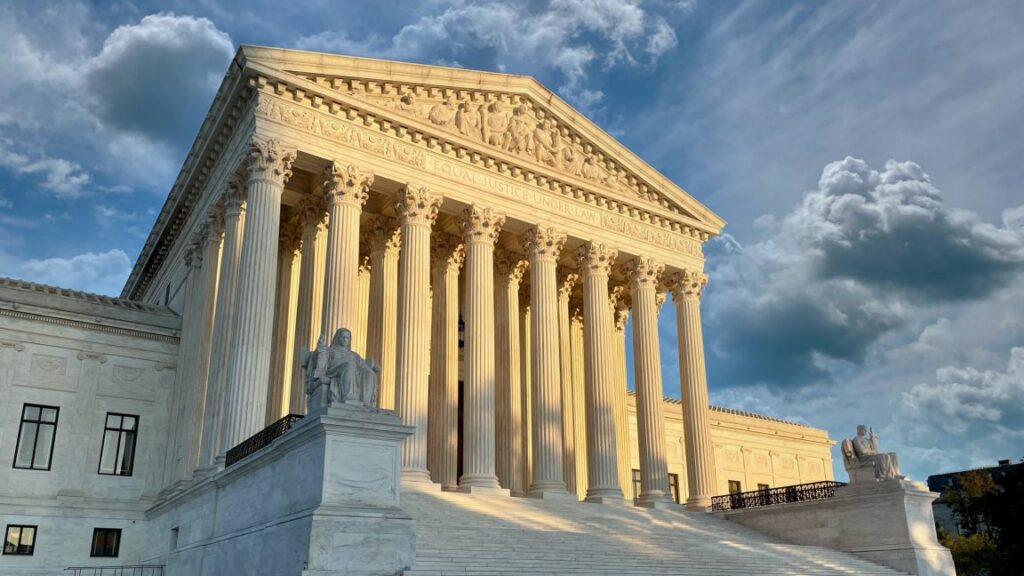
Supreme Court lets Trump fire FTC Democrat despite 90-year-old precedent

The Supreme Court yesterday allowed President Trump to fire a Democratic member of the Federal Trade Commission and will decide whether to overturn a 90-year-old precedent that says the president cannot fire an FTC commissioner without cause.

Trump fired Commissioner Rebecca Kelly Slaughter in March with a notice that said her “continued service on the FTC is inconsistent with my administration’s priorities.” Trump did so despite the 1935 ruling in Humphrey’s Executor v. United States, in which the Supreme Court unanimously held that the president can only remove FTC commissioners for inefficiency, neglect of duty, or malfeasance in office.

An appeals court reinstated Slaughter three weeks ago, with judges finding that “the government has no likelihood of success on appeal given controlling and directly on point Supreme Court precedent.” But on September 8, Supreme Court Chief Justice John Roberts granted a stay that temporarily blocked the lower-court ruling against Trump.

The Supreme Court majority followed that up yesterday by granting a longer-term stay that will keep Slaughter off the FTC at least until the court rules on the merits of the case. The case will be scheduled for arguments in the December 2025 session.

“The parties are directed to brief and argue the following questions: (1) Whether the statutory removal protections for members of the Federal Trade Commission violate the separation of powers and, if so, whether Humphrey’s Executor v. United States, 295 U. S. 602 (1935), should be overruled. (2) Whether a federal court may prevent a person’s removal from public office, either through relief at equity or at law,” the Supreme Court said.

Kagan: Trump given control of independent agencies

Justice Elena Kagan wrote a dissent that was joined by Justices Ketanji Brown Jackson and Sonia Sotomayor. Kagan wrote that the majority is continuing to use the court’s emergency docket “to permit what our own precedent bars,” “transfer government authority from Congress to the President,” and thus “reshape the Nation’s separation of powers.”

Supreme Court lets Trump fire FTC Democrat despite 90-year-old precedent Read More »

google-play-is-getting-a-gemini-powered-ai-sidekick-to-help-you-in-games

Google Play is getting a Gemini-powered AI Sidekick to help you in games

The era of Google’s Play’s unrivaled dominance may be coming to an end in the wake of the company’s antitrust loss, but Google’s app store isn’t going anywhere. In fact, the Play Store experience is getting a massive update with more personalization, content, and yes, AI. This is Google, after all.

The revamped Google Play Games is a key part of this update. Gamer profiles will now have a public face, allowing you to interact with other players if you choose. Play Games will track your activity for daily streaks, which will be shown on your profile and unlock new Play Points rewards. Your profile will also display your in-game achievements.

Your gaming exploits can also span multiple platforms. Google Play Games for PC is officially leaving beta. Google says there are now 200,000 games that work across mobile and PC, and even more PC-friendly titles, like Deep Rock Galactic: Survivor, are on the way. Your stats and streaks will apply across both mobile and PC as long as the title comes from the Play Store.

At the core of Google’s app store revamp is the You Tab, which will soon take its place in the main navigation bar of the Play Store. This page will show your rewards, subscriptions, game, stats, and more—and it goes beyond gaming. The You Tab will recommend a variety of content on Google Play, including books and podcasts.

Google Play is getting a Gemini-powered AI Sidekick to help you in games Read More »

eu-investigates-apple,-google,-and-microsoft-over-handling-of-online-scams

EU investigates Apple, Google, and Microsoft over handling of online scams

The EU is set to scrutinize if Apple, Google, and Microsoft are failing to adequately police financial fraud online, as it steps up efforts to police how Big Tech operates online.

The EU’s tech chief Henna Virkkunen told the Financial Times that on Tuesday, the bloc’s regulators would send formal requests for information to the three US Big Tech groups as well as global accommodation platform Booking Holdings, under powers granted under the Digital Services Act to tackle financial scams.

“We see that more and more criminal actions are taking place online,” Virkkunen said. “We have to make sure that online platforms really take all their efforts to detect and prevent that kind of illegal content.”

The move, which could later lead to a formal investigation and potential fines against the companies, comes amid transatlantic tensions over the EU’s digital rulebook. US President Donald Trump has threatened to punish countries that “discriminate” against US companies with higher tariffs.

Virkkunnen stressed the commission looked at the operations of individual companies, rather than where they were based. She will scrutinize how Apple and Google are handling fake applications in their app stores, such as fake banking apps.

She said regulators would also look at fake search results in the search engines of Google and Microsoft’s Bing. The bloc wants to have more information about the approach Booking Holdings, whose biggest subsidiary Booking.com is based in Amsterdam, is taking to fake accommodation listings. It is the only Europe-based company among the four set to be scrutinized.

EU investigates Apple, Google, and Microsoft over handling of online scams Read More »

f1-in-azerbaijan:-this-sport-is-my-red-flag

F1 in Azerbaijan: This sport is my red flag

A tailwind caught out Alpine’s Pierre Gasly in Q1, and his rookie teammate Franco Colapinto hit the wall at the same corner shortly after. Sauber’s Nico Hulkenberg also crashed, although not badly enough that he couldn’t return to the pit under his own steam. As mentioned, Hamilton went no further than Q2, and Haas rookie Oliver Bearman was responsible for one of those six red flags when he collided with a wall.

Q3 was interrupted by light rain, just after Carlos Sainz had set a fantastic time in the other Williams. Had more rain arrived, Sainz would surely have started on pole position for Sunday’s race. But things cleared up enough for the other drivers to complete some laps.

BAKU, AZERBAIJAN - SEPTEMBER 21: Max Verstappen of the Netherlands driving the (1) Oracle Red Bull Racing RB21 leads Carlos Sainz of Spain driving the (55) Williams FW47 Mercedes on track during the F1 Grand Prix of Azerbaijan at Baku City Circuit on September 21, 2025 in Baku, Azerbaijan.

The old city section. Credit: James Sutton – Formula 1/Formula 1 via Getty Images

Or try to, at least. With only four times on the board, Leclerc crashed heavily at turn 15, the third time in recent years. Championship leader Oscar Piastri also found the wall in his McLaren, putting the pair in ninth and eighth for the race. Lando Norris, in the other McLaren, was only able to secure seventh on the grid—like Canada and Monza, the McLaren does not have an advantage at low-downforce circuits.

On the other hand, cold temperatures and low downforce play well to the Mercedes’ strength, and its drivers George Russell and Kimi Antonelli would start fourth and fifth. As we saw at Monza, Red Bull has unlocked some speed on tracks with these characteristics, too, and Yuki Tsunoda put in one of his best qualifying performances all year to grab sixth for the start.

Liam Lawson, who started the season at Red Bull before swapping seats with Tsunoda to move to the Racing Bulls, had an even better day, snagging third. Sainz would still start on the front row, but next to Max Verstappen, who demonstrated his mastery of car control in changeable conditions and uncertain grip to get pole position.

Almost no chaos in the race

If Saturday was bad for McLaren, Sunday was worse. Piastri jumped the start, then got swamped on the grid after his anti-stall system kicked in. He made it as far as turn 5 before locking up his front tires and finding the wall, heavily. The championship leader would watch the rest of the race from behind the crash fencing.

F1 in Azerbaijan: This sport is my red flag Read More »

oklahoma’s-big-“tv-nudes”-scandal-was…-a-jackie-chan-movie-on-a-samsung-streaming-service

Oklahoma’s big “TV nudes” scandal was… a Jackie Chan movie on a Samsung streaming service

News 4 watched the movie and confirmed it contains several scenes that match the description given by board members, including one where a group of fully nude women [!] work inside a factory [!!] packaging cocaine [!!!], some wearing only lab coats [!!!!].

Another scene shows a fully nude woman giving a man a massage, eventually moving under the table while the dialogue strongly suggests sexual activity.

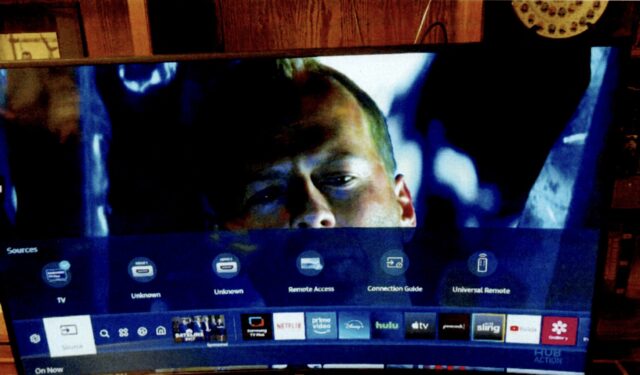
But why was The Protector showing on a TV in a state office building at all? Investigators came to find out that the Samsung smart TV in question—recently installed in the office—had been set up in such a way that it defaulted to showing Samsung TV Plus Channel 1204, the “Movie Hub Action.” (You can see Samsung’s full list of TV Plus streaming channels here.) And at the time of the state board meeting, Movie Hub Action was streaming The Protector. How and why the TV was turned on or switched to this streaming channel isn’t clear, but the whole thing appears to be an absolutely bizarre accident.

As part of this important investigation, the sheriff’s office then took clips from The Protector to the board members who complained. According to the Oklahoma Voice, “The board members, Becky Carson and Ryan Deatherage, confirmed to the Sheriff’s Office that the movie was consistent with what they saw on the TV.”

Photo of the TV.

Behold! The actual TV from the incident. Credit: Alias

Hooking smart TVs up to the Internet looks increasingly like a bad idea, though not usually for the reason found in this case. TV manufacturers have taken what should have been a useful feature and turned it into a way to spy on what you’re watching and to push ads to your TV.

Now you can add “showing naked, cocaine-packaging factory workers to Oklahoma Board of Education members” to the list of grievances.

Oklahoma’s big “TV nudes” scandal was… a Jackie Chan movie on a Samsung streaming service Read More »

microsoft-raises-xbox-console-prices-for-the-second-time-this-year

Microsoft raises Xbox console prices for the second time this year

Here we go again

Higher than usual inflation can help explain some of the nominal price increases for the oldest Xbox consoles affected by today’s price hikes. The $300 for an Xbox Series S at launch in November 2020 is worth roughly $375 in August 2025 dollars, for instance. And the $500 for an Xbox Series X in 2020 is now worth about $625.

But the particularly sharp price increases for more recent Xbox configurations can’t really use that inflation excuse. The disc-drive-free Digital Xbox Series X Digital and 2TB “Galaxy Special Edition” are now a whopping 33 percent more expensive than they were at launch in October 2024. A year’s worth of inflation would account for only a small fraction of that.

Even accounting for inflation, though, the current spate of nominal console price increases goes against a near-universal, decades-long trend of game console prices dropping significantly in the years following their launch. Those days seem well and truly gone now, as console makers’ costs remain high thanks in part to current tariff uncertainty and in part to the wider slowdown of Moore’s Law.

We’ll see just how much the market can bear aging console hardware that increases in price over time rather than decreases. But until and unless consumers start balking, it looks like ever-increasing console prices are here to stay.

Microsoft raises Xbox console prices for the second time this year Read More »

chimps-consume-alcohol-equivalent-of-nearly-2-drinks-a-day

Chimps consume alcohol equivalent of nearly 2 drinks a day

Nearly two drinks a day

This latest study involved chimp populations at the Ngogo Chimpanzee Project (Uganda) and a second site at Tai (Ivory Coast), where scientists have estimated the animals consume between 5 to 10 percent of their body weight (about 40 kilos) in fruit each day—around 45 kilograms. The authors collected fallen fruit pulp samples from both sites, packed them in airtight containers, and froze them back at base camp to keep the fruit from ripening further.

Then they quantified the ethanol concentrations using a breathalyzer, a portable gas chromatograph, and chemical testing. The Uganda fruit contained 0.32 percent ethanol, while the Ivory Coast fruit contained 0.31 percent ethanol, which might not sound like much until you consider just how much fruit they eat. And the most frequently consumed fruit at both sites had the highest ethanol content.

If anything, this is a conservative estimate, per Dudley. “If the chimps are randomly sampling ripe fruit, then that’s going to be their average consumption rate, independent of any preference for ethanol,” he said. “But if they are preferring riper and/or more sugar-rich fruits, then this is a conservative lower limit for the likely rate of ethanol ingestion.” That’s in keeping with a 2016 report that captive aye-ayes and slow lorises prefer nectar with the highest alcohol content.

“Our findings imply that our ancestors were similarly chronically exposed to dietary alcohol,” co-author Aleksey Maro, a graduate student at UC Berkeley, told New Scientist. “The drunken monkey hypothesis suggests that this exposure caused our species to evolve an association between alcohol consumption and the reward of finding fruit sugars, and explains human attraction to alcohol today.” One caveat is that apes ingest ethanol accidentally, while humans drink it deliberately.

“What we’re realizing from this work is that our relationship with alcohol goes deep back into evolutionary time, probably about 30 million years,” University of St. Andrews primatologist Catherine Hobaiter, who was not involved with the study, told BBC News. “Maybe for chimpanzees, this is a great way to create social bonds, to hang out together on the forest floor, eating those fallen fruits.”

The next step is to sample the chimps’ urine to see if it contains any alcohol metabolites, as was found in a 2022 study on spider monkeys. This will further refine estimates for how much ethanol-laden fruit the chimps eat every day. Maro spent this summer in Ngogo, sleeping in trees—protected from the constant streams by an umbrella—to collect urine samples.

Science Advances, 2025. DOI: 10.1126/sciadv.adw1665 (About DOIs).

Chimps consume alcohol equivalent of nearly 2 drinks a day Read More »

two-of-the-kremlin’s-most-active-hack-groups-are-collaborating,-eset-says

Two of the Kremlin’s most active hack groups are collaborating, ESET says

But ESET said its most likely hypothesis is that Turla and Gamaredon were working together. “Given that both groups are part of the Russian FSB (though in two different Centers), Gamaredon provided access to Turla operators so that they could issue commands on a specific machine to restart Kazuar, and deploy Kazuar v2 on some others,” the company said.

Friday’s post noted that Gamaredon has been seen collaborating with other hack groups previously, specifically in 2020 with a group ESET tracks under the name InvisiMole.

In February, ESET said, company researchers spotted four distinct Gamaredon-Turla co-compromises in Ukraine. On all of the machines, Gamaredon deployed a wide range of tools, including those tracked under the names PteroLNK, PteroStew, PteroOdd, PteroEffigy, and PteroGraphin. Turla, for its part, installed version 3 of its proprietary malware Kazuar.

ESET software installed on one of the compromised devices observed Turla issuing commands through the Gamaredon implants.

“PteroGraphin was used to restart Kazuar, possibly after Kazuar crashed or was not launched automatically,” ESET said. “Thus, PteroGraphin was probably used as a recovery method by Turla. This is the first time that we have been able to link these two groups together via technical indicators (see First chain: First chain: Restart of Kazuar v3).”

Then, in April and again in June, ESET said it detected Kazuar v2 installers being deployed by Gamaredon malware. In all the cases, ESET software was installed after the compromises, so it wasn’t possible to recover the payloads. Nonetheless, the firm said it believes an active collaboration between the groups is the most likely explanation.

“All those elements, and the fact that Gamaredon is compromising hundreds if not thousands of machines, suggest that Turla is interested only in specific machines, probably ones containing highly sensitive intelligence,” ESET speculated.

Two of the Kremlin’s most active hack groups are collaborating, ESET says Read More »

rfk-jr.’s-anti-vaccine-panel-realizes-it-has-no-idea-what-it’s-doing,-skips-vote

RFK Jr.’s anti-vaccine panel realizes it has no idea what it’s doing, skips vote


With a lack of data and confusing language, the panel tabled the vote indefinitely.

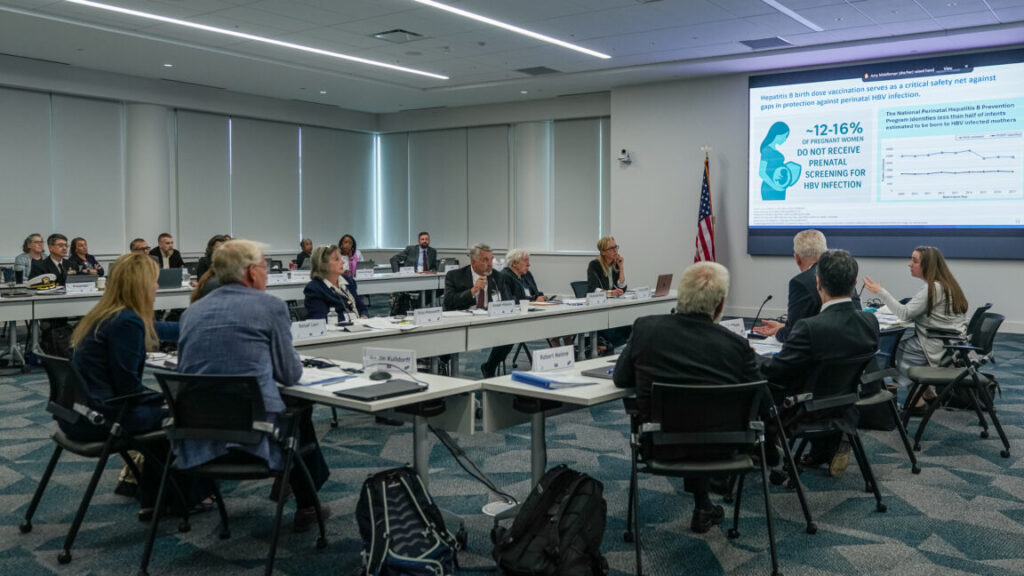
Catherine Stein, far right, speaks during a meeting of the CDC’s Advisory Committee on Immunization Practices on September 18, 2025 in Chamblee, Georgia. Credit: Getty | Elijah Nouvelage

The second day of a two-day meeting of the Advisory Committee on Immunization Practices—a panel currently made up of federal vaccine advisors hand-selected by anti-vaccine activist Robert F. Kennedy, Jr.—is off to a dramatic start, with the advisors seemingly realizing they have no idea what they’re doing.

The inexperienced, questionably qualified group that has espoused anti-vaccine rhetoric started its second day of deliberations by reversing a vote taken the previous day on federal coverage for the measles, mumps, rubella, and varicella (MMRV) vaccine. Yesterday, the group voted to restrict access to MMRV, stripping recommendations for its use in children under age 4. While that decision was based on no new data, it passed with majority support of 8–3 (with one abstention). (For an explanation of that, see our coverage of yesterday’s part of the meeting here.)

But puzzlingly, they then voted to uphold access and coverage of MMRV vaccines for children under age 4 if they receive free vaccines through the federal Vaccines for Children program, which covers about half of American children, mostly low-income. The discrepancy projected the idea that the alleged safety concerns that led the panel to rescind the recommendation for MMRV generally, somehow did not apply to low-income, vulnerable children. The vote also created significant confusion for VFC coverage, which typically aligns with recommendations made by the panel.

Today, Kennedy’s ACIP retook the vote, deciding 9-0 (with three abstentions) to align VFC coverage with their vote yesterday to strip the recommendation for MMRV in young children.

Hepatitis B vaccine newborn dose

Next, they moved to a vote they failed to take yesterday as scheduled—a vote to strip a recommendation for a dose of hepatitis B vaccine that is currently recommended to be given universally on the first day of a baby’s life. Instead, the proposed recommendation would be to wait at least a month before the first dose—opening a window for a highly infectious disease that leads to chronic liver disease and cancer—unless the baby’s mother tested positive for the virus.

While it initially seemed that the panel was poised to approve the change, cracks in the plan began to appear quickly this morning, as some members of the panel noted that the proposed recommendation made no sense and was based on zero data.

Joseph Hibbeln, a psychiatrist on the panel, raised the obvious concern yesterday, saying: “I’m unclear if we’ve been presented with any safety or data comparing before one month to after one month, and I’m wondering why one month was selected as our time point and if there are data to help to inform us if there’s greater risk of adverse effects before one month or after one month at all, let alone in negative mothers.”

There was no data comparing the risks and benefits of moving the first dose from the day of birth to any other time point. And there is no data suggesting that such a move would be more or less safe.

Adam Langer, Acting Principal Deputy Director of the CDC’s National Center for HIV, Viral Hepatitis, STD, and Tuberculosis Prevention, stressed in his presentation on the safety data yesterday, that the vaccine is safe—there are no safety concerns for giving a dose at birth. Adverse side effects are rare, he said, and when they do occur, they’re mild. “The worst adverse event you could imagine, anaphylaxis, has been very rarely reported at only 1.1 cases per 1 million vaccine doses administered.”

Langer gave a clear explanation for why newborns are vaccinated at day one. Hepatitis B, which primarily affects the liver, spreads via bodily fluids and can live on surfaces for up to seven days. It can spread easily; only a tiny microscopic amount of blood or fluid is enough for a child to be infected. For some, an infection can be short-lived, but for others it can become chronic, which leads to liver disease, cirrhosis, liver transplant, and liver cancer. The risk of the infection becoming chronic increases with the younger someone is when they’re infected.

Benefits and harms

Newborns who get hepatitis B from their mothers at birth have a 90 percent chance of developing a chronic infection, and 25 percent of those children will die prematurely from the disease. Up to 16 percent of pregnant women in the US are not tested for hepatitis B during pregnancy. Newborns and babies can also get infected from other people in their family or household, given hepatitis B’s infectiousness. Prior to the universal birth dose recommendation, a study of US-born children born to immigrant mothers found that 7 percent to 11 percent of them had hepatitis B while their mothers were negative. This highlights that unvaccinated babies and children can pick up the infection from family or the community.

Part of the reason for this is the elusiveness of the disease. While about 2.4 million people in the US are infected with hepatitis B, about 50 percent of those infected do not know that they’re infected.

In 1991, ACIP began recommending universal hepatitis B vaccination at birth; acute hepatitis B cases then fell from around 18,000 to about 5,500 in 2005 to about 2,200 in 2023. Since 2018, ACIP has recommended universal Hep B vaccination for all newborns within 24 hours of birth.

In the discussion, panel members pushed back on the universal birth dose, arguing that if mothers tested negative, there was little to no risk—downplaying the risk of other family or community exposure and assuming that test coverage could increase to 100 percent. There was a lot of discussion of why some women aren’t tested and if doctors can just try to assess whether there’s a risk that a family member might have the infection—even if those family members don’t know themselves that they’re infected.

Data and trust

Langer acknowledged there might be ways to assess risk from at least the mother in the 24-hour window after birth—”or,” he suggested, “you cannot have to worry about all of those different things that could go wrong, and you could simply give the vaccine because there is no data available that says that there is any harm that would come to a newborn compared to a one-month-old infant [getting the vaccine.]”

He summed up the discussion succinctly: “The only thing that we’re discussing here is if there’s some benefit or removal of harm that comes from waiting a month. And I have not seen any data that says that there is any benefit to the infant of waiting a month, but there are a number of potential harms to the infant of waiting a month.”

Panel member Robert Malone, who has falsely claimed that COVID-19 vaccines cause a form of AIDS, explained that the proposed change for the hep B vaccination was not due to any safety concern or evidence-based reason, but about trust among parents who have been exposed to vaccine misinformation.

“The signal that is prompting this is not one of safety, it is one of trust,” Malone said yesterday. “It is one of parents uncomfortable with this medical procedure being performed at birth in a rather unilateral fashion without significant informed consent at a time in particular when there has been a loss of trust in the public health enterprise and vaccines in general.”

Dashed decisions

But the questions and uncertainties of the proposed recommendation and the data behind it dogged the committee again this morning.

This morning, the voting language was put on a slide and immediately drew criticism. The language was:

If a mother tests [hepatitis B]-negative:

  • The first dose of the Hepatitis B vaccine is not given until the child is at least one month old.
  • Infants may receive a dose of Hepatitis B vaccine before one month according to individual based decision-making. *

*Also referred to as shared clinical decision-making.

Hibbeln, the psychiatrist, again pushed back, this time noting that the language of the change is confusing. “You can’t say don’t give it and then give an opportunity to give it,” he said, arguing that shared clinical decision-making is, essentially, all or nothing.

Discussion quickly spiraled, with another member questioning whether there was any data presented at all on the proposed recommendation. There was a fast motion to table the vote indefinitely, and the motion to table passed in a speedy vote of 11–1, with the ACIP chair, Martin Kulldorff, being the only holdout.

For the rest of the day, the panel is discussing COVID-19 vaccines. Stay tuned.

Photo of Beth Mole

Beth is Ars Technica’s Senior Health Reporter. Beth has a Ph.D. in microbiology from the University of North Carolina at Chapel Hill and attended the Science Communication program at the University of California, Santa Cruz. She specializes in covering infectious diseases, public health, and microbes.

RFK Jr.’s anti-vaccine panel realizes it has no idea what it’s doing, skips vote Read More »

in-new-level-of-stupid,-rfk-jr.’s-anti-vaccine-advisors-axe-mmrv-recommendation

In new level of stupid, RFK Jr.’s anti-vaccine advisors axe MMRV recommendation


The vote to strip the recommendation came after a day of inept discussion.

An MMR and VAR vaccine ready for a pediatric vaccination at Kaiser Permanente East Medical offices in Denver in 2015. Credit: Getty | Joe Amon

The panel of vaccine advisors hand-selected by anti-vaccine activist Robert F. Kennedy Jr. voted on Thursday to change the federal vaccine recommendations for children, removing safe, well-established vaccine doses from current schedules and realizing Kennedy’s anti-vaccine agenda to erode federal vaccine policy and sow distrust.

Specifically, the panel—the Advisory Committee on Immunization Practices (ACIP)—voted to remove the Centers for Disease Control and Prevention’s previous recommendation for use of a measles, mumps, rubella, varicella (chickenpox) MMRV combination vaccine for children under 4 years old.

The context

In June, Kennedy fired all 17 highly qualified, highly vetted members of ACIP and quickly replaced them with seven questionable members, who largely did not have subject matter expertise. Moreover, many of them have clearly expressed anti-vaccine rhetoric and skepticism about pandemic responses and COVID-19 vaccines. At least two new members have been paid witnesses in trials against vaccine makers, a clear conflict of interest. Earlier this week, Kennedy added five additional members, who raise the same anti-vaccine concerns as the first group.

In the meeting today—the first of two all-day meetings—members made clear their inexperience and lack of expertise in evaluating vaccine policy. They asked basic questions about study data and analysis—such as asking what a “low confidence” designation means—and claimed CDC presentations lacked critical data when, in fact, a CDC scientist had just presented the exact data in question.

The first half of the day focused on the MMRV vaccine, while the second half focused on a newborn dose of the hepatitis B (hep B) vaccine. A vote was initially scheduled for that vaccine today, too, but was postponed after the panel decided to change the wording of the voting question. They meet again tomorrow to vote on the hep B recommendation as well as recommendations for this year’s COVID-19 vaccine. Ars Technica will have coverage of the second half of the meeting tomorrow, along with a report on the hepatitis B discussion today.

MMRV vaccine change

For the MMRV vaccine, the panel rehashed an issue that vaccine experts had thoroughly examined years ago. Currently, the CDC recommends children get vaccinated against measles, mumps, rubella, and varicella (chickenpox) twice—one dose at 12 to 15 months, and a second dose between the ages of 4 and 6 years.

In 2005, the Food and Drug Administration approved a combo shot for all four—the MMRV vaccine—which provided an alternative to the previous method of giving an MMR vaccine dose (against measles, mumps, and rubella) plus a separate varicella vaccine dose at the same time. (This vaccination strategy is shorthanded as MMR + V.) Thus, the MMRV combo shot meant one fewer shot for children. But, in 2008, post-market data suggested that the MMRV shot might have a slightly higher risk of causing febrile seizures (seizures associated with fevers), which is a very low risk with the MMR + V separate shots.

Febrile seizures are a somewhat common reaction in young children; this type of seizure almost entirely occurs in children under age 5 years, most often striking between 14 and 18 months. The seizures are short, usually less than a minute or two, and they can be caused by essentially anything that can cause a fever—ear infections, vaccines, the flu, etc. For parents, a febrile seizure can be very scary and lead them to bring their child to a doctor or hospital. However, febrile seizures are almost always harmless—the prognosis is “excellent,” as CDC staff experts noted. Nearly all children fully recover with no long-term problems. By age 5, up to 5 percent of all children have had a febrile seizure at some point, for some reason.

Low risks

In post-market studies of the MMRV vaccine, it was very clear that a slightly increased risk of febrile seizures was only linked to the first dose (given at 12 to 15 months, not the second, given at 4 to 6 years). In studies of over 400,000 children, data found that the risk of a febrile seizure after a first-dose MMRV vaccine was 7 to 8.5 seizure cases for every 10,000 vaccinations. That’s compared to 3.2 to 4.2 seizure cases in 10,000 vaccinations with MMR + V. In all, a first-dose MMRV vaccine had about one additional febrile seizure per 2,300 to 2,600 children vaccinated compared with MMR + V.

In 2009, CDC vaccine experts reviewed all the data and updated the vaccine recommendation. They maintained that MMRV and the MMR+V vaccinations are still both safe, effective, and recommended at both vaccination time points. But, they added the nuance that there is a preference (or a default, basically) for using the MMR + V shots for the first dose, unless a parent expressly wanted the MMRV vaccine for that first dose. This skirted the slightly increased risk of febrile seizure in young children, without entirely taking away the option if a parent prioritized fewer jabs and wanted the MMRV. For the second dose, again, both MMRV and MMR + V are options, but the CDC stated a preference for the one-shot MMRV.

Since then, about 85 percent of vaccinated children have gotten MMR + V for their first dose shots, with the other 15 percent getting the MMRV vaccine.

Inept discussion

In the discussion today, Kennedy’s members seemed to have little grasp of the issue at hand and the clinical significance of febrile seizures generally. They continued to circle back to unfounded concerns about febrile seizures and fringe theories about potential long-term effects.

Cody Meissner, a pediatric professor at Dartmouth’s Geisel School of Medicine who has served on ACIP in the past—arguably the most qualified of Kennedy’s new lineup—was bewildered at why the committee was rehashing the issue addressed years ago. “This discussion is really a déjà vu for me,” he said.  Yet, while Meisner felt the issue was settled and pediatricians were well-equipped to calm parents’ fears about febrile seizures, the other members could not be swayed. They claimed, without evidence, that parents of children who have febrile seizures after a vaccine would be less likely to get future vaccines.

As the committee seemed to be leaning toward removing the recommendation for MMRV for the first dose, Jason Goldman, president of the American College of Physicians, who attended the meeting as a liaison, pushed back strongly. He pointed out that—as with the last time Kennedy’s ACIP met—they were not following the standard framework for making and changing recommendations.

“Are we going to have a thoroughly vetted evidence-to-recommend framework presentation that looks at all the harms benefits, acceptability, feasibility—with input from practicing clinicians and liaisons in order to make an informed decision?” Goldman asked. “I would argue that this recommendation is going to create more confusion among the public.”

Goldman noted that if the committee rescinds the recommendation for MMRV for children under 4, the shot would no longer be covered by the Vaccines for Children (VFC) Program, a federal program for Medicaid-eligible and under- or uninsured kids, which covers about half of American children.

“And finally, you are taking away the choice of parents to have informed consent and discussion with their physician on what they want to do for the health and benefit of their children,” Goldman said. “So, I urge this committee not to change the recommendations if they truly want to give the power to the parents to decide what is best for their child and allow them to make the choice in consultation with their physicians.”

Voting confusion

In the end, Kennedy’s panel voted 8–3 (with one abstention) to not recommend MMRV for children under age 4, meaning the MMRV vaccine could potentially no longer be available for some children under age 4. Private insurance companies are required to cover ACIP-recommended vaccines, so this move strips the recommendation and that coverage requirement.

But, anticipating such a change, AHIP, a trade organization representing insurance companies, put out a statement earlier this week suggesting that they would still cover the MMRV vaccine for children under 4, even if it’s not required.

“Health plans will continue to cover all ACIP-recommended immunizations that were recommended as of September 1, 2025, including updated formulations of the COVID-19 and influenza vaccines, with no cost-sharing for patients through the end of 2026,” the statement reads.

But, there’s more: In a second vote today, ACIP voted 8–1 (with three abstentions) against changing VFC coverage for MMRV. Therefore, the VFC program will continue to cover MMRV vaccines for children under age 4. This is a split from standard policy that is likely to spur confusion, because VFC typically goes with ACIP recommendations. Also, Medicaid’s Children’s Health Insurance Program (CHIP) has to follow the ACIP vaccine recommendation and thus will no longer cover MMRV for children under age 4 covered by CHIP.

One of the abstentions on the VFC coverage vote was Meissner, who didn’t want to strip the recommendation or the VFC coverage but was entirely confused by how this would work in practice.

Photo of Beth Mole

Beth is Ars Technica’s Senior Health Reporter. Beth has a Ph.D. in microbiology from the University of North Carolina at Chapel Hill and attended the Science Communication program at the University of California, Santa Cruz. She specializes in covering infectious diseases, public health, and microbes.

In new level of stupid, RFK Jr.’s anti-vaccine advisors axe MMRV recommendation Read More »