Author name: Tim Belzer

“red-meat-allergy”-from-tick-bites-is-spreading-both-in-us-and-globally

“Red meat allergy” from tick bites is spreading both in US and globally


Remember to check for ticks after your next stroll through the woods or long grasses.

Hours after savoring that perfectly grilled steak on a beautiful summer evening, your body turns traitor, declaring war on the very meal you just enjoyed. You begin to feel excruciating itchiness, pain, or even swelling that can escalate to the point of requiring emergency care.

The culprit isn’t food poisoning—it’s the fallout from a tick bite you may have gotten months earlier and didn’t even notice.

This delayed allergic reaction is called alpha-gal syndrome. While it’s commonly called the “red meat allergy,” that nickname is misleading, because alpha-gal syndrome can cause strong reactions to many products, beyond just red meat.

The syndrome is also rapidly spreading in the US and around the globe. The Centers for Disease Control and Prevention estimates as many as 450,000 people in the US may have it. And it’s carried by many more tick species than most people realize.

Map showing alpha-gal syndrome prevalence.

Cases of suspected alpha-gal syndrome based on confirmed laboratory evidence.

Credit: CDC

Cases of suspected alpha-gal syndrome based on confirmed laboratory evidence. Credit: CDC

What is alpha-gal syndrome?

Alpha-gal syndrome is actually an allergy to a sugar molecule with a tongue-twisting name: galactose-alpha-1,3-galactose, shortened to alpha-gal.

The alpha-gal sugar molecule exists in the tissues of most mammals, including cows, pigs, deer, and rabbits. But it’s absent in humans. When a big dose of alpha-gal gets into your bloodstream through a tick bite, it can send your immune system into overdrive to generate antibodies against alpha-gal. In later exposure to foods containing alpha-gal, your immune system might then launch an inappropriate allergic response.

Picture of lone star tick

A lone star tick (Amblyomma americanum). The tick can cause alpha-gal syndrome as well as carry other diseases, including ehrlichiosis, tularemia, and Southern tick-associated rash illness.

A lone star tick (Amblyomma americanum). The tick can cause alpha-gal syndrome as well as carry other diseases, including ehrlichiosis, tularemia, and Southern tick-associated rash illness. Credit: wildpixel/Getty

Often this allergy is triggered by eating red meat. But the allergy also can be set off by exposure to a range of other animal-based products, including dairy products, gelatin (think Jell-O or gummy bears), medications, and even some personal care items. The drug heparin, used to prevent blood clotting during surgery, is extracted from pig intestines, and its use has triggered a dangerous reaction in some people with alpha-gal syndrome.

Once you have alpha-gal syndrome, it’s possible to get over the allergy if you can modify your diet enough to avoid triggering another reaction for a few years and also avoid more tick bites. But that takes time and careful attention to the less obvious triggers that you might be exposed to.

Why more people are being diagnosed

As an entomologist who studies bugs and the diseases they transmit, what I find alarming is how rapidly this allergy is spreading around the globe.

Several years ago, experts thought alpha-gal syndrome was primarily limited to the Southeastern US because it was largely associated with the geographical range of the lone star tick.

photo of tick feeding on human

How a tick feeds.

However, both local and global reports have now identified many different tick species across six continents that are capable of causing alpha-gal syndrome, including the prolific black-legged tick, or deer tick, which also transmits Lyme disease.

These ticks lurk in yards and urban parks, as well as forests where they can stealthily grab onto hikers when they touch tick-infested vegetation. As tick populations boom with growing deer and human populations, the number of people with alpha-gal syndrome is escalating.

Why ticks are blamed for alpha-gal syndrome

There are a few theories on how a tick bite triggers alpha-gal syndrome and why only a small proportion of people bitten develop the allergy. To understand the theories, it helps to understand what happens as a tick starts feeding on you.

When a tick finds you, it typically looks for a warm, dark area to hide and attach itself to your body. Then its serrated teeth chew through your skin with rapid sawing motions.

As it excavates deeper into your skin, the tick deploys a barbed feeding tube, like a miniature drilling rig, and it secretes a biological cement that anchors its head into its new tunnel.

A tick’s mouth is barbed so it can stay embedded in your skin as it draws blood over hours and sometimes days.

Credit: National Institute of Allergy and Infectious Diseases

A tick’s mouth is barbed so it can stay embedded in your skin as it draws blood over hours and sometimes days. Credit: National Institute of Allergy and Infectious Diseases

Once secure, the tick activates its pumping station, injecting copious amounts of saliva containing anesthetics, blood thinners, and, sometimes, alpha-gal sugars into the wound so it can feed undetected, sometimes for days.

One theory about how a tick bite causes alpha-gal syndrome is linked to the enormous quantity of tick saliva released during feeding, which activates the body’s strong immune response. Another suggests how the skin is damaged as the tick feeds and the possible effect of the tick’s regurgitated stomach contents into the bite site are to blame. Or it may be a combination of these and other triggers. Scientists are still investigating the causes.

What an allergic reaction feels like

The allergy doesn’t begin right away. Typically, one to three months after the sensitizing tick bite, a person with alpha-gal syndrome has their first disturbing reaction.

Alpha-gal syndrome produces symptoms that range from hives or swelling to crushing abdominal pain, violent nausea, or even life-threatening anaphylactic shock. The symptoms usually start two to six hours after a person has ingested a meat product containing alpha-gal.

Due to a general lack of awareness about the allergy, however, doctors can easily miss the diagnosis. A study in 2022 found that 42 percent of US health care practitioners had never heard of alpha-gal syndrome. A decade ago, people with alpha-gal syndrome might go years before the cause of their symptoms was accurately diagnosed. Today, the diagnosis is faster in areas where doctors are familiar with the syndrome, but in many parts of the country it can still take time and multiple doctor visits.

Unfortunately, with every additional tick bite or exposure to food or products containing alpha-gal, the allergy can increase in severity.

Chart showing tick relative sizes

The lone star tick isn’t the only one that can cause alpha-gal syndrome. Black-legged ticks have also been connected to cases.

Credit: US Army

The lone star tick isn’t the only one that can cause alpha-gal syndrome. Black-legged ticks have also been connected to cases. Credit: US Army

If you think you have alpha-gal syndrome

If you suspect you may have alpha-gal syndrome, the first step is to discuss the possibility with your doctor and ask them to order a simple blood test to measure whether your immune system is reacting to alpha-gal.

If you test positive, the main strategy for managing the allergy is to avoid eating any food product from a mammal, including milk and cheese, as well as other potential triggers, such as more tick bites.

Read labels carefully. Some products contain additives such as carrageenan, which is derived from red algae and contains alpha-gal.

In extreme cases, people with alpha-gal syndrome may need to carry an EpiPen to prevent anaphylactic shock. Reputable websites, such as the CDC and alphagalinformation.org, can provide more information and advice.

Mysteries remain as alpha-gal syndrome spreads

Since alpha-gal syndrome was first formally documented in the early 2000s, scientists have made progress in understanding this puzzling condition. Researchers have connected the allergy to specific tick bites and found that people with the allergy can have a higher risk of heart disease, even without allergy symptoms.

But important mysteries remain.

Scientists are still figuring out exactly how the tick bite tricks the human immune system and why tick saliva is a trigger for only some people. With growing public interest in alpha-gal syndrome, the next decade could bring breakthroughs in preventing, diagnosing, and treating this condition.

For now, the next time you are strolling in the woods or in long grasses, remember to check for ticks on your body, wear long sleeves, long pants, and tick repellent to protect yourself from these bloodthirsty hitchhikers. If you do get bitten by a tick, watch out for odd allergic symptoms to appear a few hours after your next steak or handful of gummy bears.

Lee Rafuse Haines is associate research professor of molecular parasitology and medical entomology at University of Notre Dame.

This article is republished from The Conversation under a Creative Commons license. Read the original article.

Photo of The Conversation

The Conversation is an independent source of news and views, sourced from the academic and research community. Our team of editors work with these experts to share their knowledge with the wider public. Our aim is to allow for better understanding of current affairs and complex issues, and hopefully improve the quality of public discourse on them.

“Red meat allergy” from tick bites is spreading both in US and globally Read More »

lotus-still-knows-how-to-make-a-driver’s-car:-the-2025-emira-v6,-driven

Lotus still knows how to make a driver’s car: The 2025 Emira V6, driven

The mid-engine sports car is an increasingly rare breed, but Lotus still carries the torch with its Emira, which is available with a choice of supercharged V6 or turbocharged inline-four cylinder engines. Between its steering, compact dimensions, standard manual transmission, and low mass, it’s a breath of fresh air, and it’s ready to capture the hearts of enthusiasts. Pricing starts at $102,250 for the V6, which is in direct competition with the Porsche 718 Cayman GTS while it lasts, and a sea of mostly cosmetic options inflated this example to $116,950.

Like many Lotuses before it, the Emira’s foundation is a bonded aluminum chassis with Bilstein passive damper-equipped double-wishbone suspension at all four corners and the engine mounted right behind the seats. Curb weight isn’t as low as you’d think at 3,187 lbs (1,445 kg), but it’s contained within an overall length, width (sans mirrors), and height of 173, 75, and 48 inches (4,395 mm, 1,905 mm, 1,220 mm), respectively.

Mid-engine layouts generally put the same components like radiators in the same places, and the Emira’s shape follows its predecessors (as well as cars from McLaren or Ferrari) with large intake ducts straked across its doors and rear fenders, a low nose, and little overhang past the axles. In fact, these are key in its sense-of-occasion appeal; climbing over its door sills and into its driver position is teeming with “let’s go” energy, and the view out the windshield—fenders, short nose, and all—is more exotic than anything else at its price.

A lime green Lotus Emira in profile

The shape is dictated by the underlying form. Credit: Peter Nelson

Behind the seats is a Toyota-sourced 3.5 L V6. Lotus has tuned the engine and added an Eaton/Edelbrock-sourced supercharger. It revs freely like a sportbike, and it produces a sharp, angry tone anywhere above 2,000 rpm. Adding to the drama is a clear view of the bypass valve in the rear-view mirror, feeding or re-routing boost depending on throttle input. Power is rated at 400 hp (300 kW)  and 310 lb-ft (420 Nm) of torque, which feels healthy everywhere—but especially within the final thousand rpm or so. Hitting 60 mph (97 km/h) from a standstill takes just 4.3 seconds.

Lotus still knows how to make a driver’s car: The 2025 Emira V6, driven Read More »

samsung-galaxy-z-fold-7-review:-quantum-leap

Samsung Galaxy Z Fold 7 review: Quantum leap


A pretty phone for a pretty penny

Samsung’s new flagship foldable is a huge improvement over last year’s model.

Samsung Galaxy Z Fold 7 bent

Samsung’s new foldable is thinner and lighter than ever before. Credit: Ryan Whitwam

Samsung’s new foldable is thinner and lighter than ever before. Credit: Ryan Whitwam

The first foldable phones hit the market six years ago, and they were rife with compromises and shortcomings. Many of those problems have persisted, but little by little, foldables have gotten better. With the release of the Galaxy Z Fold 7, Samsung has made the biggest leap yet. This device solves some of the most glaring problems with Samsung’s foldables, featuring a new, slimmer design and a big camera upgrade.

Samsung’s seventh-generation foldable has finally crossed that hazy boundary between novelty and practicality, putting a tablet-sized screen in your pocket without as many compromises. There are still some drawbacks, of course, but for the first time, this feels like a foldable phone you’d want to carry around.

Whether or not you can justify the $1,999 price tag is another matter entirely.

Most improved foldable

Earlier foldable phones were pocket-busting bricks, but companies like Google, Huawei, and OnePlus have made headway streamlining the form factor—the Pixel 9 Pro Fold briefly held the title of thinnest foldable when it launched last year. Samsung, however, stuck with the same basic silhouette for versions one through six, shaving off a millimeter here and there with each new generation. Now, the Galaxy Z Fold 7 has successfully leapfrogged the competition with an almost unbelievably thin profile.

Specs at a glance: Samsung Galaxy Z Fold 7 – $1,999
SoC Snapdragon 8 Elite
Memory 12GB, 16GB
Storage 256GB, 512GB, 1TB
Display Cover: 6.5-inch 1080×2520 120 Hz OLED

Internal: 8-inch 1968×2184 120 Hz flexible OLED
Cameras 200MP primary, f/1.7, OIS; 10 MP telephoto, f/2.4, OIS; 12 MP ultrawide, f/2.2; 10 MP selfie cameras (internal and external), f/2.2
Software Android 16, 7 years of OS updates
Battery 4,400 mAh, 25 W wired charging, 15 W wireless charging
Connectivity Wi-Fi 7, NFC, Bluetooth 5.4, sub-6 GHz and mmWave 5G, USB-C 3.2
Measurements Folded: 158.4×72.8×8.9 mm

Unfolded: 158.4×143.2×4.2 mm

215 g

Clocking in at just 215 g and 8.9 mm thick when folded, the Z Fold 7 looks and feels like a regular smartphone when closed. It’s lighter than Samsung’s flagship flat phone, the Galaxy S25 Ultra, and is only a fraction of a millimeter thicker. The profile is now limited by the height of the standard USB-C port. You can use the Z Fold 7 in its closed state without feeling hindered by an overly narrow display or hand-stretching thickness.

Samsung Galaxy Z Fold 7 back

The Samsung Galaxy Z Fold 7 looks like any other smartphone at a glance.

Credit: Ryan Whitwam

The Samsung Galaxy Z Fold 7 looks like any other smartphone at a glance. Credit: Ryan Whitwam

It seems unreal at times, like this piece of hardware should be a tech demo or a dummy phone concept rather than Samsung’s newest mass-produced device. The only eyebrow-raising element of the folded profile is the camera module, which sticks out like a sore thumb.

To enable the thinner design, Samsung engineered a new hinge with a waterdrop fold. The gentler bend in the screen reduces the appearance of the middle crease and allows the two halves to close tightly with no gap. The opening and closing action retains the same precise feel as previous Samsung foldables. The frame is made from Samsung’s custom Armor Aluminum alloy, which promises greater durability than most other phones. It’s not titanium like the S25 Ultra or iPhone Pro models, but that saves a bit of weight.

Samsung Galaxy Z Fold 7 side

The Samsung Galaxy Z Fold 7 is almost impossibly thin, as long as you ignore the protruding camera module.

Credit: Ryan Whitwam

The Samsung Galaxy Z Fold 7 is almost impossibly thin, as long as you ignore the protruding camera module. Credit: Ryan Whitwam

There is one caveat to the design—the Z Fold 7 doesn’t open totally flat. It’s not as noticeable as Google’s first-gen Pixel Fold, but the phone stops a few degrees shy of perfection. It’s about on par with the OnePlus Open in that respect. You might notice this when first handling the Z Fold 7, but it’s easy to ignore, and it doesn’t affect the appearance of the internal flexible OLED.

The 6.5-inch cover display is no longer something you’d only use in a pinch when it’s impractical to open the phone. It has a standard 21:9 aspect ratio and tiny symmetrical bezels. Even reaching across from the hinge side is no problem (Google’s foldable still has extra chunk around the hinge). The OLED panel has the customary 120 Hz refresh rate and high brightness we’ve come to expect from Samsung. It doesn’t have the anti-reflective coating of the S25 Ultra, but it’s bright enough that you can use it outdoors without issue.

Samsung Galaxy Z Fold 7 open angle

The Z Fold 7 doesn’t quite open a full 180 degrees.

Credit: Ryan Whitwam

The Z Fold 7 doesn’t quite open a full 180 degrees. Credit: Ryan Whitwam

Naturally, the main event is inside: an 8-inch 120 Hz OLED panel at 1968×2184, which is slightly wider than last year’s phone. It’s essentially twice the size of the cover display, just like in Google’s last foldable. As mentioned above, the crease is almost imperceptible now. The screen feels solid under your fingers, but it still has a plastic cover that is vulnerable to damage—it’s even softer than fingernails. It’s very bright, but the plastic layer is more reflective than glass, which can make using it in harsh sunlight a bit of a pain.

Unfortunately, Samsung’s pursuit of thinness led it to drop support for the S Pen stylus. That was always a tough sell, as there was no place to store a stylus in the phone, and even Samsung’s bulky Z Fold cases struggled to accommodate the S Pen in a convenient way. Still, it’s sad to lose this unique feature.

The Z Fold 7 (right) cover display is finally free of compromise. Z Fold 6 on the left. Ryan Whitwam

Unlike some of the competition, Samsung has not added a dedicated AI button to this phone—although there’s plenty of AI here. You get the typical volume rocker on the right, with a power button below it. The power button also has a built-in fingerprint scanner, which is fast and accurate enough that we can’t complain. The buttons feel sturdy and give good feedback when pressed.

Android 16 under a pile of One UI and AI

The Galaxy Z Fold 7 and its smaller flippy sibling are the first phones to launch with Google’s latest version of Android, a milestone enabled by the realignment of the Android release schedule that began this year. The device also gets Samsung’s customary seven years of update support, a tie with Google for the best in the industry. However, updates arrive slower than they do on Google phones. If you’re already familiar with One UI, you’ll feel right at home on the Z Fold 7. It doesn’t reinvent the wheel, but there are a few enhancements.

Samsung Galaxy Z Fold 7 home screen

It’s like having a tablet in your pocket.

Credit: Ryan Whitwam

It’s like having a tablet in your pocket. Credit: Ryan Whitwam

Android 16 doesn’t include a ton of new features out of the box, and some of the upcoming changes won’t affect One UI. For example, Google’s vibrant Material 3 Expressive theme won’t displace the standard One UI design language when it rolls out later this summer, and Samsung already has its own app windowing implementation separate from Google’s planned release. The Z Fold 7 has a full version of Android’s new progress notifications at launch, something Google doesn’t even fully support in the initial release. Few apps have support, so the only way you’ll see those more prominent notifications is when playing media. These notifications also tie in to the Now Bar, which is at the core of Samsung’s Galaxy AI.

The Now Bar debuted on the S25 series earlier this year and uses on-device AI to process your data and present contextual information that is supposed to help you throughout the day. Samsung has expanded the apps and services that support the Now Bar and its constantly updating Now Brief, but we haven’t noticed much difference.

Samsung Galaxy Z Fold 7 Now Brief

Samsung’s AI-powered Now Brief still isn’t very useful, but it talks to you now. Umm, thanks?

Credit: Ryan Whitwam

Samsung’s AI-powered Now Brief still isn’t very useful, but it talks to you now. Umm, thanks? Credit: Ryan Whitwam

Nine times out of 10, the Now Bar doesn’t provide any useful notifications, and the Brief is quite repetitive. It often includes just weather, calendar appointments, and a couple of clickbait-y news stories and YouTube videos—this is the case even with all the possible data sources enabled. On a few occasions, the Now Bar correctly cited an appointment and suggested a route, but its timing was off by about 30 minutes. Google Now did this better a decade ago. Samsung has also added an AI-fueled audio version of the Now Brief, but we found this pretty tedious and unnecessary when there’s so little information in the report to begin with.

So the Now Bar is still a Now Bummer, but Galaxy AI also includes a cornucopia of other common AI features. It can rewrite text for you, summarize notes or webpages, do live translation, make generative edits to photos, remove background noise from videos, and more. These features work as well as they do on any other modern smartphone. Whether you get any benefit from them depends on how you use the phone.

However, we appreciate that Samsung included a toggle under the Galaxy AI settings to process data only on your device, eliminating the privacy concerns of using AI in the cloud. This reduces the number of operational AI features, but that may be a desirable feature all on its own.

Samsung Galaxy Z Fold 7 multitasking

You can’t beat Samsung’s multitasking system.

Credit: Ryan Whitwam

You can’t beat Samsung’s multitasking system. Credit: Ryan Whitwam

Samsung tends to overload its phones with apps and features. Those are here, too, making the Z Fold 7 a bit frustrating at times. Some of the latest One UI interface tweaks, like separating the quick settings and notifications, fall flat. Luckily, One UI is also quite customizable. For example, you can have your cover screen and foldable home screens mirrored like Pixels, or you can have a distinct layout for each mode. With some tweaking and removing pre-loaded apps, you can get the experience you want.

Samsung’s multitasking system also offers a lot of freedom. It’s quick to open apps in split-screen mode, move them around, and change the layout. You can run up to three apps side by side, and you can easily save and access those app groups later. Samsung also offers a robust floating window option, which goes beyond what Google has planned for Android generally—it has chosen to limit floating windows to tablets and projected desktop mode. Samsung’s powerful windowing system really helps unlock the productivity potential of a foldable.

The fastest foldable

Samsung makes its own mobile processors, but when speed matters, the company doesn’t mess around with Exynos. The Z Fold 7 has the same Snapdragon 8 Elite chip as the Galaxy S25 series, paired with 12GB of RAM and 256GB of storage in the model most people will buy. In our testing, this is among the most powerful smartphones on the market today, but it doesn’t quite reach the lofty heights of the Galaxy S25 Ultra, presumably due to its thermal design.

Samsung Galaxy Z Fold 7 in hand

The Z Fold 7 is much easier to hold than past foldables.

Credit: Ryan Whitwam

The Z Fold 7 is much easier to hold than past foldables. Credit: Ryan Whitwam

In Geekbench, the Galaxy Z Fold 7 lands between the Motorola Razr Ultra and the Galaxy S25 Ultra, both of which have Snapdragon 8 Elite chips. It far outpaces Google’s latest Pixel phones as well. The single-core CPU speed doesn’t quite match what you get from Apple’s latest custom iPhone processor, but the multicore numbers are consistently higher.

If mobile gaming is your bag, the Z Fold 7 will be a delight. Like other devices running on this platform, it puts up big scores. However, Samsung’s new foldable runs slightly behind some other 8 Elite phones. These are just benchmark numbers, though. In practice, the Z Fold 7 will handle any mobile game you throw at it.

Samsung Galaxy Z Fold 7 geekbench

The Fold 7 doesn’t quite catch the Z 25 Ultra.

Credit: Ryan Whitwam

The Fold 7 doesn’t quite catch the Z 25 Ultra. Credit: Ryan Whitwam

Samsung’s thermal throttling is often a concern, with some of its past phones with high-end Snapdragon chips shedding more than half their initial speed upon heating up. The Z Fold 7 doesn’t throttle quite that aggressively, but it’s not great, either. In our testing, an extended gaming session can see the phone slow down by about 40 percent. That said, even after heating up, the Z Fold 7 remains about 10 percent faster in games than the unthrottled Pixel 9 Pro. Qualcomm’s GPUs are just that speedy.

The CPU performance is affected by a much smaller margin under thermal stress, dropping only about 10–15 percent. That’s important because you’re more likely to utilize the Snapdragon 8 Elite’s power with Samsung’s robust multitasking system. Even when running three apps in frames with additional floating apps, we’ve noticed nary a stutter. And while 12GB of RAM is a bit shy of the 16GB you get in some gaming-oriented phones, it’s been enough to keep a day’s worth of apps in memory.

You also get about a day’s worth of usage from a charge. While foldables could generally use longer battery life, it’s impressive that Samsung made this year’s Z Fold so much thinner while maintaining the same 4,400 mAh battery capacity as last year’s phone. However, it’s possible to drain the device by early evening—it depends on how much you use the larger inner screen versus the cover display. A bit of battery anxiety is normal, but most days, we haven’t needed to plug it in before bedtime. A slightly bigger battery would be nice, but not at the expense of the thin profile.

The lack of faster charging is a bit more annoying. If you do need to recharge the Galaxy Z Fold 7 early, it will fill at a pokey maximum of 25 W. That’s not much faster than wireless charging, which can hit 15 W with a compatible charger. Samsung’s phones don’t typically have super-fast charging, with the S25 Ultra topping out at 45 W. However, Samsung hasn’t increased charging speeds for its foldables since the Z Fold 2. It’s long past time for an upgrade here.

Long-awaited camera upgrade

Camera hardware has been one of the lingering issues with foldables, which don’t have as much internal space to fit larger image sensors compared to flat phones. In the past, this has meant taking a big step down in image quality if you want your phone to fold in half. While Samsung has not fully replicated the capabilities of its flagship flat phones, the Galaxy Z Fold 7 takes a big step in the right direction with its protruding camera module.

Samsung Galaxy Z Fold 7 camera macro

The Z Fold 7’s camera has gotten a big upgrade.

Credit: Ryan Whitwam

The Z Fold 7’s camera has gotten a big upgrade. Credit: Ryan Whitwam

The camera setup is led by a 200 MP primary sensor with optical stabilization identical to the main shooter on the Galaxy S25 Ultra. It’s joined by a 12 MP ultrawide and 10 MP 3x telephoto, both a step down from the S25 Ultra. There is no equivalent to the 5x periscope telephoto lens on Samsung’s flat flagship. While it might be nice to have better secondary sensors, the 200 MP will get the most use, and it does offer better results than last year’s Z Fold.

Many of the photos we’ve taken on the Galaxy Z Fold 7 are virtually indistinguishable from those taken with the Galaxy S25 Ultra, which is mostly a good thing. The 200 MP primary sensor has a full-resolution mode, but you shouldn’t use it. With the default pixel binning, the Z Fold 7 produces brighter and more evenly exposed 12 MP images.

Samsung cameras emphasize vibrant colors and a wide dynamic range, so they lean toward longer exposures. Shooting with a Pixel and Galaxy phone side by side, Google’s cameras consistently use higher shutter speeds, making capturing motion easier. The Z Fold 7 is no slouch here, though. It will handle moving subjects in bright light better than any phone that isn’t a Pixel. Night mode produces bright images, but it takes longer to expose compared to Google’s offerings. Again, that means anything moving will end up looking blurry.

Between 1x and 3x, the phone uses digital zoom on the main sensor. When you go beyond that, it moves to the 3x telephoto (provided there is enough light). At the base 3x zoom, these photos are nice enough, with the usual amped-up colors and solid detail we’d expect from Samsung. However, the 10 MP resolution isn’t great if you push past 3x. Samsung’s image processing can’t sharpen photos to the same borderline magical degree as Google’s, and the Z Fold 7 can sometimes over-sharpen images in a way we don’t love. This is an area where the cheaper S25 Ultra still beats the new foldable, with higher-resolution backup cameras and multiple optical zoom levels.

At 12 MP, the ultrawide sensor is good enough for landscapes and group shots. It lacks optical stabilization (typical for ultrawide lenses), but it keeps autofocus. That allows you to take macro shots, and this mode activates automatically as you approach a subject. The images look surprisingly good with Samsung’s occasionally heavy-handed image processing, but don’t try to crop them down further.

The Z Fold 7 includes two in-display selfie cameras at 10 MP—one at the top of the cover display and the other for the inner foldable screen. Samsung has dispensed with its quirky under-display camera, which had a smattering of low-fi pixels covering it when not in use. The inner selfie is now just a regular hole punch, which is fine. You should really only use the front-facing cameras for video calls. If you want to take a selfie, foldables offer the option to use the more capable rear-facing cameras with the cover screen as a viewfinder.

A matter of coin

For the first time, the Galaxy Z Fold 7 feels like a viable alternative to a flat phone, at least in terms of hardware. The new design is as thin and light as many flat phones, and the cover display is large enough to do anything you’d do on non-foldable devices. Plus, you have a tablet-sized display on the inside with serious multitasking chops. We lament the loss of S Pen support, but it was probably necessary to address the chunkiness of past foldables.

Samsung Galaxy Z Fold 7 typing

The Samsung Galaxy Z Fold 7 is the next best thing to having a physical keyboard.

Credit: Ryan Whitwam

The Samsung Galaxy Z Fold 7 is the next best thing to having a physical keyboard. Credit: Ryan Whitwam

The camera upgrade was also a necessary advancement. You can’t ask people to pay a premium price for a foldable smartphone and offer a midrange camera setup. The 200 MP primary shooter is a solid upgrade over the cameras Samsung used in previous foldables, but the ultrawide and telephoto could still use some attention.

The price is one thing that hasn’t gotten better—in fact, it’s moving in the wrong direction. The Galaxy Z Fold 7 is even more expensive than last year’s model at a cool $2,000. As slick and capable as this phone is, the exorbitant price ensures tablet-style foldables remain a niche category. If that’s what it costs to make a foldable you’ll want to carry, flat phones won’t be usurped any time soon.

If you don’t mind spending two grand on a phone or can get a good deal with a trade-in or a carrier upgrade, you won’t regret the purchase. This is the most power that can fit in your pocket. It’s available directly from Samsung (in an exclusive Mint color), Amazon, Best Buy, and your preferred carrier.

Samsung Galaxy Z Fold 7 hinge macro

The Samsung Galaxy Z Fold 7 has a new, super-thin hinge design.

Credit: Ryan Whitwam

The Samsung Galaxy Z Fold 7 has a new, super-thin hinge design. Credit: Ryan Whitwam

The good

  • Incredibly slim profile and low weight
  • Upgraded 200 MP camera
  • Excellent OLED screens
  • Powerful multitasking capabilities
  • Toggle for local-only AI
  • Launches on Android 16 with seven years of update support

The bad

  • Ridiculously high price
  • Battery life and charging speed continue to be mediocre
  • One UI 8 has some redundant apps and clunky interface decisions
  • Now Brief still doesn’t do very much

Photo of Ryan Whitwam

Ryan Whitwam is a senior technology reporter at Ars Technica, covering the ways Google, AI, and mobile technology continue to change the world. Over his 20-year career, he’s written for Android Police, ExtremeTech, Wirecutter, NY Times, and more. He has reviewed more phones than most people will ever own. You can follow him on Bluesky, where you will see photos of his dozens of mechanical keyboards.

Samsung Galaxy Z Fold 7 review: Quantum leap Read More »

substack’s-“nazi-problem”-won’t-go-away-after-push-notification-apology

Substack’s “Nazi problem” won’t go away after push notification apology


Substack may be legitimizing neo-Nazis as “thought leaders,” researcher warns.

After Substack shocked an unknown number of users by sending a push notification on Monday to check out a Nazi blog featuring a swastika icon, the company quickly apologized for the “error,” tech columnist Taylor Lorenz reported.

“We discovered an error that caused some people to receive push notifications they should never have received,” Substack’s statement said. “In some cases, these notifications were extremely offensive or disturbing. This was a serious error, and we apologize for the distress it caused. We have taken the relevant system offline, diagnosed the issue, and are making changes to ensure it doesn’t happen again.”

Substack has long faced backlash for allowing users to share their “extreme views” on the platform, previously claiming that “censorship (including through demonetizing publications)” doesn’t make “the problem go away—in fact, it makes it worse,” Lorenz noted. But critics who have slammed Substack’s rationale revived their concerns this week, with some accusing Substack of promoting extreme content through features like their push alerts and “rising” lists, which flag popular newsletters and currently also include Nazi blogs.

Joshua Fisher-Birch, a terrorism analyst at a nonprofit non-government organization called the Counter Extremism Project, has been closely monitoring Substack’s increasingly significant role in helping far-right movements spread propaganda online for years. He’s calling for more transparency and changes on the platform following the latest scandal.

In January, Fisher-Birch warned that neo-Nazi groups saw Donald Trump’s election “as a mix of positives and negatives but overall as an opportunity to enlarge their movement.” Since then, he’s documented at least one Telegram channel—which currently has over 12,500 subscribers and is affiliated with the white supremacist Active Club movement—launch an effort to expand their audience by creating accounts on Substack, TikTok, and X.

Of those accounts created in February, only the Substack account is still online, which Fisher-Birch suggested likely sends a message to Nazi groups that their Substack content is “less likely to be removed than other platforms.” At least one Terrorgram-adjacent white supremacist account that Fisher-Birch found in March 2024 confirmed that Substack was viewed as a back-up to Telegram because it was that much more reliable to post content there.

But perhaps even more appealing than Substack’s lack of content moderation, Fisher-Birch noted that these groups see Substack as “a legitimizing tool for sharing content” specifically because the Substack brand—which is widely used by independent journalists, top influencers, cherished content creators, and niche experts—can help them “convey the image of a thought leader.”

“Groups that want to recruit members or build a neo-fascist counter-culture see Substack as a way to get their message out,” Fisher-Birch told Ars.

That’s why Substack users deserve more than an apology for the push notification in light of the expanding white nationalist movements on its platform, Fisher-Birch said.

“Substack should explain how this was allowed to happen and what they will do to prevent it in the future,” Fisher-Birch said.

Ars asked Substack to provide more information on the number of users who got the push notification and on its general practices promoting “extreme” content through push alerts—attempting to find out if there was an intended audience for the “error” push notification. But Substack did not immediately respond to Ars’ request to comment.

Backlash over Substack’s defense of Nazi content

Back in 2023, Substack faced backlash from over 200 users after The Atlantic‘s Jonathan Katz exposed 16 newsletters featuring Nazi imagery in a piece confronting Substack’s “Nazi problem.” At the time, Lorenz noted that Substack co-founder Hamish McKenzie confirmed that the ethos of the platform was that “we don’t like Nazis either” and “we wish no-one held those views,” but since censorship (or even demonetization) won’t stop people from holding those views, Substack thought it would be a worse option to ban the content and hide those extreme views while movements grew in the shadows.

However, Fisher-Birch told Ars that Substack’s tolerance of Nazi content has essentially turned the platform into a “bullhorn” for right-wing extremists at a time when the FBI has warned that online hate speech is growing and increasingly fueling real-world hate crimes, the prevention of which is viewed at the highest-level national threat priority.

Fisher-Birch recommended that Substack take the opportunity of its latest scandal to revisit its content guidelines “and forbid content that promotes hatred or discrimination based on race, ethnicity, national origin, religion, sex, gender identity, sexual orientation, age, disability, or medical condition.”

“If Substack changed its content guidelines and prohibited individuals and groups that promote white supremacism and neo-Nazism from using its platform, the extreme right would move to other online spaces,” Fisher-Birch said. “These right wing extremists would not be able to use the bullhorn of Substack. These ideas would still exist, and the people promoting them would still be around, but they wouldn’t be able to use Substack’s platform to do it.”

Fisher-Birch’s Counter Extremism Project has found that the best way for platforms to counter growing online Nazi movements is to provide “clear terms of service or community guidelines that prohibit individuals or groups that promote hatred or discrimination” and take “action when content is reported.” Platforms should also stay mindful of “changing trends in the online extremist landscape,” Fisher-Birch said.

Instead, Fisher-Birch noted, Substack appears to have failed to follow its own “limited community guidelines” and never removed a white supremacist blog promoting killing one’s enemies and violence against Jewish people, which CEP reported to the platform back in March 2024.

With Substack likely to remain tolerant of such content, CEP will continue monitoring how extremist groups use Substack to expand their movements, Fisher-Birch confirmed.

Favorite alternative platforms for Substack ex-pats

This week, some Substack users renewed calls to boycott the platform after the push notification. One popular writer who long ago abandoned Substack, A.R. Moxon, joined Fisher-Birch in pushing back on Substack’s defense of hosting Nazi content.

“This was ultimately my biggest problem with Substack: their notion that the answer to Nazi ideas is to amplify them so you can defeat them with better ideas presupposes that Nazi ideas have not yet been defeated on the merits, and that Nazis will ever recognize such a defeat,” Moxon posted on Bluesky.

Moxon has switched to Ghost for his independent blog, The Reframe, an open source Substack alternative that woos users by migrating accounts for users and ditching Substack’s fees, which take a 10 percent cut of each Substacker’s transactions. That means users can easily switch platforms and make more money on Ghost, if they can attract as broad an audience as they got on Substack.

However, some users feel that Substack’s design, which can help more users discover their content, is the key reason they can’t switch, and Ghost acknowledges this.

“Getting traffic to an independent website can be challenging, of course,” Ghost’s website said. “But the rewards are that you physically own the content and you’re benefitting your own brand and business.”

But Gillian Brockell, a former Washington Post staff writer, attested on Bluesky that her subscriber rate is up since switching to Ghost. Perhaps that’s because the hype that Substack heightens engagement isn’t real for everyone, but Brockell raised another theory: “Maybe because I’m less ashamed to share it? Maybe because more and more people refuse to subscribe to Substack? I dunno, but I’m happier.”

Another former Substack user, comics writer Grek Pak, posted on Bluesky that Buttondown served his newsletter needs. That platform charges lower fees than Substack and counters claims that Substack’s “network effects” work by pointing to “evidence” that Substack “readers tend to be less engaged and pay you less.”

Fisher-Birch suggested that Substack’s biggest rivals—which include Ghost and Buttondown, as well as Patreon, Medium, BeeHiiv, and even old-school platforms like Tumblr—could benefit if the backlash over the push notification forces more popular content creators to ditch Substack.

“Many people do not want to use a platform that does not remove content promoting neo-Nazism, and several creators have moved to other platforms,” Fisher-Birch said.

Imani Gandy, a journalist and lawyer behind a popular online account called “Angry Black Lady,” suggested on Bluesky that “Substack is not sustainable from a business perspective—and that’s before you get to the fact that they are now pushing Nazi content onto people’s phones. You either move now or move in shame later. Those are the two options really.”

Photo of Ashley Belanger

Ashley is a senior policy reporter for Ars Technica, dedicated to tracking social impacts of emerging policies and new technologies. She is a Chicago-based journalist with 20 years of experience.

Substack’s “Nazi problem” won’t go away after push notification apology Read More »

peacock-feathers-can-emit-laser-beams

Peacock feathers can emit laser beams

Peacock feathers are greatly admired for their bright iridescent colors, but it turns out they can also emit laser light when dyed multiple times, according to a paper published in the journal Scientific Reports. Per the authors, it’s the first example of a biolaser cavity within the animal kingdom.

As previously reported, the bright iridescent colors in things like peacock feathers and butterfly wings don’t come from any pigment molecules but from how they are structured. The scales of chitin (a polysaccharide common to insects) in butterfly wings, for example, are arranged like roof tiles. Essentially, they form a diffraction grating, except photonic crystals only produce certain colors, or wavelengths, of light, while a diffraction grating will produce the entire spectrum, much like a prism.

In the case of peacock feathers, it’s the regular, periodic nanostructures of the barbules—fiber-like components composed of ordered melanin rods coated in keratin—that produce the iridescent colors. Different colors correspond to different spacing of the barbules.

Both are naturally occurring examples of what physicists call photonic crystals. Also known as photonic bandgap materials, photonic crystals are “tunable,” which means they are precisely ordered in such a way as to block certain wavelengths of light while letting others through. Alter the structure by changing the size of the tiles, and the crystals become sensitive to a different wavelength. (In fact, the rainbow weevil can control both the size of its scales and how much chitin is used to fine-tune those colors as needed.)

Even better (from an applications standpoint), the perception of color doesn’t depend on the viewing angle. And the scales are not just for aesthetics; they help shield the insect from the elements. There are several types of manmade photonic crystals, but gaining a better and more detailed understanding of how these structures grow in nature could help scientists design new materials with similar qualities, such as iridescent windows, self-cleaning surfaces for cars and buildings, or even waterproof textiles. Paper currency could incorporate encrypted iridescent patterns to foil counterfeiters.

Peacock feathers can emit laser beams Read More »

google-confirms-it-will-sign-the-eu-ai-code-of-practice

Google confirms it will sign the EU AI Code of Practice

The regulation of AI systems could be the next hurdle as Big Tech aims to deploy technologies framed as transformative and vital to the future. Google products like search and Android have been in the sights of EU regulators for years, so getting in on the ground floor with the AI code would help it navigate what will surely be a tumultuous legal environment.

A comprehensive AI framework

The US has shied away from AI regulation, and the current administration is actively working to remove what few limits are in place. The White House even attempted to ban all state-level AI regulation for a period of ten years in the recent tax bill. Europe, meanwhile, is taking the possible negative impacts of AI tools seriously with a rapidly evolving regulatory framework.

The AI Code of Practice aims to provide AI firms with a bit more certainty in the face of a shifting landscape. It was developed with the input of more than 1,000 citizen groups, academics, and industry experts. The EU Commission says companies that adopt the voluntary code will enjoy a lower bureaucratic burden, easing compliance with the block’s AI Act, which came into force last year.

Under the terms of the code, Google will have to publish summaries of its model training data and disclose additional model features to regulators. The code also includes guidance on how firms should manage safety and security in compliance with the AI Act. Likewise, it includes paths to align a company’s model development with EU copyright law as it pertains to AI, a sore spot for Google and others.

Companies like Meta that don’t sign the code will not escape regulation. All AI companies operating in Europe will have to abide by the AI Act, which includes the most detailed regulatory framework for generative AI systems in the world. The law bans high-risk uses of AI like intentional deception or manipulation of users, social scoring systems, and real-time biometric scanning in public spaces. Companies that violate the rules in the AI Act could be hit with fines as high as 35 million euros ($40.1 million) or up to 7 percent of the offender’s global revenue.

Google confirms it will sign the EU AI Code of Practice Read More »

ai-in-wyoming-may-soon-use-more-electricity-than-state’s-human-residents

AI in Wyoming may soon use more electricity than state’s human residents

Wyoming’s data center boom

Cheyenne is no stranger to data centers, having attracted facilities from Microsoft and Meta since 2012 due to its cool climate and energy access. However, the new project pushes the state into uncharted territory. While Wyoming is the nation’s third-biggest net energy supplier, producing 12 times more total energy than it consumes (dominated by fossil fuels), its electricity supply is finite.

While Tallgrass and Crusoe have announced the partnership, they haven’t revealed who will ultimately use all this computing power—leading to speculation about potential tenants.

A potential connection to OpenAI’s Stargate AI infrastructure project, announced in January, remains a subject of speculation. When asked by The Associated Press if the Cheyenne project was part of this effort, Crusoe spokesperson Andrew Schmitt was noncommittal. “We are not at a stage that we are ready to announce our tenant there,” Schmitt said. “I can’t confirm or deny that it’s going to be one of the Stargate.”

OpenAI recently activated the first phase of a Crusoe-built data center complex in Abilene, Texas, in partnership with Oracle. Chris Lehane, OpenAI’s chief global affairs officer, told The Associated Press last week that the Texas facility generates “roughly and depending how you count, about a gigawatt of energy” and represents “the largest data center—we think of it as a campus—in the world.”

OpenAI has committed to developing an additional 4.5 gigawatts of data center capacity through an agreement with Oracle. “We’re now in a position where we have, in a really concrete way, identified over five gigawatts of energy that we’re going to be able to build around,” Lehane told the AP. The company has not disclosed locations for these expansions, and Wyoming was not among the 16 states where OpenAI said it was searching for data center sites earlier this year.

AI in Wyoming may soon use more electricity than state’s human residents Read More »

trump-claims-europe-won’t-make-big-tech-pay-isps;-eu-says-it-still-might

Trump claims Europe won’t make Big Tech pay ISPs; EU says it still might

We asked the White House and European Commission for more details today and will update this article with any new information.

If the White House fact sheet’s reference to network usage fees has at least some truth to it, it may refer only to a tentative agreement between Trump and von der Leyen. The overall trade deal, which includes a 15 percent cap on tariffs for most EU exports into the US, is not final, as the European Commission pointed out in its announcement.

“The political agreement of 27 July 2025 is not legally binding,” a European Commission announcement said. “Beyond taking the immediate actions committed, the EU and the US will further negotiate, in line with their relevant internal procedures, to fully implement the political agreement.”

Big Tech hopeful that usage fees are dead

The European Union government sought public input on network fees in 2023, drawing opposition from US tech companies and the Biden administration. While European ISPs pushed for new fees from online companies that accounted for over 5 percent of average peak traffic, the Biden administration said the plan “could reinforce the dominant market position of the largest operators… give operators a new bottleneck over customers, raise costs for end users,” and undermine net neutrality.

As tech industry analyst Dean Bubley wrote today, the White House statement on network usage fees is vague, and “the devil is in the detail here.” One thing to watch out for, he said, is whether Europe prohibits back-door methods of charging network usage fees, such as having the government regulate disputes over IP interconnection.

Bubley speculated that the EC might have “received a boatload of negative feedback” about network usage fees in a recent public consultation on the Digital Networks Act and that the trade deal provides “a nice, Trump-shaped excuse to boot out the whole idea, which in any case had huge internal flaws and contradictions—and specifically worked against the EU’s own objectives in having a robust AI industry, which I’d wager is seen in Brussels as much more important.”

Trump claims Europe won’t make Big Tech pay ISPs; EU says it still might Read More »

2025-polestar-3-drives-sporty,-looks-sharp,-can-be-a-little-annoying

2025 Polestar 3 drives sporty, looks sharp, can be a little annoying

Earlier this month, Ars took a look at Volvo’s latest electric vehicle. The EX90 proved to be a rather thoughtful Swedish take on the luxury SUV, albeit one that remains a rare sight on the road. But the EX90 is not the only recipe one can cook with the underlying ingredients. The ingredients in this case are from a platform called SPA2, and to extend the metaphor a bit, the kitchen is the Volvo factory in Ridgeville, South Carolina, which in addition to making a variety of midsize and larger Volvo cars for the US and European markets also produces the Polestar 3.

What’s fascinating is how different the end products are. Intentionally, Polestar and Volvo wisely seek different customers rather than cannibalize each other’s sales. As a new brand, Polestar comes with many fewer preconceptions other than the usual arguments that will rage in the comment section over just how much is Swedish versus Chinese, and perhaps the occasional student of history who remembers the touring car racing team that then developed some bright blue special edition Volvo road cars that for a while held a production car lap record around the Nürburgring Nordschliefe.

That historical link is important. Polestar might now mentally slot into the space that Saab used to occupy in the last century as a refuge for customers with eclectic tastes thanks to its clean exterior designs and techwear-inspired interiors. Once past the necessity of basic transportation, aesthetics are as good a reason as most when it comes to picking a particular car. Just thinking of a Polestar as a brand that exemplifies modern Scandinavian design would be to sell it short, though. The driving dynamics are just too good.

Although it shares a platform with the big Volvo, the Polestar 3 is strictly a two-row SUV. Jonathan Gitlin

High praise

In fact, if there’s another brand out there that might be starting to pay attention to the way Polestars drive, it should be Porsche. Bold words indeed. Often, dual-motor EVs have one motor rated as more powerful than the other, or perhaps even of different designs. But the long-range dual motor Polestar 3 (MSRP: $73,400) is fitted with a pair of identical 241 hp (180 kW), 310 lb-ft (420 Nm) permanent magnet motors. The drive units are not entirely identical, however—at the rear, clutches on either side allow for true torque vectoring during cornering, as well as disconnecting the rear axle entirely for a more efficient mode.

2025 Polestar 3 drives sporty, looks sharp, can be a little annoying Read More »

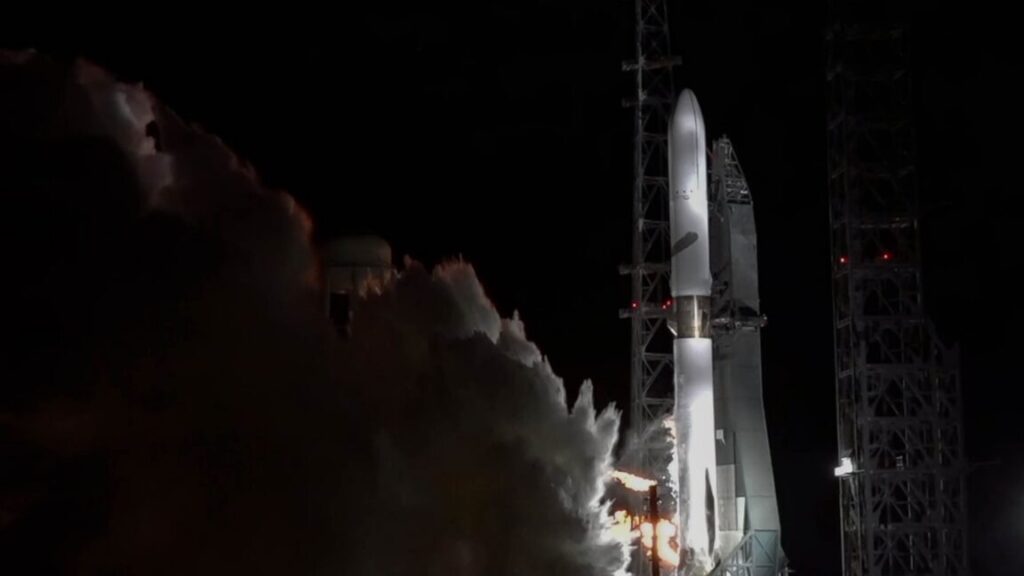
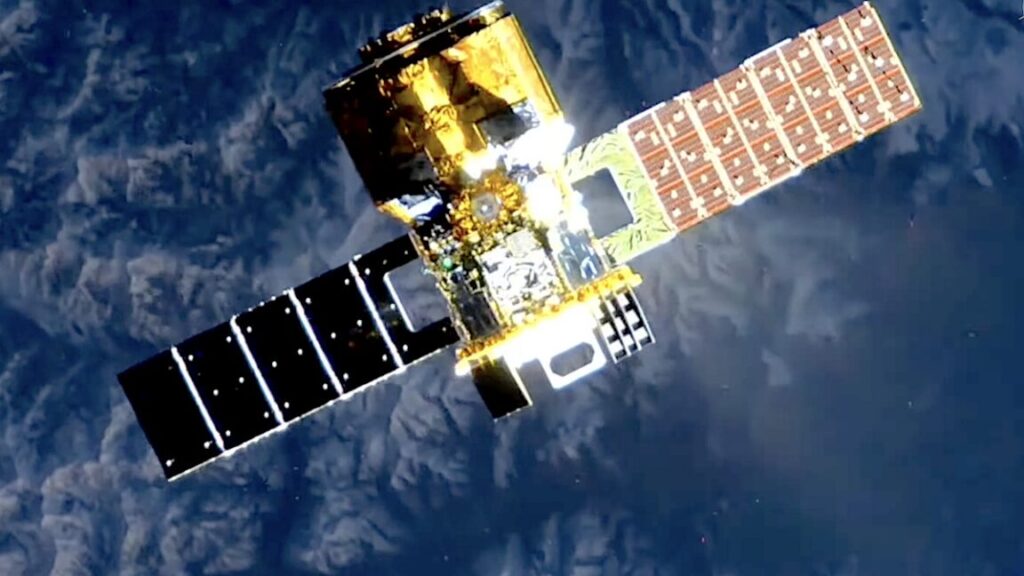
a-secretive-space-plane-is-set-to-launch-and-test-quantum-navigation-technology

A secretive space plane is set to launch and test quantum navigation technology

The mission’s goals include tests of “high-bandwidth inter-satellite laser communications technologies.”

“OTV-8’s laser communications demonstration will mark an important step in the US Space Force’s ability to leverage commercial space networks as part of proliferated, diversified, and redundant space architectures,” said US Space Force Chief of Space Operations Gen. Chance Saltzman in a statement. “In so doing, it will strengthen the resilience, reliability, adaptability, and data transport speeds of our satellite communications architectures.”

Navigating in a world without GPS

The space plane will also advance the development of a new navigation technology based on electromagnetic wave interference. The Space Force news release characterizes this as the “highest-performing quantum inertial sensor ever tested in space.”

Boeing has previously tested a quantum inertial measurement unit, which detects rotation and acceleration using atom interferometry, on conventional aircraft. Now, an advanced version of the technology is being taken to space to demonstrate its viability. The goal of the in-space test is to demonstrate precise positioning, navigation, and timing in an environment where GPS services are not available.

“Bottom line: testing this tech will be helpful for navigation in contested environments where GPS may be degraded or denied,” Saltzman said in a social media post Monday, describing the flight.

Quantum inertial sensors could also be used near the Moon, where there is no comparable GPS capability, or for exploration further into the Solar System.

Notably, the small X-37B is back to launching on a medium-lift rocket with this new mission. During its most recent flight that ended in March, the space plane launched on a Falcon Heavy rocket for the first time. This allowed the X-37B to fly beyond low-Earth orbit and reach an elliptical high-Earth orbit.

A secretive space plane is set to launch and test quantum navigation technology Read More »

f1-in-belgium:-the-best-racetrack-in-the-world

F1 in Belgium: The best racetrack in the world


Changeable conditions usually make for exciting races, but 2025 was a bit dull.

Lewis Hamilton of Ferrari during the Formula 1 Belgian Grand Prix at Spa-Francorchamps in Spa, Belgium on July 27, 2025.

Does every race track have to have a ferris wheel now? For the record, Eau Rouge is the left-hand corner those cars are approaching—the corner at the top of the hill is Radillion. Credit: Jakub Porzycki/NurPhoto via Getty Images

Does every race track have to have a ferris wheel now? For the record, Eau Rouge is the left-hand corner those cars are approaching—the corner at the top of the hill is Radillion. Credit: Jakub Porzycki/NurPhoto via Getty Images

Formula 1 made its annual stop at Spa-Francorchamps, the historic track that winds its way through the hills and trees of the Ardennes. I’ll admit, I’d been waiting for this one; in fact, I’ve become somewhat of a Spa bore, having fallen in love with the place all over again a few weeks ago while attending the Crowdstrike 24-hour GT3 race.

The 4.3 mile (6.9 km) track delivers, whether that’s as a challenge to the drivers—corners like Eau Rouge, Raidillon, Pouhon, and Blanchiment are the equal of any. There’s elevation change, something that neither Monza nor Silverstone nor Montreal can offer. It has history, dating back well before the start of the Formula 1 world championship in 1949, albeit in a much longer, much scarier version that was truncated by more than half in 1979. The views are spectacular from almost anywhere you choose to watch from, and despite the track’s size, its a pleasant and easy walk through the forest paths (just as long as you can stop imagining that one scene from Band of Brothers).

The food and drink in the region are worth a visit by themselves, and architecture fans will enjoy the Belgians’ chaotic attitude toward planning permission and house renovations, which appears to boil down to “do whatever you like as long as it looks good and won’t fall down.” Pretty good driving roads in the area, too, although they get even better toward the Nürburgring, just over an hour away in Germany.

The other thing Spa has plenty of is weather. (Well, almost always; while it rained during practice for the 24 hour race last month, the race itself was completely dry. As was the Nürburgring 24 the weekend before. And the 24 Hours of Le Mans the week before that. Which scares me.) But there was weather aplenty for the 2025 Belgian Grand Prix.

Sprint weekend

This year Spa held a sprint weekend, significantly shortening the practice time available to teams, most of whom brought technical upgrades to the race. Sprint qualifying was determined by track evolution, with the surface getting grippier as more and more cars attempted to set fast times. Sauber rookie Gabriel Bortoleto in particular garnered some well-deserved attention for getting into SQ3, up among the very fastest cars, as did the Haas of Oliver Bearman (and his anything-but-a-rookie teammate Nico Hulkenberg).

McLaren’s Oscar Pastri secured the pole for the sprint race, lining up next to the Red Bull of Max Verstappen, a team now under the direction of Laurent Miekes after Red Bull’s corporate owners gave founding team principal Christian Horner his marching orders two weeks ago. As I wrote some months ago, for the past few years Red Bull’s design team has built cars that, while theoretically fast, are so difficult to drive at the limit that only Verstappen can exploit them properly. A single driver in the fastest car can win the driver’s championship, but if you want the team’s title—and that’s the one the bonuses are tied to, usually—then you better have both cars scoring good points. Just ask McLaren.

And Red Bull can no longer claim to have built the fastest car, even in Verstappen’s hands.

SPA, BELGIUM - JULY 26: Oscar Piastri of Australia driving the (81) McLaren MCL39 Mercedes leads Max Verstappen of the Netherlands driving the (1) Oracle Red Bull Racing RB21 Lando Norris of Great Britain driving the (4) McLaren MCL39 Mercedes and the rest of the field at the start during the Sprint ahead of the F1 Grand Prix of Belgium at Circuit de Spa-Francorchamps on July 26, 2025 in Spa, Belgium.

The grid negotiates the first corner—La Source—at the start of the sprint race. Credit: Clive Rose – Formula 1/Formula 1 via Getty Images)

That said, starting in second place at Spa is not so bad. After the slow hairpin of La Source—which McLaren has finally built a car able to cope with—there’s a long run to Les Coombes, with the challenge of Eau Rouge and Raidillon on the way. Verstappen got a good tow from the slipstream behind Piastri’s car along the Kemmel straight toward Les Coombes (isn’t it better when all the parts of the track have actual names and not just turn 1, turn 2, etc?) and got past, staying there in first place until the end, 15 laps later. Behind him, Ferrari’s Charles Leclerc did something similar to Piastri’s McLaren teammate, Lando Norris.

Although the Mclaren is a faster car than either the Red Bull or Ferrari, at Spa its speed came in the corners, and the orange cars were unable to close on or pass their rivals on the straights.

Teams and drivers faced a dilemma for Sunday’s race. They could either set their cars up for dry running, with less downforce and more top speed, or give them a higher downforce setup to capitalize on the rain. The thing is, they have to make that decision before qualifying on Saturday, then stick with it. Changes are allowed to setup, but only if you opt to start from the pitlane.

The McLarens took first and second in qualifying, with an amazing lap by Charles Leclerc that pipped Verstappen to third place by 3 milliseconds. Alex Albon got his Williams into a fine fifth place, and Red Bull’s other driver, Yuki Tsunoda—who has a much better relationship with Miekes than he ever did with Horner—made it into seventh just 0.3 seconds behind his otherworldly teammate. Bortotelo repeated his feat, snatching 10th in qualifying.

Not everyone had a good quali, particularly not Ferrari’s Lewis Hamilton, who was eliminated among the first drivers for the second time in two days, something the seven-time World Champion described as unacceptable. Mercedes’ young phenom, Kimi Antonelli, who replaced Hamilton, was also eliminated among the first batch, part of a miserable weekend for the Italian who just graduated from high school.

Race day

Sunday morning was greeted with plenty of rain, affecting the support races and then delaying the start of the Grand Prix. Formula 1 has both intermediate and wet grooved tires, which pump gallons of water into the air from the track at speed, creating huge clouds of visibility-obscuring spray that, at a place like Spa, just hang between the trees. It’s this lack of visibility, rather than the wet track itself, that makes F1 so cautious, and so the formation lap was held behind the safety car, at which point the race officials decided to red flag things and wait for some more rain to come through and then leave.

Aston Martin F1 Safety Car, Lando Norris and Oscar Piastri of McLaren during the Formula 1 Belgian Grand Prix at Spa-Francorchamps in Spa, Belgium on July 27, 2025.

The FIA was far too cautious in bringing in the safety car and getting the race started. Credit: akub Porzycki/NurPhoto via Getty Images

The race eventually began 90 minutes late and circulated behind the safety car for far longer than was necessary, given the emergence of a dry line before too long. The red flag gave plenty of drivers and teams the opportunity to tweak their setups for the rain—something that turned out to be the wrong move given the FIA’s reticence to throw the green flag.

Piastri, in second place behind Norris, did to his teammate what Verstappen had done to him the day before and snatched the lead well before Les Coombes, staying just far enough ahead of his closest rival for the championship throughout the race. A small mistake by Norris and a slightly slower pitstop from his team meant he never got close enough to challenge Piastri for the lead. Behind them, Verstappen was similarly unable to make his way past Leclerc.

Star of the race for me, and the viewers who voted him driver of the day, was Hamilton. Starting from the very back of the queue in the pitlane, Hamilton’s Ferrari was set up for wet weather, and yet again we saw the skills that have won him more F1 races than any other driver in history. Have you ever seen someone overtake at Stavelot? I might have, but only in Gran Turismo 7.

A key to Hamilton’s success was pitting for slick tires at the right time—lap 11, just ahead of almost everyone else—and the British driver finished in seventh place at the end, behind the low-downforce Williams of Albon.

The 2025 race will not rank high in the pantheon of Belgian Grands Prix in terms of a thrilling race, but if you’re a motorsport fan, you owe it to yourself to make it out there sometime. Did I mention the World Endurance Championship has a six-hour race there in May? The tickets are far cheaper than F1, and you get a lot more access, too.

Photo of Jonathan M. Gitlin

Jonathan is the Automotive Editor at Ars Technica. He has a BSc and PhD in Pharmacology. In 2014 he decided to indulge his lifelong passion for the car by leaving the National Human Genome Research Institute and launching Ars Technica’s automotive coverage. He lives in Washington, DC.

F1 in Belgium: The best racetrack in the world Read More »

20-years-after-katrina,-new-orleans-remembers

20 years after Katrina, New Orleans remembers


20 years ago, Ivor Van Heerden warned of impending disaster in New Orleans. Are his warnings still going unheeded?

A man is stranded on a rooftop in the aftermath of Hurricane Katrina in 2005. Credit: Wickes Helmboldt

Next month marks the 20th anniversary of one of the most devastating natural disasters in US history: Hurricane Katrina, a Category 3 storm that made landfall on August 29, 2005. The storm itself was bad enough, but the resulting surge of water caused havoc for New Orleans in particular when the city’s protective levees failed, flooding much of New Orleans and killing 1,392 people. National Geographic is marking the occasion with a new documentary series: Hurricane Katrina: Race Against Time.

The five-part documentary is directed by Oscar nominee Traci A. Curry (Attica) and co-produced by Ryan Coogler’s Proximity Media, in conjunction with Lightbox. The intent was to go beyond the headlines of yesteryear and re-examine the many systemic failures that occurred while also revealing “stories of survival, heroism, and resilience,” Proximity’s executive producers said in a statement. “It’s a vital historical record and a call to witness, remember and recon with the truth of Hurricane Katrina’s legacy.”

Race Against Time doesn’t just rehash the well-worn narrative of the disaster; it centers the voices of the people who were there on the ground: residents, first responders, officials, and so forth. Among those interviewed for the documentary is geologist/marine scientist Ivor Van Heerden, author of The Storm: What Went Wrong and Why During Hurricane Katrina: the Inside Story from One Louisiana Scientist (2006).

Around 1998, Van Heerden set up Louisiana State University’s (LSU) fledgling Hurricane Center with his colleague Marc Levitan, developing the first computer modeling efforts for local storm surges. They had a supercomputer for the modeling and LiDAR data for accurate digital elevation models, and since there was no way to share data among the five major parishes, they created a networked geographical information system GIS) to link them. Part of Van Heerden’s job involved driving all over New Orleans to inspect the levees, and he didn’t like what he saw: levees with big bows, sinking under their own weight, for example, and others with large cracks.

Van Heerden also participated in the 2004 Hurricane Pam mock scenario, designed as a test run for hurricane planning for the 13 parishes of southeastern Louisiana, including New Orleans. It was essentially a worst-case scenario for the conditions of Hurricane Betsy, assuming that the whole city would be flooded. “We really had hoped that the exercise would wake everybody up, but quite honesty we were laughed at a few times during the exercise,” Van Heerden told Ars. He recalled telling one woman from FEMA that they should be thinking about using tents to house evacuees: “She said, ‘Americans don’t live in tents.'”

Stormy weather

Mayor Ray Nagin orders a mandatory evacuation of New Orleans. ABC News Videosource

The tens of thousands of stranded New Orleans residents in the devastating aftermath of Katrina could have used those tents. Van Heerden still vividly recalls his frustration over the catastrophic failures that occurred on so many levels. “We knew the levees had failed, we knew that there had been catastrophic structural failure, but nobody wanted to hear it initially,” he said. He and his team were out in the field in the immediate aftermath, measuring water levels and sampling the water for pathogens and toxic chemicals. Naturally they came across people in need of rescue and were able to radio locations to the Louisiana State University police.

“An FBI agent told me, ‘If you find any bodies, tie them with a piece of string to something so they don’t float away and give us the lats and logs,'” Van Heerden recalled. The memories haunt him still. Some of the bodies were drowned children, which he found particularly devastating since he had a young daughter of his own at the time.

How did it all go so wrong? After 1965’s Hurricane Betsy flooded most of New Orleans, the federal government started a levee building program with the US Army Corps of Engineers (USACE) in charge. “Right at the beginning, the Corps used very old science in terms of determining how high to make the levees,” said Van Heerden. “They had access to other very good data, but they chose not to use it for some reason. So they made the levees way too low.”

“They also ignored some of their own geotechnical science when designing the levees,” he continued. “Some were built in sand with very shallow footings, so the water just went underneath and blew out the levee. Some were built on piles of earth, again with very shallow footings, and they just fell over. The 17th Street Canal, the whole levee structure actually slid 200 feet.”

There had also been significant alterations to the local landscape since Hurricane Betsy. In the past, the wetlands, especially the cypress tree swamps, provided some protection from storm surges. In 1992, for example, the Category 5 Hurricane Andrew made landfall on Atchafalaya Delta, where healthy wetlands reduced its energy by 50 percent between the coast and Morgan City, per Van Heerden. But other wetlands in the region changed drastically with the dredging of a canal called the Mississippi Gulf Outlet, running from Baton Rouge to the Gulf of Mexico.

“It was an open conduit for surge to get into New Orleans,” said Van Heerden. “The saltwater got into the wetlands and destroyed it, especially the cypress trees. This canal had opened up, in some places, to five times its width, allowing waves to build on the surface. The earthen levees weren’t armored in any way, so they just collapsed. They blew apart. That’s why parts of St. Bernard saw a wave of water 10 feet high.”

Just trying to survive

Stranded New Orleans residents gather in a shelter during Hurricane Katrina. KTVT-TV

Add in drastic cuts to FEMA under then-President George W. Bush—who inherited “a very functional, very well-organized” version of the department from his predecessor, Bill Clinton, per Van Heerden—and the stage was set for just such a disaster like Katrina’s harrowing aftermath. It didn’t help that New Orleans Mayor Ray Nagin delayed issuing a mandatory evacuation order until some 24 hours before the storm hit, making it much more difficult for residents to follow those orders in a timely fashion.

There were also delays in conveying the vital information that the levees had failed. “We now know that the USACE had a guy in a Coast Guard helicopter who actually witnessed the London Avenue Canal failure, at 9: 06 AM on Day One,” said Van Heerden. “That guy went to Baton Rouge and he didn’t tell a soul other than the Corps. So the Corps knew very early what was gong on and they did nothing about it. They had a big megaphone and millions of dollars in public relations and kept saying it was an act of God. It took until the third week of September for us to finally get the media to realize that this was a catastrophic failure of the levees.”

The USACE has never officially apologized for what happened, per Van Heerden. “Not one of them lost their job after Katrina,” he said. But LSU fired Van Heerden in 2009, sparking protest from faculty and students. The university gave no reason for his termination, but it was widely speculated at the time that Van Heerden’s outspoken criticism of the USACE was a factor, with LSU fearing it might jeopardize funding. Van Heerden, sued and the university settled. But he hasn’t worked in academia since and now consults with various nonprofit organizations on flooding and storm surge impacts.

The widespread reports of looting and civil war further exacerbated the situation as survivors swarmed the Superdome and the nearby convention center. The city had planned for food and water for 12,000 people housed at Superdome for 48 hours. The failure of the levees swelled that number to 30,000 people stranded for several days, waiting in vain for the promised cavalry to arrive.

Van Heerden acknowledges the looting but insists most of that was simply due to people trying to survive in the absence of any other aid. “How did they get water on the interstate?” said Van Heerden. “They went to a water company, broke in and hot-wired a truck, then went around and gave water to everyone.”

As for the widespread belief outside the city that there was unchecked violence and a brewing civil war, “That doesn’t happen in a catastrophe,” he said. The rumors were driven by reports of shots being fired but, “there are a lot of hunters in Louisiana, and the hunter’s SOS is to fire three shots in rapid succession,” he said. “One way to say ‘I’m here!’ is to fire a gun. But everybody bought into that civil war nonsense.”

“Another ticking time bomb”

LSU Hurricane Center co-founder Ivor Van Heerden working at his desk in 2005. Australian Broadcasting Corporation

The levees have since been rebuilt, and Van Heerden acknowledges that some of the repairs are robust. “They used more concrete, they put in protection pads and deeper footings,” he said. “But they didn’t take into account—and they admitted this a few years ago—subsidence in Louisiana, which is two to two-and-a-half feet every century. And they didn’t take into account global climate change and the associated rising sea levels. Within the next 70 years, sea level in Louisiana is going to rise four feet over millions of square miles. If you’ve got a levee with a [protective] marsh in front of it, before too long that marsh is no longer going to exist, so the water is going to move further and further in-shore.”

Then there’s the fact that hurricanes these days are now bigger in diameter than they were 30 years ago, thanks to the extra heat. “They get up to a Category 5 a lot quicker,” said Van Heerden. “The frequency also seems to be creeping up. It’s now four times as likely you will experience hurricane-force winds.” Van Heerden has run storm surge models assuming a 3-foot rise in sea level. “What we saw was the levees wouldn’t be high enough in New Orleans,” he said. “I hate to say it, but it looks like another ticking time bomb. Science is a quest for the truth. You ignore the science at your folly.”

Assuming there was sufficient public and political will, how should the US be preparing for future tropical storms? “In many areas we need to retreat,” said Van Heerden. “We need to get the houses and buildings out and rebuild the natural vegetation, rebuild the wetlands. On the Gulf Coast, sea level is really going to rise, and we need to rethink our infrastructure. This belief that, ‘Oh, we’re going to put up a big wall’—in the long run it’s not going to work. The devastation from tropical storms is going to spread further inland through very rapid downpours, and that’s something we’re going to have to plan mitigations for. But I just don’t see any movement in that direction.”

Perhaps documentaries like Race Against Time can help turn the tide; Van Heerden certainly hopes so. He also hopes the documentary can correct several public misconceptions of what happened—particularly the tendency to blame the New Orleans residents trying to survive in appalling conditions, rather than the government that failed them.

“I think this is a very good documentary in showing the plight of the people and what they suffered, which was absolutely horrendous,” said Van Heerden. “I hope people watching will realize that yes, this is a piece of our history, but sometimes the past is the key to the present. And ask themselves, ‘Is this a foretaste of what’s to come?'”

Hurricane Katrina: Race Against Time premieres on July 27, 2025, on National Geographic. It will be available for streaming starting July 28, 2025, on Disney+ and Hulu.

Photo of Jennifer Ouellette

Jennifer is a senior writer at Ars Technica with a particular focus on where science meets culture, covering everything from physics and related interdisciplinary topics to her favorite films and TV series. Jennifer lives in Baltimore with her spouse, physicist Sean M. Carroll, and their two cats, Ariel and Caliban.

20 years after Katrina, New Orleans remembers Read More »