AI could be nearly twice as accurate as biopsies at assessing the aggressiveness of some rare types of cancer, a new study suggests. According to researchers this could save the lives of thousands of patients.
A research team from the Royal Marsden NHS Foundation Trust and the Institute for Cancer Research (ICR) focused on retroperitoneal sarcoma — a form of soft tissue sarcoma that develops in the back of the abdomen.
“There is an urgent need to improve the diagnosis and treatment of patients with retroperitoneal sarcoma, who currently have poor outcomes,” said Dr Amani Arthur, first author of the study.
“The disease is very rare — clinicians may only see one or two cases in their career — which means diagnosis can be slow. This type of sarcoma is also difficult to treat as it can grow to large sizes and, due to the tumour’s location in the abdomen, involve complex surgery.”
To develop and train an AI algorithm, the researchers used CT scans of 170 patients suffering from the two most common types of retroperitoneal sarcoma: leiomyosarcoma and liposarcoma. Then, they tested the algorithm on a set of 89 patients across Europe and the US.
The <3 of EU tech
The latest rumblings from the EU tech scene, a story from our wise ol’ founder Boris, and some questionable AI art. It’s free, every week, in your inbox. Sign up now!
The technology accurately assessed the aggressiveness of the tumours 82% of the time, while biopsies were correct in only 44% of the cases. The AI model was also able to predict the type of 84% of the sarcomas tested, compared to radiologists who could diagnose 65% of the cases.
Study lead Professor Christina Messiou,Consultant Radiologist at the Royal Marsden NHS Foundation Trust and Professor in Imaging for Personalised Oncology at the Institute of Cancer Research. Credit: ICR
The researchers believe that their method could not only improve and speed up diagnosis, but also help clinicians manage the disease and its outcomes. For example, the algorithm could identify high-risks patients, who need amplified treatment, and low-risk patients, who can reduce treatment, follow-up scans, and hospital visits.
Notably, the team suggests that the AI model could prove to be useful for other cancer types as well.
“In the future, this approach may help characterise other types of cancer, not just retroperitoneal sarcoma,” said study lead Professor Christina Messiou. “Our novel approach used features specific to this disease, but by refining the algorithm, this technology could one day improve the outcomes of thousands of patients each year.”
If you can get your hands on a Quest 3, you’ve got everything you need right in the box to start playing some of the best VR games out there. Once you’ve got a few hours under your belt though, you’ll probably notice a few things that definitely need improving, many of which can thankfully be solved with a few key aftermarket accessories.
Upgrade Your Headstrap
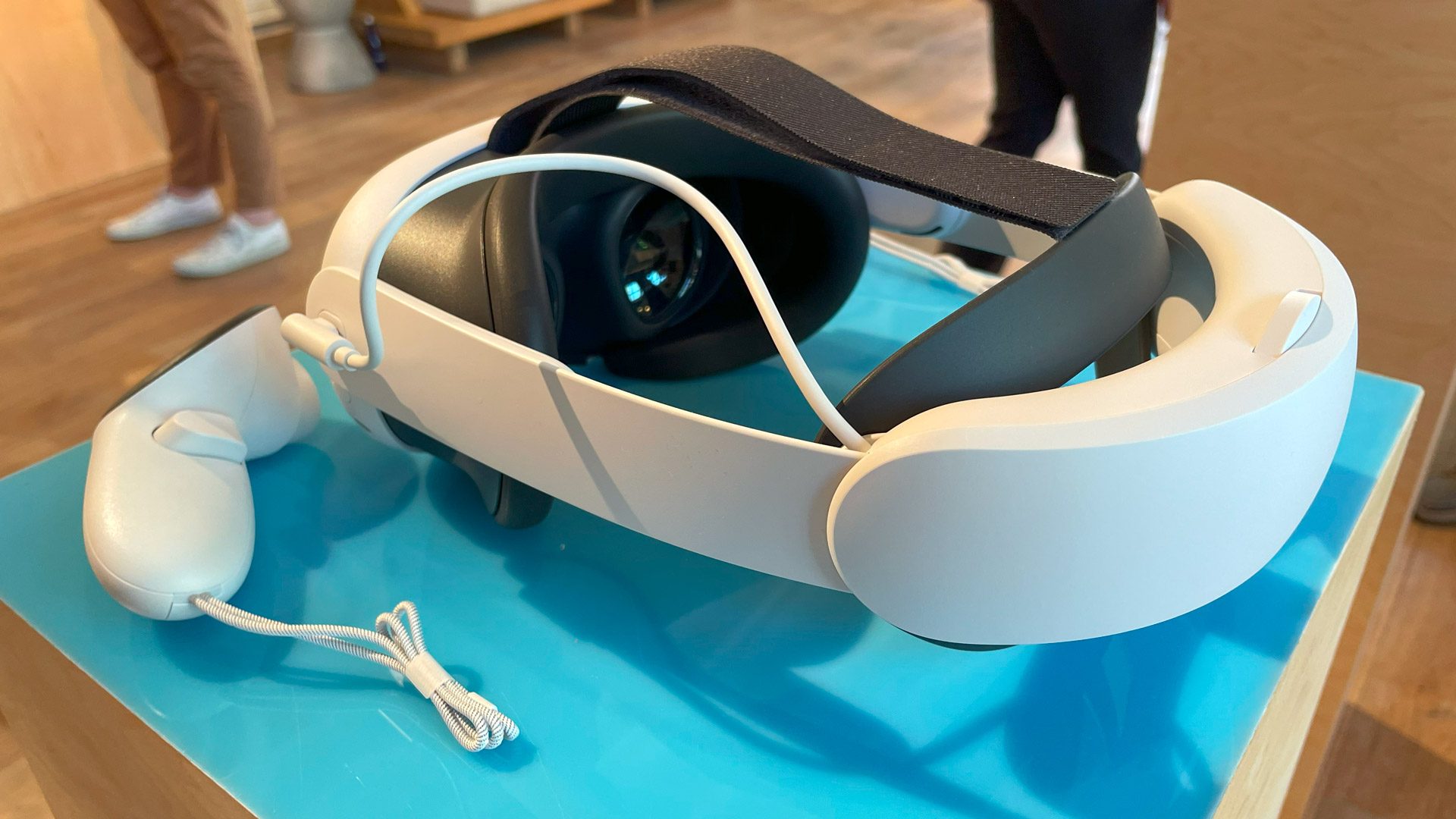
Meta has done it again; like Quest 2, they’ve included a cheap, floppy strap that you’ll very likely want to replace soon after popping out of your first long playsession. For many, the stock strap just doesn’t do a good enough job of distributing weight evenly and comfortably on the user’s head. Some users report the stock Quest 3 straps even cut into the base of their ears a bit too, which is bound be bothersome long-term.
It’s difficult to recommend Meta’s Quest 3 straps out of the gate: Elite Strap ($70) and Elite Strap With Battery ($130), the latter of which includes an integrated 2,330mAh battery promising two hours of extra gameplay.
Quest 3 Elite Strap with Battery | Photo by Road to VR
Don’t get us wrong, they’re both comfortable and great out of the box. Meta’s one-year warranty will also likely let you exchange them too if/when they break. Beyond that, you’re at the mercy of Zuckerberg though; Meta doesn’t have a great track record with the build quality of its aftermarket headstraps, and until we put ours through its paces and we’re reasonably convinced it won’t snap in half like the first-party Quest 2 straps were prone to do, well, buyer beware.
Respected third-party accessory makers, such as Bobo VR and Kiwi Design, are slated to have their own versions soon. If you’re looking for something right this second though, a fairly inexpensive solution from MOJOXR ($25) not only has great reviews, but also supports both Quest 3 and Quest 2 thanks to an included adapter.
Provided you can 3D print your own adapter though, you may be able to use any Quest 2 aftermarket strap on the market, which should give you a little more choice in the meantime.
VR Cover or Spare Facepad
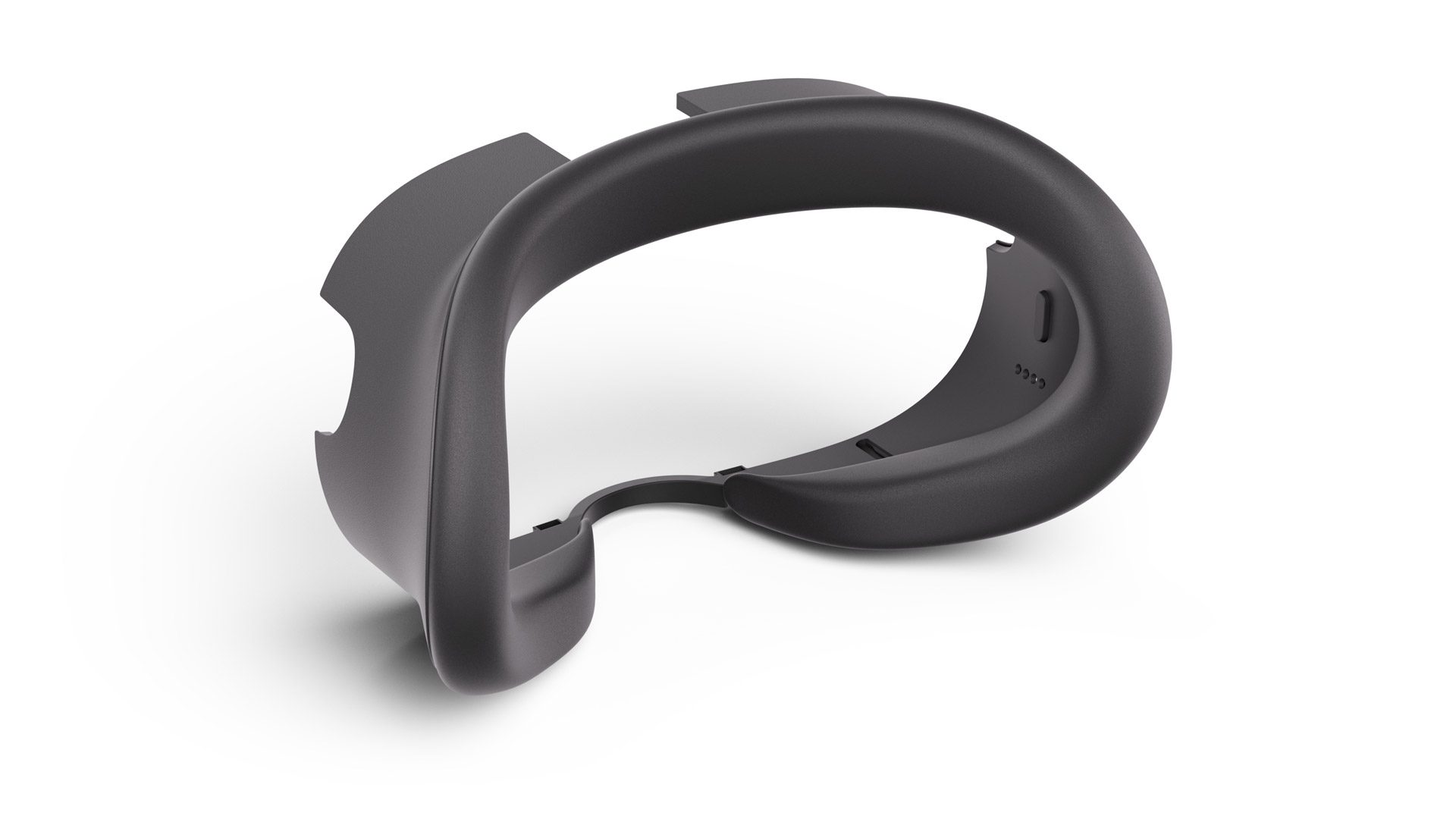
The stock facial interface on Quest 3 is actually a big improvement over the Quest 2 version. Out of the gate, its fabric weave feels better than having some sort of clammy high-density foam straight on your undoubtably greasy face, although it isn’t nearly as cleanable as, say, a silicone or removable fabric cover.
Quest 3 Silicon Facial Interface | Image courtesy Meta
Silicone covers are great for workouts since you can easily wipe them down before or after a session. Meta offers its own Quest 3 silicone facial interface ($40), which completely replaces the stock facepad. The benefit here is you can quickly swap out the stock pad when you’re done playing casual games, and swap in the silicone pad for when you’re ready for some Les Mills Body Combat, Supernatural, Beat Saber, Pistol Whip—whatever gets your heart pumping.
Realistically speaking though, you probably don’t need to shell out the better part of 50 bucks to get the job done. There are a number of third-party silicone covers on Amazon which fit right over the stock facepad, ranging from $10 to $15, and offer equal protection from face grime.
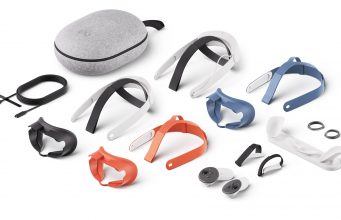
As for fabric, the trusted third-party creator VR Cover has its own machine washable fabric cover too ($30) in case you want to keep it a little more cosy than the impenetrable seal of a silicone cover. Alternatively, you can also get full facepad replacements from Meta which comes with matching floppy headstraps in Elemental Blue and Blood Orange ($50).
Make Charging Easier
Quest 3 has charging pins at the bottom of the face plate, meaning we’re sure to see a host of third-party charging docks and accessories come to market soon enough.
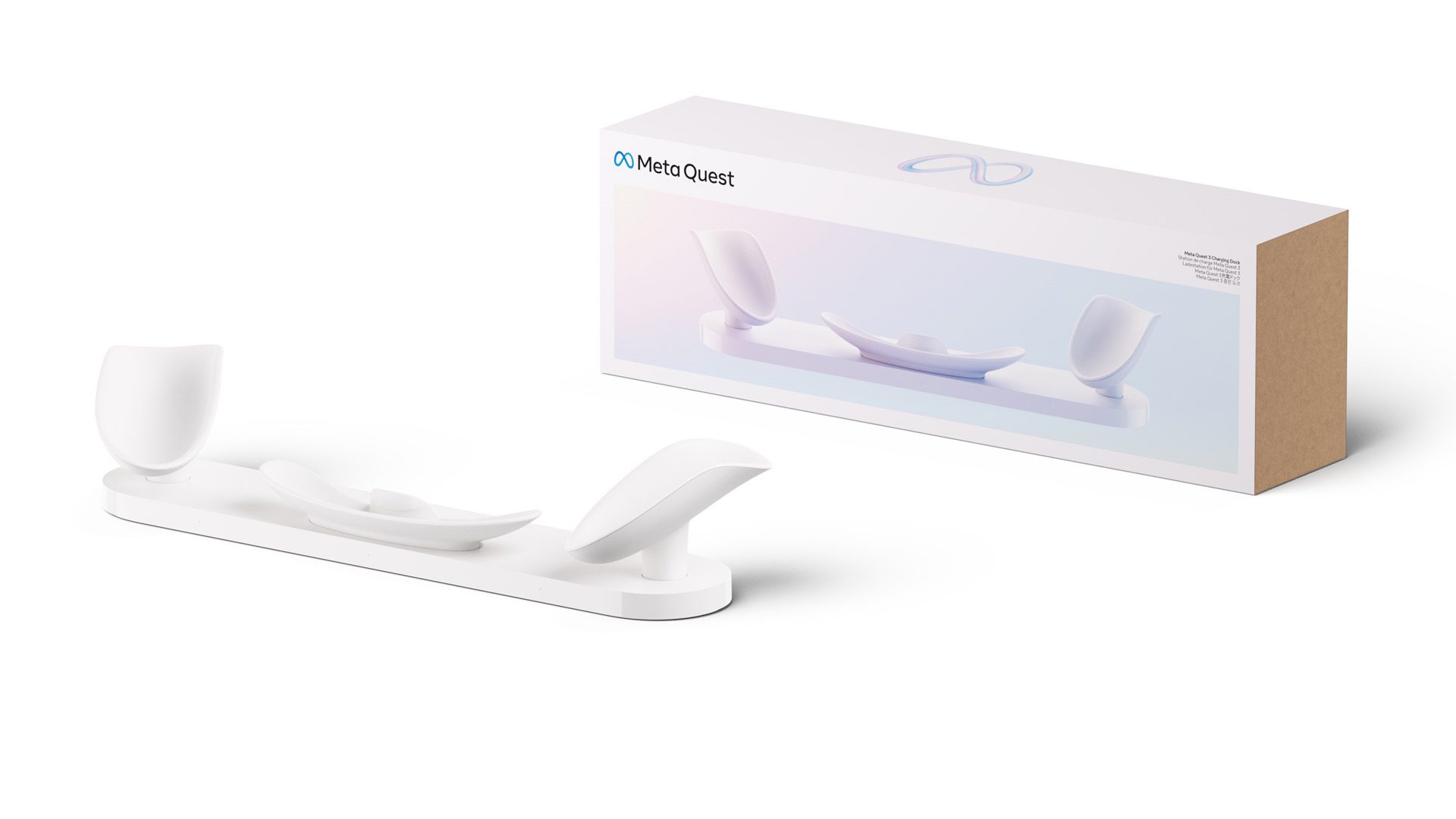
Quest 3 Charging Dock | Image courtesy Meta
For now, there’s really only one real solution though: Meta’s official Quest 3 charging dock ($130). While this also charges your Touch Plus controllers, keep in mind this won’t charge up any sort of external battery strap.
Always the old reliable: the second option could be to get magnetic USB-C connector cables, which allow you to attach and detach special charging cables to your headset without having to wear out the charging port. Many on Amazon can even do fast charging, although getting one with data transfer is hit and miss. Even if you could, you wouldn’t want to use Meta Link with a magnetic cable because of how easily it can detach.
Carrying Cases
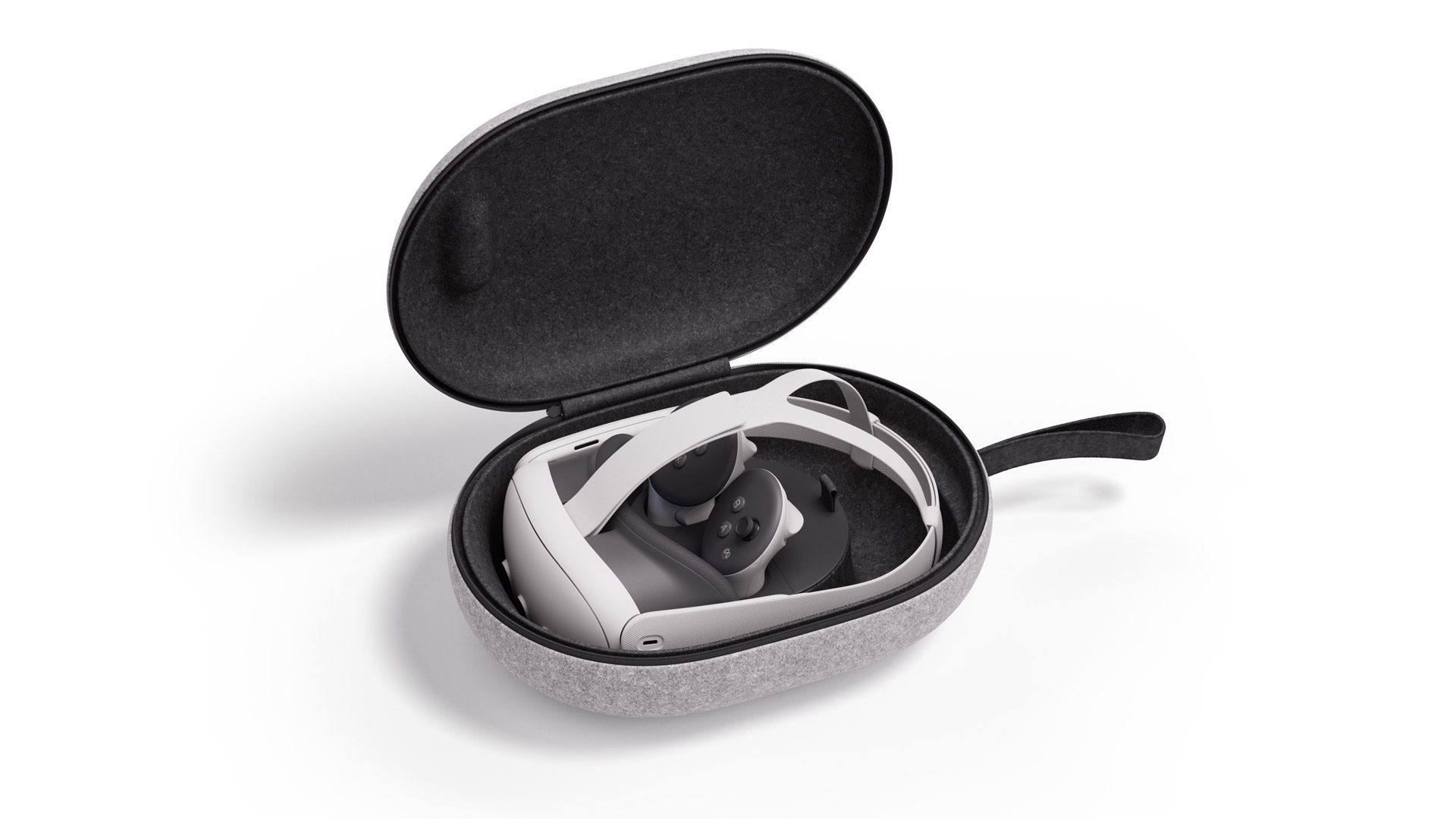
Meta’s official Quest 3 carrying case ($70) is certainly a good option to keeping your Quest 3 prim and proper—if you don’t mind the hefty price tag, that is.
Quest 3 Carrying Case | Image courtesy Meta
There are definitely more cost-effective ways to spend 70 bucks though, considering Quest 3 is smaller and will most definitely fit in the carrying cases originally designed for Quest 2; there are a ton on Amazon, with many hovering under the $25 mark.
There’s bound to be an explosion of Quest 3-specific cases in the coming months, although it’s still too early to tell. Third-parties have created a ton of different case styles over the years for Quest 2, ranging from standard copycats of Meta’s own to official case to ones that even double as charging docks. More of those, please.
Long USB-C Cables for Wired PC Play
Whether you’re just looking for a way to charge during gameplay, or you want to connect Quest 3 to your computer via Meta Link to use it as a PC VR headset, you’ll need a USB-C cable long enough to get the job done.
Official Oculus Link Cable | Image courtesy Oculus
By now, you know the drill: ‘Meta first, then the actual option you’ll actually want to buy’. Meta’s Link Cable ($80) is a thin fiber-optic cable that spans 16 feet (5m). It’s a great cable since it’s very thin and fairly light at 7.9oz (224g).
That said, any 3.0 USB-C cable will work, and there are tons on Amazon that will do the job just as well at a quarter of the price. Pick one, and you’re playing Half-Life: Alyx (2020) in no time.
Wi-Fi Router for Wirelessly PC VR Games
We know who you are. You’re more of a “low contact” sort of person. You exclusively charge all of your devices wirelessly, only talk to friends through Discord, and prefer courteous bows from across the room over shaking hands. Your ‘hover over public toilets’ game is also suitably on-lock. Well, you’ll be happy to know you can play PC VR games cable-free too thanks to Air Link.
You should be able to game easily enough using Air Link on that old 2.4GHz router, although if you’re looking to get the most out of Air Link-ing your headset to a VR-ready PC for a host of PC VR games, it might be time to upgrade to a dual-band router, as Meta recommends connecting to Wi-Fi via 5GHz band (AC or AX).
Note: Virtual Desktop developer Guy Godin has reported an early issue with Quest 3 and how it connects over Wi-Fi. For now, it appears the headset has network performance issues with routers running in Wi-Fi 5 (AC) mode. The issue disappears when switching the router to Wi-Fi 6 (AX) or Wi-Fi 6e (AXE) mode.
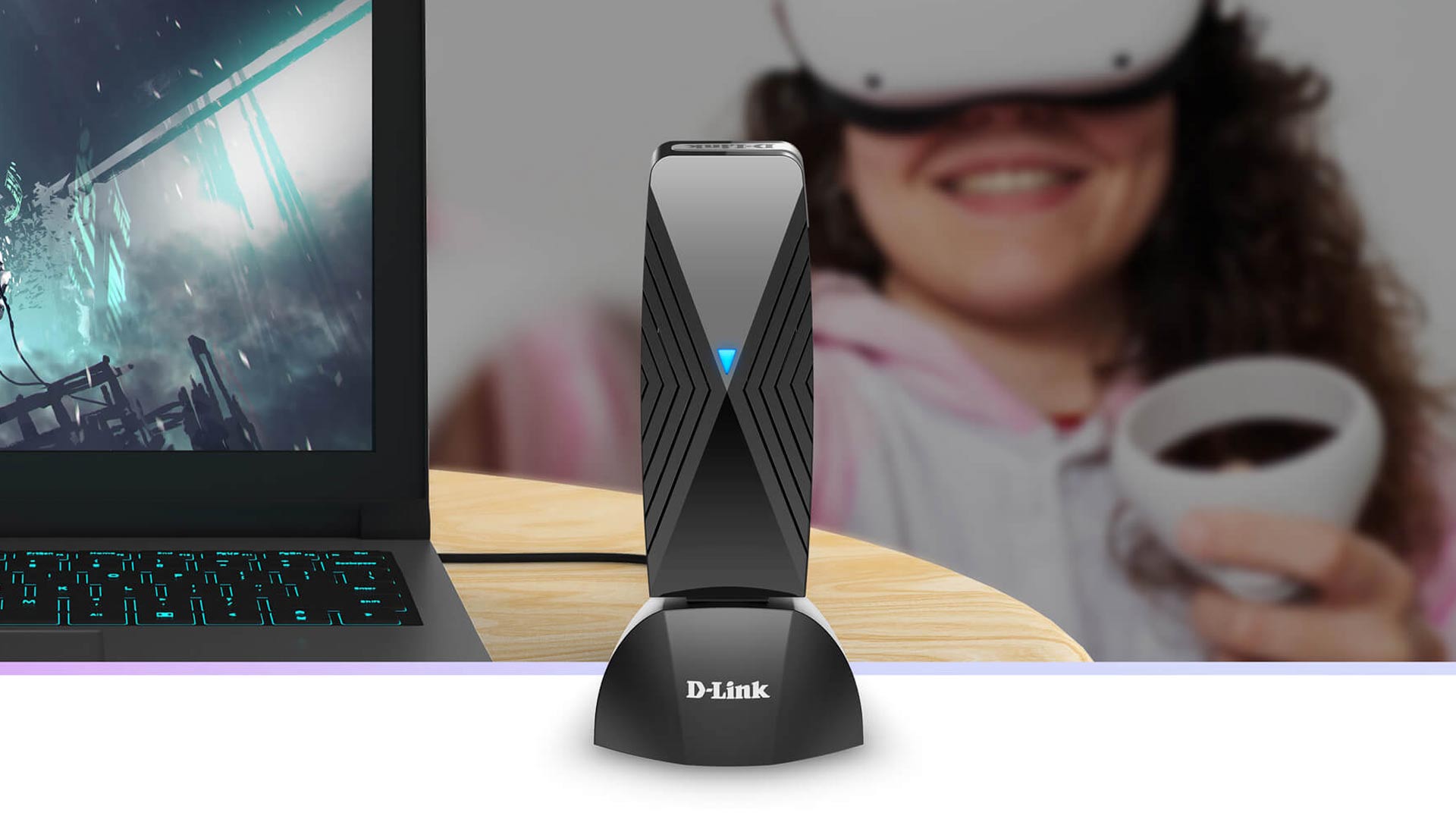
Image courtesy D-Link
You can find dual-band Wi-Fi routers for as low as $40 on Amazon, however the more you pay, generally the better range you get. You can also get them for significantly cheaper if you don’t mind refurbished units.
Then there’s dedicated dongles, such as the D-Link Airplay ($100), which creates a dedicated Wi-Fi network between your Quest headset and your PC, skipping the whole Wi-Fi router tango entirely. Whatever the case, Meta recommends having your PC connected to a router or access point via ethernet cable, and in the same room as the headset or in line of sight. The better the connection, the lower the latency involved.
Google has agreed to pay German publishers €3.2mn per year for publishing their content on its News search engine.
The compensation is part of an interim agreement between the tech giant and Corint Media, pending a decision by the German Patent and Trademark Office (DPMA), which will determine the final (and potentially higher) amount.
Corint Media is a European corporation that represents the rights of over 500 German and international media companies, including Axel Springer, Al Jazzeera, France 24, and CNBC Europe. The corporation has long been disputing Google’s “unlawful” use of press content without paying any compensation.
Having initially sought a €420mn payment for the news content used in 2022, Corint Media said it now hopes that the DPMA’s decision will lead to a “significantly” higher amount than the preliminary agreement of €3.2mn.
Meanwhile, Google has previously accepted a one-off €5.8mn payment to cover the period between June 2021 (when the EU’s press ancillary copyright law came into force) and March 2023.
“The payments to Corint Media are in line with what we have already agreed with 470 regional and national publications in Germany,” Google said in a statement. Its existing licensing deals include German outlets Zeit and Spiegel.
“Where the quasi-monopoly Google otherwise dictates prices, the route through ordinary courts is the only way to get appropriate compensation for the use of content,” said Dr Christine Jury-Fischer, managing director of Corint Media.
She added that the agreement proves that “even a part of the press market can succeed in defending itself against Google’s dominant business practices if only there is a high level of unity. If successful, these efforts should — and will — also benefit other publishers.”
Get the TNW newsletter
Get the most important tech news in your inbox each week.
In the third quarter of 2023, European startups raised $16.4bn (€15.6bn) in VC funding — a 28% increase quarter over quarter.
The findings are based on an analysis by Crunchbase, which also unveiled that the fresh capital has mostly favoured late-stage rounds. In contrast, funding for seed and early-stage companies hit its lowest points since Q3 2022.
Specifically, late-stage funding doubled quarter over quarter, reaching $10.5bn (€10bn) in total. Notably, VCs invested large sums in the sustainable energy sector, with big rounds raised by Sweden’s H2 Green Steel, battery manufacturers Northvolt and Verkor, and London-based battery storage startup Zenobe Energy.
Μeanwhile, seed funding added up to $1.4bn (€1.3bn), down from $2.1bn (€2bn) last year. Alongside its 30% year-over-year drop, it also fell by 25% quarter over quarter. Similarly, early-stage companies saw another low at $4.5bn (€4.3bn) with the largest amount of capital invested in Series A.
On the bright side, European startups have managed to raise a bigger proportion of global venture capital compared to last year. Their share reached approximately 23%, while VC funding in North America remained flat. Europe’s AI companies also accounted for close to one-fifth of the sector’s global funding, representing 11% of the region’s total capital raised in the past quarter.
Overall, Europe’s highest capital injection was concentrated in the UK, followed by Sweden, France, and Germany.
“The pullback in venture has made a huge difference in how capital-efficient a startup needs to be,” said Michiel Kotting, partner at Northzone, a London-headquartered multi-stage VC firm.
He noted, however, that the amount of capital raised isn’t the only measure of success for tech companies, adding that the economic downturn “does not make entrepreneurship harder or disfavor tech.”
After a lengthy process of regulatory scrutiny, the biggest deal in gaming history finally has the all-clear. Today, the final hold-out in the saga, the UK’s CMA, said it had approved Microsoft’s acquisition of Activision Blizzard, after the parties had made “gamechanging” amendments to the terms.
The antitrust watchdog stated it had been swayed by Activision’s agreement to sell its streaming rights to Ubisoft Entertainment. What this effectively means is that its blockbuster video games will not become exclusively available via streaming to Microsoft Xbox gamers following the takeover.
“The new deal will stop Microsoft from locking up competition in cloud gaming as this market takes off, preserving competitive prices and services for UK cloud gaming customers,” the CMA said in a statement.
According to Statista, revenue in the cloud gaming market is projected to reach $4.34bn (€4.1bn) in 2023. It could then show an annual growth rate of 44.09%, which would result in a market volume of $18.71bn (€17.7bn) by 2027.
With the approval, Microsoft now has the opportunity to close the $69bn (€65.4bn) deal by October 18, three months after the original deadline.
The <3 of EU tech
The latest rumblings from the EU tech scene, a story from our wise ol’ founder Boris, and some questionable AI art. It’s free, every week, in your inbox. Sign up now!
CMA decidedly unhappy with Microsoft tactics
Activision Blizzard makes household franchises such as Call of Duty, World of Warcraft, and Candy Crush. Microsoft first announced its intention to purchase the Fortune 500 video game publisher in early 2022. When the CMA blocked the deal in April this year, Microsoft said the UK was “closed for business,” and that it was the “darkest day” in its 40 years operating in the country. The EU granted its approval in May 2023, while US regulators followed suit in July. Meanwhile, the lengthy back and forth with the UK watchdog has been one of the most publicised and contentious antitrust processes in Britain to date. CMA chief executive Sarah Cardell said the agency had delivered a clear message to Microsoft that the deal would be blocked unless they comprehensively addressed concerns and “we stuck to our guns on that.” She further added that the CMA’s decision had been “free from political influence” and that the agency would not be “swayed by corporate lobbying.”
“Businesses and their advisors should be in no doubt that the tactics employed by Microsoft are no way to engage with the CMA,” Cardell stated, in what could be considered a less than entirely amicable tone.
Hard to remember a more fractious affair, competition advisor says
Indeed, the CMA’s statements appear to lay down a marker that publicly litigating appeals against the agency in the press will be “seen in an exceedingly poor light in the future.” That is according to Gareth Mills, who is a partner at law firm Charles Russell Speechlys and advises on commercial dispute resolution, regulatory, and competition matters.
“In a UK context, it’s hard to remember a more fractious affair and the comments made by the CMA’s chief executive as part of the approval makes it clear that some of Microsoft’s tactics have left a bitter taste, despite the final collaborative resolution,” Mills told TNW.
“Ultimately, this approval allows both sides to claim a satisfactory result. Microsoft have the deal finalised and the CMA can justifiably point to the remedies offered by Microsoft to facilitate the deal’s approval as evidence that its original rejection was a correct use of its powers.”
For its part, Microsoft was somewhat more conciliatory in its comments on the approval than the CMA. Brad Smith, the tech giant’s vice chair and president, said:
“We’re grateful for the CMA’s thorough review and decision today. We have now crossed the final regulatory hurdle to close this acquisition, which we believe will benefit players and the gaming industry worldwide.”
Valve is a notorious black box when it comes to basically everything. A recent update to Steam client for VR though suggests the company is still working behind the scenes on what appears to be its long-awaited standalone VR headset.
As revealed by tech analyst and consummate Steam data miner Brad Lynch, a recent update to Steam’s client included a number of VR-specific strings related to batteries, which seems to support the idea that Valve is currently readying the platform for some sort of standalone VR headset.
Image courtesy Brad Lynch
The update also included mention of new UI elements, icons, and animations added to the Steam Client for VR—something it probably wouldn’t do for a competitor’s headset, like Meta’s soon-to-release Quest 3 standalone.
Meanwhile, South Korean’s National Radio Research Agency (RAA) recently certified a “low-power wireless device” from Valve, also spotted by Lynch. It’s still too early to say whether the device in question is actually a standalone VR headset—the radio certification only mentions it uses 5 GHz wireless—however headsets like Meta Quest 2 are equally as vague when it comes to RAA listings.
Granted, Valve hasn’t come out and said it’s developing a standalone VR headset yet, although with mounting competition from Apple and Meta, 2024 may be the year we finally see the ‘Index of standalone VR’ come to the forefront. Valve Index has widely been regarded as the ‘best fit’ PC VR headset, owing to its excellent quality, performance, and comfort—something we called “the enthusiast’s choice” in our full review of the headset back when it launched in 2019.
But it hasn’t been entirely mum either. In early 2022, Valve chief Gabe Newell called its handheld gaming PC platform Steam Deck “a steppingstone” to standalone VR hardware, nothing that Steam Deck represented “battery-capable, high-performance horsepower that eventually you could use in VR applications as well.”
– – — – –
While a capable, high-end standalone VR headset from Valve is certainly something to salivate over, a few big questions remain: What will happen when Valve opens Steam up to standalone VR content? How would the largely Meta-heavy ecosystem react as Steam becomes a new outlet for VR games? And what if Valve’s headset is instead capable of playing some subsection of standard PC VR content? We don’t know the answer to any of these questions, but with Valve’s continued interest in VR, we’re still pretty hopeful to find out.
Ubisoft announced Assassin’s Creed Nexus VR back in June, staying that we’d get the Quest exclusive sometime this holiday. Now the studio has revealed a first look at gameplay, and announced the official release date.
Coming to Quest on November 16th, the new Assassin’s Creed Nexus VR trailer shows off a few clips of each of the game’s three protagonists: Ezio (Assassin’s Creed II), Connor (Assassin’s Creed 3), and Kassandra (Assassin’s Creed Odyssey).
From the gameplay trailer, it seems there’s going to be a good slice of parkour, melee, and ranged combat too—basically what you’d expect from the long-awaited Assassin’s Creed VR game. Ubisoft says we should expect to “get caught up in a world of espionage, intrigue and betrayal.”
Locations in the game include Venice, Athens, Colonial Boston “and more,” the studio says in the game’s Quest page, noting that players will have the autonomy to “decide the best way to achieve your objectives” across open map environments. “Meet and interact with civilians and historical figures, all of whom react to your VR actions,” Ubisoft says.
As for combat, Assassin’s Creed Nexus VR melee includes blocking, parrying, and counterattacks, with weapons including bow and arrows, the Hidden Blade, swords, tomahawk, throwing knives, crossbow, and smoke bombs.
You can wishlist Assassin’s Creed Nexus VRfor Quest 2 and Quest Pro, with launch coming November 16th. The game is also presumably coming to Quest 3 whenever the headset launches, although Meta hasn’t mentioned yet when Quest 3 is due to release. Whatever the case, we’re sure to learn more next week at Connect 2023, which promises a big info dump on Meta’s latest VR headset.
The future of influence is here: a digital avatar that captivates millions of adoring fans while offering unparalleled customisation and round-the-clock availability.
Virtual influencers are transforming the way content is created, consumed and marketed online. They represent an electrifying dance between cutting-edge technology and our desire for connection. But, at the same time, they are yet another product being peddled by marketers that want our money.
Upon close inspection, we can see the risks that emerge with these blurred realities.
What are virtual influencers?
While virtual influencers aren’t a particularly new concept – virtual Japanese popstar Kyoko Date has been around since 1996 – recent advances in technology have thrust them into the spotlight.
Also called digital influencers or AI influencers, these digital personalities have a social media presence and interact with the world from a first-person perspective.
They’re created by 3D artists using CGI (computer-generated imagery), motion-capture technology and AI tools. Creators can make them look and act exactly how they want, and their personas are thoughtfully developed to align with a target audience.
There are three main types of virtual influencers: non-humans, animated humans and life-like CGI humans. Each one provides an innovative way to connect with audiences.
Why do virtual influencers exist?
Advancements in AI, the rise of social media and visions of the metaverse (in which the real and virtual worlds are blended into a massive immersive digital experience) are synergistically fuelling the growth of virtual influencers.
Their popularity has prompted marketing agencies to embrace them as a cost-effective promotional strategy.
While real influencers with millions of followers may demand hundreds of thousands of dollars per post, one 2020 estimate suggested virtual influencer Lil Miquela charged a more reasonable £6,550 (currently about A$12,600).
Virtual influencers have clear benefits when it comes to online engagement and marketing. They don’t age, they’re free from (real) scandals and they can be programmed to speak any language. It’s no surprise a number of companies and celebrities have caught onto the trend.
In 2019, supermodel Bella Hadid posed with Lil Miquela in ads for Calvin Klein in what one columnist dubbed a “terrifying glimpse of the future”.
Since then, virtual influencers have become even more popular. In 2021, Prada introduced a CGI ambassador for its perfume Candy. More recently, Lil Miquela has popped up in a number of high-profile brand campaigns and celebrity interviews. Even rapper Timbaland has said he is considering a collaboration.
The transparency issue
Virtual influencers have a unique cultural dimension. They exist in a murky space between our world and the virtual which we’ve never quite explored. How might they impact us?
One major concern is transparency. Many virtual influencers already present as human-like, and it may become increasingly difficult to distinguish between them and real people. This is particularly problematic in an advertising context.
Noam Chomsky developed the generative theory of language acquisition.
There’s a problem with that argument, though. Even though humans are endlessly capable of generating new strings of language, people usually don’t. Humans are constantly recycling bits of language they’ve encountered before and shaping their speech in ways that respond – consciously or unconsciously – to the speech of others, present or absent.
As Mikhail Bakhtin – a Chomsky-like figure for linguistic anthropologists – put it, “our thought itself,” along with our language, “is born and shaped in the process of interaction and struggle with others’ thought.” Our words “taste” of the contexts where we and others have encountered them before, so we’re constantly wrestling to make them our own.
Even plagiarism is less straightforward than it appears. The concept of stealing someone else’s words assumes that communication always takes place between people who independently come up with their own original ideas and phrases. People may like to think of themselves that way, but the reality shows otherwise in nearly every interaction – when I parrot a saying of my dad’s to my daughter; when the president gives a speech that someone else crafted, expressing the views of an outside interest group; or when a therapist interacts with her client according to principles that her teachers taught her to heed.
In any given interaction, the framework for production – speaking or writing – and reception – listening or reading and understanding – varies in terms of what is said, how it is said, who says it and who is responsible in each case.
What AI reveals about humans
The popular conception of human language views communication primarily as something that takes place between people who invent new phrases from scratch. However, that assumption breaks down when Woebot, an AI therapy app, is trained to interact with human clients by human therapists, using conversations from human-to-human therapy sessions. It breaks down when one of my favorite songwriters, Colin Meloy of The Decemberists, tells ChatGPT to write lyrics and chords in his own style. Meloy found the resulting song “remarkably mediocre” and lacking in intuition, but also uncannily in the zone of a Decemberists song.
As Meloy notes, however, the chord progressions, themes and rhymes in human-written pop songs also tend to mirror other pop songs, just as politicians’ speeches draw freely from past generations of politicians and activists, which were already replete with phrases from the Bible. Pop songs and political speeches are especially vivid illustrations of a more general phenomenon. When anyone speaks or writes, how much is newly generated à la Chomsky? How much is recycled à la Bakhtin? Are we part robot? Are the robots part human?
People like Chomsky who say that chatbots are unlike human speakers are right. However, so are those like Bakhtin who point out that we’re never really in control of our words – at least, not as much as we’d imagine ourselves to be. In that sense, ChatGPT forces us to consider an age-old question anew: How much of our language is really ours?
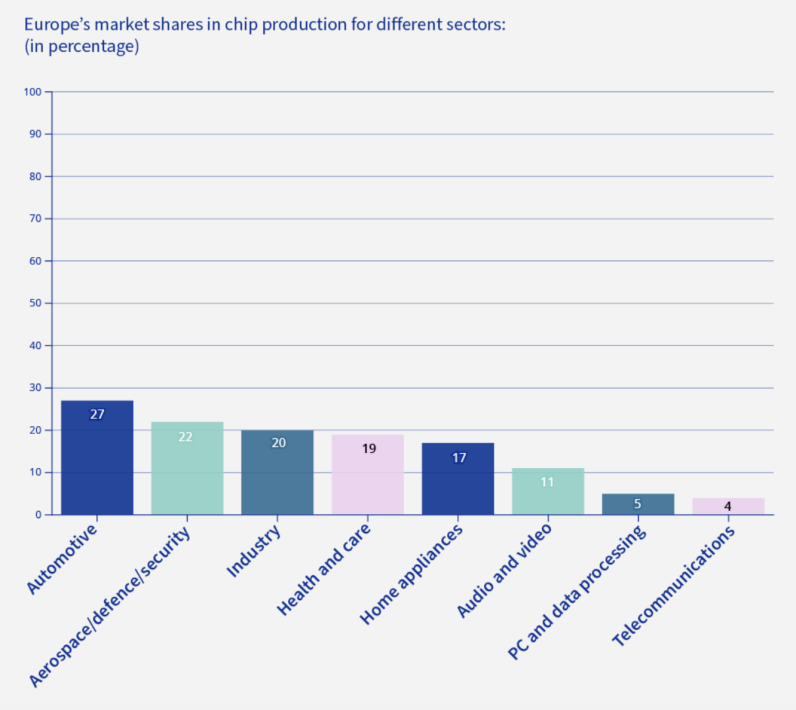
The EU’s Chips Act finally entered into force yesterday (September 21), after spending over a year winding its way through the legislature. The landmark law is designed to bolster the bloc’s domestic supply, sovereignty, and competitiveness in the semiconductor sector.
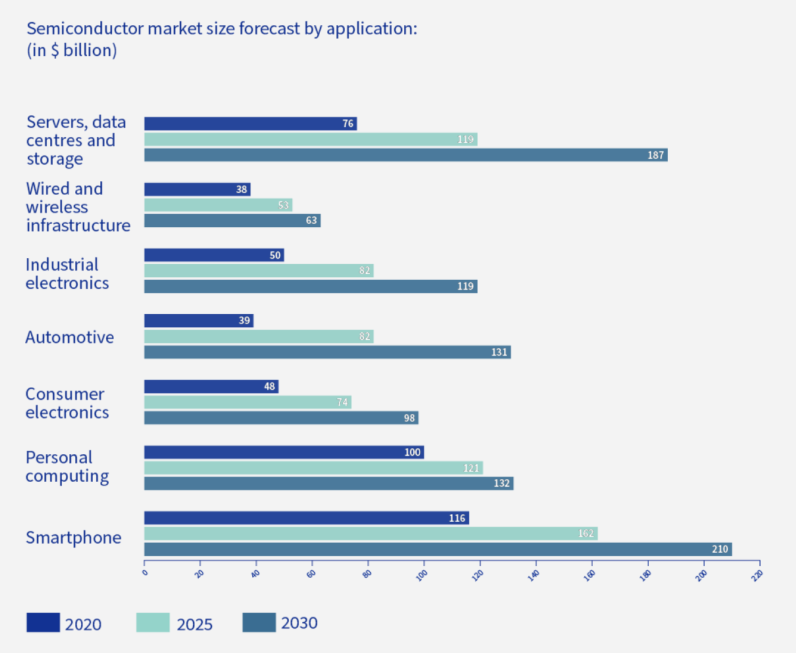
Semiconductor chips are the backbone of all electronic products — and as such, theyr’e fundamental components in everything from smartphones and cars to applications in healthcare, clean energy, and communications. This means chips are also at the centre of geopolitical interests and the global rally for technological supremacy.
“The global race for leadership in chips is a fact and Europe must secure her active part in it,” said Věra Jourová, the Commission’s VP for Values and Transparency. “In the EU we have great talent and research, but we are missing out in linking those advantages with production and rollout of the technology.”
Meanwhile, shortages and frictions in the semiconductor supply chain (especially heightened during the pandemic), exposed the bloc’s heavy reliance on a few foreign suppliers — China and Taiwan for manufacturing, and the US for design.
Credit: Council of the European Union
Against this backdrop, the Chips Act has three main objectives: to strengthen domestic manufacturing capacity, boost the European design ecosystem, and support scaleup and innovation across the entire value chain.
Overall, the EU aims to mobilise €43bn in public and private investments, and bring its share in global production capacity from 10% to 20% by 2030.
Three key pillars of action
1. The Chips for Europe Initiative
The Initiative will facilitate the “lab to fab” process and bridge the gap between research and industrialisation. It will receive €3.3bn in EU funding alongside capital from member states. It will support actions including the development of advanced pilot production lines and quantum chips, and the creation of a Chips Fund to provide easier access to debt financing and equity.
2. Boosting investment
To ensure security of supply and boost production capacity, the act will incentivise private and public investments in manufacturing facilities for chipmakers and their suppliers.
3. Coordination
The act has established a coordination mechanism between member states and the Commission to boost collaboration, monitor supply, estimate demand, and trigger a “crisis stage” if necessary. A pilot semiconductor alert system has already been set for shareholders to report supply chain disruptions.
Credit: Council of the European Union
“Investment is already happening, coupled with considerable public funding, and a robust regulatory framework,” said Commissioner Thierry Breton.
“We are becoming an industrial powerhouse in the markets of the future — capable of supplying ourselves and the world with both mature and advanced semiconductors. Semiconductors that are essential building blocks of the technologies that will shape our future, our industry, and our defence base.”