Human intelligence heavily depends on acquiring knowledge from other humans — accumulated through time as part of our cultural evolution. This type of social learning, known in literature as cultural transmission, enables us to imitate actions and behaviours in real time. But can AI also develop social learning skills the same way?
Imitation learning has long been a training approach for artificial intelligence, instructing the algorithms to observe humans complete a task and then try to mimic them. But usually AI tools need multiple examples and exposure to vast amounts of data to successfully copy their trainer.
Now, a groundbreaking study by DeepMind researchers claims that AI agents can also demonstrate social learning skills in real time, by imitating a human in novel contexts “without using any pre-collected human data.”
Specifically, the team focused on a particular form of cultural transmission, known as observational learning or (few-shot) imitation, which refers to the copying of body movement.
DeepMind ran its experiment in a simulated environment called GoalCycle3D, a virtual world with uneven terrain, footpaths, and obstacles, which the AI agents had to navigate.
To help the AI learn, the researchers used reinforcement learning. For those unfamiliar with Pavlov’s work in the field, this method is based on offering rewards for every behaviour that facilitates learning and the desired result — in this case, finding the correct course.
At the following stage, the team added expert agents (either hard-coded or human-controlled) that already knew how to navigate the simulation. The AI agents understood quickly that the best way to reach their destination was to learn from the experts.
The researchers’ observations were twofold. Firstly, they found that the AI not only learned faster when mimicking the experts, but also that it applied the knowledge it had gained to other virtual paths. Secondly, DeepMind discovered that the AI agents could still use their new skills even in the absence of the experts, which, according to the study’s authors, constitutes an example of social learning.
While the authors note that more research is needed, they believe that their method can pave the way “for cultural evolution to play an algorithmic role in the development of artificial general intelligence.” They also look forward to further interdisciplinary cooperation between the fields of AI and cultural evolutionary psychology.
Despite its early stage, DeepMind’s breakthrough could have significant implications for the artificial intelligence industry. Such an advancement has the potential to reduce the traditional, resource-intensive training of algorithms, while increasing their problem-solving capabilities. It also raises the question of whether artificial intelligence could ever learn to acquire social and cultural elements of human thought.
As a new year approaches, you might be curious to see whether your programming skills are still in demand or whether you should consider up-skilling for the best opportunities.
Hundreds of coding languages have emerged over the years; no matter what you’re hoping to create, there is no doubt a programming language out there for it.
So which are standing the test of time and which are worth boning up on? Here are seven that are set to emerge or remain in demand in 2024 and beyond.
Python
Hailed for its versatility and dev velocity, Python has steadily climbed the programming language charts over the past few years. It’s considered a useful language for working with AI, and Statista reports it was the third most used language of 2023, behind JavaScript and HTML/CSS.
The TIOBE Index, which factors search volume popularity into its rankings, currently lists Python in the number one spot.
Its power lies in its ability to automate tasks and improve workflows. Skilled software engineers with strong Python skills are in demand right now and will continue to be.
Python developers are natural problem-solvers, always looking for ways to optimise and improve processes.
If Python is your language of choice, Tech for Good is hiring a senior Python engineer to help develop a healthcare product that enables users to better manage their patient experience. It’s a UK-based remote role, though you will collaborate with a small, globally distributed team across the US, New Zealand and, eventually, Europe. Curious? See the requirements here.
Java
Since its creation in 1995, Java has been a solid and steady performer. A survey of 14 million developer jobs earlier this year put Java as the third most in-demand programming language.
Widely used in everything from web development to cloud computing, Internet of Things applications and large-scale enterprise tools, it’s commonly seen as a language that offers excellent job security.
PHP
Depending on who you ask, this 28-year-old programming language is either making a comeback – or never went away. Mainly used for web development, PHP skills continue to be sought after on the job market. Over 77% of websites still rely on it and one in every 10 dev jobs calls for it.
If you’re a PHP dev with a love of web culture, Belgian IT company Smals is looking for a PHP lead developer to help create websites for various Belgian federal and regional institutions. Working with a multidisciplinary team, you will work on project definition and design of open-source products and translate customer needs into cutting-edge digital solutions. Find out more about the role here.
C++
C++ continues to be one of the most popular programming languages out there, thanks to its versatility and high performance.
Widely used in the gaming industry, as well as for system-level programming, where interactions with hardware are crucial, there is a constant demand for C++ developers across a wide range of industries, translating into strong job security.
Kotlin
Popular for both Android and cross-platform app development, Kotlin is supported by Google, which announced it as an official language for Android development in 2017. Since then, it has steadily grown in popularity.
Fintech company SumUp is currently seeking a senior backend Kotlin engineer to work with the product development team in Paris on an in-app point-of-sale solution. Used by millions of businesses around the world, you’ll use Kotlin daily to support a large-scale fintech product. You can learn more about the role here.
C#
A key language in the Microsoft tech stack, C# is used for building web apps, Windows desktop apps and in-game development. Consistently in demand at small organisations and enterprise-level businesses, the C# syntax will look really familiar to you if you’ve spent time with a classic language like Java, so it can be a good one to upskill into.
JavaScript
Thanks to its adaptability, JavaScript will continue to be one of the most in-demand programming languages out there. Used primarily for front-end web development (over 98% of all websites use it in some way), every tech device you interact with, from your laptop to your phone to your smart TV, makes use of it to create dynamic, interactive content.
If you’re looking for a new opportunity, ConnectingTheDots is looking for a backend JavaScript developer. In this role, you would work with a team in Zwolle creating landing pages for global campaigns, festivals, and major product launches. As well as extensive JavaScript experience, a role like this also calls for experience with e-commerce tools like Salesforce Commerce Cloud and proficiency with UX/UI software. For more information, head here.
It’s a question as old as the tech industry itself: can Europe compete with Silicon Valley?
This reared up again in my mind for two main reasons. The first is the recent(-ish) shift of Big Tech into being media entities. And the second? That’s Spotify’s struggles as a European stalwart in this field.
Let’s consider the first point.
Over the past few years, we’ve seen Silicon Valley shift its strategy and start investing heavily in media. You only need to look at Apple’s launch of the Apple TV+ and Apple Music streaming services, or Amazon’s foray into movies and TV series. I mean, the latter was behind The Rings Of Power, the most expensive television show ever made.
There are, of course, a myriad of reasons why Big Tech is investing in media, but one of the biggest is using it as a tool to hook people into their ecosystems.
“In the case of Amazon, due to its various revenue channels and methods of connecting with customers, it has a greater understanding of its users and their preferences through data,” Stephen Hateley says. He’s the head of product and partner marketing at DigitalRoute, a business that helps streaming companies understand their customer data.
He tells me that because Amazon “is not primarily or solely a media company, it can combine its customer accounts and upsell to them via its ecommerce, TV, film and music streaming, consumer electronics, and grocery delivery channels.”
For example, the company is able to spend money on shows and encourage people to subscribe to Amazon Prime Video. This comes bundled with Amazon Prime itself, meaning users have an incentive to use the platform to shop on.
“This provides it with more opportunities to monetise its customers as well as collect a great amount of data on their preferences,” Hateley says.
Spotify’s struggles: An industry signpost
The thing is, all of the above isn’t particularly profitable — and especially not when it comes to the media side of things. In many ways, US tech companies are using streaming as a loss leader. They’re pumping billions into shows and movies with the aim of making money elsewhere, not through the media itself.
This is a huge problem to both media companies in general and European businesses in the same field. And guess who sits in both these categories? Yep, you guessed it: Spotify.
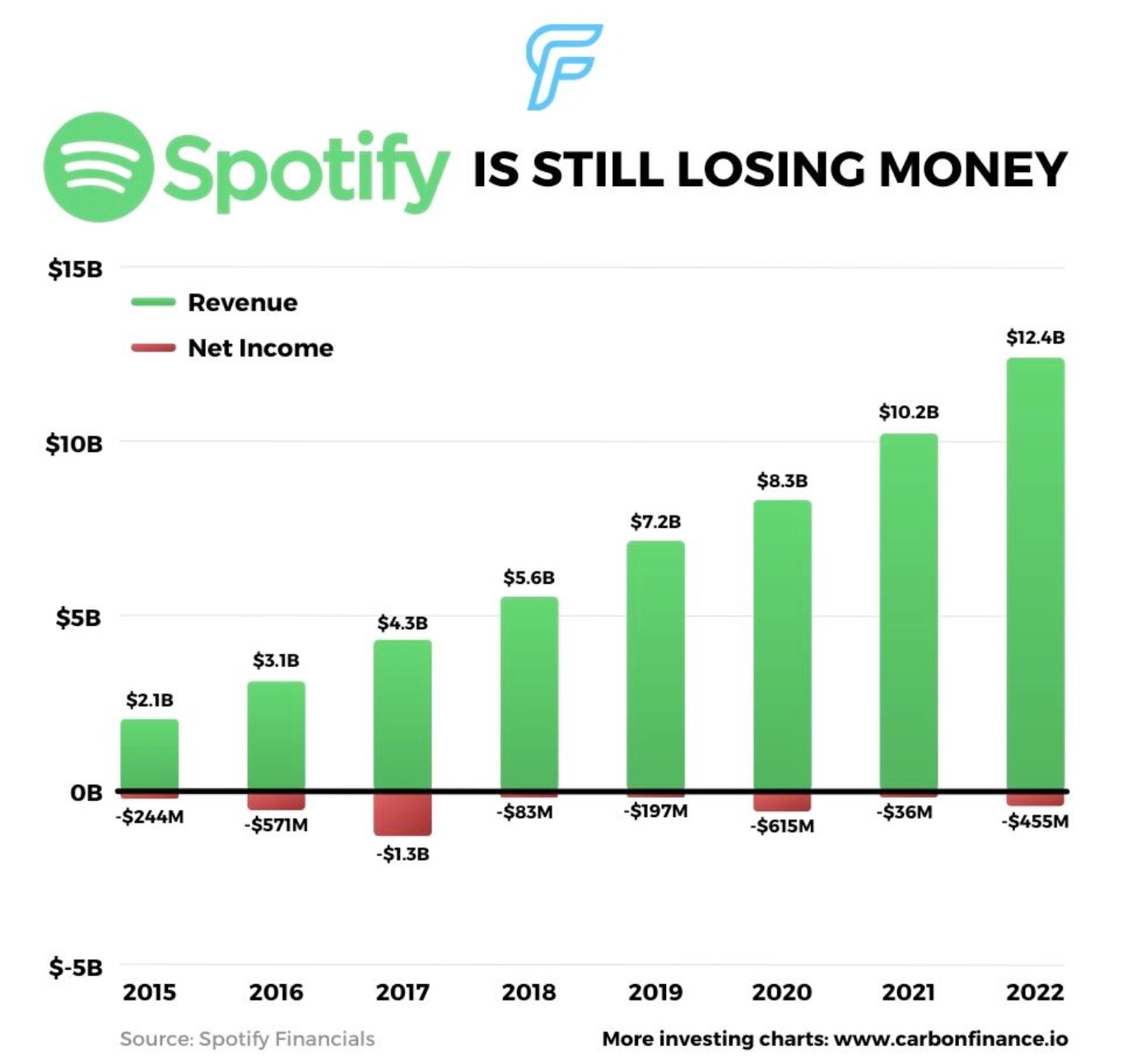
The Swedish company, which is broadly independent, is struggling to keep up with Big Tech. It pays its artists less than its biggest competitors, yet still hasn’t made a profit:
This graph from Carbon Finance shows that although Spotify has incredible growth, it’s consistently losing money.
This pattern is being played out across the entire European media landscape.
“US dominance can prove challenging for European companies attempting to claim their share of the market in any industry, and media is no different,” Hateley says, pointing towards how even organisations like the BBC are struggling in this environment.
This paints a picture of a sector being blasted away by Big Tech’s ability to spend and raises some important questions for the future of media.
Can European countries fight back? And do they need to?
“One way European media companies can compete with the big budgets of US firms is re-evaluating the type of content they’re putting out to audiences,” Marty Roberts tells me. He’s the SVP, Product Strategy & Marketing, at Brightcove, a streaming technology company.
Effectively, Roberts believes that US streaming giants create too many shows to market effectively. This is an opportunity for smaller entities to do “an amazing job at promoting a couple of new shows a month.”
Alongside this, he thinks that “[a] key strength for European media companies is hyper-localisation in niche markets.” He points towards either non-English language content, or getting particularly good at a specific genre, such as the success of Nordic detective dramas.
Jesse Shemen — the CEO of Papercup, a company that delivers AI dubbing for media companies — is similarly positive about prospects for European media.
“The current trend of bundling is opening up chances for unprecedented collaboration between European companies and US rivals,” he says. “We’re already seeing this in action, with Paramount Global’s partnerships with Sky and Canal+ just one recent example.”
This paints a rosier picture than I was expecting. The doom-and-gloom of European companies not competing doesn’t seem to trouble many experts, with them generally believing the businesses can thrive by not fighting US Big Tech, but instead working alongside it.
Yet is this unified, global approach a good thing?
One element that was brought up during my conversations was that the interconnected and worldwide focus of media now makes borders broadly irrelevant, meaning this focus on the success of European media specifically isn’t helpful.
“When it comes to investment capital, we live in a global village, where giant investors from the US, EU, UK, APAC, and anywhere can pour substantial capital into companies they believe in,” Maor Sadra says. He’s CEO and co-founder of INCRMNTAL, a data science platform.
This blurring of geographic lines, Sadra contends, is true of Spotify too. He points out that the company’s largest institutional investors include the UK’s Baillie Gifford, US-based Morgan Stanley, and Tencent Holidays, a Chinese company.
“The location of key management and employees in a connected world seems almost an irrelevant point of consideration in today’s age,” he tells me.
There’s no doubt that what Sadra and other experts say is true: we live in a global media environment and, for companies to survive, they need to accept that. Looking for outside investment or partnering with bigger organisations like Apple or Amazon is part-and-parcel of existing in this modern world.
This though doesn’t mean it’s not vital for Europe to maintain powerful media bodies.
You only need to look at how Hollywood and TV has benefitted America. It has expanded its cultural influence worldwide, becoming a form of soft power. Just consider, as one micro example, the global footprint of Halloween and Thanksgiving. For Europe to remain an attractive place, for it to carve out its own identity, it requires strong media.
Yes, it’s important to work together with these huge American organisations, yet European businesses in the same sector have to make their own mark too — and one way of achieving that is with tech.
Staying ahead of the wave
There was one theme that came up across many of my conversations on this topic of using tech to remain relevant: artificial intelligence.
“Localisation is one area where technology’s influence, especially generative AI, is being felt,” Shemen from Papercup tells me.
This is being trialled in a number of places already, with Spotify planning on cloning podcast hosts’ voices and then translating them into different languages. This trend will be hugely important for European media creators, especially if they’re making content in non-English. It almost goes without saying how much this could benefit smaller creators and media companies that fall into this category, as their potential reach can skyrocket.
Artificial intelligence will also be a vital part of the puzzle for European businesses when it comes to analysing data. If they can get access to forms of insights currently only available to gargantuan tech companies, they can alter their content to appeal and reach the masses, levelling the playing field.
The European route to success
If European media is going to survive Big Tech’s thrust into the space one thing’s for certain: it can’t stay stationary. Instead, the European industry needs to take advantage of its positive attributes and use them as best it can.
This should involve embracing its ability to create niche content, clever content partnerships, and investing in technologies that can help European content hit a wider audience.
Ultimately, the future of media streaming in Europe is one of balance. While there’s a lucrative future available by partnering with bigger organisations, it can’t risk losing itself in the process. Currently, there’s no real way European media bodies can compete with the bottomless wallets of Silicon Valley. What they can do though is ensure they stay relevant.
The secret to achieving this isn’t all that secret — being nimble and open minded.
Don’t act so shocked: age-old questions often have age-old answers, after all.
Oh, the wonderful and mind-twisting world of quantum mechanics. However, in order to harness the magic-like potential of bending qubits to one’s will, there is a whole lot of nitty gritty engineering that needs to occur.
The quantum revolution will not happen unless an entire ecosystem comes together, each part reaching the highest potential of its own expertise.
And plenty of that development is happening in the Netherlands. Just today, Dutch startup QuantaMap announced it had secured €1.4mn in funding for its quality assurance tech for the production of quantum computer chips. Quantum chips are not like regular computer chips, on many different levels (let’s set operating principles and data processing aside for now). One of these is that when they do not work like they should, there is not really any way of finding out why, and what has failed. This is to a great extent because it is so difficult to measure properties of the quantum chips without disturbing the qubits in the process.
QuantaMap, based in Leiden, the Netherlands, has developed what it calls a “quantum-first” microscope that will allow both quantum researchers and chip manufacturers to closely inspect every chip and improve quality.
What sets its technology apart, the startup says, is a combination of cryogenic scanning technology with quantum sensors, both specifically designed for quantum applications.
“We are convinced that our technology will be instrumental for making good on the promises of quantum computing, enabling the societal advances that quantum technology can deliver,” said QuantaMap co-founder Johannes Jobst.
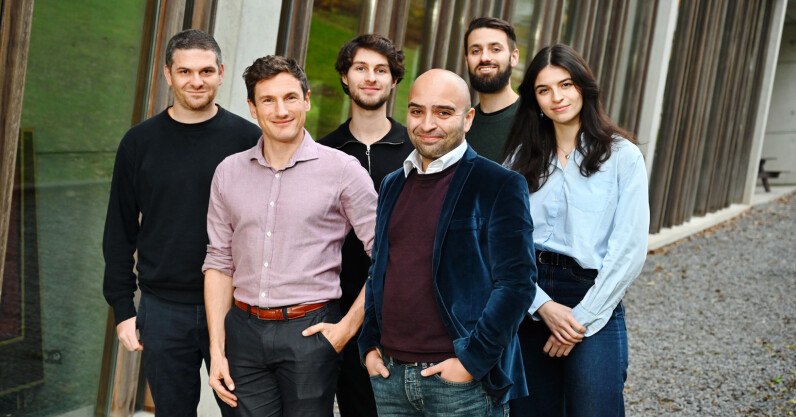
QuantaMap was founded in November 2022 by Jobst, Kaveh Lahabi, Milan Allan, and Jimi de Haan. The funding round includes investment from QDNL Participations, a fund that will invest €15mn into early-stage Dutch quantum computing startups in the coming years.
Ton van ‘t Noordende, the fund’s managing director, said that QuantaMap’s unique combination of cryogenic scanning-probe microscopy and custom quantum sensors would solve the crucial challenge of producing reliable quantum chips.
IPD stands for interpupillary distance—which simply means the distance between the center of your eyes. It’s important to know your IPD when it comes to VR and AR headsets because headsets can be adjusted to match your IPD for optimal image quality and comfort. Knowing your IPD is important for understanding which headsets are most suitable for your eyes. Luckily you can easily and automatically measure your IPD if you have a recent iPhone or iPad Pro, or use one of several simple measurement methods.
EyeMeasure is a free iOS app which uses the TrueDepth camera on recent iPhone and iPad Pro models to measure your IPD. Developer Dotty Digital claims the measurement is accurate within 0.5mm. Once you use the app the “far” IPD measurement is the one you’ll use when configuring your headset.
You can use the app to measure your IPD with the following iOS devices:
If you don’t have access to one of the above devices for an automatic measurement, here’s other ways you can measure your IPD.
Ask Your Eye Doctor (most accurate)
The most accurate IPD measurement you’ll be able to get is from an eye-doctor. If you’ve been to one since you’ve reached your adult size, your doctor should have an accurate measurement on file; give them a call and ask if they can provide your IPD measurement in millimeters. If you’re younger than 20 and it’s been more than a year since you saw the eye-doctor, you may want to get a check-up to make sure you have an up-to-date measurement.
Online IPD Measure Tool (easiest)
You can measure your IPD with a browser-based tool like this one from Ace & Tate. This will work through your browser on your computer or smartphone. You’ll be asked to upload a photo of yourself holding any standard-sized magnetic strip card (ie: credit card or drivers license) which will be used to establish the correct scale for the measurement.
Use a Mirror (accurate but you need a ruler)
With a ruler and a mirror you can easily measure your IPD. Our friend Oliver Kreylos offers these simple instructions, along with a more detailed breakdown.
Stand in front of a mirror and hold a ruler up to your nose, such that the measuring edge runs directly underneath both your pupils.
Close your right eye and look directly at your left eye. Move the ruler such that the “0” mark appears directly underneath the center of your left pupil. Try to keep the ruler still for the next step.
Close your left eye and look directly at your right eye. The mark directly underneath the center of your right pupil is your inter-pupillary distance.
Ask a Friend (but you need a ruler… and a friend)
Are you a vampire with no need for mirrors in your home? Ask a friend with a steady hand to hold a ruler directly under your eyes. Look straight forward at a distant object and ask your friend to align the “0” mark with the center of one pupil and then read the measurement under the center of your other pupil. That measurement is your IPD.
This is also an ideal way to measure the IPD of a VR novice to which you’re demoing VR.
Eyeball It (when you’re in a pinch)
This option may be the most error prone, but it’s probably better than nothing if you just need a quick and dirty alignment; it only works with headsets that have a physical IPD adjustment.
While inside the headset, close your non-dominant eye. With your dominant eye open, look at a sharp recognizable texture like text or the flat edge of an object. Begin adjusting the IPD setting back and forth to slowly find the position of maximum sharpness. This should get you in the ballpark of your ideal IPD setting. We would not recommend trying this exercise with both eyes open because it’s easier to misalign your IPD when using both eyes.
Thanks to Allan Hambrick who shared this method in the comments!
Why Correctly Setting Your IPD is Important in a VR or AR Headset
Tricking our brains into believing we’re seeing another reality starts by feeding our eyes imagery which closely matches how we perceive the real world. That means making sure the images are correctly aligned with each eye, just like adjusting the width on a pair of binoculars.
Since we always see the real world from the perspective of or own IPD, correct alignment in a headset is important for matching our ingrained sense of 3D depth and scale. If the IPD of your headset is incorrectly set, the scale of the virtual world will appear to be slightly incorrect.
Even if a given headset doesn’t have a physical IPD adjustment, most headsets have a software IPD adjustment which can correct the sense of scale. In both cases you’ll need to know your own IPD measurement to set this properly.
Setting the correct IPD is also very important for maximizing image quality in VR and AR headsets.
Most headsets have lenses and displays which are designed to achieve maximum clarity and field of view when seen through the ‘optical center’ of the lens (this is also called the ‘sweet spot’). If the center of your eyes don’t align with the optical center of the lenses, you won’t get that maximum clarity and field of view; depending upon the lens, such misalignment can lead to a surprising reduction in visual quality.
Luckily, many headsets have physical IPD adjustments which allow you to change the distance between the lenses to align your eyes with the optical center of the lenses. All major headsets with physical IPD adjustments have digital readouts in millimeters that display inside the headset which you can use to match to your own IPD.
In summary, knowing your IPD and setting it correctly is important for achieving the best visual experience and comfort in any headset. And if your measured IPD is an outlier, you should make sure your headset of choice can accommodate your IPD; a headset with a physical IPD adjustment will support a much wider range of IPD measurements.
Steam VR Fest is in full swing, offering deep discounts on PC VR titles that may just give you another pretty valid reason to stay indoors this winter.
While you won’t be able to nab Half-Life: Alyx (2020) on the cheap this time around, there are a host of top games on sale to buy or gift to a friend for the holiday season.
That’s great news if you have a PC VR headset, but even greater news if you have a VR-ready PC and Meta Quest thanks to the new dedicated Steam Link App which makes playing Steam games on Quest even easier.
Valve highlighted some immersive games in the latest VR Fest hype video, although there are a ton more on sale to check out. Here’s some of the standout titles on sale from now until December 11th.
In the world of AI image generation, tools like DALL-E and Midjourney are holding the crown — and not simply because of their high-resolution performance. The training of these models requires such substantial investment and resources that it inevitably leads to centralised services and pay-per-use access.
A new AI tool developed by the University of Surrey aims to reverse this trend and democratise the technology, by opening up high-res image generation to a wider audience.
Dubbed DemoFusion, the model allows users to generate high-quality images without the need to subscribe to a service, or own a very powerful computer. In fact, the system only requires consumer-grade RTX 3090 GPU that can be found in any mid-range gaming PC or a Mac M1.
The AI is essentially a plug-and-play extension to the Stable Diffusion XL (SDXL) open-source model, which generates images at a resolution of 1024×1024. DemoFusion enables 4x, 16x, or even higher increase in resolution — with a few simple lines of code and without any additional training. The only trade-off according to the team is “a little more patience.” We tried it at TNW and it’s about six minutes.
Credit: University of SurreyOn the left side: the result by SDXL. On the right side, the result by DemoFusion. Credit: University of Surrey
To achieve these high-res results, the scientists first generated low-res images and then enhanced them using a process called progressive upscaling. This improves the SDXL’s detail and resolution by working across images in patches.
“For the first time, our unique technique lets users enhance their AI-generated images without the need for vast computing power, or any re-training of the model,” said Professor Yi-Zhe Song.
“Digital art and imagery is a powerful medium which everyone should have access to — not just a handful of wealthy corporations. That’s why we made DemoFusion publicly available. We believe it can enrich our lives, and everyone should be able to use it.”
The new technique is available online in the paper “DemoFusion: Democratising High-Resolution Image Generation with No $$$.”
Whether DemoFusion will gain enough traction to compete with giants like OpenAI’s DALL-E remains to be seen, but its creation is an important step to opening up AI’s image-generation potential to the public and the wider tech community.
Shady behaviour might be part of the Grand Theft Auto DNA, but leaking video game trailers on TikTok before launch is probably not what developers had in mind. Especially not when it can be traced back to a senior Rockstar developer’s son.
The fact that fans will need to wait more than a year for the next instalment in the GTA saga (or, as one viewer close to the author expressed this morning, “2025 just means not 2024”) did not diminish the enthusiasm when Rockstar Games released the GTA VI trailer in the early hours of Tuesday CET.
Vice City looks slicker than ever indeed. However, Rockstar released the trailer to the public some hours earlier than intended. The reason? The leaking of an off-cam clip of the footage to TikTok over the weekend and a subsequent leak of the trailer on X on Monday. Plot twist — the TikTok user in question has reportedly been identified as the son of a senior Rockstar North employee.
Incriminating evidence?
Rockstar North, based in Edinburgh, Scotland, has been part of the Rockstar Games family since 1999 and is responsible for the development of the Grand Theft Auto series. The evidence that the seven-second TikTok leak came from a developer’s family member has been labelled by some social media users as “fairly convincing.”
Reportedly, it involves the TikTok user posing with the Rockstar employee and calling them “dad.” But as the TikTok (it is a noun, right?) has been deleted, this shall have to remain second-hand speculation on our part. Of course, it could all be a part of a deceitful ruse to deflect culpability, in keeping with the spirit of the game.
The evidence to suggest the video has come from someone related to the employee in question is fairly convincing.
Again, if this is true it’s extremely disappointing that this has occurred so close to the official reveal.
In another noteworthy turn of events, the trailer revealed that GTA VI will feature the game’s first female protagonist (Bonnie and Clyde storylines FTW). Rockstar Games says it will be released on PS5 and Xbox Series X / S.
Other notable vide game leaks
Leaks to social media are not unusual in the gaming world. A prototype of Horizon Forbidden West was leaked to Twitter one week before its release. A Russian website published a version of the script to Mass Effect 3 before the game’s official release in March 2012 (although we cannot see the appeal of reading it — it would be like sneaking a peek at your Christmas presents before they are wrapped).
However, it is unusual for leaks to come from such intimate sources, and so close to the official release. Whoever may prove to be behind the leaks, let’s hope the repercussions are more akin to being grounded than ending up in jail, like the last teenagers who messed with Rockstar and GTA.
European contributions might have been a little late to join the generative AI investment party, but that does not mean they will not end up rivalling some of the earlier North American frontrunners. According to people familiar with the matter, Mistral AI, the French genAI seed-funding sensation, is just about to conclude the raising of about €450mn from investors.
Unlike Germany’s Aleph Alpha who just raised a similar sum, most investors come from beyond the confines of the continent. The round is led by Silicon Valley VC firm Andreessen Horowitz, and also includes backing from Nvidia and Salesforce.
Sources close to the deal told Bloomberg that Andreessen Horowitz would invest €200mn in funding, whereas Nvidia and Salesforce would be down for €120mn in convertible debt, although this was still subject to change. If it goes through, this would value the Paris-based startup at nearly $2bn — less than a year after it was founded.
The key thing that sets Mistral apart is that it is specifically building smaller models that target the developer space. Speaking at the SLUSH conference in Helsinki last week, co-founder and CEO Arthur Mensch said this was exactly what separates the philosophy of the company from its competitors.
“You can start with a very big model with hundreds of billions of parameters — maybe it’s going to solve your task. But you could actually have something which is a hundred times smaller,” Mensch stated. “And when you make a production application that targets a lot of users, you want to make choices that lower the latency, lower the costs, and leverage the actual populated data that you may have. And this is something that I think is not the topic of our competitors — they’re really targeting multi-usage, very large models.” Mensch, who previously worked for Google DeepMind, added that this approach would also allow for strong differentiation through proprietary data, a key factor for actors to survive in the mature application market space.
Mistral AI and the reported investors have all declined to comment on the potential proceedings.
We have all seen the gloomy headlines over the past week. VC funding for European tech startups will have dropped by a whopping $45bn in 2023. However, some sectors, such as build world climate tech are faring… less horribly than others.
Specifically, a new report by sustainability investor A/O released today has found that despite the global downturn, climate tech is attracting as much as 70% of built world VC investment — up from around only 20% five years ago. In addition, investment in early stage rounds in European startups in the sector has, for the first time, exceeded that in North America.
The built world includes anything that is human-made and created to adapt the natural environment into a habitable and usable area for the purpose of living, working, and playing. This includes architecture and parks, and covers everything from road infrastructure to building construction and operations. Nearly 40% of global greenhouse gas emissions come from buildings — a number that is set to double by 2050 if left unchecked.
According to the report by A/O, the largest European built world VC firm, the trend has been driven by the energy crisis along with mounting pressures from regulators to decarbonise the real estate and construction industries.
The <3 of EU tech
The latest rumblings from the EU tech scene, a story from our wise ol’ founder Boris, and some questionable AI art. It’s free, every week, in your inbox. Sign up now!
Indeed, while total venture capital funding has dropped by over 30% in the first half of 2023, and climate tech overall lost 40%, built world climate tech only saw a 13% decrease in funding.
“The built world is not immune to the wider macroeconomic challenges in the tech and startup world in 2023,” Gregory Dewerpe, Managing Partner at London-based A/O commented. “However, climate themes have proven more resilient relative to the wider venture market, and within the built world specifically, we have observed both a more muted downturn and faster recovery.”
Meanwhile, not all themes throughout the sector fared equally well. While retrofit installers, grid storage, infrastructure monitoring, and renewable energy procurement continue to see the most investment, areas such as water efficiency and heat pump technology remain significantly underfunded.
The report also found that for the first time Europe and North America now see the same dollars invested for early stage built world climate tech. Germany and the UK grew significantly (+73% and +27% respectively), while the US contracted (-32%). Indeed, the top three cities for dollars invested were all European — London, Berlin, and Munich.
“It’s great to see Europe’s ecosystem continue to grow with early-stage investment in Europe on par with North America for the first time, showcasing that some of the most exciting innovation is coming out of the continent,” Dewerpe continued.
On a more sombre note, later-stage rounds have suffered the most with total investment volumes and median deal size dropping -53%.
Astell & Kern takes the idea of the DAP to its logical conclusion
If you demand (and can afford) the very best digital audio player around, the Astell & Kern A&ultima SP3000 is a no-brainer. Remarkably, it gets pretty close to justifying the asking price.
$3,699 at Amazon
Pros
+Audio excellence in every respect
+Uncompromised specification
+A lovely object as well as an impressive device
Cons
–Stunningly expensive
–Not as portable as is ideal
–Not vegan-friendly
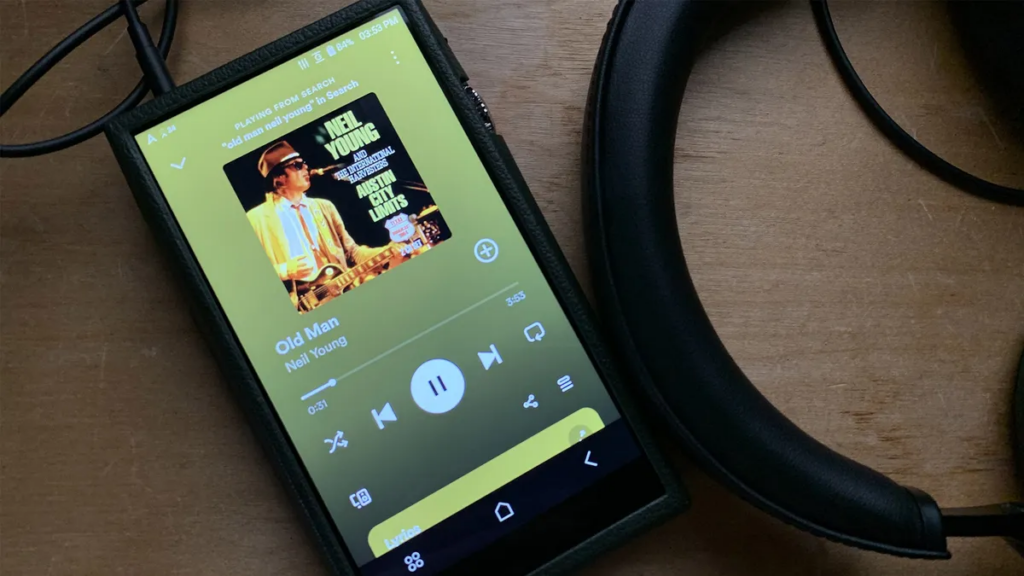
The Astell & Kern A&ultima SP3000 is the most expensive digital audio player in a product portfolio full of expensive digital audio players. It’s specified without compromise (full independent balanced and unbalanced audio circuits? Half a dozen DACs taking care of business? These are just a couple of highlights) and it’s finished to the sort of standard that wouldn’t shame any of the world’s leading couture jewellery companies.
Best of all, though, is the way it sounds. It’s remarkably agnostic about the stuff you like to listen to, the sort of standard of digital file in which it’s contained, and the headphones you use too – and when you give it the best stuff to work with, the sound it’s capable of producing is almost humbling in its fidelity. Be in no doubt, this is the best digital audio player – aka best MP3 player – when it comes to sound quality you can currently buy. Which, when you look again at how much it costs, is about the least it needs to be.
The Astell & Kern A&ultima SP3000 is the most expensive digital audio player in a product portfolio full of expensive digital audio players. It’s specified without compromise (full independent balanced and unbalanced audio circuits? Half a dozen DACs taking care of business? These are just a couple of highlights) and it’s finished to the sort of standard that wouldn’t shame any of the world’s leading couture jewellery companies.
Best of all, though, is the way it sounds. It’s remarkably agnostic about the stuff you like to listen to, the sort of standard of digital file in which it’s contained, and the headphones you use too – and when you give it the best stuff to work with, the sound it’s capable of producing is almost humbling in its fidelity. Be in no doubt, this is the best digital audio player – aka best MP3 player – when it comes to sound quality you can currently buy. Which, when you look again at how much it costs, is about the least it needs to be.
The Astell & Kern A&ultima SP3000 (which I think we should agree to call ‘SP3000’ from here on out) is on sale now, and in the United Kingdom it costs a not-inconsiderable £3799. In the United States, it’s a barely-more-acceptable $3699, and in Australia you’ll have to part with AU$5499.
Need I say with undue emphasis that this is quite a lot of money for a digital audio player? I’ve reviewed very decent digital audio players (DAP) from the likes of Sony for TechRadar that cost about 10% of this asking price – so why on Earth would you spend ‘Holiday of a Lifetime’ money on something that doesn’t do anything your smartphone can’t do?
Bluetooth 5.0 with aptX HD and LDAC
Native 32bit/784kHz and DSD512 playback
Discrete balanced and unbalanced audio circuits
Admittedly, when Astell & Kern says the SP3000 is “the pinnacle of audio players”, that seems a rather subjective statement. When it says this is “the world’s first DAP with independent audio circuitry”, that’s simply a statement of fact.
That independent audio circuitry keeps the signal path for the balanced and unbalanced outputs entirely separated, and it also includes independent digital and analogue signal processing. Astell & Kern calls the overall arrangement ‘HEXA-Audio’ – and it includes four of the new, top-of-the-shop AKM AK4499EX DAC chipsets along with a couple of the very-nearly-top-of-the-shop AK4191EQ DACs from the same company. When you add in a single system-on-chip to take care of CPU, memory and wireless connectivity, it becomes apparent Astell & Kern has chosen not to compromise where technical specification is concerned. And that’s before we get to ‘Teraton X’… this is a bespoke A&K-designed processor that minimises noise derived from both the power supply and the numerous DACs, and provides amplification that’s as clean and efficient as any digital audio player has ever enjoyed.
The upshot is a player that supports every worthwhile digital audio format, can handle sample rates of up to 32bit/784kHz and DSD512 natively, and has Bluetooth 5.0 wireless connectivity with SBC, AAC, aptX HD and LDAC codec compatibility. A player that features half-a-dozen DAC filters for you to investigate, and that can upsample the rate of any given digital audio file in an effort to deliver optimal sound quality. And if you want to enjoy the sound as if it originates from a pair of loudspeakers rather than headphones, the SP3000 has a ‘Crossfeed’ feature that mixes part of the signal from one channel into the other (with time-adjustment to centre the audio image) in an effort to do just that.
904L stainless steel chassis
493g; 139 x 82 x 18mm (HxWxD)
1080 x 1920 touchscreen
‘Portable’, of course, is a relative term. The SP3000 is not the most portable product of its type around – it weighs very nearly half a kilo and is 139 x 82 x 18mm (HxWxD) – but if you can slip it into a bag then I guess it must count as ‘portable’. Its pointy corners count against it too, though – and while it comes with a protective case sourced from French tanners ALRA, the fact it’s made of goatskin is not going to appeal to everyone.
To be fair, the body of the SP3000 isn’t as aggressively angular as some A&K designs. And the fact that it’s built from 904L stainless steel goes a long way to establishing the SP3000’s credentials as a luxury ‘accessory’ (in the manner of a watch or some other jewellery) as well as a functional device. 904L stainless steel resists corrosion like nobody’s business, and it can also accept a very high polish – which is why the likes of Rolex make use of it. I’m confident you’ve never seen such a shiny digital audio player.
The front and rear faces of the SP3000 are glass – and on the front it makes up a 5.4in 1080 x 1920 touch-screen. The Snapdragon octa-core CPU that’s in charge means it’s an extremely responsive touch-screen, too.
On the top right edge of the chassis there’s the familiar ‘crown’ control wheel – which is another design feature that ups the SP3000’s desirability. It feels as good as it looks, and the circular light that sits behind it glows in one of a number of different colours to indicate the size of the digital audio file that’s playing. The opposite edge has three small, much less exciting, control buttons that work perfectly well but have none of the control wheel’s visual drama or tactile appeal.
The top of the SP3000 is home to three headphone sockets. There’s a 3.5mm unbalanced output, and two balanced alternatives – 2.5mm (which works with four-pole connections) and 4.4mm (which supports five-pole connections). On the bottom edge, meanwhile, there’s a USB-C socket for charging the internal battery – battery life is around 10 hours in normal circumstances, and a full charge from ‘flat’ takes around three hours. There’s also a micro-SD card slot down here, which can be used to boost the player’s 256GB of memory by up to 1TB.
Set your calendar reminders, because Capcom announced today that the official VR mode for Resident Evil 4 (2023) remake is coming to PSVR 2 on December 8th.
In the new VR mode, you can tackle the game’s main story, which pits you against crazed villagers, huge creatures (some may say even Gigantic), and other epic boss battles. Yes, that means you’ll be able to upgrade and blast away with all of the weapons from the main story.
While the PSVR 2 mode will be free to players of the game, the studio also announced it’s putting out a free demo at launch, which lets you experience the start of the game as well as try out the shooting range so you can get a taste for how each weapon shoots in VR.
What’s more, the game’s VR implementation was done by the same development team behind the full-length VR experiences of Resident Evil 7 biohazard and Resident Evil Village—two extremely well-done VR modes in their own right.
And just to avoid confusion: the VR mode coming exclusively to PSVR 2 on December 8th however isn’t the same as the Quest-exclusive refresh of Resident Evil 4 (2021), which was remastered from the 2005 original by Armature Studio using new textures and including its own self-developed, VR-native controls.