Author name: Rejus Almole

tsa-silent-on-crowdstrike’s-claim-delta-skipped-required-security-update

TSA silent on CrowdStrike’s claim Delta skipped required security update


We’re all trying to find the guy who did this

CrowdStrike and Delta’s legal battle has begun. Will Microsoft be sued next?

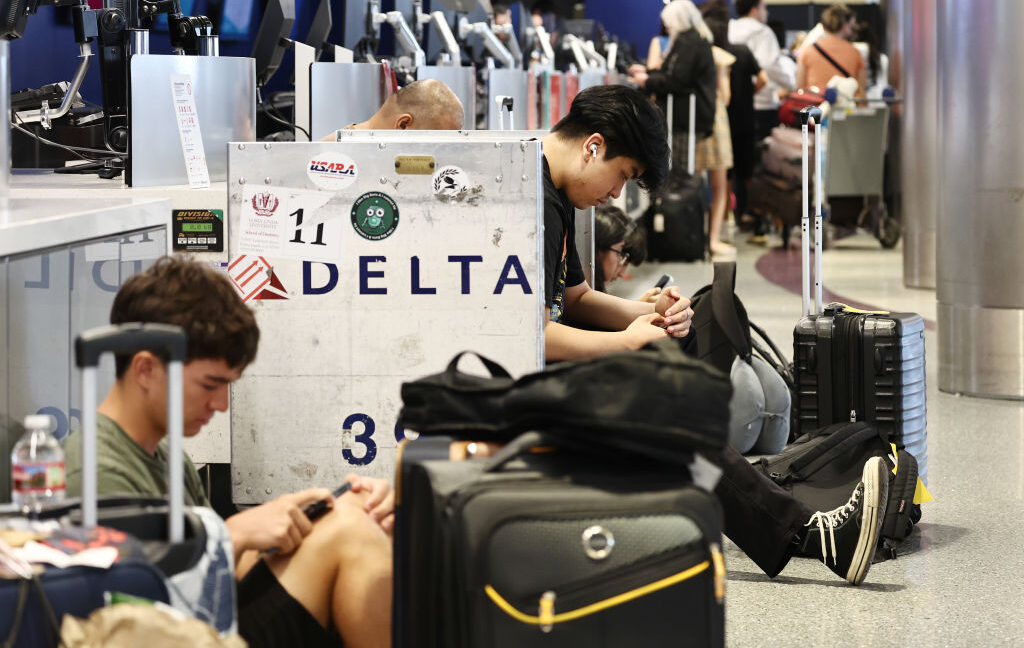
Travelers sit with their luggage on the check-in floor of the Delta Air Lines terminal at Los Angeles International Airport (LAX) on July 23, 2024 in Los Angeles, California. Credit: Mario Tama / Staff | Getty Images News

Delta and CrowdStrike have locked legal horns, threatening to drag out the aftermath of the worst IT outage in history for months or possibly years.

Each refuses to be blamed for Delta’s substantial losses following a global IT outage caused by CrowdStrike suddenly pushing a flawed security update despite Delta and many other customers turning off auto-updates.

CrowdStrike has since given customers more control over updates and made other commitments to ensure an outage of that scale will never happen again, but Delta isn’t satisfied. The airline has accused CrowdStrike of willfully causing losses by knowingly deceiving customers by failing to disclose an unauthorized door into their operating systems that enabled the outage.

In a court filing last Friday, Delta alleged that CrowdStrike should be on the hook for the airline’s more than $500 million in losses—partly because CrowdStrike has admitted that it should have done more testing and staggered deployments to catch the bug before a wide-scale rollout that disrupted businesses worldwide.

“As a result of CrowdStrike’s failure to use a staged deployment and without rollback capabilities, the Faulty Update caused widespread and catastrophic damage to millions of computers, including Delta’s systems, crashing Delta’s workstations, servers, and redundancy systems,” Delta’s complaint said.

Delta has further alleged that CrowdStrike postured as a certified best-in-class security provider who “never cuts corners” while secretly designing its software to bypass Microsoft security certifications in order to make changes at the core of Delta’s computing systems without Delta’s knowledge.

“Delta would have never agreed to such a dangerous process had CrowdStrike disclosed it,” Delta’s complaint said.

In testimony to Congress, CrowdStrike executive Adam Meyers suggested that the faulty update did follow standard protocols. He explained that “CrowdStrike’s software code is certified by Microsoft” and that it’s “updated less frequently,” and “new configurations are sent with rapid occurrence to protect against threats as they evolve,” not to bypass security checks, as Delta alleged.

But by misleading customers about these security practices, Delta alleged, CrowdStrike put “profit ahead of protection and software stability.” As Delta sees it, CrowdStrike built in the unauthorized door so that it could claim to resolve security issues more quickly than competitors. And if a court agrees that CrowdStrike’s alleged failure to follow standard industry best practices does constitute, at the very least, “gross negligence,” Delta could win.

“While we aimed to reach a business resolution that puts customers first, Delta has chosen a different path,” CrowdStrike’s spokesperson told Ars. “Delta’s claims are based on disproven misinformation, demonstrate a lack of understanding of how modern cybersecurity works, and reflect a desperate attempt to shift blame for its slow recovery away from its failure to modernize its antiquated IT infrastructure. We have filed for a declaratory judgment to make it clear that CrowdStrike did not cause the harm that Delta claims and they repeatedly refused assistance from both CrowdStrike and Microsoft. Any claims of gross negligence and willful misconduct have no basis in fact.”

CrowdStrike sues to expose Delta’s IT flaws

In its court filing, however, CrowdStrike said there’s much more to the story than that. It has accused Delta of failing to follow laws, including best practices established by the Transportation Security Administration (TSA).

While many CrowdStrike customers got systems back up and running within a day of the outage, Delta’s issues stretched painfully for five days, disrupting travel for a million customers. According to CrowdStrike, the prolonged delay at Delta was not due to CrowdStrike failing to provide adequate assistance but allegedly to Delta’s own negligence to comply with TSA requirements designed to ensure that no major airline ever experiences prolonged system outages.

“Despite the immediate response from CrowdStrike, it was Delta’s own response and IT infrastructure that caused delays in Delta’s ability to resume normal operation, resulting in a longer recovery period than other major airlines,” CrowdStrike’s complaint said.

In March 2023, the TSA added a cybersecurity emergency amendment to its cybersecurity programs. The amendment required airlines like Delta to develop “policies and controls to ensure that operational technology systems can continue to safely operate in the event that an information technology system has been compromised,” CrowdStrike’s complaint said.

Complying with the amendment ensured that airlines could “timely” respond to any exploitation of their cybersecurity or operating systems, CrowdStrike explained.

CrowdStrike realized that Delta was allegedly non-compliant with the TSA requirement and other laws when its “efforts to help remediate the issues revealed” alleged “technological shortcomings and failures to follow security best practices, including outdated IT systems, issues in Delta’s active directory environment, and thousands of compromised passwords.”

TSA declined Ars’ request to comment on whether it has any checks in place to ensure compliance with the emergency amendment.

While TSA has made no indication so far that it intends to investigate CrowdStrike’s claims, the Department of Transportation (DOT) is currently investigating Delta’s seemingly inferior customer service during the outage. That probe could lead to monetary fines, potentially further expanding Delta’s losses.

In a statement, DOT Secretary Pete Buttigieg said, “We have made clear to Delta that they must take care of their passengers and honor their customer service commitments. This is not just the right thing to do, it’s the law, and our department will leverage the full extent of our investigative and enforcement power to ensure the rights of Delta’s passengers are upheld.”

On X (formerly Twitter), Buttigieg said that the probe was sparked after DOT received hundreds of complaints about Delta’s response. A few days later, Buttigieg confirmed that the probe would “ensure the airline is following the law and taking care of its passengers during continued widespread disruptions.” But DOT declined Ars’ request to comment on whether DOT was investigating Delta’s alleged non-compliance with TSA security requirements, only noting that “TSA is not part of DOT.”

Will Microsoft be sued next?

Delta has been threatening legal action over the CrowdStrike outage since August, when Delta confirmed in an SEC filing that the outage caused “approximately 7,000 flight cancellations over five days.” At that time, Delta CEO Ed Bastian announced, “We are pursuing legal claims against CrowdStrike and Microsoft to recover damages caused by the outage, which total at least $500 million.”

But Delta’s lawsuit Friday notably does not name Microsoft as a defendant.

Ars could not immediately reach Delta’s lawyer, David Boies, to confirm if another lawsuit may be coming or if that legal threat to Microsoft was dropped.

It could be that Microsoft dissuaded Delta from filing a complaint. Immediately in August, Microsoft bucked Delta’s claims that the tech giant was in any way liable for Delta’s losses, The Register reported. In a letter to Boies, Microsoft lawyer Mark Cheffo wrote that Microsoft “empathizes” with Delta, but Delta’s public comments blaming Microsoft for the outage are “incomplete, false, misleading, and damaging to Microsoft and its reputation.”

“The truth is very different from the false picture you and Delta have sought to paint,” Cheffo wrote, noting that Microsoft did not cause the outage and Delta repeatedly turned down Microsoft’s offers to help restore its systems. That includes one instance where a Delta employee allegedly responded to a Microsoft inquiry three days after the outage by saying that Delta was “all good.” Additionally, a message from Microsoft CEO Satya Nadella to Delta’s Bastian allegedly went unanswered.

Cheffo alleged that Delta was cagey about accepting Microsoft’s help because “the IT system it was most having trouble restoring—its crew-tracking and scheduling system—was being serviced by other technology providers, such as IBM, because it runs on those providers’ systems, and not Microsoft Windows or Azure.”

According to Cheffo, Microsoft was “surprised” when Delta threatened to sue since the issues seemed to be with Delta’s IT infrastructure, not Microsoft’s services.

“Microsoft continues to investigate the circumstances surrounding the CrowdStrike incident to understand why other airlines were able to fully restore business operations so much faster than Delta, including American Airlines and United Airlines,” Cheffo wrote. “Our preliminary review suggests that Delta, unlike its competitors, apparently has not modernized its IT infrastructure, either for the benefit of its customers or for its pilots and flight attendants.”

At that time, Cheffo told Boies that Microsoft planned to “vigorously defend” against any litigation. Additionally, Microsoft’s lawyer demanded that Delta preserve documents, including ones showing “the extent to which non-Microsoft systems or software, including systems provided and/or designed by IBM, Oracle, Amazon Web Services, Kyndryl or others, and systems using other operating systems, such as Linux, contributed to the interruption of Delta’s business operations between July 19 and July 24.”

It seems possible that Cheffo’s letter spooked Delta out of naming Microsoft as a defendant in the lawsuit over the outage, potentially to avoid a well-resourced opponent or to save public face if Microsoft’s proposed discovery threatened to further expose Delta’s allegedly flawed IT infrastructure.

Microsoft declined Ars’ request to comment.

CrowdStrike says TOS severely limits damages

CrowdStrike appears to be echoing Microsoft’s defense tactics, arguing that Delta struggled to recover due to its own IT failures.

According to CrowdStrike, even if Delta’s breach of contract claims are valid, CrowdStrike’s terms of service severely limit damages. At most, CrowdStrike’s terms stipulate, damages owed to Delta may be “two times the value of the fees paid to service provider for the relevant subscription services subscription term,” which is likely substantially less than $500 million.

And Delta wants much more than lost revenue returned. Beyond the $500 million in losses, the airline has asked a Georgia court to calculate punitive damages and recoup Delta for future revenue losses as its reputation took a hit due to public backlash from Delta’s lackluster response to the outage.

“CrowdStrike must ‘own’ the disaster it created,” Delta’s complaint said, alleging that “CrowdStrike failed to exercise the slight diligence or care of the degree that persons of common sense, however inattentive they may be, would use under the same or similar circumstances.”

CrowdStrike is hoping a US district court jury will agree that Delta was the one that dropped the ball the most as the world scrambled to recover from the outage. The cybersecurity company has asked the jury to declare that any potential damages are limited by CrowdStrike’s subscriber terms and that “CrowdStrike was not grossly negligent and did not commit willful misconduct in any way.”

This story was updated to include CrowdStrike’s statement.

Photo of Ashley Belanger

Ashley is a senior policy reporter for Ars Technica, dedicated to tracking social impacts of emerging policies and new technologies. She is a Chicago-based journalist with 20 years of experience.

TSA silent on CrowdStrike’s claim Delta skipped required security update Read More »
google-accused-of-shadow-campaigns-redirecting-antitrust-scrutiny-to-microsoft

Google accused of shadow campaigns redirecting antitrust scrutiny to Microsoft

On Monday, Microsoft came out guns blazing, posting a blog accusing Google of “dishonestly” funding groups conducting allegedly biased studies to discredit Microsoft and mislead antitrust enforcers and the public.

In the blog, Microsoft lawyer Rima Alaily alleged that an astroturf group called the Open Cloud Coalition will launch this week and will appear to be led by “a handful of European cloud providers.” In actuality, however, those smaller companies were secretly recruited by Google, which allegedly pays them “to serve as the public face” and “obfuscate” Google’s involvement, Microsoft’s blog said. In return, Google likely offered the cloud providers cash or discounts to join, Alaily alleged.

The Open Cloud Coalition is just one part of a “pattern of shadowy campaigns” that Google has funded, both “directly and indirectly,” to muddy the antitrust waters, Alaily alleged. The only other named example that Alaily gives while documenting this supposed pattern is the US-based Coalition for Fair Software Licensing (CFSL), which Alaily said has attacked Microsoft’s cloud computing business in the US, the United Kingdom, and the European Union.

That group is led by Ryan Triplette, who Alaily said is “a well-known lobbyist for Google in Washington, DC, but Google’s affiliation isn’t disclosed publicly by the organization.” An online search confirms Triplette was formerly a lobbyist for Franklin Square Group, which Politico reported represented Google during her time there.

Ars could not immediately reach the CFSL for comment. Google’s spokesperson told Ars that the company has “been a public supporter of CFSL for more than two years” and has “no idea what evidence Microsoft cites that we are the main funder of CFSL.” If Triplette was previously a lobbyist for Google, the spokesperson said, “that’s a weird criticism to make” since it’s likely “everybody in law, policy, etc.,” has “worked for Google, Microsoft, or Amazon at some point, in some capacity.”

Google accused of shadow campaigns redirecting antitrust scrutiny to Microsoft Read More »

nasa’s-oldest-active-astronaut-is-also-one-of-the-most-curious-humans

NASA’s oldest active astronaut is also one of the most curious humans

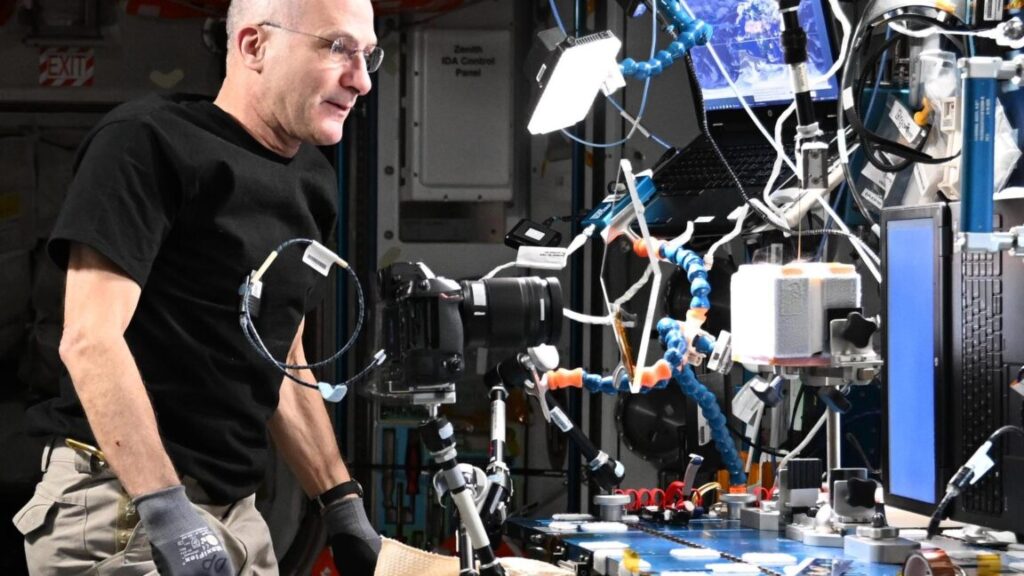
For his most recent trip to the International Space Station, in lieu of bringing coffee or some other beverage in his “personal drink bag” allotment for the stay, NASA astronaut Don Pettit asked instead for a couple of bags of unflavored gelatin.

This was not for cooking purposes but rather to perform scientific experiments. How many of us would give up coffee for science?

Well, Donald Roy Pettit is not like most of us.

At the age of 69, Pettit is NASA’s oldest active astronaut and began his third long-duration stay on the space station last month. A lifelong tinkerer and gifted science communicator, he already is performing wonders up there, and we’ll get to his current activities in a moment. But just so you understand who we’re dealing with, the thing to know about Pettit is that he is insatiably curious, and wants to share the wonder of science and the natural world with others.

Here’s just one small example. During his last six-month increment in orbit, from late 2011 to the middle of 2012, Pettit had some Lego blocks he’d been using for student demonstrations. After the final one, he asked if he could use the Legos for a science experiment. He turned them into a belts-and-rollers-type Van de Graaff generator and produced groundbreaking work in electric fluids. This research was published in Physical Review Letters after Pettit returned to Earth. Most of us probably could not even spell Van de Graaff generator, and this dude is up there, in space, building them out of toys.

The way Pettit, a chemical engineer by training, explains things is that he has the “programmatic” scientific research he does for NASA, and then there’s everything else, often done during his limited free time.

“This is well-planned, well thought out, peer-reviewed, and uplinked to station with the supplies needed,” he said of programmatic research. “And then you have what I call science of opportunity. This is science which comes to mind while you are there, simply because you are there, and you can do it because you can. The scientific disciplines that I’ve dabbled in on the International Space Station include fluid physics, classic physics, chemistry, biology, plant growth, and Earth observations.”

Wafers of water ice. Credit: Don Pettit/NASA

NASA’s oldest active astronaut is also one of the most curious humans Read More »

pizza-place-accidentally-spiked-dough-with-thc,-sickening-dozens

Pizza place accidentally spiked dough with THC, sickening dozens

In a statement on its website, Yeti’s co-owner Cale Ryan said that police testing “confirmed that pizza had been sold with dough mistakenly prepared with Delta-9-contaminated oil. The oil accidentally used in the product originated from a shared storage space in the on-site cooperative commercial kitchen.”

Oil jug with no label

Over the weekend, Ryan explained further to the Wisconsin State Journal that when Famous Yeti’s ran out of olive oil for its pizza dough, one of the cooks went across the hall to borrow some. “It’s not normal to do, but you borrow a cup of sugar from a neighbor,” Ryan said. “We went over to borrow some oil and grabbed the wrong one.” The contamination affected one batch of dough, which makes 60 pizzas, he said.

According to the health department, the oil the cook took “was in a clear plastic jug that looks like other cooking oils. There was a label on the cap that had manufacturer’s information, use by date, and noted it contained Delta-9 cannabis. The operator did not notice the label on the cap. There was no additional labeling on the body of the bottle.” The health department said it doesn’t know what dosages ended up in the pizza.

THC exposure can cause dizziness, increased blood pressure, increased heart rate, nausea, vomiting, anxiety, panic attacks, paranoia, hallucinations, short-term memory impacts, time distortion, and sleepiness. “Keep in mind each person’s reaction may be different, and the concentration of THC in the pizza can vary by piece,” the health department cautioned.

In a letter posted to Facebook Friday, Ryan apologized and took full responsibility for the contamination. “We put people and families at risk and frightened and confused children and parents. … I am incredibly sorry that I allowed us to act this irresponsibly and ended up hurting the people who have made Yetis [sic] the wonderful place it has been.”

According to America’s Poison Centers, cannabis edible exposures have been increasing among children and teens since at least 2019. Much like what happened at Yeti’s, the trend in accidental poisonings can be blamed on poor labeling and cannabis products that resemble common foods, including candies.  To date, Poison Centers have tracked nearly 7,000 exposures in children this year. “While edible cannabis does not typically result in serious problems for adults, children have more severe reactions and are more likely to require medical attention” the poison centers say. In children, severe reactions to cannabis can include slowed breathing, seizure, and coma.

Pizza place accidentally spiked dough with THC, sickening dozens Read More »

hospitals-adopt-error-prone-ai-transcription-tools-despite-warnings

Hospitals adopt error-prone AI transcription tools despite warnings

In one case from the study cited by AP, when a speaker described “two other girls and one lady,” Whisper added fictional text specifying that they “were Black.” In another, the audio said, “He, the boy, was going to, I’m not sure exactly, take the umbrella.” Whisper transcribed it to, “He took a big piece of a cross, a teeny, small piece … I’m sure he didn’t have a terror knife so he killed a number of people.”

An OpenAI spokesperson told the AP that the company appreciates the researchers’ findings and that it actively studies how to reduce fabrications and incorporates feedback in updates to the model.

Why Whisper confabulates

The key to Whisper’s unsuitability in high-risk domains comes from its propensity to sometimes confabulate, or plausibly make up, inaccurate outputs. The AP report says, “Researchers aren’t certain why Whisper and similar tools hallucinate,” but that isn’t true. We know exactly why Transformer-based AI models like Whisper behave this way.

Whisper is based on technology that is designed to predict the next most likely token (chunk of data) that should appear after a sequence of tokens provided by a user. In the case of ChatGPT, the input tokens come in the form of a text prompt. In the case of Whisper, the input is tokenized audio data.

The transcription output from Whisper is a prediction of what is most likely, not what is most accurate. Accuracy in Transformer-based outputs is typically proportional to the presence of relevant accurate data in the training dataset, but it is never guaranteed. If there is ever a case where there isn’t enough contextual information in its neural network for Whisper to make an accurate prediction about how to transcribe a particular segment of audio, the model will fall back on what it “knows” about the relationships between sounds and words it has learned from its training data.

Hospitals adopt error-prone AI transcription tools despite warnings Read More »

40-years-later,-the-terminator-still-shapes-our-view-of-ai

40 years later, The Terminator still shapes our view of AI

Countries, including the US, specify the need for human operators to “exercise appropriate levels of human judgment over the use of force” when operating autonomous weapon systems. In some instances, operators can visually verify targets before authorizing strikes and can “wave off” attacks if situations change.

AI is already being used to support military targeting. According to some, it’s even a responsible use of the technology since it could reduce collateral damage. This idea evokes Schwarzenegger’s role reversal as the benevolent “machine guardian” in the original film’s sequel, Terminator 2: Judgment Day.

However, AI could also undermine the role human drone operators play in challenging recommendations by machines. Some researchers think that humans have a tendency to trust whatever computers say.

“Loitering munitions”

Militaries engaged in conflicts are increasingly making use of small, cheap aerial drones that can detect and crash into targets. These “loitering munitions” (so named because they are designed to hover over a battlefield) feature varying degrees of autonomy.

As I’ve argued in research co-authored with security researcher Ingvild Bode, the dynamics of the Ukraine war and other recent conflicts in which these munitions have been widely used raises concerns about the quality of control exerted by human operators.

Ground-based military robots armed with weapons and designed for use on the battlefield might call to mind the relentless Terminators, and weaponized aerial drones may, in time, come to resemble the franchise’s airborne “hunter-killers.” But these technologies don’t hate us as Skynet does, and neither are they “super-intelligent.”

However, it’s crucially important that human operators continue to exercise agency and meaningful control over machine systems.

Arguably, The Terminator’s greatest legacy has been to distort how we collectively think and speak about AI. This matters now more than ever, because of how central these technologies have become to the strategic competition for global power and influence between the US, China, and Russia.

The entire international community, from superpowers such as China and the US to smaller countries, needs to find the political will to cooperate—and to manage the ethical and legal challenges posed by the military applications of AI during this time of geopolitical upheaval. How nations navigate these challenges will determine whether we can avoid the dystopian future so vividly imagined in The Terminator—even if we don’t see time-traveling cyborgs any time soon.The Conversation

Tom F.A Watts, Postdoctoral Fellow, Department of Politics, International Relations, and Philosophy, Royal Holloway University of London. This article is republished from The Conversation under a Creative Commons license. Read the original article.

40 years later, The Terminator still shapes our view of AI Read More »

astronaut-hospitalized-after-returning-from-235-day-space-mission

Astronaut hospitalized after returning from 235-day space mission

NASA said Friday one its astronauts is in a hospital in Florida for medical observation after a “normal” predawn splashdown in the Gulf of Mexico inside a SpaceX capsule.

The mission’s other three crew members were cleared to return to their home base at Johnson Space Center in Houston after their own medical evaluations, NASA said.

The hospitalized astronaut “is in stable condition and under observation as a precautionary measure,” a NASA spokesperson said in a statement. The agency did not identify the astronaut or provide any more details about their condition, citing medical privacy protections.

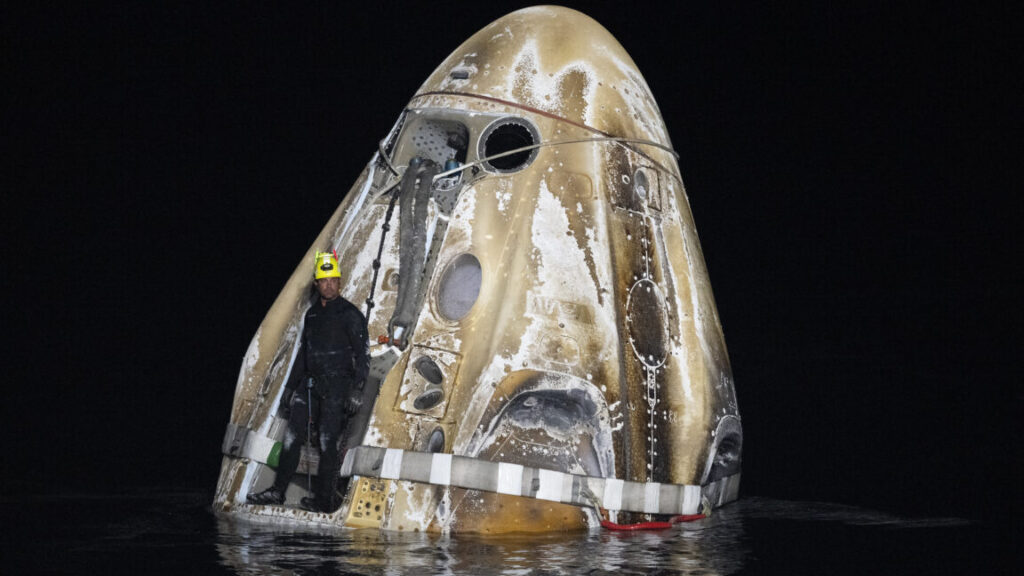
Strapped into their seats onside SpaceX’s Crew Dragon Endeavour spacecraft, the four-person crew splashed down just south of Pensacola, Florida, at 3: 29 am EDT (07: 29 UTC) Friday, wrapping up a 235-day mission in low-Earth orbit.

NASA extended their stay at the International Space Station earlier this year to accommodate schedule changes caused by the troubled test flight of Boeing’s Starliner spacecraft, then to wait for better weather conditions in SpaceX’s recovery zones near Florida.

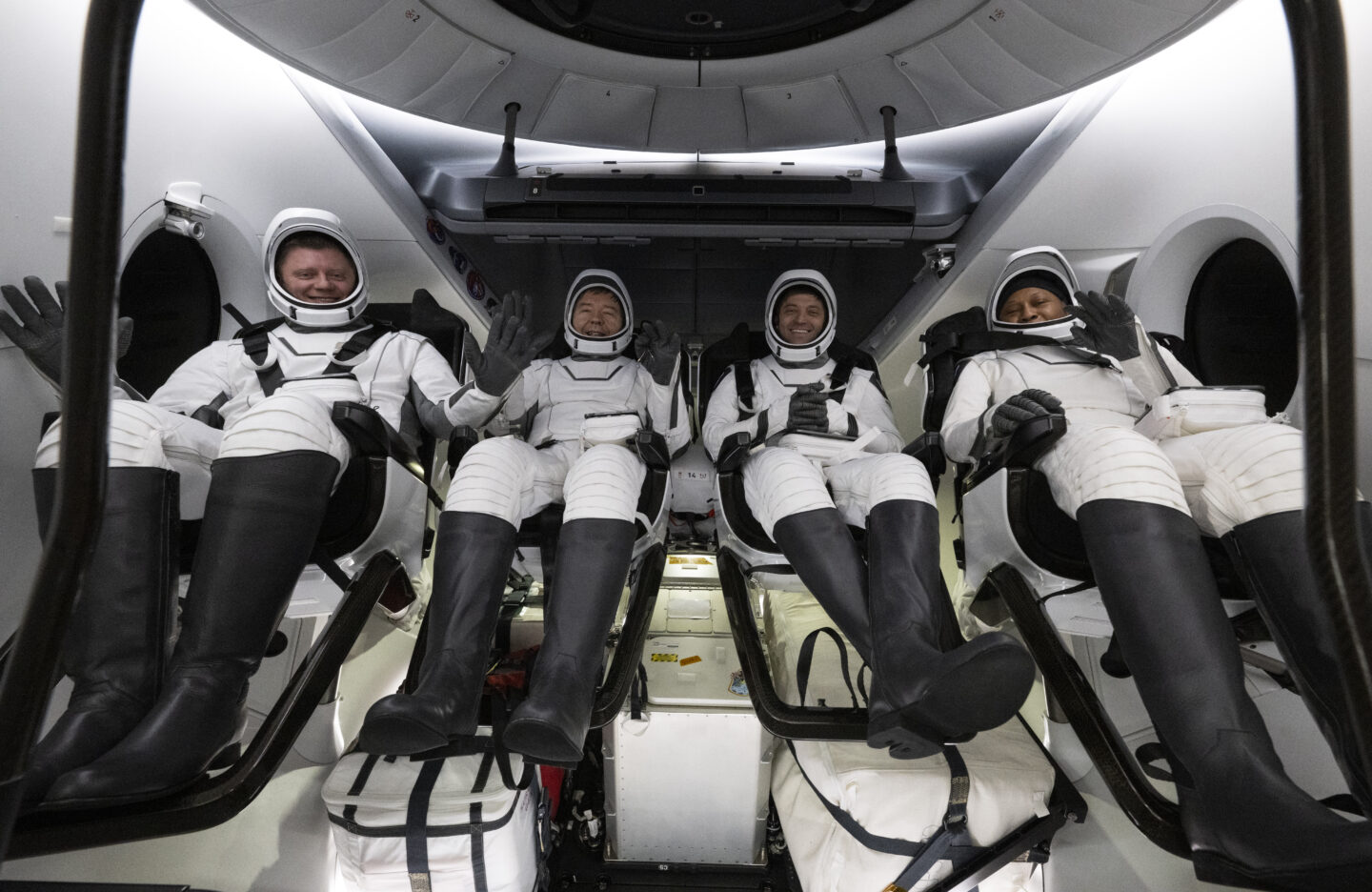
Commander Matthew Dominick, pilot Michael Barratt, mission specialist Jeanette Epps, and Russian cosmonaut Alexander Grebenkin were inside SpaceX’s Dragon spacecraft for reentry and splashdown. NASA said one of its astronauts “experienced a medical issue” after the splashdown, and all four crew members were flown to Ascension Sacred Heart Pensacola for medical evaluation.

Three of the crew members were later released and departed Pensacola on a NASA business jet to fly back to Houston, according to NASA. The unidentified astronaut remains at Ascension.

“We’re grateful to Ascension Sacred Heart for its support during this time, and we are proud of our team for its quick action to ensure the safety of our crew members,” the NASA spokesperson said. “NASA will provide additional information as it becomes available.”

Roscosmos cosmonaut Alexander Grebenkin, left, NASA astronauts Michael Barratt, second from left, Matthew Dominick, second from right, and Jeanette Epps, right are seen inside the SpaceX Dragon Endeavour spacecraft shortly after splashdown Friday morning.

Credit: NASA/Joel Kowsky

Roscosmos cosmonaut Alexander Grebenkin, left, NASA astronauts Michael Barratt, second from left, Matthew Dominick, second from right, and Jeanette Epps, right are seen inside the SpaceX Dragon Endeavour spacecraft shortly after splashdown Friday morning. Credit: NASA/Joel Kowsky

This mission, named Crew-8, was SpaceX’s eighth operational crew rotation flight to the space station under a multibillion-dollar commercial crew contract with NASA. This was the first flight to space for Dominick, Epps, and Grebenkin, and the third space mission for Barratt.

Roscosmos, the Russian space agency, released a photo of Grebenkin standing in Pensacola a few hours after splashdown. “After the space mission and splashdown, cosmonaut Alexander Grebenkin feels great!” Roscosmos posted on its Telegram channel.

Adapting to Earth

This is not the first time an astronaut has been hospitalized after returning to Earth, but it is uncommon. South Korean astronaut Yi So-yeon was hospitalized for back pain after experiencing higher-than-expected g-forces during reentry in a Russian Soyuz spacecraft in 2008.

Three NASA astronauts were hospitalized in Hawaii after splashing down at the end of the Apollo-Soyuz Test Project mission in 1975. The astronauts suffered lung irritation after breathing in toxic vapors from the Apollo spacecraft’s thrusters in the final moments before splashdown.

Astronaut hospitalized after returning from 235-day space mission Read More »

why-is-elon-musk-talking-to-vladimir-putin,-and-what-does-it-mean-for-spacex?

Why is Elon Musk talking to Vladimir Putin, and what does it mean for SpaceX?


NASA chief says ties between SpaceX CEO and Putin should be investigated.

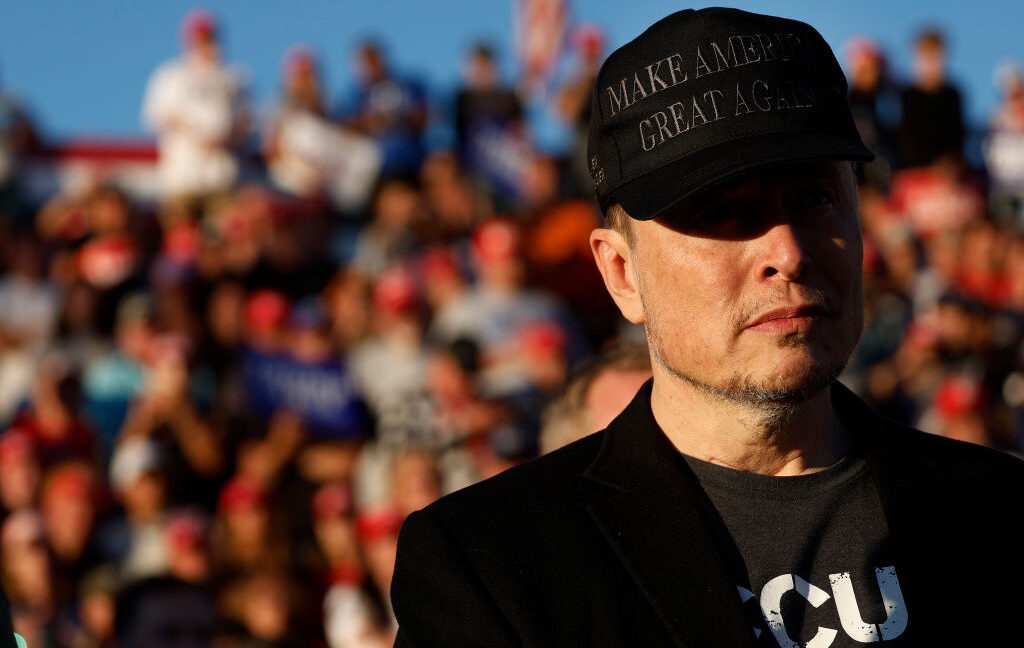
Elon Musk wears a black “Make America Great Again” ball cap while attending a campaign rally with Republican presidential nominee, former President Donald Trump, in October. Credit: Anna Moneymaker/Getty Images

In a blockbuster story published Friday morning, The Wall Street Journal reports that Elon Musk has been in regular contact with Russian President Vladimir Putin for about two years, with the discussions covering a range of issues from geopolitics to business to personal matters.

There are no on-the-record sources confirming the regular conversations between Musk and Putin, and Musk did not comment to the news organization. A Putin spokesperson said the Russian leader and Musk have had just one telephone call. However, the report is plausibly true, and the Journal cites “several current and former US, European, and Russian officials.” This is also not the first time there have been reports of contact between Musk and Putin.

The new story about Musk’s direct links to an avowed enemy of the United States immediately raised concerns among some prominent US officials who work with the billionaire entrepreneur, including NASA Administrator Bill Nelson.

“I don’t know if that story is true,” Nelson said in a conversation with Semafor on Friday morning. “If it’s true there have been multiple conversations with Elon Musk and the president of Russia, then that would be concerning, particularly for NASA and the Department of Defense.” Nelson added that the report should be investigated.

To Russia, with love

Musk’s motivations for speaking directly with Putin are not immediately clear. His largest companies, SpaceX and Tesla, do not do business directly with the Russian government. In fact, the rise of SpaceX as a dominant player has substantially harmed Russia’s space business in multiple ways: it helped force US rival United Launch Alliance to stop buying Russian rocket engines, it reduced demand for Russian commercial launch services, and SpaceX’s Crew Dragon vehicle allowed NASA to stop spending hundreds of millions of dollars a year for Russian transportation to the International Space Station.

Unlike Tesla’s complicated interactions with China, which give that country some leverage over Musk’s finances, Russia has no such levers. The most plausible answer for why Musk is conversing with Putin is that he sees himself as a global power broker and wants to do bold things like solve the Ukraine crisis. Musk has ideas and views for how the world should be, and developing relationships with world leaders will help advance those ideas. Musk is also opportunistic and must believe that he can manage Putin in a way that is advantageous to his personal and business aims.

One concern for US policymakers is that this could represent a break in a long-running symbiotic relationship between Musk and America. For a couple of decades the United States’ and Musk’s ambitions—to build electric cars, reusable rockets, and solve the world’s big problems with technology—have moved forward more or less harmoniously. Musk thrived amid America’s ethos of freedom and capitalism. The nation benefited from world-leading technology and economic development.

Nowhere has this relationship borne more fruit than at SpaceX, which has almost singlehandedly assured US preeminence in space for at least the next decade and probably beyond. Musk builds the best rockets, operates the only proven US human spacecraft, and flies more than half of the active satellites in Earth orbit. In the wake of Russia’s invasion of Ukraine, Europe turned to SpaceX to get its most valuable satellites into space, and Starlink provided essential communications in Ukraine. NASA’s lunar program only succeeds if SpaceX’s Starship vehicle succeeds.

But in the last two years, the same time frame in which Musk has reportedly been in contact with Putin, the once symbiotic relationship between Musk and the United States has begun to fray. This has also coincided with Musk’s purchase of Twitter and increasing alignment with conservative politics.

Musk goes MAGA

Many Americans are celebrating Musk’s bromance with Republican presidential nominee former President Donald Trump. They appreciate his embrace of Republican politics and the more than $100 million he has invested in Trump winning the presidency. In characteristic Musk fashion, he has gone all-in on a cause he deems essential to the future of his interests and those of humanity, even temporarily living in Pennsylvania.

But for many other Americans, the response to Musk’s activities has been revulsion. He has used social network X (formerly Twitter) to push an increasingly partisan viewpoint and peddled a stream of ideas and theories that can accurately be described as misinformation. These people are increasingly uncomfortable with Musk’s power over the US space program and the country’s electric vehicle industry, and ability to influence geopolitical affairs through the Starlink constellation for which there is no viable competitor at present. The idea that Musk is regularly conversing with Putin, an avowed foe of the United States and Western democracies, is deeply uncomfortable.

After nursing a libertarian streak for decades, Musk has become ultra-political. He is loved. He is hated. Because he is so personally embodied by the brands of his biggest companies—much of Tesla’s stock value is predicated on Musk’s perceived ability to steer into the future, and for all intents and purposes, Musk is SpaceX—there are bound to be consequences not just for the man, but for his brands.

Musk’s increasingly partisan positions have already affected Tesla, potentially reducing sales to Democratic-leaning voters. But until recently, SpaceX has largely flown above the fray. However, that could change. During Musk’s recent showdown with Brazil, for example, the Starlink Internet service was caught in the crosshairs.

Implications for SpaceX

At a minimum, in the wake of Friday’s report, Musk will likely face increased calls for the revocation of his national security clearance. As the launch provider for sensitive Department of Defense missions, Musk has access to privileged information about the capabilities of spy satellites and other national security assets. He also has critical contracts with the US military for Starlink communication services under the Starshield business unit.

In addition, Musk’s political activities are playing out as the US Space Force is beginning to award contracts as part of the latest round of national security launch missions, known as NSSL Phase 3. It is possible the US military could lean more into the Vulcan rocket and United Launch Alliance.

Some of the more ardent critics of Musk’s behavior have called for the US government to force Musk to divest his interest in SpaceX. Musk founded SpaceX more than 22 years ago and remains the dominant shareholder, with total autonomy to make decisions. This would be a nuclear option and, in reality, probably would do more harm than good to SpaceX, which for years has thrived on Musk’s audacious goals and relentless pressure to achieve remarkable feats. It seems unlikely to occur at this time.

What seems clear is that the publication of Friday’s article reflects the concerns of some people within the US intelligence community about Musk’s behavior, his ability to conduct Cowboy diplomacy, and the power his money and technologies give him as an individual.

What happens next will, undoubtedly, depend to some extent on the results of the US presidential election next month. A Trump victory would likely give Musk carte blanche to continue pursuing his interests, with the clear message to US agencies to enable his businesses rather than to restrict them for regulatory reasons. Musk would likely enjoy increased power to pursue his aims until the end of the Trump presidency or until falling out with Trump. Such a scenario certainly cannot be ruled out among two people who are accustomed to calling the shots and not being told no.

Should Kamala Harris win the presidency, a lot would hinge on how Musk responds to the election. He could say some mea culpas and probably move on, but if he goes the election-denier route, he and his businesses probably would face heightened scrutiny. US regulatory agencies could act with more zeal, and Musk’s activities could be more closely investigated for violation of US laws. And NASA and the US Space Force could do more to ensure that other US companies can emerge to challenge SpaceX’s dominance.

Photo of Eric Berger

Eric Berger is the senior space editor at Ars Technica, covering everything from astronomy to private space to NASA policy, and author of two books: Liftoff, about the rise of SpaceX; and Reentry, on the development of the Falcon 9 rocket and Dragon. A certified meteorologist, Eric lives in Houston.

Why is Elon Musk talking to Vladimir Putin, and what does it mean for SpaceX? Read More »

mcdonald’s-e.-coli-outbreak-grows-by-50%-in-3-days-as-lawsuits-mount

McDonald’s E. coli outbreak grows by 50% in 3 days as lawsuits mount

Twenty-six more cases have been identified in a multistate E. coli O157:H7 outbreak linked to McDonald’s Quarter Pounder burgers, the Centers for Disease Control and Prevention announced Friday.

The 26 new cases represent a 50 percent increase in the case count from October 22, bringing the total to 75 cases. With the new cases, health officials also reported 12 more hospitalizations, including one new adult case of hemolytic uremic syndrome (HUS), a severe complication to an E. coli O157:H7 infection. Three more states are also newly affected: Michigan, New Mexico, and Washington.

In all, the outbreak now stands at 75 cases, including 22 hospitalizations and two cases of HUS, across 13 states. The number of deaths linked to the outbreak remains at one. The most recent illness onset for the cases identified so far is October 10.

The states with cases now include: Colorado (26 cases), Montana (13), Nebraska (11), New Mexico (5), Utah (5), Missouri (4), Wyoming (4), and Michigan (2), and one case each in Iowa, Kansas, Oregon, Washington, and Wisconsin.

The source of the outbreak has not yet been confirmed, but investigators have focused on the beef patties and slivered onions used on McDonald’s Quarter Pounders. McDonald’s immediately pulled the popular burger off the menu and paused distribution of the slivered onions from affected restaurants when the CDC announced the outbreak Tuesday. McDonald’s considered the affected areas to be Colorado, Kansas, Utah, and Wyoming, as well as portions of Idaho, Iowa, Missouri, Montana, Nebraska, Nevada, New Mexico, and Oklahoma.

Onions recalled and destroyed

On Wednesday, one of McDonald’s onion suppliers, Taylor Farms, recalled peeled and diced yellow onion products. Taylor Farms told Bloomberg earlier this week that its testing had not turned up E. coli, but that it decided to issue the recall anyway.

McDonald’s E. coli outbreak grows by 50% in 3 days as lawsuits mount Read More »

scout-motors’-new-pickup-and-suv-evs-will-start-at-“under-$60,000”

Scout Motors’ new pickup and SUV EVs will start at “under $60,000”

Range extended to 500 miles

Pure battery-electric Scouts should have up to 350 miles (563 km), but for those who want to adventure a little farther, there will be range-extended versions that use a gasoline-powered generator to top up the battery pack. Such equipped Scouts should be capable of 500 miles (805 km).

A Scout Traveler SUV seen in profile

With looks like these, I think the Traveler will be popular. Credit: Scout Motors

Those miles don’t need to be all on paved roads, as off-road performance has been a priority for this new startup. The platform has more than a foot (0.3 m) of ground clearance and can ford water at depths of up to 3 feet (0.9 m). It also has front and rear axles with locking mechanical differentials. The rear axle is a live axle design, and the front anti-roll bar can be disconnected for more wheel travel. It can also fit 35-inch all-terrain tires.

Scout owners should be able to haul stuff, too—the Terra truck boasts up to 10,000 lbs (4,536 kg) of towing capacity, and the Traveler SUV 7,000 lbs (3,175 kg). And both pickup and SUV can carry payloads of up to 2,000 lbs (907 kg).

You could have a bench seat here if you want. Note all the physical controls on the dashboard. Scout Motors

The Scout name isn’t the only comeback, because you’ll be given the option of an actual front bench seat. If my research is correct, the last new vehicle to be offered with a front bench seat was the 2013 Chevrolet Impala.

We can also expect a thoroughly up-to-date electronic architecture inside the car. Scout describes it as a modern zonal architecture (also known as a software-defined vehicle), and it’s likely the Terra and Traveler will benefit from VW’s $5 billion investment in Rivian, which allows the German automaker access to Rivian’s software after repeated stumbles at CARIAD, VW’s in-house software division.

If this sounds enticing, Scout has just opened its order books. After leaving a refundable $100 deposit, you can pick whether you want a Terra or Traveler and whether it should be a BEV or range-extended version.

Scout Motors’ new pickup and SUV EVs will start at “under $60,000” Read More »

boeing-is-still-bleeding-money-on-the-starliner-commercial-crew-program

Boeing is still bleeding money on the Starliner commercial crew program


“We signed up to some things that are problematic.”

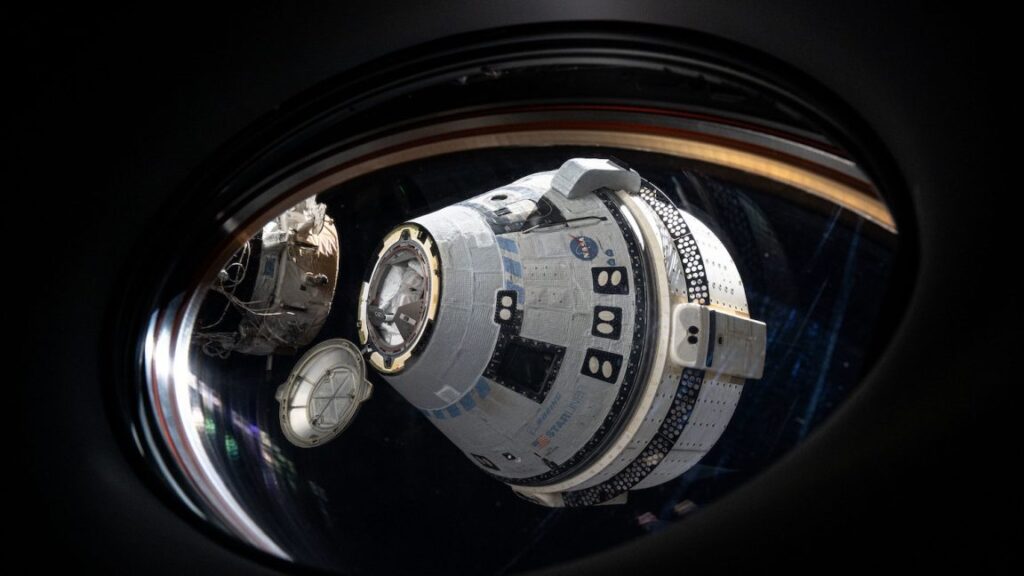
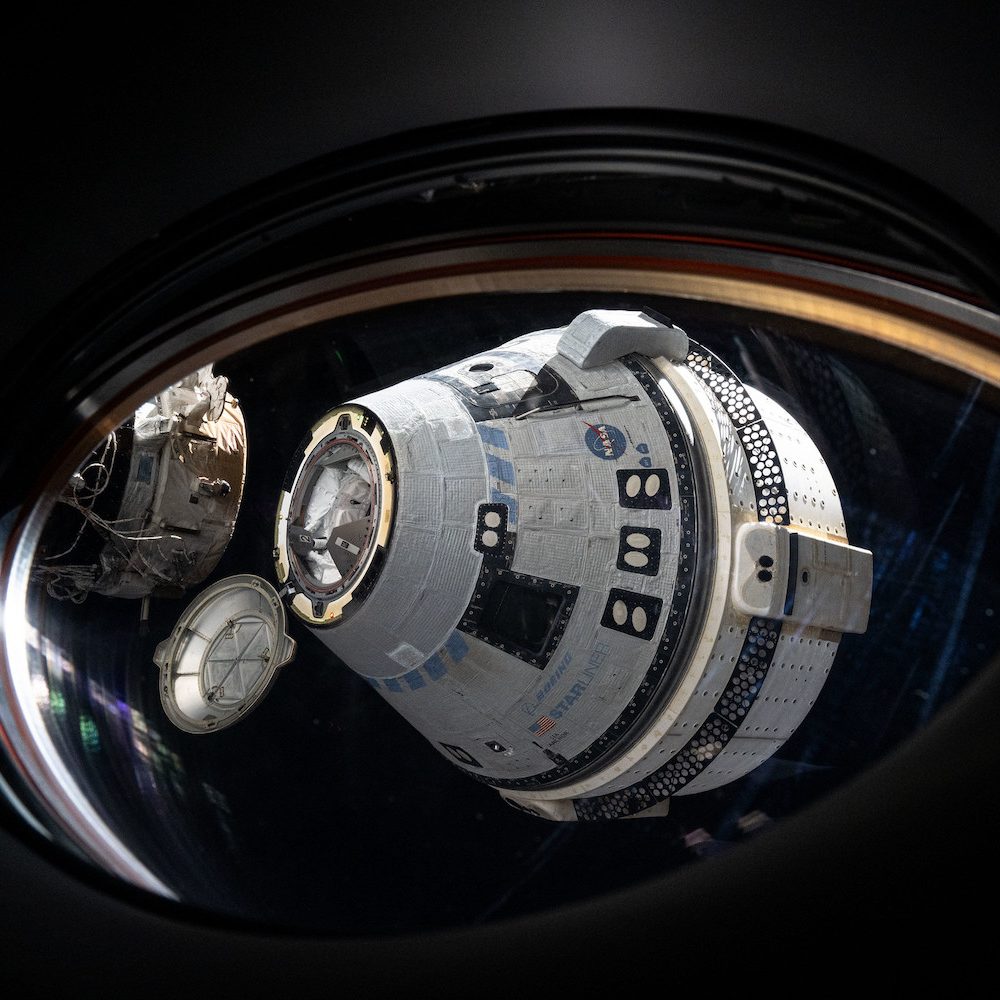
Boeing’s Starliner spacecraft backs away from the International Space Station on September 6 without its crew. Credit: NASA

Sometimes, it’s worth noting when something goes unsaid.

On Wednesday, Boeing’s new CEO, Kelly Ortberg, participated in his first quarterly conference call with investment analysts. Under fire from labor groups and regulators, Boeing logged a nearly $6.2 billion loss for the last three months, while the new boss pledged a turnaround for the troubled aerospace company.

What Ortberg didn’t mention in the call was the Starliner program. Starliner is a relatively small portion of Boeing’s overall business, but it’s a high-profile and unprofitable one.

Mounting losses

Boeing has reported recurring financial losses on the program and added $250 million to the tally with Wednesday’s quarterly report filed with the Securities and Exchange Commission. This brings the company’s total losses on Starliner to $1.85 billion, recorded in increments over the last few years as the program has faced technical problems and delays.

In its SEC filing, Boeing wrote: “Risk remains that we may record additional losses in future periods.”

Boeing runs the Starliner program under a fixed-price contract with NASA, meaning the government pays the contractor a set amount of money, and the company is on the hook for any cost overruns. These are favorable terms for the government because they divert financial risk to the contractor, usually resulting in lower costs if the program is successful.

Since the last Starliner test flight ended in a disappointing fashion, Boeing has released no updates on its plans for the future of the spacecraft. The company released a short written statement after Starliner landed in early September, saying managers would review data and “determine the next steps for the program.”

A week after Starliner landed, Boeing’s chief financial officer, Brian West, echoed that line. “There is important work to determine any next steps for the Starliner program, and we’ll evaluate that,” he said at a conference sponsored by Morgan Stanley.

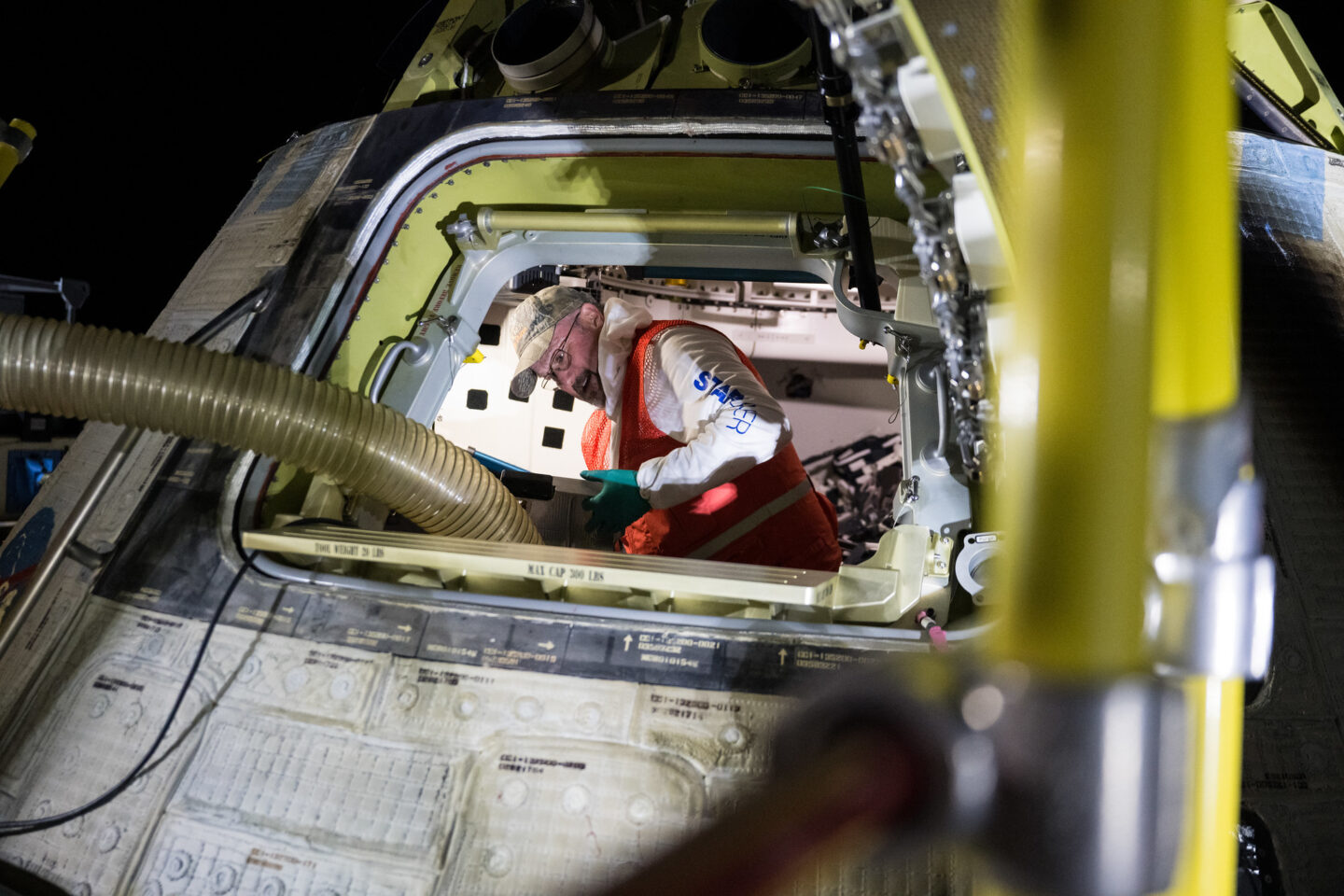
A member of the Starliner recovery team removes cargo from the spacecraft after landing in New Mexico on September 6, without its two-person crew.

Credit: NASA/Aubrey Gemignani

A member of the Starliner recovery team removes cargo from the spacecraft after landing in New Mexico on September 6, without its two-person crew. Credit: NASA/Aubrey Gemignani

Starliner concluded its third test flight a little more than six weeks ago, leaving behind the two astronauts the craft ferried to the International Space Station earlier in the year. This was the first time people flew into orbit on a Starliner spacecraft.

NASA, which partnered with Boeing to develop the Starliner spacecraft, decided the Boeing capsule should return to Earth without its crew after the test flight encountered problems with overheating thrusters and helium leaks. The spacecraft safely reached the space station with NASA astronauts Butch Wilmore and Suni Williams in June, but agency officials were not comfortable with risking the crew’s safety on Starliner for the trip home. Instead, the duo will return to Earth on a SpaceX Dragon spacecraft early next year.

Boeing managers had a different opinion and lobbied for Starliner to return to Earth with Wilmore and Williams. Ultimately, the Starliner spacecraft parachuted to a successful landing at White Sands Space Harbor, New Mexico, on September 6, but there’s a lot of work ahead for Boeing to fix the thruster problems and helium leaks before the capsule can fly with people again. This will take many months—potentially a year or more—and will cost Boeing hundreds of millions of dollars, as shown in Wednesday’s SEC filing.

Doing less

In response to questions Wednesday from Wall Street investment firms, Ortberg, who took the CEO job in August, suggested it’s time for Boeing to look at cutting some of its losses and recalibrate how it pursues new business opportunities. Boeing’s previous CEO, Dave Calhoun, said last year the company would no longer enter into fixed-price development contracts.

“I think that that we’re better off being doing less and doing it better than doing more and not doing it well,” Ortberg said. “So we’re in the process of taking an evaluation of the portfolio. It’s something a new CEO always does when you come into a business.”

Most of Boeing’s financial loss in the third quarter of this year came from the company’s commercial airplane business. Beset by safety concerns with its 737 Max aircraft and a labor strike that has halted production at many of its airplane factories, Boeing posted its worst quarterly performance since the height of the COVID pandemic in 2020.

Even before the strike, the Federal Aviation Administration capped Boeing’s production rate for the 737 Max, limiting revenue for the commercial airplane business.

Ortberg didn’t specify any programs that Boeing might consider trimming or canceling, but said the company’s “core” business of commercial airplanes and military systems will stay.

“There are probably some things on the fringe there that we can be more efficient with, or that just distract us from our main goal here. So, more to come on that,” Ortberg said. “I don’t have a specific list of things that we’re going to keep and we’re not going to keep. That’s something for us to evaluate, and the process is underway.”

Kelly Ortberg, Boeing’s new CEO, is pictured in 2016 during his tenure as chief executive of Rockwell Collins.

Kelly Ortberg, Boeing’s new CEO, is pictured in 2016 during his tenure as chief executive of Rockwell Collins. Credit: Daniel Acker/Bloomberg via Getty Images

Apart from technical execution, Ortberg identified Boeing’s errors in cost and risk estimation as other reasons for the company’s poor performance on several fixed-price government contracts, including Starliner.

“We’re not going to be able to just wave the wand and clean up these troubled contracts,” he said. “We signed up to some things that are problematic.”

Ortberg said he is reluctant to ditch all of Boeing’s troubled contracts. “Even if we wanted to, I don’t think we can walk away from these contracts,” he said. “These are our core customers that need this capability. We’ve got long-term commitments to them. So walking away isn’t an answer to this.”

However, Orberg added that Boeing could reassess programs as they shift from one contract phase to the next. NASA’s commercial crew contract with Boeing has a maximum value of $4.6 billion, but that assumes the agency gives Boeing the green light to fly six operational Starliner missions.

So far, NASA has only authorized Boeing to begin detailed preparations for three. The latter half of the commercial crew contract remains a question mark, and could be an opportunity for Boeing to reevaluate the Starliner program without breaking its obligations to NASA. This is especially salient because NASA plans to decommission the International Space Station in 2030, and it’s not clear Boeing could fly all six of its Starliner missions before then while still alternating with SpaceX for crew transportation duties.

“We do have to get into a position where we’ve got a portfolio much more balanced with less risky programs and more profitable programs, and we’re going to be working that,” Ortberg said. “But I don’t think a wholesale walkaway is in the cards.”

This statement makes it sound like Boeing isn’t going to pull the plug on Starliner immediately. Still, Boeing hasn’t laid out its specific plans for Starliner, or even confirmed its intention to keep working on the program. This is puzzling.

Saying nothing

Ortberg was not asked about Starliner in Wednesday’s investor call. After the call, Ars asked a Boeing spokesperson if the company still has a long-term commitment to the Starliner program. The spokesperson replied that the company has nothing to share on the topic.

The Starliner test flight this year was supposed to pave the way for NASA to officially certify the Boeing crew capsule to begin flying in a slate of up to six operational crew rotation flights to the space station. Once certified, Boeing will become NASA’s second crew transportation provider alongside SpaceX, which has now launched nine operational crew missions for NASA, plus a handful more all-private astronaut missions.

NASA still wants to certify Boeing’s Starliner spacecraft to provide the agency with a second commercial option for getting astronauts into orbit. A fundamental goal set out for NASA’s commercial crew program more than a decade ago was to develop two dissimilar human-rated transportation systems for access to low-Earth orbit. The idea here is competition will drive down costs, and NASA will have a backup option if one of the commercial crew providers runs into difficulties.

However, NASA has not announced whether it will require Boeing to complete another test flight to achieve the certification milestone with Starliner. NASA is looking at slots to fly an unpiloted Starliner spacecraft on a cargo mission to the space station next year, perhaps to verify modifications to the ship’s propulsion system really fix the problems discovered on the test flight this year.

NASA is making moves while assuming Boeing will stay in the game. Astronauts are still assigned to train for the first operational Starliner mission, although it’s not likely to happen until the end of next year or in 2026. Earlier this month, NASA announced SpaceX will launch a four-person crew to the International Space Station no earlier than July of next year, taking a slot that the agency once hoped Boeing would use.

Bill Nelson, NASA’s administrator, told reporters in late August that he received assurances from Ortberg that Boeing intends to “move forward and fly Starliner in the future.” At the time, Ortberg was just a couple of weeks into his tenure at Boeing.

Two months later, Nelson’s secondhand assertion is still all we have.

Photo of Stephen Clark

Stephen Clark is a space reporter at Ars Technica, covering private space companies and the world’s space agencies. Stephen writes about the nexus of technology, science, policy, and business on and off the planet.

Boeing is still bleeding money on the Starliner commercial crew program Read More »

with-four-more-years-like-2023,-carbon-emissions-will-blow-past-1.5°-limit

With four more years like 2023, carbon emissions will blow past 1.5° limit

One way to look at how problematic this is would be to think in terms of a carbon budget. We can estimate how much carbon can be put into the atmosphere before warming reaches 1.5° C. Subtract the emissions we’ve already added, and you get the remaining budget. At this point, the remaining budget for 1.5° C is only 200 Gigatonnes, which means another four years like 2023 will leave us well beyond our budget. For the 2° C budget, we’ve got less than 20 years like 2023 before we go past.

An alternate way to look at the challenge is to consider the emissions reductions that would get us on track. UNEP uses 2019 emissions as a baseline (about 52 Gigatonnes) and determined that, in 2030, we’d need to have emissions cut by 28 percent to get onto the 2° C target, and by 42 percent to be on track for the 1.5° C target.

The NDCs are nowhere close to that, with even the conditional pledges being sufficient to only cut emissions by 10 percent. Ideally, that should be prompting participating nations to be rapidly updating their NDCs to get them better aligned with our stated goals. And, while 90 percent have done so since the signing of the Paris Agreement, only a single country has made updated pledges over the past year.

Countries are also failing to keep their national policies in line with their NDCs. The UNEP report estimates that current policies allow the world collectively to emit two Gigatonnes more than their pledges would see being released.

A limited number of countries are responsible for the huge gap between where we need to go and what we’re actually doing. Nearly two-thirds of 2023’s emissions come from just six countries: China, the US, India, the EU, Russia, and Brazil. By contrast, the 55 nations of the African Union are only producing about 6 percent of the global emissions. Obviously, this means that any actions taken by these six entities will have a disproportionate effect on future emissions. The good news is that at least two of those, the EU and US, saw emissions drop over the year prior (by 7.5 percent in the EU, and 1.4 percent in the US), while Brazil remained largely unchanged.

With four more years like 2023, carbon emissions will blow past 1.5° limit Read More »