Author name: Rejus Almole

usb-c-gets-a-bit-more-universal-as-the-eu’s-mandate-goes-into-effect

USB-C gets a bit more universal as the EU’s mandate goes into effect

Fewer bricks, standardized “fast charging”

The most significant impact this USB-C requirement has had so far is on Apple, which, while initially resisting, has gradually shifted its products from its proprietary Lightning connector to USB-C. Its latest iMac comes with a Magic Keyboard, Magic Mouse, and Magic Trackpad that all connect via USB-C. The firm stopped selling the Lightning-charging iPhone 14 and iPhone SE in the EU after December 28.
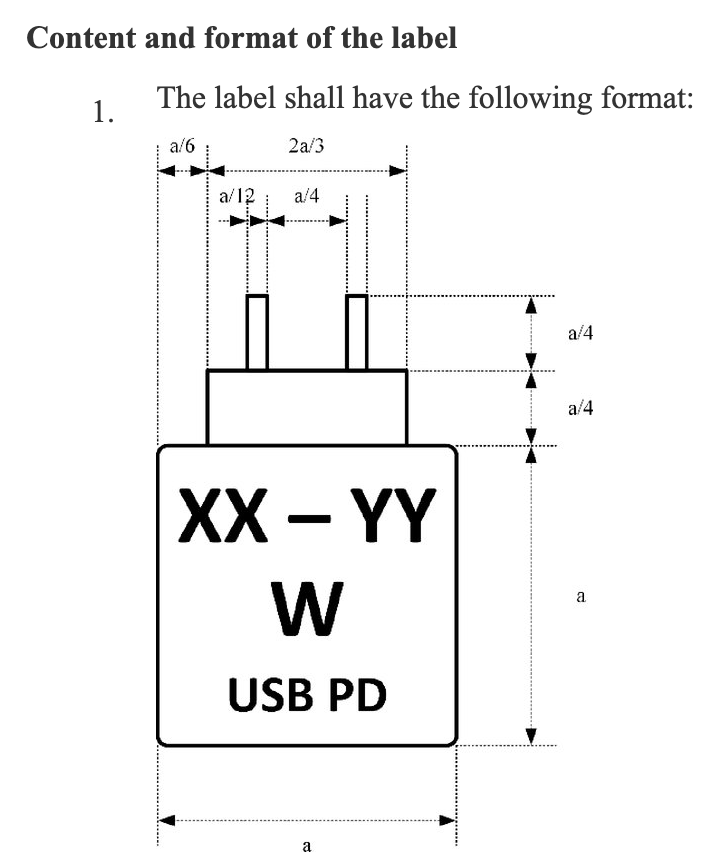
Section of the EU law regarding USB-C charging, with a plug showing

People who understand electrical terminology, and live in an EU member country, will soon have a better understanding of how many more cables they’ll need to buy for their newest gadget.

Credit: European Commission

People who understand electrical terminology, and live in an EU member country, will soon have a better understanding of how many more cables they’ll need to buy for their newest gadget. Credit: European Commission

In addition to simply demanding that a USB-C port be present, the Directive requires that anything with “fast charging”—pulling more than 5 volts, 3 amperes, or 15 watts—enable the USB Power Delivery (USB PD) standard. This should ensure that they properly negotiate charging rates with any charger with USB PD rather than require their own proprietary charging brick or adapter.

In Europe, devices must indicate on their product boxes whether they contain a charging plug or mid-cord brick. A different label will indicate the minimum and maximum power that a device requires to charge and whether it can support USB PD or not.

Can the EU make cables and cords get along?

The EU’s celebratory post on X is heavy with replies from doubters, suggesting that mandating USB-C as “THE charger” could stifle companies innovating on other means of power delivery. Most of these critiques are addressed in the actual text of the law, because more powerful devices are exempted, secondary power plugs are allowed, and wireless largely gets a pass. “What about when USB-D arrives?” is something no person can really answer, though it seems a vague reason to avoid addressing the e-waste, fragmentation, and consumer confusion of the larger device charging ecosystem.

How the Common Charger Directive will be enforced is yet to be seen, as that is something left up to member nations. Also unproven is whether companies will comply with it across their international product lines or simply make specific EU-compliant products.

USB-C gets a bit more universal as the EU’s mandate goes into effect Read More »

siri-“unintentionally”-recorded-private-convos;-apple-agrees-to-pay-$95m

Siri “unintentionally” recorded private convos; Apple agrees to pay $95M

Apple has agreed to pay $95 million to settle a lawsuit alleging that its voice assistant Siri routinely recorded private conversations that were then shared with third parties and used for targeted ads.

In the proposed class-action settlement—which comes after five years of litigation—Apple admitted to no wrongdoing. Instead, the settlement refers to “unintentional” Siri activations that occurred after the “Hey, Siri” feature was introduced in 2014, where recordings were apparently prompted without users ever saying the trigger words, “Hey, Siri.”

Sometimes Siri would be inadvertently activated, a whistleblower told The Guardian, when an Apple Watch was raised and speech was detected. The only clue that users seemingly had of Siri’s alleged spying was eerily accurate targeted ads that appeared after they had just been talking about specific items like Air Jordans or brands like Olive Garden, Reuters noted (claims which remain disputed).

It’s currently unknown how many customers were affected, but if the settlement is approved, the tech giant has offered up to $20 per Siri-enabled device for any customers who made purchases between September 17, 2014, and December 31, 2024. That includes iPhones, iPads, Apple Watches, MacBooks, HomePods, iPod touches, and Apple TVs, the settlement agreement noted. Each customer can submit claims for up to five devices.

A hearing when the settlement could be approved is currently scheduled for February 14. If the settlement is certified, Apple will send notices to all affected customers. Through the settlement, customers can not only get monetary relief but also ensure that their private phone calls are permanently deleted.

While the settlement appears to be a victory for Apple users after months of mediation, it potentially lets Apple off the hook pretty cheaply. If the court had certified the class action and Apple users had won, Apple could’ve been fined more than $1.5 billion under the Wiretap Act alone, court filings showed.

But lawyers representing Apple users decided to settle, partly because data privacy law is still a “developing area of law imposing inherent risks that a new decision could shift the legal landscape as to the certifiability of a class, liability, and damages,” the motion to approve the settlement agreement said. It was also possible that the class size could be significantly narrowed through ongoing litigation, if the court determined that Apple users had to prove their calls had been recorded through an incidental Siri activation—potentially reducing recoverable damages for everyone.

Siri “unintentionally” recorded private convos; Apple agrees to pay $95M Read More »

it’s-january,-which-means-another-batch-of-copyrighted-work-is-now-public-domain

It’s January, which means another batch of copyrighted work is now public domain

It’s January, and for people in the US, that means the same thing it’s meant every January since 2019: a new batch of previously copyrighted works have entered the public domain. People can publish, modify, and adapt these works and their characters without needing to clear rights or pay royalties.

This year’s introductions cover books, plays, movies, art, and musical compositions from 1929, plus sound recordings from 1924. Most works released from 1923 onward are protected for 95 years after their release under the terms of 1998’s Sonny Bono Copyright Term Extension Act. This law prevented new works from entering the public domain for two decades.

As it does every year, the Duke University Center for the Study of the Public Domain has a rundown of the most significant works entering the public domain this year.

Significant novels include Ernest Hemingway’s Farewell to Arms, the first English translation of Erich Maria Remarque’s All Quiet on the Western Front, Agatha Christie’s The Seven Dials Mystery, Virginia Woolf’s A Room of One’s Own, and William Faulkner’s The Sound and the Fury.

Many of the films on the list showcase the then-new addition of sound to movies, including the first all-color feature-length film with sound throughout (Warner Bros.’ On With the Show!) and the first films with sound from directors like Cecil B. DeMille and Alfred Hitchcock. Buster Keaton’s final silent film, Spite Marriage, is also on the list. Musical compositions include notables like Singin’ in the Rain and Tiptoe Through the Tulips.

On the Disney front, we get the Silly Symphony short The Skeleton Dance, as well as a dozen more Mickey Mouse shorts. These include the first films to depict Mickey wearing white gloves and the first to show him talking—as we covered last year, it’s only the 1920s-era versions of these characters who have entered the public domain, so each new version is significant for people looking to use these characters without drawing the ire of Disney and other copyright holders.

It’s January, which means another batch of copyrighted work is now public domain Read More »

manta-rays-inspire-faster-swimming-robots-and-better-water-filters

Manta rays inspire faster swimming robots and better water filters

This robot can also dive and come back to the surface. Faster flapping results in strong downward waves that will push the robot upward, while slower flapping creates weaker upward waves that allow it to go further down. (Actual mantas sink if they slow down.)  It also proved it could fetch a payload from the bottom of a tank and bring it to the surface.

Eating on the fly

Because manta rays are essentially giant moving water filters, researchers from MIT looked to them and other mobula rays (a group that includes mantas and devil rays) for inspiration when figuring out potential improvements to industrial water filters.

Mantas feed by leaving their mouths open as they swim. At the bottom of either side of a manta’s mouth are structures known as mouthplates, which look something like a dashboard air conditioner. When water enters the mouth, plankton particles too large to pass through the plates bounce further down into the manta’s body cavity and, eventually, to its stomach. Gills absorb oxygen from the water that gushes out so the manta can breathe.

The MIT team was especially interested in mobula rays because they thought the animals struck an ideal balance between allowing water in quickly enough to breathe while maintaining highly selective structures that prevent most plankton from escaping into the water. To create a filter as close to a mobula ray as possible, the team 3D-printed plates that were then glued together to create narrow openings between them. Particles that do not pass instead flow away into a waste reservoir.

With slow pumping, water and smaller particles flowed out of the filter. When pumping was sped up, the water created a vortex in each opening that allowed water, but not particles, through. The team realized that this is how mobula rays are such successful filter feeders. They must know the right speed to swim so they can breathe and still get an optimal amount of plankton filtered into their mouths.

The team thinks that incorporating vortex action will “expand the traditional design of [industrial] filters,” as they said in a study recently published in PNAS.

Manta rays may look alien, but there is nothing sci-fi about how they use physics to their advantage, from powerful swimming to efficient (and simultaneous) eating and breathing. Sometimes nature comes through with the most ingenious tech upgrades.

Science Advances, 2024. DOI: 10.1126/sciadv.adq4222

PNAS, 2024. DOI:  10.1073/pnas.241001812

Manta rays inspire faster swimming robots and better water filters Read More »

a-cold-war-mystery:-why-did-jimmy-carter-save-the-space-shuttle?

A Cold War mystery: Why did Jimmy Carter save the space shuttle?


Ars solves the mystery by going directly to a primary source—the president himself.

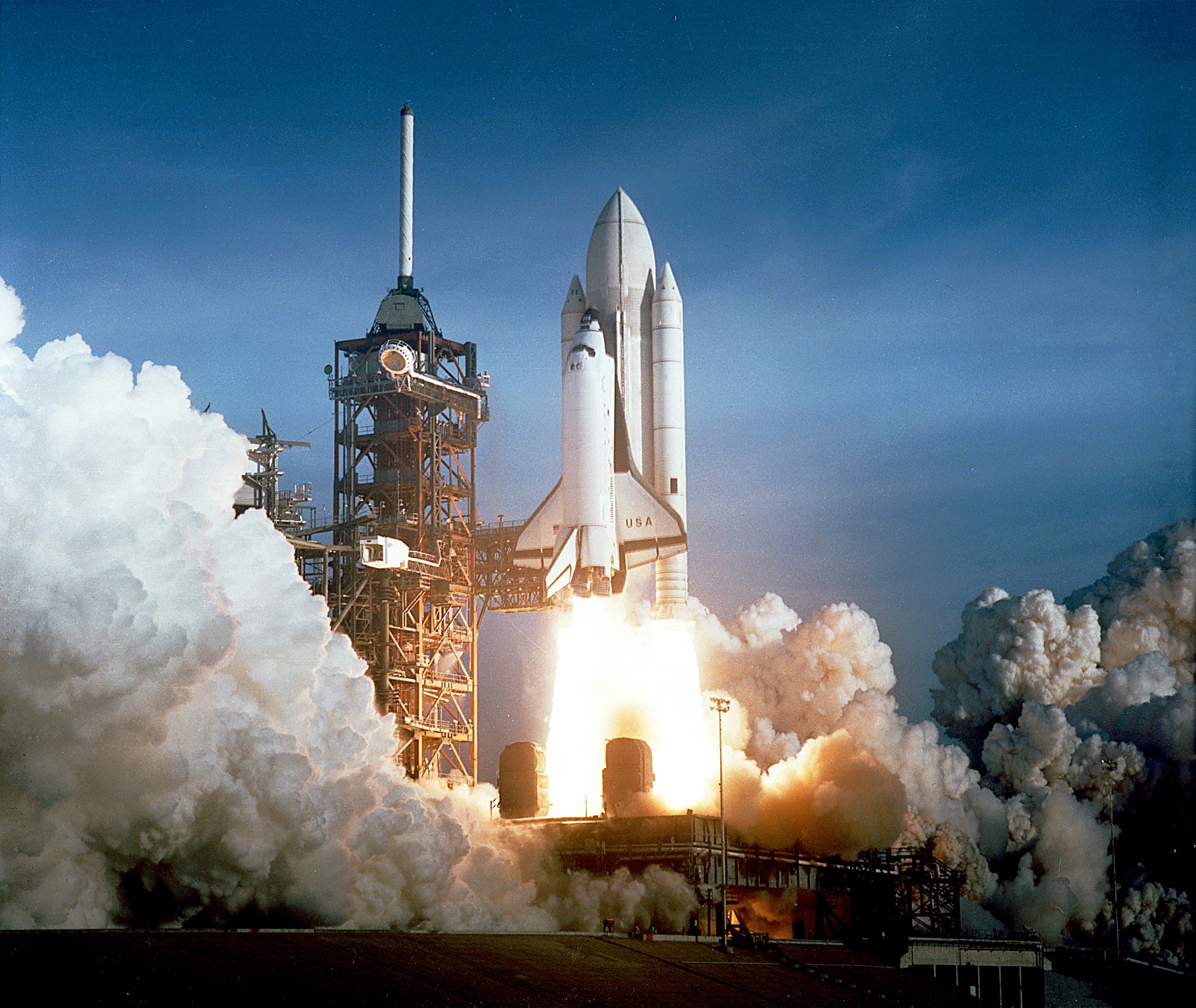
The first launch of the space shuttle finally came on April 12, 1981. Credit: NASA

The first launch of the space shuttle finally came on April 12, 1981. Credit: NASA

With 39th President Jimmy Carter passing away at the age of 100, we are revisiting this story of how he unexpectedly saved the space shuttle.

We’d been chatting for the better part of two hours when Chris Kraft’s eyes suddenly brightened. “Hey,” he said, “Here’s a story I’ll bet you never heard.” Kraft, the man who had written flight rules for NASA at the dawn of US spaceflight and supervised the Apollo program, had invited me to his home south of Houston for one of our periodic talks about space policy and space history. As we sat in recliners upstairs, in a den overlooking the Bay Oaks Country Club, Kraft told me about a time the space shuttle almost got canceled.

It was the late 1970s, when Kraft directed the Johnson Space Center, the home of the space shuttle program. At the time, the winged vehicle had progressed deep into a development phase that started in 1971. Because the program had not received enough money to cover development costs, some aspects of the vehicle (such as its thermal protective tiles) were delayed into future budget cycles. In another budget trick, NASA committed $158 million in fiscal year 1979 funds for work done during the previous fiscal year.

This could not go on, and according to Kraft the situation boiled over during a 1978 meeting in a large conference floor on the 9th floor of Building 1, the Houston center’s headquarters. All the program managers and other center directors gathered there along with NASA’s top leadership. That meeting included Administrator Robert Frosch, a physicist President Carter had appointed a year earlier.

Kraft recalls laying bare the budget jeopardy faced by the shuttle. “We were totally incapable of meeting any sort of flight schedule,” he said. Further postponing the vehicle would only add to the problem because the vehicle’s high payroll costs would just be carried forward.

There were two possible solutions proposed, Kraft said. One was a large funding supplement to get development programs back on track. Absent that, senior leaders felt they would have to declare the shuttle a research vehicle, like the rocket-powered X-15, which had made 13 flights to an altitude as high as 50 miles in the 1960s. “We were going to have to turn it, really, into a nothing vehicle,” Kraft said. “We were going to have to give up on the shuttle being a delivery vehicle into orbit.”

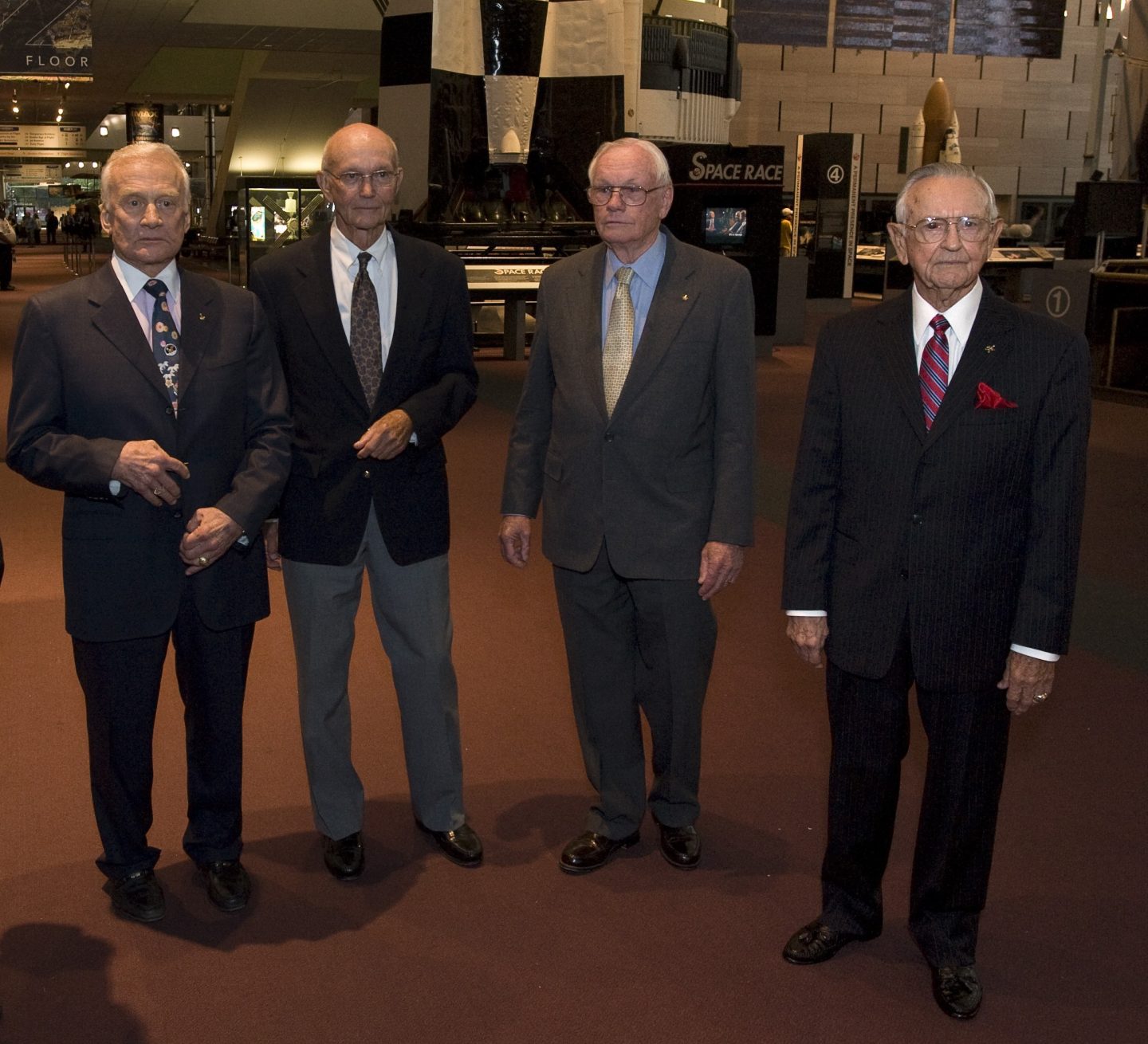
On the eve of the 40th anniversary of the first human landing on the Moon, Apollo 11 crew members, Buzz Aldrin, left, Michael Collins, and Neil Armstrong and NASA Mission Control creator Chris Kraft, right, during their visit to the National Air and Space Museum on July 19, 2009.

Credit: NASA/Getty Images

On the eve of the 40th anniversary of the first human landing on the Moon, Apollo 11 crew members, Buzz Aldrin, left, Michael Collins, and Neil Armstrong and NASA Mission Control creator Chris Kraft, right, during their visit to the National Air and Space Museum on July 19, 2009. Credit: NASA/Getty Images

Armed with these bleak options, Frosch returned to Washington. Some time later he would meet with Carter, not expecting a positive response, as the president had never been a great friend to the space program. But Carter, according to Kraft, had just returned from Strategic Arms Limitation Talks (SALT) in Vienna, and he had spoken with the Soviet leader, Leonid Brezhnev, about how the United States was going to be able to fly the shuttle over Moscow continuously to ensure they were compliant with the agreements.

So when Frosch went to the White House to meet with the president and said NASA didn’t have the money to finish the space shuttle, the administrator got a response he did not expect: “How much do you need?”

In doing so, Jimmy Carter saved the space shuttle, Kraft believes. Without supplementals for fiscal year 1979 and 1980, the shuttle would never have flown, at least not as the iconic vehicle that would eventually fly 135 missions and 355 individual fliers into space. It took some flights as high as 400 miles above the planet before retiring five years ago this week. “That was the first supplemental NASA had ever asked for,” Kraft said. “And we got that money from Jimmy Carter.”

As I walked out of Kraft’s house that afternoon in late spring, I recall wondering whether this could really be true. Could Jimmy Carter, of all people, be the savior of the shuttle? All because he had been bragging about the shuttle’s capabilities to the Soviets and, therefore, didn’t want to show weakness? This Cold War mystery was now nearly 40 years in the past, but most of the protagonists still lived. So I began to ask questions.

Carter’s apathy toward space

At the root of my skepticism was this simple fact—Jimmy Carter was no great friend to the space program or, at least initially, the shuttle. Less than five months after he became president, on the date of June 9, 1977, Carter wrote the following in his White House Diary: “We continued our budget meetings. It’s obvious that the space shuttle is just a contrivance to keep NASA alive, and that no real need for the space shuttle was determined before the massive construction program was initiated.”

On NASA’s own 50th anniversary website, space historian John Logsdon described the Carter presidency in less than flattering terms. “Jimmy Carter was perhaps the least supportive of US human space efforts of any president in the last half-century,” Logsdon wrote.

In 1978 President Jimmy Carter visited Kennedy Space Center to check on the space shuttle’s progress and participate in an awards ceremony. Here he is greeted by Kennedy Space Center Director Lee Scherer. NASA

Then there was Carter’s vice president, Walter Mondale, who in 1972 had called the space shuttle a “senseless extravaganza.” A senator from Minnesota at the time, Mondale had vigorously opposed early funding measures to begin development of the shuttle. His views exemplified those who believed the United States had more pressing needs for its money than chasing the stars.

“I believe it would be unconscionable to embark on a project of such staggering cost when many of our citizens are malnourished, when our rivers and lakes are polluted, and when our cities and rural areas are dying,” Mondale argued during one debate over shuttle funding. “What are our values? What do we think is more important?”

Now these two men were responsible for establishing priorities for the government’s budget and supporting a shuttle that was already years behind schedule as it faced cost overruns of hundreds of millions of dollars. They were going to keep the program afloat?

The shuttle, canceled?

If Kraft is to be believed, cost overruns began really catching up to the shuttle program in 1978, necessitating the big meeting at Johnson Space Center. By then the Enterprise had already made its first free flight in the atmosphere, and the test vehicle was a public relations success. However, the programs to develop the space shuttle’s main engines and its thermal protective tiles remained far behind schedule. It does not seem beyond the realm of possibility that the program might be canceled altogether and that program managers might have worried about this.

John Logsdon, the eminent space historian who has written books about Nixon’s space policy and is working on one about Reagan, told Ars that as costs mounted, the White House Office of Management and Budget suggested to Carter that he might want to cancel the program in 1978 and 1979. This set off a series of White House meetings that culminated in an influential memo to Carter from Brigadier General Robert Rosenberg, of the National Security Council. Titled “Why Shuttle Is Needed,” the Rosenberg memo offered an effective counterpoint to the OMB concerns about cost, according to Logsdon. Written in November 1979, it helped lead Carter to a decision to fund the vehicle.

The crew of Star Trek gathers around space shuttle Enterprise in 1977.

Credit: NASA

The crew of Star Trek gathers around space shuttle Enterprise in 1977. Credit: NASA

“Strong national support and prestige is focused on Shuttle as a means for maintaining space dominance as evidenced by broad user interest and recent space policy statements,” Rosenberg wrote. “Significant delay or abandonment of the Shuttle and manned space capabilities at this time would be viewed as a loss of national pride and direction. The notion that we are forced for short term economic reasons to abandon a major area of endeavor in which we have achieved world leadership at great cost is simply not credible.”

A key player in the shuttle program at this time, Robert Thompson, pushed back on the idea that the shuttle was ever at any real risk of being canceled. Thompson and Kraft are contemporaries. They were classmates at Virginia Tech University in the early 1940s, and later both were original members of the Space Task Group that put together Project Mercury. When Kraft managed flight operations during the Apollo Program, Thompson was in charge of capsule recovery. Ultimately Thompson became the first shuttle program manager in 1970, a post he headed until 1981. Today, Thompson lives about a mile away from Kraft, and his home overlooks the same golf course.

“I never worried an instant about Carter cutting the funding off,” he said in an interview at his dining room table. “You’d have to be an idiot to get up in front of people and say, ‘I’m now going to trash $5 billion even though we’re that close to the finish line, and I’m going to quit human spaceflight.’ Carter was kind of an oddball guy to be president, but he wasn’t stupid.”

So why wasn’t it canceled?

Still, there seem to be valid reasons for concern about a program that would ultimately run three years behind schedule and, according to NASA’s comptroller, about 30 percent over its initial $5.15 billion estimated development cost. Why did Carter remain so steadfastly behind the shuttle? Was it really because Carter valued the shuttle in his arms control discussions with the Soviet Union? The answer appears to be yes.

“It is conceivable that one of his arguments to Brezhnev on why there should be SALT was our ability to use the shuttle to verify the agreements,” Logsdon said. Whereas the president unquestionably felt lukewarm toward spaceflight, he felt conversely strong about arms control. And to verify that the Soviet Union was complying with the treaty, the United States would need a constellation of spy satellites. Back in 1970, to win Department of Defense support at the program’s outset, NASA had redesigned the shuttle to launch national security payloads. Now, that decision paid off.

A book about Carter’s space policy, Back Down to Earth by Mark Damohn, draws this conclusion about a president who liked NASA’s robotic exploration and science but didn’t see the value of humans in space. “The ability of the shuttle to launch arms control verification satellites is what saved it during the Carter administration,” Damohn writes. His book does not recount any meetings with Brezhnev. When asked whether Carter might have discussed the shuttle with the Soviet general secretary and whether that might have influenced his decisions, Damohn replied that Kraft’s story is essentially correct except for the part of Carter bragging to Brezhnev. Bragging is not in Carter’s personality, Damohn told Ars.

Another person who could verify or debunk Kraft’s anecdote is Frosch himself, who left NASA in 1981 and remains a senior research fellow at Harvard’s Kennedy School of Government. After I related Kraft’s story, Frosch said he didn’t recall a Brezhnev connection with Carter’s decision to support shuttle funding. “That does not mean it’s not true,” he added. “I just don’t remember any clear sequence like that. But it’s certainly possible if the dates fit together correctly.”

The timeline

Do the dates fit together? For some of the story, yes, and for other parts, no. Kraft recounted fiscal problems plaguing the space shuttle program in 1977 and 1978 that delayed development of the space shuttle’s main engines, thermal protection system, and other flight critical elements. According to TA Heppenheimer’s excellent History of the Space Shuttle, by May of 1979 the shuttle’s costs had already run $830 million over the initial $5.2 billion projected cost.

Moreover, by the time of Kraft’s come-to-Jesus meeting with the shuttle program managers and Frosch at Johnson Space Center, the vehicle had already missed its original March 1978 flight date. Ultimately, the vehicle would not fly until April 12, 1981.

It is also true that the White House provided additional funding when NASA needed it most. The president approved a $185 million supplemental for fiscal year 1979 to address the technical and manufacturing delays, and NASA would receive another $300 million supplemental for the fiscal year 1980 budget. The message from Carter to his OMB officials at this time regarding these supplementals was clear—“find the money.”

What is not consistent with Kraft’s narrative is the notion that Carter bragged about the shuttle to Brezhnev and then felt compelled to follow through with the shuttle’s development for this reason. The 1979 supplemental was formally signed into law by Carter on June 4, 1979, and by then he had already greenlit another supplemental for 1980. These dates are important, because Carter did not meet with Brezhnev in Vienna to sign the SALT II Treaty until June 15.

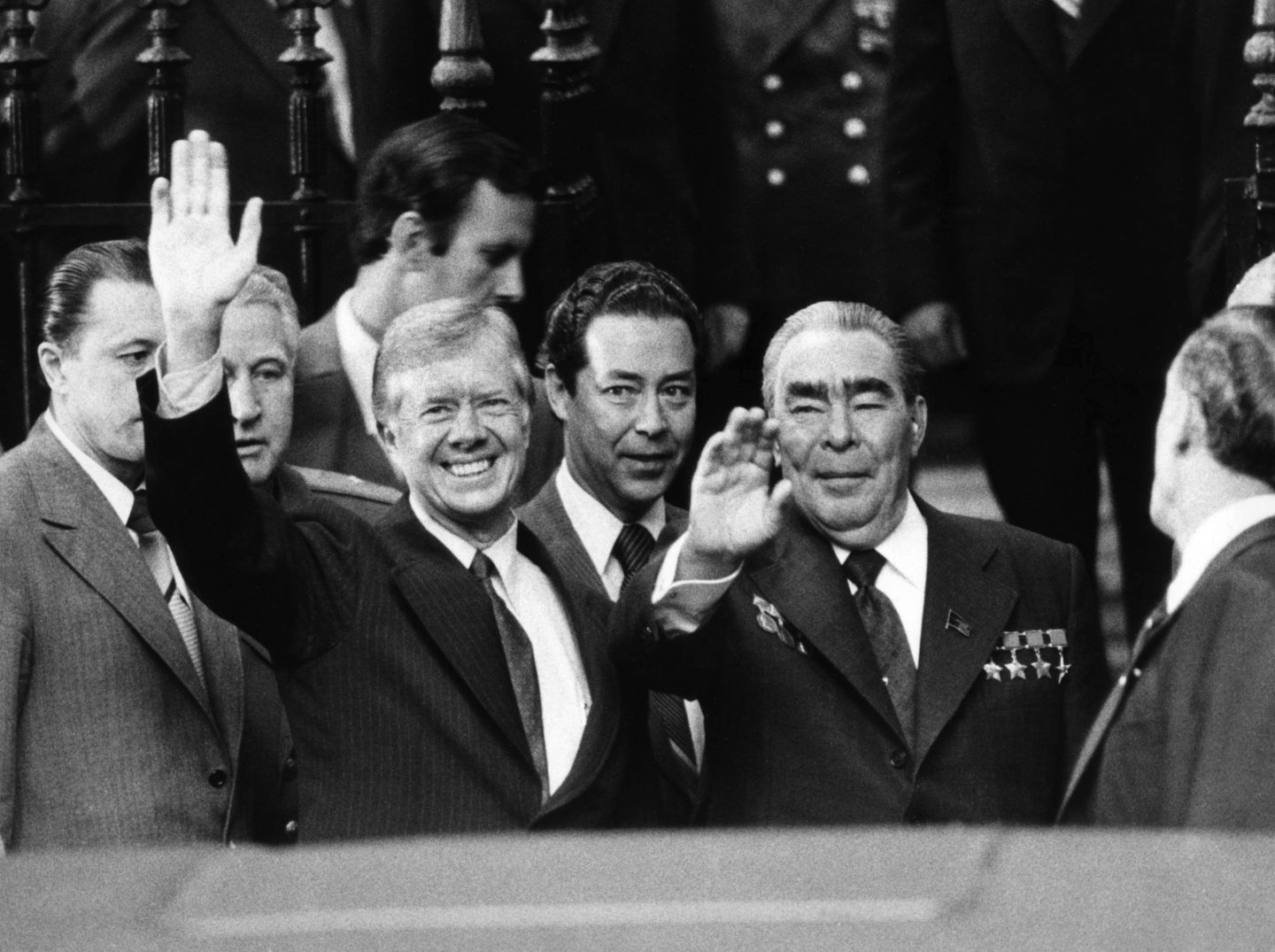
United States President Jimmy Carter, left, and Leonid Brezhnev, First Secretary of the Communist Party of the Soviet Union, welcomed journalists to the Soviet Embassy in Vienna, Austria, on June 17, 1979, on the eve of the signing of the SALT II treaty limiting strategic arms.

Credit: AFP/Getty Images

United States President Jimmy Carter, left, and Leonid Brezhnev, First Secretary of the Communist Party of the Soviet Union, welcomed journalists to the Soviet Embassy in Vienna, Austria, on June 17, 1979, on the eve of the signing of the SALT II treaty limiting strategic arms. Credit: AFP/Getty Images

This means Carter could not have “bragged” about the shuttle and then have funded it. However, this does not mean the talks with Brezhnev had zero influence on Carter’s feelings for the space shuttle during the last 18 months of his turbulent presidency.

By 1980, amid double-digit inflation, spiraling gas prices, and Ayatollah Khomeini’s revolution in Iran, the United States was slipping into another recession. As part of that year’s budget process, the president sought broad spending cuts. Administration officials told NASA to find budget cuts of $460 million to $860 million for the coming fiscal year.

But ultimately, NASA’s budget was spared. Heppenheimer’s book says this happened because “Carter exempted the Pentagon from these cutbacks, which meant that the Defense Department could stand fast in the wake of Moscow’s invasion of Afghanistan. This exemption gave Frosch an opening, as he argued that the shuttle should also be spared from cutbacks on national security grounds.” The president agreed.

Effectively, then, the shuttle program received extra funding in 1980 from a president that did not support human spaceflight and a vice president that adamantly opposed it. The funds came during a recession when the rest of the federal government was undergoing significant budget cuts. That is perhaps a greater marvel than the majestic orbiters themselves.

The ultimate source

For some perspective on all of this, Ars reached out to Carter through Steven Hochman, director of research at The Carter Center. He hadn’t heard the Brezhnev-space shuttle story, but he was happy to assist our reporting by bringing some questions to the 39th president of the United States.

Why did the president ultimately support funding the shuttle in its time of need? “I was not enthusiastic about sending humans on missions to Mars or outer space,” Carter told Ars. “But I thought the shuttle was a good way to continue the good work of NASA. I didn’t want to waste the money already invested.”

Carter also confirmed that he did, in fact, discuss the space shuttle and its capabilities with Brezhnev at the SALT II Treaty meetings in Vienna in June 1979. “I did explain to the Soviets that the space shuttle was peaceful, would not carry weapons, and would always land in the US,” Carter explained.

Finally, Hochman reviewed Carter’s schedule and found that the president had met with Frosch four times, including a brief discussion on July 11, 1979 at Camp David with the NASA administrator. This came shortly after the final treaty negotiations in Vienna. Hochman said it would not have been at all surprising if Carter discussed with Frosch that he mentioned the shuttle during the Brezhnev meeting.

From this we can draw a few conclusions—principally that despite some timeline inconsistencies, Kraft’s story appears to be mostly true. The shuttle program was in big trouble and could have been canceled or drastically modified had Carter not stepped in. Moreover, this was not a drawn out process. By all accounts Carter acted swiftly in the shuttle’s time of need. One of Carter’s primary motivations in doing so was enforcing the SALT II Treaty and, critically, Carter discussed the shuttle with Brezhnev during the treaty meetings. Important presidential decisions about the shuttle were made before and after the treaty meetings.

Perhaps what stands out most of all is the lasting, yet almost completely forgotten impact Carter had on this country’s space legacy. Despite just a passing interest in human space exploration, Carter ultimately played a pivotal role in ensuring that the longest-flying US spacecraft in history got built. That decision was instrumental, too, in development of the International Space Station. After all, NASA’s primary purpose for the shuttle was to eventually build an orbital station.

As someone who championed peace during his post-presidency, Carter no doubt would welcome the station’s driving idea of building an international consensus to work together in space. And ironically, after the shuttle finally stopped flying in 2011, America would come to rely on Russia to get into space. Today, we work with the very Cold War enemies with whom Carter negotiated arms treaties, contended with in Afghanistan, and vowed to watch closely from the orbital vehicle he shepherded across the finish line.

Photo of Eric Berger

Eric Berger is the senior space editor at Ars Technica, covering everything from astronomy to private space to NASA policy, and author of two books: Liftoff, about the rise of SpaceX; and Reentry, on the development of the Falcon 9 rocket and Dragon. A certified meteorologist, Eric lives in Houston.

A Cold War mystery: Why did Jimmy Carter save the space shuttle? Read More »

youtuber-won-dmca-fight-with-fake-nintendo-lawyer-by-detecting-spoofed-email

YouTuber won DMCA fight with fake Nintendo lawyer by detecting spoofed email

Defending his livelihood, Neumayer started asking questions. At first, that led to his videos being reinstated. But that victory was short-lived, as the supposed Nintendo lawyer only escalated his demands, spooking the YouTuber into voluntarily removing some videos, The Verge reported, while continuing to investigate the potential troll.

Reaching out directly to Nintendo helped, but questions remain

The Verge has all the receipts, sharing emails from the fake lawyer and detailing Neumayer’s fight blow-for-blow. Neumayer ultimately found that there was a patent lawyer with a similar name working for Nintendo in Japan, although he could not tell if that was the person sending the demands and Nintendo would not confirm to The Verge if Tatsumi Masaaki exists.

Only after contacting Nintendo directly did Neumayer finally get some information he could work with to challenge the takedowns. Reportedly, Nintendo replied, telling Neumayer that the fake lawyer’s proton email address “is not a legitimate Nintendo email address and the details contained within the communication do not align with Nintendo of America Inc.’s enforcement practices.”

Nintendo promised to investigate further, as Neumayer continued to receive demands from the fake lawyer. It took about a week after Nintendo’s response for “Tatsumi” to start to stand down, writing in a stunted email to Neumayer, “I hereby retract all of my preceding claims.” But even then, the troll went down fighting, The Verge reported.

The final messages from “Tatsumi” claimed that he’d only been suspended from filing claims and threatened that other Nintendo lawyers would be re-filing them. He then sent what The Verge described as “in some ways the most legit-looking email yet,” using a publicly available web tool to spoof an official Nintendo email address while continuing to menace Neumayer.

It was that spoofed email that finally ended the façade, though, The Verge reported. Neumayer detected the spoof by checking the headers and IDing the tool used.

Although this case of copyright trolling is seemingly over, Neumayer—along with a couple other gamers trolled by “Tatsumi”—remain frustrated with YouTube, The Verge reported. After his fight with the fake Nintendo lawyer, Neumayer wants the streaming platform to update its policies and make it easier for YouTubers to defend against copyright abuse.

Back in May, when Ars reported on a YouTuber dismayed by a DMCA takedown over a washing machine chime heard on his video, a YouTube researcher and director of policy and advocacy for the Electronic Frontier Foundation, Katharine Trendacosta told Ars that YouTube’s current process discourages YouTubers from disputing copyright strikes.

“Every idiot can strike every YouTuber and there is nearly no problem to do so. It’s insane,” Neumayer said. “It has to change NOW.”

YouTuber won DMCA fight with fake Nintendo lawyer by detecting spoofed email Read More »

ars-technica’s-top-20-video-games-of-2024

Ars Technica’s top 20 video games of 2024


A relatively light year still had its fair share of interactive standouts.

Credit: Aurich Lawson | Getty Images

When we introduced last year’s annual list of the best games in this space, we focused on how COVID delays led to a 2023 packed with excellent big-name blockbusters and intriguing indies that seemed to come out of nowhere. The resulting flood of great titles made it difficult to winnow the year’s best down to our traditional list of 20 titles.

In 2024 we had something close to the opposite problem. While there were definitely a few standout titles that were easy to include on this year’s list (Balatro, UFO 50, and Astro Bot likely chief among them), rounding out the list to a full 20 proved more challenging than it has in perhaps any other year during my tenure at Ars Technica (way back in 2012!). The games that ended up on this year’s list are all strong recommendations, for sure. But many of them might have had more trouble making a Top 20 list in a packed year like 2023.

We’ll have to wait to see if the release calendar seesaws back to a quality-packed one in 2025, but the forecast for big games like Civilization 7, Avowed, Doom: The Dark Ages, Grand Theft Auto 6, and many, many more has us thinking that it might. In the meantime, here are our picks for the 20 best games that came out in 2024, in alphabetical order.

Animal Well

Billy Basso; Windows, PS5, Xbox X/S, Switch

The Metroidvania genre has started to feel a little played out of late. Go down this corridor, collect that item, go back to the wall that can only be destroyed by said item, explore a new corridor for the next item, etc. Repeat until you’ve seen the entire map or get too bored to continue.

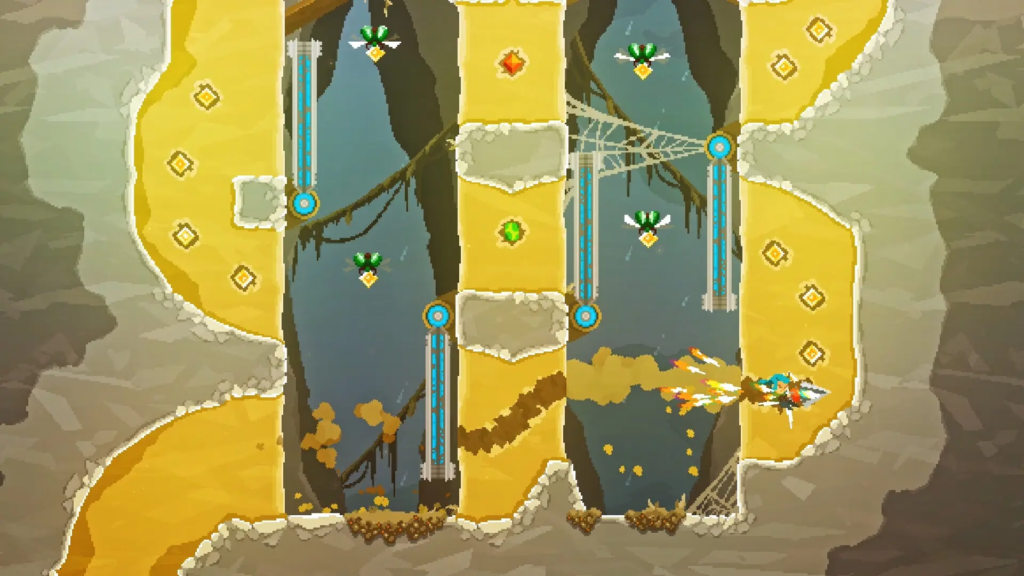
Animal Well eschews this paint-by-numbers design and brings back the sense of mystery inherent to the best games in the genre. This is done in part by some masterful pixel-art graphics, which incorporate some wild 2D lighting effects and detailed, painterly sprite world. The animations—from subtle movements of the lowliest flower to terrifying, screen-filling actions from the game’s titular giant animals—are handled with equal aplomb.

But Animal Well really shines in its often inscrutable map and item design. Many key items in the game have multiple uses that aren’t fully explained in the game itself, requiring a good deal of guessing, checking, and observation to figure out how to exploit fully. Uncovering the arcane secrets of the game’s multiple environmental blocks is often far from obvious and rewards players who like to experiment and explore.

Those arcane secrets can sometimes seem too obtuse for their own good—don’t be surprised if you have to consult an outside walkthrough or work with someone to bust past some of the most inscrutable barriers put in your way. If you soldier through, though, you’ll have been on one of the most memorable journeys of its type.

-Kyle Orland

Astro Bot

Team Asobi; PS5

Astro Bot is an unlikely success story. The team that made it, Studio Asobi, was for years dedicated to making small-scale projects that were essentially glorified tech demos for Sony’s latest hardware. First there was The Playroom, which was just a collection of small experiences made to show off the features of the PlayStation 4’s camera peripheral. Then there was Astro Bot Rescue Mission, which acted as a showcase for the first PlayStation VR headset.

But momentum really picked up with Astro’s Playroom, the bite-size 2020 3D platformer that was bundled with every PlayStation 5—again to show off the hardware features. When I played it, my main thought was, “I really wish this team would make a full-blown game.”

That’s exactly what Astro Bot is: a 15-hourlong 3D platformer with AAA production values, with no goal other than just being an excellent game. Like its predecessors, it fully leverages all the hardware features of the PlayStation 5, and it’s loaded with Easter eggs and fan service for players who’ve been playing PlayStation consoles for three decades.

Like many 3D platformers, it’s a collect-a-thon. In this case, you’re gathering more than 300 little robot friends. All of them are modeled after characters from other games that defined the PlayStation platform, from Resident Evil to Ico to The Last of Us, from the obscure to the well-known.

Between those Easter eggs, the tightly designed gameplay, and the upbeat music, there’s an ever-present air of joy and celebration in Astro Bot—especially for players who get the references. But even if you’ve never played any of the games it draws on, it’s an excellent 3D platformer—perhaps the best released on any platform in the seven years since 2017’s Super Mario Odyssey.

The PlayStation 5 will arguably be best remembered for beefy open-world games, serious narrative titles, and multiplayer shooters. Amid all that, I don’t think anybody expected one of the best games ever released for the console to be a platformer that in some ways would feel more at home on the PlayStation 2—but that’s what happened, and I’m grateful for the time I spent with it.

The only negative thing I have to say about it is that because of how it leverages the specific features of the DualSense controller, it’s hard to imagine it’ll ever be playable for anyone who doesn’t own that device.

Is it worth buying a PS5 just to play Astro Bot? Probably not—as beefy as it is compared to Astro’s Playroom, there’s not enough here to justify that. But if you have one and you haven’t played it yet, get on it, because you’re missing out.

-Samuel Axon

Balatro

LocalThunk; Windows, PS4/5, Xbox One/Series, Switch, MacOS, iOS, Android

At first glance, video poker probably seems a bit too random to serve as the basis of yet another rogue-like deck-builder experience. As anyone who’s been to Atlantic City can tell you, video poker’s hold-and-draw hand-building involves only the barest hint of strategy and is designed so the house always wins.

The genius of Balatro, then, is in the layers of strategy it adds to this simple, easy-to-grasp poker hand base. The wide variety of score or hand-modifying jokers that you purchase in between hands can be arranged in literally millions of combinations, each of which can change the way a particular run goes in ways both large and small. Even the most powerful jokers can become nearly useless if you run into the wrong debuffing Boss Blind, forcing you to modify your strategy mid-run to keep the high-scoring poker hands coming.

Then you add in a complex in-game economy, powerful deck-altering arcana cards, dozens of Deck and Stake difficulty options, and a Challenge Mode whose hardest options have continued to thwart me even after well over 100 hours of play. The result is a game that’s instantly compelling and as addictive as a heater at a casino, only without the potential to lose your mortgage payment to a series of bad bets.

-Kyle Orland

The Crimson Diamond

Julia Minamata; Windows, Mac

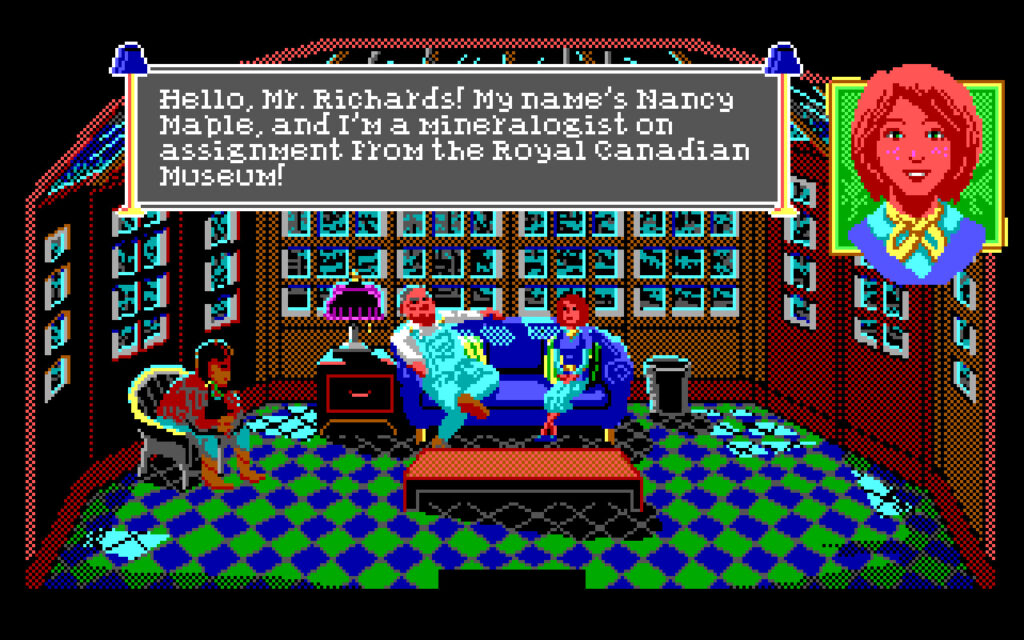
Would you like to spend some time in a rural vacation town in Ontario, Canada, doing mineralogy fieldwork in the off-season? A better question, then: Would you like to go there in 16-color EGA, wandering through a classic adventure game, text parser and all?

The Crimson Diamond is one of the most intriguing gaming trips I took this year. It’s an achievement in creative constraints, a cozy mystery, and an ear-catching soundtrack. It was made by a solo Canadian developer, inside Adventure Game Studio, with some real work put into upgrading the text parser and (optional) mouse experience with reasonable quality-of-life concessions. The charming but mysterious plot gently pulls you along from one wonderfully realized 1980s-era IBM backdrop to the next. It feels like playing a game you forgot to unbox, except this one actually plays without a dozen compatibility tricks.

We are awash in game remasters and light remakes that toy with our memories of old systems and forgotten genres (and having a lot more time to play games). The Crimson Diamond does something much more interesting, finding just the right new story and distinct style to port backward to a bygone era. It’s worth the clicks for any fan of pointing, clicking, and investigating.

-Kevin Purdy

Elden Ring: Shadow of the Erdtree

From Software; Windows, PS4/5, Xbox One/Series

Credit: Bandai Namco

You can tell downloadable content has come a long way when we deign to put a piece of DLC on our best-games-of-the-year list in 2024.

Released two years after the megaton zeitgeist hit that was the original Elden Ring, Shadow of the Erdtree bucks just as many modern gaming conventions as its base game did. Yes, it’s DLC because it’s digitally distributed add-on content, but while most AAA games get DLC that adds about 5–10 hours of stuff to do, Shadow of the Erdtree‘s scope actually fell somewhere between a full sequel and the expansions you’d buy in separate retail boxes for PC games in the 1990s and 2000s. It adds a large new landmass to explore, with multiple additional “legacy dungeons” and tentpole bosses, plus new mechanics and weapons aplenty.

Additionally, the game’s designers cleverly mapped a whole new system on top of the base game’s player levels and equipment, ensuring that you could still get the same satisfying sense of power progression, regardless of how deeply you’d gotten into the Elden Ring base game previously. Shadow of the Erdtree attracted some criticism for its sharp difficulty—even more so than the base game—but the same satisfying progression from hopelessness to triumph through perseverance as we enjoyed in 2022 is in play here.

As such, everything that was great about Elden Ring is also great about Shadow of the Erdtree. You could cynically call it more of the same, but when what we’re getting more of is so delicious, it’s hard to complain—especially given that this expansion includes some of the most compelling and original bosses in From Software history.

It didn’t convert anyone who didn’t dig the original, but fortunately that still left it with an audience of millions of people who were excited for a new challenge. Its impressive polish and scope land it on this list.

-Samuel Axon

Frostpunk 2

11 bit studios; Windows, Mac (ARM-based); PlayStation, Xbox (coming in 2025)

Credit: 11 Bit Studios

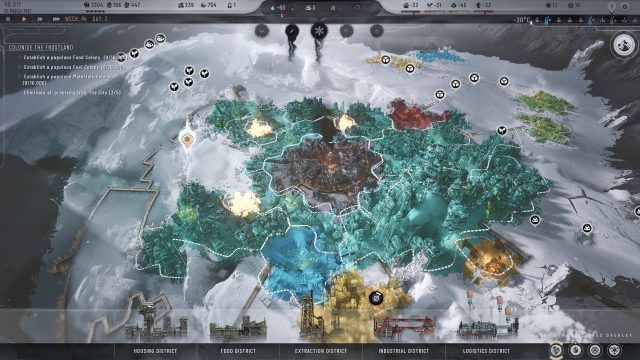
The first Frostpunk asked if you could make the terrible decisions necessary for survival in a never-ending blizzard. Frostpunk 2 asks you to manage something different, but no less dire: helping these people who managed to hold on keep their nascent civilization together. You can go deep with the fascists, the mystics, the hard-nosed realists, or the science nerds or try to play them all off one another to keep the furnace going.

It’s stressful, and it’s not at all easy, and the developers may have done too good a job of recreating the insane demands and interplay of human factions. The interface and navigation, sore spots on launch, have received a lot of attention, and the roadmap for the game into 2025 looks intriguing. I’d probably recommend starting with the first game before diving into this, but Frostpunk 2 is an accomplished, confident game in its own right. Human failings amidst an unfeeling snowpocalypse make for some engaging scenes.

-Kevin Purdy

Halls of Torment

Chasing Carrots; Windows, Linux, iOS, Android

Credit: Chasing Carrots

The isometric demon-killing of the old-school Diablo games has endured over the decades, especially among those who remember playing in their youth. But the whole concept has been in need of a bit of an update now that we’re in the age of Vampire Survivors and its “Bullet Heaven” auto-shooter ilk.

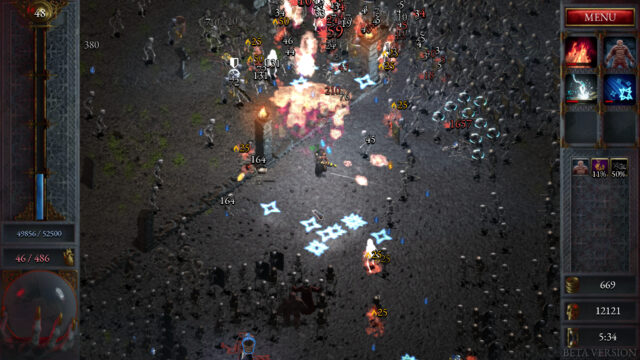
Enter Halls of Torment, a game that is probably as close as it comes to aping old-school Diablo‘s visual style without being legally actionable. Here, though, all the lore and story and exploration of the Diablo games has been replaced by a lot more enemies, all streaming toward your protagonist at the rate of up to 50,000 per hour. Much like Vampire Survivors, the name of the game here is dodging through those small holes in those swarms of enemies while your character automatically fills the screen with devastating attacks (that slowly level up as you play).

The wide variety of different playable classes—each with their own distinct strengths, weaknesses, and unique attack patterns—help each run feel distinct, even after you’ve smashed through the game’s limited set of six environments. But there’s plenty of cathartic replay value here for anyone who just wants to cause as much on-screen carnage as possible in a very short period of time.

-Kyle Orland

Helldivers 2

Arrowhead Game Studios; Windows, PS5

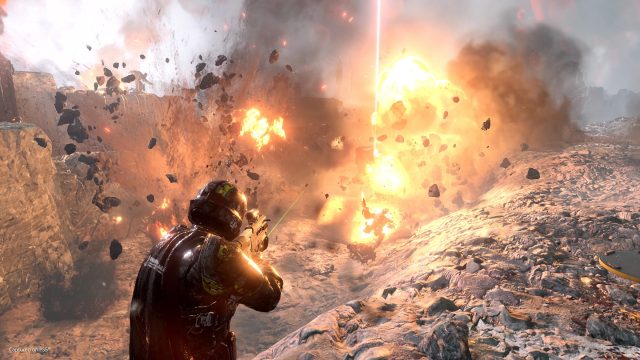
Helldivers 2 player aiming a laser reticule into a massive explosion.

Credit: PlayStation/Arrowhead

Every so often, a multiplayer game releases to almost universal praise, and for a few months, seemingly everyone is talking about it. This year, that game was Helldivers 2. The game converted the 2015 original’s top-down shoot-em-up gameplay into third-person shooter action, and the switch-up was enough to bring in tons of players. Taking more than a few cues from Starship Troopers, the game asks you to “spread democracy” throughout the galaxy by mowing down hordes of alien bugs or robots during short-ish missions on various planets. Work together with your team, and the rest of the player base, to slowly liberate the galaxy.

I played Helldivers 2 mostly as a “hang out game,” something to do with my hands and eyes as I chatted with friends. You can play the game “seriously,” I guess, but that would be missing the point for me. My favorite part of Helldivers 2 is just blowing stuff up—bugs, buildings, and, yes, even teammates. Friendly fire is a core part of the experience, and whether by accident or on purpose, you will inevitably end up turning your munitions on your friends. My bad!

Some controversial balance patches put the game into a bit of an identity crisis for a while, but things seem to be back on track. I’ll admit the game didn’t have the staying power for me that it seemed to for others, but it was undeniably a highlight of the year.

-Aaron Zimmerman

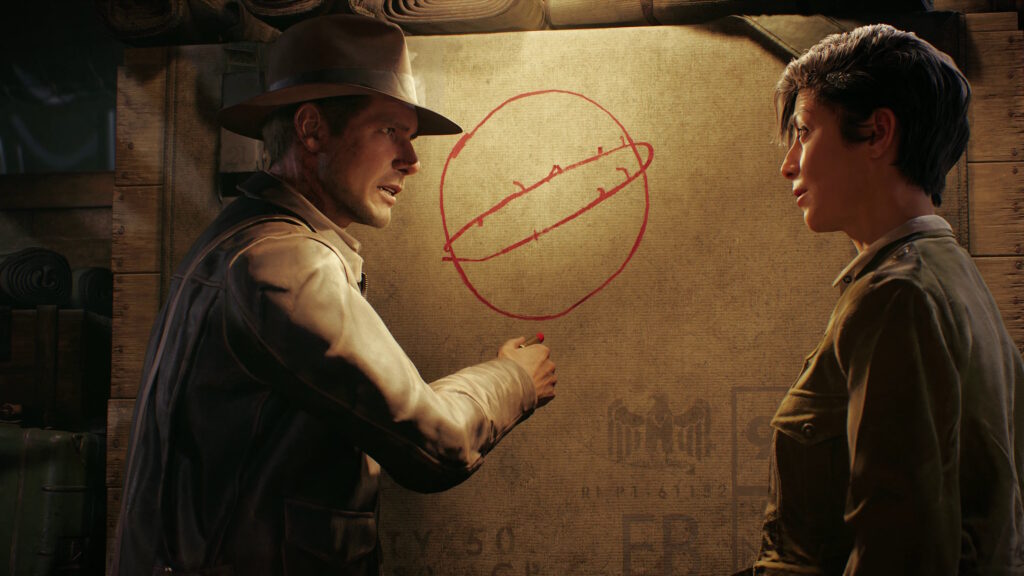
Indiana Jones and the Great Circle

MachineGames; Windows, PS5, Xbox Series X/S

Credit: Bethesda / MachineGames

A new game based on the Indiana Jones license has a lot to live up to, both in terms of the films and TV shows that inspired it and the well-remembered games that preceded it. The Great Circle manages to live up to those expectations, crafting the most enjoyable Indy adventure in years.

The best part of the game is contained in the main storyline, captured mainly in exquisitely madcap cut scenes featuring plenty of the pun-filled, devil-may-care quipiness that Indy is known for. Voice actor Troy Baker does a great job channeling Harrison Ford (by way of Jeff Goldblum) as Indy, while antagonist Emmerich Voss provides all the scenery-chewing Nazi shenanigans you could want from the ridiculous, magical-realist storyline.

The stealth-action gameplay is a little more pedestrian but still manages to distinguish itself with suitably crunchy melee combat and the enjoyable improvisation of attacking Nazis with everyday items, from wrenches to plungers. And while the puzzles and side-quests can feel a bit basic at times, there are enough hidden trinkets in out-of-the-way corners to encourage completionists to explore every inch of the game’s intricately detailed open-world environments.

It’s just the kind of light-hearted, escapist, exploratory fun we need in these troubled times. Welcome back, Indy! We missed you!

-Kyle Orland

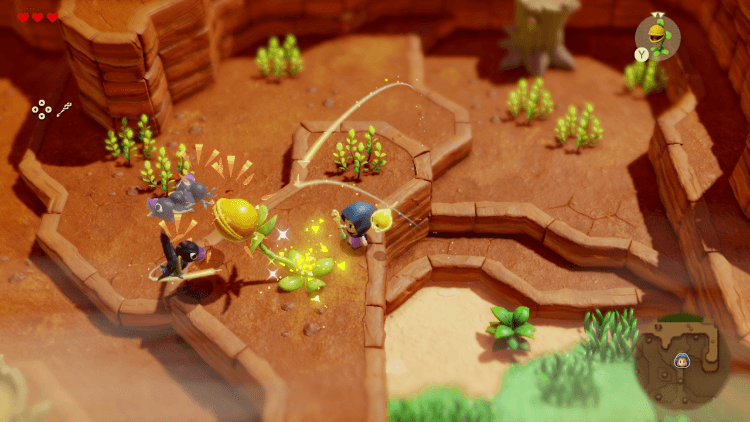
The Legend of Zelda: Echoes of Wisdom

Nintendo; Switch

After decades and decades of Zelda games where you don’t actually play as Zelda, there was a lot of pressure on a game where you finally get to control the princess herself as the protagonist (those CD-i monstrosities from the ’90s are best forgotten). Fortunately, Zelda’s turn in full control of her own series captures the franchise’s old-school, light-hearted adventuring fun with a few modern twists.

The main draw here is the titular “echo” abilities, which let Zelda copy enemies and objects that can be summoned in multiple copies with a special wand. This eventually opens up to allow for a number of inventive ways to solve some intricate puzzles in what feels like a heavily simplified version of Tears of the Kingdom‘s more complex crafting tools.

My favorite bit in Echoes of Wisdom, though, might be summoning copies of defeated enemies to fight new enemies in a kind of battle royale. As much as I love Link’s sword-swinging antics (which are partially captured here), just watching these magical minions do my combat for me is more than half of the fun in Echoes of Wisdom.

Even without those twists, though, Echoes of Wisdom provides all the old-school 2D Zelda dungeon exploring you could hope for, and the lighthearted storyline to match. Here’s hoping this isn’t the last time we’ll see Zelda taking a starring role in her own legends.

-Kyle Orland

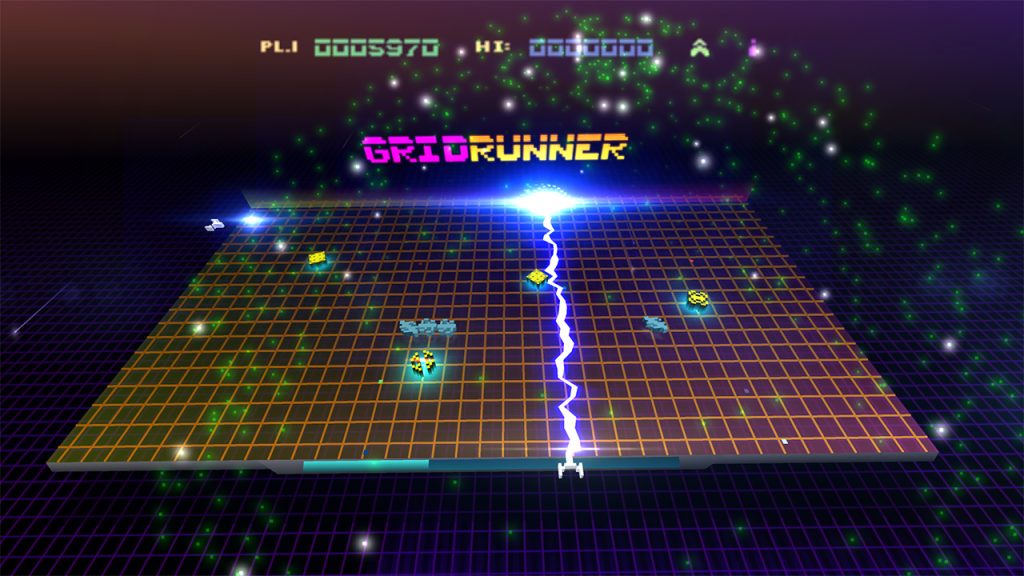
Llamasoft: The Jeff Minter Story

Digital Eclipse; Windows, PS4/5, Xbox One/Series, Switch

I went into this latest Digital Eclipse playable museum as someone who had only a passing familiarity with Jeff Minter. I knew him mainly as a revered game development elder with a penchant for psychedelic graphics and an association with Tempest 2000. Then I spent hours devouring The Jeff Minter Story on my Steam Deck during a long flight, soaking in the full history of a truly unique character in the annals of gaming history.

The emulated games on this collection are actually pretty hit or miss, from a modern game design perspective. But the collection of interviews and supporting material on offer here are top-notch, putting each game into the context of the time and of Minter’s personal journey through an industry that was still in its infancy. I especially liked the scanned versions of Minter’s newsletter, sent to his early fans, which included plenty of diatribes and petty dramas about his game design peers and the industry as a whole.

There are few other figures in the early history of games that would merit this kind of singular focus—even early games were too often the collaborative product of larger companies with a more corporate focus (as seen in Digital Eclipse’s previous Atari 50. But I reveled in this opportunity to get to know Minter better for his unique and quixotic role in early gaming history.

-Kyle Orland

Lorelei and the Laser Eyes

Simogo; Windows, PS4/5, Switch

You’d be forgiven for finding Lorelei and the Laser Eyes at least a little pretentious. Everything from the black-and-white presentation—laced with only the occasional flash of red for emphasis —to the Twin Peaks-style absurdist writing to the grand pronouncements on the Importance and Beauty of Art make for a game that feels like it’s trying a little too hard, at points.

Push past that surface, though, and you’ll find one of the most intricately designed interactive puzzle boxes ever committed to bits and bytes. Lorelei goes well beyond the simple tile-pushing and lock-picking tasks that are laughably called “puzzles” in most other adventure games. The mind-teasers here require real out-of-the-box thinking, careful observation of the smallest environmental details, and multi-step deciphering of arcane codes.

This is a game that’s not afraid to cut you off from massive chunks of its content if you’re not able to get past a single near-inscrutable locked door puzzle—don’t feel bad if you need to consult a walkthrough at some point to move on. It’s also a game that practically requires a pen and paper notes to keep track of all the moving pieces—your notebook will look like the scribblings of a madman by the time you’re done.

And you may actually feel a little mad as you try to unravel the meaning of the game’s multiple labyrinthine layers and self-aware, time-bending, magical-realist storyline. When it all comes together at the end, you may just find yourself surprisingly moved not just by the intricate design, but by that oft-pretentious plot as well.

-Kyle Orland

Metal Slug Tactics

Leikir Studio; Windows, PS4/5, Xbox One/Series, Switch

Credit: Dotemu

Good tactics games are all about how the game plays in your mind. How many ways can you overcome this obstacle, maximize this turn, and synergize your squad’s abilities? So it’s a very nice bonus when such a well-made pile of engaging decisions also happens to look absolutely wonderful and capture the incredibly detailed sense of motion of a legendary run-and-gun franchise.

That’s Metal Slug Tactics, and it’s one of the most surprising successes of 2024. It delivers the look and feel of a franchise that isn’t easy to get right, and it translates those games’ feeling of continuous motion into turn-based tactics. The more you move, shoot, and team up each turn, the better you’ll do. You can do a level or two on a subway ride, crank out a rogue-ish run on a lunch break, and keep getting rewarded with new characters, unlocks, and skill tree branches.

If you’re always contemplating a replay of Final Fantasy Tactics, but might like a new challenge, consider giving this unlikely combination of goofy arcade revival and deep strategy a go.

-Kevin Purdy

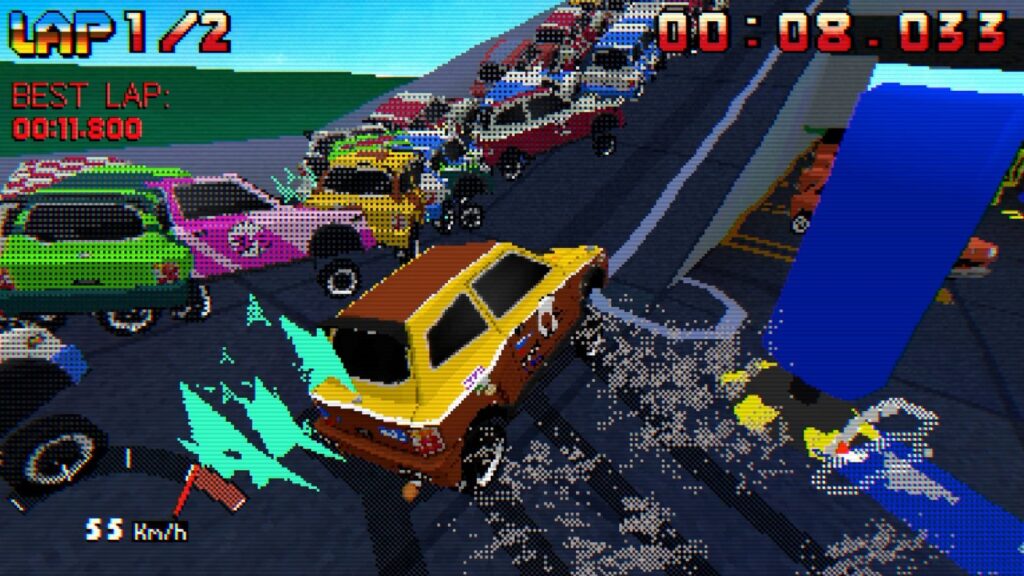
Parking Garage Rally Circuit

Walaber Entertainment; Windows

The rise of popular, ultra-detailed racing sims like Gran Turismo and Forza Motorsport has coincided with a general decline in the drift-heavy, arcadey side of the genre. Titles like Ridge Racer Sega Rally or even Crazy Taxi now belong more in the industry’s nostalgic memories than its present top-sellers.

Parking Garage Rally Circuit is doing its best to bring the arcade racer genre back single-handedly. The game’s perfectly tuned drifting controls make every turn a joyful sliding experience, complete with chainable post-drift boosts for those who want to tune that perfect speedy line. It captures that great feeling of being just on the edge of losing control, while still holding onto the edge of that perfect drift.

It all takes place, as the name implies, winding up, down, over, and through some well-designed parking garages. Each track’s short laps (which take a minute or less) ensure you can practically memorize the best paths after just a little bit of play. But the stopped cars and large traffic dividers provide for some hilarious physics-based crashes when your racing line does go wrong.

The game earns extra nostalgia points for a variety of visual effects and graphics options that accurately mimic Dreamcast-era consoles and/or emulation-era PC hardware. But the game’s extensive online leaderboards and ghost-racers help it feel like a decidedly modern take on a classic genre.

-Kyle Orland

Pepper Grinder

Ahr Ech; Windows, MacOS, Linux, PS4/5, Xbox One/Series, Switch

It’s amazing how far a platform game can get on nothing more than a novel control scheme. Pepper Grinder is a case in point here, based around a tiny, blue-haired protagonist who uses an oversized drill to tunnel through soft ground like some kind of human-machine-snake hybrid.

Navigating through the dirt in large, undulating curves is fun enough, but the game really shines when Pepper bursts out through the top layer of dirt in large, arcing jumps. Chaining these together, from dirt clump to dirt clump, is the most instantly compelling new 2D navigation scheme we’ve seen in years and creates some beautiful, almost balletic curves through the levels once you’ve mastered it.

The biggest problem with Pepper Grinder is that the game is over practically before it really gets going. And while some compelling time-attack and item-collection challenges help to extend the experience a bit, we really hope some new DLC or a proper sequel is coming soon to give us a new excuse to wind our way through the dirt.

-Kyle Orland

The Rise of the Golden Idol

Color Gray Games; Windows, MacOS, iOS, Android, PS4/5, Xbox One/Series, Switch

In 2022, The Case of the Golden Idol proved that details like a controllable protagonist or elaborate cut scenes are unnecessary for a good murder mystery-solving puzzle adventure. All you need is a series of lightly animated vignettes, a way to uncover the smallest hidden details in those vignettes, and a fill-in-the-blanks interface to let you piece together the disparate clues.

As a follow-up, Rise moves the 18th-century setting of the original into the 20th century, bringing the mysterious, powerful idol to the attention of both academic scientists and mass media executives who seek to exploit its mind-altering powers. From your semi-omniscient perspective, you have to figure out not just the names and motivations of those pulled into the idol’s orbit, but the somewhat inscrutable powers of the idol itself.

Rise adds a few interesting new twists, like the ability to scrub through occasional video animations for visual clues and the ability to track certain scenes throughout multiple times of day. At its core, though, this is an extension of the best-in-class, pure deductive reasoning gameplay we saw in the original game, with a slightly more modern twist. This is yet another 2024 favorite that requires strong attention to detail and logical inference from very small hints.

It all comes together in a satisfying conclusion that leaves the door wide open for a sequel that we can’t wait for.

-Kyle Orland

Satisfactory

Coffee Stain Studios; Windows

Danish publisher Coffee Stain makes gaming success seem so simple. Put a game with a goofy feel, a corporate dystopia, and complex systems into early access. Iterate, cultivate feedback and a sense of ownership with the community. Take your time, refine, and then release the game, without any revenue-grabbing transactions or add-ons, beyond fun cosmetics. They did it with Deep Rock Galactic, and they’ve done it again with Satisfactory. By the time the game hit 1.0, the only thing left to add was “Premium plumbing.”

It’s remarkably fun to live on the bad-guy side of The Lorax, exploiting a planet’s natural resources to create a giant factory system producing widgets for corporate wellbeing. The first-person perspective might seem odd for game with such complex systems, but it heightens your sense of accomplishment. You didn’t just choose to put a conveyor belt between that ore extractor and that fabricator; you personally staked out that deposit, and your ran the track yourself.

The systems are incredibly deep, but it can be quite relaxing to wander around your planet-sized industrial park, thinking up ways that things might run better, faster, with no interruptions. It’s the kind of second job you’re happy to buy into, giving you a deep sense of accomplishment for learning the ins and outs of this system, even as it gently mocks you for engaging with it. Satisfactory has itself worked for years to refine the most efficient gameplay for its bravest fans, and now it’s ready to employ the rest of us.

-Kevin Purdy

Sixty Four

Oleg Danilov; Windows, Mac

I try not to think about, or write about, games in the manner of “dollars to enjoyment ratio.” Games often get cheaper over time, everybody enjoys them differently, and they’re art, too, as well as commerce. But, folks, come on: $6 for Sixty Four? If you play it for one hour and just smile a few times at its oddities and tiny cubes, that was less than a big-city latte or beer.

But you will almost certainly play Sixty Four for more than one hour, and maybe many more hours than that if you enjoy games with systems, building, and resources. You build and place machines to extract resources, use those resources to fund new and better machines, rearrange your machines, and eventually create beautiful workflows that are largely automated. Why do you do this? It’s a fun, dark mystery.

The game looks wonderful in its SimCity 2000/3000-esque style. It can be mentally taxing, but you can’t really lose; you can even leave the game window open in the background while you convince your boss or remote work software that you’re otherwise productive. It’s a fever dream I’d recommend to most anybody, unless they dread a repeat of the many lost days to games like Factorio, Satisfactory, or even Universal Paperclips. Just wishlist it, in that case; what could go wrong?

-Kevin Purdy

Tactical Breach Wizards

Suspicious Developments; Windows

Credit: Suspicious Developments

What can you do to spice up turn-based tactics, a rather mature genre?

Tactical Breach Wizards adds future-seeing, time-bending, hex-placing wizards, for one thing. It refines the heck out of grid combat, for another, adding window-tossing and door-sealing into the mix, and giving enemies a much wider array of attacks than area-of-effect variations. Finally, it wraps this all up in an inventive sci-fi narrative, one with an engaging plot, characters that reveal themselves one quip at a time, and an overall sense of wonderment at a charming, bizarre world of militarized magic.

In other words, you could put some joy into your turn-based combat, while still offering intricate challenges and clever levels.

Tom Francis’ unique sense of humor, seen previously in Gunpoint and Heat Signature, is given space here to shine, and it’s a wonderful wrapper for all the missions and upgrade decisions. It’s pretty ridiculous to be a wizard, wielding a laser-scoped rifle that fires crystal energy, plotting how to hit three guards at once with your next blast. Tactical Breach Wizards knows this, jokes about it, and then celebrates with you when you pull it off. It’s both a hoot, and a very good shoot.

-Kevin Purdy

UFO 50

Mossmouth; Windows

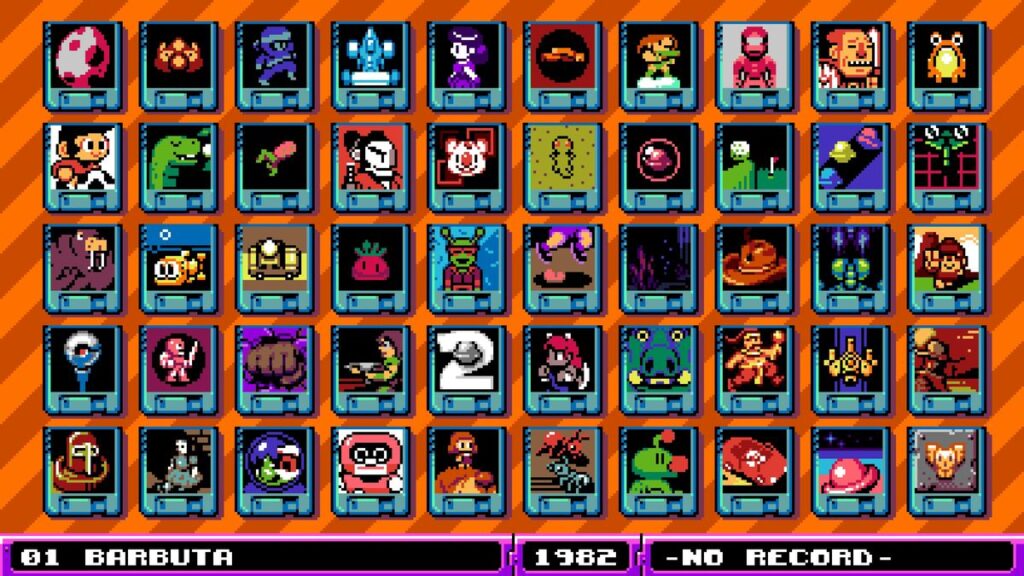
In recent years, modern games have started evoking the blocky polygons and smeary textures of early 3D games to appeal to nostalgic 20- and 30-somethings. UFO 50 has its nostalgic foot placed firmly in an earlier generation of ’80s and ’90s console gaming, with a bit of early ’00s Flash game design thrown in for good measure.

Flipping your way through the extremely wide variety of games on offer here is like an eminently enjoyable trip through random titles in an emulator’s (legally obtained) classic ROMs folder—just set in an alternate universe. There are plenty of shmups and platform games befitting the ostensible gaming era being recreated—but you also get full-fledged strategy, puzzle, arcade, racing, adventure, and RPG titles, on top of a few so unique that I can’t find any real historical genre analog for. These well-designed titles evoke the classics—everything from Bad Dudes and Bubble Bobble to Super Dodge Ball and Smash TV—without ever feeling like a simple rehash of games you remember from your youth.

While there’s the usual spread of quality you’d expect from such a wide-ranging collection, even the worst-made title in UFO 50 shows a level of care and attention to detail that will delight anyone with even a passing interest in game design and/or history. Not every game in UFO 50 will be one of your all-time favorites, but I’d be willing to wager that any gamer of a certain age will find quite a few that will eat away plenty of pleasant, nostalgic hours.

-Kyle Orland

Photo of Kyle Orland

Kyle Orland has been the Senior Gaming Editor at Ars Technica since 2012, writing primarily about the business, tech, and culture behind video games. He has journalism and computer science degrees from University of Maryland. He once wrote a whole book about Minesweeper.

Ars Technica’s top 20 video games of 2024 Read More »

horizon:-zero-dawn-gets-the-graphical-remaster-a-modern-classic-deserves

Horizon: Zero Dawn gets the graphical remaster a modern classic deserves

So when Sony put out the recent “remaster” of Zero Dawn, I was cautiously optimistic. Any sort of non-half-assed PS5 reworking ought to reduce load times, right?

Machines make it hard to enjoy the view.

I meant to dip into the world of Zero Dawn only for a few hours, but I ended up playing through the whole game and its expansion, The Frozen Wilds, over the last few weeks. The arrow-based gameplay, complex story, and voice acting were still terrific, and the remastered elements were far more than a simple cash-in. Even little things, like the way the adaptive triggers on the PS5 controllers mimic the tension of a bowstring, felt perfect.

I didn’t expect to get sucked back into the game’s world for so many hours, but I had a great time doing it and wanted to spread the good word for those who might be looking for an engaging single-player experience over the holidays.

Big changes

When it comes to major changes, the remaster has three.

First, the game loads fast. It feels like a ground-up PS5 title. Death—and its attendant reloads—no longer makes me want to throw my controller across the room during difficult battles. It’s great.

Second, the game looks unbelievable. This is not a case of just upping the resolution to 4K and calling it a day. Sony claims that the game features “over 10 hours of re-recorded conversation, mocap and countless graphical improvements that bring the game to the same visual fidelity as its critically acclaimed sequel.” Also, the game’s characters have “been upgraded, bringing them in line with current generation advances in character models and rendering.”

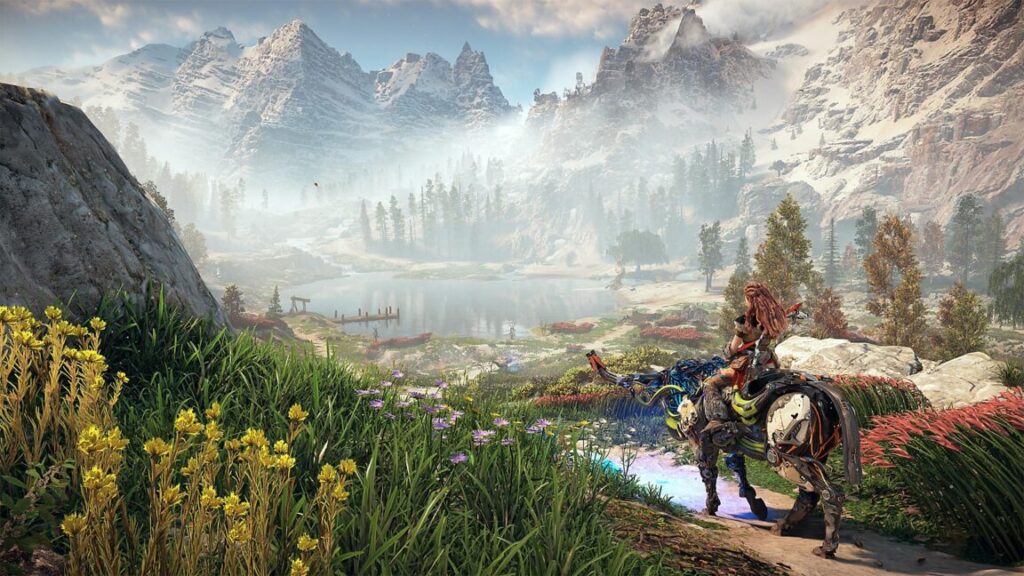
This is not just marketing fluff. The faces look incredible, even in close-up cinematic interludes, but what really caught my eye was the lighting. From the moment a young Aloy spelunks into a cave and finds an electronic gadget attached to a skeleton lying peacefully in a sunbeam, the revamped lighting engine makes its presence clear. No, it’s not “realistic”—everything looks like a postcard shot. But I found myself pausing the game just to look at the sunlight scattered by a snowstorm or dawn breaking over a mountain range. The lighting interacts with a volumetric set of effects that bring fog and dust devils to life like few other games I’ve seen. When Aloy tramps through a winter squall, leaving footsteps in the mountain snow as she walks, the effect is magical. (Until a Glinthawk swoops in, screaming, and attacks.)

Horizon: Zero Dawn gets the graphical remaster a modern classic deserves Read More »

man-who-claims-he-invented-bitcoin-faces-prison-after-filing-$1.1-trillion-suit

Man who claims he invented bitcoin faces prison after filing $1.1 trillion suit

Wright’s lawsuit names a defendant he calls “BTC Core,” which apparently doesn’t exist. Wright alleges that BTC Core “partners” include 122 corporate entities and 22 individuals who contributed to bitcoin development and research. Wright also named BTC Core as a defendant in a 2022 lawsuit.

This week’s court ruling said that “COPA (and others) say there is no such entity and it is an invention of Dr. Wright’s in his attempt to designate those who are or who have been involved in the development of the software used in various manifestations of Bitcoin as a partnership. They deny there is any such partnership, as Dr. Wright seems to allege. It is not necessary to resolve that issue.”

Corporations and individuals that Wright claims are part of BTC Core “were defendants to various of the previous actions brought by Dr. Wright (and his companies),” Mellor wrote.

Wright suit “repeat[s] his dishonest claim to be Satoshi”

Wright contended that his lawsuit falls outside the bounds of the previous order because his new claims “do not involve him claiming to be Satoshi Nakamoto and do not depend on him having invented the Bitcoin system,” Mellor wrote. Mellor rejected Wright’s arguments.

For one thing, Mellor said the earlier order “is not limited to prohibiting claims dependent on Dr. Wright asserting that he is Satoshi Nakamoto.” For another, Mellor pointed out that Wright’s latest lawsuit “does include pleaded contentions that he is Satoshi Nakamoto,” and thus “Dr. Wright is wrong to say that his New Claim does not repeat his dishonest claim to be Satoshi.”

Further, COPA contended “that each of the principal claims in the New Claim can only be maintained by Dr. Wright asserting intellectual property rights which the Order precludes him from asserting in legal proceedings.”

Addressing Wright’s copyright claim, Mellor wrote that “Dr. Wright does not claim a license or any assignment from some other person alleged to be owner of copyright in the relevant works. Therefore Dr. Wright cannot bring this claim for copyright infringement without claiming ownership of the rights which he alleges to have been infringed. That is to say, Dr. Wright cannot bring an infringement claim in relation to the works in question, however it is worded, without breaching the Order.”

Man who claims he invented bitcoin faces prison after filing $1.1 trillion suit Read More »

home-assistant’s-voice-preview-edition-is-a-little-box-with-big-privacy-powers

Home Assistant’s Voice Preview Edition is a little box with big privacy powers


Home Assistant Voice Preview Edition

Home Assistant’s voice device is a $60 box that’s both focused and evolving.

Credit: Home Assistant Foundation

Home Assistant announced today the availability of the Voice Preview Edition, its own design of a living-room-friendly box to offer voice assistance with home automation. Having used it for a few weeks, it seems like a great start, at least for those comfortable with digging into the settings. That’s why Home Assistant is calling it a “Preview Edition.”

Using its privacy-minded Nabu Casa cloud—or your own capable computer—to handle the processing, the Voice Preview Edition (VPE) ($60/60 euros, available today) has the rough footprint of a modern Apple TV but is thinner. It works similarly to an Amazon Echo, Google Assistant, or Apple Siri device, but with a more focused goal. Start with a wake word—the default, and most well-trained version, is “Okay, Nabu,” but “Hey, Jarvis” and “Hey, Mycroft” are available. Follow that with a command, typically something that targets a smart home device: “Turn on living room lights,” “Set thermostat to 68,” “Activate TV time.” And then, that thing usually happens.

Home Assistant’s Voice Preview Edition, doing what it does best. I had to set a weather service to an alias of “the weather outside” to get that response worked out.

“That thing” is primarily controlling devices, scenes, and automations around your home, set up in Home Assistant. That means you have to have assigned them a name or alias that you can remember. Coming up with naming schemes is something you end up doing in big-tech smart home systems, too, but it’s a bit more important with the VPE.

You won’t need to start over with all your gear if you’ve got a Google Home, Alexa, or Apple Home ecosystem, at least. Home Assistant has good “bridge” options built into it for connecting all the devices you’ve set up and named inside those ecosystems.

It’s important to have a decently organized smart home set up with a VPE box, because it doesn’t really do much else, for better or worse. Unless you hook it up to an AI model.

The voice device that is intentionally not very chatty

The VPE box can run timers (with neat LED ring progress indicators), and with a little bit of settings tweaking, you can connect it to Home Assistant’s built-in shopping lists and task lists or most any other plug-in or extension of your system. If you’re willing to mess with LLMs—like ChatGPT or Google’s Gemini—locally or through cloud subscriptions, you could trigger prompts with your voice, though performance will vary.

Home Assistant’s Voice Preview Edition, not quite sure what to do with non-home-related questions.

What else does Home Assistant’s hardware do? Nothing, at least by default. It listens for its prompt, it passes them onto a Home Assistant server, and that’s it. You can’t ask it how tall Buffalo Bills quarterback Josh Allen is or how many consecutive Super Bowls the Bills lost. It won’t do simple math calculations or metric conversions. It cannot tell you whether you should pack an umbrella tomorrow or a good substitute if you’re out of eggs.

For some people either hesitant to bring a voice device into their home or fatigued by the failures of supposedly “smart” assistants that can seem quite dumb, this might be perfect. When the Home Assistant VPE hears me clearly (more on that in a moment), it almost always understands what I’m saying, so long as I remember what I named everything.

There were times during the month-long period when I muted Google Assistant and stuck with Home Assistant that I missed the ability to ask questions I would normally just look up on a search engine. The upside is that I didn’t have to sit through 15 seconds of Google explaining at length something I didn’t ask for.

If you want the VPE to automatically fall back to AI for answering non-home-specific questions, you can set that up. And that’s something we’ll likely dig into for a future post.

The hardware

Home Assistant’s Voice Preview Edition device, with Apple TV (4K, 2022) for scale. Kevin Purdy

As a product you want to keep somewhere it can hear you, the Home Assistant VPE blends in, is reasonably small, and has more useful buttons and switches than the competition. It looks entirely innocuous sitting on a bookshelf, entertainment center, kitchen counter, or wall mount. It’s quite nice to pay for a functional device that has absolutely no branding visible.

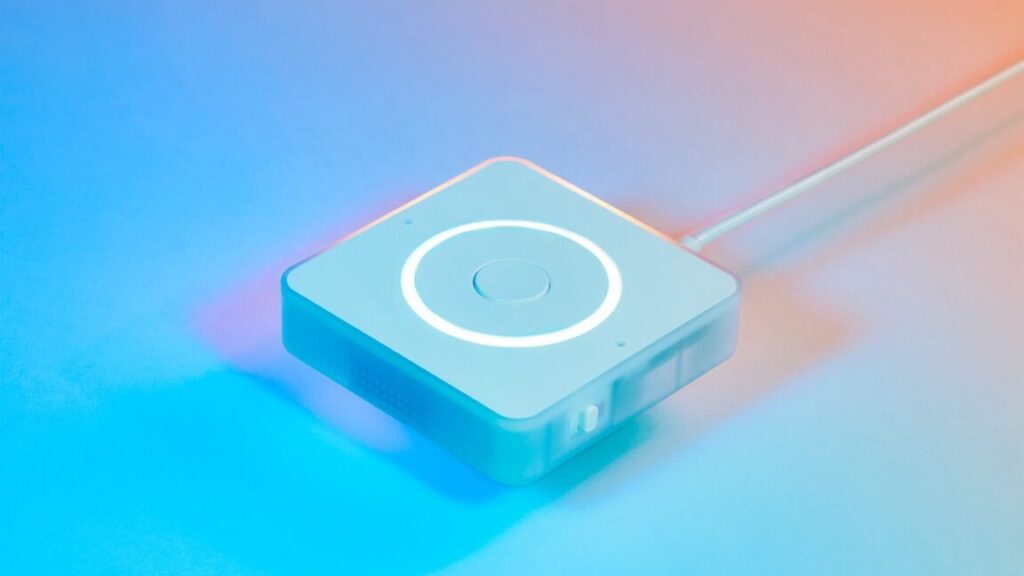
There are four neat things on top. First is two microphone inputs, which are pretty important. There’s an LED ring that shows you the VPE is listening by spinning, then spinning the other way to show that it’s “thinking” and reversing again when responding. A button in the middle can activate the device without speech or cancel a response.

Best of all, there is a physically rotating dial wheel around the button. It feels great to spin, even if it’s not something you’ll need to do very often.

Around the sides is clear plastic, with speaker holes on three sides. The speakers are built specifically for voice clarity, according to Home Assistant, and I agree. I can always hear what the VPE is trying to tell me, at any distance in my living room.

There’s a hardware mute switch on one side, with USB-C inputs (power and connection) and a stereo headphone/speaker jack. On the bottom is a grove port for deeper development.

Hearing is still the challenge

The last quasi-official way to get a smart speaker experience with Home Assistant was the ESP32 S3 Box 3, which was okay or decent in a very quiet room or at dining room table distance. The VPE is a notable improvement over that device in both input and output. If I make a small effort to speak clearly and enunciate, it catches me pretty much everywhere in my open-plan living room/dining room/kitchen. It’s not too bad at working around music or TV sound, either, so long as that speaker is not between me and the VPE box. It is best with its default wake phrase, “Okay, Nabu,” because that’s the most trained and sampled by the Open Wake Word community.

And yet, every smart speaker I’ve had in my home at some point—a Google Home/Nest Mini, Amazon Echo (full-size or Dot), Apple HomePod (original), the microphones on Sonos speakers—has seemed better at catching its wake word, given similar placement as the VPE. After all, Home Assistant, a not-for-profit foundation, cannot subsidize powerful microphone arrays with advertising, Prime memberships, or profitable computer hardware ecosystems. I don’t have lab tests to prove this, just my own experiences—with my particular voice, accent, phrasing, room shape, and noise levels.

I’ve been using this device with pre-release firmware and software, and it’s under active development, so it will almost certainly get better. But as a device you can buy and set up right now, it’s very close—but not quite—to the level of the big ecosystems. It is notably better than the hodgepodge of other devices you can technically use with Home Assistant voice prompts.

Is it better for my privacy that the VPE is not great at being triggered by ambient speech in the room? Maybe. At the same time, I’m more likely to switch away from said big-tech voice devices only if I don’t feel like I have to say everything twice or three times.

It’s fun to craft your own voice system

I’ve been able to use the VPE on a bookshelf in my living room for weeks, asking it to turn on lights, adjust thermostats, set scenes with blinds and speakers, and other automations, and the successes are far more common than failures. I still want to test some different placements and try out local hardware processing (requiring an Intel N100 or better for common languages), since I’ve only tested it with Home Assistant’s cloud servers, the generally faster solution.

The best things about the VPE are not the things you’ll notice by looking at or speaking to it. It’s a smart speaker that seems a lot more reasonable for private places, especially if you’re running on local hardware. It’s not a smart speaker that is going to read you an entire Wikipedia page when it misunderstands what you want. And it doesn’t demand you to use an app tied into an ecosystem to use, other than the web app running off your Home Assistant server.

Paulus Schoutsen said on the VPE’s launch stream that the VPE might not be the best choice for someone switching over from an established Google/Amazon/Apple ecosystem. That might be true, but I think the VPE also works as a single-user device at a desk, or for anyone who’s been waiting to step into voice but concerned about privacy, ecosystem lock-in, or their kids’ demands to play Taylor Swift songs on repeat.

This post was update at 5 p.m. to note the author’s wake word experience may relate to his voice and room characteristics.

Photo of Kevin Purdy

Kevin is a senior technology reporter at Ars Technica, covering open-source software, PC gaming, home automation, repairability, e-bikes, and tech history. He has previously worked at Lifehacker, Wirecutter, iFixit, and Carbon Switch.

Home Assistant’s Voice Preview Edition is a little box with big privacy powers Read More »

crypto-scammers-posing-as-real-brands-on-x-are-easily-hacking-youtubers

Crypto scammers posing as real brands on X are easily hacking YouTubers

“I’m fighting with Google now,” Townsend told Ars. “I don’t expect any real answers from them.”

How YouTubers can avoid being targeted

As YouTube appears evasive, Townsend has been grateful for long-time subscribers commenting to show support, which may help get his videos amplified more by the algorithm. On YouTube, he also said that because “the outpouring of support was beyond anything” he could’ve expected, it kept him “sane” through sometimes 24-hour periods of silence without any updates on when his account would be restored.

Townsend told Ars that he rarely does sponsorships, but like many in the fighting game community, his inbox gets spammed with offers constantly, much of which he assumes are scams.

“If you are a YouTuber of any size,” Townsend explained in his YouTube video, “you are inundated with this stuff constantly,” so “my BS detector is like, okay, fake, fake, fake, fake, fake, fake, fake. But this one just, it looked real enough, like they had their own social media presence, lots of followers. Everything looked real.”

Brian_F echoed that in his video, which breaks down how the latest scam evolved from more obvious scams, tricking even skeptical YouTubers who have years of experience dodging phishing scams in their inboxes.

“The game has changed,” Brian_F said.

Townsend told Ars that sponsorships are rare in the fighting game community. YouTubers are used to carefully scanning supposed offers to weed out the real ones from the fakes. But Brian_F’s video pointed out that scammers copy/paste legitimate offer letters, so it’s already hard to distinguish between potential sources of income and cleverly masked phishing attacks using sponsorships as lures.

Part of the vetting process includes verifying links without clicking through and verifying identities of people submitting supposed offers. But if YouTubers are provided with legitimate links early on, receiving offers from brands they really like, and see that contacts match detailed LinkedIn profiles of authentic employees who market the brand, it’s much harder to detect a fake sponsorship offer without as many obvious red flags.

Crypto scammers posing as real brands on X are easily hacking YouTubers Read More »

supreme-court-to-decide-if-tiktok-should-be-banned-or-sold

Supreme Court to decide if TikTok should be banned or sold

While the controversial US law doesn’t necessarily ban TikTok, it does seem designed to make TikTok “go away,” Greene said, and such a move to interfere with a widely used communications platform seems “unprecedented.”

“The TikTok ban itself and the DC Circuit’s approval of it should be of great concern even to those who find TikTok undesirable or scary,” Greene said in a statement. “Shutting down communications platforms or forcing their reorganization based on concerns of foreign propaganda and anti-national manipulation is an eminently anti-democratic tactic, one that the US has previously condemned globally.”

Greene further warned that the US “cutting off a tool used by 170 million Americans to receive information and communicate with the world, without proving with evidence that the tools are presently seriously harmful” would “greatly” lower “well-established standards for restricting freedom of speech in the US.”

TikTok partly appears to be hoping that President-elect Donald Trump will disrupt enforcement of the law, but Greene said it remains unclear if Trump’s plan to “save TikTok” might just be a plan to support a sale to a US buyer. At least one former Trump ally, Steven Mnuchin, has reportedly expressed interest in buying the app.

For TikTok, putting pressure on Trump will likely be the next step, “if the Supreme Court ever says, ‘we agree the law is valid,'” Greene suggested.

“Then that’s it,” Greene said. “There’s no other legal recourse. You only have political recourses.”

Like other civil rights groups, the EFF plans to remain on TikTok’s side as the SCOTUS battle starts.

“We are pleased that the Supreme Court will take the case and will urge the justices to apply the appropriately demanding First Amendment scrutiny,” Greene said.

Supreme Court to decide if TikTok should be banned or sold Read More »