ChatGPT isn’t perfect, but the popular AI chatbot’s access to large language models (LLM) means it can do a lot of things you might not expect, like give all of Tamriel’s NPC inhabitants the ability to hold natural conversations and answer questions about the iconic fantasy world. Uncanny, yes. But it’s a prescient look at how games might one day use AI to reach new heights in immersion.
YouTuber ‘Art from the Machine’ released a video showing off how they modded the much beloved VR version of The Elder Scrolls V: Skyrim.
The mod, which isn’t available yet, ostensibly lets you hold conversations with NPCs via ChatGPT and xVASynth, an AI tool for generating voice acting lines using voices from video games.
Check out the results in the most recent update below:
The latest version of the project introduces Skyrim scripting for the first time, which the developer says allows for lip syncing of voices and NPC awareness of in-game events. While still a little rigid, it feels like a pretty big step towards climbing out of the uncanny valley.
Here’s how ‘Art from the Machine’ describes the project in a recent Reddit post showcasing their work:
A few weeks ago I posted a video demonstrating a Python script I am working on which lets you talk to NPCs in Skyrim via ChatGPT and xVASynth. Since then I have been working to integrate this Python script with Skyrim’s own modding tools and I have reached a few exciting milestones:
NPCs are now aware of their current location and time of day. This opens up lots of possibilities for ChatGPT to react to the game world dynamically instead of waiting to be given context by the player. As an example, I no longer have issues with shopkeepers trying to barter with me in the Bannered Mare after work hours. NPCs are also aware of the items picked up by the player during conversation. This means that if you loot a chest, harvest an animal pelt, or pick a flower, NPCs will be able to comment on these actions.
NPCs are now lip synced with xVASynth. This is obviously much more natural than the floaty proof-of-concept voices I had before. I have also made some quality of life improvements such as getting response times down to ~15 seconds and adding a spell to start conversations.
When everything is in place, it is an incredibly surreal experience to be able to sit down and talk to these characters in VR. Nothing takes me out of the experience more than hearing the same repeated voice lines, and with this no two responses are ever the same. There is still a lot of work to go, but even in its current state I couldn’t go back to playing without this.
You might notice the actual voice prompting the NPCs is also fairly robotic too, although ‘Art from the Machine’ says they’re using speech-to-text to talk to the ChatGPT 3.5-driven system. The voice heard in the video is generated from xVASynth, and then plugged in during video editing to replace what they call their “radio-unfriendly voice.”
And when can you download and play for yourself? Well, the developer says publishing their project is still a bit of a sticky issue.
“I haven’t really thought about how to publish this, so I think I’ll have to dig into other ChatGPT projects to see how others have tackled the API key issue. I am hoping that it’s possible to alternatively connect to a locally-run LLM model for anyone who isn’t keen on paying the API fees.”
Serving up more natural NPC responses is also an area that needs to be addressed, the developer says.
Squido Studio announced its first-person platformer No More Rainbows is coming to Quest 2 and SteamVR headsets soon, offering up a VR take on classic platforming action.
No More Rainbows has been available in open beta on Quest’s App Lab for a year now, and it’s almost time for it to graduate to the main Quest Store and Steam too. Exactly when, we don’t know, but Squido and its partner Robot Teddy say it’s coming “very soon.”
Here’s the studio’s description of the first-person VR platformer:
In No More Rainbows, you are The Beast, who must spring forth into a fantastical virtual reality world to reclaim your home from the beings of infinite happiness that have infested the Underworld! Bizou and their merry band of minions plan to take over your sanctuary of screams and turn it into a bountiful paradise where cries of pain and torment are replaced by kisses and rainbows… what a nightmare! Use arm-based locomotion mechanics to run, jump, claw, and climb using only your hands and arms to engage with tight platformer mechanics.
In the full release, the game is set to include four unique campaign worlds, environmental storytelling, multiplayer modes, beast personalization, leaderboards, and boss encounters. Squido says the full game has around five hours of gameplay.
The open beta on Quest will be removed from App Lab on May 2nd, which follows a Dev Day on May 1st where players can hang out with the game’s developers. In the meantime, you can also wishlist it on Steam here.
A Dutch startup has been awarded a contract to install floating solar panels at an offshore wind farm in the North Sea.
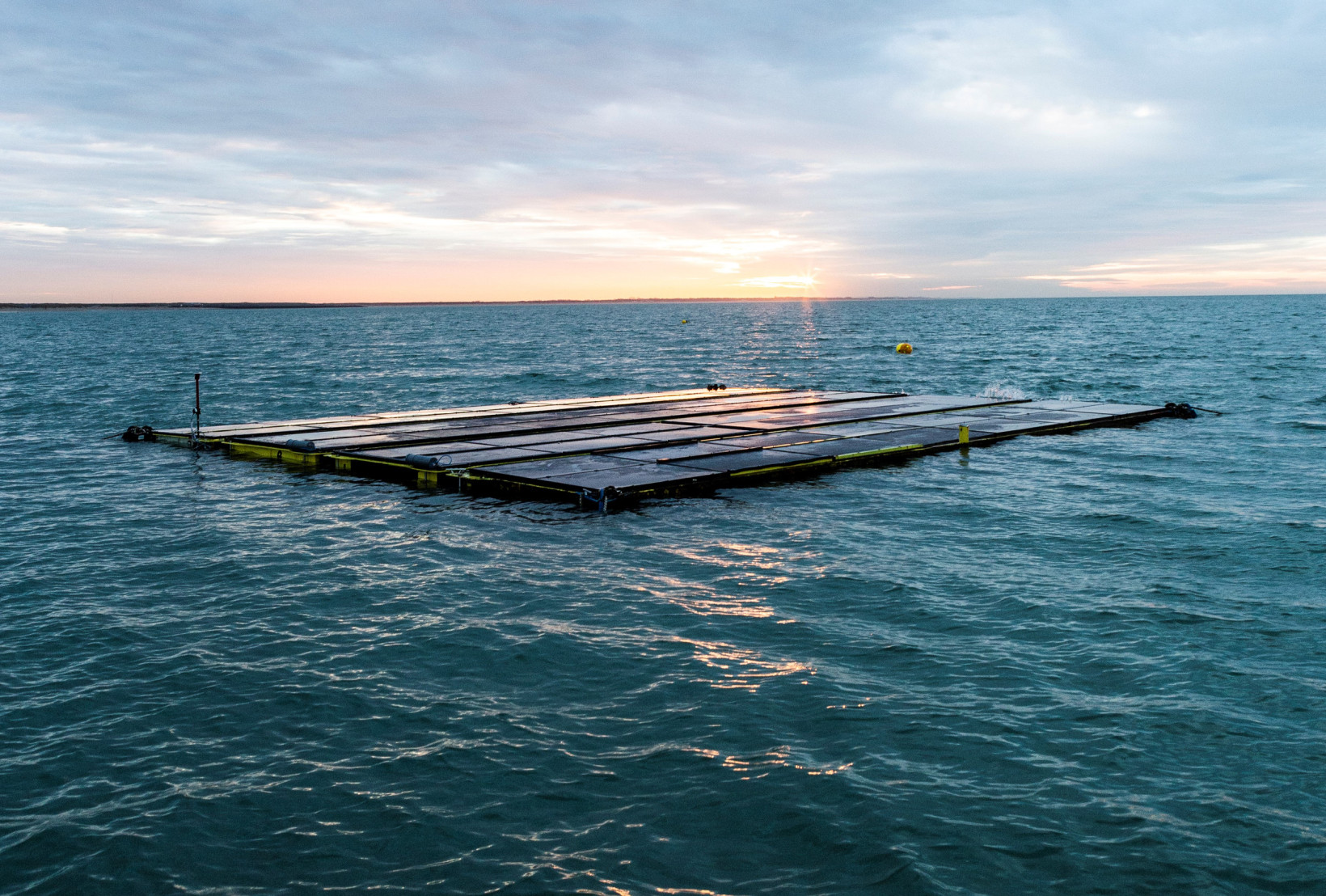
Oceans of Energy secured the contract from CrossWind, a joint venture between Shell and Eneco. The renewable energy startup has been tasked with building a 0.5MW floating array between wind turbines at the 750MW Hollands Kust Noord wind farm, located 18.5km off the coast of the Netherlands.
According to the startup, which was founded in 2016 by Dutch engineer and entrepreneur Allard van Hoeken, this would be the first offshore solar farm in the world to be connected, installed, and operated within a wind farm in “high-wave conditions”.
The solar panels will be situated in between the offshore wind turbines, providing backup power on sunnier but less windy days. The panels will be moored to the wind turbines and connected to the same cables, transporting energy efficiently to end users.
Van Hoeken says the project “will functionas an example for combined offshore wind and solar parks in the future.”
The solar array will provide energy for around 500 households once it links up to the Dutch electric grid in 2025, two years after the wind farm comes online.
Until now the startup has mainly relied on subsidies from the Dutch government, of which it has raised €20m to date. Financial details of the new contract with CrossWind, however, were not disclosed.
Oceans of Energy’s pilot floating solar array located 15km off the coast of The Hague has successfully survived years of storms and rough seas. Credit: Oceans of Energy.
Oceans of Energy built a slightly larger array in 2019 which it has been using to test the technology and its ability to withstand some of the roughest seas on Earth. The rig is still operational despite being hit by some pretty severe storms over the last few years.
Researchers from Utrecht University have closely monitored energy production at the pilot array, located around 15km off the coast of The Hague, at a testing zone known as the North Sea Farm.
“In addition to removing the problem of a land shortage, there are several other benefits to building at sea, similar to those in wind energy,” solar energy expert Wilfried van Sark at Utrecht University, who is involved in the project, told Reuters. “There is more sun at sea and there is the added benefit of a cooling system for the panels, which boosts output by up to 15%,” he said.
According to Dutch research organisation TNO, 200 gigawatts of solar power is expected to be generated in the Netherlands by 2050, 25 of which will be on inland waters and 45 at sea. This is expected to open up many opportunities for Oceans of Energy and other budding startups like SolarDuck, a Norwegian-Dutch venture that is currently building an even bigger floating solar array in the North Sea.
Get the TNW newsletter
Get the most important tech news in your inbox each week.
Sarah Geraghty is Head of Careers with The Communications Clinic where she oversees interviewee and interviewer preparation training to hund Sarah Geraghty is Head of Careers with The Communications Clinic where she oversees interviewee and interviewer preparation training to hundreds of individuals at all levels in public and private sector organisations every year. As a senior training consultant, Sarah designs and delivers leadership programmes for clients in multinational companies and industry groups as well as Media Skills and Presentation skills training. Formerly a contributor to The Irish Times, Sarah regularly appears in national print and broadcast media as a careers expert and is a graduate of Trinity College Dublin and the University of Edinburgh.
Assumed remote work was here to stay? Not so fast.
Three years ago, lockdowns confined everyone to their homes, eager bosses rolled out policies to support WFH-ers’ wellbeing and the office was being gleefully denounced as a relic from the past. WFH was the “new normal.”
Two years ago, Goldman Sachs CEO David Solomon famously took issue with that: “It’s not a new normal. It’s an aberration that we are going to correct as quickly as possible.”
Fast forward to 2023 and the reckoning is happening.
Leading the charge to correct that “aberration” is Disney’s chief executive Bob Iger who told staff in February they would be expected to appear in person four days a week, saying it would benefit “the company’s creativity, culture, and our employees’ careers.”
Taking a more balanced approach are companies like insurance giant Axa, which is opting for a hybrid model with a significant degree of flexibility.
Since the pandemic, legitimate fears about remote working have surfaced from both sides: reduced productivity due to lack of space and privacy; the mental burden of being switched on digitally 24/7; teams becoming siloed and spending less time collaborating; the difficulties of onboarding and settling in new hires in near empty offices; the loss of skills and cultural confidence once acquired through informal mentoring chats in hallways and lifts.
While companies are still figuring out what’s best for them, workers are very clear on what they believe works best. In survey after survey, they want flexibility.
Over two-thirds of respondents to a 2021 FlexJobs survey wanted to remain full-time remote workers. More than half said they would “absolutely” look for a new position if they couldn’t continue working remotely.
Three years on, the balance of power has shifted. Many workers no longer have the upper hand when bargaining for flexibility. But, as a Senior Training Consultant, I have some tips to offer job seekers who find themselves in the dream job vs dream remote life predicament:
Negotiate your case
Before quitting your job or rejecting an offer because it requires five days a week in the office, prepare to put your case across and negotiate.
First of all, think about it from the company’s perspective. They will be looking for a good, enthusiastic hire, someone who can gel with the team and not hide with their camera off on a Zoom call.
Reaching that perfect WFH and office-based balance will take time and convincing your interviewer will be difficult. Here’s some steps you need to consider:
1. Research the company in advance
How does it operate? Is it already open to remote or hybrid working? Bear in mind that whatever the company’s policy on remote working is, you may be expected to work in the office for a probationary phase. You need to be clear on that.
2. “Do you have any questions?”
Use this opportunity to elicit some information about the company’s day-to-day working structures. How many people are on the team? Where are they located? Who do you report to and where is that person based? This will give you a good feel for where people are, and where and when the work is expected to be done.
3. Reframe the narrative
Reaching that perfect WFH and office-based balance will take time, and is unlikely to be achieved during the interview, where your motivation for the job will be crucial in the eyes of the interview panel.
Will they believe that you really want to work with their particular company—or that you’ll take any career that allows you to work from home? A common pitfall I often encounter with clients is people declaring a need for flexibility because they want to give up childcare or don’t want to sit in traffic for hours every day.
These are externalities––they have nothing to do with the employer. Instead, focus on the positives of WFH for them; you’ll be more motivated, more organised, less distracted, and will have more head space to innovate.
4. Concentrate on getting the job first
Negotiate terms and conditions second. In the interview, focus on using concrete examples of achievements you’ve delivered. Mention how this work was done remotely or in a blended environment, but not before you’ve described the success and outcome. If all else fails, get the job, then negotiate a switch.
5. Use your location to your advantage
I know a manager who did a major recruitment round in September 2022 and none of the job candidates were based in the home city of the organisation.
The applicants who landed the jobs were the ones who explained how their specific locations could be a valuable asset to the firm. When I checked in with her recently she said much of what the candidates said had come to fruition, and the firm has a greater foothold in traditionally untapped parts of the country as a result.
5. Be flexible
Bear in mind, flexibility is a two-way street. Whatever the company’s policy is on remote working, show your enthusiasm for the day-to-day work, but also the overall culture. Tell them that you’d be delighted if training, or even a probationary period, happened in the office so you can learn their processes and bring them back to your more permanent place of work: your home.
Don’t approach this (or any negotiation) ultimatum-style. One woman I spoke with in the past told me that her company announced that Wednesday would be a new “anchor day” where all-staff had to be present for face-to-face catch-ups. In response, she told her manager that she purchased a house on the opposite side of the country during the pandemic and would quit if she was expected to get the train to the capital every week. You can guess their response.
6. Be patient
Work on the basis that, if remote working is not on the table initially, it can be earned. One of my clients is halfway through his six-month probation period in a role he loves.
When he started, the company made it clear he was expected to be in the office, on whatever days he chose, four days a week. Once he passes his probation period, he can dial this down to two. But everyone is clear that he has to prove himself first.
Don’t turn down an attractive role if you’re not allowed to work remotely at first; instead plan to build up trust and a track record of achievement that can then be used in six months as the basis of seeking what you want. If this is agreed, get it in writing.
WFH or remote working can mean anything from never turning up at the office, to being at Zalando with the option––in some cases––to work from abroad up to 30 working days a year. It could mean a company like Bolt supporting your relocation to Estonia. Or Immersive Labs’ offering might appeal with flexible start and finish times and job share options.
It depends on the role and the nature of the work required which will in turn inform the company’s working patterns.
Take the flexible-sounding Octopus Energy: “Ideally you will be based in the Greater Manchester area and happy to come into the office a couple of days per week. But we appreciate that things have changed and flexibility is at the top of everyone’s agenda, so if you would rather be remote please let us know.”
Now, that sounds like the kind of company that wants to make work “work” for you.
Though delayed from its commitment last year, Magic Leap today announced that ML2 now fully supports OpenXR. The timing might have something to do with Apple’s looming entrance into the XR space.
OpenXR is an open standard that aims to standardize the development of VR and AR applications, making hardware and software more interoperable. The standard has been in development since 2017 and is backed by virtually every major hardware, platform, and engine company in the XR industry.
“The adoption of OpenXR as a common AR ecosystem standard ensures the continual growth and maturation of AR,” Magic Leap said in its announcement. “Magic Leap will continue to advance this vision as Vice Chair of the OpenXR Working Group. In this role, Magic Leap provides technical expertise and collaborates with other members to address the needs of developers and end-users, the scope of the standard, and best practices for implementation.”
Its true that Magic Leap has been part of the OpenXR Working Group—a consortium responsible for developing the standard—for a long time, but we can’t help but feel like Apple’s heavily rumored entrance into the XR space lit a bit of a fire under the feet of the company to get the work across the finish line.
In doing so, Magic Leap has strengthened itself—and the existing XR industry—against what could be a standards upheaval by Apple.
Apple is well known for ignoring certain widely adopted computing standards and choosing to use their own proprietary technologies, in some cases causing a technical divide between platforms. You very well may have experienced this yourself, have you ever found yourself in a conversation about ‘blue bubbles and green bubbles’ when it comes to texting.
With an industry as young as XR—and with Apple being so secretive about its R&D in the space—there’s a good chance the company will have its own way of doing things, especially when it comes to how developers and their applications are allowed to interact with the headset.
If Apple doesn’t want to support OpenXR, this is likely the biggest risk for the industry; if developers have to change their development processes for Apple’s headset, that would create a divide between Apple and the rest of the industry, making applications less portable between platforms.
And while OpenXR-supporting incumbents have the upper hand for the time being (because they have all the existing XR developers and content on their side), one would be foolish to forget the army of experienced iOS developers that are used to doing things the ‘Apple way’. If those developers start their XR journey with Apple’s tools, it will be less likely that their applications will come to OpenXR headsets.
On the other hand, it’s possible that Apple will embrace OpenXR because it sees the value that has already come from years of ironing out the standard—and the content that already supports it. Apple could even be secretly part of the OpenXR Working Group, as companies aren’t forced to make their involvement known.
In the end it’s very likely that Apple will have its own way of doing things in XR, but whether that manifests more in the content running on the headset or down at the technical level, remains to be seen.
If the avalanche of recent reports can indicate anything at all, it seems Apple is entering the VR/AR headset market fairly soon, bringing along with it the most inflated expectations the industry has ever seen. It’s probably going to be expensive, but whether it flops or becomes a big hit, the mere existence of Apple in the space is set to change a lot about how things are done.
The iPhone wasn’t the first smartphone. That award goes to an obscure PDA device called the IBM Simon, released in limited numbers in 1994. The Apple Watch wasn’t the first smartwatch either. That was debatably the Seiko Raputer, which was released in 1998 in Japan. Its monochrome LCD wasn’t capable of touch, instead offering up a tiny eight-direction joystick and six function buttons to browse files, play games, and set calendar appointments. Similarly, iPad wasn’t the first tablet. Mac wasn’t the first home computer. iPod wasn’t the first MP3 player. But all of these products have become nothing short of iconic. There’s very little benefit to being first, at least as far as Apple is concerned.
And while it seems the company’s first mixed reality headset could finally debut at its Worldwide Developers Conference (WWDC) in June, like all of its other products, it won’t be the first MR headset. Just the same, like everything else the fruit company makes, it’s going to be the one everyone is talking about—for better or worse.
In case you haven’t noticed, Apple is a big deal. It has an ecosystem of products which connect to each other, design-forward hardware that has helped it maintain brand name cache, and a philosophy that puts user-friendliness at the core of its software experience. Oh, and it’s the most valuable company in the world.
And while the irrational exuberance for successive device generations has mostly petered out since its heydays in the early 2000s, reducing its famed long-line launch extravaganzas to more chill online pre-order releases, becoming an Apple apostate is still unthinkable to many. Once you’re in, you’re in. You buy the phone, the laptop, the headphones, and now, maybe you’ll get the newfangled headset too. Maybe. Let’s put aside the rumors for now. Forget about the spec breakdowns, hardware design leaks, software capabilities, etc. There are plenty of them out there, and you can read about those here. The only thing we know for sure is Apple is… well… Apple. Here’s what you, and probably everyone else is expecting.
Apple’s BKC Store in Mumbai, India | Image courtesy Apple
For Better: What Should Happen
Unless the company is making a drastic departure here, its first mixed reality headset should be built with this same level of user friendliness as all of its other devices, which means it should connect to the Apple ecosystem easily, and have a simple and intuitive UI. Log in with Apple ID. No muss, no fuss (whatever ‘muss’ is). Privacy should be a giant focus for the headset from the outset, since it will almost certainly pack eye-tracking in addition to a host of cameras to get a glimpse of the inside of your immediate surroundings, messiness and all. Apple has its fair share of data collection scandals, yet it seems to inspire enough confidence for privacy to be a big historical selling point for all of its devices.
If you want to avoid drawing the ire of tech reviewers everywhere though, wearing it should be fairly simple and very comfortable, and the experiences within should be of high enough value to overcome that inherent friction of charging it, putting it on, setting up a tracking volume, and wearing it for extended periods of time—everything we expect from any mixed reality headset at this point. It should fit most people, and offer up a clear picture to people with heads and eyes of all shapes and sizes.
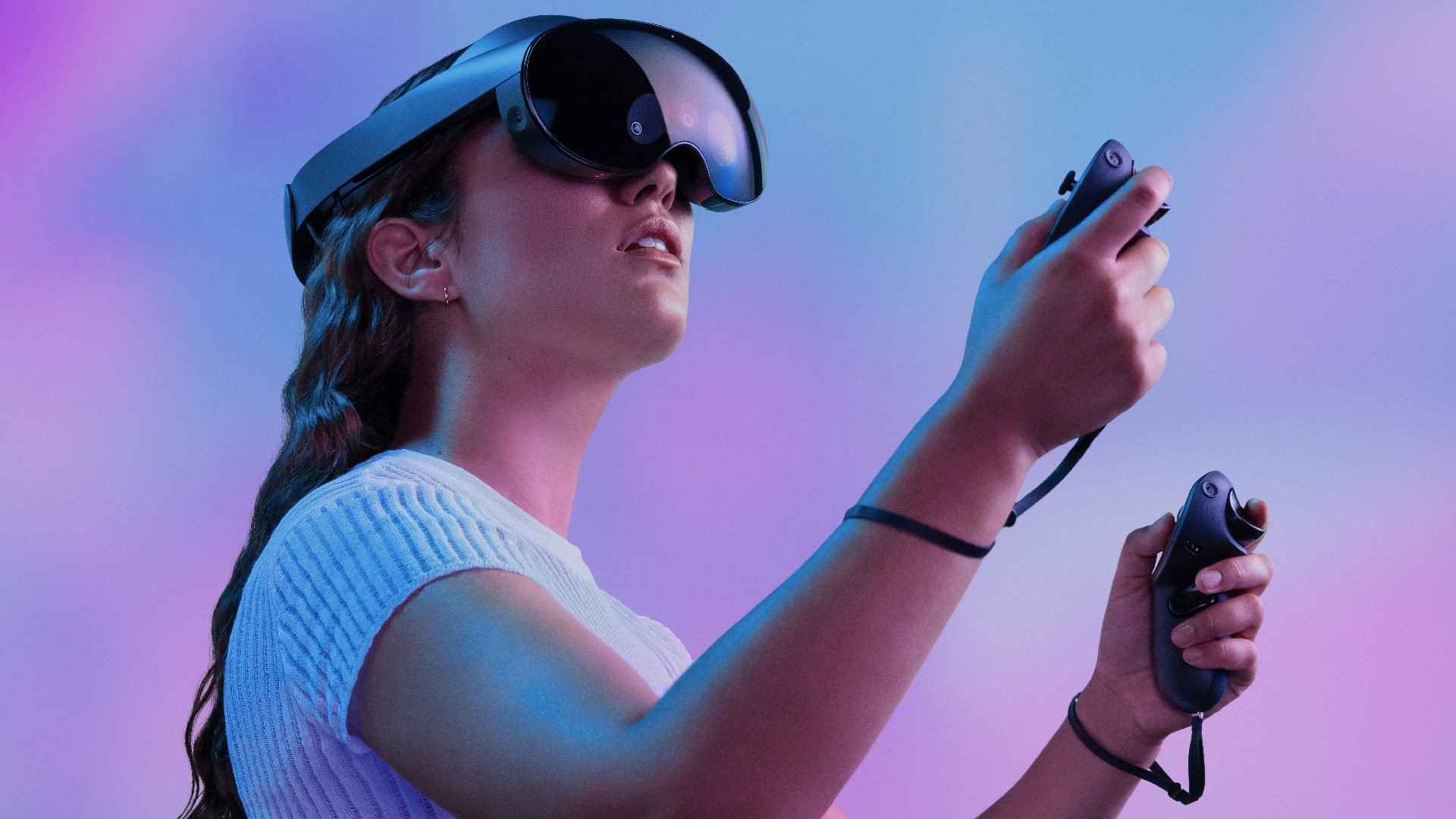
Meta Quest Pro | Image courtesy Meta
An obvious analogue here is Meta Quest Pro, which is relatively low friction, but things like a halo strap that forces too much weight on your brow, or a passthrough that’s just a little too grainy, or a display that doesn’t have a high enough pixel per degree (ppd) for staring at text—all of these things make it less appealing to users in the day-to-day, introducing what you might call accumulative friction. You use it a bunch at first until you figure out all of the niggles, at which point you may revert to traditional computing standards like using a laptop or smartphone. The thing isn’t really the all-purpose device you hoped it would be, and the company thinks twice about when to send the better, more improved version down the pipeline.
One would hope that Apple’s headset, on the other hand, should have a mature design language and have obviously useful features from day one. While there’s bound to be some stutters, like with the first Apple Watch, which was critiqued for its slow software, short battery life, and lack of customization, it should all be there, and not require a ton of feature updates to enhance after the big launch day.
It should sell well out of the gate—at least by the standards of the existing XR industry—even if everything isn’t perfect. And it should be so cool that it’s copied. Like a lot. And it should drag top-level studios into the XR scene to start making innovative and useful apps that aren’t just straight ports of ARkit or ARcore apps made for mobile, but things people need and want to use in-headset. A big win from Apple should not only spur its new mixed reality product category, but kick off a buzz among developers, which would include those who currently work in the XR industry and Apple’s existing cohort of dedicated iOS developers.
But more than merely being the latest shiny new headset within the existing XR industry, Apple’s entrance into the field has a real chance of radically expanding the industry itself, by showing that the world’s most iconic tech company now thinks the medium is worth pursuing. That’s the way it happened when Apple jumped into MP3 players, smartphones, tablets, wireless earbuds, and more.
As the saying goes, a rising tide lifts all boats. The inverse is also true though….
For Worse: What Could Happen
Apple’s headset is reportedly (okay, maybe just one rumor) priced somewhere near $3,000, so it probably won’t be the sort of accessory that initially attracts people to the ecosystem; that would be the job of a peripheral like Apple Watch. It will likely rely on the pool of built-in Apple users. Despite the price, the first iteration very likely won’t offer the sort of power you’d expect from a workhorse like Apple MacBook Pro either.
At the outset, any sustained draw from prosumers will invariably hinge on how well it can manage general computing tasks, like you might have with an iPad or MacBook, and everything else current mixed reality headset should do too, namely VR and AR stuff. That includes a large swath of things like fitness apps, both AR and VR games and experiences, productivity apps, standard work apps, everything. Basically, it has to be the Quest Pro that Meta wanted to release but didn’t.
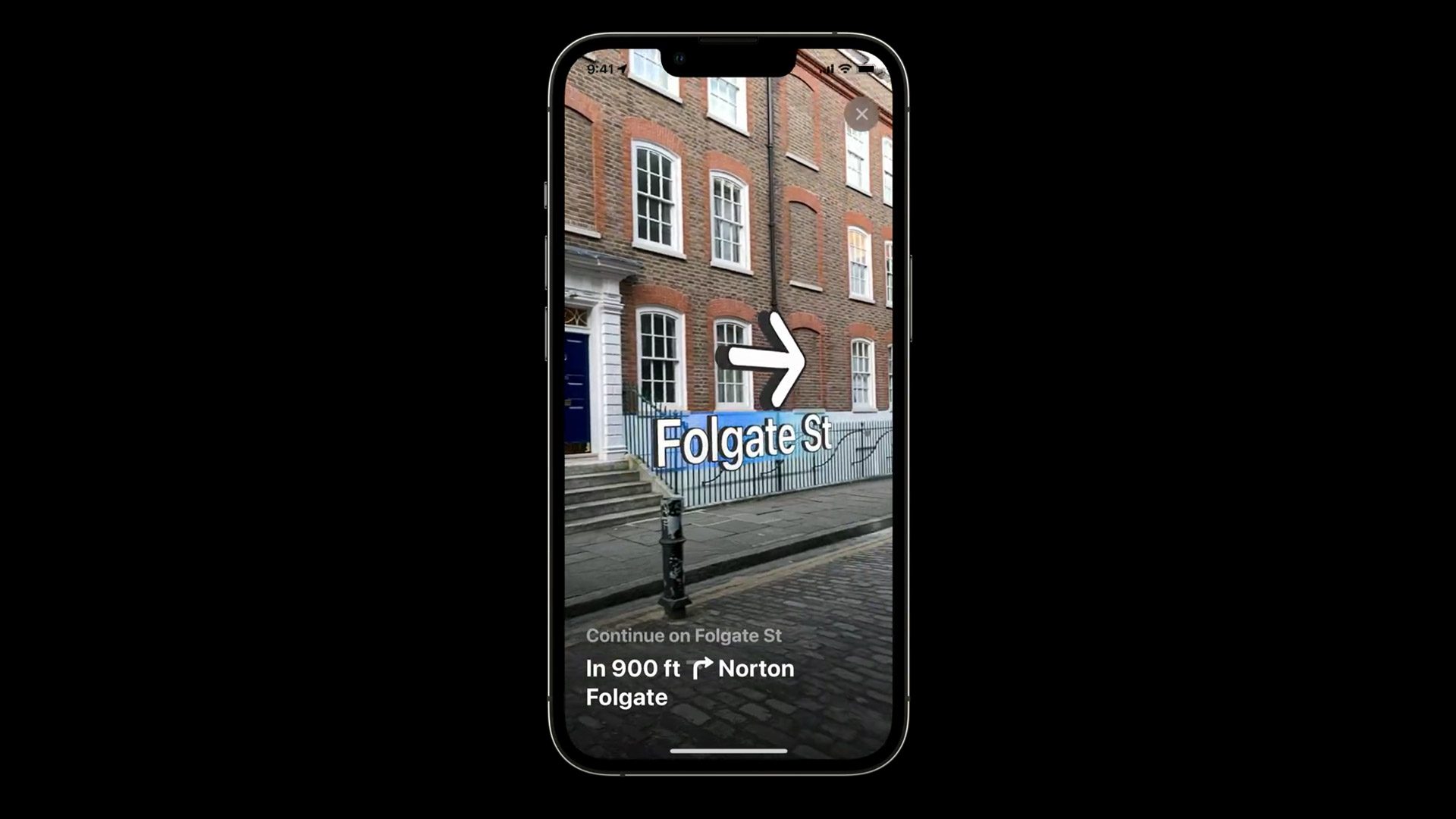
AR turn-by-turn directions on an iPhone | Image courtesy Apple
And if not, it leaves Apple in a pretty precarious situation. If their headset can’t find a proper foothold within its ecosystem and attract enough users, it could lead to low adoption rates and a lack of interest in the technology as a whole. Mixed reality is largely seen as valuable steppingstone to what many consider the true moneymaker: all-day AR glasses. And despite some very glassses-shaped AR headsets out there, we’re still not there yet. Even if Apple is willing to take a hit with a bulky device in service of pushing use cases for its AR glasses yet to come, the short term may not look very bright.
And perhaps most importantly for the industry as a whole are the (metaphorical) optics.
After all, if the iconic Apple can’t manage to make MR something that everybody wants, the rest of the world watching from the sidelines may think the concept just can’t be conquered. In turn, it may mean capital investment in the space will dry up until ‘real’ AR headsets are a thing—the all-day glasses that will let you play Pokémon Go in the park, do turn-by-turn directions, and remind you the name of that person you met last week. The steppingstone of mixed reality may get waterlogged. Those are a lot of ifs, coulds, shoulds, and won’ts though. The only thing truly certain is we’re in for a very interesting few months, which you can of course follow at Road to VR.
Apple’s entrance into XR has the potential to expand the industry by demonstrating its viability, just as Apple has done with previous technologies. It stands a good chance at carving out a sizeable claim in the space, but it’s a gamble that could equally backfire if both sales and public perception aren’t on their side.
Is Apple’s XR headset going to be the “one more thing?” we’ve all been waiting for at WWDC this year? Will it live up to the Apple name, or be an expensive dev kit? Let us know in the comments below!
Vertigo 2 is arguably one of the best games of 2023, but it’s only available on PC VR headsets. Developer Zach Tsiakalis-Brown said earlier this year that he thought a PSVR 2 port would definitely be a good possibility, and now that Half-Life-style sci-fi shooter is in the wild, PSVR 2 support is apparently still in the cards for the solo dev.
Reacting to Twitter user Timo Schmidt, Tsiakalis-Brown confirmed that PSVR 2 support is still on the horizon, as he recalls an earlier tweet from January saying he “would love to port to psvr in the future. It’s definitely a possibility!”
As many have noted in the recent past, PlayStation 5’s rendering ability is pretty much on par with a mid-range PC, which has allowed for a big bump in graphics over legacy hardware, such as PS4/PS4 Pro.
That bump lets developers create even more immersive and graphically intense games than we’ve ever seen on PS platform, likeHorizon Call of the Mountain (2023),or the remastered version of Song in the Smoke, the latter of which rivals even the PC VR version of the game.
Still, developing for PSVR 2 isn’t so cut and dry. Outside of actually getting it to work on Sony’s latest VR headset, which is a much more precise target than creating a PC VR game in general, Tsiakalis-Brown admits he’s never gone through the certification process to publish a game on the PlayStation Store. Up until now, all of the developer’s games have been PC VR only.
Nathan Rowe, the solo dev behind VR art app SculptrVR (2016), had some sage advice to overcoming the process:
It is possible to do solo. It nearly killed me, though. My advice is to ask Sony for help early. File tickets! They get read and responded to!
And what good is Vertigo 2 without Vertigo Remastered (2020)? Tsiakalis-Brown says releasing both games for PSVR 2 would be a “great way to expose [the series to] a bigger audience!”
While the solo dev hasn’t published a post-launch release schedule, the order of operations is fairly clear. First the game’s upcoming sandbox DLC, which will allow users to create and share their own content based on Vertigo 2 assets and worlds, then … who knows!
Swedish startup H2 Green Steel has announced its plans to raise more than €1.5bn in equity funding to build steel plants that emit virtually no emissions.
The startup, backed by high-profile investors such as Mercedes, Maersk, and Spotify’s chief executive, is constructing a ‘green steel’ manufacturing plant in Boden, north Sweden.
Construction of the plant will be financed through more than €5bn in debt and equity. The startup said in October that it had received support from European financial institutions for €3.5bn in debt financing, making it one of the most capitalised climate tech projects in Europe.
H2 Green Steel confirmed today that it is now in the process of securing the remaining €1.5bn equity funding and is working with advisers from Morgan Stanley, Financial Times reports.
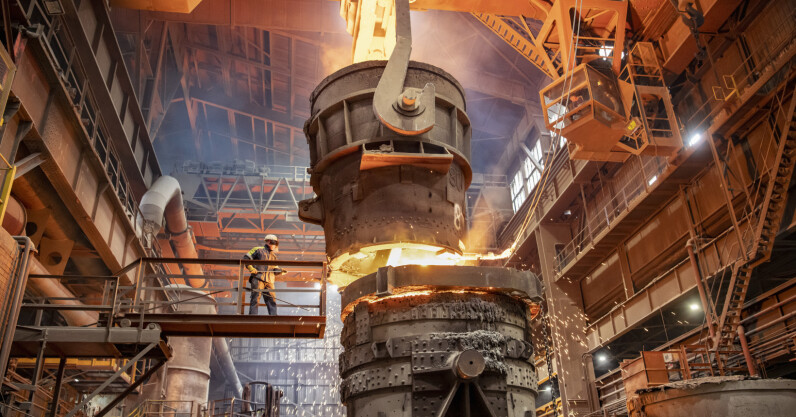
Traditionally, steel is made by combining iron ore with coke (a type of coal) at extremely high temperatures. The burning coke produces carbon monoxide, which converts the iron ore into ‘pig iron’ — the basis of steel. The only problem is, when the coke burns it produces a lot of CO2. In fact, the steel industry as a whole is responsible for an estimated 8% of global CO2 emissions.
H2 Green Steel looks to decarbonise steelmaking by replacing coke with ‘green’ hydrogen (hydrogen produced using renewable energy). Hydrogen reacts with the iron ore to create pig iron — but without the emissions. The only by-product, the startup says, would be water vapour.
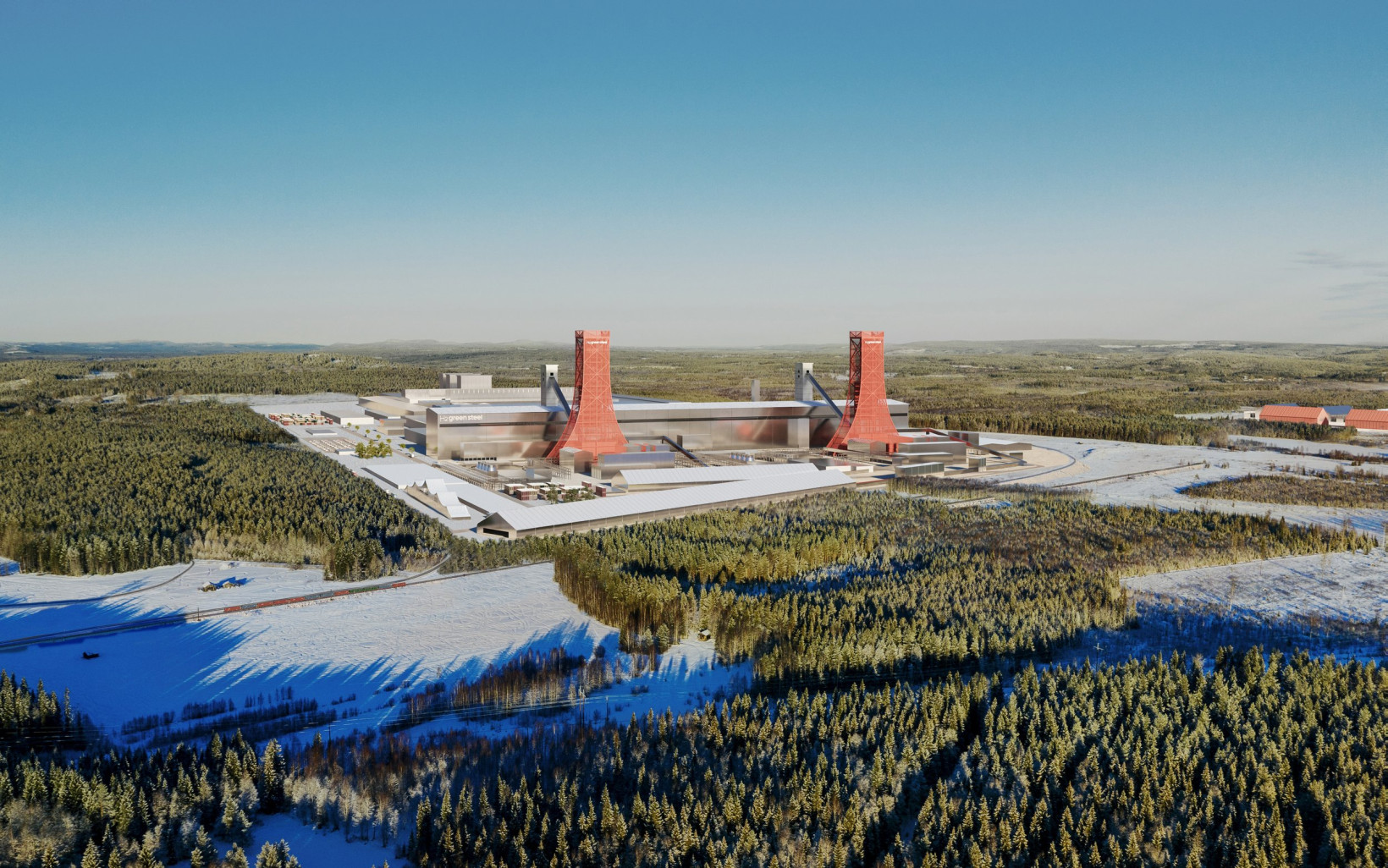
An artist’s impression of the green steel plant in Boden. The startup hopes the plant will produce 5 million tonnes of green steel by 2030. Credit: H2 Green Steel
The hydrogen itself would be made in an electrolyser at the Boden site. The electrolyser would be powered by renewable energy, including hydropower from the Lule River and nearby wind farms. Overall, this process is predicted to slash steelmaking emissions by 95%.
If successful, the Boden plant will be the first large-scale green steel plant in Europe, with its products used to construct everything from cars and cargo ships to buildings and bridges. The startup expects to roll out the first commercial batches of its steel by 2025 and aims to produce five million tonnes of green steel a year by 2030.
However, global annual steel production is currently around 2,000 million tonnes, according to figures from the World Steel Association. This would make the production capacity of the Boden plant a mere “drop in the sea,” Ms Lund Waagsaether, senior policy advisor at the Brussels-based climate think tank E3G, told the BBC.
But the Boden plant isn’t the only one of its kind in the pipeline.H2 Green Steel has already signed an agreement with Spanish company Iberdrola to build a plant powered by solar power on the Iberian peninsula. Hybrit, another Swedish company, hopes to open a fossil-free green steel plant by 2026 in a joint venture with mining operator LKAB, Nordic steel company SSAB, and energy company Vattenfall. GravitHy plans to open a hydrogen-based plant in France in 2027, and German steel giant Thyssenkrupp recently said it aims to introduce carbon-neutral production at all its plants by 2045.
These projects are set to boost Europe’s domestic production of green steel, and could soon have political backing too. The EU is in the process of finalising the Carbon Border Adjustment Mechanism, a strategydesigned to make it more expensive for European companies to import cheaper, non-green steel from other parts of the world.
Get the TNW newsletter
Get the most important tech news in your inbox each week.
Thomas is a senior reporter at TNW. He covers European tech, with a focus on deeptech, startups, and government policy. Thomas is a senior reporter at TNW. He covers European tech, with a focus on deeptech, startups, and government policy.
An Irish startup has teamed with CERN to develop a new form of insulation for superconducting cables, which are designed to accelerate the green energy transition.
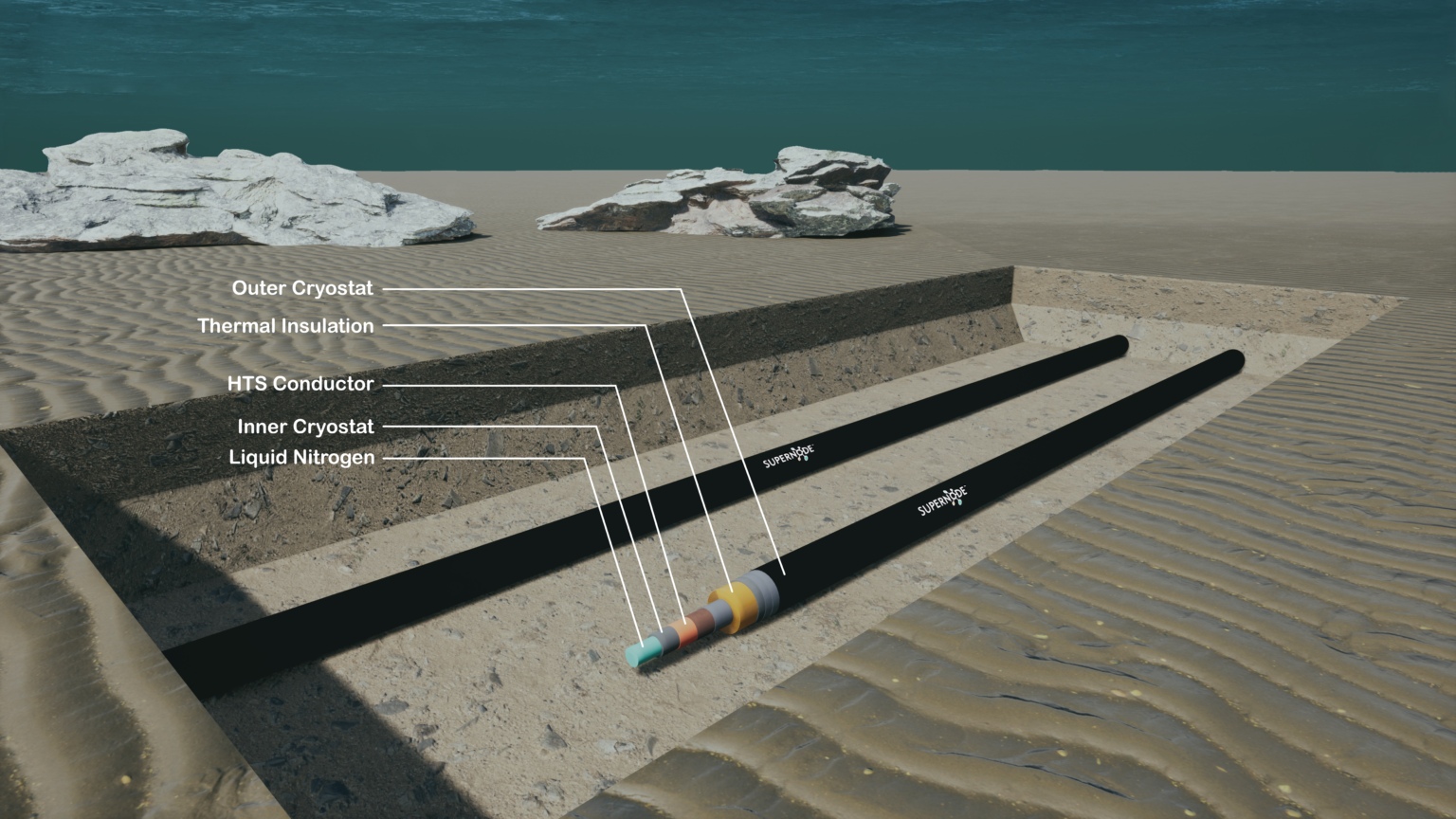
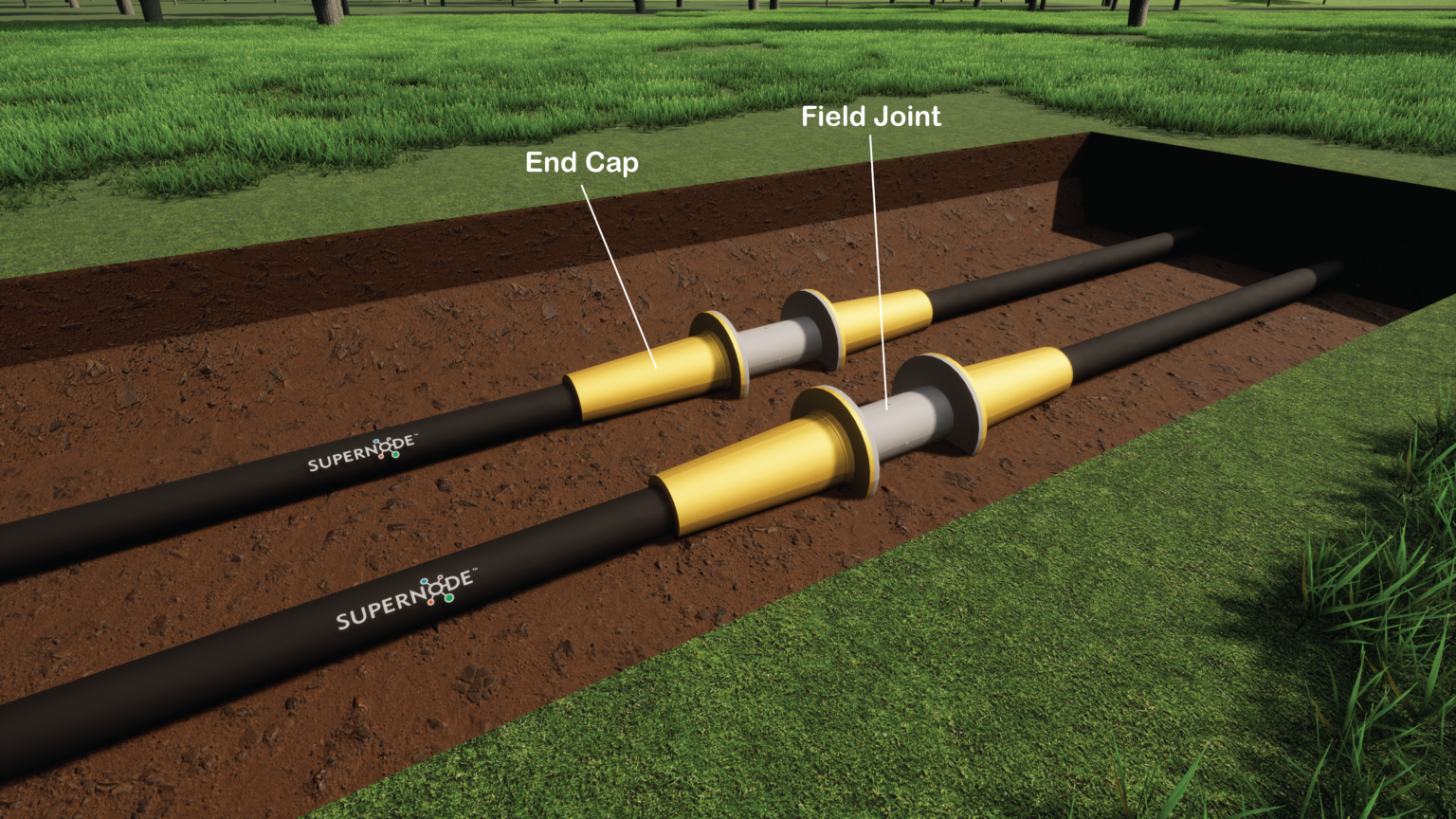
Named SuperNode, the company has invented energy transmission cables that can transfer immense power across long distances. As the system requires less space and voltage than conventional copper-based cables, the environmental impact is reduced.
These benefits derive from superconductivity. This phenomenon occurs when certain materials are cooled below their critical temperature — typically -180°C for high-temperature superconductors. As a result, superconductors can offer a hefty power density and zero electrical losses.
To harness this potential, SuperNode needs unique scientific resources — which is where CERN comes in.
“In its research, CERN pushes the limit of superconductivity to reach record energy levels and operates one of the largest vacuum systems in the world,” said CERN’s Paolo Chiggiato in a statement.
“In particular, to avoid collisions with residual gas molecules inside the accelerators, we must reach extreme levels of vacuum. Vacuum is also used at CERN as a thermal insulator for our superconducting magnets. We believe that this know-how can be successfully applied to evaluate the technological solutions proposed to insulate the superconducting cables developed by SuperNode.”
To test the tech, CERN will subject candidate materials to temperatures, pressures, and environments that replicate the conditions that the cables will face. CERN will also design and develop a novel test rig to validate scale prototypes. Eventually, the rig will be installed at SuperNode’s Dublin headquarters — dubbed the European Cryogenic Centre for Superconductors.
A study commissioned by SuperNode found that an integrated pan-European energy grid could reduce energy costs by 32%. Credit: SuperNode
The tie-up with CERN caps a busy month for SuperNode. Last week, the company announced that shareholders Aker Horizons and Dr Eddie O’Connor had committed €16 million of extra money towards developing the tech. The new funding followed a previous €14m cash injection made last year.
John Fitzgerald, CEO of SuperNode, believes adding CERN to the mix will provide a further boost.
“To meet increasing electricity demands, future transmission grids will have to reliably transfer bulk electricity over distances of hundreds of kilometres — connecting consumption hubs with areas of production, which are often located far away,” he said.
“We believe that by working together, we can find innovative solutions to improve the world’s energy infrastructure. Without new grid technology, we cannot integrate the level of renewables governments across the world have targeted and we will not achieve the goals of the Paris Agreement”.
SuperNode says its system is more efficient, cheaper, and better for the environment than any other viable alternative. Credit: SuperNode
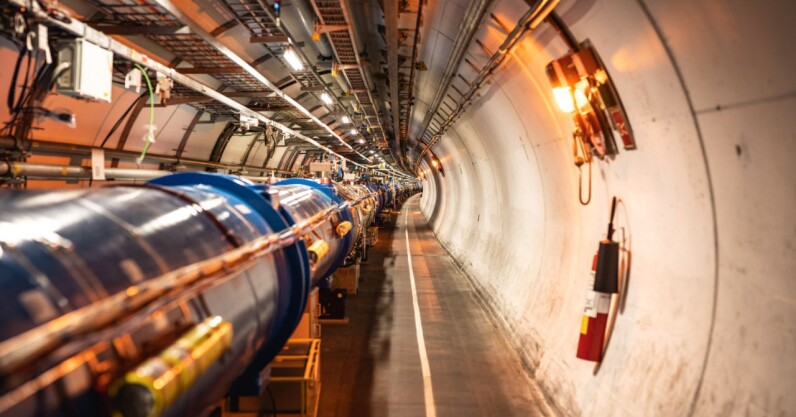
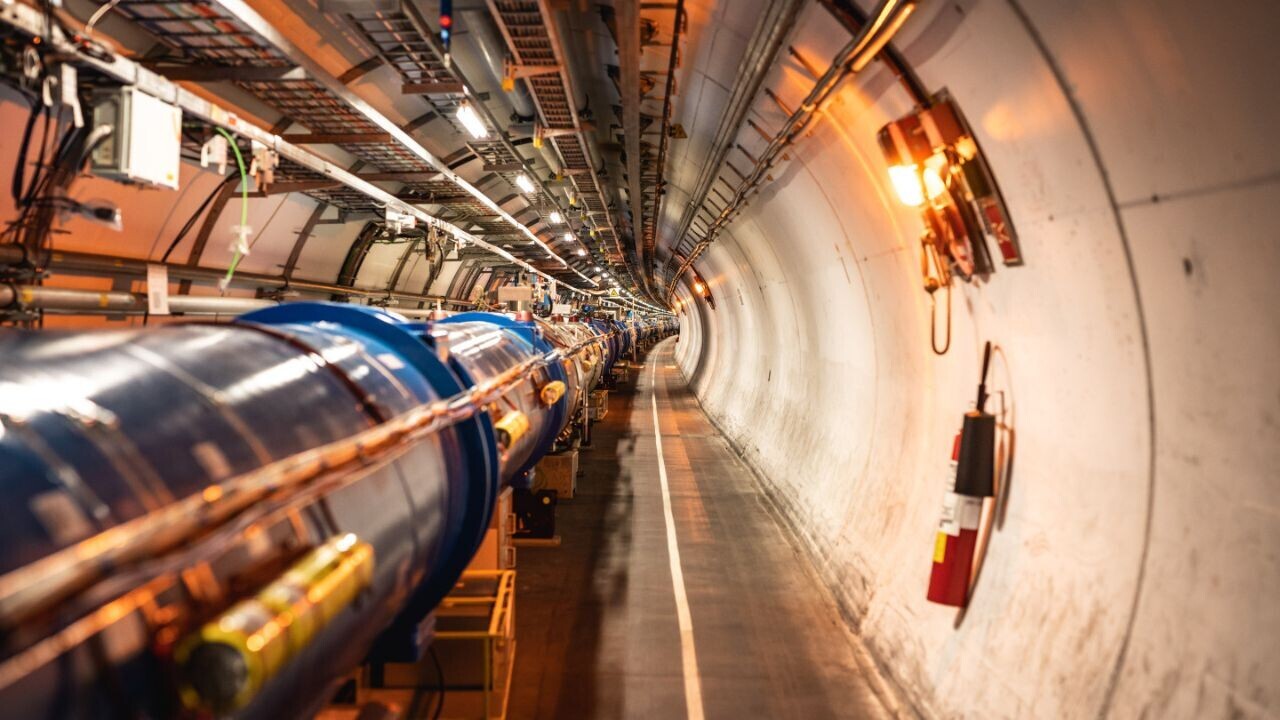
The collaboration also comes at a historical moment for CERN. The lab has just taken its first steps towards building a 91 km-long particle accelerator. The new system would more than triple the length of the Large Hadron Collider (LHC) — currently the world’s largest and most powerful particle collider — which will complete its mission around 2040.
The plans were revealed amid growing competition for Europe’s leading position in the field.
The most notable rival is China, which also intends to build the world’s largest particle accelerator. CERN’s Malika Meddahi told AFP last week that “China displays the same ambition” as Europe.
“Let’s be vigilant and be sure that we are not on the verge of a change in this hierarchy,” she said.
Some concerns have also been raised over the enormous cost of the new collider. Critics worry that the investment in fundamental science would be better spent in applied sciences. But the collaboration with SuperNode is further evidence that CERN’s work can lead to practical applications.
Get the TNW newsletter
Get the most important tech news in your inbox each week.
Esports fans are in for a new experience at the Virtex Stadium. Aside from EchoVR, users can now watch live gameplays of Counter-Strike: Global Offensive and Counter-Strike 2.
Virtex has partnered with Skybox Technologies to bring this unique spectator experience to gaming enthusiasts. With Counter-Strike as the first significant esports title at the Virtex Stadium, the virtual esports fan base on the platform is bound to grow faster.
An Immersive Experience for Counter-Strike Gamers and Fans
Following the launch of the Echo VR title on the platform, Counter-Strike allows fans to enjoy more top-level gameplay. “As the third most watched esport last year, CS: GO already has an enormous following, and we’re excited to be working with Skybox to deliver a 360° spectating experience unique to every fan,” said Virtex CEO and co-founder, Tim Mcguinness, in a press release shared with ARPost.
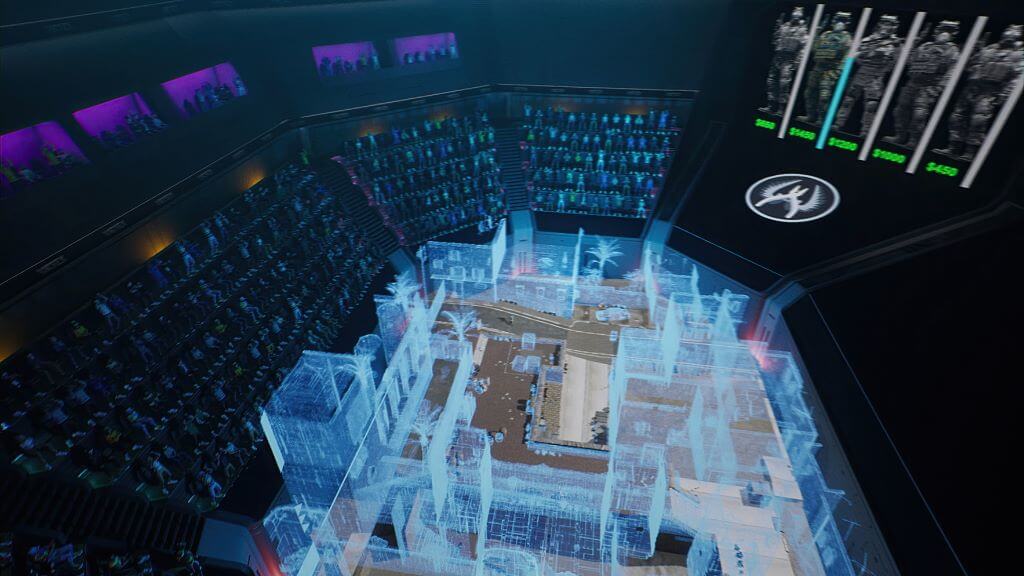
Using their desktop and compatible VR headsets, users enter the Virtex Stadium, which is still in closed beta, where they can watch live gameplays recreated in 3D. They can customize their Ready Player Me avatars, meet other fans in the lobby, and enter the virtual arena. They can sit on the stadium seats to watch gameplay in full view or immerse themselves in the battle by diving into the map.
They can see opening duels, site retakes, and clutches up close. Dynamic map controls allow them to maneuver easily and spectate at any site they want. The epic virtual effects and sounds create a deep 3D spectator experience that’s like no other.
Collaborating to Make Fan Experiences More Meaningful
Virtex, a London-based software development company, has been at the forefront of esports. Its Virtex Stadium provides sports and gaming enthusiasts with an innovative VR platform where they can experience esports at a whole new level.
Founded in 2020, Virtex brings together the expertise of tech entrepreneur Christoph Ortlepp and seasoned VR player Tim Mcguinness. Sharing a vision to redefine the esports fan experience, they are collaborating with partners across the tech and esports space to bolster the capabilities of the Virtex Stadium.
In the past year, the company worked with Skybox Technologies to integrate Counter-Strike maps into the virtual stadium. A provider of spectator and analysis solutions, Skybox helps ensure that in-game models, key modes, and spectator tools are functioning smoothly at the Virtex Stadium.
It provides real-time data and 3D game recreations that allow users to view Counter-Strike gameplay from every angle. It also ensures that map control and all gameplay features work seamlessly to make the 3D viewing experience more enjoyable.
According to Ethan Cooper, CEO of Skybox Technologies, Virtex has done an outstanding job at building out the Virtex Stadium. “We are proud that via the Skybox and Virtex partnership, fans can soon experience live Counter-Strike in a whole new way. It’s an exciting time for our respective companies, and we are looking forward to continuing our partnership with additional game titles and new experiences,” he said.
This collaboration paves the way for more meaningful fan experiences across the globe. Fans can dive into the map and watch the players they follow in action. They can explore different areas during the matches or meet other fans in virtual hangout spaces.
More to Come From The Growing Virtex Community
The partnership between Virtex and Skybox has just begun. Through their continued collaboration, we can expect more tournaments and esports titles at the Virtex Stadium in the next few months. Virtex is also pitching to more partners to widen its offerings and make the platform even more engaging. It wants to collaborate with tournament organizers, teams that want dedicated stadiums for their fans, and brands that want to run activations on virtual platforms.
A die-hard esports fan, Tim Mcguinness is eager to announce more upcoming tournaments they are set to feature in the Virtex Stadium. But, for now, fans can enjoy the closed beta program and be among the first to experience this virtual esports stadium.
If you’ve been plugged into the Valve leak-o-verse, you’ve probably come across the name ‘Deckard’, the supposed code name of a standalone headset allegedly under development by the one and only. While Valve isn’t confirming anything about the storied standalone, the company went on record late last year to say they are still have faith in VR, and are critically still working on VR headsets.
Valve product designer Greg Coomer spoke to Korean gaming publication This is Game (Korean) in December, saying that VR is very much still in the works. The interview wasn’t widely shared in the English-speaking side of the Internet until it landed on Reddit, Google-translated to English.
Here’s Coomer’s response to a question about what he can reveal in regard to VR, translated from Korean to English:
There isn’t much (laughter). Nevertheless, I can definitely say that we are continuing to develop VR headsets recently. Valve has a lot of expertise in VR devices and has faith in the medium and VR games.
We hope to remain open on PC platforms rather than having VR games exclusively on a certain platform. While adhering to this belief, we are continuing development.
However, we cannot confirm the existence of specific products or disclose the release date of the results. The same applies to game projects being developed internally. There are certainly many projects underway, but we cannot announce anything today.
As you might gather, Valve doesn’t openly speak about its in-development projects. Hearing that VR is still on the table from Coomer directly though, who has been with Valve since the release of Half-Life (1998), and worked on major games all the way up to Half-Life: Alyx (2020), is just about as good as you can get.
That’s especially so since the last time Valve released any VR hardware was its enthusiast-grade PC VR headset Valve Index in 2019. A year later, the studio launched its only full-length VR game to date, Half-Life: Alyx.
Still, it hasn’t been entirely all quiet on the Valve VR front. In March 2022, Valve chief Gabe Newell called its handheld gaming PC platform Steam Deck “a steppingstone” to standalone VR hardware.
“One of the things [Steam Deck] represents is battery-capable, high-performance horsepower that eventually you could use in VR applications as well. You can take the PC and build something that is much more transportable. We’re not really there yet, but this is a stepping stone.”
At the time, Coomer also noted Steam Deck’s hardware “would run well in that [standalone VR] environment, with the TDP necessary… it’s very relevant to us and our future plans.”
Meanwhile, tech analyst and YouTuber Brad Lynch has been probably the most vocal proponent of all things Steam standalone, having followed the Deckard beat since data miners first found a string in a January 2021 Steam update that mentioned the alleged VR standalone.
Over the following years, Lynch has uncovered mounting evidence in subsequent releases of SteamVR, including his most recent supposition that Deckard may include PC VR wireless streaming capabilities, eye-tracking, and passthrough AR features.
As you’d imagine, there have been no public confirmations from Valve, so we’ll just have to wait and see.
Last month we got an eyeful of Cyan’s upcoming VR puzzle adventure Firmament in an extended preview trailer that showed off some of the game’s impressively looming set pieces. Now, prepping for the game’s May 18th release on PC VR, the studio released its first look at some of the game’s puzzle mechanics.
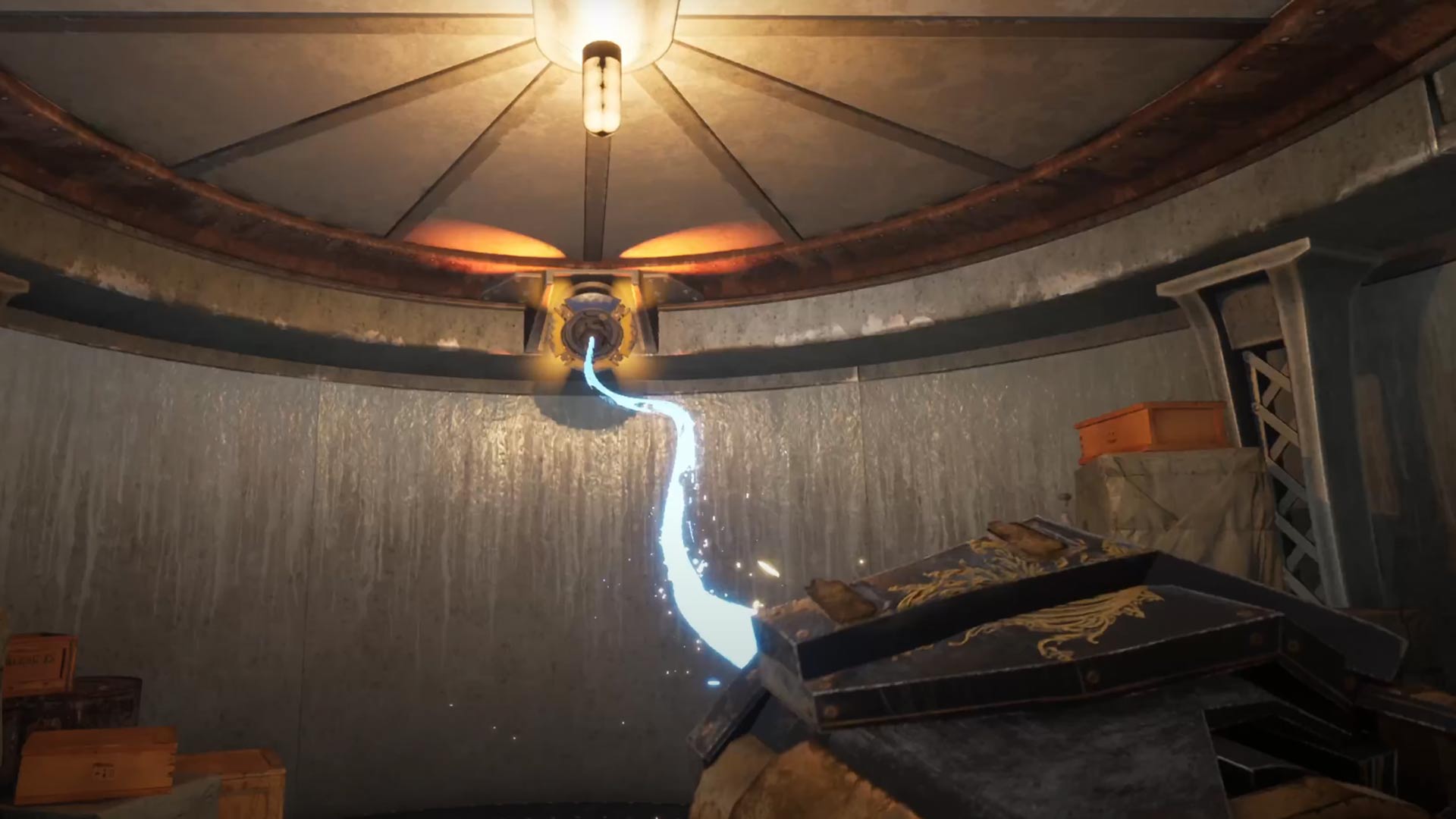
There are a few new things shown in the video that we haven’t seen before, notably what appears to be the final version of the most important tool to your puzzle-adventuring.
Called an ‘Adjunct’, the tool lets you interface with the various devices strewn about the Realm of Firmament, which Cyan says will help you on your quest to unlocking the secrets this place holds.
Image captured via video courtesy Cyan
We previously saw the Adjunct very briefly in Firmament’s initial Kickstarter video, although it wasn’t clear at the time what it was, or whether or not it would be a one-off object. Whatever the case, it’s clear now that the adjunct is a mainstay that ostensibly works like and extension of the player’s arm.
Also, it appears the ability to shoot the bit from the holder has let Cyan develop a wider range of far-flung puzzles, as you can manipulate locks and various receptacles you wouldn’t be able to physically reach otherwise.
Firmament is launching for PC VR headsets and traditional monitors via Steam on May 18th. In the new Steam page, the studio reveals a few more tidbits of info about the narrative and structure of the game:
You are not entirely alone in Firmament. In addition to The Adjunct, you are joined by a mysterious apparition, who has a story of her own to share with you. As you explore you will be introduced to 3 Realms – each with secrets and mysteries to reveal. What purpose do the Realms serve? Can the spirit who accompanies you be trusted?
Are the realms of Firmament abandoned? What are these giant, mysterious machines scattered throughout the world? What is their purpose? What part do you play in this grand mystery? Explore, Discover, Solve, and Reveal the mystery for yourself by playing Firmament!
In the game’s Kickstarter November update, Cyan said Firmament is also set to come to PSVR 2, PS4 and PS5 at some point “down the line.” There’s no word on whether Quest 2 will ever get a native version of the game, i.e. one that can be played without a PC and Link or Air Link.