Author name: Rejus Almole

‘firmament’-review-–-complex-puzzles-&-visual-richness-lacking-a-native-vr-touch

‘Firmament’ Review – Complex Puzzles & Visual Richness Lacking a Native VR Touch

Firmament was created in the spirit of Myst, the studio’s genre-defining puzzle adventure which maroons you in a strange realm with some very imposing architecture, all of which houses a smorgasbord of some patently challenging puzzles. In this respect, Firmament is kind of an old dog with a few new tricks, as it brings modern beauty and narrative finesse, although the game’s VR implementation sadly feels like a bit of an afterthought.

Firmament Details:

Available On:  SteamVR, PSVR 2 (coming later)

Release Date:  May 11th, 2023

Price: $35

Developer: Cyan Worlds

Reviewed On:  Quest 2 via Link

Gameplay

Firmament: from Latin firmamentum—that which strengthens or supports. In an ancient cosmological sense, the word was also used to refer to the sky, or the vault of the heavens fixed above Earth. You’ll have plenty of time to ponder meaning that as you teleport between the four realms via the game’s conveniently located conveyance pods, which automagically shuttle you Dr. Who-style atop wind-swept mountains and steampunk botanical gardens just waiting to be explored (and fixed).
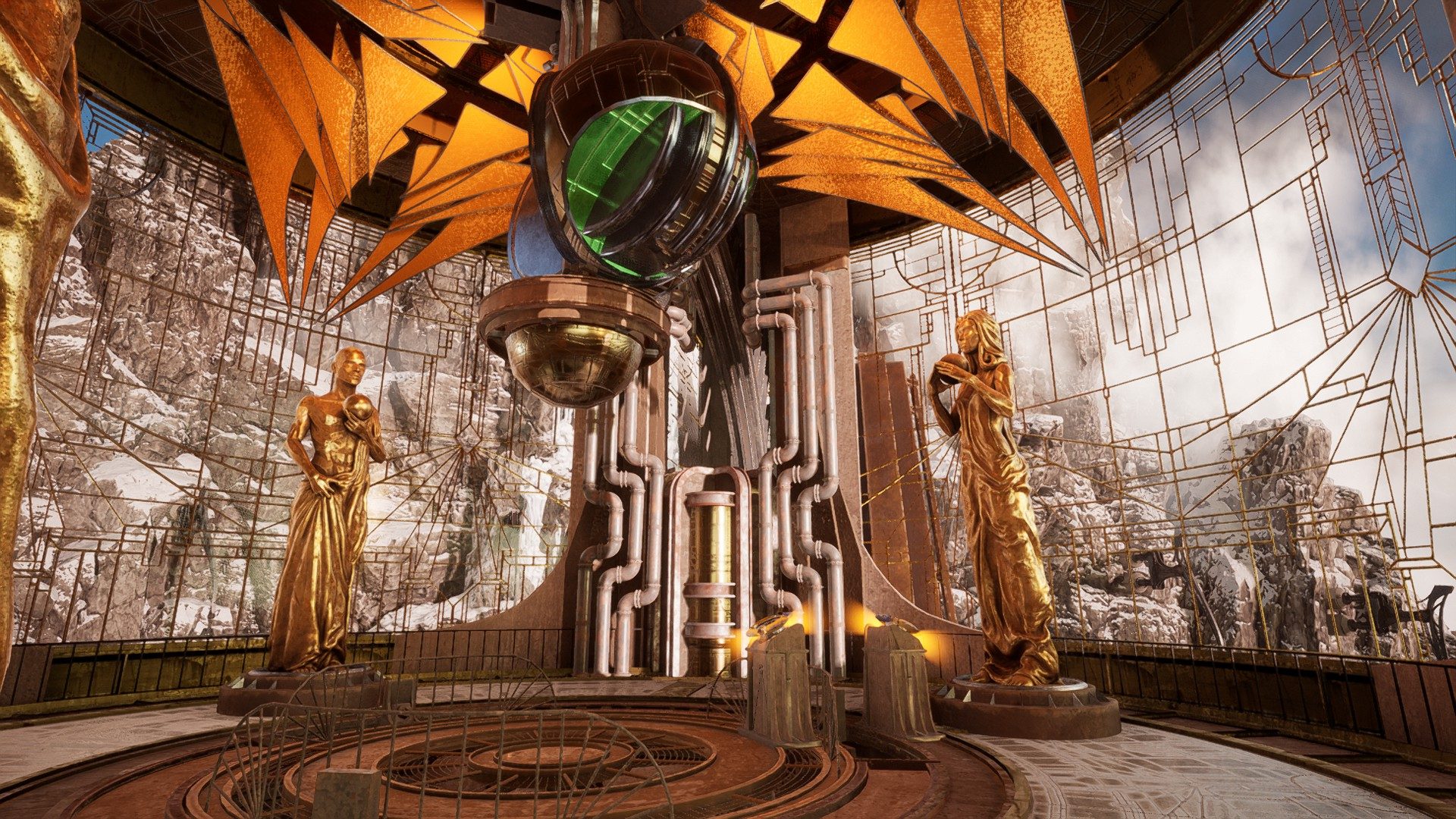
Image captured by Road to VR

Firmament dishes out real moments of awe between serving up maddeningly complex puzzles—basically a Cyan Worlds game through and through. The game’s gigantic machines will leave you scratching your head as you run back and forth just to make sure the figurative pilot light is on. While you have some narrative-based voice recordings and found notes to go by, you’re basically on your own when it comes to puzzling, meaning you won’t be babied by a ‘helpful robot’ who feeds answers into your ear. You’ll need to pay close attention to everything, and really get a grip of all the pieces in play before you can make sense of things. Beating your head against puzzles rarely works, so you’ll be greeted by some very familiar frustration if you’ve played any of Cyan’s most recent games, like Obduction or Myst VR.

Anyway, here are some useful hints: Watch out for every ladder. Watch out for every socket. Keep your head on a swivel and mess with everything a little just to see if it moves, but not so much that you scramble puzzles beyond their intended solvability.

Interacting with the world is done by way of activating a swath of standardized sockets, which pair to your hand-held ‘adjunct’ tool—kind of like a remote-controlled sonic screwdriver that lets you tether and interact with machines. Some sockets only have a single function, like opening and closing a door, while others have multiple functions that you’ll need to flip through. More on that in the Immersion section below.
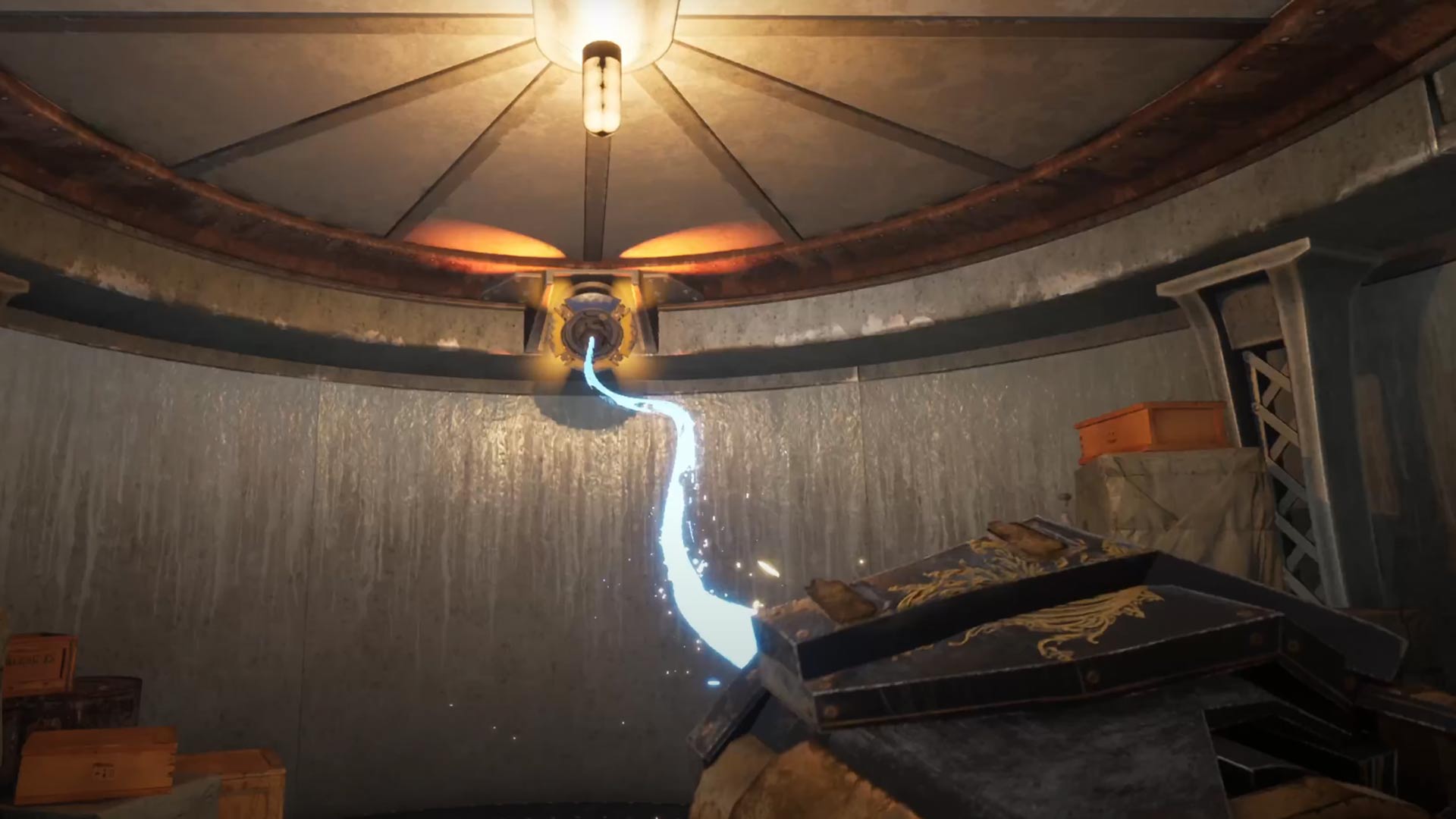
Image courtesy Cyan Worlds

There is a lot of running back and forth, which feels more like a chore in VR than on traditional monitors. That frustration is compounded by moments when I wasn’t sure whether the game was borked, making me wonder whether it was me who screwed up or the game. It seems Firmament came well prepared for this eventuality at least, as you can safely reset back to a central location, which typically also resets puzzles too. While complex and mostly logical, a minority of puzzle solutions can be downright obtuse. I was provided with a solutions guide, which included hints as well as solutions, and I’m not ashamed to say I needed a few of those hints to complete the game, which I did in about nine hours.

In the end the juice is generally worth the squeeze with Firmament, as you’re whisked off to new, even more impressive areas of the game. While the ending left me feeling a little perplexed, the overall level of world-building is extremely high. I only wish I could be more present in the game and given more agency than casting my tether to manipulate glorified on-off buttons.

Immersion

Firmament is a sumptuous and potentially beautiful game that I wish I could be more present in. My aging GTX 1080 was able to play along decently on medium graphics settings in most areas, which is more than I can say for Obduction. Still, some of the inherent beauty of the game is marred by jagged edges and a muddiness in some areas that feel like it’s really pushing the boundaries of what’s possible. My GPU, which is probably the minimum spec for VR at this point, was much happier sipping along on all low settings, so make sure to curb your expectations if you’re running an older or less powerful setups like mine.

I touched on some of the frustration of puzzle solving above, or rather, when solving puzzles goes wrong, but there’s another frustration that has more to do with level design, and not whether things are actually working properly. While slick and in line with ‘AAA’ games in terms of graphics, level design is still very much rooted in the studio’s point-and-click past, which means you’ll have less physical agency than you’d probably think is rational given the expectation of working hands and feet.
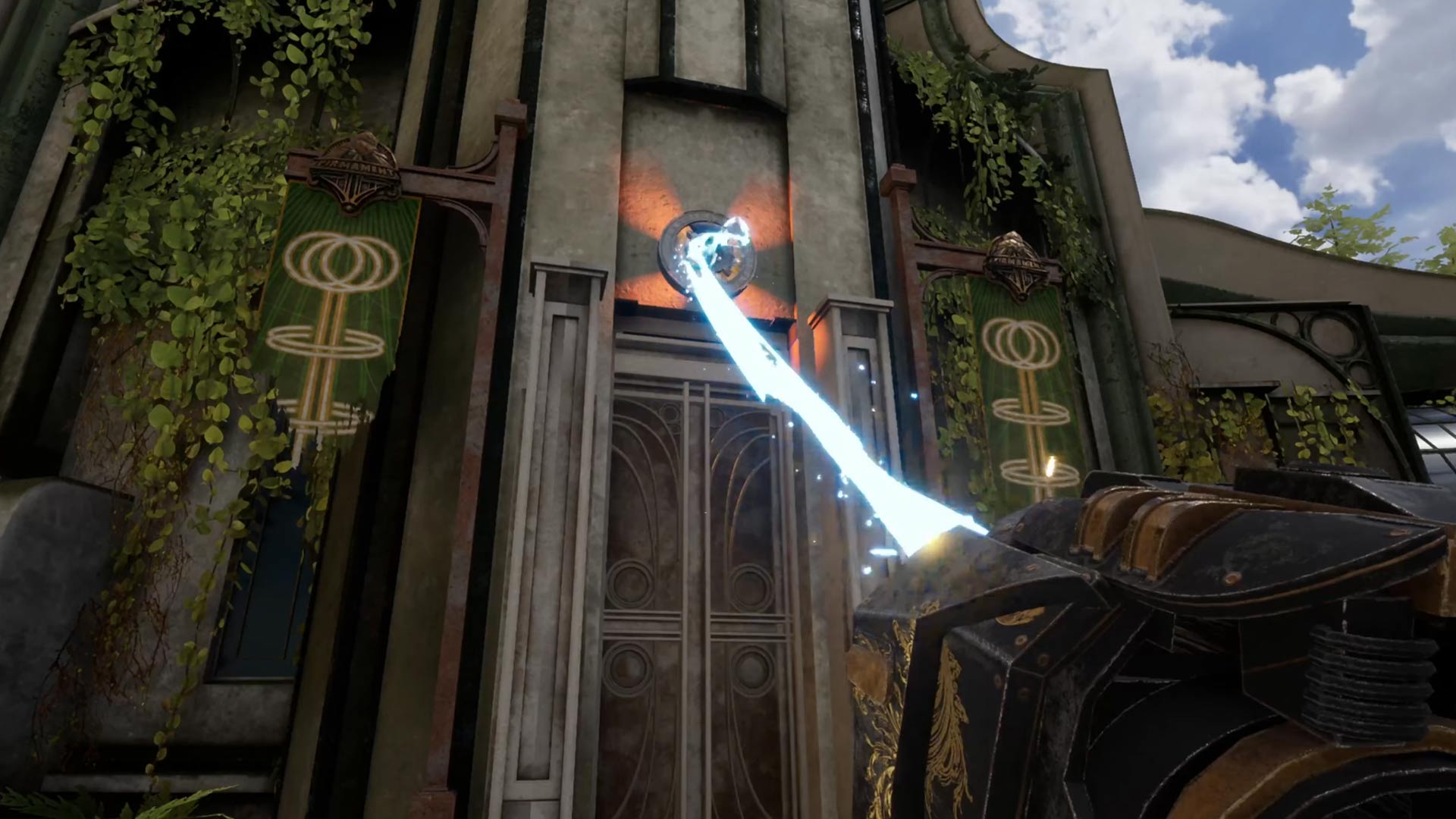
Image captured by Road to VR

In VR, I’m used to being able to not only do what I can in physical reality, like climbing and jumping, but even more. Some of the game’s level design feels like a step backwards in terms of what should be logically possible, like scrambling over a simple banister railing, or sidestepping a box to get to another area. I know that’s part and parcel of the studio’s puzzle style, but if I’m not offered some explanation beyond “no, you just can’t because of reasons,” it negatively impacts my perception of the inherent solidity of the world around me.

And while the world is so rich with possibility, the only meaningful way to interact with it is by using your adjunct tool to manipulate sockets, save a single other tool you’re given that disperses ice and other crusty bits in your way. This raises the question whether Firmament is making good use of VR beyond giving you a more immersive view of the game. Sadly, it doesn’t. It feels more like a flatscreen game with an optional VR mode that hasn’t really informed many of the game’s puzzles or much of its level design. While the amount of backtracking from place to place isn’t such an issue on traditional monitors, it feels way more like a chore in VR.
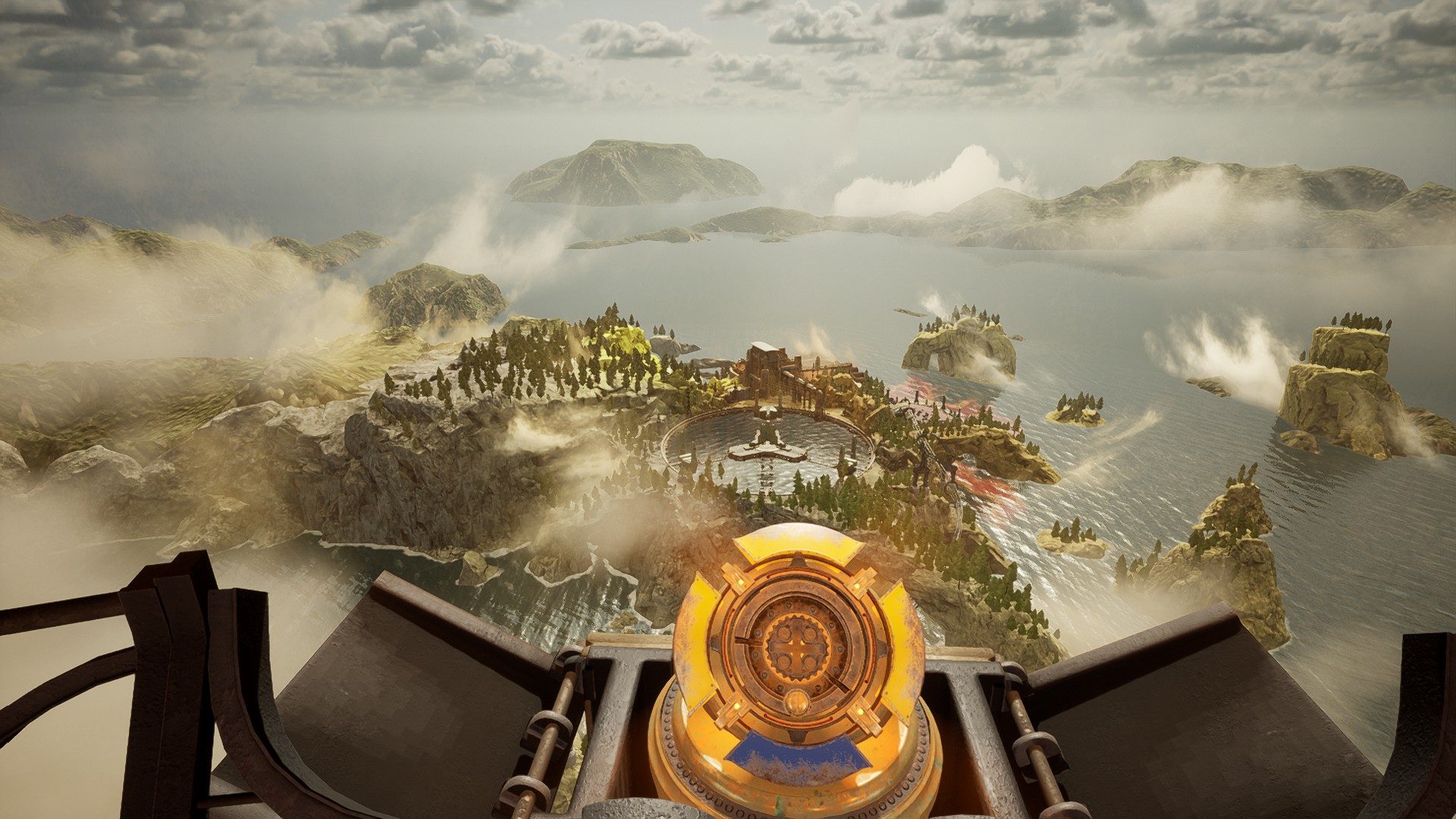
Image captured by Road to VR

And yet, all of the frustrations of Firmament never seemed to completely overwhelm me. The game’s score is excellent, complementing both its strong voice acting and mostly well-reasoned narrative. I only wish it were just a little more sympathetic to the modern VR gamer, and a little less of an optional mode that basically works, but not as well as you’d hope.

Comfort

The game’s a bit at odds with standard VR movement schemes. While teleport and smooth movement are options, the game default movement scheme puts turning on one stick, and forward movement on another—something I’m not generally used to. Besides a few cart ride-style vehicles, the game is ultimately comfortable enough for most players.

‘Firmament’ Comfort Settings – May 18th, 2023

Turning
Artificial turning
Snap-turn
Quick-turn
Smooth-turn
Movement
Artificial movement
Teleport-move
Dash-move
Smooth-move
Blinders
Head-based
Controller-based
Swappable movement hand
Posture
Standing mode
Seated mode
Artificial crouch
Real crouch
Accessibility
Subtitles
Languages English, Italian, German, French, Japanese, Korean, Polish, Portuguese (Brazil), Russian, Simplified Chinese, Spanish (Latin America)
Dialogue audio
Languages English
Adjustable difficulty
Two hands required
Real crouch required
Hearing required
Adjustable player height

‘Firmament’ Review – Complex Puzzles & Visual Richness Lacking a Native VR Touch Read More »
the-next-wave-in-urban-transport:-my-top-pick-for-tnw-conference

The next wave in urban transport: My top pick for TNW Conference

Thomas Macaulay

Story by

Thomas Macaulay

Senior reporter

Thomas is a senior reporter at TNW. He covers European tech, with a focus on deeptech, startups, and government policy. Thomas is a senior reporter at TNW. He covers European tech, with a focus on deeptech, startups, and government policy.

Jinhua Zhao and Shashi Verma will be speaking at TNW Conference, which takes place on June 15 & 16 in Amsterdam. If you want to experience the event (and say hi to our editorial team!), we’ve got something special for our loyal readers. Use the promo code READ-TNW-25 and get a 25% discount on your business pass for TNW Conference. See you in Amsterdam!

Urban transport systems are straining under unprecedented pressure from population growth, fiscal challenges, and environmental harm.

Living in London, I feel the impact every day. The roads are horribly polluted, the metro is the world’s most expensive, and the buses are constantly in traffic jams. Indeed, the commute’s so bad it was named the most stressful in Europe — and it had serious competition.

Technology could create a better future. But the promises of fully-autonomous cars, air taxis, and zero-emission cities have been tricky to fulfil.

At TNW Conference, the potential meets reality.  On day two of the event, transit leaders will expose the next wave in urban transport: integrating mobility ecosystems.

Jinhua Zhao, Professor of City and Transportation Planning at MIT, and Shashi Verma, Director of Strategy and CTO at Transport for London, will reveal the latest trends in urban transit tech.

For anyone who’s been in sweaty metros, overdue buses, or gridlocked roads, it could be a glimpse into a better tomorrow. As someone who desperately needs the hope, I’ll certainly be there — as long as my train isn’t late.

Transport tech is among many innovations that will be explored at TNW Conference. You can find more on the event agenda — and remember: for a 25% discount on business passes, use the promo code READ-TNW-25.

Get the TNW newsletter

Get the most important tech news in your inbox each week.

Also tagged with


The next wave in urban transport: My top pick for TNW Conference Read More »

this-new-spacecraft-system-could-bring-‘supermaterials’-back-to-earth

This new spacecraft system could bring ‘supermaterials’ back to Earth

This new spacecraft system could bring ‘supermaterials’ back to Earth

Thomas Macaulay

Story by

Thomas Macaulay

Senior reporter

Thomas is a senior reporter at TNW. He covers European tech, with a focus on deeptech, startups, and government policy. Thomas is a senior reporter at TNW. He covers European tech, with a focus on deeptech, startups, and government policy.

A UK startup has unveiled a unique system for bringing spacecraft back to Earth.

The company, named Space Forge, developed the tech to provide a low-cost and sustainable way of reusing satellites. Ultimately, the startup wants the system to support in-space manufacturing, which can produce materials that can’t be made on Earth.

These “supermaterials” have transformative potential for electronics, pharmaceuticals, and alloys. Unfortunately, returning them to Earth is currently painfully complex and costly.

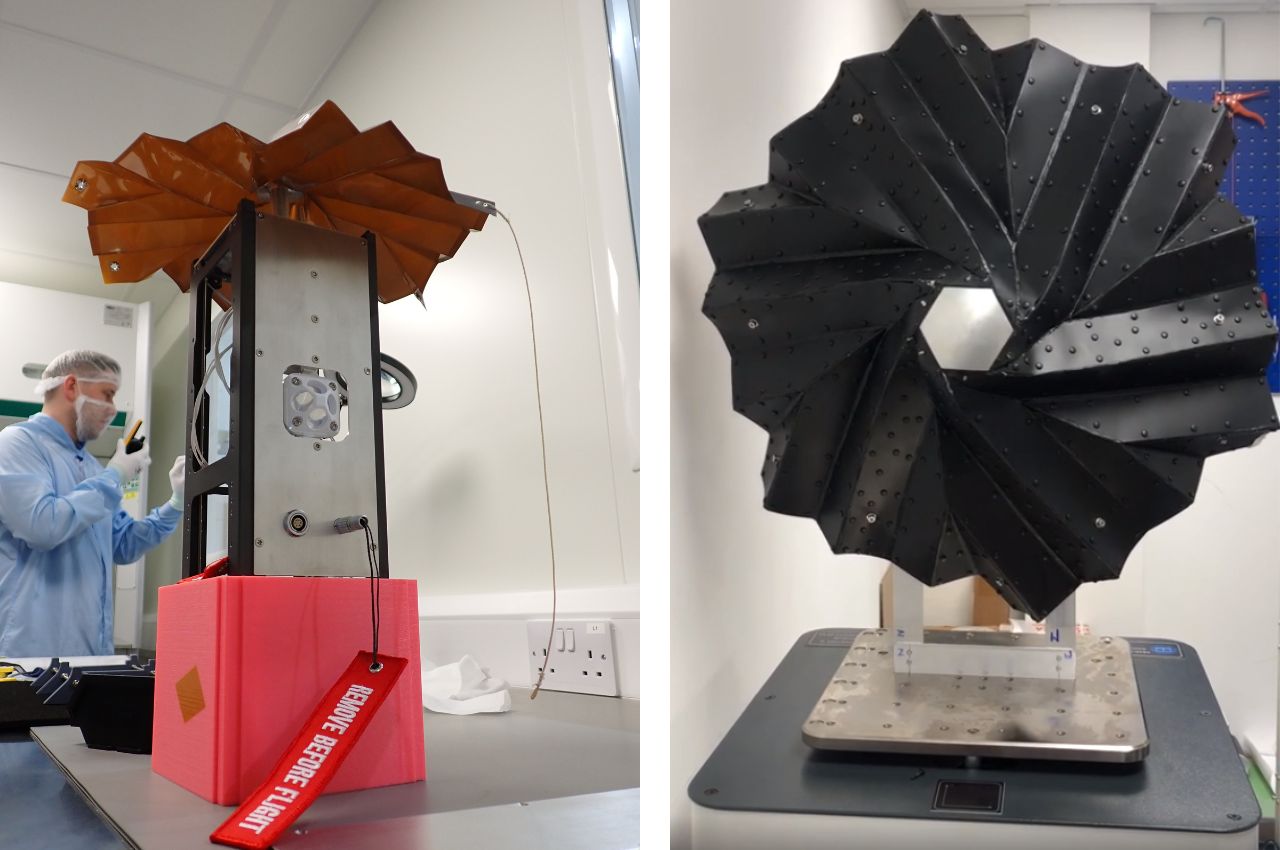
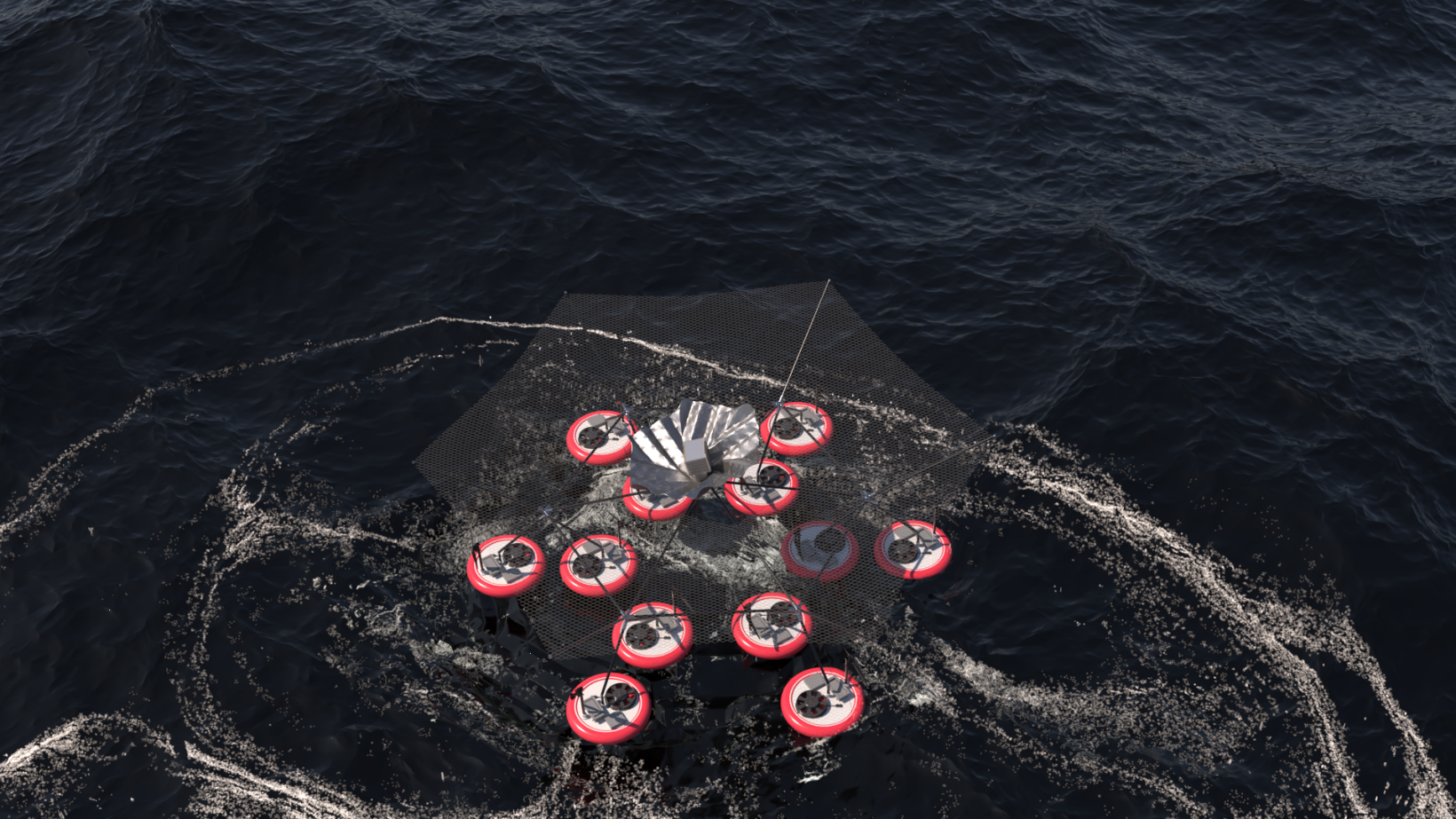
To solve this problem, Space Forge developed two separate components: a hover-net called Fielder and a heat shield dubbed Pridwen.

Named after King Arthur’s legendary shield, Pridwen is made of a flexible alloy fabric that can withstand harsh temperatures. It’s also reusable, unlike conventional “ablative” heatshields, which must be replaced after every flight.

To fit inside a launcher vehicle, Pridwen folds into a compact size. To protect its cargo on the return journey, the origamic-style heatshield expands. Joshua Western, the cofounder of Space Forge, describes the system as “Mary Poppins but from space.”

Prototypes of Pridwen
Prototypes of Pridwen have already undergone extensive testing. Credit: Space Forge

As the spacecraft approaches the atmosphere, Pridwen will unfurl like an umbrella to shield the satellite from the heat of re-entry. In a manner reminiscent of a shuttlecock, Pridwen can also decelerate the drop to Earth’s surface.

Then Fielder comes into play.  As the satellite descends, the water-based hover net will move beneath the vehicle to soften the landing and enable a quick return to land.

SpaceForge's capture system
The net can catch Pridwen and softens the landing for its cargo. Credit: SpaceForge

According to Space Forge, the system has already completed trials including high-altitude balloon drops, sea survival, and plasma wind tunnel testing. The company is planning a launch later this year to further tests the re-entry system.

Eventually, Space Forge plans to use Pridwen and Fielder in a world-first in-orbit and return-to-Earth manufacturing service, named ForgeStar.

“Supermaterials made in space will be able to save industries on Earth enormous amounts of energy, limiting their CO2 emissions in a way their terrestrial counterparts can never match,” said Andrew Bacon, CTO and co-founder of Space Forge.

“Pridwen and Fielder are key parts of our plan to develop fully reusable manufacturing satellites that can kick start a new industrial revolution.”

Get the TNW newsletter

Get the most important tech news in your inbox each week.

Also tagged with


This new spacecraft system could bring ‘supermaterials’ back to Earth Read More »

social-impact-startups-face-unique-challenges-—-joining-the-right-accelerator-is-key

Social impact startups face unique challenges — joining the right accelerator is key

Social impact startups face unique challenges — joining the right accelerator is key

Andrea Hak

Story by

Andrea Hak

Andrea is TNW’s Branded Content Editor and, as a writer, she’s covered a wide range of topics from ClimateTech to AI and gender bias. She’s Andrea is TNW’s Branded Content Editor and, as a writer, she’s covered a wide range of topics from ClimateTech to AI and gender bias. She’s always on the lookout for stories that explore the social and political impact of emerging technology.

A growing number of founders are leveraging the power of technology to help solve some of society’s biggest problems, from developing self-monitoring digital health platforms that give patients more autonomy to finding new solutions for storing renewable energy.

Today, on Global Accessibility Awareness Day, it’s particularly important to recognise the advancements a growing number of founders have made in making technology open, equal, and accessible to all, from creating devices that take into account deaf and blind communities to using AI to build groundbreaking advancements in prosthetics.

But, due to the novel and often disruptive approaches they take to solve common problems, these startups also need to contend with additional hurdles. They often struggle with developing their product and business models, complying with regulations and bureaucratic red tape, gaining funding, and marketing their products and services.

Zeng Xi Feng, founder and CEO of TangTangQuan, a new platform that offers professional health management to children with Type1 diabetes, understands this all too well. With digital and wearable technology, his company aims to help diabetics maintain a normal life and combat key issues, such as discrimination in social environments and gaps in medical insurance coverage.

However, despite the potential TangTangQuan has to change lives for the better, Xi Feng and his team faced a number of challenges.

Challenging the status quo

Ironically, the main difficulty social impact startups are up against is not inventing a new solution, but getting people to change their habits and ways of thinking. As Xi Feng explained, many chronic disease patients place a greater focus on medicine and body examinations than on continuing health monitoring and management, which are actually more beneficial for therapy.

“The most difficult hurdle for digital health startups is developing a business model. Patients with chronic disease are used to paying for doctor visits, physical medicines, and examinations, but there is no notion of paying for digital services.”

Despite the fact that the type 1 diabetes community is already one of the chronic disease community’s most concerned about continuing health management, Xi Feng shared that less than 10% of patients are willing to pay for the health service.

Gaining funding

Many VCs still carry the outdated notion that social impact can’t be profitable, especially when it’s targeting new and niche audiences. For many social impact startups, this can make it difficult to raise funding amongst traditionally risk averse investors.

“The type 1 diabetes we are targeting is actually a very small community with few patients. Many of our peers and investors felt that our team would not survive the fierce competition using such a large team to serve such a small number of patients. As a result, we do not receive as much financing from VCs as other firms in the digital health field.”

Building a network

Xi Feng and his team realised forming a partnership with a large industry player would be the best move to gain the influence, credibility, and network TangTangQuan needed to reach more users. But attracting attention would be difficult.

“In China, business health insurance is still in its early stages. So there is no way to get the business model off the ground as rapidly as digital health startups in Europe and the United States can by working with commercial insurance companies,” Xi Feng explained.

That’s why they decided to enter the OPPO Inspiration Challenge which is aimed at empowering startups with innovative solutions to solve some of the world’s most pressing issues.

TangTangQuan was selected as one of the top ten proposals in the 2022 OPPO Inspiration Challenge, gaining access to OPPO’s tech, marketing, and business experts, and allowing it to establish a longer-term partnership with the brand.

Could joining an accelerator programme be right for you?

Joining an accelerator is a great way to get the guidance, mentorship, network, and visibility you need to take your startup to the next level. However, you need to select the right one for your business.

1. Define your goals and needs

Each program has its own unique strengths and areas of focus, so it’s important to find the one that best suits your startup’s specific needs. Start by clearly defining your startup’s long-term goals. It’s important to consider the growth stage your startup is in and what it would take to make it to the next level of growth, whether that’s access to new markets, technology, or funding.

Xi Feng had identified OPPO as a partner with the technology and market influence TangTangQuan needed to get its business off the ground.

“We had been researching the OPPO watch on our own before joining this challenge. We wanted to integrate the blood glucose monitoring app and the artificial pancreas app into the OPPO watch, and then have the watch send the blood glucose data to the cloud, allowing the patient’s parents to have real-time distant blood glucose monitoring as well as local blood glucose management.”

After being selected as one of the top 10 winning proposals last year, TangTangQuan started a partnership with the company. Now, OPPO watch (Chinese version) can be applied to the app to help more type 1 diabetes patients. Meanwhile, its IoT team has also helped TangTangQuan optimise data connection and transmission, making the app more accurate and convenient for patients to use.

“Of course, I think the value of participating in the OPPO Inspiration Challenge is still in the business model optimization mentioned earlier. In China, it’s still quite difficult for digital health startups to charge for their services, but by combining with OPPO hardware, we can successfully productize the service physically, while being able to transmit data remotely and make the service easy.”

2. Assess network access

When evaluating accelerator programs, it’s crucial to consider their market influence and reputation. Take a deeper look at the program’s network both in terms of potential corporate partnerships and its media presence. A well-connected accelerator can provide invaluable introductions, partnerships, and guidance from experienced professionals who can help propel your startup forward.

“Of course, OPPO’s brand influence and corporate awareness remain high, which is a positive endorsement for us. The variety of media coverage we received as a result of our participation in the Inspiration Challenge also contributed to our increased visibility. At the same time, we made many new acquaintances and generated commercial potential for future collaboration. In addition, we were also invited to participate in the filming of a video to promote our startup project to a wider audience.”

3. Research past alumni

Look for programs that have a strong track record of success, with alumni who have gone on to achieve notable milestones or made significant industry impact. Programs that have produced successful startups in your specific sector can also provide valuable market connections and credibility. Research the program’s alumni network and don’t be afraid to reach out to previous participants.

2023 OPPO Inspiration Challenge now open for applications

If you’re a social impact startup developing innovative new solutions in the fields of digital health, accessibility, and environmental protection, the OPPO Inspiration Challenge could be for you.

Together with Qualcomm, GSMA 5G IN, Amazon Web Services and LinkedIn, OPPO and its global technology ecosystem partners aim to bring new and innovative solutions to life by providing funding, support, and partnership opportunities. By working together, OPPO hopes these innovations can create a positive impact, and encourage greater awareness of the issues that affect global communities.

Each of the final top 5 winners will receive a grant of $50,000 (tax-included). The top 15 will be invited to OPPO’s Acceleration Camp where they will receive mentorship from experts and industry partners. Additional partnership opportunities will be open to the global top 45 participants.

The deadline to submit your proposal is 30 June 2023. Check out the OPPO Inspiration Challenge’s official website for more information.

Get the TNW newsletter

Get the most important tech news in your inbox each week.

Also tagged with


Social impact startups face unique challenges — joining the right accelerator is key Read More »

a-geospatial-web-platform-to-enhance-in-person-events?-absolutely,-says-fabric

A Geospatial Web Platform to Enhance In-Person Events? Absolutely, Says Fabric

Fabric aims to change how in-person events are held, through geospatial web. Starting with sports, the geospatial web and augmented reality platform Fabric can transform live events into an immersive, augmented reality-assisted experience to thrill sports fans.

Better Experiences With the Geospatial Web

The geospatial web is simply the use of geolocation technology within the greater realm of the Internet. For Fabric, it means syncing location, time, and content. By utilizing this technology along with immersive AR tools, spectators can elevate their experiences.

Fabric geospatial web

With geospatial technology, Fabric draws attention to an emerging trend in the experience economy in the sports industry. Using geospatial web technology, brands and sports teams can make in-person events more unique, social, and exciting.

While the concept of the geospatial web has already been around for some time, Fabric spent the past five years finding new ways to leverage this technology. The result is their main geospatial product, called “Space.” Space aims to prioritize human connections during in-person events as opposed to purely digital connections. It serves as a new medium of communication among fans, teams, and brands.

Fabric also offers a no-code platform that lets sports stakeholders, such as leagues and venues, display relevant content for any game or sporting experience.

Merging Sports and Augmented Reality for a Unique Experience

The company believes that sports are the top industry for live, in-person events; hence why they chose to start there. Fabric can facilitate peer-to-peer interactions within the same venue, plus help increase monetization and brand activation. They market Space as an “interactive jumbotron in every sports fan’s pocket.”

a 3D jumbotron Fabric

Space encourages sports spectators to disengage from artificial connections and seek real-time, location-based interactions with other people. And because it takes place at a single event, users know they already have a shared interest with other fans.

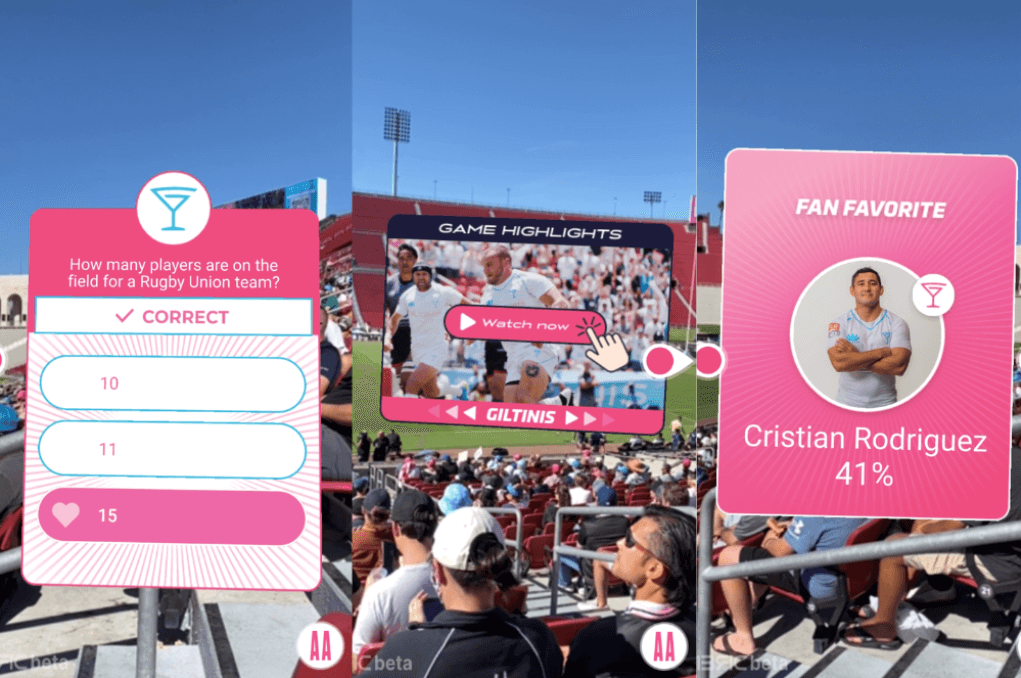
Within the app, AR assets called “Fabs” are powered by the geospatial web to encourage real-world interaction. These Fabs are designed to get people to interact more with each other in a unique and fun way, made possible by technology.

Enhancing Human Connections Through the Geospatial Web

Fabric is trying to bring back the experience of human connection, which is enhanced instead of hampered by technology. The company holds a different perspective than that of metaverse pioneers.

According to Fabric, the metaverse can offer unique, shared experiences via virtual reality. But ultimately, the user is, in fact, isolated from other people in the real world. The connection comes through VR via a headset. The “shared” experience is, in a way, manufactured artificially through VR technology.

This version of shared experiences provides advantages and disadvantages, as other technologies do. The metaverse can also open opportunities not available for other people and brands otherwise.

geospatial web Fabric

Meanwhile, Fabric offers an alternative way to experience life with digital technology. Fabric Spaces allow people within the same geographical location—in this case, a sports stadium or arena—to have meaningful, offline and online connections. Add to that the shared real-world experience of attending a sports event, and you have a potentially unforgettable encounter.

Growing the Social Fabric

Fabric began as an idea that founder and president Sarah Kass had while noticing societal issues brought about by connectivity. Together with co-founder and CEO Saul Garlick, they developed the geospatial web platform that became Fabric.

In an interview with Forbes magazine, Kass explained her reasoning for coming up with Fabric. She saw that mobile phones offer unprecedented connectivity but also distance people from others, so she sought to develop a product that could address this paradox.

“I began to frame the problem as ‘how do we grow the social fabric?’ What new infrastructure could propel the growth of social capital in the digital age? Or what new infrastructure would allow us to strengthen the social fabric in today’s time when we’re walking around with all these phones?” she stated in the interview.

As of press time, the Fabric team works with five professional sports teams and leagues. The goal is to provide fans with an elevated sports experience during games and other sporting events through the geospatial web and mixed reality.

A Geospatial Web Platform to Enhance In-Person Events? Absolutely, Says Fabric Read More »

[industry-direct]-grab-a-great-deal-on-vr-games-during-fanatical’s-bundlefest-celebration

[Industry Direct] Grab a Great Deal on VR Games during Fanatical’s Bundlefest Celebration

Industry Direct by Mark at Fanatical

Industry Direct is our program for sponsors who want to speak directly to the Road to VR newsletter audience. They are written by sponsors with no involvement from the Road to VR editorial team. Links to these posts appear only in our newsletter and do not intermix with our on-site editorial feed. Industry Direct sponsors help make Road to VR possible.

For a limited time only, at Fanatical we are holding our annual Bundlefest celebration, offering a range of PC VR and Quest VR games at incredible prices.

As an official digital retailer of PC and Quest games, this week sees the launch of two exciting collections.

Build your own Quest VR Collection

Choose from a collection of 24 Quest VR games that includes Creed: Rise to Glory – Championship Edition, Zombieland: Headshot Fever, Death Horizon: Reloaded, Ragnarock, IRON GUARD and more, starting at 4 games for just $40. This will be a limited run collection so select your favorites as soon as you can, so as not to be disappointed.

Here is the full line-up:

  • Creed: Rise to Glory – Championship Edition
  • Sairento VR : Untethered
  • Zombieland: Headshot Fever
  • Death Horizon: Reloaded
  • Ragnarock
  • IRON GUARD
  • Table of Tales: The Crooked Crown
  • Swarm
  • HitchHiker: A Mystery Game
  • Audio Trip
  • Prison Boss VR
  • Shadowgate VR: The Mines of Mythrok
  • Yupitergrad
  • SculptrVR
  • Mare
  • Startenders: Intergalactic Bartending
  • Pinball FX2 VR
  • Gadgeteer
  • AVICII Invector: Encore Edition
  • ForeVR Bowl
  • YUKI
  • Puzzle Bobble VR: Vacation Odyssey
  • ForeVR Cornhole
  • ForeVR Pool

Check out the collection here

Bethesda VR Collection

For just $24.99, get a collection of four amazing VR games from the team at Bethesda. With a total value of over $150, this is truly great value and includes

  • The Elder Scrolls V: Skyrim VR
  • Fallout 4 VR
  • DOOM VFR
  • Wolfenstein: Cyberpilot

Check out the collection here

To see these and other bundles launching during Bundlefest this week, check out our bundle page.

[Industry Direct] Grab a Great Deal on VR Games during Fanatical’s Bundlefest Celebration Read More »

recent-valve-hiring-hints-at-next-gen-index-headset-in-development

Recent Valve Hiring Hints at Next-gen Index Headset in Development

Since the release of its first (and so far, only) VR headset in 2019 and its flagship VR game in 2020, Valve has been worryingly quiet about its future plans for VR. But recent hiring and job listings suggest the company is still working toward next-gen VR hardware.

It’s been nearly four years since the release of Valve Index, a leading PC VR headset which has held its ground as the second most-popular headset on the platform for longer than most might have expected. But the aging headset mirrors the aging PC VR landscape in general which has taken a back seat to Meta’s Quest platform after it captured the attention of a bulk of VR developers.

But Valve may not be done with VR yet. As YouTuber Brad Lynch pointed out last month, the company recently brought in two new people with experience in VR displays and optics, one of which claims to be advising the company on “next-gen Valve Index and Steam Deck products.”

Valve has made a couple VERY notable hires recently for their hardware teams

One being what seems to be their first full-time Display architect that has a fluent history in OLED/HDR

And a consultant focused on bringing “Next Gen Valve Index” products for commercial launch pic.twitter.com/nGpo859ore

— Brad Lynch (@SadlyItsBradley) April 23, 2023

Additionally we’ve spotted some interesting updates to Valve job listings showing the company is still very interested in hiring people with VR expertise.

As of late 2022, the company’s listing for a Visual & User Experience Designer didn’t include any mention of VR, but sometime between then and March 2023, the company updated the description to indicate that the hire would “create UI for use across desktop, mobile, handheld & VR.”

Similarly, the Software Engineer for Hardware listing was updated sometime between mid-2022 and March 2023 with new language specifically relating to “the next generation of VR and hand-held gaming products,” and “core VR Technologies (tracking, optical calibration, display customization).”

Add that to a handful of teases from the company in the last few years, and it surely seems like VR remains on the radar internally at Valve, despite little external communication to that end. Granted, Valve is pretty unique as a company, often working at its own pace on projects that may or may not ever launch. While there’s no telling if the company’s internal VR effort is on the backburner or actively moving forward, it’s clear the company still wants to hire and retain employees with VR expertise.

Recent Valve Hiring Hints at Next-gen Index Headset in Development Read More »

bigscreen-beyond-teardown-overviews-design-decisions-behind-compact-headset

Bigscreen Beyond Teardown Overviews Design Decisions Behind Compact Headset

CEO Darshan Shankar sits down with the upcoming Bigscreen Beyond VR headset for a teardown and explanation of the company’s design decisions.

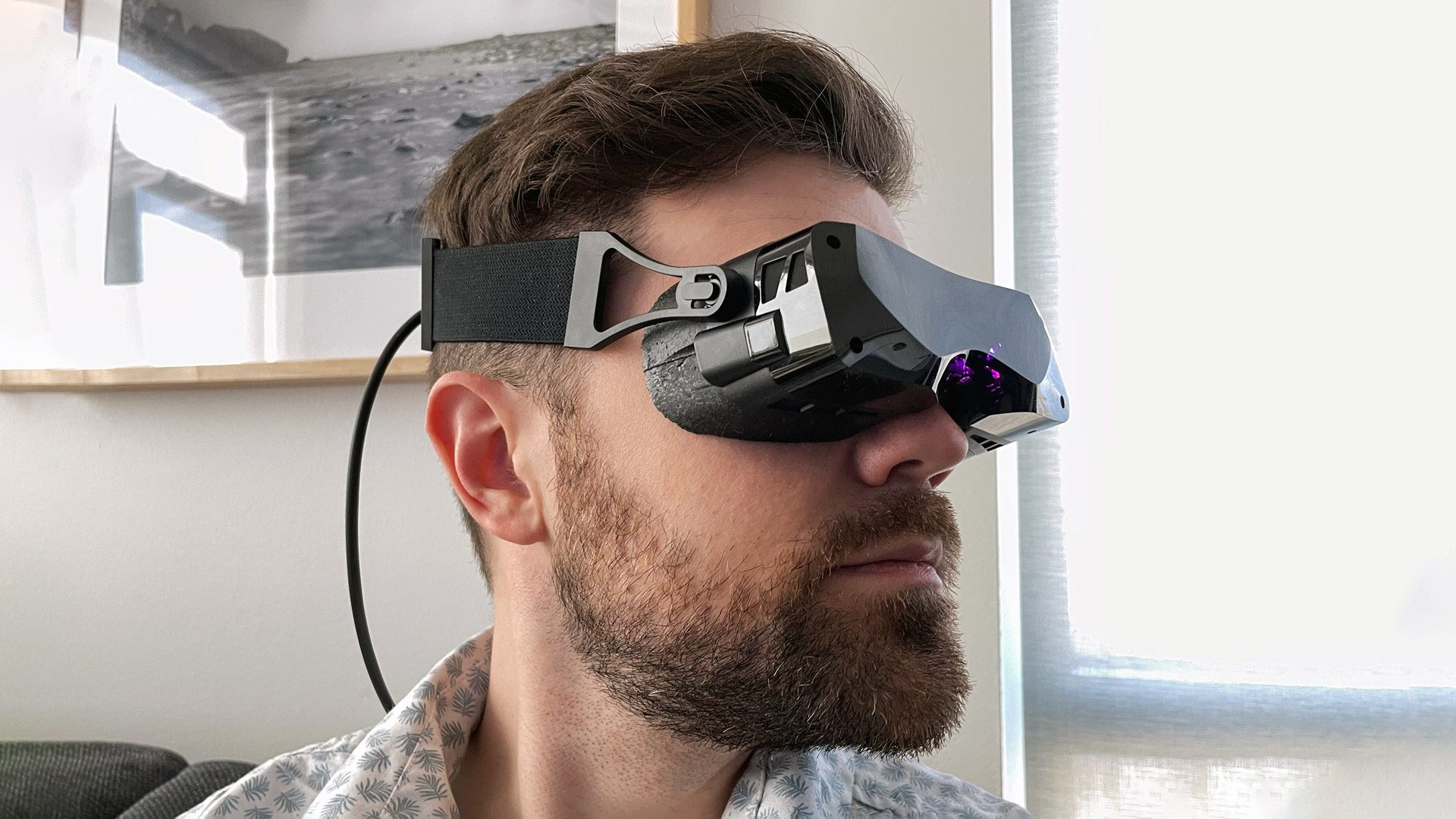
Bigscreen Beyond is a made-for-enthusiasts VR headsets coming from the makers of the social VR theater application Bigscreen. In our recent hands-on with the headset we found an impressively well-built device that’s taking a different approach than other PC VR headsets on the market.

Photo by Road to VR

Bigscreen Beyond is due to start shipping in Q3, and ahead of its release Bigscreen CEO Darshan Shankar has sat down to tear the tiny headset open and talk about the decisions the company made and why.

Bigscreen Beyond is impressive in many ways, but it’s priced for serious VR enthusiasts. The headset starts at $1,000, which doesn’t include controllers or tracking beacons (which would add another $580).

Bigscreen Beyond Teardown Overviews Design Decisions Behind Compact Headset Read More »

tech’s-role-in-the-quest-for-climate-justice:-what-not-to-miss-at-tnw-conference

Tech’s role in the quest for climate justice: What not to miss at TNW Conference

Tech’s role in the quest for climate justice: What not to miss at TNW Conference

Linnea Ahlgren

Story by

Linnea Ahlgren

Award-winning innovators Caroline Lair and Lucia Gallardo will be speaking at TNW Conference, which takes place on June 15 & 16 in Amsterdam. If you want to experience the event (and say hi to our editorial team!), we’ve got something special for our loyal readers. Use the promo code READ-TNW-25 and get a 25% discount on your business pass for TNW Conference. See you in Amsterdam!

Social inequality and climate risk have become central to understanding what will drive innovation – and investment – for the future. On day two of TNW Conference, Caroline Lair, founder of startup and scaleup communities The Good AI and Women in AI, and Lucia Gallardo, founder and CEO of impact innovation “socio-technological experimentation lab” Emerge, will be on the Growth Quarters stage for a session titled Technology-Driven Climate Justice.” 

The climate crisis is itself the result of a deeply embedded and systemic exploitation of nature and people in the name of profit. Its impact is already being felt disproportionately over the world, with severe heat waves, droughts, and entire nations disappearing below sea level. What’s more, the people worst affected are those who have contributed little to the greenhouse gas emissions driving global warming.

Climate justice is the idea that climate change is not just an environmental but also a social justice issue, and aims to ensure that the transition to a low-carbon economy is equitable and benefits everyone. Lair and Gallardo will specifically speak about how technologies such as AI, blockchain, and Web3 can play a crucial role in addressing these issues. 

AI for good

Artificial intelligence can be applied in the quest for climate justice in several ways, given that it is implemented in a way that ensures transparency, accountability, and fairness. These include data analysis and prediction, discovering patterns and informing policies, as well as evaluating their effectiveness. 

It can also enhance climate modelling capabilities, crucial for developing adaptation strategies. Furthermore, AI-powered technologies can monitor, for instance, weather systems with real-time data and also optimise resource allocation and energy distribution.

Reimagining value

Emerge’s objective is to “reimagine impact innovation with regenerative monetisation models.” Regenerative finance goes beyond traditional models that focus on profit, taking into account broader social, environmental, and economic impacts. 

Blockchain technology can, for instance, offer transparency for transactions, ensuring that funds are indeed directed to regenerative investments. It can also tokenise regenerative assets such as renewable energy installations, sustainable agriculture initiatives, or ecosystem restoration projects, representing them as digital tokens and making them more accessible to a broader range of investors. 

Meanwhile, in the words of Gallardo, “Integrating crypto into existing ecological initiatives doesn’t automatically mean it is applied regenerative finance. We must be intentional about how we’re reimagining value.”

Reclaiming an equitable future

Why am I looking forward to this session? The theme of this year’s TNW Conference is “Reclaim The Future”. In all honesty, I belong to a generation that, while I hopefully have several decades more of on-earth experience ahead of me, will most likely not have to deal with full-on dystopian scenarios, battling to survive climate catastrophe.

I am also privileged in terms of geographical location and socioeconomic status not to have to worry about immediate drought and famine. (Flooding may be another matter, but as someone said when convincing me to move to Amsterdam – “wouldn’t you prefer to live in a place that is already used to keeping water out?”) 

However, this does not mean that we who enjoy such privileges get to simply shrug our shoulders and carry on indulging in business as usual. TNW has always been about the good technology can do in the world. And what is better than employing it in service of one of the greatest challenges of our time?

The update introduces the latest prototype which shrinks the system somewhat from a large booth to a more streamlined setup that appears to use commodity depth cameras and fewer of them. Google says that makes the latest prototype “more practical,” and says that select companies are trialing the new version.

“Our earlier Project Starline prototypes took up an entire room, requiring complex hardware such as infrared light emitters and special cameras to create a live 3D model of the person you were talking to. While the results were impressive, the size and complexity of the system made it challenging to bring to many of today’s offices,” the company writes in an update on the project. “So for our latest prototype, we developed new AI techniques that only require a few standard cameras to produce higher quality, lifelike 3D images. Thanks to these advancements, our prototype now resembles a more traditional video conferencing system—going from the size of a restaurant booth to a flat-screen TV—that’s more deployable and accessible.”

Despite shrinking things down, Google confirms the system still uses a light-field display which creates a true 3D image without the need for glasses. However we still don’t know much about the specific display being used.

The entire premise behind Project Starline is that representing remote participants more realistically leads to better conversations. To that end the company recently pointed out several studies providing evidence that the system can bring “improved conversation dynamics, reduced video meeting fatigue, and increased attentiveness.”

Google Reveals Latest Project Starline Prototype, Its Light-field Telepresence Platform Read More »