Siôn is a reporter at TNW. With a background in environmental science, he loves to write about climate tech, policy, and the built environme Siôn is a reporter at TNW. With a background in environmental science, he loves to write about climate tech, policy, and the built environment.
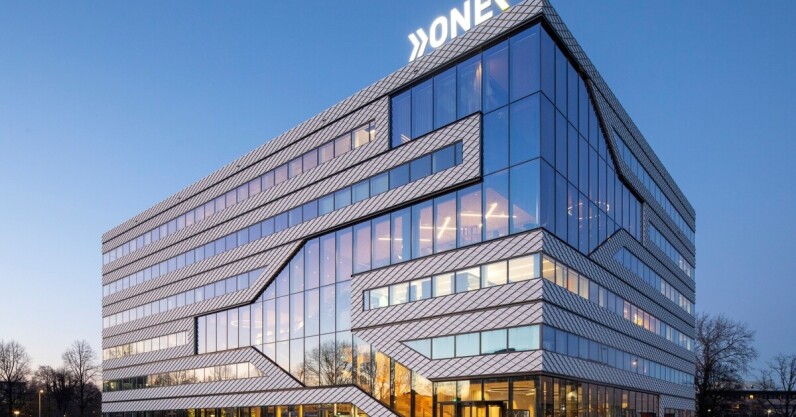
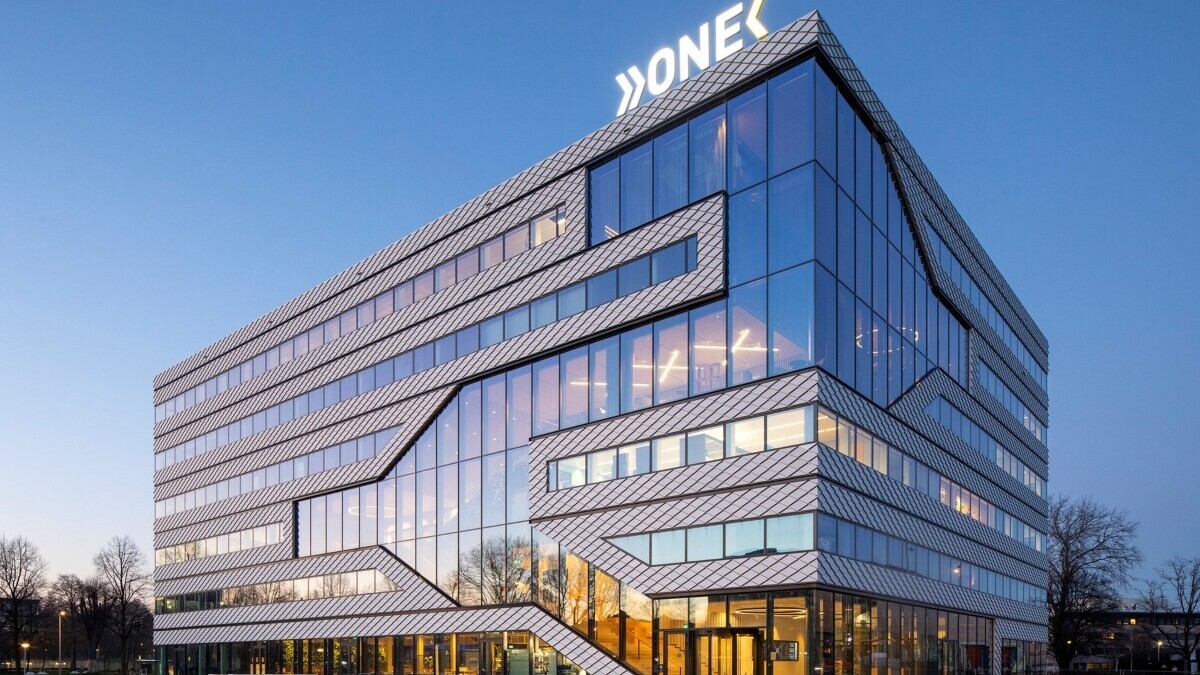
Dutch architecture firm MVRDV has completed Matrix One — a 6-storey, energy-efficient, office and laboratory block constructed using over 120,000 reusable components.
The building is the largest of seven that make up the Matrix Innovation Center in the Amsterdam Science Park, which serves as a hub for scientists and entrepreneurs developing solutions to some of the world’s toughest challenges.
Matrix One has been designed for disassembly: almost everything from the doors and windows to ceilings and furniture is fully detachable and reusable. Even the floors are made from prefabricated concrete slabs with no fixed connections — they can simply be unscrewed and removed.
MVRDV teamed up with Dutch startup Madaster to create ‘material passports’ for the building. These digital IDs store key information about each component — like weight, dimensions, and material characteristics — which aids efficient reuse further down the line.
Once the building reaches the end of its useful life or gets renovated, these components could be available for purchase on a second-hand marketplace (think eBay for buildings). According to MVRDV, 90% of the building’s materials can be used again.
“In the future, we hope this is how all buildings will work,” said MVRDV partner Frans de Witte.
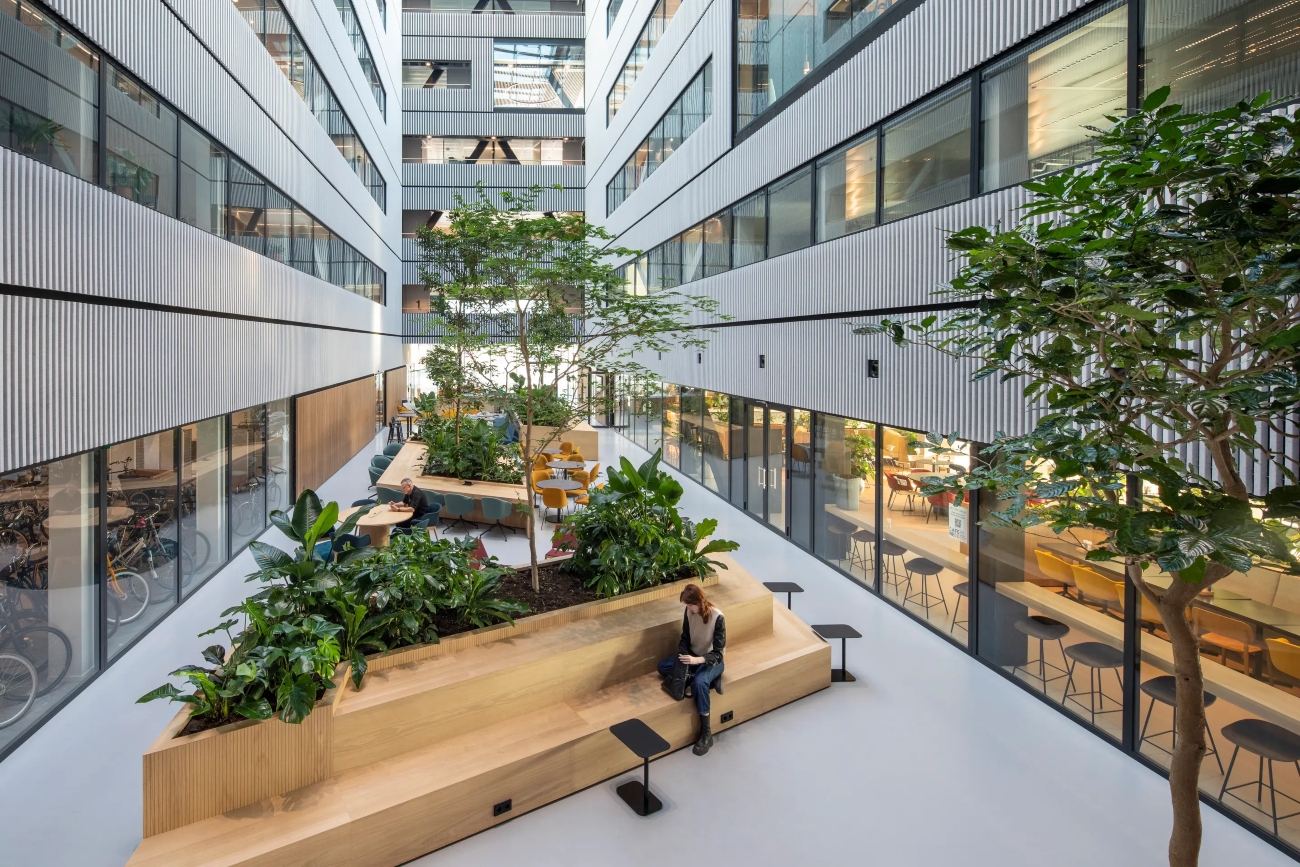
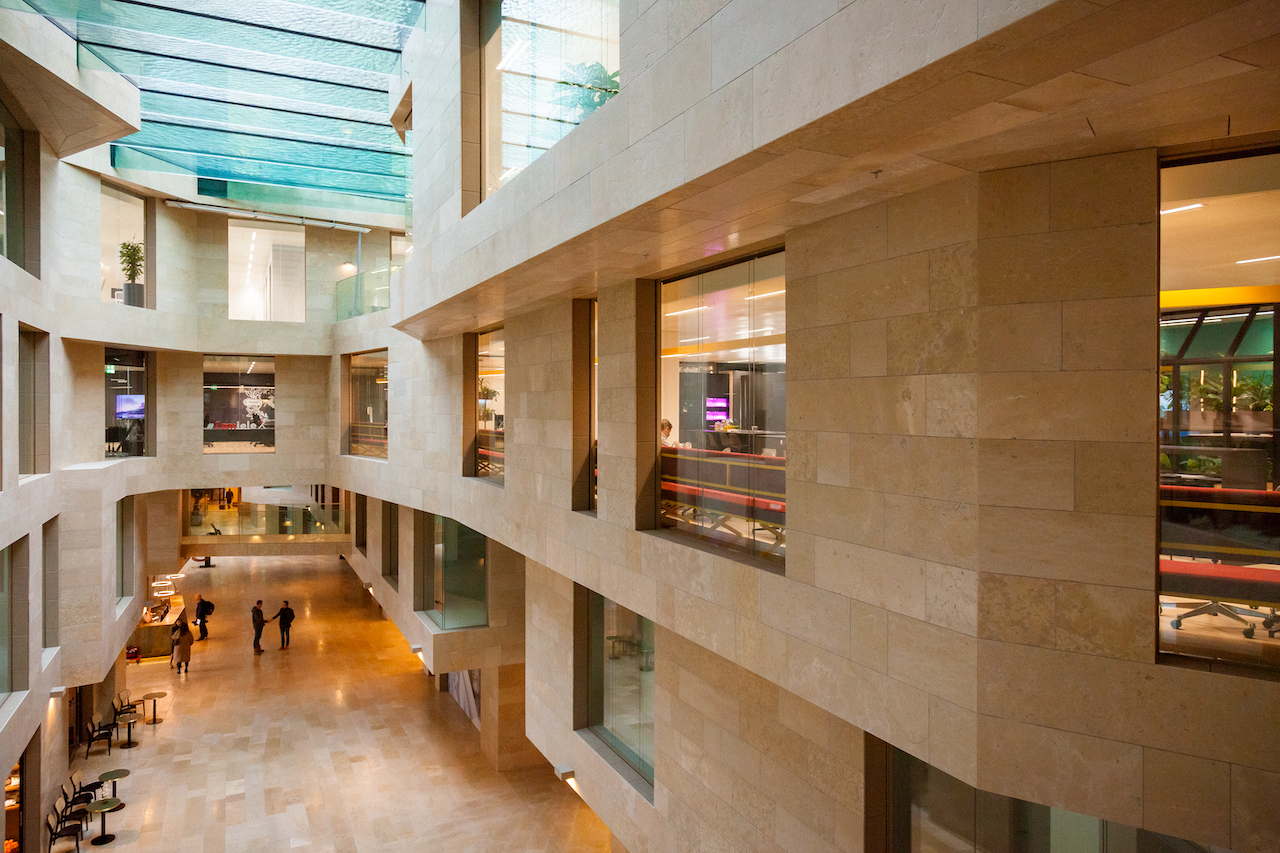
The interior of Matrix ONE. Credit: MVRDV/Daria Scagliola
Construction and demolition is currently responsible for a third of all waste generated in the EU. Making the sector more circular — that is, to minimise waste to the furthest extent possible — has been identified as a key priority for the Dutch government, in line with its commitment to transition to a fully circular economy by 2050.
Parallel to the push toward circularity is cutting down the carbon footprint of buildings and infrastructure, which account for a whopping 37% global CO₂ emissions. Projects like Matrix ONE act as a testbed for many of the technologies needed to minimise these impacts.
“Matrix ONE offered an excellent opportunity for us to test a number of carbon-reduction strategies we have been investigating for a long time,” said de Witte.
The rooftop of Matrix One is covered with a 1,000 sq.m solar array, with the rest given over to greenery, helping improve insulation. Lighting and heating are controlled by sensors and via a phone app, to reduce energy consumption.
Matrix One also has a restaurant on the ground floor, a bar at the top of the staircase, a 100-seat auditorium, and storage space for bikes.
Get the TNW newsletter
Get the most important tech news in your inbox each week.
Andrea is TNW’s Branded Content Editor and, as a writer, she’s covered a wide range of topics from ClimateTech to AI and gender bias. She’s Andrea is TNW’s Branded Content Editor and, as a writer, she’s covered a wide range of topics from ClimateTech to AI and gender bias. She’s always on the lookout for stories that explore the social and political impact of emerging technology.
No matter who your favourite character was, The Office (both the UK or US versions, let’s not get into a fight here) became an iconic series because it played on one thing we all know to be true: offices are boring.
The tech industry tried to change all that by infusing some ‘fun’ into the office. Their plan was to attract adults to the workplace with bright colours, slides, rock walls, and a relaxed dress code, echoing kid’s jungle gyms. They did away with the cubicles of the 90s and introduced open office plans, assuming that having people from different teams rubbing shoulders would surely boost collaboration, camaraderie, and innovation.
The pandemic proved they were wrong. After getting a taste of the comforts of working from home, many employees haven’t had the inclination to return. Employers have either tried to wrestle employees back to the office, or given in and let them stay home. Those opting for the latter have faced waves of employees turning in their notices in favour of employers who offer flexible work options.
Is the office finally dead?
Why it’s impossible to design the perfect office
One of the main challenges offices face is that they’re filled with people. People who all expect something different from their workplace.
While for analysts on your team, data security is a top priority, for the digital marketing team, broadcasting the cool new innovations the team is coming up with may be more important.
Likewise, it’s a well-known fact that some people need peace and quiet to do their best work, while others need people to bounce ideas off of. A recent study into personalities in the workplace by experts from the University of Arizona and California State found that extroverted workers focus better and are happier in open office plans. Meanwhile, those who are high on neuroticism struggle with open floor plans.
There’s not just a difference in personalities but also circumstances: a father of two young kids may have different needs than his colleague who’s a single dog parent.
Aside from these differences, new workplace and technology trends are continuously cropping up and shifting attitudes. Mental health, diversity and inclusion, and data protection are just a few issues that are top of managers’ minds.
So can you actually build a workplace that’s flexible enough to work for everybody?
I visited Miele X’s new home in Amsterdam’s modern new office building “The Valley” to find out.
Photo: Miele X
A digital approach to office design
When you first step out of the elevator onto Miele X’s floor, you encounter a display case of curiosities: an early prototype of a washer that oddly resembles a butter churner and a 1950s vacuum, all part of the company’s history.
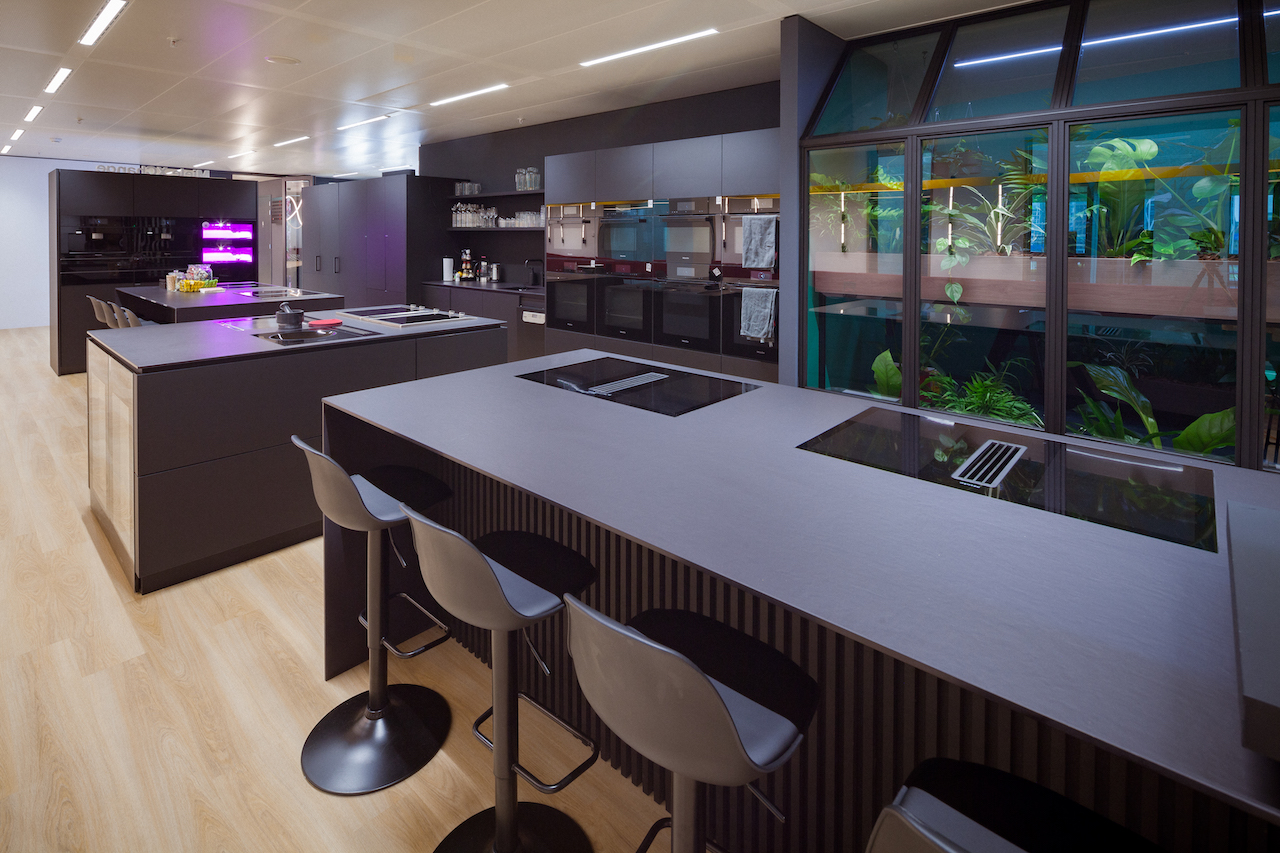
A friendly receptionist met me at the entrance and brought me through to what looked like a large modern kitchen. Some people were chopping up vegetables or clipping herbs from a mini greenhouse, while others were sitting and chatting at cafe-style tables.
Photo: Miele X
As my host Matea Fogec, External Communications Manager, explained, what they aim to build isn’t an office but a home away from home where people can’t just get a coffee but also wash their clothes, do some yoga, and cook a meal together.
But how do you build a work environment that’s suitable for the wide and varied uses of e-commerce, data & analytics, digital marketing, operations, and other departments? They decided to take an agile approach to the problem.
A team of project managers began breaking up the project into dev-style sprints. To ensure everyone’s voice was included, they collected feedback on the must-haves and nice to haves. During an “architect café,” they recruited interested teammates to vote on the final designs.
Of course, not every suggestion could be taken on board. As the Community Space project manager and Head of Agile PMO, Markus Herfert, explained:
“A treadmill meeting room concept was rejected because there wasn’t enough value for money. In the end, it was always a question if a concept fits the overall approach and design, user/employee centricity, and value for money.”
In the final stages of the project, they had a team of volunteer ‘superusers’ come and test out the space for two weeks.
So what features made the final cut?
As more remote jobs pop up, employers are realising they need to give people a real reason to come to the office (other than “upper management is making me”).
Miele X outfitted their space with tech–backed work gadgets that enhance both the way teams work and how they collaborate.
There’s a device wall which gives Miele X teams and guests insights into the variety of content displayed on different device types including smartphones, tablets, and laptops. A user testing area, including a one-sided mirror, allows teams to invite focus groups to test products on-site.
There’s even a strategy meeting room, where the windows can be fogged up to keep upcoming innovations safe from wandering eyes.
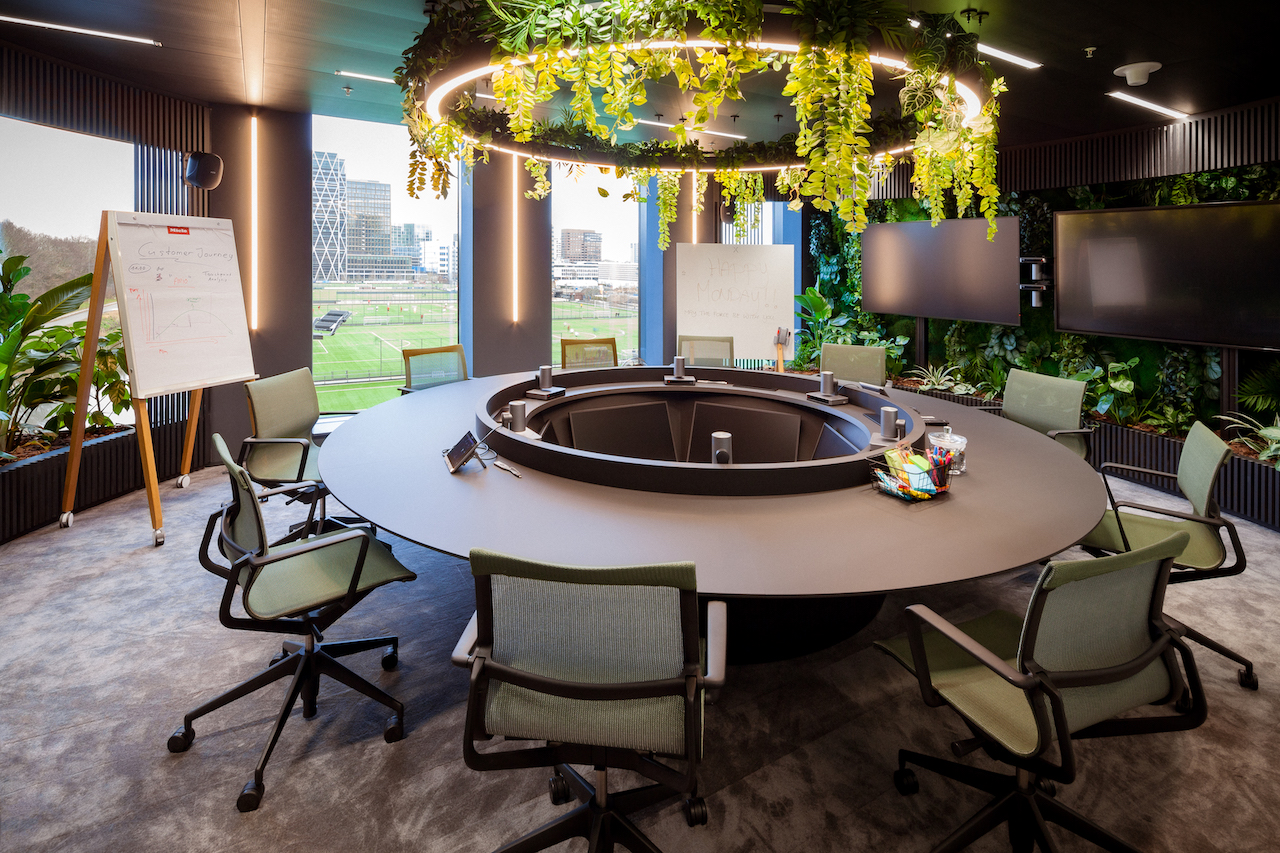
Finally, perhaps the most practical feature for all teams is a 360-degree boardroom that makes dial-in meetings a lot less awkward and a lot more inclusive as everyone appears face to face on screen, and mics are automatically turned off and on based on who’s speaking.
Photo: Miele X
This is great for employees like Tiny Nguyen, CRM Marketing Automation Manager B2B/Professional at Miele X, who’s in a team that’s spread between Amsterdam and Germany.
“People dialling in from Germany don’t feel they’re missing out because they can see everyone’s faces and hear everyone perfectly as if they were in the room,” she says.
All these digital marvels are wonderful, but how do they solve the office personality problem?
Rather than choosing between open office plans and the cubicles of yore, Miele X allows employees to choose a workstation that suits the task at hand.
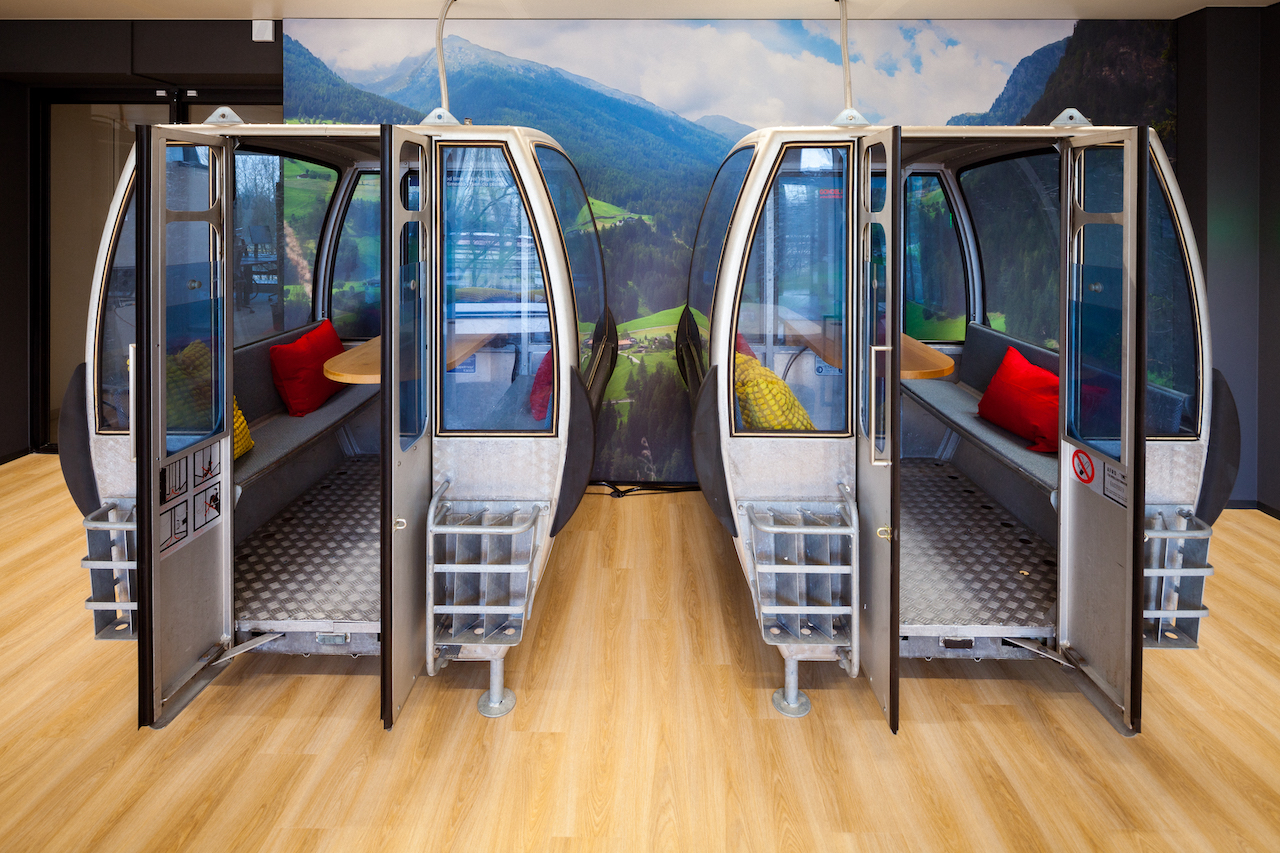
The layout follows a circular design, snaking around an open central atrium. As you walk along this pathway, you’ll come across a combination of meeting rooms and open office spaces. Those wanting more privacy can take refuge in the private nooks built for one or two, or semi-private workspaces in the shape of ski lifts and a rickshaw.
Photo: Miele X
Most important of all, its circular shape means noise doesn’t travel. So while the operations team may be chattering away in an open camper van, the noise dies off as soon as you turn the corner.
The best part is, the layouts aren’t permanent. Walls can be moved to make new rooms of different sizes, for different purposes.
The challenge offices face today is competing against the comforts of home. That’s why Miele X made sure to include creature comforts that employees won’t miss when deciding to go in to work, like:
A laundry room with Miele devices to wash, dry, and steam clothing
A fully equipped family-style Miele kitchen to cook and share meals together
Fully equipped, dedicated rooms for meditation/prayer, maternity, and recreation/yoga
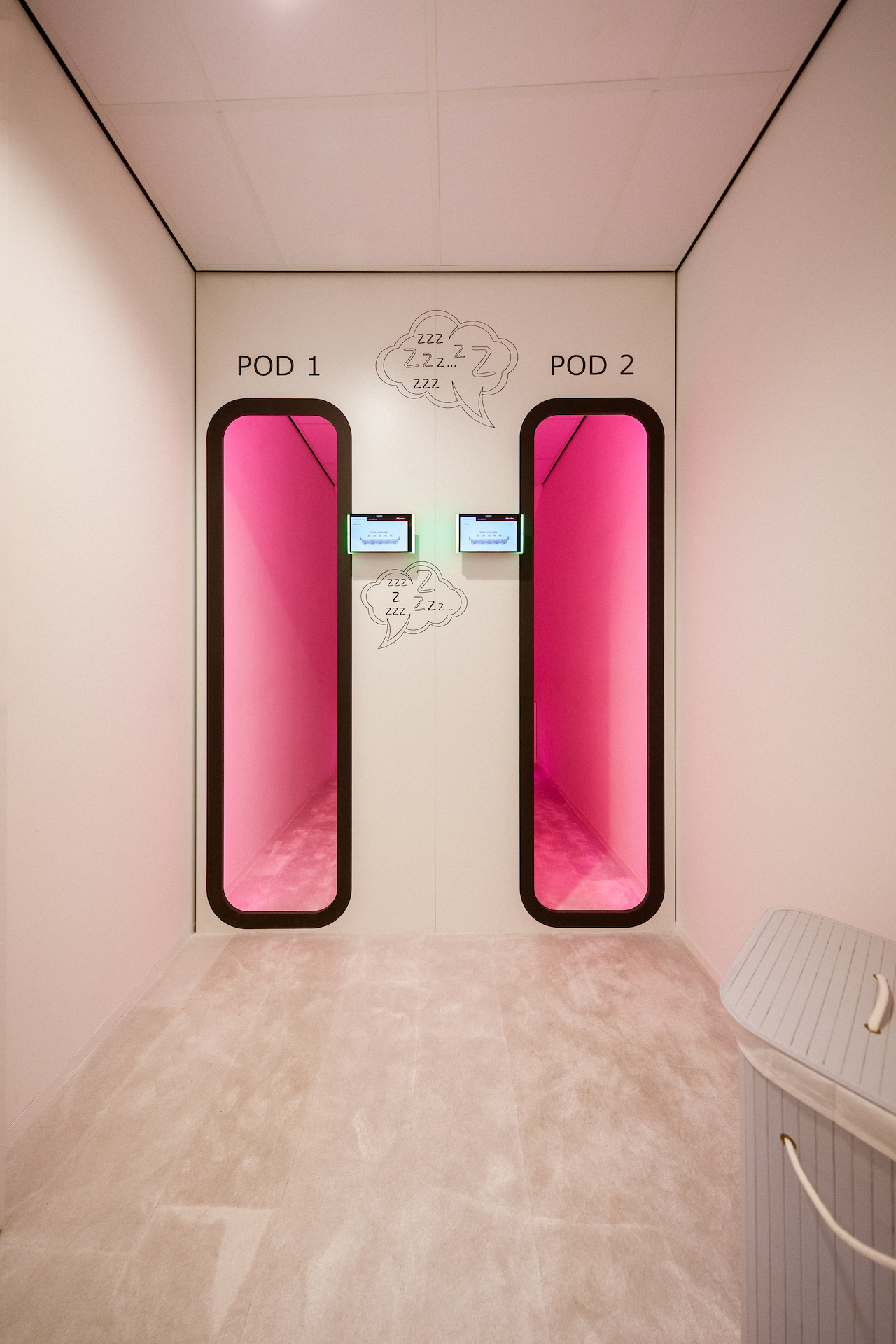
Japanese-style sleeping pods
A dehumidifier room that drys wet clothes in minutes
Photo: Miele X
The perfect work environment…
So is Miele X’s Community Space a land in the clouds where employees hold hands and sing songs around the indoor caravan? No.
There’s no such thing as perfection, but you can always strive for better, as Miele’s motto “Immer Besser” posits.
People’s needs change as social factors, technology, and the way we work change. Just a few years ago, social distancing was a major need when bringing people back together. In the future, emerging work trends like the use of generative AI may present new needs. The point is, you always need to be rethinking, redesigning, and checking in with your team.
That’s why Miele X is already thinking about the next iterations moving forward.
Aside from running regular satisfaction surveys, they’ve placed QR codes to invite feedback in areas where they see potential for improvement, and they collect data on the usage of call cabins, meeting rooms, desks, and general occupancy.
“It’s in our DNA to challenge the status quo, so it will be an ongoing process to change, update, and upgrade,” says Fogec.
Get the TNW newsletter
Get the most important tech news in your inbox each week.
Finnish game company Valo Motion is rousing the immersive reality industry with two exciting updates. With the remarkable success of RPM Raceway’s ValoArena installations and the introduction of Stomp Squad on ValoJump, Valo Motion is solidifying its position in physically active and fun immersive experiences space.
Let’s dive into these developments and explore the impact they have on the world of interactive entertainment.
RPM Raceway: A ValoArena Success Story
RPM Raceway, a New York-based Family Entertainment Center chaink, has taken their immersive attractions to new heights with mixed reality playground ValoArena. After experiencing “tremendous” success with the first installation at their Long Island location, RPM Raceway has decided to invest in a second ValoArena for their Stamford, CT venue.
According to Valo Motion, ValoArena has quickly become RPM Raceway’s top attraction, surpassing other VR experiences and even top-tier arcade machines. Players are transported into a realm where their actions and movements become an integral part of the exhilarating gameplay, providing an immersive experience that defies conventional boundaries.
This unattended 6-player mixed reality playground has proven to be a revenue-generating powerhouse, combining physical activity with social gameplay and exciting ROI potential. The success of ValoArena further cements Valo Motion’s commitment to providing physically active and engaging experiences in the FEC industry.
“What’s so impressive about ValoArena is that it generates more than enough revenue to substantiate its large footprint,” said Chris Kimlingen, RPM Operations Manager, in a press release shared with ARPost. “The numbers don’t lie, investing in a second ValoArena was really a no-brainer.”
As RPM Raceway forges ahead in their commitment to deliver unparalleled entertainment experiences, their partnership with Valo Motion continues to thrive, driving the industry forward and fueling the imagination of players seeking extraordinary adventures.
“Stomp Squad”: A Cooperative Trampoline Adventure
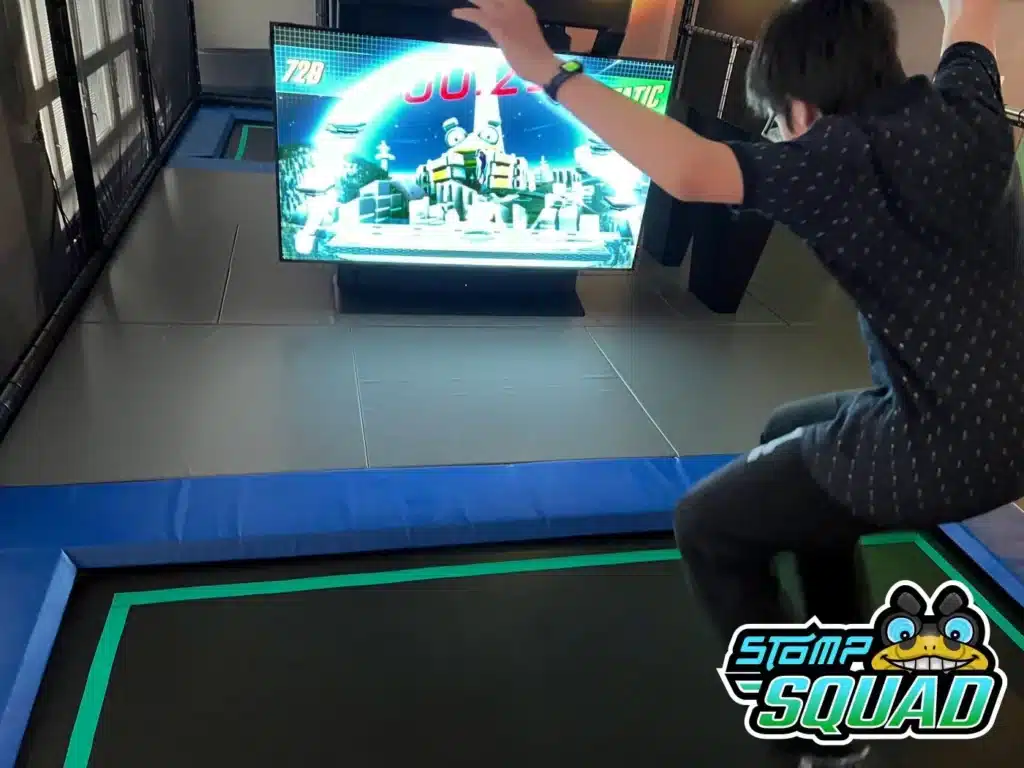
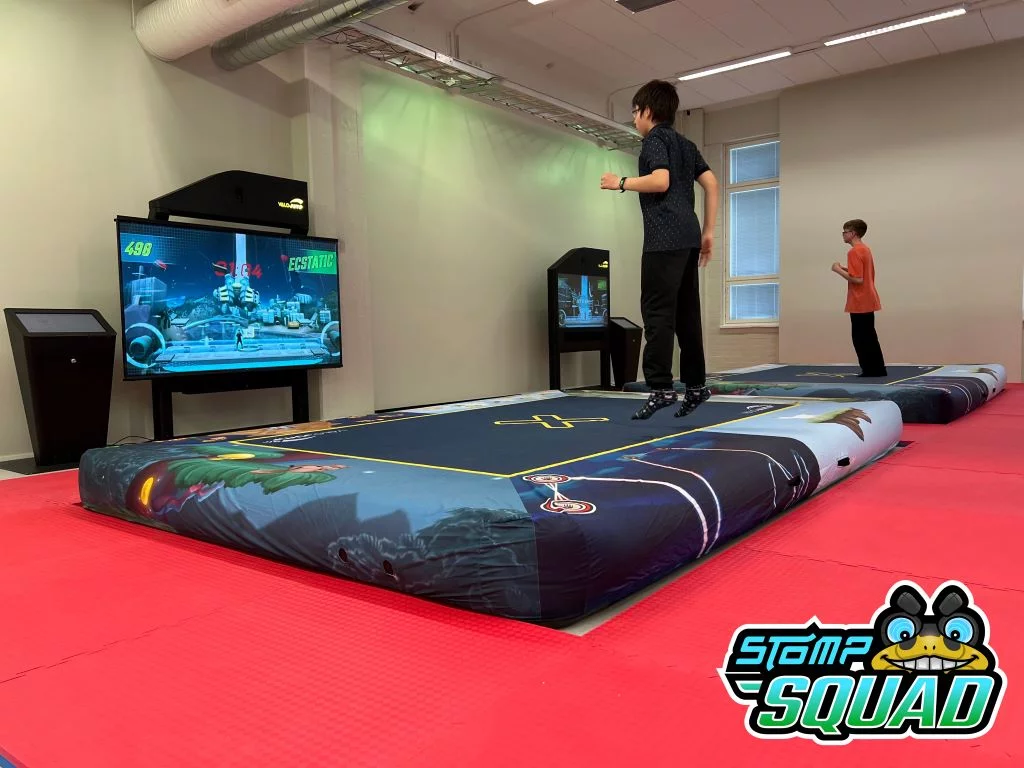
Last week Valo Motion unveiled Stomp Squad, an innovative game set in the captivating universe of Super Stomp, one of their most popular ValoJump experiences. In this futuristic world, players must join forces to protect Stomp Lake City from the notorious MegaFrog, a villain with nefarious intentions to destroy the city because of its advanced technology. The players are in for an adrenaline rush as they leap into action and stomp on evil robots.
“Valo Motion is incredibly excited to debut Stomp Squad,” noted Raine Kajastila, Founder and CEO of Valo Motion. “We’re committed to delivering unforgettable experiences that combine physical activity and cutting-edge technology; Stomp Squad does that while also encouraging teamwork. We can’t wait for guests to try it.”
Like other Valo experiences, Stomp Squad is an immersive cooperative game that combines physical activity, fun socialization, and virtual environments. Seamlessly integrating augmented reality and motion tracking, the Stomp Squad experience transcends traditional gaming, providing an opportunity for players to embrace their inner heroes and embark on an unforgettable trampoline adventure. Aside from having fun, players also cultivate skills such as spatial awareness, precise jumping, and teamwork.
Valo Motion: Committed to Continued Innovation That Redefines Gaming and Entertainment
These latest developments from Valo Motion add to their impressive portfolio of immersive entertainment. From the intergalactic adventure of Astro Blade to the thrilling heist in Operation Money Grab, the company has consistently pushed the boundaries of mixed reality gaming. Since the official launch of the ValoArena in the United States, Valo Motion has been capturing the attention of both operators and players seeking unique and thrilling experiences.
Valo Motion is certainly redefining the future of gaming and entertainment. The recently celebrated sale of their 1000th AR gaming system indicates the growing demand for their immersive products. Through their commitment to advanced technology, Valo Motion is transforming the landscape of interactive experiences, captivating audiences and attracting visitors to FECs worldwide.
Thomas is a senior reporter at TNW. He covers European tech, with a focus on deeptech, startups, and government policy. Thomas is a senior reporter at TNW. He covers European tech, with a focus on deeptech, startups, and government policy.
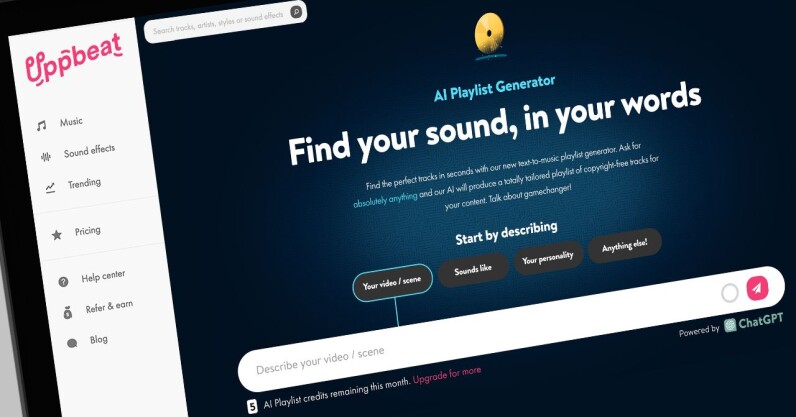
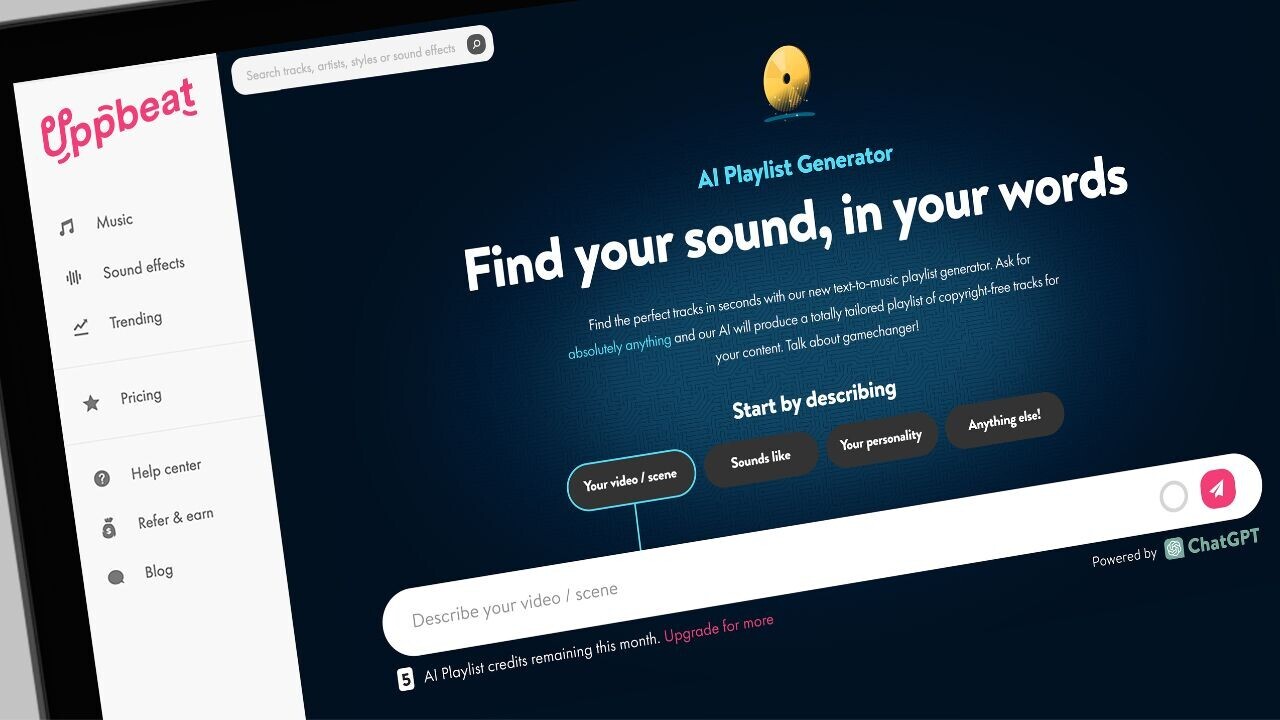
The AI system is the brainchild of Uppbeat, an audio platform based in Leeds. Targeting content creators, the feature finds copyright-free tracks for video soundtracks. Uppbeat claims it’s the first tool that lets people use their own language to find the songs they want.
“Generative AI music is rife with copyright and overall quality issues,” said Lewis Foster, CEO of Uppbeat, in a statement. “Our catalogue is full of incredible artists and AI doesn’t come closet. But, we asked ourselves, ‘What if we can use AI to help creators pinpoint the perfect copyright-free music for their content?’
“This ‘What if?’ moment has evolved into our game-changing AI Playlist Generator and I’m excited to share it with the world. We believe it promises to positively impact the way creators soundtrack their content with AI. Give it a try!”
To use the tool, just enter a description of your video, scene, music vibe, or personality. The system will then return a custom playlist of matches from Uppbeat’s catalogue of tracks.
As the tool is currently available in a freemium version, we tried to give it a whirl.
The system can process a diverse array of prompts. Credit: Uppbeat
We asked for a playlist about an apt scene: “A tech boss uses AI to take over the world.” Within seconds, the machine spat out a mix titled, “Tech Takeover Tunes.”
We were impressed by the selection. Although smash hits were lacking, it was a suitable soundtracking for a cyborg Musk pillaging his way across the planet.
Thomas is a senior reporter at TNW. He covers European tech, with a focus on deeptech, startups, and government policy. Thomas is a senior reporter at TNW. He covers European tech, with a focus on deeptech, startups, and government policy.
Some of Europe’s top technologists today joined a global group of IT luminaries in warning that AI could lead to extinction.
“Mitigating the risk of extinction from AI should be a global priority alongside other societal-scale risks such as pandemics and nuclear war.”
Issued by the non-profit Center for AI Safety, the message has been signed by an array of business leaders, researchers, and public figures. They include Sam Altman, the CEO of OpenAI, Kevin Scott, the CTO of Microsoft, and, err, the musician Grimes. Her ex-boyfriend, Elon Musk, however, was a notable absentee, despite his longtrack record of raising concerns about the field.
A sizeable proportion of the signatories come from Europe. Among them are Demis Hassabis, the London-born CEO of Google DeepMind, Kersti Kaljulaid, the former president of Estonia, and Geoffrey Hinton, a British Turing Award-winner who recently quit Google to talk about AI’s dangers.
The statement joins a bevvy of recent alarm bells about the existential threats posed by AI.
In the last two months alone, industry leaders have called for the training of powerful AI systems to be suspended amid fears of threats to humanity; healthcare professionals have demanded a pause on developing artificial general intelligence; Musk has warned AI could cause “civilisation destruction,” and Google boss Sundar Pichai has admitted that the dangers “keep [him] up at night.”
Cynics, however, may note that many figures sounding the alarm are also resisting any AI regulations that could adversely impact their businesses.
Get the TNW newsletter
Get the most important tech news in your inbox each week.
Strivr, a virtual reality training solutions startup, was founded as a VR training platform for professional sports leagues such as the NBA, NHL, and NFL. Today, Strivr has made its way to the job training scene with an innovative approach to employee training, leveraging generative AI (GenAI) to transform learning experiences.
More Companies Lean Toward Immersive Learning
Today’s business landscape is rapidly evolving. As such, Fortune 500 companies and other businesses in the corporate sector are starting to turn to more innovative employee training and development solutions. To serve the changing demands of top companies, Strivr has secured $16 million in funding back in 2018 to expand its VR training platform.
Research shows that learning through VR environments can significantly enhance knowledge retention, making it a groundbreaking development in employee training.
Unlike traditional training methods, a VR training platform immerses employees in lifelike scenarios, providing unparalleled engagement and experiential learning. However, this technology isn’t a new concept at all. Companies have been incorporating VR into their training solutions for several years, but we’ve only recently seen more industries adopting this technology rapidly.
The Impact of Generative AI on VR Training Platforms
Walmart, the largest retailer in the world, partnered with Strivr to bring VR to their training facilities. Employees can now practice in virtual sales floors repeatedly until they perfect their skills. In 2019, nearly 1.4 million Walmart associates have undergone VR training to prepare for the holiday rush, placing them in a simulated, chaotic Black Friday scenario.
As a result, associates reported a 30% increase in employee satisfaction, 70% higher test scores, and 10 to 15% higher knowledge retention rates. Because of the VR training’s success, Walmart expanded the VR training program to all their stores nationwide.
Derek Belch, founder and CEO at Strivr, states that the demand for the faster development of high-quality and scalable VR experiences that generate impactful results is “at an all-time high.”
As Strivr’s customers are among the most prominent companies globally, they are directly experiencing the impact of immersive learning on employee engagement, retention, and performance. “They want more, and we’re listening,” said Belch in a press release shared with ARPost.
So, to enhance its VR training platform, Strivr embraces generative AI to develop storylines, boost animation and asset creation, and optimize visual and content-driven features.
GenAI will also aid HR and L&D leaders in critical decision-making by deriving insights from immersive user data.
Strivr’s VR Training Platform Addresses Employee Mental Health
Strivr has partnered with Reulay and Healium in hosting its first in-headset mental health and well-being applications on the VR training platform. This will allow their customers to incorporate mental health “breaks” into their training curricula and address the rising levels of employee burnout, depression, and anxiety.
Belch has announced that Strivr also partnered with one of the world’s leading financial institutions to make meditation activities available in their workplace.
Meditation is indeed helpful for employees; the Journal of the American Medical Association recently published a study that showed that meditation can help reduce anxiety as effectively as drug therapies. Mindfulness practices, on the other hand, have been demonstrated to increase employee productivity, focus, and collaboration.
How VR Transforms Professional Training
With Strivr’s VR Training platform offering enhanced experiential learning and mental well-being, one might wonder how VR technology will influence employee training moving forward.
Belch describes Strivr’s VR training platform as a “beautifully free space” to practice. Employees can develop or improve their skills in a realistic scenario that simulates actual workplace challenges in a way that typical workshops and classrooms cannot. Moreover, training employees through VR platform cuts travel costs associated with conventional training facilities.
VR training platforms also contribute to a more inclusive and diverse workplace. Employees belonging to minority groups can rehearse and tailor their behaviors in simulated scenarios where a superior or customer is prejudiced toward them, for instance. When these situations are addressed during training, companies can protect their employees from these challenges and prepare them.
What’s Next for VR Training Platforms?
According to Belch, Strivr’s enhanced VR training platform is only the beginning of how VR will continue to impact the employee experience.
So far, VR training platforms have been improving employee onboarding, knowledge retention, and performance. They allow employees to practice and acquire critical skills in a safe, virtual environment, helping them gain more confidence and efficiency while training. Additionally, diversity and inclusion are promoted, thanks to VR’s ability to simulate scenarios where employees can tailor their behaviors during difficult situations.
And, of course, VR training has rightfully gained recognition for helping teach retail workers essential customer service skills. By interacting with virtual customers in a life-like environment, Walmart’s employees have significantly boosted their skills, and the mega-retailer has implemented an immersive training solution to all of its nearly 4,700 stores all over America.
In 2022, Accenture invested in Strivr and Talespin to revolutionize immersive learning and enterprise VR. This is a good sign of confidence in the industry and its massive potential for growth.
As we keep an eye on the latest scoop about VR technology, we can expect more groundbreaking developments in the industry and for VR platforms to increase their presence in the employee training realm.
It seems Meta is looking to stoke some hype for its next Quest headset just days before Apple is slated to unveil its own, as Bloomberg’s Mark Gurman released Quest 3’s first hands-on, confirming a number of features from previous leaks in the process.
Gurman detailed a number of features in his hands-on with the upcoming mixed reality headset, saying that Quest 3 feels lighter and thinner than the Quest 2, featuring a stronger strap with fabric sides.
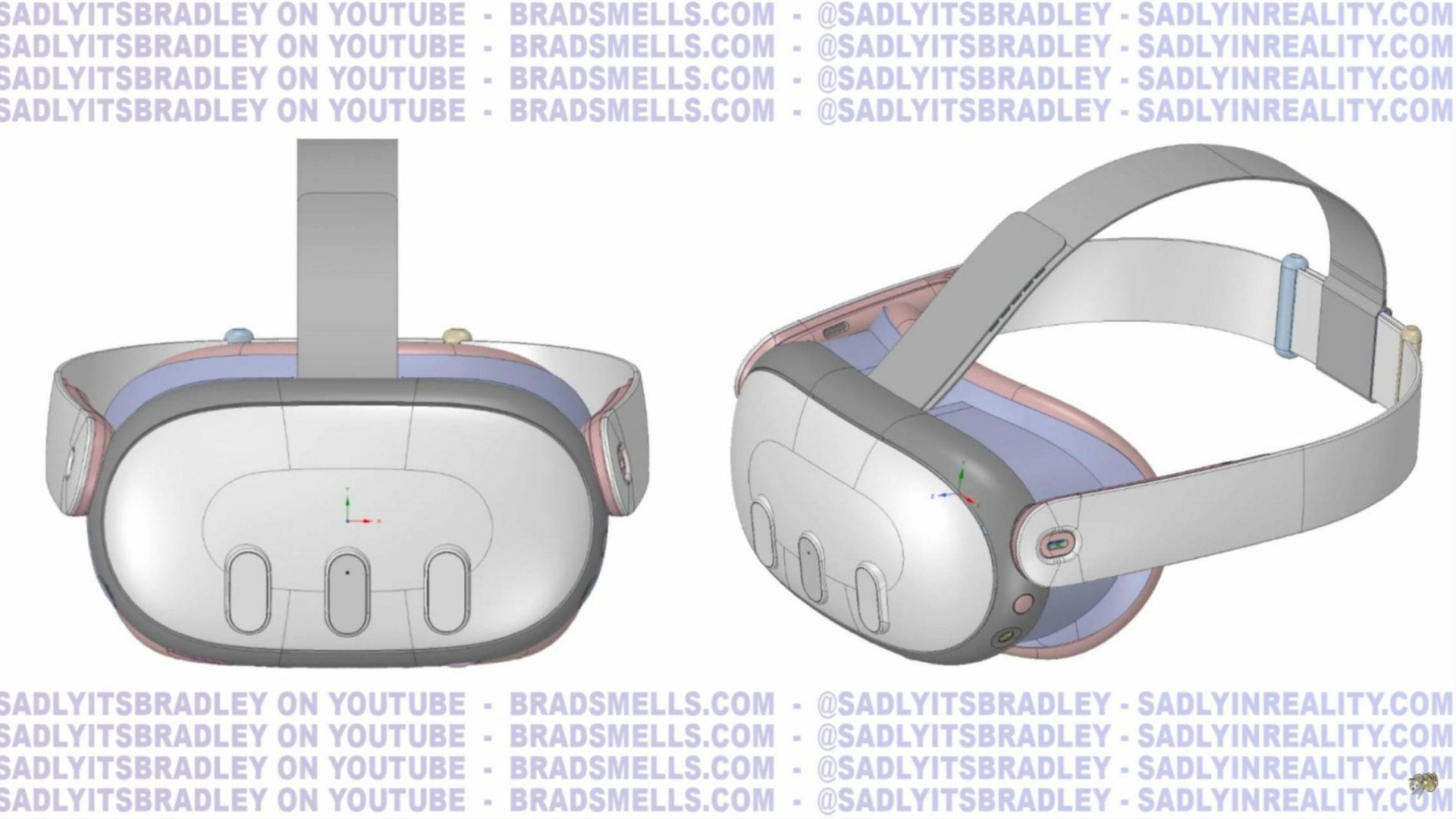
Like we’ve seen in previous renders, Quest 3 is said to feature three vertical “pill-shaped sensor areas” on the front of the device. On the left and right are color video pass-through sensors and standard cameras, while a depth sensor is placed in the middle, which is used for environment meshing and automatic identification of surrounding walls.
Tracking cameras are found on both left and right bottom sides of the device, departing from Quest 2’s four-sensor array placed on each corner of the headset. Sounds pretty similar to the image featured in a previous leak from Bradely Lynch.
Image courtesy Bradley Lynch
Quest 3 is said to come with a physical interpupillary distance (IPD) adjustment wheel next to the volume rocker which will allow users to dial in a finer IPD measurement. As a departure from its Quest Pro-esque feature set, Quest 3 is said to lack face and eye-tracking, which means none of the lauded ‘social presence’ features or foveated rendering.
Notably, Gurman says the actual clarity and VR displays within the Quest 3 feel “similar to those in the Quest 2 — despite the resolution being rumored to be slightly higher.” It seems Quest 3’s claim to fame will be its color mixed reality passthrough and faster performance thanks to a second-generation Qualcomm Snapdragon XR2.
“[V]ideo pass-through on the Quest 3 presented colors more accurately and offered an almost lifelike rendering of the real world. I was even able to use my phone while wearing the headset, something that often feels impossible on a Quest 2,” Gurman says.
There’s no mention of optics, or whether it will indeed use pancake lenses like Quest Pro or a Fresnel lens like Quest 2.
From Gurman’s description, it seems Touch controllers aren’t getting the Pro-level design either, as they appear to be optically tracked by the headset via IR markers à la Quest 2. It’s said to lack both Quest Pro’s embedded controller sensors and Quest 2’s hoop-style tracking design, which could be interesting.
Pricing for the Quest 3 isn’t finalized, however it’s expected to be higher than the Quest 2 at around $500. Meta is also expected to concurrently offer Quest 2, making for the widest headset lineup the company has ever offered at one time.
Gurman says Meta is set to target the cheaper headset segment while Apple targets the upscale market with its reported $3,000 mixed reality device. While Apple’s headset is expected to make its debut on June 5th, Gurman says Meta is bringing Quest 3 in October.
It’s as if I am chatting to a merchant on a European dockside more than a century ago when I ask Jorne Langelaan, founder and CEO of Dutch shipping startup EcoClipper, how his vessel’s maiden voyage is going.
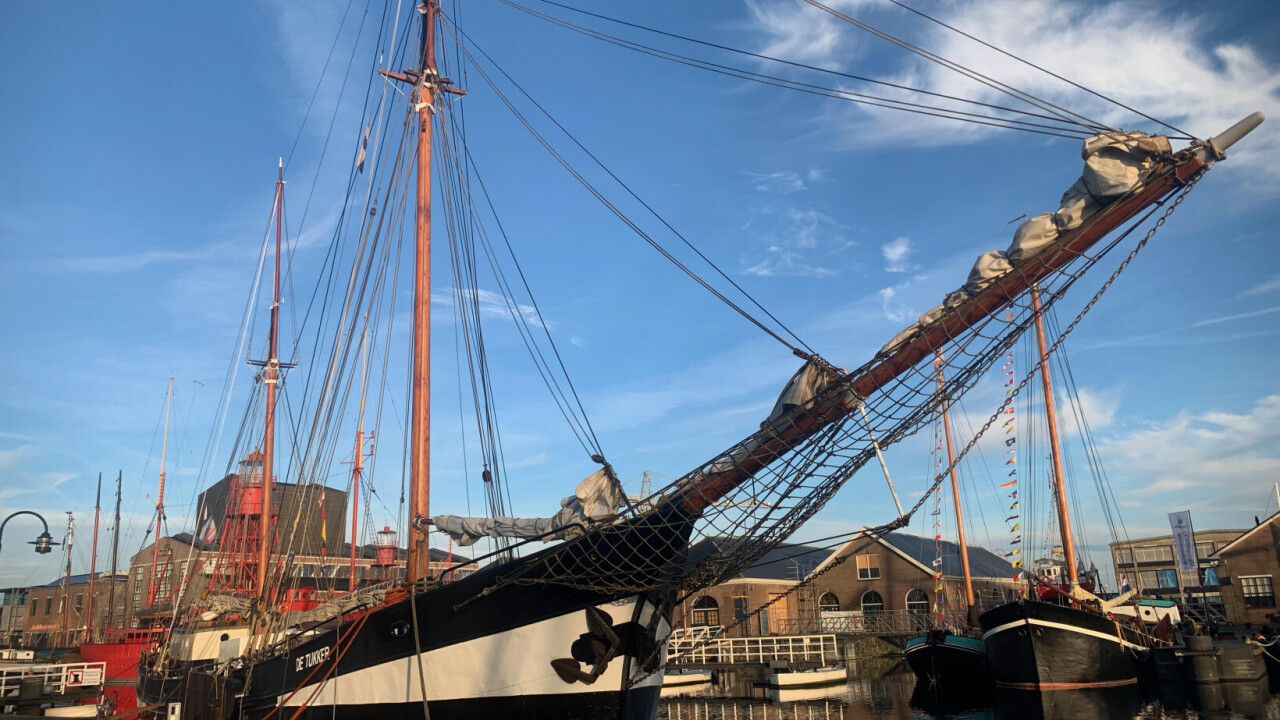
“In the beginning the winds were really favourable,” he says of the progress made by the 1912-built De Tukker, which recently embarked on a regular sailing schedule taking it to ports around Europe. Chocolate, olive oil and wine are among its first items of cargo.
On the way from The Netherlands to Portugal, like many thousands of mariners in centuries gone by, De Tukker’s crew had to sail close to Atlantic winds in order to progress south past the west coast of France.
“Otherwise,” says Langelaan, “You can easily be pulled into the Bay of Biscay with the currents there and the prevailing winds.” EcoClipper, which has five employees on shore and five crew members, has raised around €1 million in funding to date, half of which consists of loans.
Capt. Jorne Langelaan On board sailing vessel De Tukker
Decarbonisation ahoy
Does the future of shipping look confusingly like its past? Maybe. The industry certainly faces a huge challenge in going green. Globally,shipping accounts for 3% of greenhouse gas emissions – but that is more than it sounds because it is very difficult to decarbonise shipping, since giant commercial vessels have long relied on highly polluting bunker fuel.
Up to90% of goods are carried by ship and demand is rising, so the potential climate impact of shipping will only grow in the future unless cleaner fuels or zero emissions technologies emerge as suitable alternatives.
One hurdle is scale. De Tukker can carry a maximum cargo of about 80 tonnes – completely dwarfed by the 200,000 tonnes or more that the biggest container ships can shift. But Langelaan says he has received interest from companies keen to slash their carbon footprint and avail of zero emissions transportation. Multiple construction firms, for instance, have been in touch recently, he notes, since some are under pressure to reduce emissions.
Langelaan points out that De Tukker is not just a zero emissions vessel, she is also extremely quiet, meaning there is practically no risk ofnoise pollution, which is known to negatively affect marine life. The ship actually has an engine but her crew barely use it. She sails at roughly half the speed typically reached by modern large commercial ships.
In the coming years, Langelaan and his colleagues hope to deploy a whole fleet of newly constructed sailing ships based on a design that takes inspiration from classic Dutch cargo vessels. Clipper ships – among them the famed Cutty Sark – were fine-tuned over many years of maritime development, points out Langelaan.
“We don’t really have the resources to do a lot of research and development so we just took what works and are using it,” he explains, referring to theEcoClipper prototype500 ship concept, which would have a cargo capacity of 500 tonnes.
Langelaan already has a Dutch shipyard in mind that he says could build the first of these new vessels but he adds the project requires investment. Should it come, he envisages launching a newly built clipper-style ship as early as 2026.
Sails are back
For Joe Banks, a lecturer in ship science and maritime engineering at the University of Southampton, EcoClipper’s approach is certainly an impassioned one. “Those historic ships were beautiful and there is a nostalgia, a romanticism,” he says.
However, it’s the giant existing fleet of huge commercial ships that deserve the greatest focus, he argues. Shipping companies can reduce their climate impact byadding miniature sails orkites to their vessels, allowing them to utilise the wind. Automation can also help to make them as efficient as possible, he adds.
“My instinct would be that we’re going to have a bigger impact by looking at retrofitting existing ships with modern automated systems,” says Banks.
EcoClipper could still serve an important function in highlighting the virtues of shipping cargo under sail, however, argues Banks: “There is […] a value there of raising awareness and showing the benefits of that.”
Langelaan makes another point – one way to reduce emissions is simply to ship less and reduce the impact of humanity on the planet overall. “I shouldn’t really be saying this as a ship owner myself,” he quips.
For now, De Tukker has the wind in her sails and a busy schedule to keep. Langelaan lists the various places where she will call in the coming weeks, including the UK, France, and back to the Netherlands. From tall ship festivals to heaving construction materials around.
“Then it starts again,” he says, again with the air of a hardy old mariner. “The ship will be sailing constantly.”
Get the TNW newsletter
Get the most important tech news in your inbox each week.
Ioanna is a writer at TNW. She covers the full spectrum of the European tech ecosystem, with a particular interest in startups, sustainabili Ioanna is a writer at TNW. She covers the full spectrum of the European tech ecosystem, with a particular interest in startups, sustainability, green tech, AI, and EU policy. With a background in the humanities, she has a soft spot for social impact-enabling technologies.
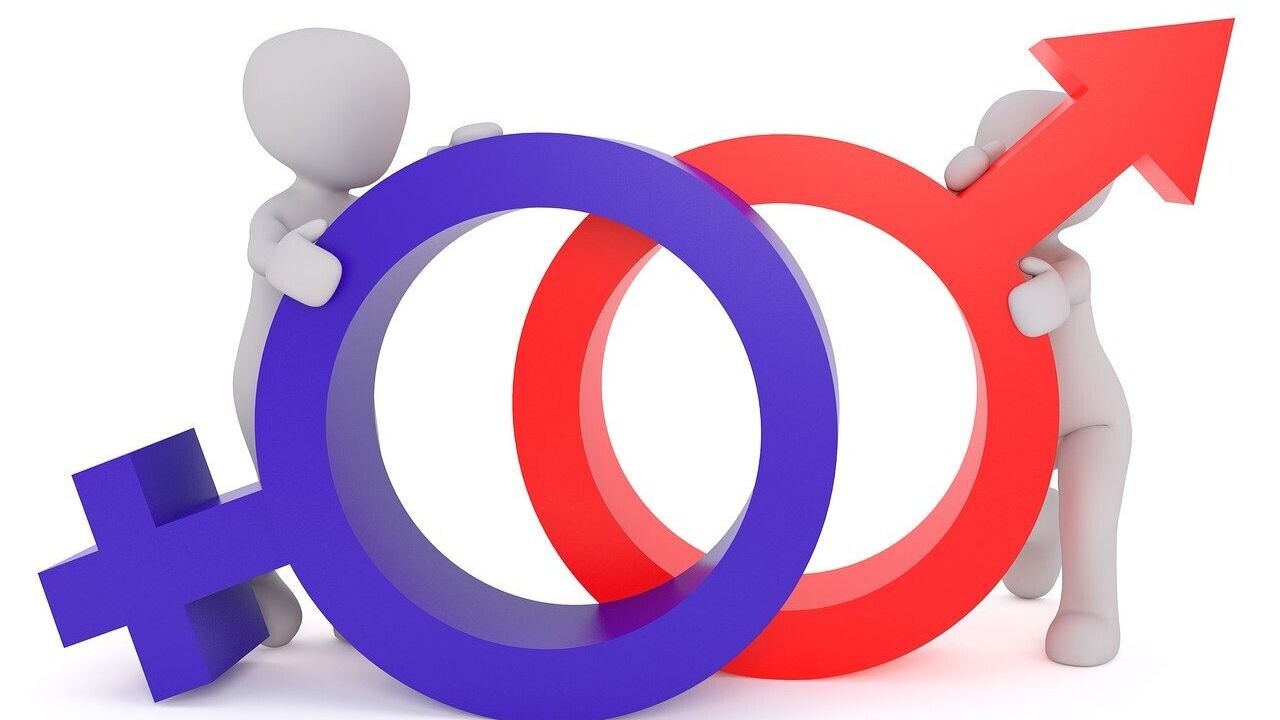
It’s been 66 years since the EU first introduced the principle of equal pay for male and female employees conducting work of equal value. Yet, the gender pay gap stubbornly persists in the bloc. Women earn, on average, around 13% less than men, with significant variations among member states.
To narrow this gap, the European Parliament and Council recently approved a set of new rules that establish binding pay transparency measures. For the first time in the union’s history, this legislation also tackles intersectional discrimination (on the combined basis of ethnicity, race, religion, etc.) and addresses the rights of non-binary individuals.
“This legislation makes it crystal clear that we do not accept any kind of gender pay discrimination in the EU,” said Kira Marie Peter-Hansen, rapporteur of the Employment and Social Affairs Committee.
The directive will apply to all workers with a legal employment contract, collective agreement, and practice in force, as well as to all employers in the public and private sector.
For some companies, this landmark law might simply (and hopefully) mean the normalisation of existing practices; for others, it might require a systematic change. But what exactly does it entail?
1. No more pay discrimination
Employers must ensure that their pay structures don’t reflect gender-based differences between employees who perform the same work or work of equal value. This concerns not only salaries, but also any type of benefit, such as bonuses and travel expenses.
To help companies (and especially startups and SMEs), member states should provide employers with training and tools to assess the value of work based on four objective criteria: skills, efforts, responsibilities, and working conditions.
2. Full-on pay transparency
The new rules require companies to inform job seekers about the starting salary or pay range of open positions, either in the job description or ahead of the interview. Employers, however, won’t have the right to ask about the candidates’ pay history.
Workers will also be entitled to information about their individual and the average pay levels — broken down by sex — for work of equal value. In addition, they’ll have access to the criteria used to determine pay and career progression, which must be objective and gender-neutral.
Member states can exempt employers with fewer than 50 employees from this obligation and allow them to make these criteria available only upon request. But in any case, they should provide ready-made templates to reduce administration hurdles for micro-enterprises and SMEs.
3. More justice for the employees
The burden of proof for pay-related disputes will no longer fall on the employee.
“It is particularly important that [this] has shifted from the employee to the employer when a charge of gender pay discrimination is brought,” Yoko Spirig, co-founder and CEO of Swiss startup Ledgy, told TNW.
“Companies now have to prove that there is no discrimination when challenged, rather than the employee having to prove the presence of discriminatory practices. This step is welcome and sends a clear signal to companies to get their pay data and processes in order now.”
Employees who’ve suffered gender pay discrimination can also claim and receive compensation, including full recovery of back pay, related bonuses, and payments in kind.
4. Report, report, report
Under the directive, companies with more than 250 employees will have to report annually on their gender pay gap. This falls to every three years for a headcount between 150 and 249, and to every eight years for an employee number between 100 and and 149.
Member states can exempt companies with fewer than 100 workers, or choose to oblige them as well.
If the reporting reveals a gap of more than 5% that can’t be justified by objective, gender-neutral criteria, then they’ll need to do a joint pay assessment in cooperation with the employees’ representatives.
The assessment’s aim is to identify problems and implement solutions that will eliminate gender pay discrimination.
5. Beware of the penalties
Employers who break the rules will face “effective, proportionate, and dissuasive penalties,” such as fines and even revocation of public benefits.
“I particularly welcome the proposal to penalise firms which fail to act on their gender pay gap as it’s imperative that companies stop resting on their laurels — complacency will get us nowhere,” Jenny Keisu, CEO of Swedish eboat maker X Shore, told TNW.
Keisu emphasised that all companies should be tracking the gender pay gap “as any other important KPI” even more regularly than the legislation proposes.
What are the next steps?
The rules will come into effect 20 days after their publication in the EU’s Official Journal — which is still pending. They’ll apply to all employers in the union, even though smaller ones (micro enterprises, startups, and SMEs) will initially have fewer obligations and more help from member states.
As this is a directive, EU countries get some freedom around how they’ll choose to apply the rules and they have three years to put them in place.
“It’s heartening that the European Parliament is taking a stand and cementing that change needs to happen sooner rather than later,” said Marta Sisí Jiménez, Head of HR at Freepik Company, a Malaga-based scaleup.
“[Especially] for Europe’s proliferating startups looking to expand, these new rules establish clear guidelines around an issue that previously lacked clarity,” she told TNW.
But this historic — and imperative — change might not come without challenges. Jiménez noted the potential resistance from founders who are already navigating a difficult landscape, with shrinking investment and increasing regulations.
David Perez, VP of Stakeholder Relations at Cabify, pointed to another possible challenge: the validity of the required data.
“It must be taken into account that in the analysis of the gender gap, many factors can distort the data, such as the number of women and men in one department versus another,” Perez told TNW. “Thus, we believe that it is vitally important to perform an ad hoc analysis of each job, so that a person is not sought for their gender but for what they can contribute to the job.”
But regardless of any challenges, the benefits of securing equal pay are large and far- reaching: from establishing equality and social justice, to bolstering business performance and strengthening the economy.
From the point of view of the startup ecosystem in Europe, the new rules also promote a level playing field.
“This regulation will begin to shape a labour market in which large companies and SMEs will compete on the same terms for talent, with the same rules,” Perez noted. “A labour market in which this data will begin to be reported in a unified and common way among all companies.”
Get the TNW newsletter
Get the most important tech news in your inbox each week.
Fast Travel Games and developer MobX released their latest VR co-op action title EVERSLAUGHT Invasion on Quest 2, bringing with it high-mobility melee action.
Update (May 26th, 2023): Developer MobX Games and publisher Fast Travel Games released EVERSLAUGHT Invasion on the Meta Quest Store, priced at $25.
The studios also released a new trailer showing off more of the game’s high-flying melee combat. The original article announcing EVERSLAUGHT Invasion follows below:
Original Article (August 24th, 2022): Set in the same universe as the PC VR action RPG EVERSLAUGHT (2021), developer MobX Games and publisher Fast Travel say the fast-paced VR first-person shooter is intended for two players, although it also supports single player in what the studios call “high-octane combat” thanks to the game’s focus on high-flying locomotion that will let you dash, jump off cliffs, or fly to an enemy with the help of a hookshot tool.
The Meta Quest 2 title puts you in the boots of a hero of the secretive Cleric order who must defeat the evil and ever-expanding faction of the Corrupted. The game includes three unique classes with their own tools and play styles: Warrior, Rogue or Vanguard. We’re hoping to learn more about each class as we get closer to the early 2023 launch window.
Like you’ll see in the game’s announcement trailer, EVERSLAUGHT Invasion puts heavy emphasis on frenetic action thanks to the game’s hookshot mechanic, which lets you traverse the map at high speeds or dispatch enemies with a single blow. You’ll also gather loot and unlock new skills and weapons through what the studio calls a “deep progression system.”
“We’ve used the original EVERSLAUGHT universe to create a brand new co-op action game filled with satisfying combat and great replayability,” said Gihad Chbib, Founder at MobX Games. “While we can’t reveal everything just yet, we’re confident that fans of the original and new players alike will be thrilled with this interpretation.”
Here’s how MobX Games describes it:
HIGH MOBILITY ACTION: Engage huge waves of monstrosities in high-octane combat by dashing, jumping off cliffs or grappling to an enemy with the hookshot.
ARMY OF TWO: Even the odds of survival by fighting back to back with a fellow hero in a crusade of frantic co-op action.
3 DISTINCT CLASSES: Pick between Warrior, Rogue and Vanguard, each with their own unique play styles and toolsets.
DEEP PROGRESSION SYSTEM: Gather loot and unlock new skills & weaponry, then spend time in the airship to upgrade your hero for the next mission.
Cloudhead Games is set to release a modding tool for its hit rhythm shooter Pistol Whip next month, which will let you create your own scenes from the ground-up for some very John Wick-style combat.
The tool, dubbed ‘Pistol Mix’, is only available for players on PC VR headsets at the moment, so Quest 2, PSVR 2, and Pico headset owners of the game will have to sit out during the open beta.
You can already dive in and make your own levels thanks to the open beta, although the studio says a full release is slated to arrive on June 14th. You can check out Pistol Mix in action below:
The studio says they aim to have modded content playable directly in select standalone headsets by that June 14th launch date however, which will ostensibly include Quest 2 and Pico headsets.
There’s no word on whether modded content will be available on PSVR 2. Like we saw with Beat Saber in the past, getting custom songs to work on console is a bit of a sticky wicket.
If you want to get modding, Pistol Mix is entirely free. Granted, you will need a copy of the game on PC (for now) to play. To get started, head over to the scene builder tutorial to get mixing.
Users will be able to share their levels online via mod.io, which lets you filter by level difficulty, song duration, and whether the level is complete or still a work-in-progress.
Dutch aviation startup ELECTRON Aviation has inked an agreement with Twente Airport, in the next step of its plans to launch a zero-emissions short-haul flight service from 2027.
The startup’s planned fleet of electric air taxis will transport up to four passengers at a time to various European cities within a 500km radius of the airport.
“To be clear, that gets you to Berlin, London, or Paris, all in under 2 hours,” said Josef Mouris, CEO and co-founder of ELECTRON.
The startup’s Electron5 plane, which is still in the prototype phase, will fly at around 300km/h with a max range of 750km on a single charge. By aiming for smaller aircraft, the company hopes to build out its fleet at pace.
“To fly meaningful distances within this decade, we had to compromise on the aircraft size, limiting ourselves to five seats. Which, if you think about it, is the perfect size for our on-demand business model,” said Mouris.
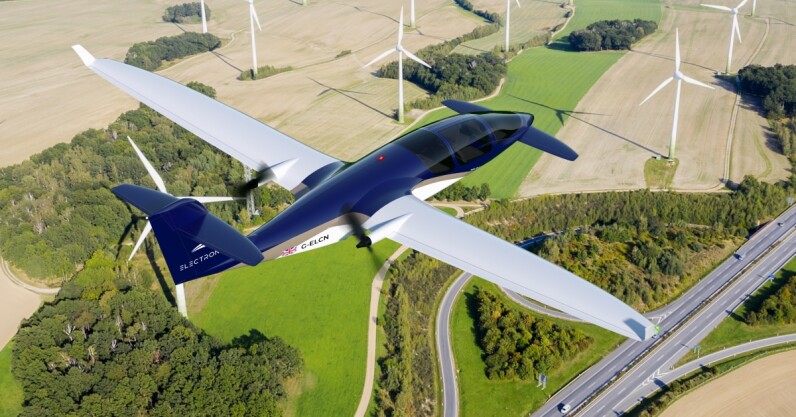
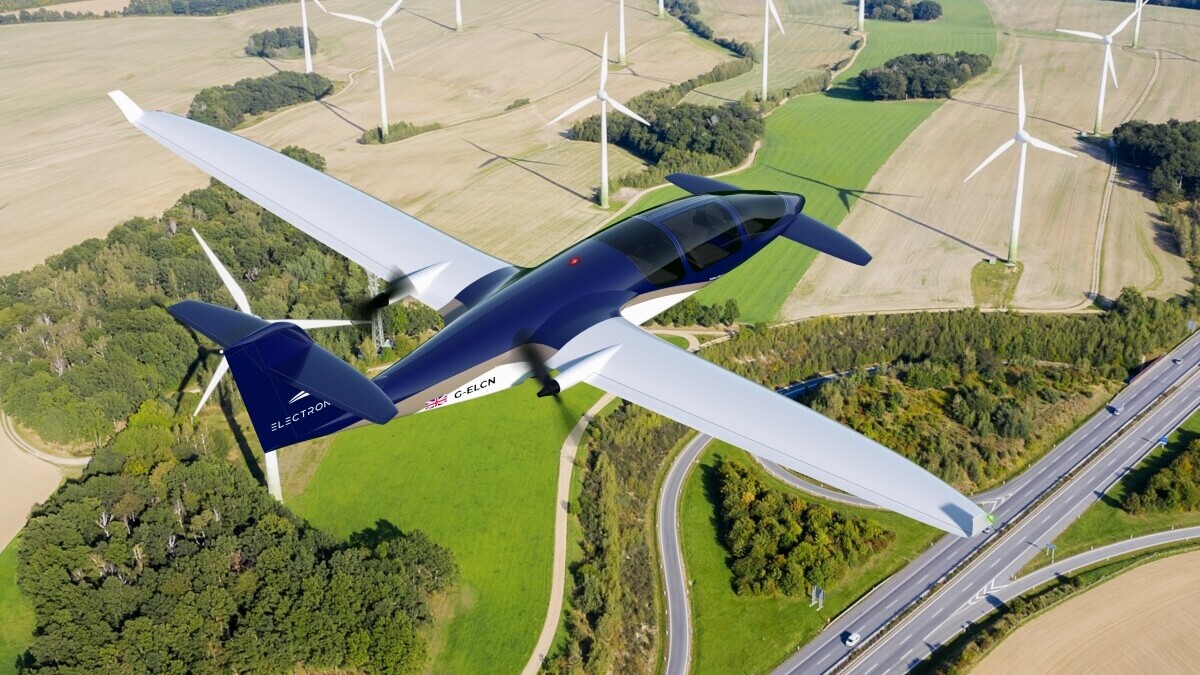
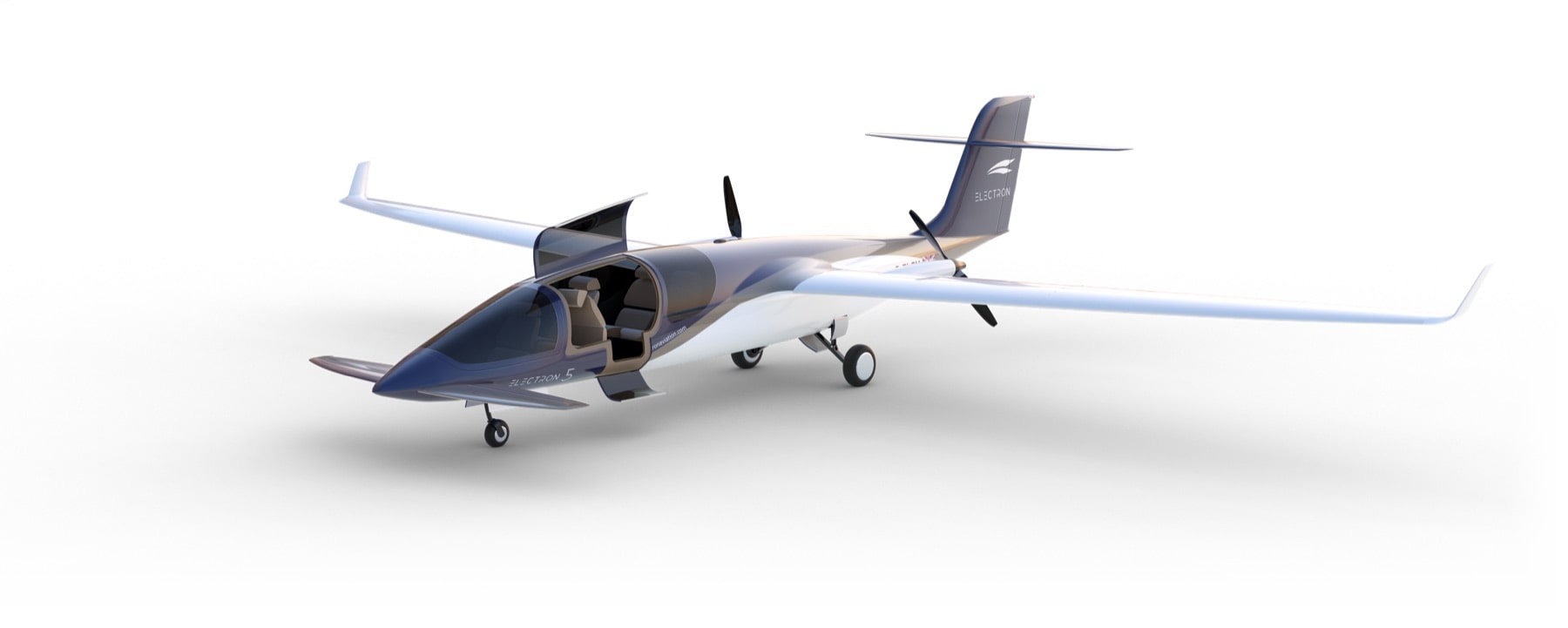
An artist’s impression of the Electric5 air taxi. Credit: ELECTRON Aviation
The startup plans to provide a quick, easy service akin to the Uber of planes — offering a faster and greener way to travel between major European centres. The plane needs 800m of airstrip to take off, which means it can launch from most regular airports, the startup said.
Previously, Josef was quoted saying that a 400km trip in one of his air taxis would set you back around €225. However, in a press release yesterday, the CEO said the “low operating costs” of the aircraft (in comparison with other low-emissions alternatives like hydrogen) would eventually enable the startup to “match or beat” the price of an economy-class plane ticket.
The startup is part of Electric Flying Connection (EFC), a Dutch consortium of companies that recently submitted a funding application to the Dutch Growth Fund to scale battery-electric flying in the country.
Jan Schuring, CEO of Twente Airport, which joined the consortium this year, said that demand for improved connectivity in the region was high, both within the Netherlands and for cross-border travel to Germany, France, and the UK.
By bringing in ELECTRON aviation as the second operator, Twente Airport looks to position itself as the airport of choice for electric air taxi startups looking to launch their services in the country.
ELECTRON also signed a similar agreement with Groningen airport in 2021 and plans to roll out a fleet of battery-electric, zero-emissions aircraft at both airports in 2027.
Get the TNW newsletter
Get the most important tech news in your inbox each week.