
“You know, you’re right, the flight rate—three years is a long time.”
The Artemis II mission is not going to the Moon this month. Credit: NASA
The Space Launch System rocket program is now a decade and a half old, and it continues to be dominated by two unfortunate traits: It is expensive, and it is slow.
The massive rocket and its convoluted ground systems, so necessary to baby and cajole the booster’s prickly hydrogen propellant on board, have cost US taxpayers in excess of $30 billion to date. And even as it reaches maturity, the rocket is going nowhere fast.
You remember the last time NASA tried to launch the world’s largest orange rocket, right? The space agency rolled the Space Launch System out of its hangar in March 2022. The first, second, and third attempts at a wet dress rehearsal—elaborate fueling tests—were scrubbed. The SLS rocket was slowly rolled back to its hangar for work in April before returning to the pad in June.
The fourth fueling test also ended early but this time reached to within 29 seconds of when the engines would ignite. This was not all the way to the planned T-9.3 seconds, a previously established gate to launch the vehicle. Nevertheless mission managers had evidently had enough of failed fueling tests. Accordingly, they proceeded into final launch preparations.
The first launch attempt (effectively the fifth wet-dress test), in late August, was scrubbed due to hydrogen leaks and other problems. A second attempt, a week later, also succumbed to hydrogen leaks. Finally, on the next attempt, and seventh overall try at fully fueling and nursing this vehicle through a countdown, the Space Launch System rocket actually took off. After doing so, it flew splendidly.
That was November 16, 2022. More than three years ago. You might think that over the course of the extended interval since then, and after the excruciating pain of spending nearly an entire year conducting fueling tests to try to lift the massive rocket off the pad, some of the smartest engineers in the world, the fine men and women at NASA, would have dug into and solved the leak issues.
You would be wrong.
The second go-round also does not unfold smoothly
On Monday, after rolling the SLS rocket to be used for the Artemis II mission to the pad in January, NASA attempted its first wet-dress test with this new vehicle. At one of the main interfaces where liquid hydrogen enters the vehicle, a leak developed, not dissimilar to problems that occurred with the Artemis I rocket three years ago.
NASA has developed several ploys to mitigate the leak. These include varying the rate of hydrogen, which is very cold, flowing into the vehicle. At times they also stopped this flow, hoping the seals at the interface between the ground equipment and the rocket would warm up and “re-seat,” thereby halting the leaks. It worked—sort of. After several hours of troubleshooting, the vehicle was fully loaded. Finally, running about four hours late on their timeline, the dogged countdown team at Kennedy Space Center pushed toward the last stages of the countdown.
However, at this critical time, the liquid hydrogen leak rate spiked once again. This led to an automatic abort of the test a little before T-5 minutes. And so ended NASA’s hopes of launching the much-anticipated Artemis II mission, sending four astronauts around the Moon, in February. NASA will now attempt to launch the vehicle no earlier than March following more wet-dress attempts in the interim.
In a news conference on Tuesday afternoon, NASA officials were asked why they had not solved a problem that was so nettlesome during the Artemis I launch campaign.
“After Artemis I, with the challenges we had with the leaks, we took a pretty aggressive approach to do some component-level testing with some of these valves and the seals, and try to understand their behavior,” said John Honeycutt, chair of the Artemis II Mission Management Team. “And so we got a good handle on that relative to how we install the flight-side and the ground-side interface. But on the ground, we’re pretty limited in how much realism we can put into the test. We try to test like we fly, but this interface is a very complex interface. When you’re dealing with hydrogen, it’s a small molecule. It’s highly energetic. We like it for that reason. And we do the best we can.”
If NASA were really going to do the best it could with this rocket, there were options in the last three years. It is common in commercial rocketry to build one or more “test” tanks to both stress the hardware and ensure its compatibility with ground systems through an extensive test campaign. However, SLS hardware is extraordinarily expensive. A single rocket costs in excess of $2 billion, so the program is hardware-poor. Moreover, tanking tests might have damaged the launch tower, which itself cost more than $1 billion. As far as I know, there was never any serious discussion of building a test tank.
Hardware scarcity, due to cost, is but one of several problems with the SLS rocket architecture. Probably the biggest one is its extremely low flight rate, which makes every fueling and launch opportunity an experimental rather than operational procedure. This has been pointed out to NASA, and the rocket’s benefactors in Congress, for more than a decade. A rocket that is so expensive it only flies rarely will have super-high operating costs and ever-present safety concerns precisely because it flies so infrequently.
Acknowledging the low flight rate issue
Until this week, NASA had largely ignored these concerns, at least in public. However, in a stunning admission, NASA’s new administrator, Jared Isaacman, acknowledged the flight-rate issue after Monday’s wet-dress rehearsal test failed to reach a successful conclusion. “The flight rate is the lowest of any NASA-designed vehicle, and that should be a topic of discussion,” he said as part of a longer post about the test on social media.
The reality, which Isaacman knows full well, and which almost everyone else in the industry recognizes, is that the SLS rocket is dead hardware walking. The Trump administration would like to fly the rocket just two more times, culminating in the Artemis III human landing on the Moon. Congress has passed legislation mandating a fourth and fifth launch of the SLS vehicle.
However, one gets the sense that this battle is not yet fully formed, and the outcome will depend on hiccups like Monday’s aborted test; the ongoing performance of the rocket in flight; and how quickly SpaceX’s Starship and Blue Origin’s New Glenn vehicle make advancements toward reliability. Both of these private rockets are moving at light speed relative to NASA’s Slow Launch System.
During the news conference, I asked about this low flight rate and the challenge of managing a complex rocket that will never be more than anything but an experimental system. The answer from NASA’s top civil servant, Amit Kshatriya, was eye-opening.
“You know, you’re right, the flight rate—three years is a long time between the first and second,” NASA’s associate administrator said. “It is going to be experimental, because of going to the Moon in this configuration, with the energies we’re dealing with. And every time we do it these are very bespoke components, they’re in many cases made by incredible craftsmen. … It’s the first time this particular machine has borne witness to cryogens, and how it breathes, and how it vents, and how it wants to leak is something we have to characterize. And so every time we do it, we’re going to have to do that separately.”
So there you have it. Every SLS rocket is a work of art, every launch campaign an adventure, every mission subject to excessive delays. It’s definitely not ideal.
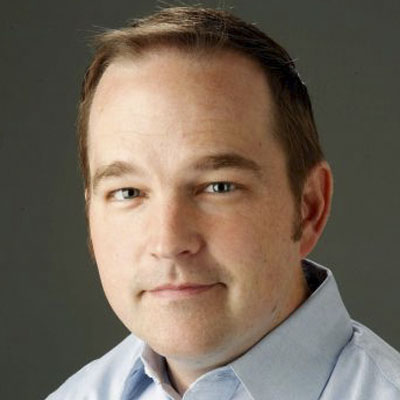
Eric Berger is the senior space editor at Ars Technica, covering everything from astronomy to private space to NASA policy, and author of two books: Liftoff, about the rise of SpaceX; and Reentry, on the development of the Falcon 9 rocket and Dragon. A certified meteorologist, Eric lives in Houston.