
The driver gets a hefty 7.5-inch digital instrument binnacle alongside a 12.9-inch infotainment display. Nearly everything is run through that screen, which is sad for those of us who want a return to physical buttons. It’s quick and responsive, but it lacks the haptic feedback that confirms a tap. The infotainment system supports Android Auto and Apple CarPlay, so you don’t have to use it too much if you don’t like it.
On the road, delivering a load
Even with 600 lbs (272 kg) loaded in the back—Kia wanted us to have a proper experience—the van felt remarkably car-like. The steering is smooth, and it has a delightfully tight turning circle to help navigate small towns and sharp city bends. It felt sure-footed and stable, though the ride was a touch on the jiggly side on all but the smoothest roads.
Yes, it’s a van, so don’t expect a buttery-smooth ride, but because everything else is so car-like, you don’t expect quite so agricultural a ride. Nor do you expect the cabin to sound so echo-y. That contrast strikes you from time to time: it’s clearly built to do a job, but it’s also thoughtfully designed. Its touchpoints are designed to withstand heavy use, so while they’re not especially luxurious, they should hold up to the many painty/muddy/gunky hands that will use them.
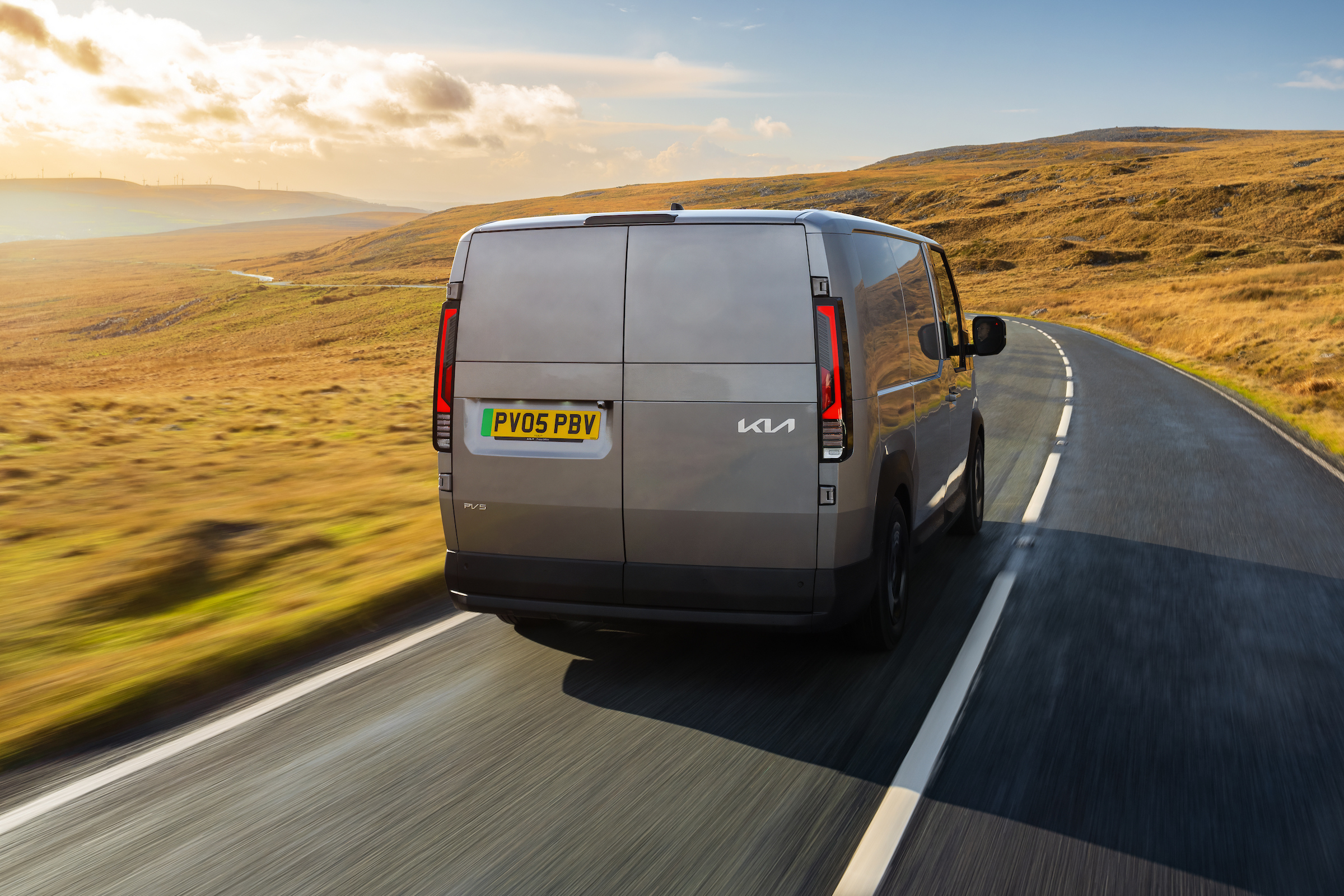
The powertrain is smooth, the ride a bit less so.
Credit: Kia
The powertrain is smooth, the ride a bit less so. Credit: Kia
Its powertrain feels exactly as you’d expect from Kia: silky smooth. It’s not the quickest vehicle in the world, but its torque gets you up to speed briskly enough. Kia’s claimed WLTP figure of 3.8 miles/kWh (16.4 kWh/100 km) wasn’t quite achievable on a chilly day, but winter weather will inevitably knock those numbers down a bit.
You can tell the PV5 isn’t the result of a simple “we have a powertrain, so let’s make a van” situation. Real thought has gone into how it will be used, how operators will interact with it, and how to make their lives easier. Ford, VW, Stellantis, and other van makers in Europe should take note.
As for America, never say never. In the UK and Europe, the PV5 costs tens of thousands less than VW’s retro microbus, suggesting that a North American PV5 could avoid the sticker shock that slowed VW’s sales, leading VW of America to delay imports for a model year. Kia America hasn’t announced plans to import the PV5 yet, but Car and Driver recently spotted one testing US-specific modifications on roads near its office.