
All the news that’s fit to lift
“That is the moment an IPO suddenly came into play.”
Rocket Lab has completed qualification testing of its “Hungry Hippo” payload fairing. Credit: Rocket Lab
Welcome to Edition 8.22 of the Rocket Report! The big news this week concerns the decision by SpaceX founder Elon Musk to take the company public, via IPO, sometime within the next 12 to 18 months. Musk confirmed this after Ars published a story on Wednesday evening. This understandably raises questions about whether a future SpaceX will be committed more to AI data centers in space or Mars settlement. However, one of the company’s founding employees, Tom Mueller, said this could benefit the company’s Mars plans. Clearly this is something we’ll be following closely.
As always, we welcome reader submissions, and if you don’t want to miss an issue, please subscribe using the box below (the form will not appear on AMP-enabled versions of the site). Each report will include information on small-, medium-, and heavy-lift rockets as well as a quick look ahead at the next three launches on the calendar.

Avio will build solid rocket motors in Virginia. The governor of Virginia, Glenn Youngkin, announced Wednesday that Avio USA has selected his state to produce solid rocket motors for defense and commercial space propulsion purposes. Avio USA’s investment, which will be up to $500 million, is supported by its Italian parent Avio. The company’s factory will encompass 860,000 sq. feet.
From Italy with love … “Avio looks forward to establishing on U.S. soil a solid rocket motor production facility to contribute in strengthening the US industrial base by providing decades of experience in engineering and manufacturing,” said Avio Chief Executive Officer Giulio Ranzo. Final approvals and the site-selection announcement are expected to be completed early next year.
Orbex funding lags in European Launcher Challenge. One of the five launch companies in ESA’s European Launcher Challenge, Orbex, received far less funding than the other four at the agency’s ministerial conference after the United Kingdom deferred a decision on how to allocate most of its contribution. Unlike typical ESA programs, in which members contribute funds with the expectation of receiving contracts proportional to their investments, the launcher challenge allowed member states to choose among five “preselected challengers,” Space News reports.
Orbex not in prime position … Those companies were chosen in July based on technical and business maturity, and each could receive up to 169 million euros. They were: Isar Aerospace, MaiaSpace, Orbex, PLD Space, and Rocket Factory Augsburg (RFA). Isar, MaiaSpace, PLD Space, and RFA each received at least 169 million euros, while Orbex received just 34.9 million euros. The UK left 112.3 million euros unallocated, a move that puzzled many industry observers. “We are working with multiple partners to ensure this funding delivers our requirements for assured access to space and benefits U.K. taxpayers,” a UK Space Agency spokesperson said. This was not exactly a ringing endorsement of the UK-based launch company. (submitted by EllPeaTea)
The easiest way to keep up with Eric Berger’s and Stephen Clark’s reporting on all things space is to sign up for our newsletter. We’ll collect their stories and deliver them straight to your inbox.
Europe takes a tentative step toward crewed launch. The European Space Agency has published a call for tenders to develop a launch abort system for a future crewed launch capability, European Spaceflight reports. The system would be used in the event of an emergency, either on the launch pad or during the initial stages of flight.
Looking beyond ISS … The new call is part of the European agency’s post-ISS low-Earth orbit strategy. This strategy, the material explains, includes the development of an end-to-end European crewed flight solution. In addition to developing a crewed launch capability, the agency’s post-ISS strategy includes options for low-Earth orbit infrastructure. These options include partnering with a commercial space station or building a European station. (submitted by EllPeaTea)

After Russian launch incident, NASA brings Dragon launches forward. With a key Russian launch pad out of service, NASA is accelerating the launch of two Cargo Dragon spaceships in order to ensure that astronauts on board the International Space Station have all the supplies they need next year, Ars reports. According to the space agency’s internal schedule, the next Dragon supply mission, CRS-34, is moving forward one month, from June 2026 to May. And the next Dragon supply mission after this, CRS-35, has been advanced three months, from November to August.
NET April for pad repairs … A source indicated that the changing schedules are a “direct result” of a launch pad incident on Thanksgiving Day at the Russian spaceport in Baikonur, Kazakhstan. The issue occurred when a Soyuz rocket launched Roscosmos cosmonauts Sergei Kud-Sverchkov and Sergei Mikayev, as well as NASA astronaut Christopher Williams, on an eight-month mission to the International Space Station. The rocket had no difficulties, but a large mobile platform below the rocket was not properly secured prior to the launch and crashed into the flame trench below, taking the Soyuz pad offline. Russia has told NASA it will require at least four months to repair the pad.
Rocket Lab completes Neutron fairing test. Rocket Lab announced Monday that the Neutron rocket’s innovative “Hungry Hippo” captive fairing has successfully completed qualification testing and is en route to Virginia for Neutron’s first launch. Whereas typical rockets’ fairing halves fall away during launch and are disposable or require collection at sea for reuse, Neutron’s fairing halves open to release the rocket’s second stage and mission payload before closing again to return Neutron to Earth as a single reusable vehicle.
Gobbling marbles … To qualify the Hungry Hippo fairing for Neutron’s first launch, Rocket Lab completed an intensive qualification and acceptance testing campaign that validated the structure’s expected performance during the intense aerodynamic pressure of launch and re-entry featuring full-scale tests as well as a series of sub-component tests. “Building, qualifying, and shipping Hungry Hippo is a fantastic marker of progress toward Neutron’s first launch, and I’m proud of the team for their attention to detail and pulling off this significant milestone,” said Shaun D’Mello, the company’s vice president overseeing Neutron.
Terran R flight tanks assembled. Relativity Space has gone largely silent since being taken over by former Google chief executive Eric Schmidt, but the company still provides monthly updates online. On Tuesday the company published its November 2025 update and revealed that progress is being made on flight hardware for the debut launch of the large Terran R rocket. Relativity has not announced a new launch target yet.
More work to be done … “In November, the team completed all circumferential friction stir welds for the first stage tank for first flight,” the company said. “Measuring 163 feet (49.7 meters) in length, the tank is composed of eight barrel sections and three domes, joined by ten circumferential welds. The tank will now move into integration. With both the first and second stage tanks finished, focus has shifted to the interstage.”
Veteran Falcon 9 booster extends record. SpaceX achieved a couple notable milestones with its Falcon 9 rocket launch from NASA’s Kennedy Space Center on Monday, December 8, Spaceflight Now reports. The mission, dubbed Starlink 6-92, featured the use of the company’s most-flown Falcon booster, tail number B1067. On its 32nd flight, it delivered SpaceX’s 3,000th Starlink satellite of the year to low-Earth orbit.
How is your payload fairing? … The use of B1067 on this mission brings SpaceX one step closer to its current goal of certifying its Falcon boosters for up to 40 missions a piece. The ultimate number of missions a booster flies will partially depend on the types of missions for which it was used and if it is needed on an expendable flight. SpaceX is looking to achieve the same level of reuse for the payload fairings on a Falcon rocket’s upper stage, but typically only provides updates on those during the launches of customer missions for the government or from other companies.

SpaceX likely to IPO next year to fund ambitions. SpaceX is planning to raise tens of billions of dollars through an initial public offering next year, and this represents a major change in thinking from the world’s leading space company and its founder, Elon Musk. The question is, why? He has not enjoyed the public scrutiny of Tesla, and feared that shareholder desires for financial return were not consistent with his ultimate goal of settling Mars. Ars attempts to answer this question by speaking to a number of people familiar with Musk’s thinking.
The short-term answer is data centers … Abhi Tripathi, a long-time SpaceX employee, believes that once Musk realized Starlink satellites could be architected into a distributed network of data centers, the writing was on the wall. “That is the moment an IPO suddenly came into play after being unlikely for so long. Much of the AI race comes down to amassing and deploying assets that work quicker than your competition. A large war chest resulting from an IPO will greatly help his cause and disadvantage all others.” Foremost among Musk’s goals right now is to “win” the battle for artificial intelligence. Taking SpaceX public and using it to marshal an incredible amount of resources shows he is playing to win.
New Glenn targets a four-launch certification. Blue Origin’s New Glenn rocket will have to complete four successful orbital flights as its pathway to certification under the US Space Force’s National Security Space Launch program, Space News reports. Gen. Philip Garrant, who leads the Space Systems Command, said Blue Origin selected the four-flight benchmark and the government agreed.
And then there were three? … “The government is supporting a four-flight certification for New Glenn,” Garrant said. The rocket has logged two successful missions so far, and Garrant said a third launch is expected “earlier in the new year than later.” If upcoming flights stay on track, he added, “I think they’re going to be in a fantastic place to become our third certified provider and compete for missions.” If certified, Blue Origin would join SpaceX and United Launch Alliance as the Space Force’s third heavy-lift launch provider. (submitted by EllPeaTea)
Next three launches
December 13: Long March 6 | Unknown Payload | Taiyuan Satellite Launch Center, China | 01: 05 UTC
December 14: Electron | RAISE and Shine | Māhia Peninsula, New Zealand | 03: 00 UTC
December 14: Falcon 9 | Starlink 15-12 | Vandenberg Space Force Base, Calif. | 05: 20 UTC

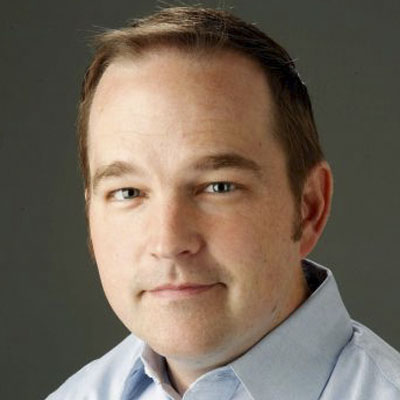
Eric Berger is the senior space editor at Ars Technica, covering everything from astronomy to private space to NASA policy, and author of two books: Liftoff, about the rise of SpaceX; and Reentry, on the development of the Falcon 9 rocket and Dragon. A certified meteorologist, Eric lives in Houston.