trump administration

despite-court-orders,-climate-and-energy-programs-stalled-by-trump-freeze

Despite court orders, climate and energy programs stalled by Trump freeze


Chief of the EPA is also trying to claw back $20 billion, citing alleged wrongdoing.

President Donald Trump’s freeze on federal funding shows little sign of thawing for climate, energy and environmental justice programs.

Despite two federal court orders directing the administration to resume distributing federal grants and loans, at least $19 billion in Environmental Protection Agency funding to thousands of state and local governments and nonprofits remained on hold as of Feb. 14, said environmental and legal advocates who are tracking the issue.

EPA Administrator Lee Zeldin has vowed to seek return of an additional $20 billion the agency invested last year in the Greenhouse Gas Reduction Fund program, calling for a Department of Justice investigation into what he characterized as a “scheme… purposefully designed to obligate all of the money in a rush job with reduced oversight.”

Environmental advocates said Zeldin was unfairly smearing the Greenhouse Gas Reduction Fund, or “green bank,” program, on which EPA worked for more than a year with the Treasury Department to design a standard financial agent arrangement—the kind the government has used many times before to collect and distribute funds.

Critics believe the Trump administration, thwarted last week in its effort to get an appeals court to reinstate its sweeping government-wide freeze on federal funding, is resorting to a new tactic—labeling individual programs as nefarious or fraudulent. Although that approach has met with some success—a federal judge last week allowed the Federal Emergency Management Agency to freeze $80 million in funding from a migrant shelter program in New York—legal experts said courts will be looking for specifics and evidence, not broad assertions that programs are improper.

“They cannot challenge an entire program based on charges of fraud and waste,” said Jillian Blanchard, a vice president of the nonprofit Lawyers for Good Government. “If they had actual concerns about fraud or waste, they would need to follow clear procedures and protocols in the regulations, going grant by grant to address this, but that’s not what’s happening here. They are challenging entire programs whole cloth without evidence.

“The executive does not have the authority to change policies simply because they don’t like them,” Blanchard said at a virtual briefing for reporters on Friday. “Congress makes the law, not the president and certainly not Elon Musk,” she said, referring to the billionaire donor whom Trump has deputized to cut government spending.

Feeling the freeze

Across the country, the spending freeze has thrown into chaos the environmental, resilience and community improvement programs that Congress authorized in the Inflation Reduction Act of 2022. Among the efforts on hold: clean drinking water, air monitoring, hurricane recovery and electric school buses.

“Real people on the ground are being hurt by the stop-start situation,” said Blanchard, whose group is working with the Natural Resources Defense Council on the cases of 230 grantees in 44 states.

Grantees are in a state of confusion because they have not heard directly from EPA, she said.

Michelle Roos, executive director of the Environmental Protection Network, a coalition of former EPA employees that is also working with Lawyers for Good Government, said many grantees are not sure what is happening because the agency’s employees have been forbidden to talk to people outside of the agency.

Several grantees reached by Inside Climate News said that they were not talking to the press, or did not want to say whether or not they could access their funding.

MDC, a nonprofit in Durham, North Carolina, along with the Hispanic Federation, was supposed to receive a $3 million environmental justice community change grant for disaster recovery and resilience programs in Latino areas of eastern North Carolina.

“We were thrilled to receive federal support to do this work, but unfortunately, like many others, we have experienced an interruption in accessing this funding,” said Clarissa Goodlett, MDC’s director of communications.

Many neighborhoods, especially those that are home to low-income, Black and Latino residents, are still rebuilding from hurricanes that hit in 2016 and 2018.

During the storms, rural counties in eastern North Carolina did not provide real-time emergency alerts or evacuation orders in Spanish, according to Enlace Latino NC, a Spanish-language digital news outlet.

The MDC grant would help Latinos connect with local governments to ensure their communities are included in discussions and decisions about the impact of climate disasters.

“We are investigating and pursuing whatever options and channels are available to us to ensure we can follow through on our commitment to communities in eastern North Carolina,” Goodlett said.

Dorothy Darr, executive director of the Southwest Renewal Foundation in High Point, near Greensboro, North Carolina, said she doesn’t know if the group’s $18.4 million grant is frozen. Southwest Renewal is teaming up with eight partners to support not only environmental projects—tree planting, water testing and building an urban greenway—but also workforce training and infrastructure improvements. These include upgrades to old, leaking sewer lines and inefficient HVAC systems and a new energy-efficient “cool” roof at a Guilford County school.

The money would also pay for nine new public electric vehicle charging stations, anti-littering campaigns and other improvements in historically Black and low-income neighborhoods in the southwest part of the city.

Darr said the foundation only recently received an account number from the EPA, and she plans to try to access the funds Monday.

“The grant title”—Environmental and Climate Justice Community Change Grants—”has the words ‘environment’ and ‘justice’ in it,” Darr said. “If you’re just slashing programs based on words, then we’re a sitting duck.”

In Texas, the nonprofit group Downwiders at Risk received word in a Feb. 4 letter that it had received a $500,000 EPA environmental justice “collaborative problem-solving” grant it had applied for last year. The money was to be used to install community air monitors in neighborhoods near Dallas. But the notification didn’t provide instructions on how to access the money, and no followup ever came.

Executive Director Caleb Roberts called around his local EPA office, but no one could give answers.

“People are still unsure. Our project officer at the EPA has no idea. I’ve emailed people higher up,” Roberts said. “They have no idea if things are funded or not. They are just as in the dark as we are.”

Downwinders’ award letter said they had 21 days to pull their first block of funding. If no instructions to access the money arrive before then, Robert worries they may lose it.

The city of New Haven, Connecticut, only received word on Jan. 21—the day after Trump’s inauguration—that it and its local nonprofit partners had received a $20 million environmental justice community change grant, according to Steve Winter, who heads up the city’s Office of Climate and Sustainability. But he had never been able to access the funds; the online system originally said “unavailable for payment;” that changed on Feb. 10 to “suspended.”

The money was supposed to help fund whole-home energy efficiency retrofits in a city where one-quarter of the population lives in poverty and where energy costs have skyrocketed since the start of the Russia-Ukraine war, Winter said. Connecticut, like much of New England, relies heavily on heating oil in winter—not only the most expensive home heating fuel, but the most polluting. The grants also would have helped with asbestos and mold remediation in the homes, which are necessary before energy efficiency upgrades can be done.

Winter said the city has warned its partners that they now may need to lay off staff that they’ve hired for outreach for energy efficiency programs, and the future of a community geothermal project is at risk. Also up in the air: a local food rescue organization’s plans to increase staff and food storage capacity.

“People might say, oh this environmental justice grant is some frivolous thing, but it’s about helping people with quality affordable housing, with lowering their energy bills, alleviating hunger in the community, providing affordable transportation options,” Winter said. “These are all trying to meet basic needs that also have an environmental impact.”

A “rush job” accusation

The Trump administration’s drive to root out “diversity, equity and inclusion,” or DEI programs, throughout the government has swept up environmental justice programs at EPA, even though the two are distinct policy initiatives similar only in that they often involve people of color. After taking office two weeks ago, the first employees that Zeldin announced he was eliminating from the agency were those in DEI and environmental justice programs.

“The previous Administration used DEI and Environmental Justice to advance ideological priorities, distributing billions of dollars to organizations in the name of climate equity,” Zeldin said in a statement. “This ends now. We will be good stewards of tax dollars and do everything in our power to deliver clean air, land, and water to every American, regardless of race, religion, background, and creed.”

Last week, as thousands more employees at EPA and other federal agencies were placed on administrative leave or accepted the deferred retirement offer, Zeldin escalated his critiques on environmental justice and climate programs.

In a video first posted on X, Musk’s social media platform, on Wednesday night,

Zeldin called out $20 billion for the Greenhouse Gas Reduction Fund that he said had been “parked at an outside financial institution,” suggesting that the money was given away in a “rush job” in the waning days of the Biden administration. In fact, the money in question was awarded to eight recipients in August, well before the election. The program’s defenders say it went through a rigorous selection process that began more than a year before the awards were announced.

The $20 billion falls under two programs within the EPA’s Greenhouse Gas Reduction Fund and is intended to support nonprofits and financial institutions to serve as green banks. The eight recipients, which received between $400,000 and $7 billion, are supposed to use that money to finance projects by businesses and nonprofits around the country that would cut climate pollution. Much of the money is dedicated to low-income communities, where it is often harder for businesses to raise private financing.

The recipients have already begun using the funding to support businesses, including $250 million for an electric truck financing program beginning at the ports of Los Angeles and Long Beach, $31.8 million in financing for a solar project for the University of Arkansas System and $10.8 million for solar projects on Tribal lands in Oregon and Idaho.
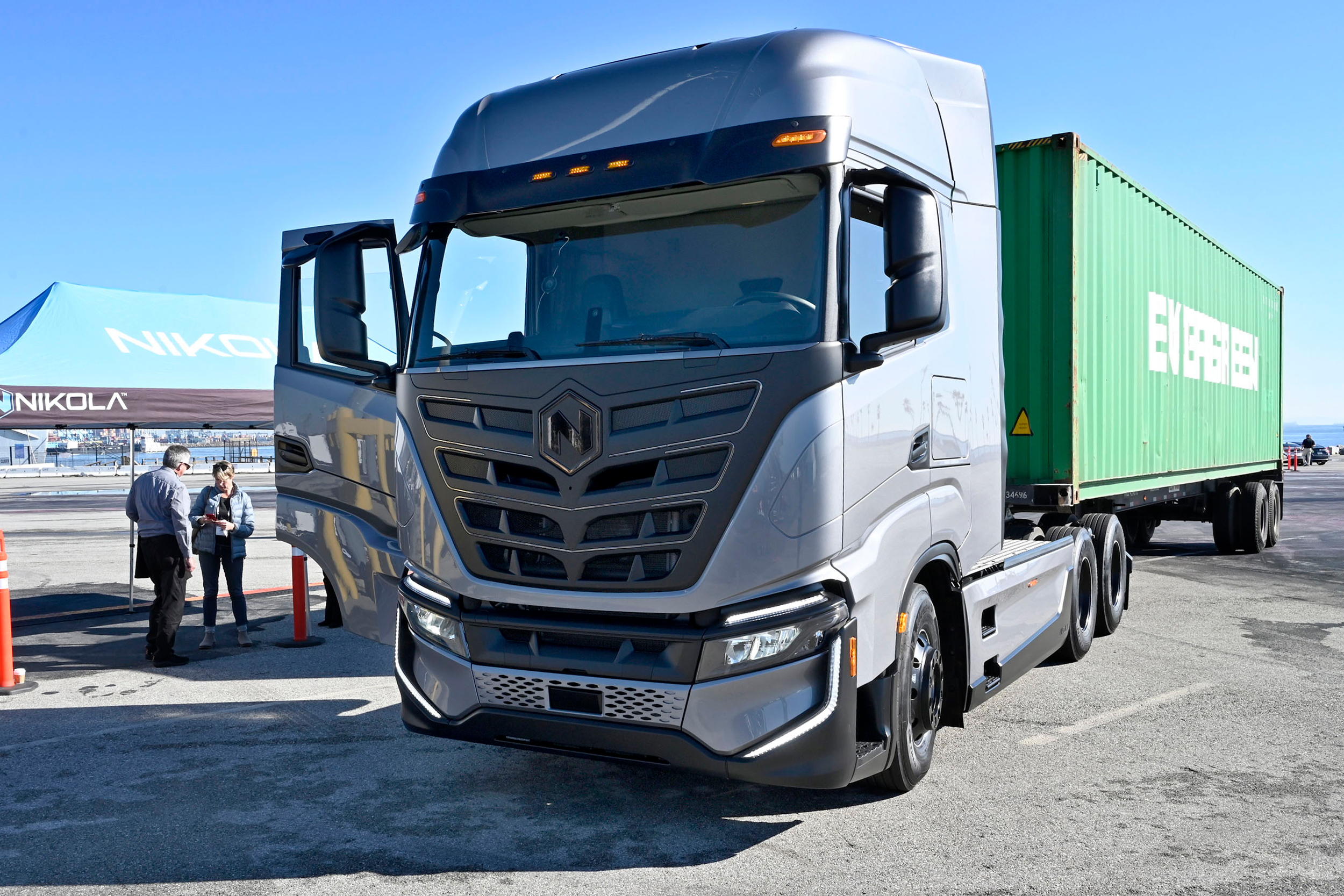
Electric truck

An electric truck is delivered to the Port of Los Angeles in San Pedro, Calif. on Dec. 17, 2021.

Credit: Brittany Murray/MediaNews Group/Long Beach Press-Telegram via Getty Images

An electric truck is delivered to the Port of Los Angeles in San Pedro, Calif. on Dec. 17, 2021. Credit: Brittany Murray/MediaNews Group/Long Beach Press-Telegram via Getty Images

Unlike most of the grant recipients under the IRA, who draw down their money over time as work is completed, the green banks already received their money. Zealan Hoover, who administered IRA programs at EPA during the Biden administration, said the money was placed into bank accounts at Citibank under terms of financial agreements worked out with the Treasury Department.

Although EPA had never used such an outside financial agent before, the Treasury Department had made such agreements with outside institutions many times in the past to distribute or collect money. The system used for electronic federal tax payments, for expanding access to retirement savings and for getting money to assist businesses during the COVID-19 pandemic are just a few of the examples he cited.

“What is underway is not a good-faith effort to fight fraud,” Hoover said. “If it was, federal agencies would not be firing thousands of employees who are hired to conduct robust management and oversight of these programs.”

Zeldin said he was calling for termination of the financial agent agreement for the green bank program, and for the immediate return of the entire fund balance to the United States Treasury. He also said he was referring the issue to the EPA’s Office of the Inspector General and Congress and would “work with the U.S. Department of Justice.” In fact, EPA’s inspector general was dismissed in the early days of the Trump administration along with those at 16 other agencies. EPA’s press office said the agency currently has an acting inspector general but when asked, did not respond with that person’s name. EPA did not answer further questions on the financial agent program, referring only to Zeldin’s video post.

“The American public deserves a more transparent and accountable government than what transpired the past four years,” Zeldin said in the post. “We take our obligations under the law as seriously as it gets. I’ve directed my team to find your ‘gold bars’ and they found them. Now we will get them back inside of control of government as we pursue next steps.”

Citibank declined to comment. Each of the eight recipients of the green bank funds either declined to comment or did not reply to requests for comment.

“Hard for courts to catch up”

What happens next for the grant recipients is not entirely clear. Courts have issued temporary restraining orders to halt the funding freeze until the issue can be argued on its merits. In a five-page order issued Feb. 10, U.S. District Judge John McConnell Jr. of Rhode Island said that it was clear that the administration had in some instances continued “to improperly freeze federal funds.”

McConnell ordered the administration to “immediately end any funding pause,” but EPA and other agencies that are administering IRA climate programs, like the Department of Energy, are continuing to hold back funds.

“We’re talking about funding for families to make upgrades that help them save on their monthly energy bill, funding for people to buy energy efficient appliances and to retrofit their home so that cold air stays out in the winter and hot air stays out in the summer,” said Sen. Patty Murray, D-Wash., the vice chair of the Senate Appropriations Committee, in a briefing with reporters on Thursday. “Those programs aren’t just important to tackling the climate crisis. They are saving our families money.”

“What is painfully clear is that Trump’s illegal funding freeze is causing chaos and confusion,” Murray said.

But Murray and other Democrats, who helped shepherd the IRA to passage in 2022 with no Republican votes, now have little power to force a showdown in a Congress controlled by Republicans. And although multiple studies have shown that most of the $379 billion Congress devoted to funding the clean energy transition in that legislation has flowed to Republican districts, there has been little sign so far that GOP leaders are inclined to clash with the administration. In a few instances, Republicans have sought protection for individual programs that affect their own states.

Blanchard and other legal experts said the courts will have the final say on whether the Trump administration can continue to selectively freeze federal funds. But the decisions may not come soon enough for the programs that are relying on the money they were promised.

“The problem is, as a practical matter, it’s very hard for the courts to catch up,” said Richard Lazarus, an environmental law professor at Harvard Law School. “And the impact on these communities is immediate. The place is closed down, the services aren’t provided for these communities. So the impact can be immediate and devastating, and the practical remedy may be illusory.”

Lazarus was one of the legal scholars writing about environmental justice in the 1990s, before President Bill Clinton signed the first executive order to address communities that suffer a disproportionate burden of pollution. He said that although these communities now “have a fight on their hands,” it is not a new situation for them.

“It’s not as though the government turning against their hardship is something the EJ communities don’t know,” he said. “They don’t welcome it, but they know what this is. It’s how they’ve lived their lives for decades. They fought, and they’ll continue to fight. And that’ll be fighting in cases and lawsuits, and it’ll be fighting politically.”

This story originally appeared on Inside Climate News.

Photo of Inside Climate News

Despite court orders, climate and energy programs stalled by Trump freeze Read More »
trump-has-thrown-a-wrench-into-a-national-ev-charging-program

Trump has thrown a wrench into a national EV charging program


Electric charging projects have been thrown into chaos by the administration’s directive.

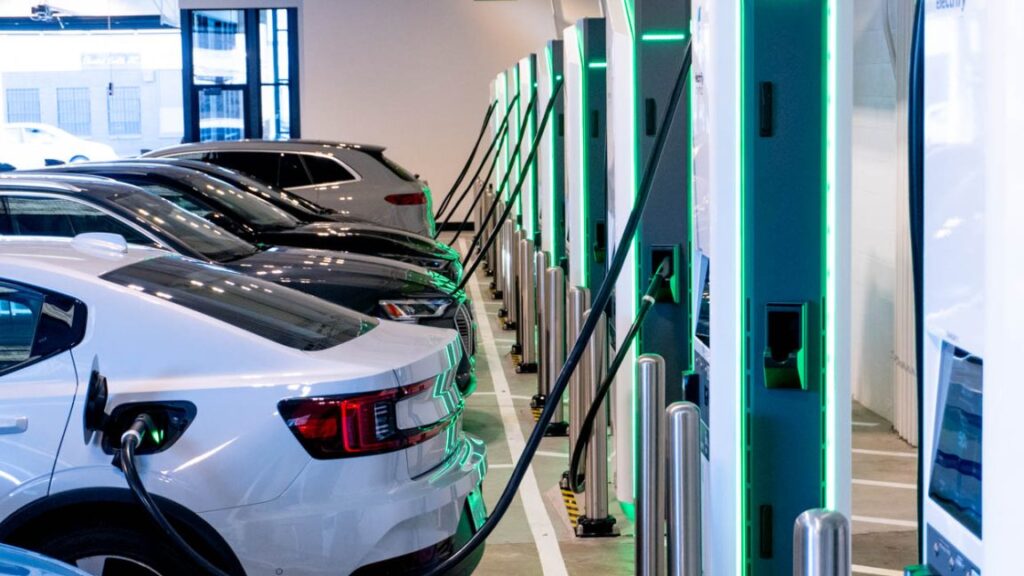
A row of happy EVs charge with no drama, no phone calls to the support line, and no one shuffling spots. Credit: Roberto Baldwin

This article originally appeared on Inside Climate News, a nonprofit, non-partisan news organization that covers climate, energy and the environment. Sign up for their newsletter here.

For now, Priester’s will have to stick to its famous pecans in Fort Payne, Alabama. But maybe not for long.

Priester’s Pecans, an Alabama staple, is one of more than half a dozen sites across the state slated to receive millions of dollars in federal funding to expand access to chargers for electric vehicles.

Across the country, the National Electric Vehicle Infrastructure (NEVI) program, part of the 2021 Infrastructure Investment and Jobs Act signed into law under then-President Joe Biden, is set to provide $5 billion to states for projects that expand the nation’s EV charging infrastructure.

But in a February 6 letter, a Trump administration official notified state directors of transportation that, effectively, they can’t spend it. The Federal Highway Administration rescinded guidance on the funds, which had been allocated by Congress, and “is also immediately suspending the approval of all State Electric Vehicle Infrastructure Deployment plans for all fiscal years,” the letter said.

“Therefore, effective immediately, no new obligations may occur under the NEVI Formula Program until the updated final NEVI Formula Program Guidance is issued and new State plans are submitted and approved.”

POLITICO reported on Wednesday that a DOT spokesman said in an email that states were free to use a small portion of the funding—about $400 million—because that was money the states had already “obligated,” or awarded to subcontractors. But that would still leave close to 90 percent of the funding up in the air.

Even before the administration had issued its letter, some Republican-led states, including Alabama, had already announced pauses to their states’ implementation of the national EV charging program.

“In response to Unleashing American Energy, one of several Executive Orders that President Trump signed on January 20, 2025, the Alabama Department of Economic and Community Affairs has paused the National Electric Vehicle Infrastructure (NEVI) Program as of January 28, 2025,” the Alabama agency responsible for implementing NEVI posted on its website. “In addition, for applications for funding that were originally due on March 17, 2025, ADECA has closed the application window until further notice.”

Despite the announcement by the Trump administration, however, legal experts and those familiar with the electric charging program at issue say the president does not have the power to permanently nix the NEVI program.

“NEVI funding was appropriated by Congress as part of the bipartisan infrastructure law, and it cannot be canceled by the executive branch,” said Elizabeth Turnbull, director of policy and regulatory affairs at the Alliance for Transportation Electrification, a trade group for the electric vehicle industry. “It’s not clear that the secretary of transportation has the authority to revoke states’ NEVI plans, and it’s quite clear that the executive branch lacks the authority to withhold the funding for any sustained period. So, we expect recent executive branch actions to be successfully challenged in court.”

Even under the most aggressive arguments for a strong executive branch, the Supreme Court has stated clearly that the Constitution gives Congress the sole authority to appropriate and legislate.

Lawmakers, too, have weighed in on the legality of the Trump administration’s NEVI directive, saying officials acted with “blatant disregard for the law.”

In a letter to administration officials, Democratic members of the Senate Committee on Environment and Public Works urged the Department of Transportation to retract its February 6 letter and “implement the law according to your responsibilities.”

The Democrats’ letter also asked for responses to questions about the legal basis for the action and for information about the involvement of individuals associated with Elon Musk’s so-called “Department of Government Efficiency.” DOGE is not an official department, and multiple reports show that Musk’s team has been dismantling parts or all of some federal agencies.

Tesla, Musk’s electric vehicle company, currently has the largest network of fast chargers in the country. It’s not yet clear if any new policies on NEVI, or the pause on building out a more robust network for all EV drivers, could benefit Tesla.

The Department of Transportation, the Federal Highway Administration’s parent agency, did not respond to a request for comment.

With or without NEVI, the move toward the electrification of transportation is inevitable, experts say. But they warn that although the administration’s pause of the program will likely be reversed by the courts, even a temporary delay in EV charging infrastructure can harm the nation’s ability to quickly and efficiently transition to electric vehicles. And the Trump administration ignored an earlier court order to lift a broad freeze on federal funds, a federal judge ruled this week.

Meanwhile, Trump’s NEVI freeze has sown confusion across the country, with EV stakeholders and state governments scrambling to figure out what the funding pause will mean and how to respond.

Beyond Alabama, interviews across the country found officials in deep red Wyoming contemplating a possible return of funds, while those in progressive states like Illinois and Maryland remain firmly committed to the EV buildout, with or without federal funding. In purple North Carolina, officials are in limbo, having already spent some NEVI funds, but not sure how to proceed with the next round of projects.

Alabama

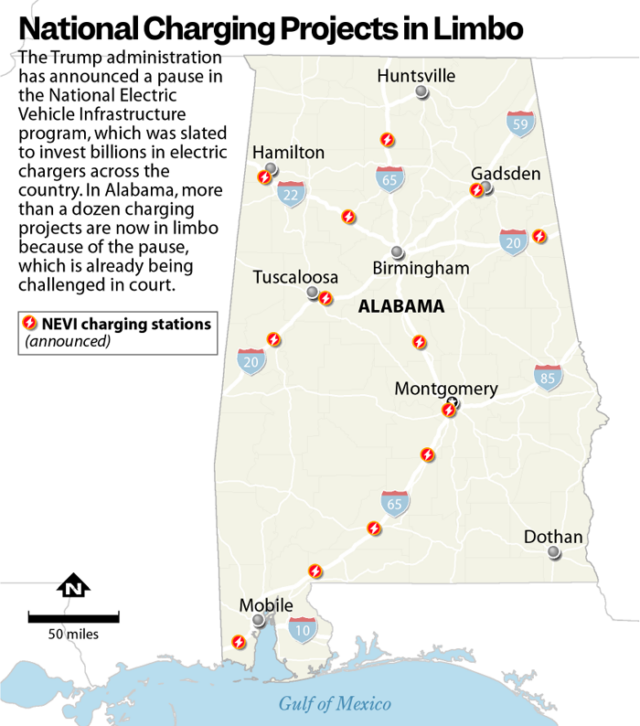
In Alabama, officials had already announced plans to fund more than a dozen chargers at sites across the state along interstates and major highways, including installing two dual-port chargers at eight Love’s Travel Stops and another at Priester’s Pecans off I-65 in Fort Deposit.

At the time, state officials, including Republican Gov. Kay Ivey, praised the funding.

“Having strategic electric vehicle charging stations across Alabama not only benefits EV drivers, but it also benefits those companies that produce electric vehicles, including many of them right here in Alabama, resulting in more high-paying jobs for Alabamians,” Ivey said when the funding allocation was announced in July 2024. “This latest round of projects will provide added assurance that Alabamians and travelers to our state who choose electric vehicles can travel those highways and know a charging station is within a reliable distance on their routes.”

In total, Alabama was set to receive $79 million in funding through the program, including $2.4 million to expand training programs for the installation, testing, operation, and maintenance of EVs and EV chargers at Bevill State Community College in the central part of the state. The college did not respond to a request for comment on whether the money had been disbursed to the institution before the announced pause.

In an email exchange this week, a spokesperson for the Alabama Department of Economic and Community Affairs confirmed what the agency had posted to its website in the wake of Trump’s inauguration—that the state would pause NEVI projects and await further guidance from the Trump administration.

Even with a pause, however, stakeholders in Alabama and across the country have expressed a commitment to continuing the expansion of electric vehicle charging infrastructure.

For its part, Love’s Travel Stops, a 42-state chain that had been set to receive more than $5.8 million in funding for EV chargers in Alabama alone, said it will continue to roll out electric chargers at locations nationwide.

“Love’s remains committed to meeting customers’ needs regardless of fuel type and believes a robust electric vehicle charging network is a part of that,” Kim Okafor, general manager of zero emissions for Love’s, said in an emailed statement. “Love’s will continue to monitor related executive orders and subsequent changes in law to determine the next steps. This includes the Alabama Department of Transportation’s Electric Vehicle charging plan timelines.”

The state of Alabama, meanwhile, has its own EV charger program apart from NEVI that has already funded millions of dollars worth of charging infrastructure.

In January, even after its announced pause of NEVI implementation, the Alabama Department of Economic and Community Affairs announced the awarding of six grants totaling $2.26 million from state funds for the construction of EV chargers in Huntsville, Hoover, Tuscaloosa, and Mobile.

“The installation of electric vehicle charging stations at places like hotels are investments that can attract customers and add to local economies,” ADECA Director Kenneth Boswell said at the time.

North Carolina

In North Carolina, the full buildout of the state’s electric charging network under NEVI is in limbo just four months after the NC Department of Transportation announced the initial recipients of the funds.

NC DOT spokesman Jamie Kritzer said that based on the federal government’s directive, the agency is continuing with awarded projects but “pausing” the next round of requests for proposals, as well as future phases of the buildout.

If that pause were to become permanent, the state would be forced to abandon $103 million in federal infrastructure money that would have paid for an additional 41 stations to be built as part of Phase 1.

Last September the state announced it had awarded nearly $6 million to six companies to build nine public charging stations. Locations include shopping centers, travel plazas, and restaurants, most of them in economically disadvantaged communities.

NEVI requires EV charging stations in the first phase to be installed every 50 miles along the federally approved alternative fuel corridors, and that they be within one mile of those routes. The state has also prioritized Direct Current Fast Charging (DCFC) stations, which can charge a vehicle to 80 percent in 20 to 30 minutes.

The NEVI program is structured to reimburse private companies for up to 80 percent of the cost to construct and operate electric vehicle charging stations for five years, after which the charging stations will continue to operate without government support, according to the state DOT.

The state estimated it would have taken two to three years to finish Phase 1.

Under Phase 2, the state would award federal funds to build community-level electric vehicle charging stations, farther from the major highways, including in disadvantaged communities.

That is particularly important in North Carolina, which has the second-largest rural population in the US in terms of percentage. A third of the state’s residents live in rural areas, which are underserved by electric vehicle charging stations.

There are already more than 1,700 public electric charging stations and 4,850 ports in North Carolina, according to the US Department of Energy’s Alternative Fuels Data Center. But they aren’t evenly dispersed throughout the state. Alleghany and Ashe counties, in the western mountains, have just one charging station each.

Vickie Atkinson, who lives in the country between Chapel Hill and Pittsboro in central North Carolina, drives a plug-in hybrid Ford Escape, which is powered by an electric engine or gas, unlike full electric models, which have no gas option. Plug-in hybrids typically have fully electric ranges of 35 to 40 miles.

“I try to drive on battery whenever possible,” Atkinson said. But she’s frustrated that she can’t drive from her home to downtown Siler City and back—a 60-mile round trip—without resorting to the gas engine. There are two chargers on the outskirts along US 64—only one of them is a fast charger—but none downtown.

“I really hope the chargers are installed,” Atkinson said. “I fear they won’t and I find that very frustrating.”

Former Gov. Roy Cooper, a Democrat, advocated for wider adoption of electric vehicles and infrastructure. In a 2018 executive order, Cooper established a benchmark of 80,000 registered zero-emission vehicles in the state by 2025.

North Carolina met that goal. State DOT registration data shows there were 81,658 electric vehicles and 24,457 plug-in hybrids as of September, the latest figures available.

Cooper issued a subsequent executive order in 2022 that set a more aggressive goal: 1.2 million registered electric vehicles by 2030. At the current pace of electric vehicle adoption, it’s unlikely the state will achieve that benchmark.

The electric vehicle industry is an economic driver in North Carolina. Toyota just opened a $13.9 billion battery plant in the small town of Liberty and says it will create about 5,100 new jobs. The company is scheduled to begin shipping batteries in April.

Natron Energy is building a plant in Edgecombe County, east of Raleigh, to manufacture sodium-ion batteries for electric vehicles. Experts say they are cheaper and environmentally superior to lithium-ion batteries and less likely to catch fire, although they store less energy.

The global company Kempower opened its first North American factory in Durham, where it builds charging infrastructure. Jed Routh, its vice president of markets and products for North America, said that while “the rapidly shifting market is difficult to forecast and interest in electric vehicles may slow at times over the next four years, we don’t expect it to go away. We believe that the industry will remain strong and Kempower remains committed to define, produce, and improve EV charging infrastructure throughout North America.”

North Carolina does have a separate funding source for electric charging stations that is protected from the Trump administration’s program cuts and cancellations. The state received $92 million from Volkswagen, part of the EPA’s multi-billion-dollar national settlement in 2016 with the car company, which had installed software in some of its diesel cars to cheat on emissions tests.

The Department of Environmental Quality used the settlement money to pay for 994 EV charging ports at 318 sites in North Carolina. The agency expects to add more charging stations with $1.8 million in unspent settlement funds.

Electrify America was created by the Volkswagen Group of America to implement a $2 billion portion of the settlement. It required the car company to invest in electric charging infrastructure and in the promotion of electric and plug-in hybrid vehicles.

Electrify America operates 20 charging NEVI-compliant, high-speed stations in North Carolina, using the settlement money. However, the funding pause could affect the company because it works with potential site developers and small businesses to comply with the NEVI requirements.

The company is still reviewing the details in the federal memo, company spokeswoman Tara Geiger said.

“Electrify America continues to engage with stakeholders to understand developments impacting the National Electric Vehicle Infrastructure program,” Geiger wrote in an email. “We remain committed to growing our coast-to-coast Hyper-Fast network to support transportation electrification.”

Wyoming

In Wyoming, Doug McGee, a state Department of Transportation spokesperson, said the agency is taking a wait and see approach to NEVI moving forward, and is not ruling out a return of funding. About half a dozen people at the department handle NEVI along with other daily responsibilities, McGee said, and it will be easy for them to put NEVI on hold while they await further instruction.

The department was in the process of soliciting proposals for EV charging stations and has not yet spent any money under NEVI. “There was very little to pause,” McGee said.

Across 6,800 miles of highway in Wyoming, there are 110 public EV charging stations, making the state’s EV infrastructure the third-smallest in the country, ahead of charging networks in only North Dakota and Alaska.

Illinois

More progressive states, including Illinois, have explicitly said they will redouble their efforts to support the expansion of EV charging infrastructure in the wake of the Trump administration’s NEVI pause.

The state of Illinois has said it remains committed to the goal of helping consumers and the public sector transition to EVs in 2025 through state funding sources, even if some NEVI projects are halted.

Commonwealth Edison Co. (ComEd), the largest electric utility in Illinois and the primary electric provider in Chicago, also announced a $100 million rebate program on Feb. 6 at the Chicago Auto Show, funds that are currently available to boost EV adoption throughout the state.

The funds are for residential EV charger and installation costs, all-electric fleet vehicles, and charging infrastructure in both the public and private sectors.

According to Cristina Botero, senior manager for beneficial electrification at ComEd, the rebate is part of a total investment of $231 million from ComEd as part of its Beneficial Electrification plan programs to promote electrification and EV adoption.

While the $231 million won’t be impacted by the Trump administration’s order, other EV projects funded by NEVI are halted. In 2022, for example, $148 million from NEVI was set to be disbursed in Illinois over the course of five years, focusing on Direct Current Fast Charging to fulfill the requirement to build charging stations every 50 miles, according to the Illinois Department of Transportation.

“We are still in the process of reviewing the impacts of last week’s order and evaluating next steps going forward,” said Maria Castaneda, spokesperson at IDOT, in an emailed statement.

The NEVI funds were also set to help achieve Gov. J.B. Pritzker’s goal to have 1 million EVs on Illinois roads by 2030. Officials estimated that at least 10,000 EV charging stations are needed in order to achieve this 2030 goal. Last fall, there were 1,200 charging stations open to the public.

In January, Illinois was awarded federal funds totaling $114 million from the US Department of Transportation to build 14 truck charging hubs, adding to the statewide charging infrastructure.

According to Brian Urbaszewski, director of environmental health programs for the Respiratory Health Association, most of that funding is either frozen or at risk.

However, programs like the recent ComEd rebate will not be impacted. “This is at the state level and not dictated by federal policy,” Botero said.

Maryland

In Maryland, state officials are trying to assess the fallout and find alternative ways to keep EV infrastructure efforts alive. The outcome hinges on new federal guidance and potential legal battles over the suspension.

Maryland is allocated $63 million over five years under NEVI. The Maryland Department of Transportation (MDOT) launched the first $12.1 million round last summer to build 126 fast-charging ports at 22 sites across many of the state’s counties. At least some are expected to be operational by late 2025.

In December, MDOT issued a new call for proposals for building up to 29 additional highway charging stations, expecting stable federal support. At the time, senior MDOT officials told Inside Climate News they were confident in the program’s security since it was authorized under law.

But Trump’s funding pause has upended those plans.

“The Maryland Department of Transportation is moving forward with its obligated NEVI funding and is awaiting new guidance from the U.S. Department of Transportation to advance future funding rounds,” said Carter Elliott, a spokesperson for Gov. Wes Moore, in an emailed statement.

The Moore administration reaffirmed its commitment to EV expansion, calling charging essential to reducing consumer costs and cutting climate pollution. “Gov. Moore is committed to making the state more competitive by pressing forward with the administration’s strategy to deliver charging infrastructure for clean cars to drivers across the state,” the statement added.

In written comments, an MDOT spokesperson said the agency is determining its options for future funding needs and solicitations.

Katherine García, director of the Sierra Club’s Clean Transportation for All program, said that freezing the EV charging funds was an unsound and illegal move by the Trump administration. “This is an attack on bipartisan funding that Congress approved years ago and is driving investment and innovation in every state,” she said.

She said that the NEVI program is helping the US build out the infrastructure needed to support the transition to vehicles that don’t pollute the air.

The Sierra Club’s Josh Stebbins lamented the slow pace of the EV charger buildout across the state. “We are not sure when Maryland’s NEVI chargers will be operational,” he said. “States must move faster and accelerate the installation of NEVI stations. It has been frustratingly slow, and the public needs to see a return on its investment.”

Maryland EV ambitions are high stakes. Transportation remains the state’s largest source of greenhouse gas emissions, and public officials and advocates see EV adoption as critical to meet its net-zero carbon goal by 2045. NEVI is also a key plank of the state’s broader Zero Emission Vehicle Infrastructure Planning initiative, designed to accelerate the transition away from fossil fuels.

What happens next

As litigation is brought over the Trump administration’s pause on NEVI funds, experts like Turnbull of the Alliance for Transportation Electrification believe the United States remains, despite this bump, on the road toward electrification.

“We are not shifting into reverse,” Turnbull said. “The EV market will continue to grow across all market segments driven by market innovation and consumer demand, both within the United States and globally. By pretending the EV transition doesn’t exist, this administration risks the US’s global competitiveness, national security, and economic growth.”

Photo of Inside Climate News

Trump has thrown a wrench into a national EV charging program Read More »

how-might-nasa-change-under-trump?-here’s-what-is-being-discussed

How might NASA change under Trump? Here’s what is being discussed

One source said the space transition team has been working off of ideas that Trump has talked about publicly, including his interest in Mars. For example, during a campaign speech this fall, Trump referenced SpaceX founder Elon Musk, who played a significant role during the campaign both in terms of time and money, and his desire to settle Mars.

“We are leading in space over Russia and China… It’s my plan, I’ll talk to Elon,” Trump said in September. “Elon get those rocket ships going because we want to reach Mars before the end of my term, and we want also to have great military protection in space.”

Ideas under consideration

The transition team has been discussing possible elements of an executive order or other policy directives. They include:

  • Establishing the goal of sending humans to the Moon and Mars, by 2028
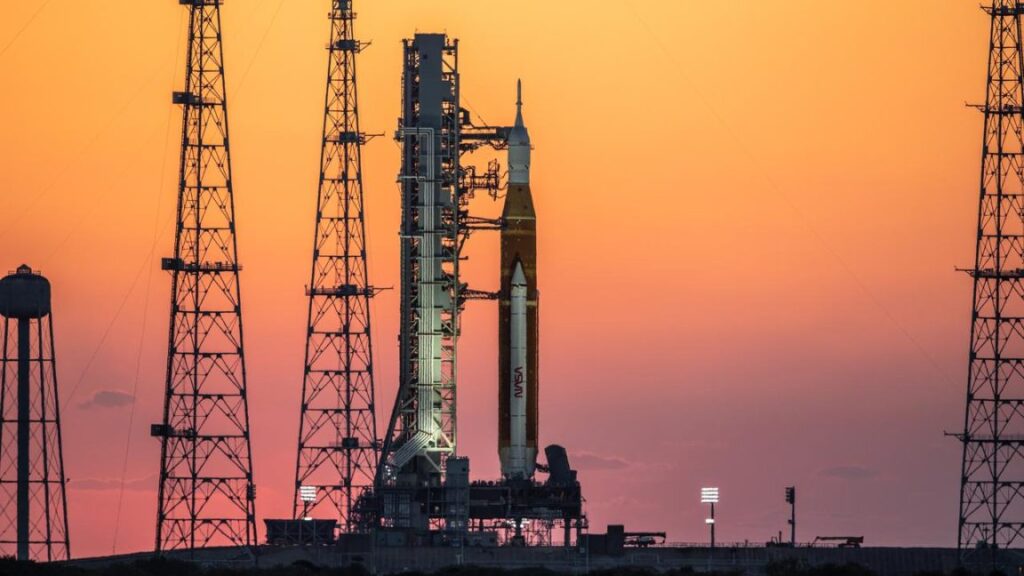
  • Canceling the costly Space Launch System rocket and possibly the Orion spacecraft
  • Consolidating Goddard Space Flight Center and Ames Research Center at Marshall Space Flight Center in Alabama
  • Retaining a small administration presence in Washington, DC, but otherwise moving headquarters to a field center
  • Rapidly redesigning the Artemis lunar program to make it more efficient

“Is any of this written in stone? No,” a source told Ars.

Additionally, substantive changes will need to be worked through the White House Office of Management and Budget, and negotiated with Congress, which funds NASA.

Previously, Trump has announced that entrepreneur and commercial astronaut Jared Isaacman will be nominated to serve as NASA Administrator. Although he has been working to create a staff for his administration, Isaacman has not been involved in the transition team discussions, sources said. Rather, after he is confirmed, Isaacman is likely to be given authority to review major programs at the space agency “at the speed of light.”

How might NASA change under Trump? Here’s what is being discussed Read More »

facing-ban-next-month,-tiktok-begs-scotus-for-help

Facing ban next month, TikTok begs SCOTUS for help

TikTok: Ban is slippery slope to broad US censorship

According to TikTok, the government’s defense of the ban to prevent China from wielding a “covert” influence over Americans is a farce invented by lawyers to cover up the true mission of censorship. If the lower court’s verdict stands, TikTok alleged, “then Congress will have free rein to ban any American from speaking simply by identifying some risk that the speech is influenced by a foreign entity.”

TikTok doesn’t want to post big disclaimers on the app warning of “covert” influence, claiming that the government relied on “secret evidence” to prove this influence occurs on TikTok. But if the Supreme Court agrees that the government needed to show more than “bare factual assertions” to back national security claims the lower court said justified any potential speech restrictions, then the court will also likely agree to reverse the lower court’s decision, TikTok suggested.

It will become much clearer by January 6 whether the January 19 ban will take effect, at which point TikTok would shut down, booting all US users from the app. TikTok urged the Supreme Court to agree it is in the public interest to delay the ban and review the constitutional claims to prevent any “extreme” harms to both TikTok and US users who depend on the app for news, community, and income.

If SCOTUS doesn’t intervene, TikTok said that the lower court’s “flawed legal rationales would open the door to upholding content-based speech bans in contexts far different than this one.”

“Fearmongering about national security cannot obscure the threat that the Act itself poses to all Americans,” TikTok alleged, while suggesting that even Congress would agree that a “modest delay” in enforcing the law wouldn’t pose any immediate risk to US national security. Congress is also aware that a sale would not be technically, commercially, or legally possible in the timeframe provided, TikTok said. A temporary injunction would prevent irreparable harms, TikTok said, including the irreparable harm courts have long held is caused by restricting speech of Americans for any amount of time.

“An interim injunction is also appropriate because it will give the incoming Administration time to determine its position, as the President-elect and his advisors have voiced support for saving TikTok,” TikTok argued.

Ars could not immediately reach TikTok for comment.

Facing ban next month, TikTok begs SCOTUS for help Read More »