Tesla kills Autopilot, locks lane-keeping behind $99/month fee
No Tesla sales in California
Tesla was told that if it couldn’t resolve the deceptive marketing within those 60 days, the sales suspension would take effect. That would be bad for the automaker, as California is far and away its largest market in the US, albeit one that is shrinking each quarter. Having to suspend sales entirely in the state would be disastrous. Some had speculated that Tesla could change Autopilot’s name to something less misleading, but the company chose a more drastic approach.
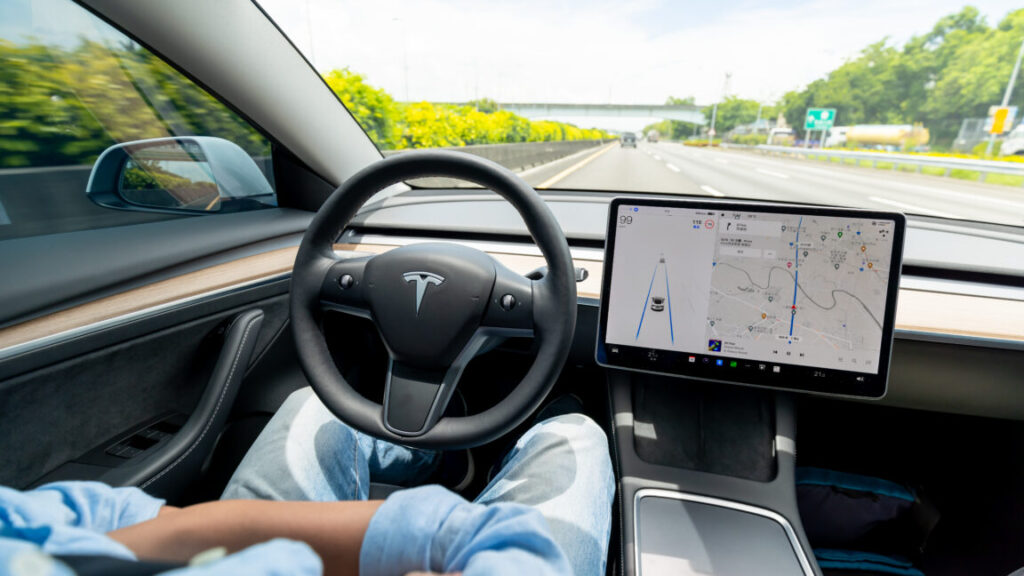
Now, if you want your new Tesla to steer itself—while you pay attention to the road—you will have to pay for FSD. Until the middle of February, that can be done for a one-time fee of $8,000. But starting on February 14, that option goes away, too, and the sole choice will be a $99/month FSD subscription.
But probably not for very long. Last night, Musk revealed on his social media platform that “the $99/month for supervised FSD will rise as FSD’s capabilities improve. The massive value jump is when you can be on your phone or sleeping for the entire ride (unsupervised FSD).”
The quest for recurring revenue streams is becoming something of a holy grail in the automotive industry as OEMs that previously treated their customers as a single sale now hope to make themselves more attractive to investors by encouraging customers to give them regular payouts.
This may have contributed to General Motors’ decision to drop Apple CarPlay and Android Automotive. BMW has also experimented with subscription services. Tesla’s stock price remains so high that such games are probably unnecessary here, but with falling profit margins, declining sales, and the loss of emissions credits to bolster the bottom line, one can see why regular cash infusions from Tesla drivers would be desirable.
Tesla kills Autopilot, locks lane-keeping behind $99/month fee Read More »