Stock Market

experts-urge-caution-about-using-chatgpt-to-pick-stocks

Experts urge caution about using ChatGPT to pick stocks

“AI models can be brilliant,” Dan Moczulski, UK managing director at eToro, told Reuters. “The risk comes when people treat generic models like ChatGPT or Gemini as crystal balls.” He noted that general AI models “can misquote figures and dates, lean too hard on a pre-established narrative, and overly rely on past price action to attempt to predict the future.”

The hazards of AI stock picking

Using AI to trade stocks at home feels like it might be the next step in a long series of technological advances that have democratized individual retail investing, for better or for worse. Computer-based stock trading for individuals dates back to 1984, when Charles Schwab introduced electronic trading services for dial-up customers. E-Trade launched in 1992, and by the late 1990s, online brokerages had transformed retail investing, dropping commission fees from hundreds of dollars per trade to under $10.

The first “robo-advisors” appeared after the 2008 financial crisis, which began the rise of automated online services that use algorithms to manage and rebalance portfolios based on a client’s goals. Services like Betterment launched in 2010, and Wealthfront followed in 2011, using algorithms to automatically rebalance portfolios. By the end of 2015, robo-advisors from nearly 100 companies globally were managing $60 billion in client assets.

The arrival of ChatGPT in November 2022 arguably marked a new phase where retail investors could directly query an AI model for stock picks rather than relying on pre-programmed algorithms. But Leung acknowledged that ChatGPT cannot access data behind paywalls, potentially missing crucial analyses available through professional services. To get better results, he creates specific prompts like “assume you’re a short analyst, what is the short thesis for this stock?” or “use only credible sources, such as SEC filings.”

Beyond chatbots, reliance on financial algorithms is growing. The “robo-advisory” market, which includes all companies providing automated, algorithm-driven financial advice from fintech startups to established banks, is forecast to grow roughly 600 percent by 2029, according to data-analysis firm Research and Markets.

But as more retail investors turn to AI tools for investment decisions, it’s also potential trouble waiting to happen.

“If people get comfortable investing using AI and they’re making money, they may not be able to manage in a crisis or downturn,” Leung warned Reuters. The concern extends beyond individual losses to whether retail investors using AI tools understand risk management or have strategies for when markets turn bearish.

Experts urge caution about using ChatGPT to pick stocks Read More »
raspberry-pi-is-planning-a-london-ipo,-but-its-ceo-expects-“no-change”-in-focus

Raspberry Pi is planning a London IPO, but its CEO expects “no change” in focus

Just enough RAM to move markets —

Eben Upton says hobbyists remain “incredibly important” while he’s involved.

Updated

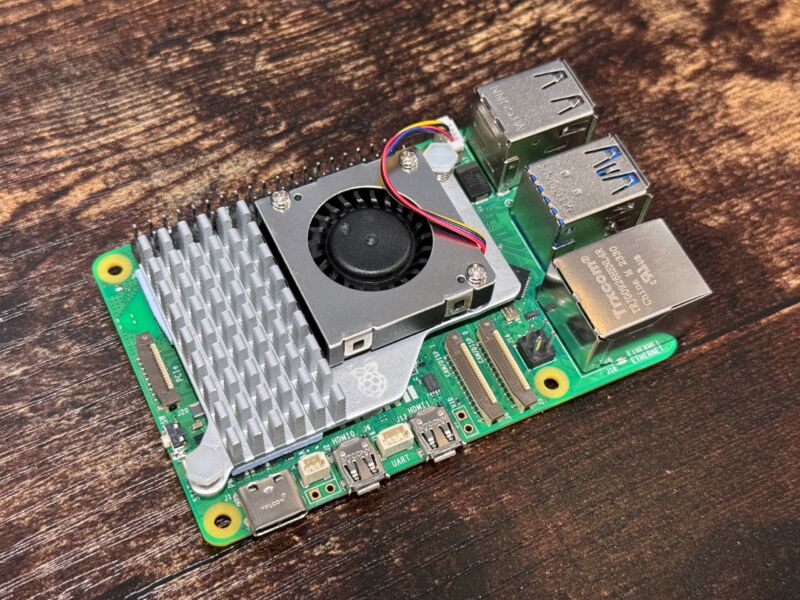
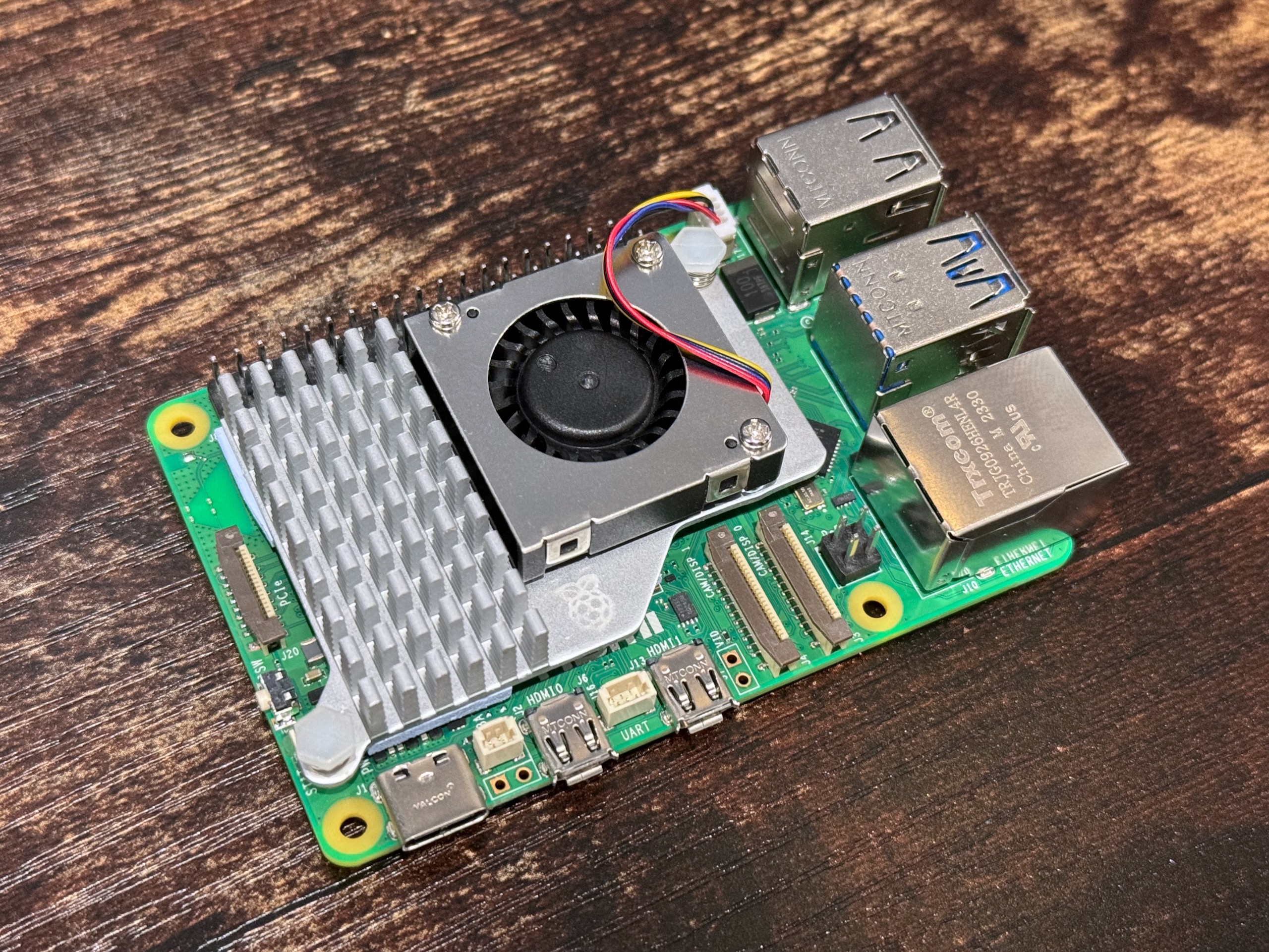
Raspberry Pi 5 with Active Cooler installed on a wood desktop

Enlarge / Is it not a strange fate that we should suffer so much fear and doubt for so small a thing? So small a thing!

Andrew Cunningham

The business arm of Raspberry Pi is preparing to make an initial public offering (IPO) in London. CEO Eben Upton tells Ars that should the IPO happen, it will let Raspberry Pi’s not-for-profit side expand by “at least a factor of 2X.” And while it’s “an understandable thing” that Raspberry Pi enthusiasts could be concerned, “while I’m involved in running the thing, I don’t expect people to see any change in how we do things.”

CEO Eben Upton confirmed in an interview with Bloomberg News that Raspberry Pi had appointed bankers at London firms Peel Hunt and Jefferies to prepare for “when the IPO market reopens.”

Raspberry previously raised money from Sony and semiconductor and software design firm ARM, and it sought public investment. Upton denied or didn’t quite deny IPO rumors in 2021, and Bloomberg reported Raspberry Pi was considering an IPO in early 2022. After ARM took a minority stake in the company in November 2023, Raspberry Pi was valued at roughly 400 million pounds, or just over $500 million.

Given the company’s gradual recovery from pandemic supply chain shortages, and the success of the Raspberry Pi 5 launch, the company’s IPO will likely jump above that level, even with a listing in the UK rather than the more typical US IPO. Upton told The Register that “the business is in a much better place than it was last time we looked at it [an IPO]. We partly stopped because the markets got bad. And we partly stopped because our business became unpredictable.”

News of the potential transformation of Raspberry Pi Ltd from the private arm of the education-minded Raspberry Pi Foundation into a publicly traded company, obligated to generate profits for shareholders, reverberated about the way you’d expect on Reddit, Hacker News, and elsewhere. Many pointed with concern to the company’s decision to prioritize small business customers requiring Pi boards for their businesses as a portent of what investors might prioritize. Many expressed confusion over the commercial entity’s relationship to the foundation and what an IPO meant for that arrangement.

Seeing comments after the Bloomberg story, Upton said he understood concerns about a potential shift in mission or a change in the pricing structure. “It’s a good thing, in that people care about us,” Upton said in a phone interview. But he noted that Raspberry Pi’s business arm has had both strategic and private investors in its history, along with a majority shareholder in its Foundation (which in 2016 owned 75 percent of shares), and that he doesn’t see changes to what Pi has built.

“What Raspberry Pi [builds] are the products we want to buy, and then we sell them to people like us,” Upton said. “Certainly, while I’m involved in it, I can’t imagine an environment in which the hobbyists are not going to be incredibly important.”

The IPO is “about the foundation,” Upton said, with that charitable arm selling some of its majority stake in the business entity to raise funds and expand. (“We’ve not cooked up some new way for a not-for-profit to do an IPO, no,” he noted.) The foundation was previously funded by dividends from the business side, Upton said. “We do this transaction, and the proceeds of that transaction allow the foundation to train teachers, run clubs, expand programs, and… do those things at, at least, a factor of 2X. That’s what I’m most excited about.”

Asked about concerns that Raspberry Pi could focus its attention on higher-volume customers after public investors are involved, Upton said there would be “no change” to the kinds of products Pi makes, and that makers are “culturally important to us.” Upton noted that Raspberry Pi, apart from a single retail store, doesn’t sell Pis directly but through resellers. Margin structures at Raspberry Pi have “stayed the same all the way through,” Upton said and should remain so after the IPO.

Raspberry Pi’s lower-cost products, like the Zero 2 W and Pico, are fulfilling the educational and tinkering missions of the project, now at far better capability and lower price points than the original Pi products, Upton said. “If people think that an IPO means we’re going to … push prices up, push the margins up, push down the feature sets, the only answer we can give is, watch us. Keep watching,” he said. “Let’s look at it in 15, 20 years’ time.”

This post was updated at 2: 30 pm ET on January 30 to include an Ars interview with Raspberry Pi CEO Eben Upton.

Raspberry Pi is planning a London IPO, but its CEO expects “no change” in focus Read More »