
sspe

child-dies-of-horrifying-measles-complication-in-los-angeles

Child dies of horrifying measles complication in Los Angeles

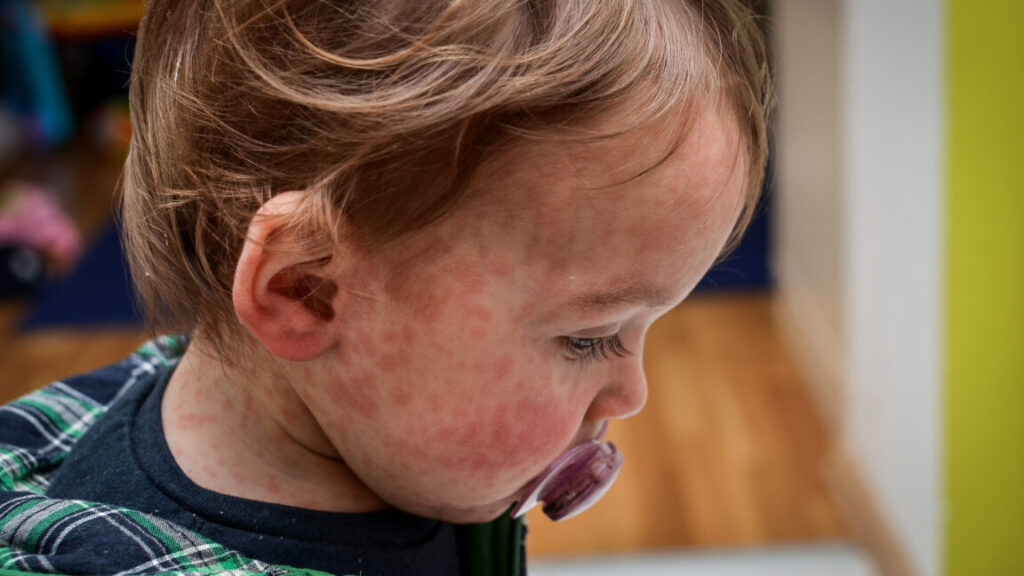
A child in Los Angeles has died of a measles-related brain disorder stemming from an infection in infancy, the Los Angeles County health department reported Thursday.

Specifically, the child died of subacute sclerosing panencephalitis (SSPE), a rare but always fatal complication that strikes years after an initial measles infection. The health department’s announcement offered few details about the child, including the child’s age, but said that the child had contracted the virus before they were old enough to be vaccinated against measles. The first of two recommended doses of measles, mumps, and rubella (MMR) vaccine is given between 12 and 15 months.

“This case is a painful reminder of how dangerous measles can be, especially for our most vulnerable community members,” Muntu Davis, a Los Angeles County health officer, said in a statement. “Infants too young to be vaccinated rely on all of us to help protect them through community immunity. Vaccination is not just about protecting yourself—it’s about protecting your family, your neighbors, and especially children who are too young to be vaccinated.”

SSPE is caused by a persistent measles infection in the central nervous system. Children infected with the virus may go through the standard disease progression—flu-like symptoms, high fever, the telltale rash—and then appear to fully recover. But, for a small few, the virus remains, and SSPE emerges years later, often seven to 10 years after the initial infection.

The Los Angeles health department noted that SSPE generally affects about 1 in 10,000 people with measles, but the risk may be much higher—about 1 in 600—for those who get measles as infants, such as the child who recently died.

With widespread vaccination, which led to measles being declared eliminated from the US in 2000, SSPE has virtually disappeared in the US. However, with vaccination rates slipping and anti-vaccine misinformation and views gripping the country, health experts fear seeing more of these devastating cases. Already, the US measles case count for the year is at a 33-year high, and two other children, as well as an adult, died from the acute infection this year.

Child dies of horrifying measles complication in Los Angeles Read More »
heartbreaking-video-shows-deadly-risk-of-skipping-measles-vaccine

Heartbreaking video shows deadly risk of skipping measles vaccine

Once SSPE develops, it moves through progressive stages, starting with mood swings, personality changes, depression, lethargy, and possibly fever and headache. This first stage can last up to six months. Then stage two involves jerking movement, spasms, loss of vision, dementia, and seizures. The third stage sees the jerking turn to writhing and rigidity. In the last stage, autonomic failure sets in—heart rate, blood pressure, and breathing become unregulated. Then comes coma and death. About 95 percent of SSPE cases are fatal.

Tragic ending

In the boy’s case, his parents don’t know when he was infected with measles. When doctors saw him, his parents recalled that in the prior six months, he had started having jerky movements, falls, and progressive cognitive decline. Before that, he had been healthy at birth and had been hitting all of his developmental milestones.

In some ways, his decline was an unmistakable case of SSPE. Imaging showed lesions in his brain. He had elevated anti-measles antibodies in his cerebrospinal fluid. An electroencephalography (EEG) showed brain waves consistent with SSPE. Then, of course, there were the jerking motions and the cognitive decline.

What stood out, though, was his rolling and swirling eyes. Vision problems are not uncommon with SSPE—sometimes the condition damages the retina and/or optic nerve. Some patients develop complete vision loss. But, in the boy’s case, he developed rapid, repetitive, erratic, multidirectional eye movements, a condition called opsoclonus. Doctors often see it in brain cancer patients, but brain inflammation from some infections can also cause the movements. Experts hypothesize that the root cause is a loss of specialized neurons involved in coordinated movement, namely Purkinje cells and omnipause cells.

The boy’s neurologists believe this is the first time opsoclonus associated with SSPE has been caught on video. They treated the boy with an antiviral drug and drugs to reduce convulsions, but his condition continued to worsen.

Heartbreaking video shows deadly risk of skipping measles vaccine Read More »