You’ll often hear plastic pollution referred to as a problem. But the reality is that it’s multiple problems. Depending on the properties we need, we form plastics out of different polymers, each of which is held together by a distinct type of chemical bond. So the method we use to break down one type of polymer may be incompatible with the chemistry of another.
That problem is why, even though we’ve had success finding enzymes that break down common plastics like polyesters and PET, they’re only partial solutions to plastic waste. However, researchers aren’t sitting back and basking in the triumph of partial solutions, and they’ve now got very sophisticated protein design tools to help them out.
That’s the story behind a completely new enzyme that researchers developed to break down polyurethane, the polymer commonly used to make foam cushioning, among other things. The new enzyme is compatible with an industrial-style recycling process that breaks the polymer down into its basic building blocks, which can be used to form fresh polyurethane.
Breaking down polyurethane
The basics of the chemical bonds that link polyurethanes. The rest of the polymer is represented by X’s here.
The new paper that describes the development of this enzyme lays out the scale of the problem: In 2024, we made 22 million metric tons of polyurethane. The urethane bond that defines these involves a nitrogen bonded to a carbon that in turn is bonded to two oxygens, one of which links into the rest of the polymer. The rest of the polymer, linked by these bonds, can be fairly complex and often contains ringed structures related to benzene.
Digesting polyurethanes is challenging. Individual polymer chains are often extensively cross-linked, and the bulky structures can make it difficult for enzymes to get at the bonds they can digest. A chemical called diethylene glycol can partially break these molecules down, but only at elevated temperatures. And it leaves behind a complicated mess of chemicals that can’t be fed back into any useful reactions. Instead, it’s typically incinerated as hazardous waste.
The absence of AMELY suggests that a sample is female, but it isn’t definitive. That’s both because it’s impossible to rule out some problem with identifying the protein in samples this old, and in part because some rare males (including at least one Neanderthal) carry deletions that eliminate the gene entirely.
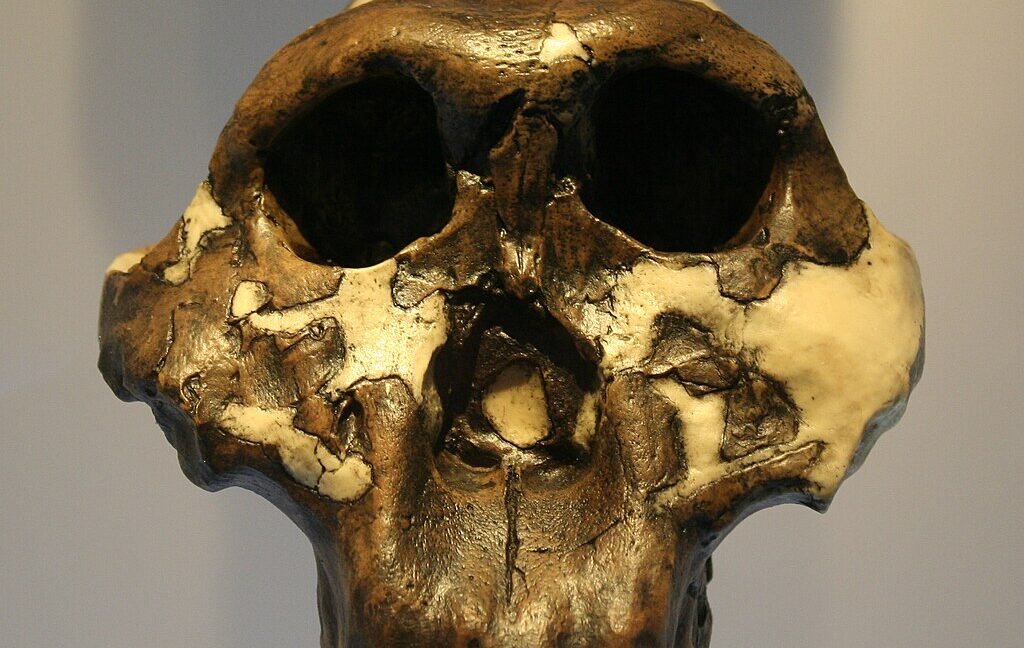
Another key aspect is that some of the 425 amino acid locations differ between hominin species, and even individual members of Paranthropus. Thus, they can potentially serve as a diagnostic of the relationships between and within species and help address some of the confusion about how many species of Paranthropus there were and their relationship with other hominins. While it’s difficult to say too much with only four samples, the researchers found some suggestive evidence.
For example, they tested whether you might see the sort of amino acid variation found among these samples if they all belonged to the same species. This was done by randomly choosing four human genomes and examining whether they had a similar level of variation. They concluded that it was “plausible” that you’d see this level of variation among any four individuals that were chosen at random, but the population of modern humans is likely to be larger than that of Paranthropus, so the test wasn’t definitive.
Among the 425 different amino acids were 16 that had species-specific variations among hominins. Somewhat surprisingly, Paranthropus robustus is the most closely related species to our own genus, Homo, based on a tree built from these variations. Again, however, they conclude that there simply isn’t enough data available to feel confident in this conclusion.
But that should really be an “isn’t enough data yet.” We heard about this paper from regular Ars reader Enrico Cappellini, who happens to be its senior author and faculty at the University of Copenhagen’s Globe Institute. And a quick look over his faculty profile indicates that developing the techniques used here is his major research focus, so hopefully we’ll be able to expand the data available on extinct hominin species with time. The challenge, as noted in the paper, is that the technique destroys a small part of the sample, and these samples are one-of-a-kind pieces of the collective history of all of humanity.
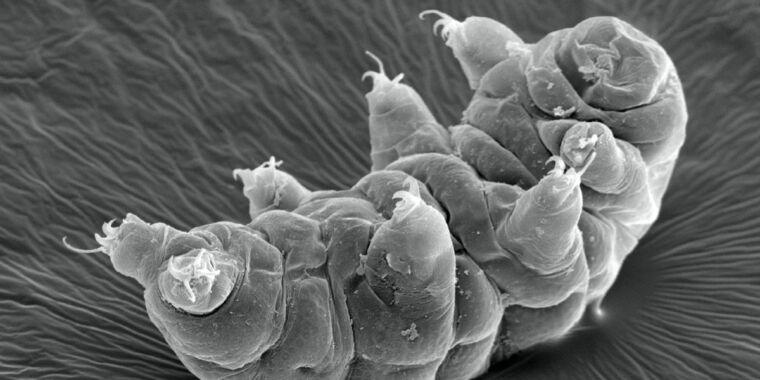
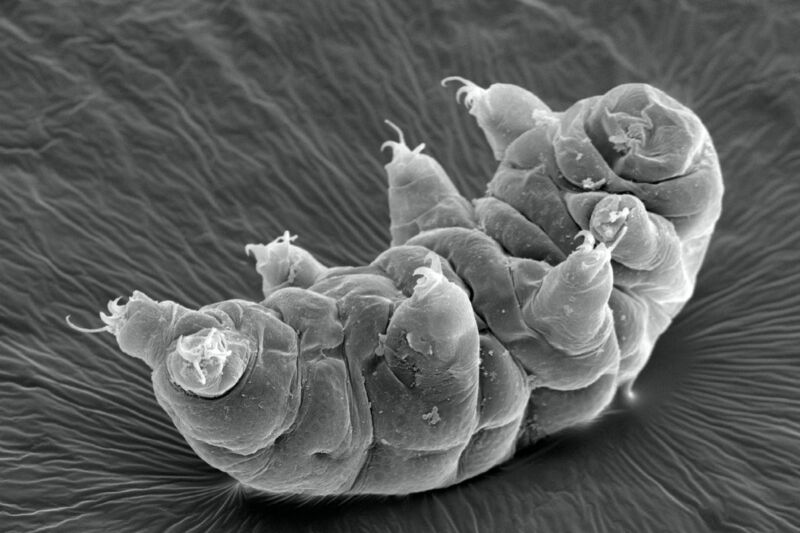
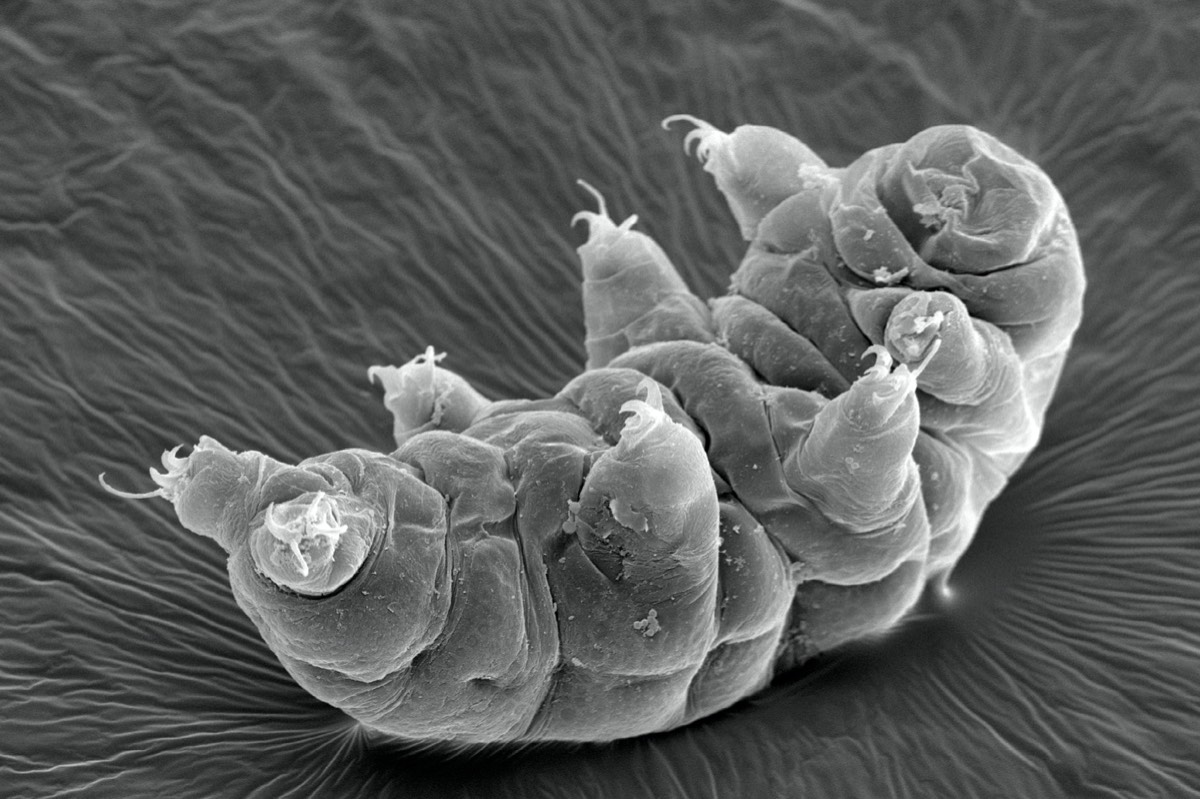
Enlarge/ SEM Micrograph of a tardigrade, more commonly known as a “water bear” or “moss piglet.”
Cultura RM Exclusive/Gregory S. Paulson/Getty Images
Since the 1960s, scientists have known that the tiny tardigrade can withstand very intense radiation blasts 1,000 times stronger than what most other animals could endure. According to a new paper published in the journal Current Biology, it’s not that such ionizing radiation doesn’t damage tardigrades’ DNA; rather, the tardigrades are able to rapidly repair any such damage. The findings complement those of a separate study published in January that also explored tardigrades’ response to radiation.
“These animals are mounting an incredible response to radiation, and that seems to be a secret to their extreme survival abilities,” said co-author Courtney Clark-Hachtel, who was a postdoc in Bob Goldstein’s lab at the University of North Carolina at Chapel Hill, which has been conducting research into tardigrades for 25 years. “What we are learning about how tardigrades overcome radiation stress can lead to new ideas about how we might try to protect other animals and microorganisms from damaging radiation.”
As reported previously, tardigrades are micro-animals that can survive in the harshest conditions: extreme pressure, extreme temperature, radiation, dehydration, starvation—even exposure to the vacuum of outer space. The creatures were first described by German zoologist Johann Goeze in 1773. They were dubbed tardigrada (“slow steppers” or “slow walkers”) four years later by Lazzaro Spallanzani, an Italian biologist. That’s because tardigrades tend to lumber along like a bear. Since they can survive almost anywhere, they can be found in lots of places: deep-sea trenches, salt and freshwater sediments, tropical rain forests, the Antarctic, mud volcanoes, sand dunes, beaches, and lichen and moss. (Another name for them is “moss piglets.”)
When their moist habitat dries up, however, tardigrades go into a state known as “tun”—a kind of suspended animation, which the animals can remain in for as long as 10 years. When water begins to flow again, water bears absorb it to rehydrate and return to life. They’re not technically members of the extremophile class of organisms since they don’t so much thrive in extreme conditions as endure; technically, they belong to the class of extremotolerant organisms. But their hardiness makes tardigrades a favorite research subject for scientists.
For instance, a 2017 study demonstrated that tardigrades use a special kind of disordered protein to literally suspend their cells in a glass-like matrix that prevents damage. The researchers dubbed this a “tardigrade-specific intrinsically disordered protein” (TDP). In other words, the cells become vitrified. The more TDP genes a tardigrade species has, the more quickly and efficiently it goes into the tun state.
In 2021, another team of Japanese scientists called this “vitrification” hypothesis into question, citing experimental data suggesting that the 2017 findings could be attributed to water retention of the proteins. The following year, researchers at the University of Tokyo identified the mechanism to explain how tardigrades can survive extreme dehydration: cytoplasmic-abundant heat soluble (CAHS) proteins that form a protective gel-like network of filaments to protect dried-out cells. When the tardigrade rehydrates, the filaments gradually recede, ensuring that the cell isn’t stressed or damaged as it regains water.
When it comes to withstanding ionizing radiation, a 2016 study identified a DNA damage suppressor protein dubbed “Dsup” that seemed to shield tardigrade genes implanted into human cells from radiation damage. However, according to Clark-Hatchel et al., it still wasn’t clear whether this kind of protective mechanism was sufficient to fully account for tardigrades’ ability to withstand extreme radiation. Other species of tardigrade seem to lack Dsup proteins, yet still have the same high radiation tolerance, which suggests there could be other factors at play.
A team of French researchers at the French National Museum of Natural History in Paris ran a series of experiments in which they zapped water bear specimens with powerful gamma rays that would be lethal to humans. They published their results earlier this year in the journal eLife. The French team found that gamma rays did actually damage the tardigrade DNA, much like they would damage human cells. Since the tardigrades survived, this suggested the tardigrades were able to quickly repair the damaged DNA.
Further experiments with three different species (including one that lacks Dsup proteins) revealed the tardigrades were producing very high amounts of DNA repair proteins. They also found a similar uptick of proteins unique to tardigrades, most notably tardigrade DNA damage response protein 1 (TDR1), which seems to protect DNA from radiation. “We found that TDR1 protein interacts with DNA and forms aggregates at high concentration suggesting it may condensate DNA and act by preserving chromosome organization until DNA repair is accomplished,” the authors wrote.
Clark-Hatchel et al. independently arrived at similar conclusions from their own experiments. Taken together, the two studies confirm that this extremely rapid up-regulation of many DNA repair genes in response to exposure to ionizing radiation should be sufficient to explain the creatures’ impressive resistance to that radiation. It’s possible that there is a “synergy between protective and repair mechanisms” when it comes to tardigrade tolerance of ionizing radiation.
That said, “Why tardigrades have evolved a strong IR tolerance is enigmatic given that it is unlikely that tardigrades were exposed to high doses of ionizing radiation in their evolutionary history,” Clark-Hatchel et al. wrote. They thought there could be a link to the mechanisms that enable tardigrades to survive extreme dehydration, which can also result in damaged DNA. Revisiting data from desiccation experiments did not show nearly as strong an increase in DNA repair transcripts, but the authors suggest that the uptick could occur later in the process, upon rehydration—an intriguing topic for future research.