
national advertising division

at&t-falsely-promised-“everyone”-a-free-iphone,-ad-industry-board-rules

AT&T falsely promised “everyone” a free iPhone, ad-industry board rules


AT&T loses another ad-board ruling just a week after suing the organization.

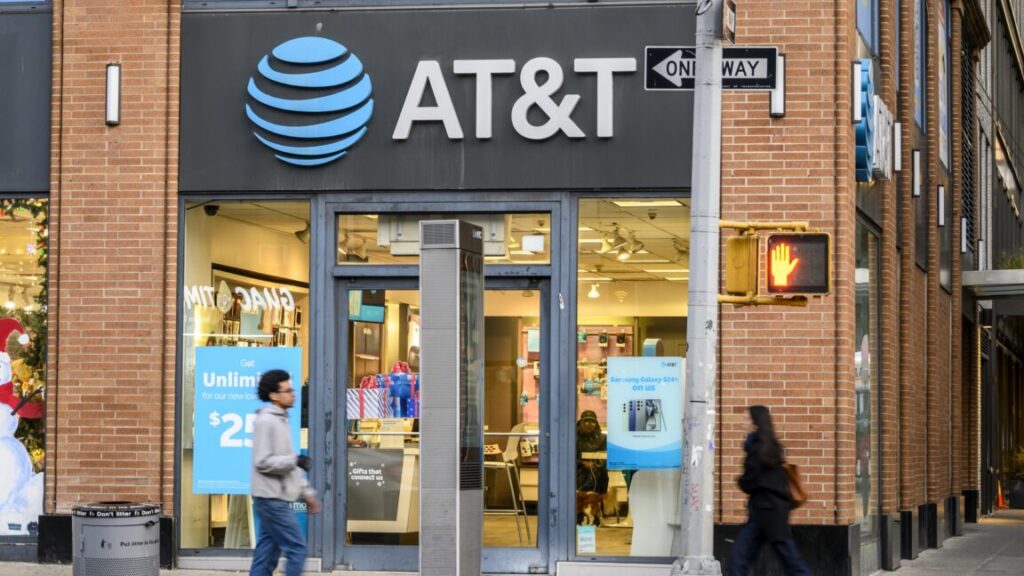
AT&T store in New York City on November 18, 2024. Credit: Getty Images | wdstock

AT&T has been told to stop running ads that falsely promise all customers a free iPhone. The rebuke came from the advertising industry’s official watchdog just a week after AT&T sued the organization over a different advertising dispute.

BBB National Programs’ National Advertising Review Board (NARB) “has recommended that AT&T Services, Inc. modify its advertising to avoid conveying a false message regarding eligibility for an iPhone device offer,” the group, which runs the ad industry’s self-regulatory system, said today.

Verizon initiated the case by challenging AT&T’s “Learn how everyone gets iPhone 16 Pro on us” claim. BBB National Programs’ National Advertising Division (NAD) ruled in favor of Verizon in September 2025. AT&T appealed but lost the challenge in the NARB decision announced today.

“The NARB panel agreed with NAD’s conclusion that the challenged advertising, on its face, conveys a false message that everyone ‘gets’ a free phone and does not clarify the message by disclosing a material limitation to the offer of a free cell phone in a clear and conspicuous manner,” the group said.

In reality, the offer was only for AT&T customers on certain plans, excluding customers with low-cost plans. “The panel recommended AT&T modify its advertising to avoid conveying the message that everyone is eligible for AT&T’s free cell phone offer, or to clearly and conspicuously disclose that subscribers to value plans are not eligible or otherwise make clear the extent of plan eligibility,” the NARB announcement said.

The NAD’s September decision said “the term ‘everyone’ means every person, without exception,” and helpfully cited the Merriam-Webster definition of “everyone.”

AT&T sued board after it demanded ads be halted

The ruling isn’t a very timely one given that AT&T started making the iPhone 16 offer over a year ago, and the iPhone 17 is now available. But it could cause AT&T to use different wording in future ads. In an advertiser’s statement published with the ruling, AT&T said it “supports NARB’s self-regulatory process and will comply with NARB’s decision.”

AT&T sued BBB National Programs last week after the group demanded that AT&T stop using its rulings for advertising and promotional purposes. The conflict stems from an ad campaign in which AT&T portrayed itself as a paragon of honesty while calling T-Mobile “the master of breaking promises.”

AT&T’s lawsuit criticized the NAD for its slow decision process, saying that it allowed T-Mobile to air deceptive advertisements without meaningful consequences. AT&T apparently benefited in a similar manner given that the NARB ruling came over a year after the iPhone 16 release.

Companies that participate in the self-regulatory process agree to rules including a prohibition on using NAD and NARB decisions for “advertising and/or promotional purposes.” The NAD said that AT&T violated the rules “by issuing a video advertisement and press release that use the NAD process and its findings for promotional purposes.”

The AT&T press release said the NAD “asked T-Mobile to correct their marketing claims 16 times over the last four years,” and an AT&T commercial featuring Luke Wilson said T-Mobile has faced more challenges for deceptive ads from competitors than all other telecom providers in that time. AT&T’s lawsuit defending the ad campaign said the company didn’t violate the rule because it didn’t cite any specific decisions and asked the court for a declaration that “NAD has no legal basis to enforce its demand for censorship.”

AT&T claimed ad was literally true

AT&T and T-Mobile both have a history of misleading advertisements, and the latest NARB decision adds to AT&T’s ledger. The ad on AT&T’s website stated, “Learn how everyone gets iPhone 16 Pro on us when you trade in your old iPhone in any condition.”

“Focusing on the words ‘everyone gets,’ Verizon argued to NAD that the challenged advertising communicated an explicit message—that all AT&T subscribers are eligible for the trade-in offer—which it asserts was literally false because only subscribers to ‘qualifying’ AT&T plans are eligible. Verizon also argued that the advertisement communicated a comparable misleading message that all AT&T customers were eligible for the trade-in,” the NARB decision said.

While AT&T disclosed the offer limits, Verizon argued that the disclosure was not clear and conspicuous. Verizon said—and the NAD agreed—that the phrase “everyone gets” suggests everyone will get a free phone, not that everyone “can get” a free phone if they subscribe to AT&T’s more expensive plans.

AT&T claimed the ad was literally true because it did not say that everyone “will” get the free phone. “Rather, according to the advertiser, the challenged language communicates that all customers, current or new, can qualify for the offer and urges customers to ‘learn’ the details about the trade-in opportunity,” the NARB said.

AT&T argued that the word “learn” makes it clear there are limits on the offer. The NAD disagreed, saying that the “learn how” phrase “precedes the word ‘everyone,’ suggesting everyone is eligible to receive a phone, not that everyone can learn how to get a phone.”

AT&T also submitted the results of a customer survey, arguing that it proved customers seeing the ad understood the offer’s limitations. The NAD decided that the survey was methodologically unsound, while the NARB said that both AT&T and Verizon offered “plausible” interpretations of the results.

Panel: Buyers of low-cost plans likely duped

After hearing AT&T’s and Verizon’s arguments, the NARB panel decided “that the challenged advertising, on its face, conveys a false message and further does not clarify the message by disclosing a material limitation to the offer of a free cell phone in a clear and conspicuous manner.”

The panel also said it is concerned that the consumers most interested in AT&T’s cheaper plans, which don’t come with the free phone, would be the most susceptible to being motivated by the free offer.

In addition to saying it “will comply with NARB’s decision,” AT&T said in its statement that “we appreciate NARB’s acknowledgment that the consumer survey in this matter plausibly supports the conclusion that the challenged advertising is truthful and not misleading. While we respectfully disagree with NARB’s recommendation that the advertising be modified, we will take that recommendation into account in the future.”

In another case decision in September, the NAD recommended that AT&T modify or discontinue claims related to an “AT&T Guarantee” that didn’t have clear disclosures about the amount of time it takes AT&T to fix network outages and how long an outage must last before the guarantee takes effect. AT&T said it would comply with the ruling.

In August 2024, AT&T was rebuked for an ad that falsely claimed the carrier was already offering cellular coverage from space. It has also gotten in trouble for advertising 4G LTE service as “5GE” and making misleading promises of unlimited data.

Photo of Jon Brodkin

Jon is a Senior IT Reporter for Ars Technica. He covers the telecom industry, Federal Communications Commission rulemakings, broadband consumer affairs, court cases, and government regulation of the tech industry.

AT&T falsely promised “everyone” a free iPhone, ad-industry board rules Read More »
at&t-sues-ad-industry-watchdog-instead-of-pulling-ads-that-slam-t-mobile

AT&T sues ad industry watchdog instead of pulling ads that slam T-Mobile


Self-regulation breakdown

National Advertising Division said AT&T ad and press release broke program rule.

Credit: Getty Images | AaronP/Bauer-Griffin

AT&T yesterday sued the advertising industry’s official watchdog over the group’s demand that AT&T stop using its rulings for advertising and promotional purposes.

As previously reported, BBB National Programs’ National Advertising Division (NAD) found that AT&T violated a rule “by issuing a video advertisement and press release that use the NAD process and its findings for promotional purposes,” and sent a cease-and-desist letter to the carrier. The NAD operates the US advertising industry’s system of self-regulation, which is designed to handle complaints that advertisers file against each other and minimize government regulation of false and misleading claims.

While it’s clear that both AT&T and T-Mobile have a history of misleading ad campaigns, AT&T portrays itself as a paragon of honesty in new ads calling T-Mobile “the master of breaking promises.” An AT&T press release about the ad campaign said the NAD “asked T-Mobile to correct their marketing claims 16 times over the last four years,” and an AT&T commercial said T-Mobile has faced more challenges for deceptive ads from competitors than all other telecom providers in that time.

While the NAD describes AT&T’s actions as a clear-cut violation of rules that advertisers agree to in the self-regulatory process, AT&T disputed the accusation in a lawsuit filed in US District Court for the Northern District of Texas. “We stand by our campaign to shine a light on deceptive advertising from our competitors and oppose demands to silence the truth,” AT&T said in a press release.

AT&T’s lawsuit asked the court for a declaration, stating “that it has not violated NAD’s procedures” and that “NAD has no legal basis to enforce its demand for censorship.” The lawsuit complained that AT&T hasn’t been able to run its advertisements widely because “NAD’s inflammatory and baseless accusations have now intimidated multiple TV networks into pulling AT&T’s advertisement.”

AT&T claims rule no longer applies

AT&T’s claim that it didn’t violate an NAD rule hinges partly on when its press release was issued. The carrier claims the rule against referencing NAD decisions only applies for a short period of time after each NAD ruling.

“NAD now takes the remarkable position that any former participant in an NAD proceeding is forever barred from truthfully referencing NAD’s own public findings about a competitor’s deceptive advertising,” AT&T said. The lawsuit argued that “if NAD’s procedures were ever binding on AT&T, their binding effect ceased at the conclusion of the proceeding or a reasonable time thereafter.”

AT&T also slammed the NAD for failing to rein in T-Mobile’s deceptive ads. The group’s slow process let T-Mobile air deceptive advertisements without meaningful consequences, and the “NAD has repeatedly failed to refer continued violations to the FTC,” AT&T said.

“Over the past several years, NAD has repeatedly deemed T-Mobile’s ads to be misleading, false, or unsubstantiated,” AT&T said. “But over and over, T-Mobile has gamed the system to avoid timely redressing its behavior. NAD’s process is often slow, and T-Mobile knows it can make that process even slower by asking for extensions and delaying fixes.”

We’ve reported extensively on both carriers’ history of misleading advertisements over the years. That includes T-Mobile promising never to raise prices on certain plans and then raising them anyway. AT&T used to advertise 4G LTE service as “5GE,” and was rebuked for an ad that falsely claimed the carrier was already offering cellular coverage from space. AT&T and T-Mobile have both gotten in trouble for misleading promises of unlimited data.

AT&T says vague ad didn’t violate rule

AT&T’s lawsuit alleged that the NAD press release “intentionally impl[ied] that AT&T mischaracterized NAD’s prior decisions about T-Mobile’s deceptive advertising.” However, the NAD’s public stance is that AT&T violated the rule by using NAD decisions for promotional purposes, not by mischaracterizing the decisions.

NAD procedures state that companies participating in the system agree “not to mischaracterize any decision, abstract, or press release issued or use and/or disseminate such decision, abstract or press release for advertising and/or promotional purposes.” The NAD announcement didn’t make any specific allegations of AT&T mischaracterizing its decisions but said that AT&T violated the rules “by issuing a video advertisement and press release that use the NAD process and its findings for promotional purposes.”

The NAD said AT&T committed a “direct violation” of the rules by running an ad and issuing a press release “making representations regarding the alleged results of a competitor’s participation in BBB National Program’s advertising industry self-regulatory process.” The “alleged results” phrase may be why AT&T is claiming the NAD accused it of mischaracterizing decisions. There could also be more specific allegations in the cease-and-desist letter, which wasn’t made public.

AT&T claims its TV ads about T-Mobile don’t violate the rule because they only refer to “challenges” to T-Mobile advertising and “do not reference any decision, abstract, or press release.”

AT&T quibbles over rule meaning

AT&T further argues that a press release can’t violate the prohibition against using NAD decisions “for advertising and/or promotional purposes.” While press releases are clearly promotional in nature, AT&T says that part of the NAD rules doesn’t apply to press releases issued by advertisers like itself. Specifically, AT&T said that “the permissibility of press releases is not governed by Section 2.1(I)(2)(b), which applies to uses ‘for advertising and/or promotional purposes.’”

But the NAD procedures also bar participants in the process from issuing certain kinds of press releases. AT&T describes the rule about press releases as being in a different section than the rule about advertising and promotional purposes, but it’s actually all part of the same sentence. The rule says, “By participating in an NAD or NARB proceeding, the parties agree: (a) not to issue a press release regarding any decisions issued; and/or (b) not to mischaracterize any decision, abstract or press release issued or use and/or disseminate such decision, abstract or press release for advertising and/or promotional purposes.”

AT&T argues that the rule only bars press releases at the time of each NAD decision. The rule’s “meaning is clear in context: When NAD or NARB [National Advertising Review Board] issues a decision, no party is allowed to issue a press release to announce that decision,” AT&T said. “Instead, NAD issues its own press release to announce the decision. AT&T did not issue a press release to announce any decision, and indeed its advertisements (and press release announcing its advertising campaign) do not mention any particular NAD decision. In fact, AT&T’s press release does not use the word ‘decision’ at all.”

AT&T said that because it only made a short reference to NAD decisions, “AT&T’s press release about its new advertising campaign is therefore not a press release about an NAD decision as contemplated by Section 2.1(I)(2)(a).” AT&T also said it’s not a violation because the press release simply stated the number of rulings against T-Mobile and did not specifically cite any of those 16 decisions.

“AT&T’s press release does not include, attach, copy, or even cite any specific decision, abstract, or press release either in part or in whole,” AT&T’s lawsuit said. AT&T further said the NAD rule doesn’t apply to any proceeding AT&T wasn’t involved in, and that “AT&T did not initiate several of the proceedings against T-Mobile included in the one-sentence reference.”

We contacted the NAD about AT&T’s lawsuit but the group declined to comment.

Photo of Jon Brodkin

Jon is a Senior IT Reporter for Ars Technica. He covers the telecom industry, Federal Communications Commission rulemakings, broadband consumer affairs, court cases, and government regulation of the tech industry.

AT&T sues ad industry watchdog instead of pulling ads that slam T-Mobile Read More »