museums

nasa-astronauts-will-have-their-own-droid-when-they-go-back-to-the-moon

NASA astronauts will have their own droid when they go back to the Moon

Artemis IV will mark the second lunar landing of the Artemis program and build upon what is learned at the moon’s south pole on Artemis III.

“After his voyage to the Moon’s surface during Apollo 17, astronaut Gene Cernan acknowledged the challenge that lunar dust presents to long-term lunar exploration. Moon dust sticks to everything it touches and is very abrasive,” read NASA’s announcement of the Artemis IV science payloads.
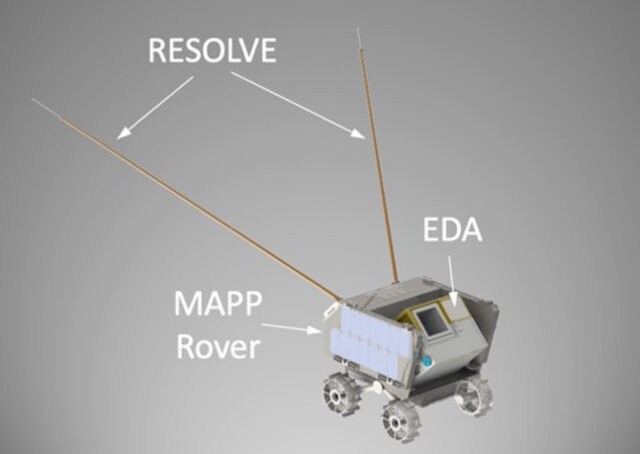
A simple rendering a small moon rover labeled to show its science instruments

Rendering of Lunar Outpost’s MAPP lunar rover with its Artemis IV DUSTER science instruments, including the Electrostatic Dust Analyzer (EDA) and Relaxation SOunder and differentiaL VoltagE (RESOLVE). Credit: LASP/CU Boulder/Lunar Outpost

To that end, the solar-powered MAPP will support DUSTER (DUst and plaSma environmenT survEyoR), a two-part investigation from the Laboratory for Atmospheric and Space Physics (LASP) at the University of Colorado, Boulder. The autonomous rover’s equipment will include the Electrostatic Dust Analyzer (EDA), which will measure the charge, velocity, size, and flux of dust particles lofted from the lunar surface, and the RElaxation SOunder and differentiaL VoltagE (RESOLVE) instrument, which will characterize the average electron density above the lunar surface using plasma sounding.

The University of Central Florida and University of California, Berkeley, have joined with LASP to interpret measurements taken by DUSTER. The former will look at the dust ejecta generated during the Human Landing System (HLS, or lunar lander) liftoff from the Moon, while the latter will analyze upstream plasma conditions.

Lunar dust attaches to almost everything it comes into contact with, posing a risk to equipment and spacesuits. It can also obstruct solar panels, reducing their ability to generate electricity and cause thermal radiators to overheat. The dust can also endanger astronauts’ health if inhaled.

“We need to develop a complete picture of the dust and plasma environment at the lunar south pole and how it varies over time and location to ensure astronaut safety and the operation of exploration equipment,” said Xu Wang, senior researcher at LASP and principal investigator of DUSTER, in a University of Colorado statement. “By studying this environment, we gain crucial insights that will guide mitigation strategies and methods to enable long-term, sustained human exploration on the Moon.”

NASA astronauts will have their own droid when they go back to the Moon Read More »
mit-student-prints-ai-polymer-masks-to-restore-paintings-in-hours

MIT student prints AI polymer masks to restore paintings in hours

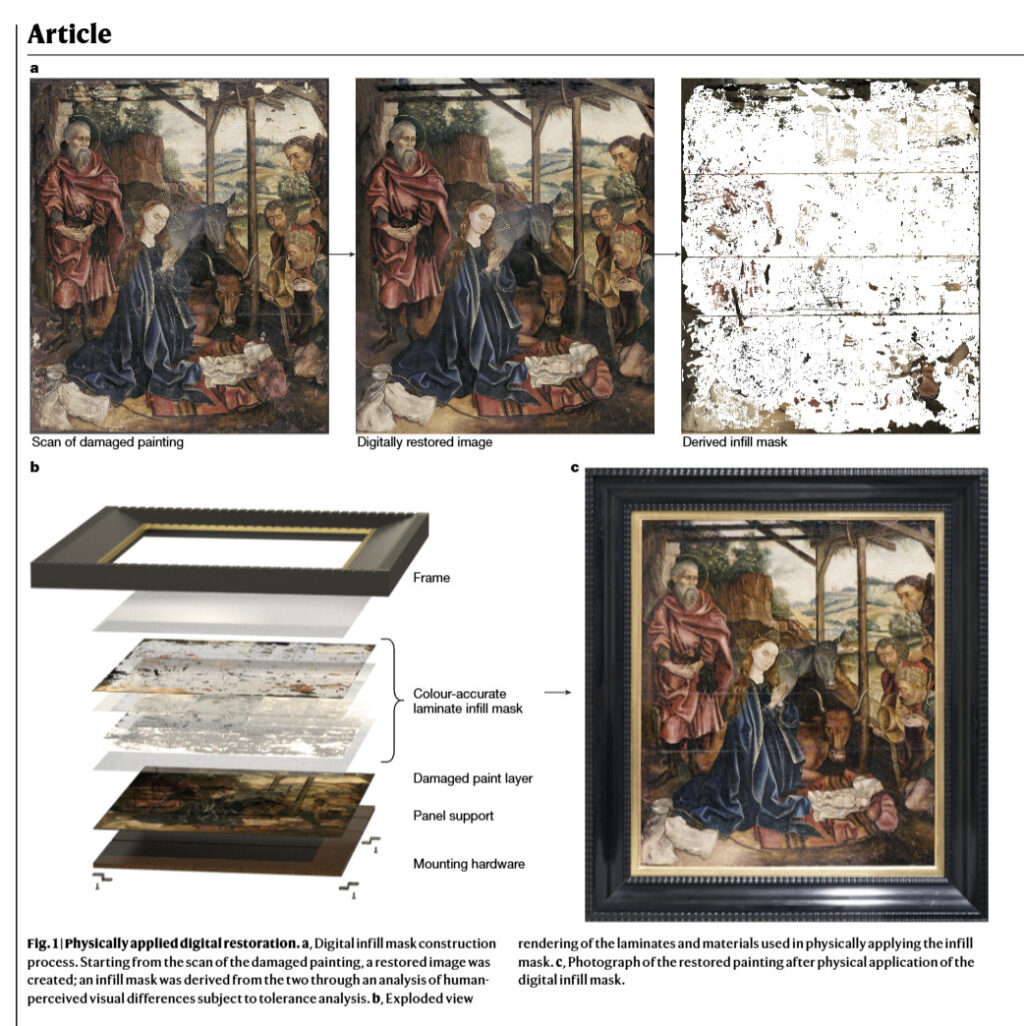
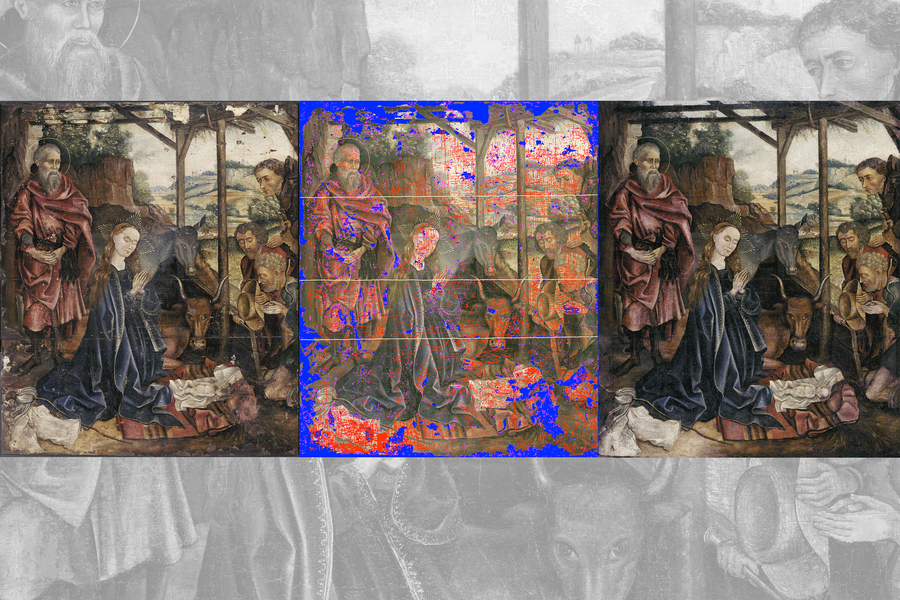
MIT graduate student Alex Kachkine once spent nine months meticulously restoring a damaged baroque Italian painting, which left him plenty of time to wonder if technology could speed things up. Last week, MIT News announced his solution: a technique that uses AI-generated polymer films to physically restore damaged paintings in hours rather than months. The research appears in Nature.

Kachkine’s method works by printing a transparent “mask” containing thousands of precisely color-matched regions that conservators can apply directly to an original artwork. Unlike traditional restoration, which permanently alters the painting, these masks can reportedly be removed whenever needed. So it’s a reversible process that does not permanently change a painting.

“Because there’s a digital record of what mask was used, in 100 years, the next time someone is working with this, they’ll have an extremely clear understanding of what was done to the painting,” Kachkine told MIT News. “And that’s never really been possible in conservation before.”

Figure 1 from the paper.

Figure 1 from the paper. Credit: MIT

Nature reports that up to 70 percent of institutional art collections remain hidden from public view due to damage—a large amount of cultural heritage sitting unseen in storage. Traditional restoration methods, where conservators painstakingly fill damaged areas one at a time while mixing exact color matches for each region, can take weeks to decades for a single painting. It’s skilled work that requires both artistic talent and deep technical knowledge, but there simply aren’t enough conservators to tackle the backlog.

The mechanical engineering student conceived the idea during a 2021 cross-country drive to MIT, when gallery visits revealed how much art remains hidden due to damage and restoration backlogs. As someone who restores paintings as a hobby, he understood both the problem and the potential for a technological solution.

To demonstrate his method, Kachkine chose a challenging test case: a 15th-century oil painting requiring repairs in 5,612 separate regions. An AI model identified damage patterns and generated 57,314 different colors to match the original work. The entire restoration process reportedly took 3.5 hours—about 66 times faster than traditional hand-painting methods.

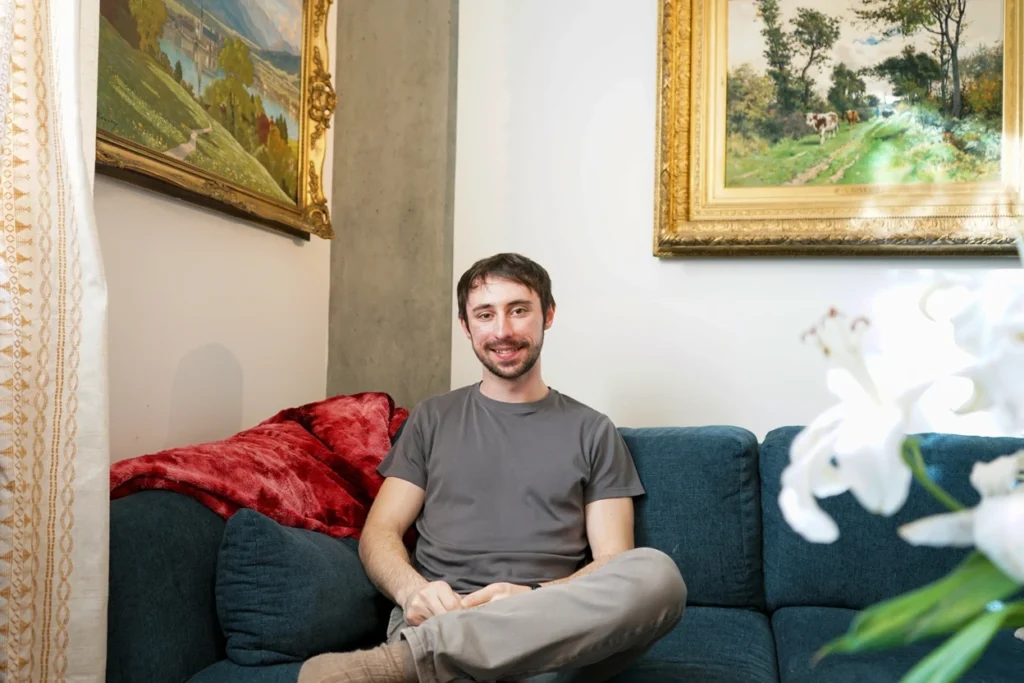
A handout photo of Alex Kachkine, who developed the AI printed film technique.

Alex Kachkine, who developed the AI-printed film technique. Credit: MIT

Notably, Kachkine avoided using generative AI models like Stable Diffusion or the “full-area application” of generative adversarial networks (GANs) for the digital restoration step. According to the Nature paper, these models cause “spatial distortion” that would prevent proper alignment between the restored image and the damaged original.

MIT student prints AI polymer masks to restore paintings in hours Read More »