Mitsubishi

space-station-astronauts-eager-to-open-“golden-treasure-box”-from-japan

Space station astronauts eager to open “golden treasure box” from Japan

And without the ISS, Russia’s human spaceflight program might be dead today.

Ins and outs of HTV-X

Yui used the outpost’s robotic arm to grapple the HTV-X spacecraft at 11: 58 am EDT (15: 58 UTC) on Wednesday. The capture capped a three-and-a-half-day transit from a launch pad on Tanegashima Island in southern Japan.

The spacecraft flew to space atop Japan’s H3 rocket, replacing the H-II launcher family used for Japan’s previous resupply missions to the ISS. The H3 and HTV-X are both manufactured by Mitsubishi Heavy Industries.
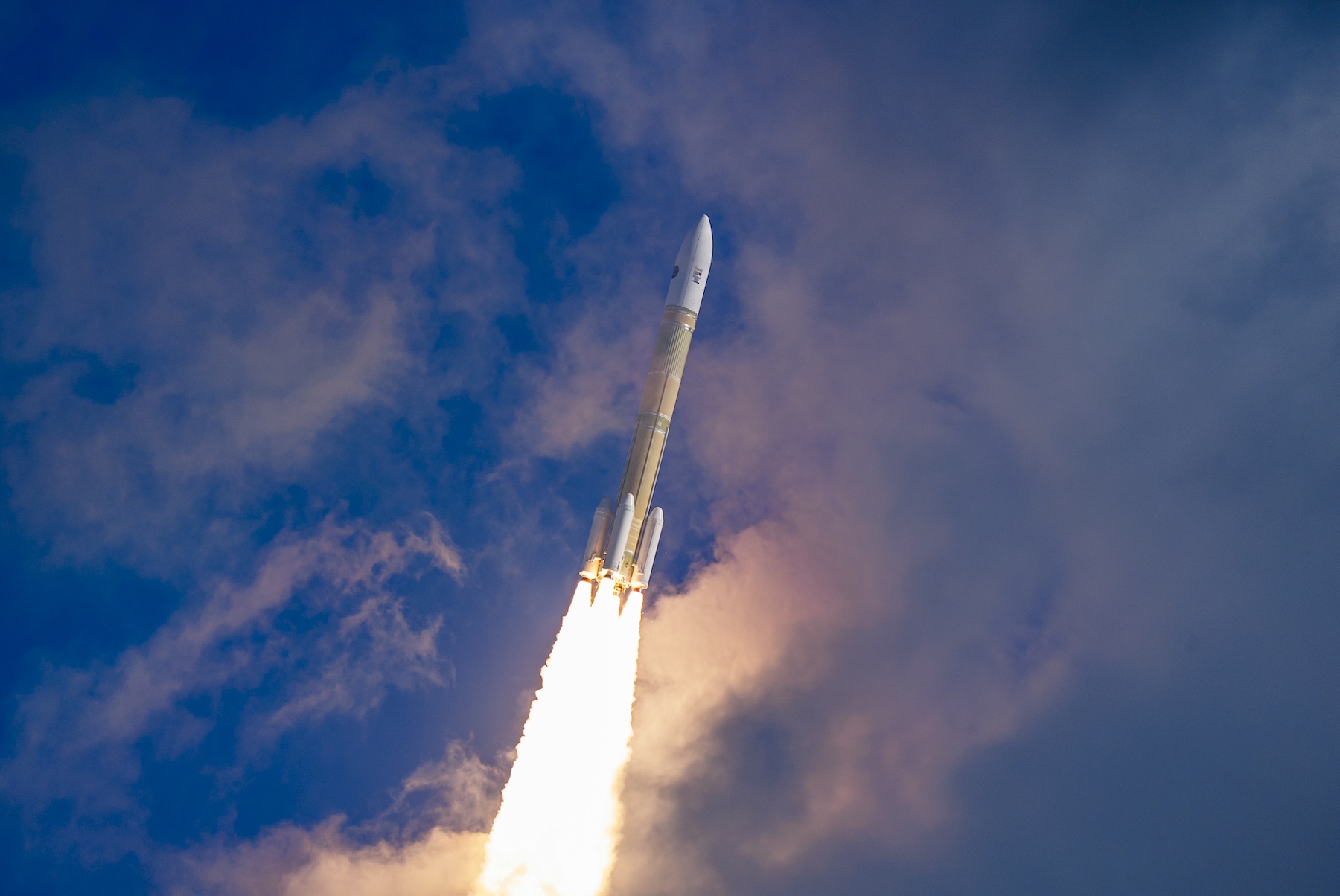
Japan’s H3 rocket launched Sunday (local time) from the Tanegashima Space Center in southern Japan, carrying the first HTV-X spacecraft into orbit en route to the International Space Station. Credit: JAXA

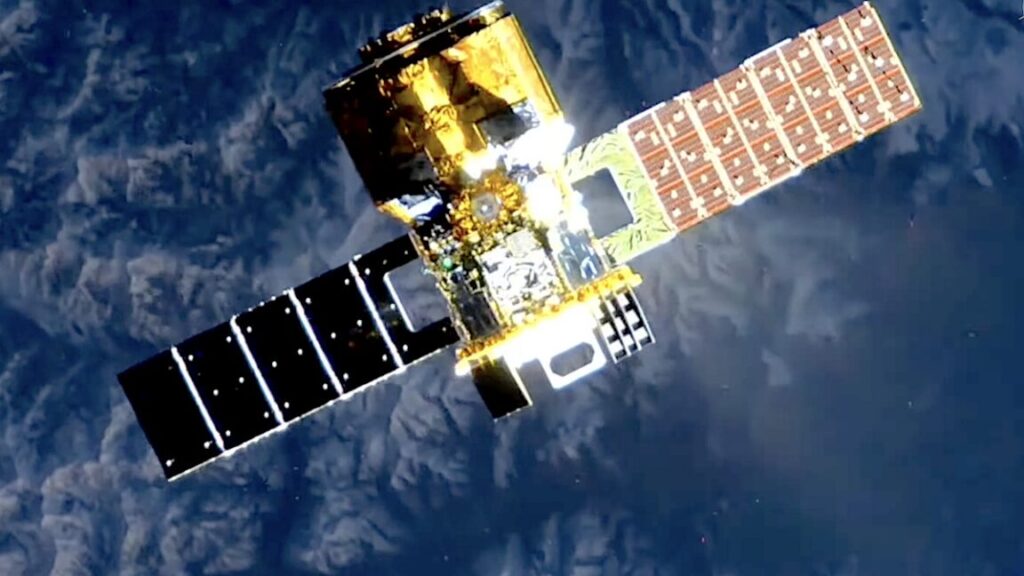
Once in orbit, HTV-X unfurled its power-generating solar panels. This is one of the new ship’s most significant differences from the HTV, which had its solar panels mounted directly on the body of the spacecraft. By all accounts, the HTV-X’s modified computers, navigation sensors, and propulsion system all functioned as intended, leading to the mission’s on-time arrival at the ISS.

Rob Navias, a NASA spokesperson, called the HTV-X’s first flight “flawless” during the agency’s streaming commentary of the rendezvous: “Everything went by the book.”

At 26 feet (8 meters) long, the HTV-X is somewhat shorter than the vehicle it replaces. But an improved design gives the HTV-X more capacity, with the ability to accommodate more than 9,000 pounds (4.1 metric tons) inside its pressurized cargo module, about 25 percent more than the HTV. The new spacecraft boasts a similar enhancement in carrying capacity for external cargo, such as spares and science instruments, to be mounted on the outside of the space station.

Japan provides resupply services to the space station to help reimburse NASA for its share of the research lab’s operating costs. In addition to space station missions in low-Earth orbit, Japanese officials say the HTV-X spacecraft could haul logistics to the future Gateway mini-space station near the Moon.

Officials plan to launch at least three HTV-X missions to the ISS to cover Japan’s share of the station’s operating expenses. There are tentative plans for a fourth and fifth HTV-X that could launch before 2030. The second HTV-X mission will attempt Japan’s first automated docking with the space station, a prerequisite for any future resupply missions to the Gateway.

Space station astronauts eager to open “golden treasure box” from Japan Read More »
daily-range-isn’t-a-problem-with-the-2024-mitsubishi-outlander-phev

Daily range isn’t a problem with the 2024 Mitsubishi Outlander PHEV

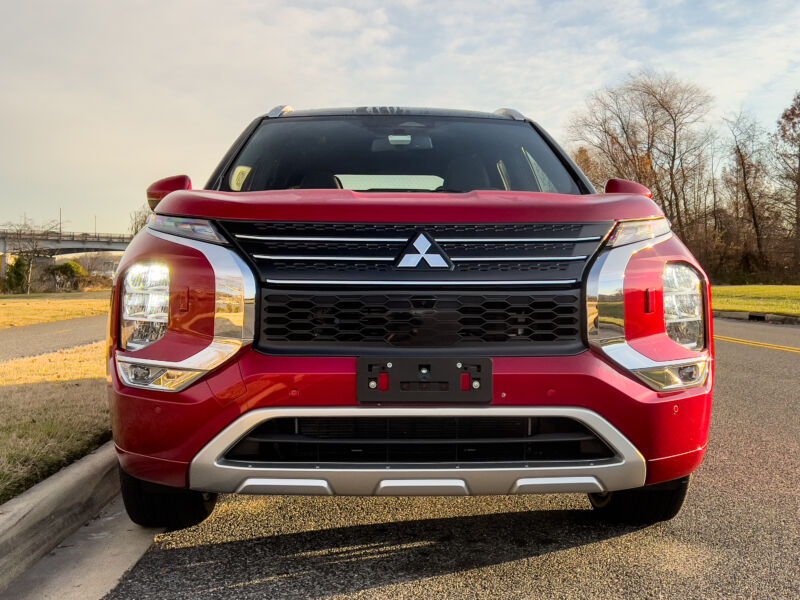
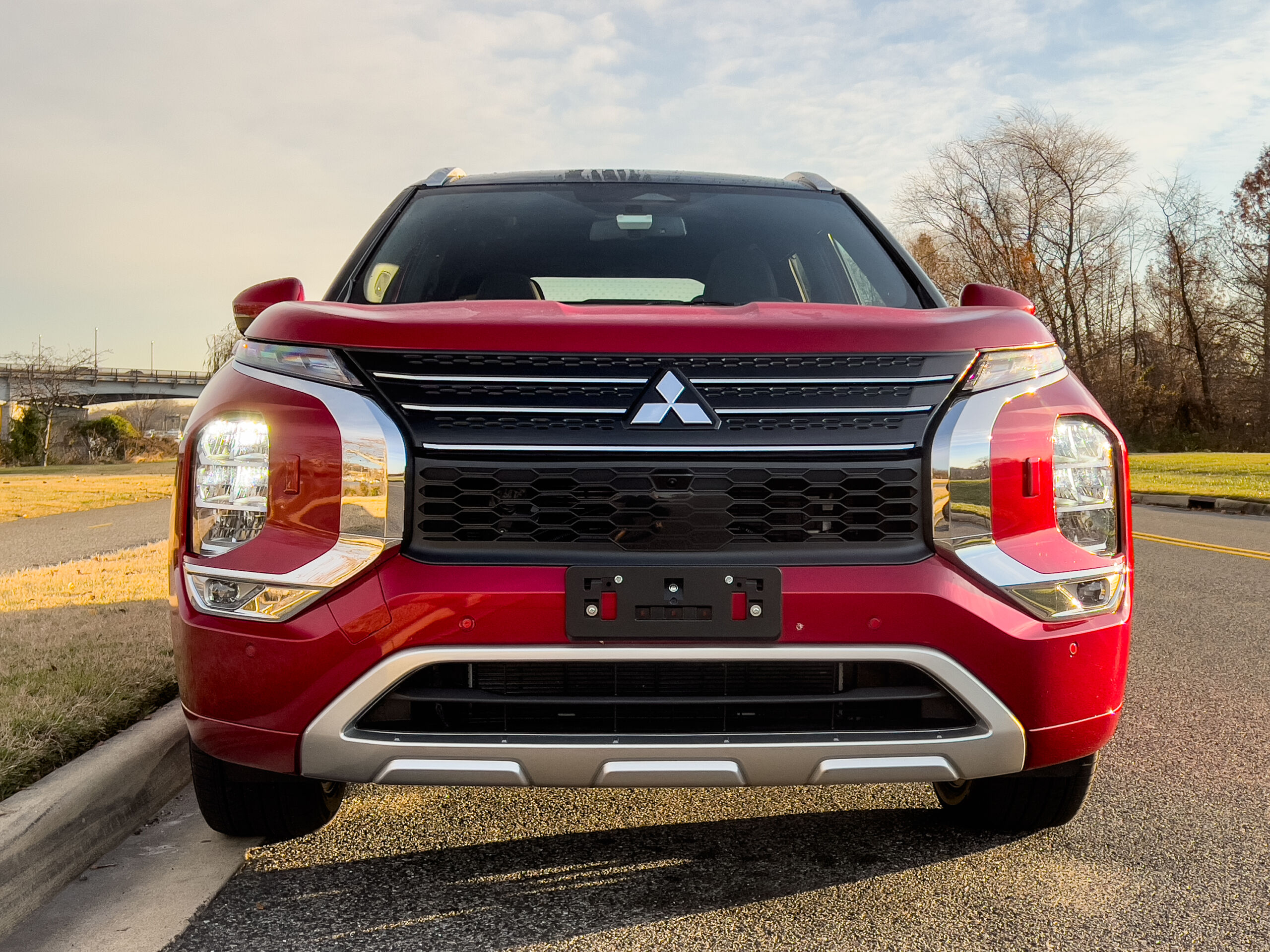
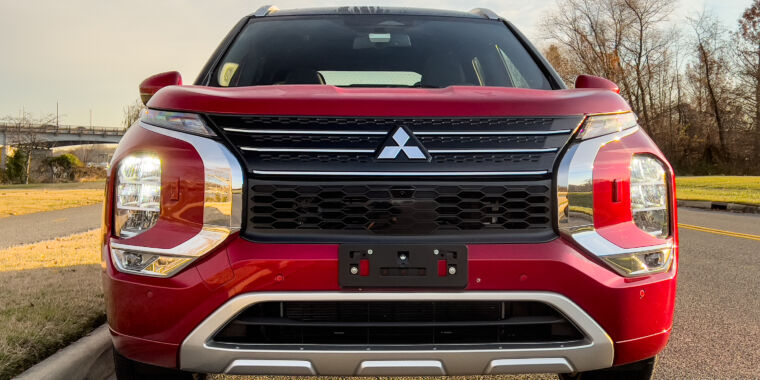
The front of a Mitsubishi Outlander PHEV

Enlarge / The previous Mitsubishi Outlander PHEV was the world’s best-selling plug-in hybrid, apparently. Now the new one has more power and a bigger battery, among other improvements.

Jonathan Gitlin

What to make of Mitsubishi, now we’re almost a quarter of the way into this century? For enthusiasts of a certain age, the brand is synonymous with rallying and fire-breathing all-wheel drive sedans with extremely short service intervals. To my old driving instructor, Mitsubishi was the Mercedes of Japan. And a Mitsubishi was even the first electric vehicle I reviewed for Ars, way back in 2012.

These days it feels very much like the third brand at the Nissan-Renault alliance. The rallying heyday is long past, and its lineup here in the USA is down to just three SUVs and the sub-$20,000 Mirage, all focused on value for money rather than all-out luxury. Mitsubishi didn’t follow up the electric i-MiEV with another battery EV, but it does make a plug-in hybrid powertrain for the Outlander SUV.

The Outlander is relatively affordable by today’s standards, starting at $40,345, and a week with a model year 2024 example found it to be a solid PHEV with a big enough battery to make most of one’s daily motoring emission-free.

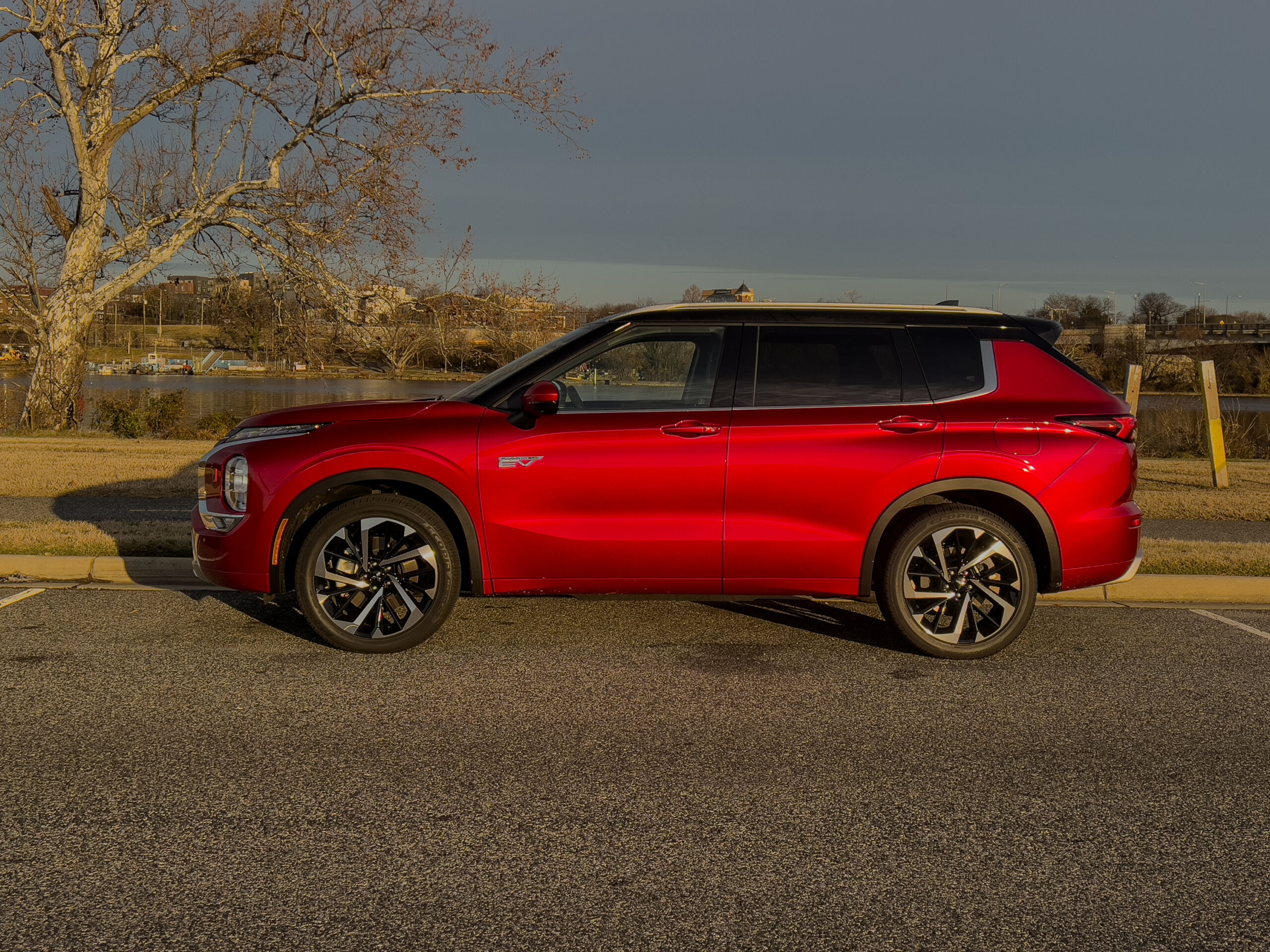
Yes, the US government considers this a compact SUV.

Enlarge / Yes, the US government considers this a compact SUV.

Jonathan Gitlin

Going by sentiments from our audience, it’s possible to feel that the PHEV has almost been abandoned in favor of more on-trend battery EVs. And data from Consumer Reports isn’t particularly complimentary about PHEV reliability, although the same publication did find PHEVs (and BEVs) are cheaper to maintain than a car that just burns gasoline.

Ars actually tested the new Outlander PHEV—albeit briefly—just over a year ago. But a first-drive event held by an automaker is stage-managed in a way that just spending a week with a car isn’t, and I figured since I quite liked the last model, it wouldn’t be a wasted week.

They say it’s a compact

Mitsubishi classifies the Outlander PHEV as a compact SUV. One can quibble about whether an SUV that’s 185.4 inches (4,709 mm) long and 75 inches (1,905 mm) wide really is compact, but that starts to get into philosophical debates about technical definitions versus the commonly accepted meaning of words. The Outlander PHEV’s 106.5-inch (2,705 mm) wheelbase is sufficiently long to allow for a third row of seats in the back though, so it will seat seven humans, as long as the two in the back are pretty short.

Daily range isn’t a problem with the 2024 Mitsubishi Outlander PHEV Read More »