Asked why we need Golden Dome, the man in charge points to a Hollywood film
“If they see how prepared we are, no one starts a nuclear war.”
A test of the nation’s Ground-based Midcourse Defense system at Vandenberg Air Force Base, California, in 2019. Credit: US Air Force/Senior Airman Clayton Wear
Near the end of the film A House of Dynamite, a fictional American president portrayed by Idris Elba sums up the theory of nuclear deterrence.
“Just being ready is the point, right?” Elba says. “It keeps people in check. Keeps the world straight. If they see how prepared we are, no one starts a nuclear war.”
There’s a lot that goes wrong in the film, namely the collapse of deterrence itself. For more than 60 years, the US military has used its vast arsenal of nuclear weapons, constantly deployed on Navy submarines, at Air Force bomber bases, and in Minuteman missile fields, as a way of saying, “Don’t mess with us.” In the event of a first strike against the United States, an adversary would be assured of an overwhelming nuclear response, giving rise to the concept of mutual assured destruction.
The Pentagon’s Golden Dome missile defense shield, still in its nascent phase, could fundamentally transform nuclear strategy. One might argue that Golden Dome, if demonstrated as successful, could reshape deterrence in ways not seen since the United States and the Soviet Union first escalated their nuclear arms race in the 1950s.
Theory of deterrence
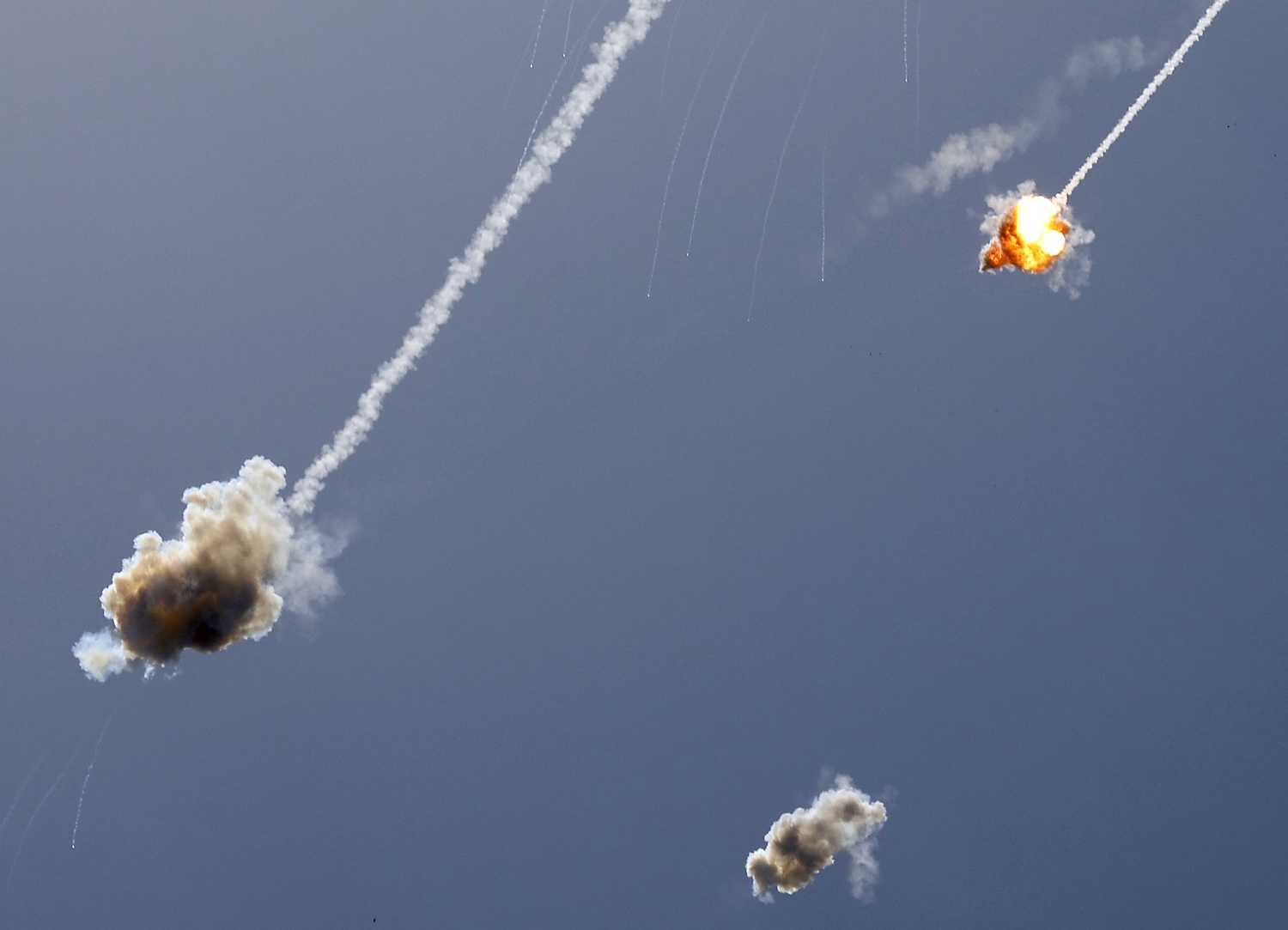
Production of A House of Dynamite, released in October, began well before President Donald Trump retook the White House and started issuing a bevy of executive orders, one of which directed the Pentagon to start work on a defense shield to protect the US homeland from missile and drone attacks. This initiative was later named Golden Dome, a twist on Israel’s Iron Dome missile defense system.
Proponents of the Golden Dome program say it’s necessary to defend the United States against evolving threats, especially in a time of “great power competition” with nuclear-armed China. Golden Dome is supposed to defend against traditional ballistic missiles, maneuverable hypersonic missiles, cruise missiles, and slower-moving drones. All of these types of weapons have seen use on battlefields in the Middle East, Ukraine, and Russia in the last several years.
Opponents argue that Golden Dome will cost untold hundreds of billions of dollars, destabilize the global order, and increase the risk of a nuclear attack. Their thinking goes that if an adversary’s leaders believe the United States can protect itself from widespread destruction—and therefore remove the motivation for a massive US response—that might be enough for an adversary to pull the trigger on a nuclear attack.
Inevitably, at least a handful of nuclear-tipped missiles would make it through the Golden Dome shield in such a scenario, and countless Americans would die, critics say. People made similar arguments against former President Ronald Reagan’s Strategic Defense Initiative, commonly known as Star Wars, before its cancellation. Ars interviewed Rep. Seth Moulton (D-Mass.) earlier this year about why he’s against Golden Dome.
Getting boxed in
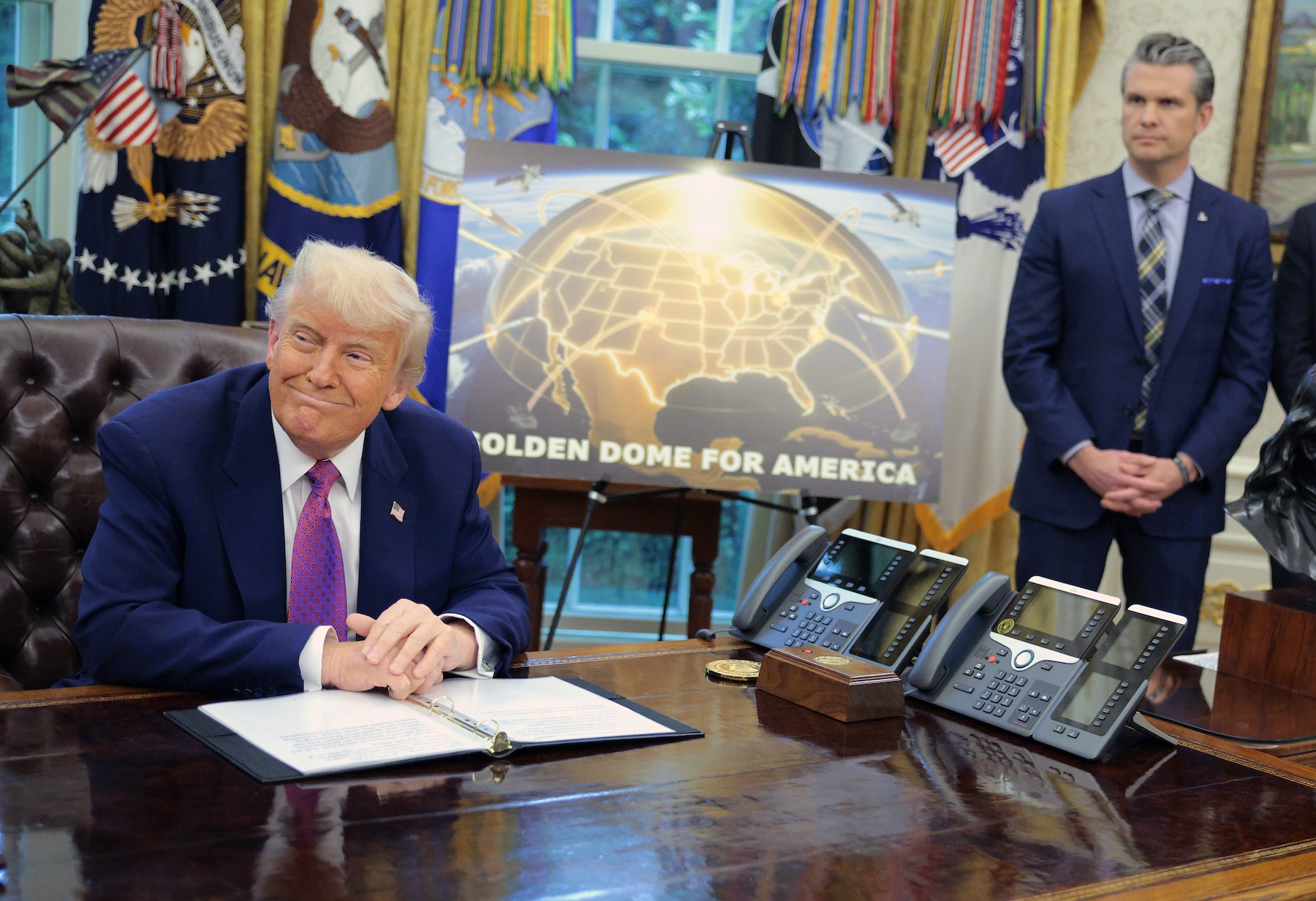
Following orders from the Trump administration, military officials have said little about Golden Dome after a flurry of White House announcements and Oval Office photo ops earlier this year. The shield will consist of hundreds or thousands of Space-Based Interceptors on satellites prepositioned in low-Earth orbit, ready to fire small rockets to strike any ballistic missile that threatens the United States. No one is prepared to say how many interceptors or how long it will take to deploy a comprehensive space-based defense system.
In order to work, Golden Dome also needs ground-based interceptors, radar arrays, missile tracking and data relay satellites, and a sophisticated computer network to tie it all together. Some of these capabilities exist today, but space-based interceptors (SBIs) do not. The Trump administration claims an initial homeland defense system could be ready by mid-2028 at a cost of $175 billion. But that won’t be the final product, and Pentagon officials haven’t said how long or how much it will cost to build out the entire network.
The four-star general in charge of developing Golden Dome, Space Force Gen. Michael Guetlein, defended the military’s reluctance to release more information to taxpayers. He said the military is sharing more about the Golden Dome architecture in “one-on-one” meetings with 200 to 300 companies vying for a lucrative slice of the program.

Gen. Michael Guetlein testifies before the Senate Armed Services Committee about joint force readiness in Washington, DC, on March 12, 2025. Credit: Eric Dietrich/US Air Force
“That transparency may not come in an industry symposium, but it is coming in one-on-ones,” Guetlein said in a discussion Saturday at the Reagan National Defense Forum. “It’s not coming in an industry symposium because you guys are not the only ones in the audience, and there are people in that audience that I don’t want to know what we’re doing.
“But I do know that… our industrial partners are all in on it and are supported, so they are pretty well-informed to the max amount I can inform them today,” Guetlein said. “We’ll continue to do more.”
Some public discourse is necessary to establish deterrence. Guetlein said he “hopes” to release more information to the public next year. For now, nearly 11 months after Trump’s order kick-started Golden Dome, nearly all of it remains under a veil of secrecy.
“We will have some things in place that allow us to start having those kind of conversations,” Guetlein said. “I think A House of Dynamite was a good place to start the dialogue. It opens up the dialogue to the American public that we have to change the defense equation. We have to provide decision space to the United States president so that we don’t get ourselves boxed in.”
Spoiler alert
The military’s Ground-based Midcourse Defense (GMD) system, which would be used to destroy an incoming missile before it ever reaches US airspace, has a success rate of less than 60 percent in testing. There are just 44 ground-based midcourse interceptors in the Pentagon’s inventory, enough to mount a defense against one or several missiles from a rogue state like North Korea, but not enough to put a dent in any large-scale nuclear attack.
The next part of this story contains spoilers.
In A House of Dynamite, the military launches two GBIs to destroy a single ballistic missile of unknown origin heading for the United States. Both interceptors fail. What’s more, for a nuclear-armed missile to actually reach a target in the United States, one assumes defense and deterrence have also failed. The president must decide what to do next. Respond with an attack? If so, attack where?

Idris Elba portrays an unnamed president of the United States in A House of Dynamite. Credit: Netflix
The film succeeds in creating suspense. It also gets a lot of technical details right, even if the ending left many viewers disappointed. According to at least two senior Pentagon leaders, the film helps illustrate why it’s time for Golden Dome. It is worth noting that the filmmakers behind A House of Dynamite—director Kathryn Bigelow and screenwriter Noah Oppenheim—said one of their goals with the movie was to show that missile defense systems are not infallible.
But Troy Meink, the secretary of the Air Force, said no president should ever wrestle with the decisions facing Elba’s character in the final minutes of the film.
“One of the things that A House of Dynamite really highlighted is the fact that you can’t let yourself be in a situation where you either have a very low chance of stopping it, or you go full nuke in return,” Meink said. “You just can’t let yourself get in that situation, and that’s why we need this [Golden Dome].”
Non-disclosure
There was a bit of news that Guetlein briefly mentioned in Saturday’s discussion at the Ronald Reagan Presidential Library. Guetlein confirmed the Pentagon recently awarded 18 contracts to develop technology for SBIs capable of targeting enemy missiles during their boost phase, before they reach their top speeds and have an opportunity to deploy countermeasures.
The Space Force awarded the prototype development deals in November, but officials didn’t say how many or which companies received the contracts. Guetlein said the number was 18. The value of each contract falls below the $9 million public disclosure threshold for Pentagon programs.
At the same time, Guetlein said the military is working with companies on command-and-control and fire-control software.
“We are in discussions with the department on the need to acquire more transport capability, which is the ability to move data through space, more sensing capability, more missile warning, missile track capability,” he said. “We are waiting on those contracts to come in and to move forward on those, but we have given our needs to the department.”
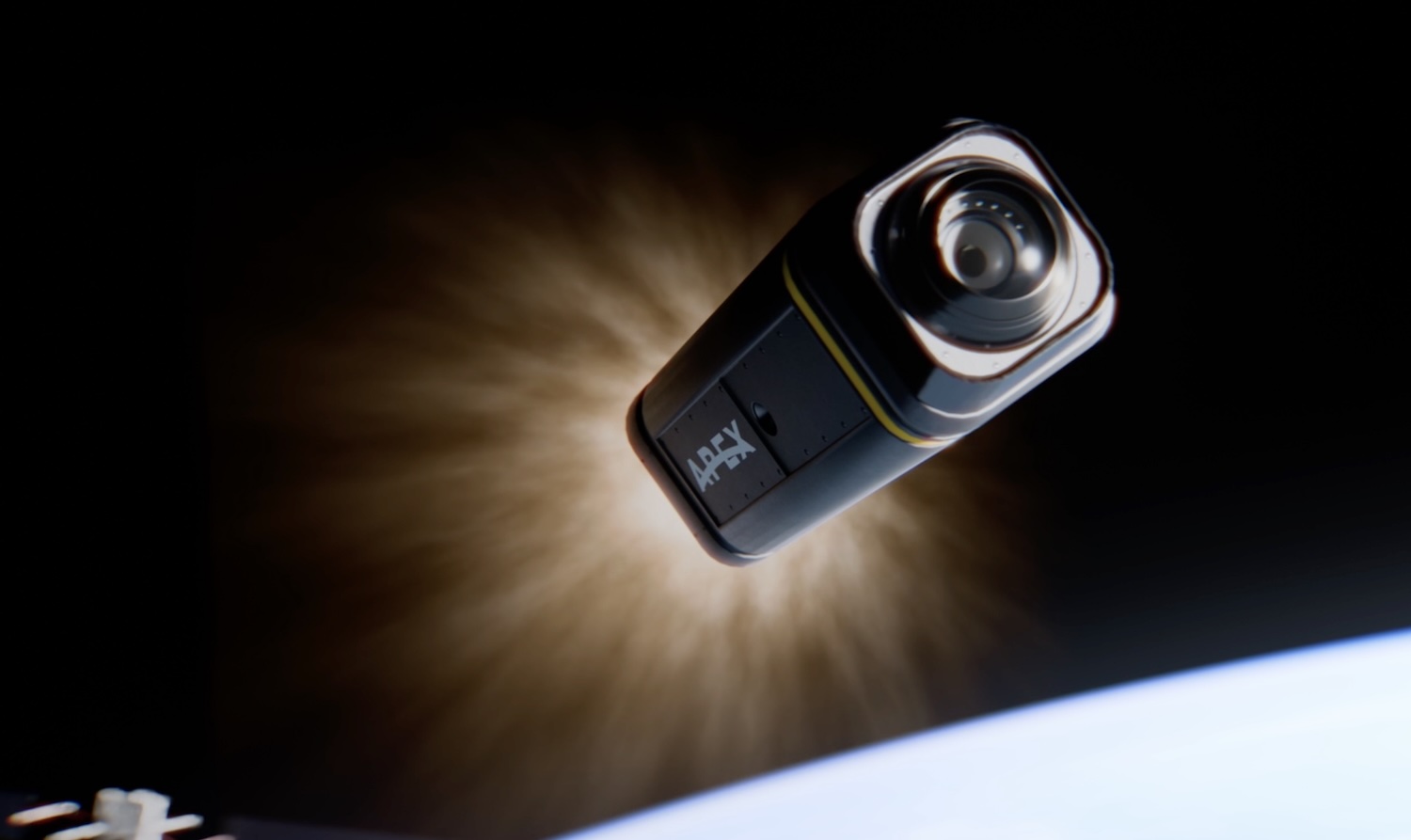
This illustration released by Apex depicts a Space-Based Interceptor fired from a satellite in low-Earth orbit. Credit: Apex
Next, the Space Force plans to award prototype contracts for midcourse SBIs, perhaps as soon as February, according to a procurement document released by Space Systems Command’s program executive office for space combat power. Like their ground-based counterparts already on alert, these kinds of interceptors would be used to take out ballistic missiles as they coast through space.
Several death knells doomed the Reagan-era Star Wars plan. One was political: the fall of the Soviet Union. The others were economic and technical. It was not possible to affordably build and launch numerous SBIs, but the cost of space access is coming down, largely thanks to reusable rockets. Many of the technologies that will underpin Golden Dome, like automation and AI, sensor sensitivity, and laser communications in space, were simply not available 40 years ago.
It also helps that the Pentagon has a head-start on Golden Dome with GMD and an inventory of smaller interceptors for shorter-range missiles. Key elements of a space-based sensor network required for detecting, tracking, and targeting ballistic and hypersonic missiles started launching in 2024.
But SBIs don’t yet exist. They are among the most challenging, and most controversial, parts of Golden Dome. That’s why the Space Force is focusing on awarding the first batches of SBI contracts.
“We are meeting all of our… objectives to date,” said Guetlein, who previously compared Golden Dome to the Manhattan Project. “I think we’re on a good trajectory. But I will tell you, it is not a gimme putt. It is an extremely complex thing that we’re getting ready to do.”

Stephen Clark is a space reporter at Ars Technica, covering private space companies and the world’s space agencies. Stephen writes about the nexus of technology, science, policy, and business on and off the planet.
Asked why we need Golden Dome, the man in charge points to a Hollywood film Read More »