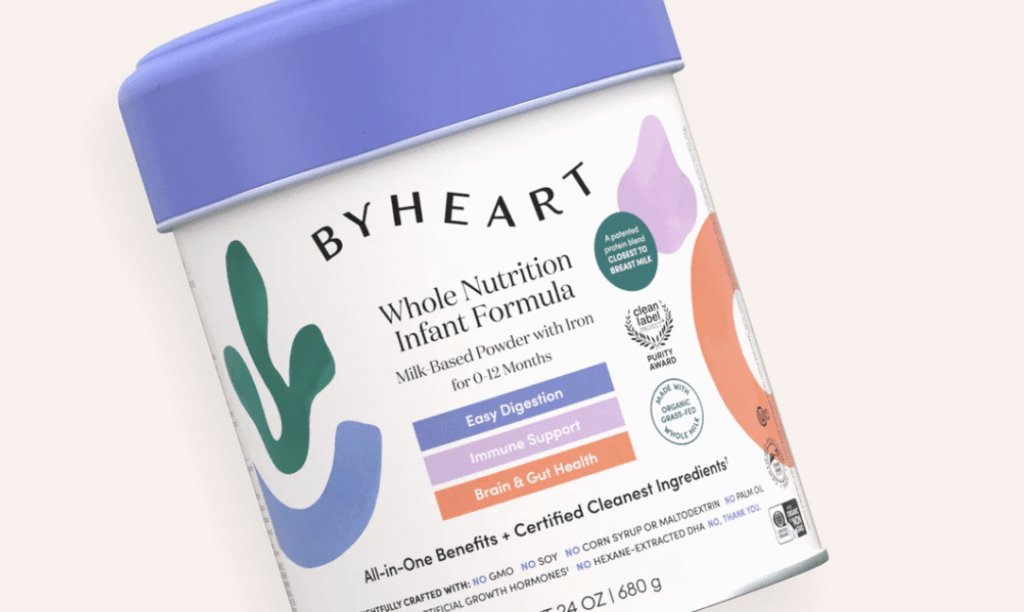
ByHeart announced on Thursday that its own testing identified the bacterium that causes botulism in its baby formula, which is linked to an ongoing infant botulism outbreak that has doubled since last week.
As of November 19, there have been 31 cases across 15 states—up from 15 cases in 12 states reported last week. All 31 cases so far have been hospitalized. No deaths have been reported.
The outbreak was announced on November 8, and ByHeart was, at first, unusually aggressive in deflecting blame for linked illnesses.
The link between infant botulism cases and ByHeart was first spotted by the California Department of Public Health (CDPH). The department is the world’s sole source of the infant botulism treatment BabyBIG, and, as such, is contacted when any infant botulism cases arise. CDPH started to notice a pattern of ByHeart exposure among the cases. While ByHeart products account for just 1 percent of infant formula sales, babies fed ByHeart formula accounted for 40 percent of infant botulism cases with dry formula exposure between August 1 and November 10. Soon, preliminary testing by the department identified the bacterium that causes botulism—Clostridium botulinum—in an opened can of ByHeart from one of the sick babies.
Changing tune
However, ByHeart didn’t buy it. In a video posted to social media the day the outbreak was announced, one of ByHeart’s co-founders, Mia Funt, said: “I want to make something really clear: There is no reason to believe that infant formula can cause infant botulism.” Funt claimed that “multiple regulatory bodies” have concluded that formula can’t cause infant botulism, and the US Food and Drug Administration has never found a “direct connection” between formula and infant botulism. She added that no “toxins” have been found in the formula.
Enlarge/ Night view of company logos in Nestlé Avanca Dairy Products Plant on January 21, 2019, in Avanca, Portugal. This plant produces Cerelac, Nestum, Mokambo, Pensal, Chocapic and Estrelitas, among others.
In high-income countries, Nestlé brand baby foods have no added sugars them, in line with recommendations from major health organizations around the world and consumer pressure. But in low- and middle-income countries, Nestlé adds sugar to those same baby products, sometimes at high levels, which could lead children to prefer sugary diets and unhealthy eating habits, according to an investigation released recently by nonprofit groups.
The investigation, conducted by Public Eye and the International Baby Food Action Network (IBFAN), says the addition of added sugars to baby foods in poorer countries, against expert recommendations, creates an “unjustifiable double standard.” The groups quote Rodrigo Vianna, an epidemiologist and professor at the Department of Nutrition of the Federal University of Paraíba in Brazil, who calls added sugars in baby foods “unnecessary and highly addictive.”
“Children get used to the sweet taste and start looking for more sugary foods, starting a negative cycle that increases the risk of nutrition-based disorders in adult life,” Vianna told the organizations for their investigation. “These include obesity and other chronic non-communicable diseases, such as diabetes or high blood-pressure.”
The two groups compared the nutritional content of Nestlé’s Cerelac and Nido products, the company’s best-selling baby food brands in low- and middle-income countries that generate sales of over $2.5 billion. In a Cerelac wheat cereal product, for instance, the product contained up to 6 grams of added sugar in countries including Thailand, Ethiopia, South Africa, Pakistan, India, and Bangladesh. In the United Kingdom and Germany, the same product contained zero added sugars.
In the Philippines, where the sugar content was the highest, and in other countries—including Nigeria, Senegal, Vietnam and Pakistan—the added sugar content was not listed on Nestlé’s labeling, the investigation found.
Double standard
“There is a double standard here that can’t be justified,” Nigel Rollins, a WHO scientist, told the nonprofit groups. Rollins pointed out that the company does not add sugars to its baby products in Switzerland, where the company is headquartered. Thus, continuing to add it in low-resource settings is “problematic both from a public health and ethical perspective,” he said.
In a report last month, the WHO found that as of 2022, 37 million children under the age of 5 worldwide had overweight. Additionally, over 390 million children ages 5 to 19 had overweight and 160 million had obesity. The prevalence of overweight in children 5 to 19 rose from 8 percent in 1990 to 20 percent in 2022, the United Nations agency noted. Obesity rates in this age group, meanwhile, rose from 2 percent to 8 percent in the same timespan.
Nestlé responded to the investigation with a statement suggesting that the differences in sugar content “depend on several factors, including regulations and availability of local ingredients, which can result in offerings with lower or no-added sugars.” But it argued that these differences do not “compromise the nutritional value of our products for infants and young children.”
Nestlé is a multinational food and drink behemoth with a controversial history of selling baby products in poorer countries. In the 1970s and ’80s, the company came under heavy international fire for aggressively marketing its baby formula to impoverished mothers. Health advocates accused Nestlé of misleading mothers into thinking formula is better than breast milk for their babies, even though leading health organizations recommend exclusive breastfeeding for the first six months of life when possible.
Critics accused Nestlé of providing free formula to hospital maternity wards, causing new, low-income mothers to turn to it shortly after birth in the critical window in which breast milk production would otherwise ramp up in response to nursing a newborn. Without nursing in that time, mothers can struggle to lactate and become dependent on formula. Out of the hospital, the powdered formula is no longer free and must be mixed in proper amounts and in sanitary conditions to ensure it is safe and meeting the nutritional needs of the infant, which can be a struggle for poor families.
Nestlé now states that it follows international standards for marketing breast-milk substitutes, despite ongoing boycotts in some countries.