New critique debunks claim that trees can sense a solar eclipse
“He puts forward logical alternative hypotheses,” said Cahill of Novoplansky’s critique. “The original work should have tested among a number of different hypotheses rather than focusing on a single interpretation. This is in part what makes it pseudoscience and promoting a worldview.”
Granted, “[p]lants have extensive and well established mechanisms of communication, with that of volatiles being the most well studied and understood,” he added. “There is also growing recognition that root exudates play a role in plant-plant interactions, though this is only now being deeply investigated. Nothing else, communication through mychorriza, has withstood independent investigation.”
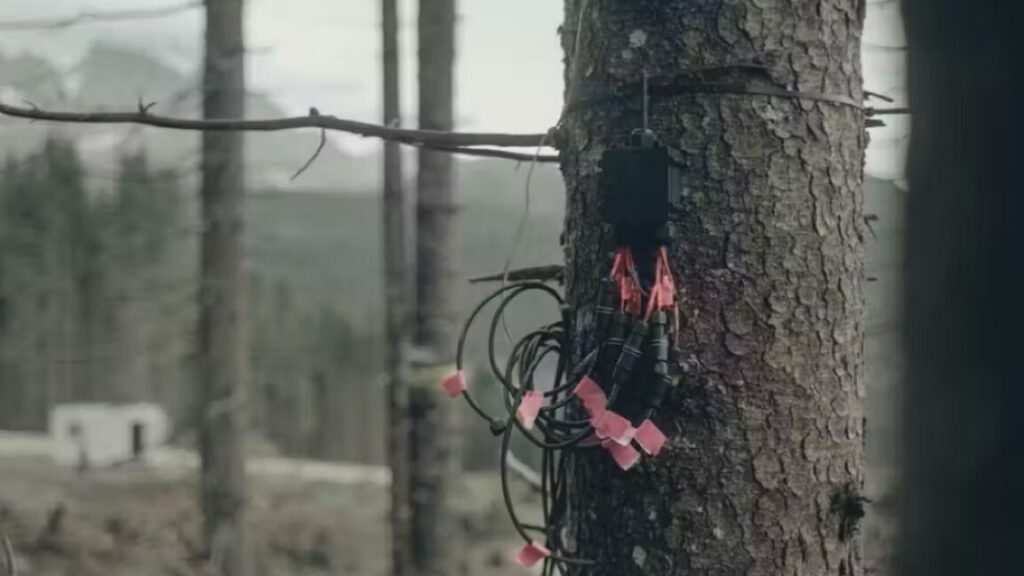
Chiolerio and Gagliano stand by their research, saying they have always acknowledged the preliminary nature of their results. “We measured [weather-related elements like] temperature, relative humidity, rainfall and daily solar radiation,” Chiolerio told Ars. “None of them shows strong correlation with the transients of the electrome during the eclipse. We did not measure environmental electric fields, though; therefore, I cannot exclude effects induced by nearby lightnings. We did not have gravitational probes, did not check neutrinos, cosmic rays, magnetic fields, etc.”
“I’m not going to debate an unpublished critique in the media, but I can clarify our position,” Gagliano told Ars. “Our [2025] paper reports an empirical electrophysiological/synchrony pattern in the eclipse window, including changes beginning prior to maximum occultation, and we discussed candidate cues explicitly as hypotheses rather than demonstrated causes. Describing weather/lightning as ‘more parsimonious’ is not evidence of cause. Regional lightning strike counts and other proxies can motivate a competing hypothesis, but they do not establish causal attribution at the recording site without site-resolved, time-aligned field measurements. Without those measurements, the lightning/weather account remains a hypothesis among other possibilities rather than a supported or default explanation for the signals we recorded.”
“We acknowledged the limited sample size and described the work as an initial field report; follow-up work is ongoing and will be communicated through peer-reviewed channels,” Gagliano added. As for the suggestion of pseudoscience, “I won’t engage with labels; scientific disagreements should be resolved with transparent methods, data, and discriminating tests.”
“It seems that the public appeal is something particularly painful for the colleagues who published their opinion on Trends in Plant Science,” Chiolerio said. “We did not care about public appeal, we wanted to share as much as possible the results of years of hard work that led to interesting data.”
DOI: Trends in Plant Science, 2026. 10.1016/j.tplants.2025.12.001 (About DOIs).
DOI: A. Chiolerio et al., Royal Society Open Science, 2025. 10.1098/rsos.241786 (About DOIs).
New critique debunks claim that trees can sense a solar eclipse Read More »