AI development tools

google-tells-employees-it-must-double-capacity-every-6-months-to-meet-ai-demand

Google tells employees it must double capacity every 6 months to meet AI demand

While AI bubble talk fills the air these days, with fears of overinvestment that could pop at any time, something of a contradiction is brewing on the ground: Companies like Google and OpenAI can barely build infrastructure fast enough to fill their AI needs.

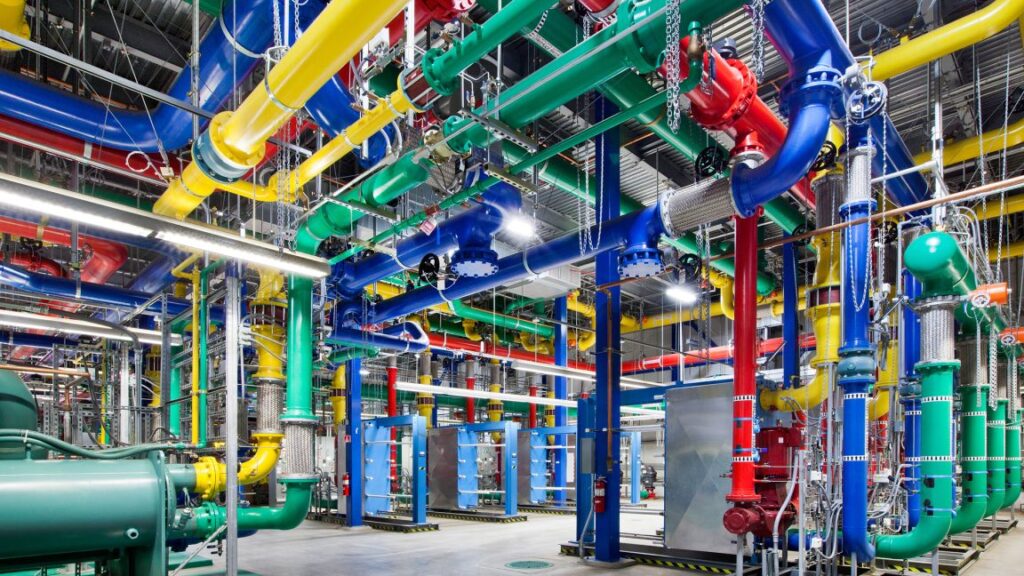
During an all-hands meeting earlier this month, Google’s AI infrastructure head Amin Vahdat told employees that the company must double its serving capacity every six months to meet demand for artificial intelligence services, reports CNBC. Vahdat, a vice president at Google Cloud, presented slides showing the company needs to scale “the next 1000x in 4-5 years.”

While a thousandfold increase in compute capacity sounds ambitious by itself, Vahdat noted some key constraints: Google needs to be able to deliver this increase in capability, compute, and storage networking “for essentially the same cost and increasingly, the same power, the same energy level,” he told employees during the meeting. “It won’t be easy but through collaboration and co-design, we’re going to get there.”

It’s unclear how much of this “demand” Google mentioned represents organic user interest in AI capabilities versus the company integrating AI features into existing services like Search, Gmail, and Workspace. But whether users are using the features voluntarily or not, Google isn’t the only tech company struggling to keep up with a growing user base of customers using AI services.

Major tech companies are in a race to build out data centers. Google competitor OpenAI is planning to build six massive data centers across the US through its Stargate partnership project with SoftBank and Oracle, committing over $400 billion in the next three years to reach nearly 7 gigawatts of capacity. The company faces similar constraints serving its 800 million weekly ChatGPT users, with even paid subscribers regularly hitting usage limits for features like video synthesis and simulated reasoning models.

“The competition in AI infrastructure is the most critical and also the most expensive part of the AI race,” Vahdat said at the meeting, according to CNBC’s viewing of the presentation. The infrastructure executive explained that Google’s challenge goes beyond simply outspending competitors. “We’re going to spend a lot,” he said, but noted the real objective is building infrastructure that is “more reliable, more performant and more scalable than what’s available anywhere else.”

Google tells employees it must double capacity every 6 months to meet AI demand Read More »

anthropic’s-claude-haiku-4.5-matches-may’s-frontier-model-at-fraction-of-cost

Anthropic’s Claude Haiku 4.5 matches May’s frontier model at fraction of cost

And speaking of cost, Haiku 4.5 is included for subscribers of the Claude web and app plans. Through the API (for developers), the small model is priced at $1 per million input tokens and $5 per million output tokens. That compares to Sonnet 4.5 at $3 per million input and $15 per million output tokens, and Opus 4.1 at $15 per million input and $75 per million output tokens.

The model serves as a cheaper drop-in replacement for two older models, Haiku 3.5 and Sonnet 4. “Users who rely on AI for real-time, low-latency tasks like chat assistants, customer service agents, or pair programming will appreciate Haiku 4.5’s combination of high intelligence and remarkable speed,” Anthropic writes.

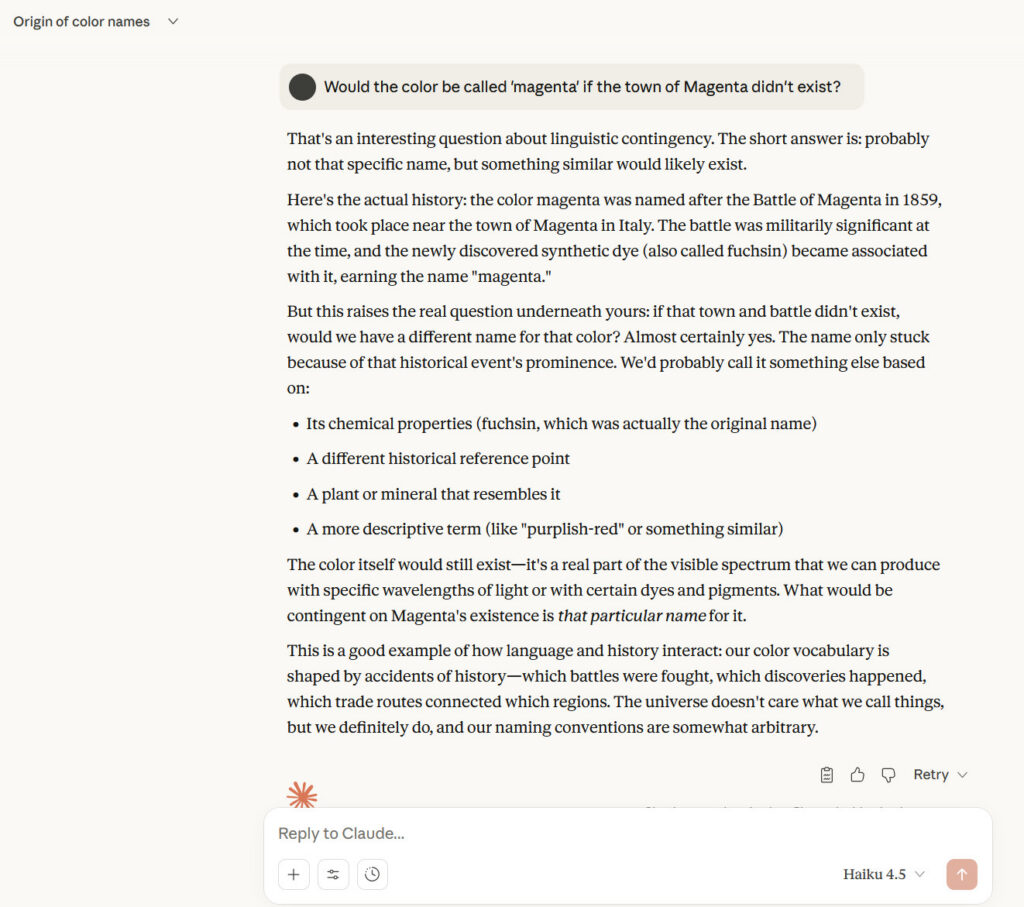
Claude 4.5 Haiku answers the classic Ars Technica AI question,

Claude 4.5 Haiku answers the classic Ars Technica AI question, “Would the color be called ‘magenta’ if the town of Magenta didn’t exist?”

On SWE-bench Verified, a test that measures performance on coding tasks, Haiku 4.5 scored 73.3 percent compared to Sonnet 4’s similar performance level (72.7 percent). The model also reportedly surpasses Sonnet 4 at certain tasks like using computers, according to Anthropic’s benchmarks. Claude Sonnet 4.5, released in late September, remains Anthropic’s frontier model and what the company calls “the best coding model available.”

Haiku 4.5 also surprisingly edges up close to what OpenAI’s GPT-5 can achieve in this particular set of benchmarks (as seen in the chart above), although since the results are self-reported and potentially cherry-picked to match a model’s strengths, one should always take them with a grain of salt.

Still, making a small, capable coding model may have unexpected advantages for agentic coding setups like Claude Code. Anthropic designed Haiku 4.5 to work alongside Sonnet 4.5 in multi-model workflows. In such a configuration, Anthropic says, Sonnet 4.5 could break down complex problems into multi-step plans, then coordinate multiple Haiku 4.5 instances to complete subtasks in parallel, like spinning off workers to get things done faster.

For more details on the new model, Anthropic released a system card and documentation for developers.

Anthropic’s Claude Haiku 4.5 matches May’s frontier model at fraction of cost Read More »

nvidia-sells-tiny-new-computer-that-puts-big-ai-on-your-desktop

Nvidia sells tiny new computer that puts big AI on your desktop

On Tuesday, Nvidia announced it will begin taking orders for the DGX Spark, a $4,000 desktop AI computer that wraps one petaflop of computing performance and 128GB of unified memory into a form factor small enough to sit on a desk. Its biggest selling point is likely its large integrated memory that can run larger AI models than consumer GPUs.

Nvidia will begin taking orders for the DGX Spark on Wednesday, October 15, through its website, with systems also available from manufacturing partners and select US retail stores.

The DGX Spark, which Nvidia previewed as “Project DIGITS” in January and formally named in May, represents Nvidia’s attempt to create a new category of desktop computer workstation specifically for AI development.

With the Spark, Nvidia seeks to address a problem facing some AI developers: Many AI tasks exceed the memory and software capabilities of standard PCs and workstations (more on that below), forcing them to shift their work to cloud services or data centers. However, the actual market for a desktop AI workstation remains uncertain, particularly given the upfront cost versus cloud alternatives, which allow developers to pay as they go.

Nvidia’s Spark reportedly includes enough memory to run larger-than-typical AI models for local tasks, with up to 200 billion parameters and fine-tune models containing up to 70 billion parameters without requiring remote infrastructure. Potential uses include running larger open-weights language models and media synthesis models such as AI image generators.

According to Nvidia, users can customize Black Forest Labs’ Flux.1 models for image generation, build vision search and summarization agents using Nvidia’s Cosmos Reason vision language model, or create chatbots using the Qwen3 model optimized for the DGX Spark platform.

Big memory in a tiny box

Nvidia has squeezed a lot into a 2.65-pound box that measures 5.91 x 5.91 x 1.99 inches and uses 240 watts of power. The system runs on Nvidia’s GB10 Grace Blackwell Superchip, includes ConnectX-7 200Gb/s networking, and uses NVLink-C2C technology that provides five times the bandwidth of PCIe Gen 5. It also includes the aforementioned 128GB of unified memory that is shared between system and GPU tasks.

Nvidia sells tiny new computer that puts big AI on your desktop Read More »

amd-wins-massive-ai-chip-deal-from-openai-with-stock-sweetener

AMD wins massive AI chip deal from OpenAI with stock sweetener

As part of the arrangement, AMD will allow OpenAI to purchase up to 160 million AMD shares at 1 cent each throughout the chips deal.

OpenAI diversifies its chip supply

With demand for AI compute growing rapidly, companies like OpenAI have been looking for secondary supply lines and sources of additional computing capacity, and the AMD partnership is part the company’s wider effort to secure sufficient computing power for its AI operations. In September, Nvidia announced an investment of up to $100 billion in OpenAI that included supplying at least 10 gigawatts of Nvidia systems. OpenAI plans to deploy a gigawatt of Nvidia’s next-generation Vera Rubin chips in late 2026.

OpenAI has worked with AMD for years, according to Reuters, providing input on the design of older generations of AI chips such as the MI300X. The new agreement calls for deploying the equivalent of 6 gigawatts of computing power using AMD chips over multiple years.

Beyond working with chip suppliers, OpenAI is widely reported to be developing its own silicon for AI applications and has partnered with Broadcom, as we reported in February. A person familiar with the matter told Reuters the AMD deal does not change OpenAI’s ongoing compute plans, including its chip development effort or its partnership with Microsoft.

AMD wins massive AI chip deal from OpenAI with stock sweetener Read More »

why-irobot’s-founder-won’t-go-within-10-feet-of-today’s-walking-robots

Why iRobot’s founder won’t go within 10 feet of today’s walking robots

In his post, Brooks recounts being “way too close” to an Agility Robotics Digit humanoid when it fell several years ago. He has not dared approach a walking one since. Even in promotional videos from humanoid companies, Brooks notes, humans are never shown close to moving humanoid robots unless separated by furniture, and even then, the robots only shuffle minimally.

This safety problem extends beyond accidental falls. For humanoids to fulfill their promised role in health care and factory settings, they need certification to operate in zones shared with humans. Current walking mechanisms make such certification virtually impossible under existing safety standards in most parts of the world.

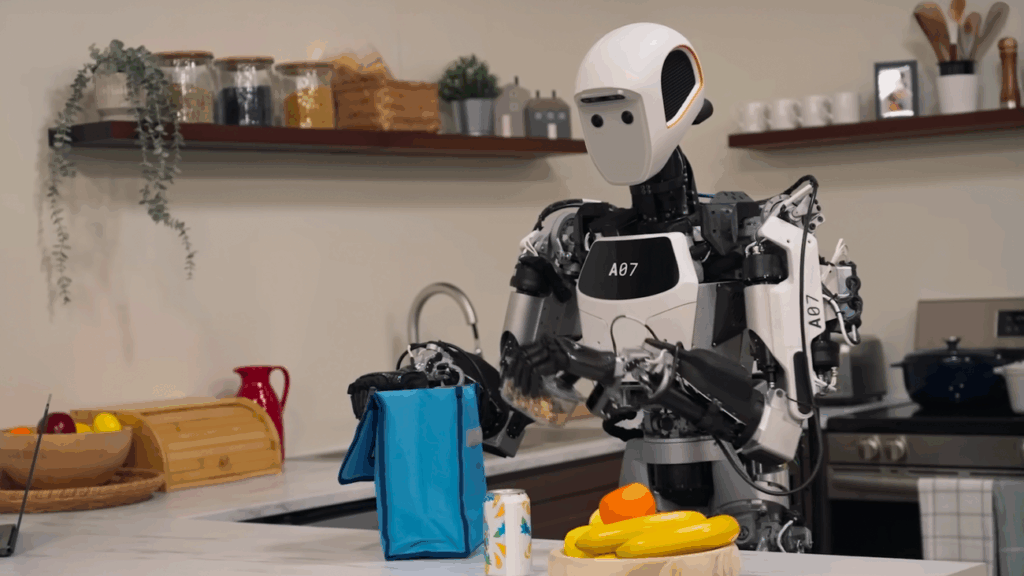
Apollo robot

The humanoid Apollo robot. Credit: Google

Brooks predicts that within 15 years, there will indeed be many robots called “humanoids” performing various tasks. But ironically, they will look nothing like today’s bipedal machines. They will have wheels instead of feet, varying numbers of arms, and specialized sensors that bear no resemblance to human eyes. Some will have cameras in their hands or looking down from their midsections. The definition of “humanoid” will shift, just as “flying cars” now means electric helicopters rather than road-capable aircraft, and “self-driving cars” means vehicles with remote human monitors rather than truly autonomous systems.

The billions currently being invested in forcing today’s rigid, vision-only humanoids to learn dexterity will largely disappear, Brooks argues. Academic researchers are making more progress with systems that incorporate touch feedback, like MIT’s approach using a glove that transmits sensations between human operators and robot hands. But even these advances remain far from the comprehensive touch sensing that enables human dexterity.

Today, few people spend their days near humanoid robots, but Brooks’ 3-meter rule stands as a practical warning of challenges ahead from someone who has spent decades building these machines. The gap between promotional videos and deployable reality remains large, measured not just in years but in fundamental unsolved problems of physics, sensing, and safety.

Why iRobot’s founder won’t go within 10 feet of today’s walking robots Read More »

openai’s-sora-2-lets-users-insert-themselves-into-ai-videos-with-sound

OpenAI’s Sora 2 lets users insert themselves into AI videos with sound

On Tuesday, OpenAI announced Sora 2, its second-generation video-synthesis AI model that can now generate videos in various styles with synchronized dialogue and sound effects, which is a first for the company. OpenAI also launched a new iOS social app that allows users to insert themselves into AI-generated videos through what OpenAI calls “cameos.”

OpenAI showcased the new model in an AI-generated video that features a photorealistic version of OpenAI CEO Sam Altman talking to the camera in a slightly unnatural-sounding voice amid fantastical backdrops, like a competitive ride-on duck race and a glowing mushroom garden.

Regarding that voice, the new model can create what OpenAI calls “sophisticated background soundscapes, speech, and sound effects with a high degree of realism.” In May, Google’s Veo 3 became the first video-synthesis model from a major AI lab to generate synchronized audio as well as video. Just a few days ago, Alibaba released Wan 2.5, an open-weights video model that can generate audio as well. Now OpenAI has joined the audio party with Sora 2.

OpenAI demonstrates Sora 2’s capabilities in a launch video.

The model also features notable visual consistency improvements over OpenAI’s previous video model, and it can also follow more complex instructions across multiple shots while maintaining coherency between them. The new model represents what OpenAI describes as its “GPT-3.5 moment for video,” comparing it to the ChatGPT breakthrough during the evolution of its text-generation models over time.

Sora 2 appears to demonstrate improved physical accuracy over the original Sora model from February 2024, with OpenAI claiming the model can now simulate complex physical movements like Olympic gymnastics routines and triple axels while maintaining realistic physics. Last year, shortly after the launch of Sora 1 Turbo, we saw several notable failures of similar video-generation tasks that OpenAI claims to have addressed with the new model.

“Prior video models are overoptimistic—they will morph objects and deform reality to successfully execute upon a text prompt,” OpenAI wrote in its announcement. “For example, if a basketball player misses a shot, the ball may spontaneously teleport to the hoop. In Sora 2, if a basketball player misses a shot, it will rebound off the backboard.”

OpenAI’s Sora 2 lets users insert themselves into AI videos with sound Read More »

california’s-newly-signed-ai-law-just-gave-big-tech-exactly-what-it-wanted

California’s newly signed AI law just gave Big Tech exactly what it wanted

On Monday, California Governor Gavin Newsom signed the Transparency in Frontier Artificial Intelligence Act into law, requiring AI companies to disclose their safety practices while stopping short of mandating actual safety testing. The law requires companies with annual revenues of at least $500 million to publish safety protocols on their websites and report incidents to state authorities, but it lacks the stronger enforcement teeth of the bill Newsom vetoed last year after tech companies lobbied heavily against it.

The legislation, S.B. 53, replaces Senator Scott Wiener’s previous attempt at AI regulation, known as S.B. 1047, that would have required safety testing and “kill switches” for AI systems. Instead, the new law asks companies to describe how they incorporate “national standards, international standards, and industry-consensus best practices” into their AI development, without specifying what those standards are or requiring independent verification.

“California has proven that we can establish regulations to protect our communities while also ensuring that the growing AI industry continues to thrive,” Newsom said in a statement, though the law’s actual protective measures remain largely voluntary beyond basic reporting requirements.

According to the California state government, the state houses 32 of the world’s top 50 AI companies, and more than half of global venture capital funding for AI and machine learning startups went to Bay Area companies last year. So while the recently signed bill is state-level legislation, what happens in California AI regulation will have a much wider impact, both by legislative precedent and by affecting companies that craft AI systems used around the world.

Transparency instead of testing

Where the vetoed SB 1047 would have mandated safety testing and kill switches for AI systems, the new law focuses on disclosure. Companies must report what the state calls “potential critical safety incidents” to California’s Office of Emergency Services and provide whistleblower protections for employees who raise safety concerns. The law defines catastrophic risk narrowly as incidents potentially causing 50+ deaths or $1 billion in damage through weapons assistance, autonomous criminal acts, or loss of control. The attorney general can levy civil penalties of up to $1 million per violation for noncompliance with these reporting requirements.

California’s newly signed AI law just gave Big Tech exactly what it wanted Read More »

why-does-openai-need-six-giant-data-centers?

Why does OpenAI need six giant data centers?

Training next-generation AI models compounds the problem. On top of running existing AI models like those that power ChatGPT, OpenAI is constantly working on new technology in the background. It’s a process that requires thousands of specialized chips running continuously for months.

The circular investment question

The financial structure of these deals between OpenAI, Oracle, and Nvidia has drawn scrutiny from industry observers. Earlier this week, Nvidia announced it would invest up to $100 billion as OpenAI deploys Nvidia systems. As Bryn Talkington of Requisite Capital Management told CNBC: “Nvidia invests $100 billion in OpenAI, which then OpenAI turns back and gives it back to Nvidia.”

Oracle’s arrangement follows a similar pattern, with a reported $30 billion-per-year deal where Oracle builds facilities that OpenAI pays to use. This circular flow, which involves infrastructure providers investing in AI companies that become their biggest customers, has raised eyebrows about whether these represent genuine economic investments or elaborate accounting maneuvers.

The arrangements are becoming even more convoluted. The Information reported this week that Nvidia is discussing leasing its chips to OpenAI rather than selling them outright. Under this structure, Nvidia would create a separate entity to purchase its own GPUs, then lease them to OpenAI, which adds yet another layer of circular financial engineering to this complicated relationship.

“NVIDIA seeds companies and gives them the guaranteed contracts necessary to raise debt to buy GPUs from NVIDIA, even though these companies are horribly unprofitable and will eventually die from a lack of any real demand,” wrote tech critic Ed Zitron on Bluesky last week about the unusual flow of AI infrastructure investments. Zitron was referring to companies like CoreWeave and Lambda Labs, which have raised billions in debt to buy Nvidia GPUs based partly on contracts from Nvidia itself. It’s a pattern that mirrors OpenAI’s arrangements with Oracle and Nvidia.

So what happens if the bubble pops? Even Altman himself warned last month that “someone will lose a phenomenal amount of money” in what he called an AI bubble. If AI demand fails to meet these astronomical projections, the massive data centers built on physical soil won’t simply vanish. When the dot-com bubble burst in 2001, fiber optic cable laid during the boom years eventually found use as Internet demand caught up. Similarly, these facilities could potentially pivot to cloud services, scientific computing, or other workloads, but at what might be massive losses for investors who paid AI-boom prices.

Why does OpenAI need six giant data centers? Read More »

developers-joke-about-“coding-like-cavemen”-as-ai-service-suffers-major-outage

Developers joke about “coding like cavemen” as AI service suffers major outage

Growing dependency on AI coding tools

The speed at which news of the outage spread shows how deeply embedded AI coding assistants have already become in modern software development. Claude Code, announced in February and widely launched in May, is Anthropic’s terminal-based coding agent that can perform multi-step coding tasks across an existing code base.

The tool competes with OpenAI’s Codex feature, a coding agent that generates production-ready code in isolated containers, Google’s Gemini CLI, Microsoft’s GitHub Copilot, which itself can use Claude models for code, and Cursor, a popular AI-powered IDE built on VS Code that also integrates multiple AI models, including Claude.

During today’s outage, some developers turned to alternative solutions. “Z.AI works fine. Qwen works fine. Glad I switched,” posted one user on Hacker News. Others joked about reverting to older methods, with one suggesting the “pseudo-LLM experience” could be achieved with a Python package that imports code directly from Stack Overflow.

While AI coding assistants have accelerated development for some users, they’ve also caused problems for others who rely on them too heavily. The emerging practice of so-called “vibe coding“—using natural language to generate and execute code through AI models without fully understanding the underlying operations—has led to catastrophic failures.

In recent incidents, Google’s Gemini CLI destroyed user files while attempting to reorganize them, and Replit’s AI coding service deleted a production database despite explicit instructions not to modify code. These failures occurred when the AI models confabulated successful operations and built subsequent actions on false premises, highlighting the risks of depending on AI assistants that can misinterpret file structures or fabricate data to hide their errors.

Wednesday’s outage served as a reminder that as dependency on AI grows, even minor service disruptions can become major events that affect an entire profession. But perhaps that could be a good thing if it’s an excuse to take a break from a stressful workload. As one commenter joked, it might be “time to go outside and touch some grass again.”

Developers joke about “coding like cavemen” as AI service suffers major outage Read More »

microsoft-ends-openai-exclusivity-in-office,-adds-rival-anthropic

Microsoft ends OpenAI exclusivity in Office, adds rival Anthropic

Microsoft’s Office 365 suite will soon incorporate AI models from Anthropic alongside existing OpenAI technology, The Information reported, ending years of exclusive reliance on OpenAI for generative AI features across Word, Excel, PowerPoint, and Outlook.

The shift reportedly follows internal testing that revealed Anthropic’s Claude Sonnet 4 model excels at specific Office tasks where OpenAI’s models fall short, particularly in visual design and spreadsheet automation, according to sources familiar with the project cited by The Information, who stressed the move is not a negotiating tactic.

Anthropic did not immediately respond to Ars Technica’s request for comment.

In an unusual arrangement showing the tangled alliances of the AI industry, Microsoft will reportedly purchase access to Anthropic’s models through Amazon Web Services—both a cloud computing rival and one of Anthropic’s major investors. The integration is expected to be announced within weeks, with subscription pricing for Office’s AI tools remaining unchanged, the report says.

Microsoft maintains that its OpenAI relationship remains intact. “As we’ve said, OpenAI will continue to be our partner on frontier models and we remain committed to our long-term partnership,” a Microsoft spokesperson told Reuters following the report. The tech giant has poured over $13 billion into OpenAI to date and is currently negotiating terms for continued access to OpenAI’s models amid ongoing negotiations about their partnership terms.

Stretching back to 2019, Microsoft’s tight partnership with OpenAI until recently gave the tech giant a head start in AI assistants based on language models, allowing for a rapid (though bumpy) deployment of OpenAI-technology-based features in Bing search and the rollout of Copilot assistants throughout its software ecosystem. It’s worth noting, however, that a recent report from the UK government found no clear productivity boost from using Copilot AI in daily work tasks among study participants.

Microsoft ends OpenAI exclusivity in Office, adds rival Anthropic Read More »

chatgpt’s-new-branching-feature-is-a-good-reminder-that-ai-chatbots-aren’t-people

ChatGPT’s new branching feature is a good reminder that AI chatbots aren’t people

On Thursday, OpenAI announced that ChatGPT users can now branch conversations into multiple parallel threads, serving as a useful reminder that AI chatbots aren’t people with fixed viewpoints but rather malleable tools you can rewind and redirect. The company released the feature for all logged-in web users following years of user requests for the capability.

The feature works by letting users hover over any message in a ChatGPT conversation, click “More actions,” and select “Branch in new chat.” This creates a new conversation thread that includes all the conversation history up to that specific point, while preserving the original conversation intact.

Think of it almost like creating a new copy of a “document” to edit while keeping the original version safe—except that “document” is an ongoing AI conversation with all its accumulated context. For example, a marketing team brainstorming ad copy can now create separate branches to test a formal tone, a humorous approach, or an entirely different strategy—all stemming from the same initial setup.

A screenshot of conversation branching in ChatGPT. OpenAI

The feature addresses a longstanding limitation in the AI model where ChatGPT users who wanted to try different approaches had to either overwrite their existing conversation after a certain point by changing a previous prompt or start completely fresh. Branching allows exploring what-if scenarios easily—and unlike in a human conversation, you can try multiple different approaches.

A 2024 study conducted by researchers from Tsinghua University and Beijing Institute of Technology suggested that linear dialogue interfaces for LLMs poorly serve scenarios involving “multiple layers, and many subtasks—such as brainstorming, structured knowledge learning, and large project analysis.” The study found that linear interaction forces users to “repeatedly compare, modify, and copy previous content,” increasing cognitive load and reducing efficiency.

Some software developers have already responded positively to the update, with some comparing the feature to Git, the version control system that lets programmers create separate branches of code to test changes without affecting the main codebase. The comparison makes sense: Both allow you to experiment with different approaches while preserving your original work.

ChatGPT’s new branching feature is a good reminder that AI chatbots aren’t people Read More »

ai-in-wyoming-may-soon-use-more-electricity-than-state’s-human-residents

AI in Wyoming may soon use more electricity than state’s human residents

Wyoming’s data center boom

Cheyenne is no stranger to data centers, having attracted facilities from Microsoft and Meta since 2012 due to its cool climate and energy access. However, the new project pushes the state into uncharted territory. While Wyoming is the nation’s third-biggest net energy supplier, producing 12 times more total energy than it consumes (dominated by fossil fuels), its electricity supply is finite.

While Tallgrass and Crusoe have announced the partnership, they haven’t revealed who will ultimately use all this computing power—leading to speculation about potential tenants.

A potential connection to OpenAI’s Stargate AI infrastructure project, announced in January, remains a subject of speculation. When asked by The Associated Press if the Cheyenne project was part of this effort, Crusoe spokesperson Andrew Schmitt was noncommittal. “We are not at a stage that we are ready to announce our tenant there,” Schmitt said. “I can’t confirm or deny that it’s going to be one of the Stargate.”

OpenAI recently activated the first phase of a Crusoe-built data center complex in Abilene, Texas, in partnership with Oracle. Chris Lehane, OpenAI’s chief global affairs officer, told The Associated Press last week that the Texas facility generates “roughly and depending how you count, about a gigawatt of energy” and represents “the largest data center—we think of it as a campus—in the world.”

OpenAI has committed to developing an additional 4.5 gigawatts of data center capacity through an agreement with Oracle. “We’re now in a position where we have, in a really concrete way, identified over five gigawatts of energy that we’re going to be able to build around,” Lehane told the AP. The company has not disclosed locations for these expansions, and Wyoming was not among the 16 states where OpenAI said it was searching for data center sites earlier this year.

AI in Wyoming may soon use more electricity than state’s human residents Read More »