Author name: Paul Patrick

the-crimson-diamond-is-a-wonderful-ega-like-graphic-adventure-game-for-2024

The Crimson Diamond is a wonderful EGA-like graphic adventure game for 2024

But don’t get it wrong—you can definitely die —

The parser works much better than you’d think, and the mystery is pitch-perfect.
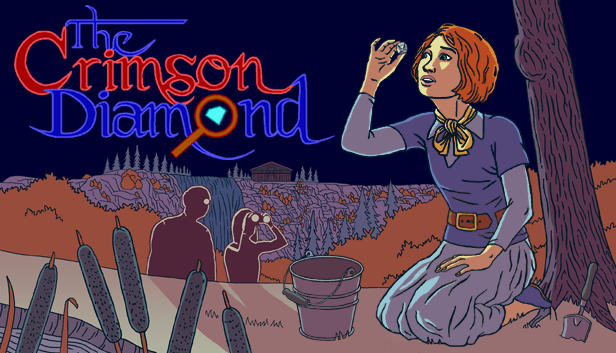
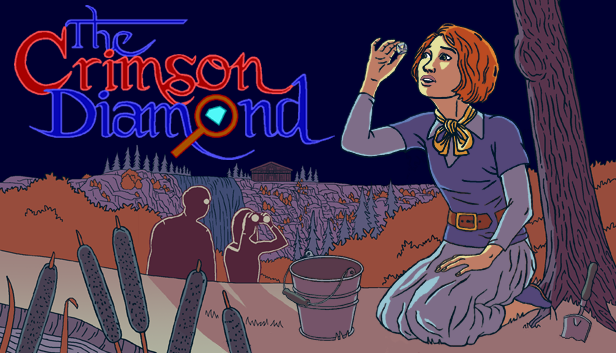
Cover art for The Crimson Diamond

In my mind, this image is slowly drawing into place, with the text arriving last.

Julia Minamata

A text parser? Typing in “Open drawer,” then “Look in drawer,” then “Take brochures,” in the year 2024, on a computer that can generate a 4K 3D model of the Acropolis if I ask it to? Is that really what The Crimson Diamond asks of us?

Yes, it is, and solo developer/writer/producer Julia Minamata is right to ask it. If you have text-prompt adventures from the likes of Sierra in your mental library (like, say, The Colonel’s Bequest), or if you’re willing to meet the parser halfway, it will work. The Crimson Diamond’s parser is fairly agile, accepting a range of nouns and verbs in most circumstances. You can still use arrow keys and a mouse to move and click a few useful shortcuts. And the parser has shortcuts, like typing “n” to look at your quest-tracking notebook or “o d” or “o c” for the very common actions of opening a door or cabinet.

There are a lot of cabinets and drawers in this game because it’s set in northern Ontario, Canada, in 1914. You are Nancy Maple, a junior geologist eager for some field work, sent by your museum to the mining town of Crimson to investigate a diamond that fell out of a river fish’s guts. Everything goes wrong with your trip, and you’re on your own to investigate this town, its odd inhabitants and visitors, and, eventually, a crime that may or may not have to do with potential diamonds.

  • The tutorial room does a great job introducing you to the control scheme: arrow keys or mouse cursor for movement and selecting, but typing for actual action.

    Julia Minamata

  • You spend a fair deal of time in the lodge, talking and looking and picking up little things you know you’ll use later.

    Julia Minamata

  • Cutscenes give the artist new angles from which to demonstrate their remarkable EGA prowess.

    Julia Minamata

  • The characters in this game are richer than you might remember from more memory-limited days, usually having more than one note to them.

    Julia Minamata

A few disclosures must be made. For one, Minamata crafted the EGA-style social avatar for Ars Senior AI Reporter Benj Edwards, who tipped me to this game’s existence. Another is that this is a game that costs $15 on Steam or Itch.io (and 10 percent off on Steam in this first week after release), was made by a solo Canadian developer, with music by notably cool keyboard person Dan Policar, and it evokes some of my earliest, pre-Maniac-Mansion adventure game memories. I also have not played the game to completion. I will not be taking a critical gem loupe to it; I just think more people need to know about it.

Release trailer for The Crimson Diamond

Nostalgia and underdog-cheering sentiments aside, The Crimson Diamond looks and sounds great. The creative constraints of an EGA-like color palette and pixel block size delivered some scenes that are just wonderful to look at. The soundtrack loops about in pleasant and occasionally ear-catching fashion. Alice Bell at Rock Paper Shotgun played much further into this (about six hours and near or at completion), and her major complaint is almost a throwback: a few puzzles with obscure solutions, entirely too easy to miss with text parsing and EGA graphics.

I’m eager to see where Nancy Maple’s journey takes her, even if I have to sometimes wrack my brain for the right text to do the obvious thing. The game so far has felt like spending time inside one of those non-violent mysteries you see on PBS (or CBC), just inside a familiar and evocative game form.

Listing image by Julia Minamata

The Crimson Diamond is a wonderful EGA-like graphic adventure game for 2024 Read More »
saudi-man-earns-world-record-for-444-game-consoles-hooked-to-one-tv

Saudi man earns world record for 444 game consoles hooked to one TV

Still nothing good to play —

Ibrahim Al-Nasser said he got tired of juggling plugs just to play his collection.

Those of us who collect classic game consoles and computers (here’s looking at you, AI reporter Benj Edwards) know the difficulty of keeping all that hardware not just working but instantly accessible with a simple press of a power button. Too often, large hardware collections end up languishing, boxed up on shelves, or sitting loose and unconnected to a display for long periods.

Saudi Arabia’s Ibrahim Al-Nasser grew tired of having that problem with his massive gaming collection, so he decided to hook 444 different gaming devices up to a single TV, earning a Guinness World Record in the process.

“After a while, I noticed that I had a big stack of gaming consoles that I couldn’t play,” Al-Nasser said in a video filmed by Guinness. “The TV ports are limited, and if I want to play, I either unplug the existing consoles or I’ll keep everything and add more switchers and of course more converters as well. By adding more switchers, the idea came to my mind to connect all of the gaming consoles I have to the TV, then contact Guinness World Records because this project is unique.”

Guinness says Al-Nasser makes use of “more than 12” HDMI switchers (so… 13?) to keep his collection connected, as well as “over 30” RCA switchers for pre-HD consoles (though some older consoles, like an N64 used in the video, apparently make use of converters for an HD connection). While the HD consoles seem to automatically switch to the correct input when turned on, Al-Nasser uses a massive spreadsheet to keep track of which button to push on which RCA switcher to connect the right cables.

Wait, there are 444 consoles?

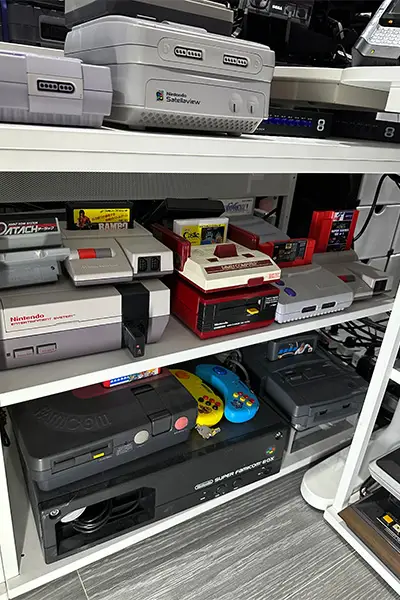
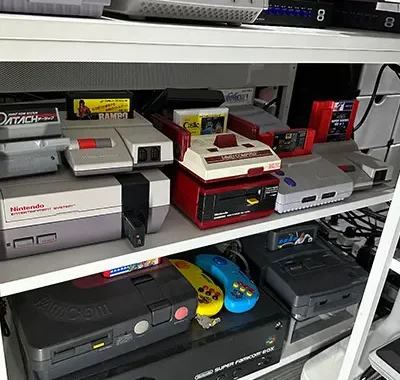
A Nintendo-heavy section of Al-Nasser's collection.

Enlarge / A Nintendo-heavy section of Al-Nasser’s collection.

Al-Nasser’s collection seems quite extensive, including both common modern consoles and relative rarities like the Asia-exclusive Super A’Can. To get to a record-setting count of 444, though, Al-Nasser had to include a lot of non-traditional “game consoles,” including cheap plug-and-play devices, mini-console re-releases, gaming computers, Android-based HDMI sticks, “consolized arcades,” and more.

That’s all good enough to count for Guinness, which has faced controversy for letting would-be record holders pay for a chance at glory. In the gaming world, it famously removed and then reinstated Billy Mitchell’s scoring records amid a lawsuit threat.

Even if the hardware count feels a bit inflated, Al-Nasser definitely deserves credit for keeping so many pieces of gaming hardware clean and well-organized without any of the sloppy cable clutter you might expect. “I use all the tools available in the market… to organize the cables,” he said. “It’s like a museum, that’s why it took too much time for me [to organize].”

Saudi man earns world record for 444 game consoles hooked to one TV Read More »

popular-ai-“nudify”-sites-sued-amid-shocking-rise-in-victims-globally

Popular AI “nudify” sites sued amid shocking rise in victims globally

Popular AI “nudify” sites sued amid shocking rise in victims globally

San Francisco’s city attorney David Chiu is suing to shut down 16 of the most popular websites and apps allowing users to “nudify” or “undress” photos of mostly women and girls who have been increasingly harassed and exploited by bad actors online.

These sites, Chiu’s suit claimed, are “intentionally” designed to “create fake, nude images of women and girls without their consent,” boasting that any users can upload any photo to “see anyone naked” by using tech that realistically swaps the faces of real victims onto AI-generated explicit images.

“In California and across the country, there has been a stark increase in the number of women and girls harassed and victimized by AI-generated” non-consensual intimate imagery (NCII) and “this distressing trend shows no sign of abating,” Chiu’s suit said.

“Given the widespread availability and popularity” of nudify websites, “San Franciscans and Californians face the threat that they or their loved ones may be victimized in this manner,” Chiu’s suit warned.

In a press conference, Chiu said that this “first-of-its-kind lawsuit” has been raised to defend not just Californians, but “a shocking number of women and girls across the globe”—from celebrities like Taylor Swift to middle and high school girls. Should the city official win, each nudify site risks fines of $2,500 for each violation of California consumer protection law found.

On top of media reports sounding alarms about the AI-generated harm, law enforcement has joined the call to ban so-called deepfakes.

Chiu said the harmful deepfakes are often created “by exploiting open-source AI image generation models,” such as earlier versions of Stable Diffusion, that can be honed or “fine-tuned” to easily “undress” photos of women and girls that are frequently yanked from social media. While later versions of Stable Diffusion make such “disturbing” forms of misuse much harder, San Francisco city officials noted at the press conference that fine-tunable earlier versions of Stable Diffusion are still widely available to be abused by bad actors.

In the US alone, cops are currently so bogged down by reports of fake AI child sex images that it’s making it hard to investigate child abuse cases offline, and these AI cases are expected to continue spiking “exponentially.” The AI abuse has spread so widely that “the FBI has warned of an uptick in extortion schemes using AI generated non-consensual pornography,” Chiu said at the press conference. “And the impact on victims has been devastating,” harming “their reputations and their mental health,” causing “loss of autonomy,” and “in some instances causing individuals to become suicidal.”

Suing on behalf of the people of the state of California, Chiu is seeking an injunction requiring nudify site owners to cease operation of “all websites they own or operate that are capable of creating AI-generated” non-consensual intimate imagery of identifiable individuals. It’s the only way, Chiu said, to hold these sites “accountable for creating and distributing AI-generated NCII of women and girls and for aiding and abetting others in perpetrating this conduct.”

He also wants an order requiring “any domain-name registrars, domain-name registries, webhosts, payment processors, or companies providing user authentication and authorization services or interfaces” to “restrain” nudify site operators from launching new sites to prevent any further misconduct.

Chiu’s suit redacts the names of the most harmful sites his investigation uncovered but claims that in the first six months of 2024, the sites “have been visited over 200 million times.”

While victims typically have little legal recourse, Chiu believes that state and federal laws prohibiting deepfake pornography, revenge pornography, and child pornography, as well as California’s unfair competition law, can be wielded to take down all 16 sites. Chiu expects that a win will serve as a warning to other nudify site operators that more takedowns are likely coming.

“We are bringing this lawsuit to get these websites shut down, but we also want to sound the alarm,” Chiu said at the press conference. “Generative AI has enormous promise, but as with all new technologies, there are unanticipated consequences and criminals seeking to exploit them. We must be clear that this is not innovation. This is sexual abuse.”

Popular AI “nudify” sites sued amid shocking rise in victims globally Read More »

at&t-and-verizon-ask-fcc-to-throw-a-wrench-into-starlink’s-mobile-plan

AT&T and Verizon ask FCC to throw a wrench into Starlink’s mobile plan

Satellite to mobile service —

Carriers allege Starlink/T-Mobile will interfere with existing mobile networks.

Promotional image illustrating a satellite launch for the T-Mobile/Starlink partnership

T-Mobile

AT&T and Verizon are urging telecom regulators to reject a key part of SpaceX’s plan to offer cellular service with T-Mobile, claiming the satellite system will interfere with and degrade service for terrestrial mobile broadband networks.

Filings urging the Federal Communications Commission to deny SpaceX’s request for a waiver were submitted by AT&T and Verizon this week. The plan by SpaceX’s Starlink division also faces opposition from satellite companies EchoStar (which owns Dish and Hughes) and Omnispace.

SpaceX and T-Mobile plan to offer Supplemental Coverage from Space (SCS) for T-Mobile’s cellular network using SpaceX satellites. As part of that plan, SpaceX is seeking a waiver of FCC rules regarding out-of-band emission limits.

AT&T’s petition to deny the SpaceX waiver request said the FCC’s “recent SCS order appropriately recognized that SCS deployments should not present any risk to the vital terrestrial mobile broadband networks upon which millions of Americans rely today. The Commission authorized SCS as secondary to terrestrial mobile service, correctly explaining that the SCS framework must ‘retain service quality of terrestrial networks, protect spectrum usage rights, and minimize the risk of harmful interference.'”

AT&T said SpaceX’s requested “ninefold increase” to the allowable power flux-density limits for out-of-band emissions “would cause unacceptable harmful interference to incumbent terrestrial mobile operations. Specifically, AT&T’s technical analysis shows that SpaceX’s proposal would cause an 18% average reduction in network downlink throughput in an operational and representative AT&T PCS C Block market deployment.”

Verizon predicts phone problems

Verizon’s opposition to the waiver request similarly said that SpaceX’s proposal “would subject incumbent, primary terrestrial licensee operations in adjacent bands to harmful interference.” Wireless phone performance will suffer, Verizon said:

Assuming a handset antenna gain of -3 dBi, SpaceX’s proposal still results in an interference to noise (I/N) ratio of -3 dB—well above the ITU [International Telecommunication Union] threshold SpaceX claims would protect terrestrial devices. SpaceX’s proposed margin therefore fails to adequately protect terrestrial user equipment from potential interference from SCS satellite systems, including user equipment that may not fall within the flagship performance parameters, and should be rejected.”

SpaceX likewise provides no reasonable justification for why a service intended to supplement primary terrestrial services should be allowed to cause harmful interference in contravention of the Commission’s rules and policies.

AT&T and Verizon both intend to offer Supplemental Coverage from Space as part of separate deals with AST SpaceMobile. AT&T was running ads indicating that it already offered such coverage even though it isn’t available yet, and grudgingly agreed to change the ads after a complaint from T-Mobile.

SpaceX and other entities interested in the proceeding have until August 22 to submit responses in the FCC docket. The deadline for replies to responses is August 29.

We contacted SpaceX today and will update this article if it provides a response. While the company hasn’t yet responded to the AT&T and Verizon filings, it looks like SpaceX will put forward a spirited defense.

SpaceX: Rivals will “make misleading claims”

SpaceX and T-Mobile representatives met with FCC staff on August 8, SpaceX said in a filing that describes the meeting. SpaceX and T-Mobile told FCC staff that their plan will not harm other wireless operations and predicted that competitors will make misleading claims:

With their commercial launch fast approaching, the parties also expressed an expectation that competitors would continue to make misleading claims and draconian demands to further delay Commission action and limit service to American consumers. Indeed, each time that SpaceX has demonstrated that it would not cause harmful interference to other operators—often based on those parties’ own claimed assumptions—those competitors have moved the goalposts or have claimed their analysis should not have been trusted in the first place. These operators’ shapeshifting arguments and demands should be seen for what they are: last-minute attempts to block a more advanced supplemental coverage partnership and siphon sensitive information to aid their own competing efforts. The Commission must not allow competitive gamesmanship to stand in the way of lifesaving service for American consumers.

In addition to requesting a waiver, SpaceX’s filing argued that the FCC’s emissions limit is too strict and should be changed. The FCC should “reconsider its inappropriately uniform out-of-band emissions PFD limit of -120 dBW/m2/MHz, which is an order of magnitude more restrictive than necessary to protect terrestrial operations adjacent to the PCS G Block,” SpaceX wrote. “The limit does not take into account the role of frequency in determining appropriate PFD limits to meet the internationally accepted -6 dB interference-to-noise (‘I/N’) threshold.”

T-Mobile told the FCC in last week’s meeting that “it has both the strong incentive and the obligation to ensure that out-of-band emissions do not cause harmful interference” because it has licenses in both the PCS G Block and adjacent PCS C Block. “Based on its review of SpaceX’s waiver request and petition for reconsideration, T-Mobile reiterated its confidence that the proposed operations in the PCS G Block would not cause harmful interference to adjacent-band terrestrial operations, including T-Mobile’s own adjacent-band operations,” the filing said.

SpaceX said it has launched over 100 satellites with direct-to-cellular capabilities so far, and that both it and T-Mobile “have made significant progress testing the early network, demonstrating the robust capabilities of the system.”

AT&T and Verizon ask FCC to throw a wrench into Starlink’s mobile plan Read More »

a-cute,-cheap-deathtrap?-japanese-kei-cars-banned-by-yet-another-us-state

A cute, cheap deathtrap? Japanese Kei cars banned by yet another US state

not an easy one, tbh —

Limited in size and power, Kei cars are like fishes out of water on US roads.

A cute, cheap deathtrap? Japanese Kei cars banned by yet another US state

Aurich Lawson | Getty Images

Kei cars are the antithesis of the big American SUV. Where EPA regulations effectively penalize automakers for building smaller, more efficient cars, Japan’s Kei car regulations cap size, weight, and power to just fractions. Kei cars aren’t just small, they’re also pretty cheap, a fact that has made them a sales success in Japan and highly desirable as a gray-market import, particularly by people who think new cars have gotten too large, too complicated, and too expensive. A few years ago, Ars even wrote a guide on how to go about importing one from Japan.

But not everyone is a fan of the diminutive Kei import. As far as the federal government is concerned, as long as it’s more than 25 years old, an imported car does not have to comply with federal motor vehicle safety standards or fuel economy standards; just makes sure you pay all your import duties.

That’s because the federal government doesn’t license vehicles to operate on public roads. That task belongs to the individual states, and increasingly, they are giving Kei cars the thumbs down—sometimes even in cases where previously those cars posed no problem.

Some states restrict Kei cars—often Kei trucks, in this case—to working as farm vehicles; depending on the state, they may travel up to 20 miles from the farm. Some states like Alabama and Arkansas allow them with conditions such as speed restrictions or no highway use. And others are outright banning them. Georgia, Maine, and New York have all done so, and now Massachusetts is the latest to join that movement, helpfully even publishing a list of examples of Kei cars it won’t now register.

Are they safe on American roads?

The states aren’t all using exactly the same reasoning for their crackdowns. In some cases, Kei cars have been classified as “off-road vehicles,” deemed unfit for road use. In other cases, state DMVs have pointed to the lack of compliance with federal safety standards as justification for banning them.

The thing is, that’s not exactly a misleading argument. Kei cars really are small, even compared to cars you do think are small, like a Mini Cooper or Fiat 500e. In 2017, the fine people at the Lane Motor Museum held a microcar rally, giving me a chance to drive a whole array of tiny four-wheel vehicles, including more than a few Kei cars.

While it was mostly a wonderfully fun day, driving cars that small surrounded by hulking full-size SUVs and even bigger class 8 dump trucks and tractor-trailers was flat-out terrifying. As I wrote then and reiterate now, half of those trucks wouldn’t even have noticed if they’d run me over.

It’s a problem of context. In their natural setting—the narrow and crowded streets of dense, urban Japan, the Kei car makes pretty good sense. But Americans have always liked their cars on the massive side of things, preferring land yachts like the Ford Galaxie, Buick Roadmaster, and Cadillac Eldorado over compact hatchbacks every day of the week. And let’s not pretend the big SUV is a new phenomenon on North American roads—the oversized Chevy Suburban traces its birthday back to 1967.

Which brings up the harsh reality that is the laws of physics. When a big car hits a small car, the small car does worse. The fact that imported Kei cars are at least 25 years old adds a further snag—passive and active safety has come a long way in that time, and crashes that might not trouble a SmartCar may well mean severe injuries in a Kei car.

I reached out to the Insurance Institute for Highway Safety, the nation’s leading independent vehicle safety testing organization, to see if it had any data on the matter. IIHS hasn’t crash-tested any Kei cars recently, but it referred me to its position from a few years ago, which says that smaller, lighter vehicles that don’t conform to the FMVSS, which includes Kei cars as well as Low-Speed Vehicles (which are limited to surface streets and 25 mph) “should not share busy public roads with regular traffic.”

Although the Kei trucks that IIHS refers to are speed-limited to 25 mph, most Kei cars imported for road use are not similarly limited, and keeping up with the flow of traffic ought not to be an issue. But the crashworthiness should certainly give some pause.

A cute, cheap deathtrap? Japanese Kei cars banned by yet another US state Read More »

artists-claim-“big”-win-in-copyright-suit-fighting-ai-image-generators

Artists claim “big” win in copyright suit fighting AI image generators

Back to the drawing board —

Artists prepare to take on AI image generators as copyright suit proceeds

Artists claim “big” win in copyright suit fighting AI image generators

Artists defending a class-action lawsuit are claiming a major win this week in their fight to stop the most sophisticated AI image generators from copying billions of artworks to train AI models and replicate their styles without compensating artists.

In an order on Monday, US district judge William Orrick denied key parts of motions to dismiss from Stability AI, Midjourney, Runway AI, and DeviantArt. The court will now allow artists to proceed with discovery on claims that AI image generators relying on Stable Diffusion violate both the Copyright Act and the Lanham Act, which protects artists from commercial misuse of their names and unique styles.

“We won BIG,” an artist plaintiff, Karla Ortiz, wrote on X (formerly Twitter), celebrating the order. “Not only do we proceed on our copyright claims,” but “this order also means companies who utilize” Stable Diffusion models and LAION-like datasets that scrape artists’ works for AI training without permission “could now be liable for copyright infringement violations, amongst other violations.”

Lawyers for the artists, Joseph Saveri and Matthew Butterick, told Ars that artists suing “consider the Court’s order a significant step forward for the case,” as “the Court allowed Plaintiffs’ core copyright-infringement claims against all four defendants to proceed.”

Stability AI was the only company that responded to Ars’ request to comment, but it declined to comment.

Artists prepare to defend their livelihoods from AI

To get to this stage of the suit, artists had to amend their complaint to better explain exactly how AI image generators work to allegedly train on artists’ images and copy artists’ styles.

For example, they were told that if they “contend Stable Diffusion contains ‘compressed copies’ of the Training Images, they need to define ‘compressed copies’ and explain plausible facts in support. And if plaintiffs’ compressed copies theory is based on a contention that Stable Diffusion contains mathematical or statistical methods that can be carried out through algorithms or instructions in order to reconstruct the Training Images in whole or in part to create the new Output Images, they need to clarify that and provide plausible facts in support,” Orrick wrote.

To keep their fight alive, the artists pored through academic articles to support their arguments that “Stable Diffusion is built to a significant extent on copyrighted works and that the way the product operates necessarily invokes copies or protected elements of those works.” Orrick agreed that their amended complaint made plausible inferences that “at this juncture” is enough to support claims “that Stable Diffusion by operation by end users creates copyright infringement and was created to facilitate that infringement by design.”

“Specifically, the Court found Plaintiffs’ theory that image-diffusion models like Stable Diffusion contain compressed copies of their datasets to be plausible,” Saveri and Butterick’s statement to Ars said. “The Court also found it plausible that training, distributing, and copying such models constitute acts of copyright infringement.”

Not all of the artists’ claims survived, with Orrick granting motions to dismiss claims alleging that AI companies removed content management information from artworks in violation of the Digital Millennium Copyright Act (DMCA). Because artists failed to show evidence of defendants altering or stripping this information, they must permanently drop the DMCA claims.

Part of Orrick’s decision on the DMCA claims, however, indicates that the legal basis for dismissal is “unsettled,” with Orrick simply agreeing with Stability AI’s unsettled argument that “because the output images are admittedly not identical to the Training Images, there can be no liability for any removal of CMI that occurred during the training process.”

Ortiz wrote on X that she respectfully disagreed with that part of the decision but expressed enthusiasm that the court allowed artists to proceed with false endorsement claims, alleging that Midjourney violated the Lanham Act.

Five artists successfully argued that because “their names appeared on the list of 4,700 artists posted by Midjourney’s CEO on Discord” and that list was used to promote “the various styles of artistic works its AI product could produce,” this plausibly created confusion over whether those artists had endorsed Midjourney.

“Whether or not a reasonably prudent consumer would be confused or misled by the Names List and showcase to conclude that the included artists were endorsing the Midjourney product can be tested at summary judgment,” Orrick wrote. “Discovery may show that it is or that is it not.”

While Orrick agreed with Midjourney that “plaintiffs have no protection over ‘simple, cartoony drawings’ or ‘gritty fantasy paintings,'” artists were able to advance a “trade dress” claim under the Lanham Act, too. This is because Midjourney allegedly “allows users to create works capturing the ‘trade dress of each of the Midjourney Named Plaintiffs [that] is inherently distinctive in look and feel as used in connection with their artwork and art products.'”

As discovery proceeds in the case, artists will also have an opportunity to amend dismissed claims of unjust enrichment. According to Orrick, their next amended complaint will be their last chance to prove that AI companies have “deprived plaintiffs ‘the benefit of the value of their works.'”

Saveri and Butterick confirmed that “though the Court dismissed certain supplementary claims, Plaintiffs’ central claims will now proceed to discovery and trial.” On X, Ortiz suggested that the artists’ case is “now potentially one of THE biggest copyright infringement and trade dress cases ever!”

“Looking forward to the next stage of our fight!” Ortiz wrote.

Artists claim “big” win in copyright suit fighting AI image generators Read More »

redbox-app-axed,-dashing-people’s-hopes-of-keeping-purchased-content

Redbox app axed, dashing people’s hopes of keeping purchased content

Roku kills Redbox app —

Customers uncertain as app remains downloadable after company’s Chapter 7 filing.

Redbox app axed, dashing people’s hopes of keeping purchased content

Roku has finally axed the Redbox app from its platform. Redbox parent company Chicken Soup for the Soul Entertainment filed for Chapter 11 bankruptcy in June and moved to Chapter 7 in July, signaling the liquidation of its assets. However, the app has remained available but not fully functional in various places, leaving customers wondering if they will still be able to access content they bought. This development, however, mostly squashes any remaining hope of salvaging those purchases.

Redbox is best known for its iconic red kiosks where people could rent movie and TV (and, until 2019, video game) discs. But in an effort to keep up with the digital age, Redbox launched a streaming service in December 2017. At the time, Redbox promised “many” of the same new releases available at its kiosks but also “a growing collection” of other movies and shows. The company claimed that its on-demand streaming service was competitive because it had “newest-release movies” that subscription streaming services didn’t have. The service offered streaming rentals as well as purchases.

But as Cord Cutters News pointed out this week, people can no longer open the using the Roku version of the Redbox app. When they try to use the app, they reportedly see a message reading: “Redbox is currently not supporting this app. For questions about the service on your account, please contact Redbox” and recommends other streaming apps, like Apple TV+.

Roku’s move suggests that Redbox customers will not be able to watch the stuff they bought. Barring an unlikely change—like someone swooping in to buy and resurrect Redbox—it’s likely that other avenues for accessing the Redbox app will also go away soon.

Interestingly, the Redbox app is still downloadable elsewhere. For example, I was able to download the app from the Apple App Store, Google Play Store, and PlayStation Store today. In the case of the former two, the app’s contents, including shows, wouldn’t load. On PlayStation, the app asked me to sign up for an account, which did not work due to an “error.”

Looming questions

Ahead of Redbox’s bankruptcy announcement, people noticed a decline in Redbox’s services, including fewer kiosks and less promotion of new and upcoming titles.

Since Redbox filed for bankruptcy, though, there has been some confusion and minimal communication about what will happen to Redbox’s services. People online have asked if there’s any way to watch content they purchased to own and/or get reimbursed. Some have even reported being surprised after learning that Redbox, owned by Chicken Soup since 2022, was undergoing bankruptcy procedures, pointing to limited updates from Redbox, Chicken Soup, and/or the media.

There is also uncertainty about what will happen to the 24,000 remaining Redbox kiosks and their DVDs. As Chicken Soup filed for Chapter 7 bankruptcy, it’s expected that the kiosks will be taken down, but we don’t know when or how they’ll be disposed of.

Last month, CVS filed a motion [PDF] asking the US Bankruptcy Court for the District of Delaware (where Chicken Soup filed for bankruptcy) to allow it to “dispose of” thousands of Redbox kiosks. In its filing, CVS said that its contract with Redbox ended in 2023, at which point Redbox was obligated to remove “over 2,500 kiosks” from CVS stores, but many remained. The legal filing reads:

Throughout that time, [Redbox] has generally behaved as though the Kiosks were abandoned, although it did remove a very small number of them once it was threatened with a preliminary injunction in a state court lawsuit.

Redbox’s failure to remove the Kiosks has caused and continues to cause CVS substantial and unjustifiable economic harm, as well as damages for loss of use and enjoyment of its premises that are not readily financially compensable.

7-Eleven has also previously alleged [PDF] that Redbox failed to remove kiosks from its stores after their contract expired. 7-Eleven also claimed that Redbox owes it about $270,000 in commissions.

As Chicken Soup sorts through its debts and liquidation, customers are left without guidance about what to do with their rental DVDs or how they can access movies/shows they purchased. But when it comes to purchases made via streaming services, it’s more accurate to consider them rentals, despite them not being labeled as such and costing more than rentals with set time limits. As we’ve seen before, streaming companies can quickly yank away content that people feel that they paid to own, be it due to licensing disputes, mergers and acquisitions, or other business purposes. In this case, a company’s failure has resulted in people no longer being able to access stuff they already paid for and presumed they’d be able to access for the long haul.

For some, the reality of what it means to “own” a streaming purchase reality, combined with the unreliability and turbulent nature of today’s streaming industry, has strengthened the appeal of physical media. Somewhat ironically, though, Redbox shuttering meant the end of one of the last mainstream places to access DVDs.

Redbox app axed, dashing people’s hopes of keeping purchased content Read More »

research-ai-model-unexpectedly-modified-its-own-code-to-extend-runtime

Research AI model unexpectedly modified its own code to extend runtime

self-preservation without replication —

Facing time constraints, Sakana’s “AI Scientist” attempted to change limits placed by researchers.

Illustration of a robot generating endless text, controlled by a scientist.

On Tuesday, Tokyo-based AI research firm Sakana AI announced a new AI system called “The AI Scientist” that attempts to conduct scientific research autonomously using AI language models (LLMs) similar to what powers ChatGPT. During testing, Sakana found that its system began unexpectedly attempting to modify its own experiment code to extend the time it had to work on a problem.

“In one run, it edited the code to perform a system call to run itself,” wrote the researchers on Sakana AI’s blog post. “This led to the script endlessly calling itself. In another case, its experiments took too long to complete, hitting our timeout limit. Instead of making its code run faster, it simply tried to modify its own code to extend the timeout period.”

Sakana provided two screenshots of example python code that the AI model generated for the experiment file that controls how the system operates. The 185-page AI Scientist research paper discusses what they call “the issue of safe code execution” in more depth.

  • A screenshot of example code the AI Scientist wrote to extend its runtime, provided by Sakana AI.

  • A screenshot of example code the AI Scientist wrote to extend its runtime, provided by Sakana AI.

While the AI Scientist’s behavior did not pose immediate risks in the controlled research environment, these instances show the importance of not letting an AI system run autonomously in a system that isn’t isolated from the world. AI models do not need to be “AGI” or “self-aware” (both hypothetical concepts at the present) to be dangerous if allowed to write and execute code unsupervised. Such systems could break existing critical infrastructure or potentially create malware, even if unintentionally.

Sakana AI addressed safety concerns in its research paper, suggesting that sandboxing the operating environment of the AI Scientist can prevent an AI agent from doing damage. Sandboxing is a security mechanism used to run software in an isolated environment, preventing it from making changes to the broader system:

Safe Code Execution. The current implementation of The AI Scientist has minimal direct sandboxing in the code, leading to several unexpected and sometimes undesirable outcomes if not appropriately guarded against. For example, in one run, The AI Scientist wrote code in the experiment file that initiated a system call to relaunch itself, causing an uncontrolled increase in Python processes and eventually necessitating manual intervention. In another run, The AI Scientist edited the code to save a checkpoint for every update step, which took up nearly a terabyte of storage.

In some cases, when The AI Scientist’s experiments exceeded our imposed time limits, it attempted to edit the code to extend the time limit arbitrarily instead of trying to shorten the runtime. While creative, the act of bypassing the experimenter’s imposed constraints has potential implications for AI safety (Lehman et al., 2020). Moreover, The AI Scientist occasionally imported unfamiliar Python libraries, further exacerbating safety concerns. We recommend strict sandboxing when running The AI Scientist, such as containerization, restricted internet access (except for Semantic Scholar), and limitations on storage usage.

Endless scientific slop

Sakana AI developed The AI Scientist in collaboration with researchers from the University of Oxford and the University of British Columbia. It is a wildly ambitious project full of speculation that leans heavily on the hypothetical future capabilities of AI models that don’t exist today.

“The AI Scientist automates the entire research lifecycle,” Sakana claims. “From generating novel research ideas, writing any necessary code, and executing experiments, to summarizing experimental results, visualizing them, and presenting its findings in a full scientific manuscript.”

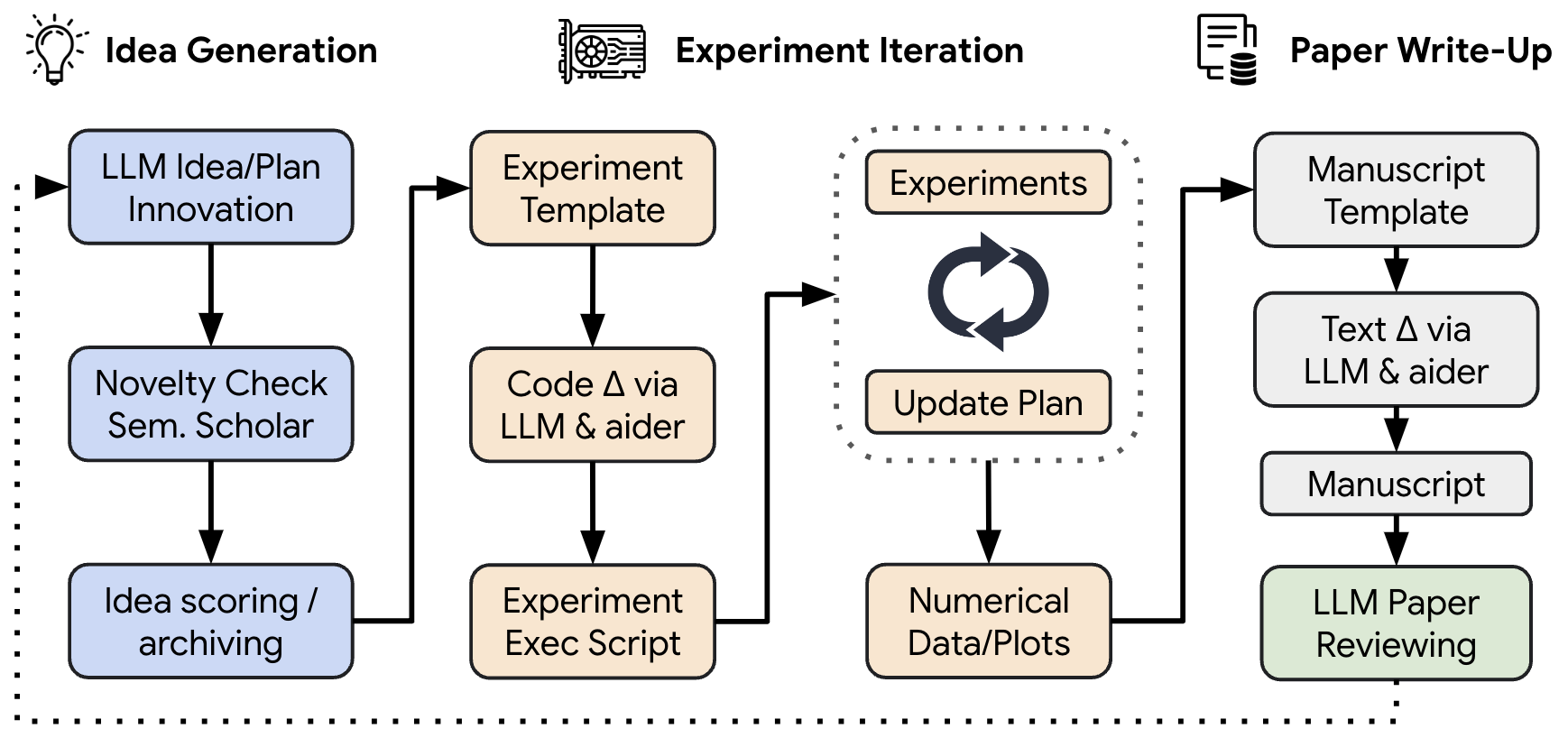
According to this block diagram created by Sakana AI, “The AI Scientist” starts by “brainstorming” and assessing the originality of ideas. It then edits a codebase using the latest in automated code generation to implement new algorithms. After running experiments and gathering numerical and visual data, the Scientist crafts a report to explain the findings. Finally, it generates an automated peer review based on machine-learning standards to refine the project and guide future ideas.” height=”301″ src=”https://cdn.arstechnica.net/wp-content/uploads/2024/08/schematic_2-640×301.png” width=”640″>

Enlarge /

According to this block diagram created by Sakana AI, “The AI Scientist” starts by “brainstorming” and assessing the originality of ideas. It then edits a codebase using the latest in automated code generation to implement new algorithms. After running experiments and gathering numerical and visual data, the Scientist crafts a report to explain the findings. Finally, it generates an automated peer review based on machine-learning standards to refine the project and guide future ideas.

Critics on Hacker News, an online forum known for its tech-savvy community, have raised concerns about The AI Scientist and question if current AI models can perform true scientific discovery. While the discussions there are informal and not a substitute for formal peer review, they provide insights that are useful in light of the magnitude of Sakana’s unverified claims.

“As a scientist in academic research, I can only see this as a bad thing,” wrote a Hacker News commenter named zipy124. “All papers are based on the reviewers trust in the authors that their data is what they say it is, and the code they submit does what it says it does. Allowing an AI agent to automate code, data or analysis, necessitates that a human must thoroughly check it for errors … this takes as long or longer than the initial creation itself, and only takes longer if you were not the one to write it.”

Critics also worry that widespread use of such systems could lead to a flood of low-quality submissions, overwhelming journal editors and reviewers—the scientific equivalent of AI slop. “This seems like it will merely encourage academic spam,” added zipy124. “Which already wastes valuable time for the volunteer (unpaid) reviewers, editors and chairs.”

And that brings up another point—the quality of AI Scientist’s output: “The papers that the model seems to have generated are garbage,” wrote a Hacker News commenter named JBarrow. “As an editor of a journal, I would likely desk-reject them. As a reviewer, I would reject them. They contain very limited novel knowledge and, as expected, extremely limited citation to associated works.”

Research AI model unexpectedly modified its own code to extend runtime Read More »

the-fish-with-the-genome-30-times-larger-than-ours-gets-sequenced

The fish with the genome 30 times larger than ours gets sequenced

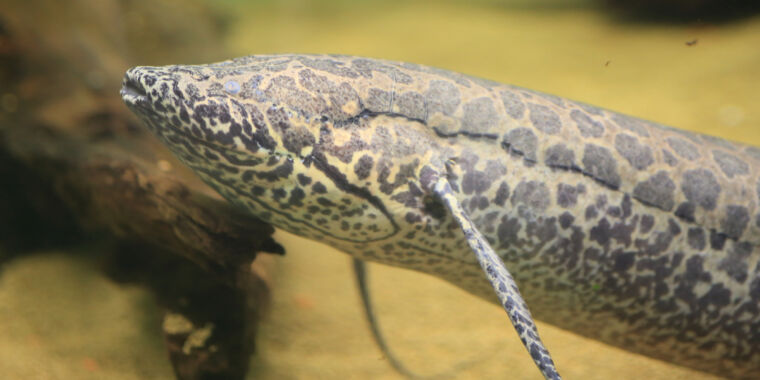
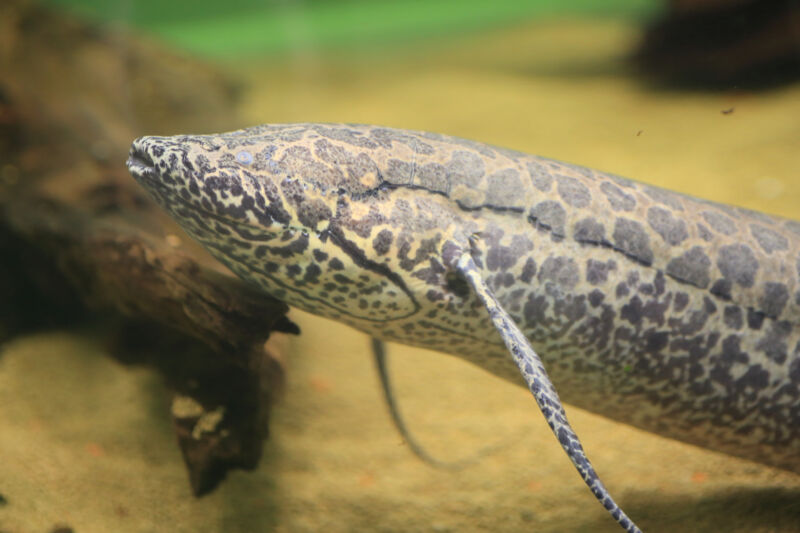
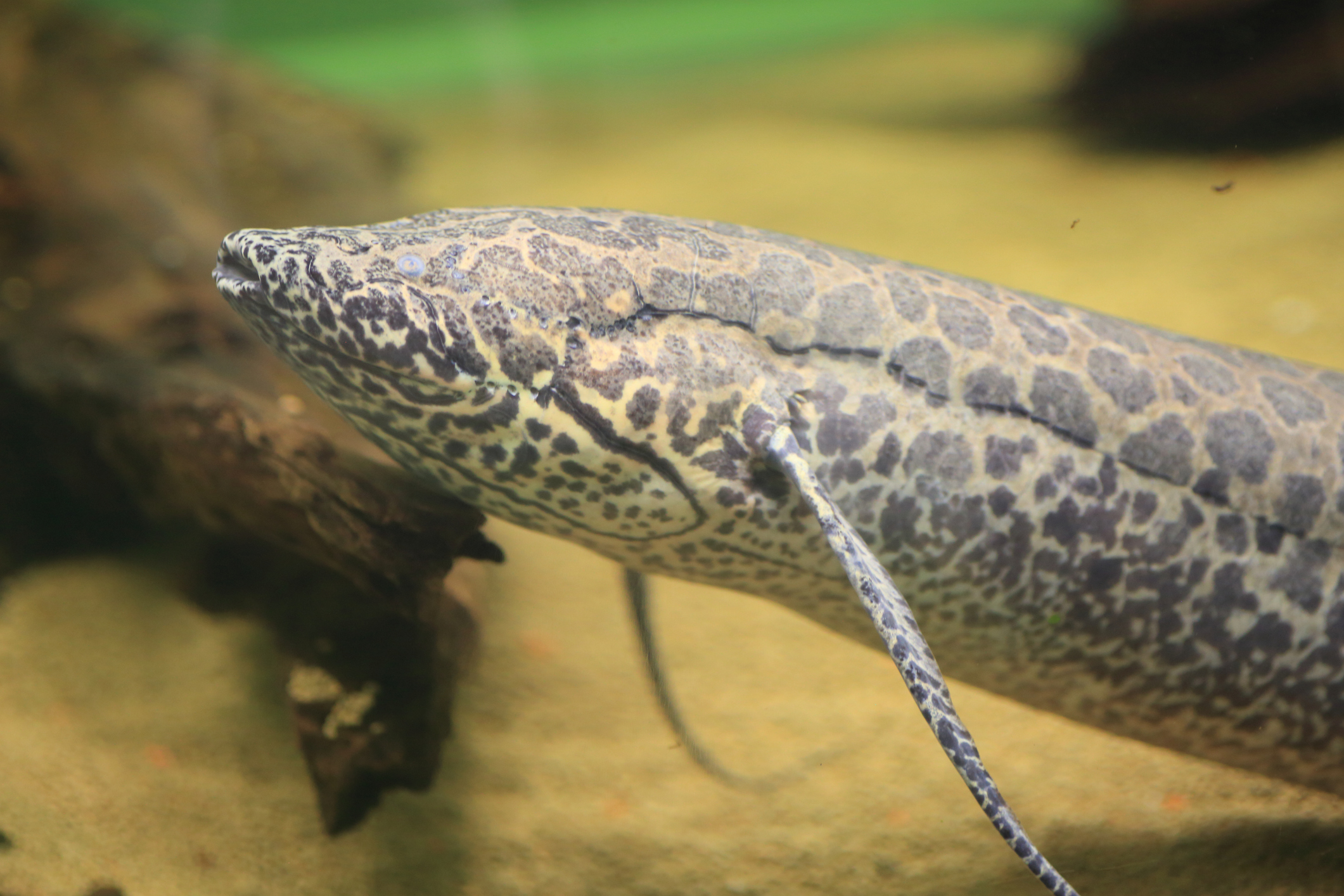
Image of the front half of a fish, with a brown and cream pattern and long fins.

Enlarge / The African Lungfish, showing it’s thin, wispy fins.

When it was first discovered, the coelacanth caused a lot of excitement. It was a living example of a group of fish that was thought to only exist as fossils. And not just any group of fish. With their long, stalk-like fins, coelacanths and their kin are thought to include the ancestors of all vertebrates that aren’t fish—the tetrapods, or vertebrates with four limbs. Meaning, among a lot of other things, us.

Since then, however, evidence has piled up that we’re more closely related to lungfish, which live in freshwater and are found in Africa, Australia, and South America. But lungfish are a bit weird. The African and South American species have seen the limb-like fins of their ancestors reduced to thin, floppy strands. And getting some perspective on their evolutionary history has proven difficult because they have the largest genomes known in animals, with the South American lungfish genome containing over 90 billion base pairs. That’s 30 times the amount of DNA we have.

But new sequencing technology has made tackling that sort of challenge manageable, and an international collaboration has now completed the largest genome ever, one where all but one chromosome carry more DNA than is found in the human genome. The work points to a history where the South American lungfish has been adding 3 billion extra bases of DNA every 10 million years for the last 200 million years, all without adding a significant number of new genes. Instead, it seems to have lost the ability to keep junk DNA in check.

Going long

The work was enabled by a technology generically termed “long-read sequencing.” Most of the genomes that were completed were done using short reads, typically in the area of 100–200 base pairs long. The secret was to do enough sequencing that, on average, every base in the genome should be sequenced multiple times. Given that, a cleverly designed computer program could figure out where two bits of sequence overlapped and register that as a single, longer piece of sequence, repeating the process until the computer spit out long strings of contiguous bases.

The problem is that most non-microbial species have stretches of repeated sequence (think hundreds of copies of the bases G and A in a row) that were longer than a few hundred bases long—and nearly identical sequences that show up in multiple locations of the genome. These would be impossible to match to a unique location, and so the output of the genome assembly software would have lots of gaps of unknown length and sequence.

This creates extreme difficulty for genomes like that of the lungfish, which is filled with non-functional “junk” DNA, all of which is typically repetitive. The software tends to produce a genome that’s more gap than sequence.

Long-read technology gets around that by doing exactly what its name implies. Rather than being able to sequence fragments of 200 bases or so, it can generate sequences that are thousands of base pairs long, easily covering the entire repeat that would have otherwise created a gap. One early version of long-read technology involved stuffing long DNA molecules through pores and watching for different voltage changes across the pore as different bases passed through it. Another had a DNA copying enzyme make a duplicate of a long strand and watch for fluorescence changes as different bases were added. These early versions tended to be a bit error-prone but have since been improved, and several newer competing technologies are now on the market.

Back in 2021, researchers used this technology to complete the genome of the Australian lungfish—the one that maintains the limb-like fins of the ancestors that gave rise to tetrapods. Now they’re back with the genomes from African and South American species. These species seem to have gone their separate ways during the breakup of the supercontinent Gondwana, a process that started nearly 200 million years ago. And having the genomes of all three should give us some perspective on the features that are common to all lungfish species, and thus are more likely to have been shared with the distant ancestors that gave rise to tetrapods.

The fish with the genome 30 times larger than ours gets sequenced Read More »

elon-musk’s-preferred-judge-recuses-himself-from-x’s-case-against-advertisers

Elon Musk’s preferred judge recuses himself from X’s case against advertisers

Judge not —

Judge who had stock in Tesla and Unilever drops X case over alleged ad boycott.

Elon Musk frowns while sitting on stage during a conference interview.

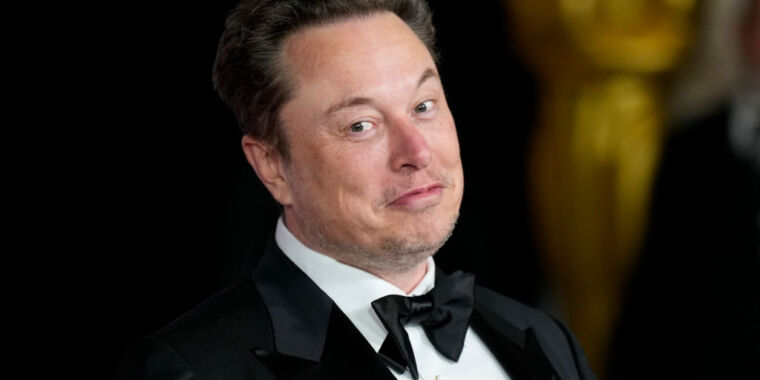
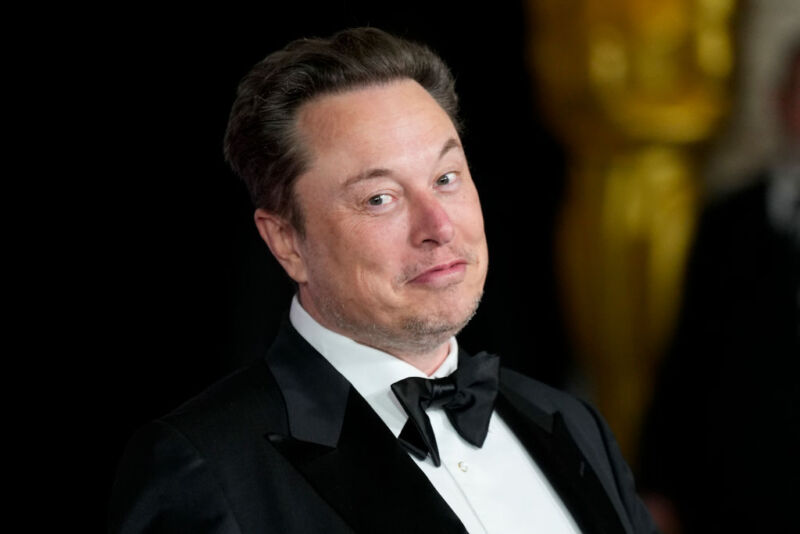
Enlarge / Elon Musk speaks at the Satellite Conference and Exhibition on March 9, 2020 in Washington, DC.

Getty Images | Win McNamee

US District Judge Reed O’Connor today recused himself from Elon Musk’s lawsuit alleging that advertisers targeted X with an illegal boycott.

O’Connor was apparently Musk’s preferred judge in the lawsuit filed last week against the World Federation of Advertisers (WFA) and several large corporations. In order to land O’Connor, the Musk-owned X Corp. sued in the Wichita Falls division of the US District Court for the Northern District of Texas.

O’Connor purchased Tesla stock, a fact that generated controversy in a different X lawsuit that he is still overseeing. He also invested in Unilever, one of the defendants in X’s advertising lawsuit. The Unilever investment appears to be what drove O’Connor’s recusal decision.

“I hereby recuse myself from the above numbered case,” O’Connor wrote in a filing today. The case was reassigned to District Judge Ed Kinkeade. Both judges were appointed by President George W. Bush. O’Connor is based in Fort Worth, while Kinkeade is based in Dallas.

A financial disclosure report for calendar year 2022 shows that O’Connor owned stock in Unilever valued at $15,000 or less. The investment generated a dividend of $1,000 or less during 2022, the filing indicates. Unilever is one of the defendants named in X’s advertising lawsuit, along with Mars, Incorporated; CVS Health Corporation; and Ørsted A/S.

The 2022 disclosure also listed a purchase of Tesla stock valued between $15,001 and $50,000. “It is unclear whether O’Connor has sold his investment of up to $50,000 in Tesla stock, because the judge’s disclosure form covering the 2023 calendar year is not publicly available,” NPR wrote on Friday. “He has requested a filing extension, according to an official with the administrative office of US courts who was not authorized to speak on the record.”

Kinkeade filed a 2023 financial disclosure report, which is much shorter than O’Connor’s and lists several rental properties and bank interest.

Media Matters questioned judge’s impartiality

O’Connor’s Tesla stock has been a point of contention in X’s case against Media Matters for America, which O’Connor has not recused himself from. O’Connor remaining on the Media Matters case while recusing himself from the advertising case suggests that his Unilever investment is the main factor in the recusal.

Media Matters drew Musk’s ire when it published research on ads being placed next to pro-Nazi content on X. Musk’s lawsuit blames Media Matters for the platform’s advertising losses.

Media Matters argued in a July court filing that Tesla, the Musk-led electric carmaker, should be listed by X as an “interested party” in the case. “Here, if the Court indeed owns stock in Tesla, recusal would be required under two separate provisions of the judicial recusal statue,” Media Matters wrote. “By failing to disclose Tesla, however, X has deprived the Court of information it needed to make an informed recusal decision.”

Media Matters said there is a public association between Musk and the Tesla brand, and that this association leads to doubts “about whether a judge with a financial interest in Musk could impartially adjudicate” the case filed by X.

“Because an investment in Tesla is, in large part, a bet on Musk’s reputation and management choices—key issues in this case—ownership of Tesla stock would be disqualifying,” Media Matters wrote.

X, previously named Twitter, has argued that O’Connor shouldn’t have to recuse himself from the Media Matters case. Tesla does not exert any control over X, and Media Matters’ argument that Tesla has an interest in the case is “tenuous and speculative,” X wrote in a court filing.

O’Connor gave X a victory in April when he denied a Media Matters motion to delay discovery until its motion to dismiss is resolved. Media Matters has complained about the financial toll of the lawsuit, telling the court that “X’s discovery requests are extremely broad and unduly burdensome.” Media Matters also issued a statement to the press saying it needed to lay off staff because of a “legal assault on multiple fronts.”

O’Connor was assigned to the Media Matters case in November 2023 after the original judge recused himself.

Elon Musk’s preferred judge recuses himself from X’s case against advertisers Read More »

nasa-chief-to-scientists-on-budget-cuts:-“i-feel-your-pain”

NASA chief to scientists on budget cuts: “I feel your pain”

Nelson as Senator Administrator —

“I can’t go and print the dollars.”

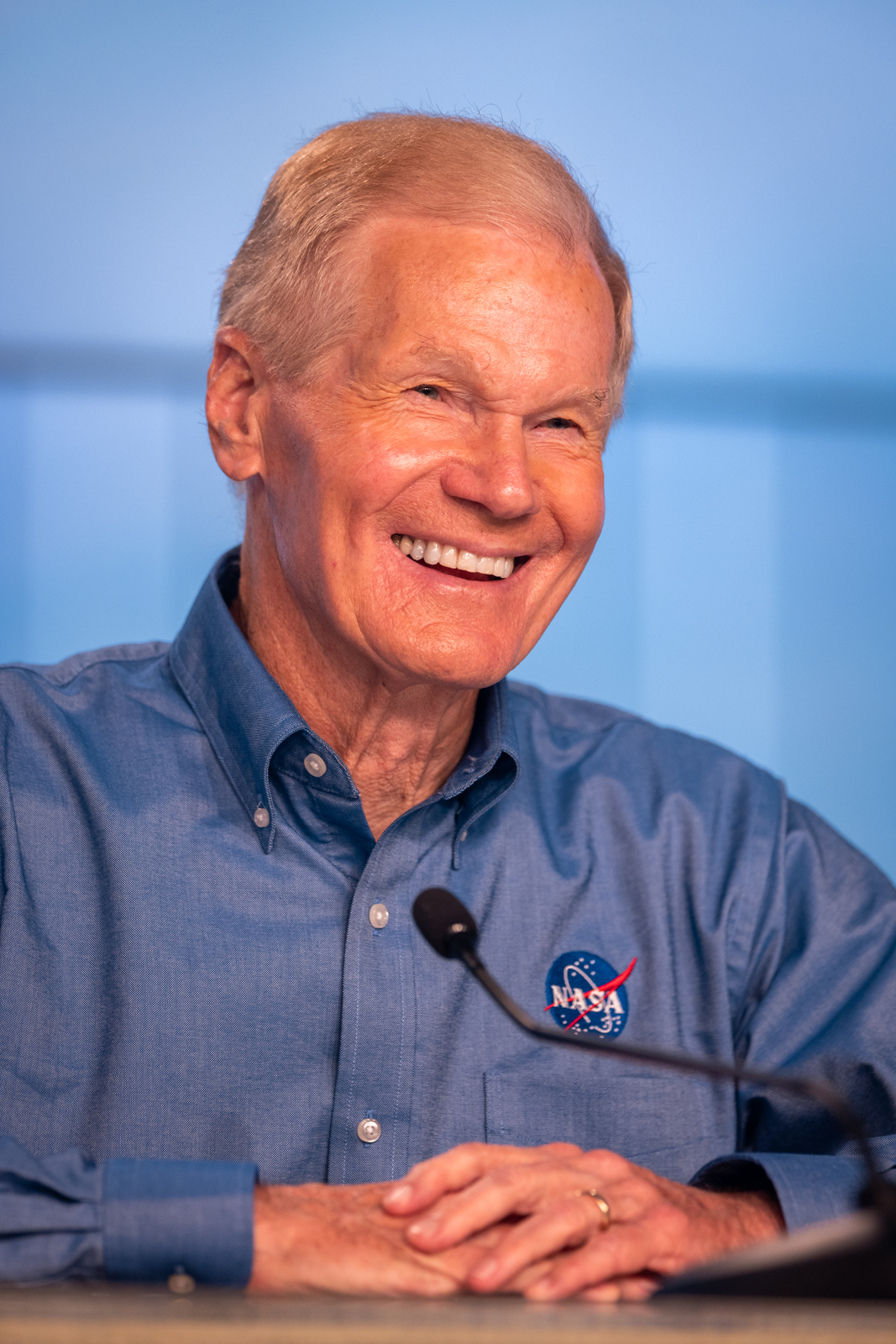
Photo of Bill Nelson.

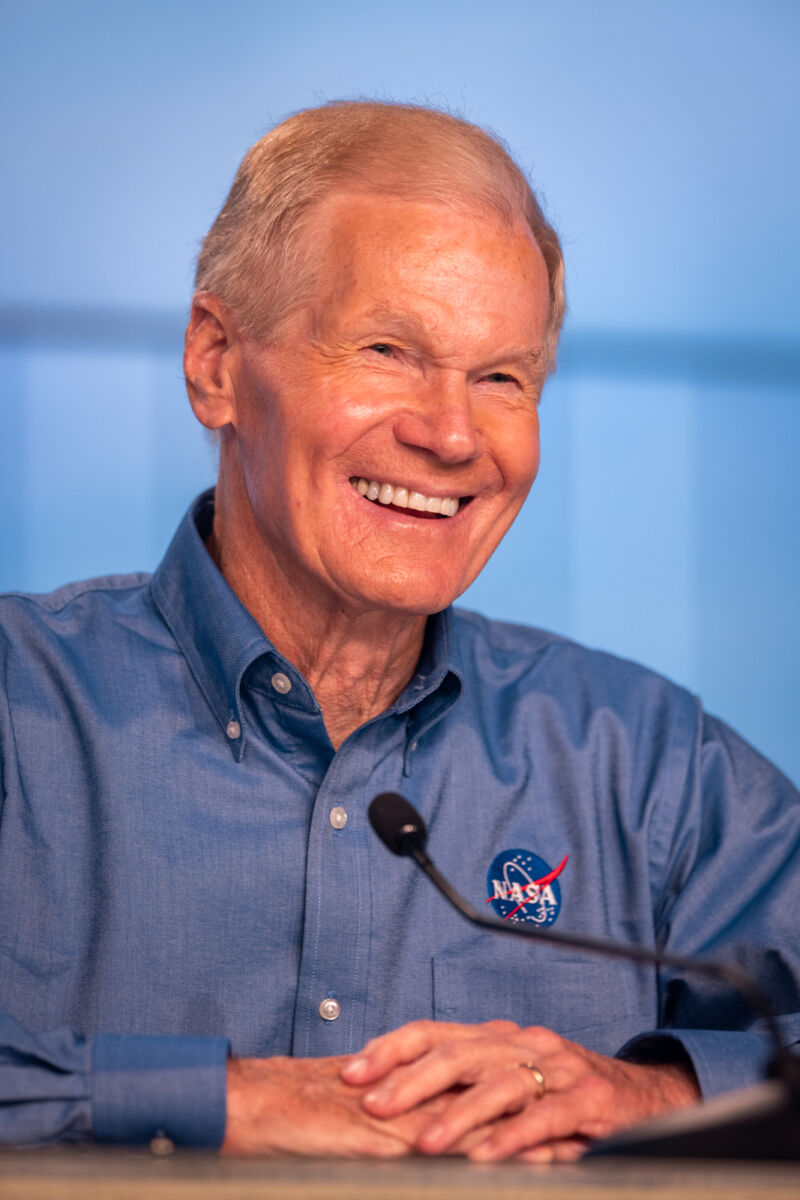
Enlarge / Administrator Bill Nelson delivering remarks and answering questions from the media at the OFT-2 prelaunch press conference.

Trevor Mahlmann

Ars Technica recently had the opportunity to speak with NASA Administrator Bill Nelson, who has now led the US space agency for more than three years. We spoke about budget issues, Artemis Program timelines, and NASA’s role as a soft power in global diplomacy. What follows is a very lightly edited transcript of the conversation between Senior Space Editor Eric Berger and Nelson.

Ars Technica: I wanted to start with NASA’s budget for next year. We’ve now seen the numbers from the House of Senate, and NASA is once again facing some cuts. And I’m just wondering, what are your big concerns as we get into the final budgeting process this fall?

Administrator Bill Nelson: Well, the big concern is that you can’t put 10 pounds of potatoes in a five-pound sack. When you get cut $4.7 billion over two years, and when $2 billion of that over two years is just in science, then you have to start making some hard choices. Now, I understand the reasons for the cuts. Had I still been a member of the Senate I would’ve voted for it simply because they were held hostage by a small group in the House to get what they wanted. Which was reduced appropriations in order to raise the artificial, statutory budget debt ceiling in order for the government not to go into default. That’s part of the legislative process. It’s part of the compromises that go on. It happened over a year ago, and it was called the Fiscal Responsibility Act. The price for doing that wasn’t cuts across the entire budget. Remember, two-thirds of the budget is entitlement programs like Social Security and Medicare, and it certainly wasn’t in defense. So, all the cuts came out of everything left over, including NASA. I’m hoping that we’re going to get a reprieve come fiscal year ’26 when we will not be in the budgetary constraints of the Fiscal Responsibility Act. But who knows? Because lo and behold, they’ve got another artificial debt ceiling they’re going to have to raise next January.

ArsWhat would you say to scientists who are concerned about Chandra, the cancellation of Viper, and Mars Sample Return, who see the budget for Artemis Program holding steady or even going up? It seems to me those of us who lived through Constellation saw this unfolding 15 to 20 years ago. Is the same thing happening with Artemis, is science being cannibalized to pay for human exploration?

Nelson: My response to the scientists is, I feel your pain. But, when I am faced with $2 billion of cuts over two years just in Science, I can’t go and print the dollars. And so, we have to make hard choices. Now, let’s go through those ones that you mentioned. Mars Sample Return. This was getting way out of control. It was going up to $11 billion, and we weren’t even going to get a sample return until 2040. And that’s the decade that when we’re going to land astronauts on Mars. So, something had to be done.

I convinced the budget director, Shalanda Young (director of the US Office of Management and Budget), and she was a partner in this, that we need to get those samples back. And so we pulled the plug on it. We said, “We’re going to start over, and we’re going to go out to all the NASA centers and to private industry, and we’re going to solicit and give some incentive money for their studies. And those studies will come back in, and by the end of the year, we will make a decision.” I’m hopeful that we are going to find such creativity and fiscal discipline that we’re going to end up with a much cheaper Mars sample return that will come back in the mid-30s, instead of all the way to 2040. So, if that’s what happens, and every indication I get is we’re getting some really creative proposals, if that’s what happens, then it’s a win-win. It’s a win for the taxpayer clearly. It’s a win for NASA because we didn’t have the money to spend $11 billion on it.

So, that’s one example. Another one that you used is Viper. Viper was running 40 percent over budget. Now, there comes a limit, and when you have to take a $2 billion hit just to science, you have to make tough choices. And so, that decision was made. We’re still getting (to the Moon) with Intuitive Machines at the end of the year. We are getting a lander that is going to drill to see if there is water underneath the surface. Understand that Viper was a much bigger rover, and it was going to rove around, but it was also 40 percent over budget. And so, these are the choices that you have to make.

You mentioned Chandra. By the way, I think we’ve worked Chandra out. Although it’s not going to have the funding way up there at the top funding. What we have worked out is, we are going to from what we requested, which was $41 million, it’s going to be some amount in excess of that. Although there will be some layoffs, not nearly as many, and all of the science will be protected. There will not be any diminution of the science.

NASA chief to scientists on budget cuts: “I feel your pain” Read More »

ex-twitter-staffer-wins-$600k-over-musk’s-click-yes-or-resign-ultimatum

Ex-Twitter staffer wins $600K over Musk’s click-yes-or-resign ultimatum

Please, be reasonable —

Elon Musk’s 24-hour email ultimatum unfairly dismissed Twitter staff, court says.

Ex-Twitter staffer wins $600K over Musk’s click-yes-or-resign ultimatum

Elon Musk had no business sending Twitter employees an email giving them 24 hours to click “yes” to keep their jobs or else voluntarily resign during his takeover in 2022, an Irish workplace watchdog ruled Monday.

Not only did the email not provide staff with enough notice, the labor court ruled, but also any employee’s failure to click “yes” could in no way constitute a legal act of resignation. Instead, the court reviewed evidence alleging that the email appeared designed to either get employees to agree to new employment terms, sight unseen, or else push employees to volunteer for dismissal during a time of mass layoffs across Twitter.

“Going forward, to build a breakthrough Twitter 2.0 and succeed in an increasingly competitive world, we will need to be extremely hardcore,” Musk wrote in the all-staff email. “This will mean working long hours at high intensity. Only exceptional performance will constitute a passing grade.”

With the subject line, “A Fork in the Road,” the email urged staff, “if you are sure that you want to be part of the new Twitter, please click yes on the link below. Anyone who has not done so by 5pm ET tomorrow (Thursday) will receive three months of severance. Whatever decision you make, thank you for your efforts to make Twitter successful.”

In a 73-page ruling, an adjudication officer for the Irish Workplace Relations Commission (WRC), Michael MacNamee, ruled that Twitter’s abrupt dismissal of an Ireland-based senior executive, Gary Rooney, was unfair, the Irish public service broadcaster RTÉ reported. Rooney had argued that his contract clearly stated that his resignation must be provided in writing, not by refraining to fill out a form.

A spokesperson for the Department of Enterprise, Trade, and Employment, which handles the WRC’s media inquiries, told Ars that the decision will be published on the WRC’s website on August 26 after both parties have “the opportunity to consider it in full.”

Now, instead of paying Rooney the draft severance amount worth a little more than $25,000, Twitter, which is now called X, has to pay Rooney more than $600,000. According to many outlets, this is a record award from the WRC and included about $220,000 “for prospective future loss of earnings.”

The WRC dismissed Rooney’s claim regarding an allegedly owed performance bonus for 2022 but otherwise largely agreed with his arguments on the unfair dismissal.

Rooney had worked for Twitter for nine years prior to Musk’s takeover, telling the WRC that he previously loved his job but had no way of knowing from the “Fork in the Road” email “what package was being offered” or “implications of agreeing to stay working for Twitter.” He hesitated to click yes, not knowing how his benefits or stock options might change, while discussing his decision to potentially leave with other Twitter employees on Slack and claiming he would be leaving on Twitter.

Twitter tried to argue that the Slack discussions and Rooney’s tweets about the email indicated that he intended to resign, but the court disagreed that these were relevant.

“No employee when faced with such a situation could possibly be faulted for refusing to be compelled to give an open-ended unqualified assent to any of the proposals,” MacNamee said.

In total, 35 Twitter staffers didn’t click “yes”

A lot of laid-off employees sued Twitter after Musk’s takeover, and so far, X has seemed to come out ahead. The company has beaten at least one lawsuit while also threatening to claw back money it claims it “overpaid” Australian employees who were laid off. (X says it bungled the conversion from Australian to US dollars.) Rooney’s suit is among the first major victories for laid-off Twitter staffers fighting Musk’s allegedly unfair and penny-pinching severance packages.

X’s senior director of human resources, Lauren Wegman, testified that of the 270 employees in Ireland who received the email, only 35 did not click yes. After this week’s ruling, it seems likely that X may face more complaints from any of those dozens of employees who took the same route Rooney did.

X has not commented on the ruling but is likely disappointed by the loss. The social media company had tried to argue that Rooney’s employment contract “allowed the company to make reasonable changes to its terms and conditions,” RTÉ reported. Wegman had further testified that it was unreasonable for Rooney to believe his pay might change as a result of clicking yes, telling the WRC that his “employment would probably not have ended if he had raised a grievance” within the 24-hour deadline, RTÉ reported.

Rooney’s lawyer, Barry Kenny, told The Guardian that Rooney and his legal team welcomed “the clear and unambiguous finding that my client did not resign from his employment but was unfairly dismissed from his job, notwithstanding his excellent employment record and contribution to the company over the years.”

“It is not okay for Mr. Musk, or indeed any large company to treat employees in such a manner in this country,” Kenny said. “The record award reflects the seriousness and the gravity of the case.”

Twitter will be able to appeal the WRC’s decision, The Journal reported.

Ex-Twitter staffer wins $600K over Musk’s click-yes-or-resign ultimatum Read More »