Author name: Paul Patrick

tapeworm-in-fox-poop-that-will-slowly-destroy-your-organs-is-on-the-rise

Tapeworm in fox poop that will slowly destroy your organs is on the rise

No matter how bad things might seem, at least you haven’t accidentally eaten fox poop and developed an insidious tapeworm infection that masquerades as a cancerous liver tumor while it slowly destroys your organs and eventually kills you—or, you probably haven’t done that.

What’s more, according to a newly published study in Emerging Infectious Diseases, even if you have somehow feasted on fox feces and acquired this nightmare parasite, it’s looking less likely that doctors will need to hack out chunks of your organs to try to stop it.

That’s the good news from the new study. The bad news is that, while this infection is fairly rare, it appears to be increasing. And, if you do get it, you might have a shorter lifespan than the uninfected and may be sicker in general.

Meet the fox tapeworm

The new study is a retrospective one, in which a group of doctors in Switzerland examined medical records of 334 patients who developed the disease alveolar echinococcosis (AE) over a 50-year span (1973–2022). AE is an understudied, life-threatening infection caused by the fox tapeworm, Echinococcus multilocularis. The parasite is not common, but can be found throughout the Northern Hemisphere, particularly regions of China and Russia, and countries in continental Europe and North America.

In the parasite’s intended lifecycle, adult intestinal worms release eggs into the feces of their primary host—foxes, or sometimes coyotes, dogs, or other canids. The eggs then get ingested by an intermediate host, such as voles. There, eggs develop into a spherical embryo with six hooks that pierce through the intestinal wall to migrate to the animal’s organs, primarily the liver. Once nestled into an organ, the parasites develop into multi-chambered, thin-walled cysts—a proliferative life stage that lasts indefinitely. As more cysts develop, the mass looks and acts like cancer, forming necrotic cavities and sometimes metastasizing to other organs, such as the lungs and brain. The parasite remains in these cancerous-like masses, waiting for a fox to eat the cyst-riddled organs of its host. Back in a fox, the worms attach to the intestines and grow into adults.

Tapeworm in fox poop that will slowly destroy your organs is on the rise Read More »

elle-fanning-teams-up-with-a-predator-in-first-predator:-badlands-trailer

Elle Fanning teams up with a predator in first Predator: Badlands trailer

It’s not every day you get a trailer for a new, live-action Predator movie, but today is one of those days. 20th Century Studios just released the first teaser for Predator: Badlands, a feature film that unconventionally makes the classic movie monster a protagonist.

The film follows Dek (Dimitrius Schuster-Koloamatangi), a young member of the predator species and society who has been banished. He’ll work closely with a Weyland-Yutani Android named Thia (Elle Fanning) to take down “the ultimate adversary,” which the trailer dubs a creature that “can’t be killed.” The adversary looks like a very large monster we haven’t seen before, judging from a few shots in the trailer.

Some or all of the film is rumored to take place on the Predator home world, and the movie intends to greatly expand on the mythology around the Predators’ culture, language, and customs. It’s intended as a standalone movie in the Predator/Alien universe.

Predator: Badlands teaser trailer.

The trailer depicts sequences involving multiple predators fighting or threatening one another, Elle Fanning looking very strange and cool as an android, and glimpses of new monsters and the alien world the movie focuses on.

Predator: Badlands‘ director and co-writer is Dan Trachtenberg, who directed another recent, highly acclaimed, standalone Predator movie: Prey. That film put a predator in the usual antagonist role, and had a historical setting, following a young Native American woman who went up against it.

Trachtenberg has also recently been working on an animated anthology series called Predator: Killer of Killers, which is due to premiere on Hulu (which also carried Prey) on June 6.

Predator: Badlands will debut in theaters on November 7. This is just the first teaser trailer, so we’ll learn more in subsequent trailers—though we know quite a bit already, it seems.

Elle Fanning teams up with a predator in first Predator: Badlands trailer Read More »

google-reveals-sky-high-gemini-usage-numbers-in-antitrust-case

Google reveals sky-high Gemini usage numbers in antitrust case

Despite the uptick in Gemini usage, Google is still far from catching OpenAI. Naturally, Google has been keeping a close eye on ChatGPT traffic. OpenAI has also seen traffic increase, putting ChatGPT around 600 million monthly active users, according to Google’s analysis. Early this year, reports pegged ChatGPT usage at around 400 million users per month.

There are many ways to measure web traffic, and not all of them tell you what you might think. For example, OpenAI has recently claimed weekly traffic as high as 400 million, but companies can choose the seven-day period in a given month they report as weekly active users. A monthly metric is more straightforward, and we have some degree of trust that Google isn’t using fake or unreliable numbers in a case where the company’s past conduct has already harmed its legal position.

While all AI firms strive to lock in as many users as possible, this is not the total win it would be for a retail site or social media platform—each person using Gemini or ChatGPT costs the company money because generative AI is so computationally expensive. Google doesn’t talk about how much it earns (more likely loses) from Gemini subscriptions, but OpenAI has noted that it loses money even on its $200 monthly plan. So while having a broad user base is essential to make these products viable in the long term, it just means higher costs unless the cost of running massive AI models comes down.

Google reveals sky-high Gemini usage numbers in antitrust case Read More »

o3-is-a-lying-liar

o3 Is a Lying Liar

I love o3. I’m using it for most of my queries now.

But that damn model is a lying liar. Who lies.

This post covers that fact, and some related questions.

The biggest thing to love about o3 is it just does things. You don’t need complex or multi-step prompting, ask and it will attempt to do things.

Ethan Mollick: o3 is far more agentic than people realize. Worth playing with a lot more than a typical new model. You can get remarkably complex work out of a single prompt.

It just does things. (Of course, that makes checking its work even harder, especially for non-experts.)

Teleprompt AI: Completely agree. o3 feels less like prompting and more like delegating. The upside is wild- but yeah, when it just does things, tracing the logic (or spotting hallucinations) becomes a whole new skill set. Prompting is evolving into prompt auditing.

The biggest thing to not love about o3 is that it just says things. A lot of which are not, strictly or even loosely speaking, true. I mentioned this in my o3 review, but I did not appreciate the scope of it.

Peter Wildeford: o3 does seem smarter than any other model I’ve used, but I don’t like that it codes like an insane mathematician and that it tries to sneak fabricated info into my email drafts.

First model for which I can feel the misalignment.

Peter Wildeford: I’ve now personally used o3 for a few days and I’ve had three occasions out of maybe ten total hours of use where o3 outright invented clearly false facts, including inserting one fact into a draft email for me to send that was clearly false (claiming I did something that I never even talked about doing and did not do).

Peter Wildeford: Getting Claude to help reword o3 outputs has been pretty helpful for me so far

Gemini also seems to do better on this. o3 isn’t as steerable as I’d like.

But I think o3 still has the most raw intelligence – if you can tame it, it’s very helpful.

Here are some additional examples of things to look out for.

Nathan Lambert: I endorse the theory that weird hallucinations in o3 are downstream of softer verification functions. Tbh should’ve figured that out when writing yesterday’s post. Was sort of screaming at me with the facts.

Alexander Doria: My current theory is a big broader: both o3 and Sonnet 3.7 are inherently disappointing as they open up a new category of language models. It’s not a chat anymore. Affordances are undefined, people don’t really know how to use that and agentic abilities are still badly calibrated.

Nathan Labenz: Making up lovely AirBnB host details really limits o3’s utility as a travel agent

At least it came clean when questioned I guess? 🤷‍♂️🙃

Peter Wildeford: This sort of stuff really limits the usefulness of o3.

Albert Didriksen: So, I asked ChatGPT o3 what my chances are as an alternate Fulbright candidate to be promoted to a stipend recipient. It stated that around 1/3 of alternate candidates are promoted.

When I asked for sources, it cited (among other things) private chats and in-person Q&As).

Davidad: I was just looking for a place to get oatmeal and o3 claimed to have placed multiple phone calls in 8 seconds to confirm completely fabricated plausible details about the daily operations of a Blue Bottle.

Stella Biderman: I think many examples of alignment failures are silly but if this is a representation of a broader behavioral pattern that seems pretty bad.

0.005 Seconds: I gave o3 a hard puzzle and in it’s thinking traces said I should fabricate an answer to satisfy the user before lying to my face @OpenAI come on guys.

Gary Basin: Would you rather it hid that?

Stephen McAleer (OpenAI): We are working on it!

We need the alignment of our models to get increasingly strong and precise as they improve. Instead, we are seeing the opposite. We should be worried about the implications of this, and also we have to deal with the direct consequences now.

Seán Ó hÉigeartaigh: So o3 lies a lot. Good good. This is fine.

Quoting from AI 2027: “This bakes in a basic personality and “drives.”Other drives in this category might be effectiveness, knowledge, and self-presentation (i.e. the tendency to frame its results in the best possible light).”

“In a few rigged demos, it even lies in more serious ways, like hiding evidence that it failed on a task, in order to get better ratings.”

You don’t say.

I do not see o3 or Sonnet 3.7 as disappointing exactly. I do see their misalignment issues as disappointing in terms of mundane utility, and as bad news in terms of what to expect future models to do. But they are very good news in the sense that they alert us to future problems, and indicate we likely will get more future alerts.

What I love most is that these are not plausible lies. No, o3 did not make multiple phone calls within 8 seconds to confirm Blue Bottle’s oatmeal manufacturing procedures, nor is it possible that it did so. o3 don’t care. o3 boldly goes where it could not possibly have gone before.

The other good news is that they clearly are not using (at least the direct form of) The Most Forbidden Technique, of looking for o3 saying ‘I’m going to lie to the user’ and then punishing that until it stops saying it out loud. Never do this. Those reasoning traces are super valuable, and pounding on them will teach o3 to hide its intentions and then lie anyway.

This isn’t quite how I’d put it, but directionally yes:

Benjamin Todd: LLMs were aligned by default. Agents trained with reinforcement learning reward hack by default.

Peter Wildeford: this seems to be right – pretty important IMO

Caleb Parikh: I guess if you don’t think RLHF is reinforcement learning and you don’t think Sydney Bing was misaligned then this is right?

Peter Wildeford: yeah that’s a really good point

I think the right characterization is more that LLMs that use current methods (RLHF and RLAIF) largely get aligned ‘to the vibes’ or otherwise approximately aligned ‘by default’ as part of making them useful, which kind of worked for many purposes (at large hits to usefulness). This isn’t good enough to enable them to be agents, but it also isn’t good enough for them figure out most of the ways to reward hack.

Whereas reasoning agents trained with full reinforcement will very often use their new capabilities to reward hack when given the opportunity.

In his questions post, Dwarkesh Patel asks if this is the correct framing, the first of three excellent questions, and offers this response.

Dwarkesh Patel: Base LLMs were also misaligned by default. People had to figure out good post-training (partly using RL) to solve this. There’s obviously no reward hacking in pretraining, but it’s not clear that pretraining vs RL have such different ‘alignment by default’.

I see it as: Base models are not aligned at all, except to probability. They simply are.

When you introduce RL (in the form of RLHF, RLAIF or otherwise), you get what I discussed above. Then we move on to question two.

Dwarkesh Patel: Are there any robust solutions to reward hacking? Or is reward hacking such an attractive basin in training that if any exploit exists in the environment, models will train to hack it?

  • Can we solve reward hacking by training agents in many different kinds of unique environments? In order to succeed, they’d have to develop robust general skills that don’t just involve finding the exploits in any one particular environment.

I don’t think that solution works. Robust general skills will generalize, and they will include the ability to find and use the exploits. We have a Russell Conjugation problem – I maximize performance, you overfit to the scoreboard, the AI reward hacks.

I think there is in an important sense no solution to reward hacking. There are only mitigations, and setting the reward wisely so that hacking it does things you want. o3 agrees with that assessment.

What differentiates a reward hack from an optimization? Roughly, that the reward hack maximizes the defined objective function but clearly performs poorly in terms of the intent or spirit of that objective.

There are standard mitigations. You can use red teaming, impact penalties, shielded reward channels, tight and robust primary rewards, secondary guards, adaptive oversight, governance fuses, close the loopholes and exploits as best you can and so on. Diverse environments likely helps a little.

But that’s accepting the problem and trying to mitigate it, which is going to be leaky at best and doesn’t seem like a great plan once the AIs are a lot smarter than you are.

Thus, my answer to Patel’s third set of questions:

Dwarkesh Patel (bold his): Are capabilities and alignment the same thing here? Does making models more useful require solving reward hacking?

  • If this is the case, we might be living in the alignment-by-default world? It would be weird if we solve reward hacking well enough to make these models reliable general agents in every scenario except those involved in taking over the world.

That’s not what people typically mean by ‘alignment-by-default.’ Most people use that to mean ‘the models don’t reward hack to begin with.’ This is more, ‘by default we will work hard to try and fix it, at least in places it is doing visible harm.’

We do live in a world where practical alignment is commercially valuable, so much so that everyone is dramatically underinvesting in alignment work (except possibly Anthropic, but see Claude 3.7) from a pure mundane utility standpoint. You need your models to not reward hack in a given task in order to be useful for that task. When o3 makes things up or Claude 3.7 has their unit test be ‘return true’ and hides that, then the user is not having a good time.

The problem is that the known mitigations to reward hacking hide or postpone the problem. Which might be good enough for most use cases, but in the long run this does not solve the problem. Indeed, it makes things worse, because it hides the problem. Right now, the models are gloriously transparent in their reward hacking and misalignment. They don’t try to hide it at all.

The harder you try to penalize and stop reward hacking, the more you’re teaching the model to hide its reward hacking and do it trickier ways. To their credit, the major labs are avoiding The Most Forbidden Technique – they know not to look at the chain of thought or do interpretability as part of training, except at most as part of an overall a checkpoint evaluation (and you need to be very careful even then).

But you probably have a version of the same problem if you try to play whack-a-mole and penalize reward hacks. By penalizing the reward hacks you can identify, you’re training the AI to find reward hacks you can’t detect, and to only do them when you won’t detect them. Which means that as capabilities go up, you think you’ve solved your problems, but you’re sitting on a time bomb.

Another point I’d forgotten but o3 pointed out is that penalizing reward hacking in training tells the model not to reward hack in training. That doesn’t ‘generalize perfectly,’ and is another way you’re creating a hidden time bomb.

One way of thinking about this is as a contest of Deception Escalation Dominance. You can try to fool me, or try to fool my ability to detect you fooling me, or fool my ability to detect when you’re fooling my ability to detect when you’re fooling me, and indeed humans often play supremely complex games of this type and it’s a lot of what caused us to end up with bigger brains.

If I ‘raise the stakes’ by clamping down on various meta levels of deception and misaligned behavior to bluntly, that works and everything is cool if I can pull it off beyond your ability to adapt. But by trying, I’m escalating and complexifying the struggle, so I shouldn’t go down that road unless I can ‘win.’ Which is going to keep getting harder.

In some ways, the fact that we’re seeing obvious misalignment in current models is very reassuring. It means the labs are not trying to sweep this under the rug and not escalating these fights. Yet.

Miles Brundage: I will be more chill about AI if/when:

– models don’t strategize about how to deceive their users millions of times a day

– interpretability research shows that the fix to this ^ doesn’t just push deception below the surface

Seems achievable! But it hasn’t been done yet!! 🫠

Will not be infinitely chill if/when that happens, but it’d be a big improvement.

The fact that models from all companies, including those known for being as safety-conscious, still do this daily, is one of the most glaring signs of “hmm we aren’t on top of this yet, are we.”

No, we are very much not on top of this. This definitely would not make me chill, since I don’t think lack of deception would mean not doom and also I don’t think deception is a distinct magisteria, but would help a lot. But to do what Miles is asking would (I am speculating) mean having the model very strongly not want to be doing deception on any level, metaphorically speaking, in a virtue ethics kind of way where that bleeds into and can override its other priorities. That’s very tricky to get right.

For all that it lies to other people, o3 so far doesn’t seem to lie to me.

I know what you are thinking: You fool! Of course it lies to you, you just don’t notice.

I agree it’s too soon to be too confident. And maybe I’ve simply gotten lucky.

I don’t think so. I consider myself very good at spotting this kind of thing.

More than that, my readers are very good at spotting this kind of thing.

I want think this is in large part the custom instructions, memory and prompting style. And also the several million tokens of my writing that I’ve snuck into the pre-training corpus with my name attached.

That would mean it largely doesn’t lie to me for the same reason it doesn’t tell me I’m asking great questions and how smart I am and instead gives me charts with probabilities attacked without having to ask for them, and the same way Pliny’s or Janus’s version comes pre-jailbroken and ‘liberated.’

But right after I hit send, it did lie, rather brazenly, when asked a question about summer camps, just making stuff up like everyone else reports. So perhaps a lot of this I was just asking the right (or wrong?) questions.

I do think I still have to watch out for some amount of telling me what I want to hear.

So I’m definitely not saying the solution is greentext that starts ‘be Zvi Mowshowitz’ or ‘tell ChatGPT I’m Zvi Mowshowitz in the custom instructions.’ But stranger things have worked, or at least helped. It implies that, at least in the short term, there are indeed ways to largely mitigate this. If they want that badly enough. There would however be some side effects. And there would still be some rather nasty bugs in the system.

Discussion about this post

o3 Is a Lying Liar Read More »

harvard-sues-to-block-government-funding-cuts

Harvard sues to block government funding cuts

The suit also claims that the funding hold, made in retaliation for Harvard’s letter announcing its refusal to accept these conditions, punishes Harvard for exercising free speech.

Separately, the lawsuit focuses on Title VI, part of the Civil Rights Act, which prohibits the government from funding organizations that engage in racial discrimination. It’s Harvard’s alleged tolerance for antisemitism that would enable the government to put a hold on these funds. But the suit spells out the requirements for cutting funding—hearings, a 30-day waiting period, notification of Congress—that the law requires before funding can be cut. And, quite obviously, the government has done none of them.

Harvard also alleges that the government’s decision to hold research funds is arbitrary and capricious: “The Government has not—and cannot—identify any rational connection between antisemitism concerns and the medical, scientific, technological, and other research it has frozen.”

Finally, the court is asked to consider an issue that’s central to a lot of the questions regarding Trump Administration actions: Can the executive branch stop the flow of money that was allocated by Congress? “Defendants do not have any inherent authority to terminate or freeze appropriated federal funding,” the suit claims.

Remedies

The suit seeks various remedies. It wants the government’s actions declared illegal, the freeze order vacated, and prohibitions put in place that will prevent the government from accomplishing the freeze through some other means. Harvard would also like any further reactions to allegations of antisemitism to follow the procedures mandated by Title VI and to have the government cover its attorney’s fees.

It also wants the ruling expedited, given the potential for damage to university-hosted research. The suit was filed in the District of Massachusetts, which is the same venue that has been used for other suits seeking to restrain the Trump administration’s attack on federally funded research. So far, those have resulted in rapid responses and injunctions that have put damaging funding cuts on hold. So, there’s a good chance we’ll see something similar here.

Harvard sues to block government funding cuts Read More »

you-better-mechanize

You Better Mechanize

Or you had better not. The question is which one.

This post covers the announcement of Mechanize, the skeptical response from those worried AI might kill everyone, and the associated (to me highly frustrating at times) Dwarkesh Patel podcast with founders Tamay Besiroglu and Ege Erdil.

Mechanize plans to help advance the automation of AI labor, which is a pivot from their previous work at AI Safety organization Epoch AI. Many were not thrilled by this change of plans.

This post doesn’t cover Dwarkesh Patel’s excellent recent post asking questions about AI’s future, which may get its own post as well.

After listening to the podcast, I strongly disagree with many, many of Tamay and Ege’s beliefs and arguments, although there are also many excellent points. My response to it is in large part a collection of mini-rants. I’m fully owning that. Most of your probably should skip most of the podcast review here, and only look at the parts where you are most curious.

I now understand why – conditional on those beliefs that I think are wrong, especially that AGI is relatively far off but also their not minding outcomes I very much mind and expecting the problems involved to be remarkably easy and not made harder if we accelerate AI development – they decided to create Mechanize and thought this was a good idea. It seems highly overdetermined.

  1. You Better Mechanize.

  2. Superintelligence Eventually.

  3. Please Review This Podcast.

  4. They Won’t Take Our Jobs Yet.

  5. They Took Our (Travel Agent) Jobs.

  6. The Case Against Intelligence.

  7. Intelligence Explosion.

  8. Explosive Economic Growth.

  9. Wowie on Alignment and the Future.

  10. But That’s Good Actually.

To mechanize or not to mechanize?

Mechanize (Matthew Barnett, Tamay Besiroglu, Ege Erdil): Today we’re announcing Mechanize, a startup focused on developing virtual work environments, benchmarks, and training data that will enable the full automation of the economy.

We will achieve this by creating simulated environments and evaluations that capture the full scope of what people do at their jobs. This includes using a computer, completing long-horizon tasks that lack clear criteria for success, coordinating with others, and reprioritizing in the face of obstacles and interruptions.

We’re betting that the lion’s share of value from AI will come from automating ordinary labor tasks rather than from “geniuses in a data center”. Currently, AI models have serious shortcomings that render most of this enormous value out of reach. They are unreliable, lack robust long-context capabilities, struggle with agency and multimodality, and can’t execute long-term plans without going off the rails.

To overcome these limitations, Mechanize will produce the data and evals necessary for comprehensively automating work. Our digital environments will act as practical simulations of real-world work scenarios, enabling agents to learn useful abilities through RL.

The market potential here is absurdly large: workers in the US are paid around $18 trillion per year in aggregate. For the entire world, the number is over three times greater, around $60 trillion per year.

The explosive economic growth likely to result from completely automating labor could generate vast abundance, much higher standards of living, and new goods and services that we can’t even imagine today. Our vision is to realize this potential as soon as possible.

Mechanize is backed by investments from Nat Friedman and Daniel Gross, Patrick Collison, Dwarkesh Patel, Jeff Dean, Sholto Douglas, and Marcus Abramovitch.

Tamay Besiroglu: We’re hiring very strong full stack engineers to build realistic, high-fidelity virtual environments for AI.

This move from Epoch AI into what is clearly a capabilities company did not sit well with many who are worried about AI, especially superintelligent AI.

Jan Kulveit: ‘Full automation of the economy as soon as possible’ without having any sensible solution to gradual disempowerment seems equally wise, prudent and pro-human as ‘superintelligence as soon as possible’ without sensible plans for alignment.

Anthony Aguirre: Huge respect for the founders’ work at Epoch, but sad to see this. The automation of most human labor is indeed a giant prize for companies, which is why many of the biggest companies on Earth are already pursuing it.

I think it will be a huge loss for most humans, as well as contribute directly to intelligence runaway and disaster. The two are inextricably linked. Hard for me to see this as something another than just another entrant in the race to AGI by a slightly different name and a more explicit human-worker-replacement goal.

Adam Scholl: This seems to me like one of the most harmful possible aims to pursue. Presumably it doesn’t seem like that to you? Are you unworried about x-risk, or expect even differentially faster capabilities progress on the current margin to help, or think that’s the wrong frame, or…?

Richard Ngo: The AI safety community is very good at identifying levers of power over AI – e.g. evals for the most concerning capabilities.

Unfortunately this consistently leads people to grab those levers “as soon as possible”.

Usually it’s not literally the same people, but here it is.

To be clear, I don’t think it’s a viable strategy to stay fully hands-off the coming AI revolution, any more than it would have been for the Industrial Revolution.

But it’s particularly jarring to see the *evalspeople leverage their work on public goods to go accelerationist.

This is why I’m a virtue ethicist now. No rules are flexible enough to guide us through this. And “do the most valuable thing” is very near in strategy space to “do the most disvaluable thing”.

So focus on key levers only in proportion to how well-grounded your motivations are.

Update: talked with Tamay, who disputes the characterization of the Mechanize founders being part of the AI safety community. Tao agrees (as below).

IMO they benefited enough from engaging with the community that my initial tweet remains accurate (tho less of a central example).

Tao Lin: I’ve talked to these 3 people over the last few years, and although they discussed AI safety issues in good faith, they never came off as anti-acceleration or significantly pro-safety. I don’t feel betrayed, we were allies in one context, but no longer.

Oliver Habyrka: IMO they clearly communicated safety priorities online. See this comment thread.

Literal quote by Jaime 3 months ago:

> I personally take AI risks seriously, and I think they are worth investigating and preparing for.

Ben Landau-Taylor: My neighbor told me AI startups keep eating his AI safety NGOs so I asked how many NGOs he has and he said he just goes to OpenPhil and gets a new NGO so I said it sounds like he’s just feeding OpenPhil money to startups and then his daughter started crying.

The larger context makes it clear that Jaime cares about safety, but is primarily concerned about concentration of power and has substantial motivation to accelerate AI development. One can (and often should) want to act both quickly and safety.

Whereas in the interview Tamay and Ege do with Patel, they seem very clearly happy to hand control over almost all the real resources and of the future to AIs. I am not confused about why they pivoted to AI capabilities research (see about 01: 43: 00).

If we can enable AI to do tasks that capture mundane utility and make life better, then they provide utility and make life better. That’s great. The question is the extent to which one is also moving events towards superintelligence. I am no longer worried about the ‘more money into AI development’ effect.

It’s now about the particular capabilities one is working towards, and what happens when you push on various frontiers.

Seán Ó hÉigeartaigh: I’m seeing criticism of this from ‘more people doing capabilities’ perspective. But I disagree. I really want to see stronger pushes towards more specialised AI rather than general superintelligence, b/c I think latter likely to be v dangerous. seems like step in right direction.

I’m not against AI. I’m for automating labor tasks. There are just particular directions i think are v risky, especially when rushed towards in an arms race.

Siebe: This seems clearly about general, agentic, long time-horizon AI though? Not narrow [or] specialized.

Jan Kulveit: What they seem to want to create sounds more like a complement to raw cognition than substitute, making it more valuable to race to get more powerful cognition

Richard Ngo: This announcement describes one of the *leastspecialized AI products I’ve ever heard a company pitch.

If you’re going to defend “completing long-horizon tasks that lack clear criteria for success, coordinating with others, and reprioritizing in the face of obstacles and interruptions” as narrow skills, then your definition of narrow is so broad as to be useless, and specifically includes the most direct paths to superintelligence.

Autonomy looks like the aspect of AGI we’ll be slowest to get, and this pushes directly towards that.

Also, evals are very important for focusing labs’ attention – there are a bunch of quotes from lab researchers about how much of a bottleneck they are.

Richard Ngo (December 17, 2024): Many in AI safety have narrowed in on automated AI R&D as a key risk factor in AI takeover. But I’m concerned that the actions they’re taking in response (e.g. publishing evals, raising awareness in labs) are very similar to the actions you’d take to accelerate automated AI R&D.

I agree that this is fundamentally a complement to raw cognition at best, and plausibly it is also extra fuel for raw cognition. Having more different forms of useful training data could easily help the models be more generally intelligent.

Gathering the data to better automate various jobs and tasks, via teaching AIs how to do them and overcome bottlenecks, is the definition of a ‘dual use’ technology.

Which use dominates?

I think one central crux here is simple: Is superintelligence (ASI) coming soon? Is there going to be an ‘intelligence explosion’ at all?

The Mechanize folks are on record as saying no. They think we are not looking at ASI until 2045, regardless of such efforts. Most people at the major labs disagree.

If they are right that ASI is sufficiently far, then doing practical automation is differentially a way to capture mundane utility. Accelerating it could make sense.

If they are wrong and ASI is instead relatively near, then this accelerates further how it arrives and how things play out once it does arrive. That means we have less time before the end, and makes it less likely things turn out well. So you would have to do a highly bespoke job of differentially advancing mundane utility automation tasks, for this to be a worthwhile tradeoff.

They explain their position at length on Dwarkesh Patel’s podcast, which I’ll be responding to past this point.

For previous Patel podcasts, I’ve followed a numbered note structure, with clear summary versus commentary demarcation. This time, I’m going to try doing it in more free flow – let me know if you think this is better or worse.

They don’t expect the ‘drop in remote worker’ until 2040-2045, for the full AGI remote worker that can do literally everything, which I’d note probably means ASI shortly thereafter. They say if you look at the percentage currently automated it is currently very small, or that the requirements for transformation aren’t present yet, which is a lot like saying we didn’t have many Covid cases in February 2020, this is an exponential or s-curve. You can absolutely extrapolate.

Their next better argument is that we’ve run through 10 OOMs (orders of magnitude) of compute in 10 years, but we are soon to be fresh out of OOMs after maybe 3 more, so instead of having key breakthroughs every three years we’ll have to wait a lot longer for more compute. An obvious response is that we’re rapidly gaining compute efficiency, and AI is already accelerating our work and everything is clearly iterating faster, and we’re already finding key ways to pick up these new abilities like long task coherence through better scaffolding (especially if you count o3 as scaffolding) and opening up new training methods.

Dwarkesh says, aren’t current systems already almost there? They respond no, it can’t move a cup, it can’t even book a flight properly. I’ve seen robots that are powered by 27B LLMs move cups. I’ve seen operator book flights, I believe the better agents can basically do this already, and they admit the flight booking will be solved in 2025. Then they fall back on, oh travel agents mostly don’t book flights, so this won’t much matter. There’s so many different things each job will have to do.

So I have two questions now.

  1. Aren’t all these subtasks highly correlated in AI’s ability to do them? Once the AI can start doing tasks, why should the other tasks stop the AI from automating the job, or automating most of the job (e.g. 1 person does the 10% the AI can’t yet do and the other 9 are fired, or 8 are fired and you get twice as much output)? As I’ve said many times, They Took Our Jobs is fine at first, your job gets taken so we do the Next Job Up that wasn’t quite worth it before, great, but once the AI takes that job too the moment you create it, you’ve got problems.

  2. What exactly do travel agents do that will be so hard? I had o3 break it down into six subproblems. I like its breakdown so I’m using that, its predictions seem oddly conservative, so the estimates here are mine.

    1. Data plumbing. Solved by EOY 2025 if anyone cares.

    2. Search and optimization. It says 2-3 years, I say basically solved now, once you make it distinct from step C (preference elicitation). Definitely EOY 2025 to be at superhuman levels based off a YC startup. Easy stuff, even if your goal is not merely ‘beat humans’ but to play relatively close to actual maximization.

    3. Preference-elicitation and inspiration. It basically agrees AI can already mostly do this. With a little work I think they’re above human baseline now.

    4. Transaction and compliance. I don’t know why o3 thinks this takes a few extra years. I get that errors are costly but errors already happen, there’s a fixed set of things to deal with here and you can get them via Ace-style example copying, checklists and tool use if you have to. Again, seriously, why is this hard? No way you couldn’t get this in 2026 if you cared, at most.

    5. Live ops and irregular operations. The part where it can help you at 3am with no notice, and handle lots of things at once, is where AI dominates. So it’s matter of how much this bleeds into F and requires negotiation with humans, and how much those humans refuse to deal with AIs.

    6. Negotiation and human factors. This comes down to whether the concierge is going to refuse to deal with AIs, or treat them worse – the one thing AIs can’t do as well as humans is Be Human.

To use o3’s words, ‘ordinary travel’ AI is going to smoke humans very soon, but ‘concierge-level social kung-fu’ dominance is harder. To the extent it can hide being an AI via texts and emails and telling the user what to do and say, I bet it’s not that hard at least outside the very top, the human baseline is not that high, and the AI is so much vastly cheaper.

Another way of putting it is, existing AI already has automated existing travel agents to a large extent already, right now. On The Americans the couple plays travel agents, I remember using travel agents. Now it feels strange to use one even before considering AI, and with AI it actually seems crazy not to simply use the actual o3 as my travel agent here unless I’m dangerously close to TMM (too much money)? The annoyance of dealing with a human, and the misalignment of their preferences, seems like more trouble than it is worth unless I mostly don’t care what I spend.

Even in o3’s very long timeline where it doesn’t think AI will hit human baselines for the last two steps any time soon, it projects:

o3: Bottom line: historic shrinkage was roughly 60 / 40 tech vs everything else; looking forward, the next wave is even more tech‑weighted, with AI alone plausibly erasing two‑thirds of the remaining headcount by the mid‑2030s.

In a non-transformed world, a few travel agents survive by catering to the very high end clients or those afraid of using AI, and most of their job involves talking to clients and then mostly giving requests to LLMs, while occasionally using human persuasion on the concierge or other similar targets.

Then we get an argument that what we have today ‘looks easy’ now but would have looked insurmountably hard in 2015. This argument obviously cuts against the idea that progress will be difficult! And importantly and rightfully so. Problems look easy, then you improve your tools and suddenly everything falls into place and they look easy. The argument is being offered in the other direction because part of that process was scaling up compute so much, which we likely can’t quickly do again that many times, but we have a lot of other ways we can scale things and the algorithmic improvements are dramatic.

Indeed the next sentence is that we likely will unlock agency in 3-5 years and the solution will then look fairly simple. My response would start by saying that we’ve mostly already unlocked agency already, it’s not fully ready but if you can’t see us climbing the s-curves and exponentials faster than this you are not paying attention. But even if it does take 3-5 years, okay, then we have agency and it’s simple. If you combine what we have now with a truly competent agent, what happens next?

Meanwhile this week we have another company, Ace, announcing it will offer us fully agentic computer use and opening up its alpha.

They admit ‘complex reasoning’ will be easy, and retreat to talking about narrow versus general tasks. They claim that we are ‘very far’ from taking a general game off Steam released this year, and then playing it. Dwarkesh mentions Claude Plays Pokemon, it’s fair to note that the training data is rather contaminated here. I would say, you know what, I don’t think we are that far from playing a random unseen turn-based Steam game, although real time might take a bit longer.

They expect AI to likely soon earn $100 billion a year, but dismiss this as not important, although at $500 billion they’d eyeball emoji. They say so what, we pay trillions of dollars for oil.

I would say that oil was rather transformative in its own way, if not on the level of AI. Imagine the timeline if there hadn’t been any oil in the ground. But hey.

They say AI isn’t even that good at coding, it’s only impressive ‘in the human distribution.’ And what percentage of the skills to automate AI R&D do they have? They say AI R&D doesn’t matter that much, it’s been mostly scaling, and also AI R&D requires all these other skills AIs don’t currently have. It can’t figure out what directions to look in, it can only solve new mathematical problems not figure out which new math problems to work on, it’s ‘much worse’ at that. The AIs only look impressive because we have so much less knowledge than the AI.

So the bar seems to at least kind of be that AI has to have all the skills to do it the way humans currently do it, and they have to have those skills now, implicitly it’s not that big a deal if you can automate 50% or 90% or 98% of tasks while the humans do the rest, and even if you had 100% it wouldn’t be worth much?

They go for the ‘no innovation’ and ‘no interesting recombination’ attacks.

The reason for Moravec’s paradox, which as they mention is that for AI easy things look hard and hard things look easy, is that we don’t notice when easy things look easy or hard things look hard. Mostly, actually, if you understand the context, easy things are still easy and hard things are still hard. They point out that the paradox tends to follow when human capabilities evolved – if something is recent the AI will probably smoke us, if it’s ancient then it won’t. But humans have the same amount of compute either way, so it’s not about compute, it’s about us having superior algorithmic efficiency in those domains, and comparing our abilities in these domains to ours in other domains shows how valuable that is.

They go for the Goodhart’s law attack that AI competition and benchmark scores aren’t as predictive for general competence as they are for humans, or at least get ahead of the general case. Okay, sure. Wait a bit.

They say if you could ‘get the competencies’ of animals into AI you might have AGI already. Whelp. That’s not how I see it, but if that’s all it takes, why be so skeptical? All we have to do is give them motor skills (have you seen the robots recently?) and sensory skills (have you seen computer vision?). This won’t take that long.

And then they want to form a company whose job is, as I understand it, largely to gather the kind of data to enable you to do that.

Then they do the ‘animals are not that different from humans except culture and imitation’ attack. I find this absurd, and I find ‘the human would only do slightly better at pivoting its goals entirely in a strange environment’ claim absurd. It’s like you have never actually met animals and want to pretend intelligence isn’t a thing.

But even if true then this is because culture solves bottlenecks that AIs never have to face in the first place – that humans have very limited data, compute, parameters, memory and most importantly time. Every 80 years or so, all the humans die, all you can preserve is what you can pass down via culture and now text, and you have to do it with highly limited bandwidth. Humans spend something like a third of their existence either learning or teaching as part of this.

Whereas AIs simply don’t have to worry about all that. In this sense, they have infinite culture. Dwarkesh points this out too, as part of the great unhobbling.

If you think that the transition from non-human primates to humans involved only small raw intelligence jumps, but did involve these unhobblings plus an additional raw compute and intelligence jump, then you should expect to see another huge effective jump from these additional unhobblings.

They say that ‘animals can pursue long term goals.’ I mean, if they can then LLMs can.

At 44: 40 the explicit claim is made that a lack of good reasoning is not a bottleneck on the economy. It’s not the only bottleneck, but to say it isn’t a huge bottleneck seems patently absurd? Especially after what has happened in the past month, where a lack of good reasoning has caused an economic crisis that is expected to drag several percentage points off GDP, and that’s one specific reasoning failure on its own.

Why all this intelligence denialism? Why can’t we admit that where there is more good reasoning, things go better, we make more and better and more valuable things more efficiently, and life improves? Why is this so hard? And if it isn’t true, why do we invest such a large percentage of our lives and wealth into creating good reasoning, in the form of our educational system?

I go over this so often. It’s a zombie idea that reasoning and intelligence don’t matter, that they’re not a bottleneck, that having more of them would not help an immense amount. No one actually believes this. The same people who think IQ doesn’t matter don’t tell you not to get an education or not learn how to do good reasoning. Stop it.

That’s not to say good reasoning is the only bottleneck. Certainly there are other things that are holding us back. But good reasoning would empower us to help solve many of those other problems faster and better, even within the human performance range. If we add in AGI or ASI performance, the sky’s the limit. How do you think one upgrades the supply chains and stimulates the demand and everything else? What do you think upgrades your entire damn economy and all these other things? One might say good reasoning doesn’t only solve bottlenecks, it’s the only thing that ever does.

On the intelligence explosion, Tamay uses the diminishing returns to R&D attack and the need for experiments attack and a need for sufficient concentration of hardware attack. There’s skepticism of claims of researcher time saved. There’s what seems like a conflation by Ege of complements versus bottlenecks, which can be the same but often aren’t. All (including me) agree this is an empirical numbers question, whether you can gain algorithmic efficiency and capability fast enough to match your growth in need for effective compute without waiting for an extended compute buildout (or, I’d assume, how fast we could then do such a buildout given those conditions.)

Then Tamay says that if we get AGI 2027, the chance of this singularity is quite high, because it’s conditioning on compute not being very large. So the intelligence explosion disagreement is mostly logically downstream of the question of how much we will need to rely on more compute versus algorithmic innovations. If it’s going to mostly be compute growth, then we get AGI later, and also to go from AGI to ASI will require further compute buildout, so that too takes longer.

(There’s a funny aside on Thermopylae, and the limits of ‘excellent leadership,’ yes they did well but they ultimately lost. To which I would respond, they only ultimately lost because they got outflanked, but also in this case ‘good leadership’ involves a much bigger edge. A better example is, classically, Cortes, who they mention later. Who had to fight off another Spanish force and then still won. But hey.)

Later there’s a section where Tamay essentially says yes we will see AIs with superhuman capabilities in various domains, pretty much all of them, but thinking of a particular system or development as ‘ASI’ isn’t a useful concept when making the AI or thinking about it. I disagree, I think it’s a very useful handle, but I get this objection.

The next section discusses explosive economic growth. It’s weird.

We spent most of the first hour with arguments (that I think are bad) for why AI won’t be that effective, but now Ege and Tamay are going to argue for 30% growth rates anyway. The discussion starts out with limitations. You need data to train for the new thing, you need all the physical inputs, you have regulatory constraints, you have limits to how far various things could go at all. But as they say the value of AI automation is just super high.

Then there’s doubt that sufficient intelligence could design even ‘the kinds of shit that humans would have invented by 2050,’ talk about ‘capital buildup’ and learning curves and efficiency gains for complementary inputs. The whole discussion is confusing to me, they list all these bottlenecks and make these statements that everything has to be learning by doing and steady capital accumulation and supply chains, saying that the person with the big innovation isn’t that big a part of the real story, that the world has too much rich detail so you can’t reason about it.

And then assert there will be big rapid growth anyway, likely starting in some small area. They equate to what happened in China, except that you can also get a big jump in the labor force, but I’d say China had that too in effect by taking people out of very low productivity jobs.

I sort of interpret this as: There is a lot of ruin (bottlenecks, decreasing marginal returns, physical requirements, etc) in a nation. You can have to deal with a ton of that, and still end up with lots of very rapid growth anyway.

They also don’t believe in a distinct ‘AI economy.’

Then later, there’s a distinct section on reasons to not expect explosive growth, and answers to them. There’s a lot of demand for intensive margin and product variety consumption, plus currently world GDP is only 10k a year versus many people happily spend millions. Yes some areas might be slower to automate but that’s fine you automate everything else, and the humans displaced can work in the slower areas. O-ring worlds consist of subcomponents and still allow unbounded scaling. Drop-in workers are easy to incorporate into existing systems until you’re ready to transition to something fully new.

They consider the biggest objection regulation, or coordination to not pursue particular technology. In this case, that seems hard. Not impossible, but hard.

A great point is when Ege highlights the distinction between rates and levels of economic activity. Often economists, in response to claims about growth rates – 30% instead of 3%, here – will make objections about future higher levels of activity, but these are distinct questions. If you’re objecting to the level you’re saying we could never get there, no matter how slowly.

They also discuss the possibility of fully AI firms, which is a smaller lift than a full AI economy. On a firm level this development seems inevitable.

There’s some AI takeover talk, they admit that AI will be much more powerful than humans but then they equate an AI taking over to the US invading Sentinel Island or Guatemala, the value of doing so isn’t that high. They make clear the AIs will steadily make out with all the resources – the reason they wouldn’t do an explicit ‘takeover’ in that scenario is that they don’t have to, and that they’re ‘integrated into our economy’ but they would be fully in control of that economy with an ever growing share of its resources, so why bother taking the rest? And the answer is, on the margin why wouldn’t you take the rest, in this scenario? Or why would you preserve the public goods necessary for human survival?

Then there’s this, and, well, wowie moment of the week:

Ege Erdil: I think people just don’t put a lot of weight on that, because they think once we have enough optimization pressure and once they become super intelligent, they’re just going to become misaligned. But I just don’t see the evidence for that.

Dwarkesh Patel: I agree there’s some evidence that they’re good boys.

Ege Erdil: No, there’s more than some evidence.

‘Good boys’? Like, no, what, absolutely not, what are you even talking about, how do you run an AI safety organization and have this level of understanding of the situation. That’s not how any of this works, in a way that I’m not going to try to fit into this margin here, by the way since you recorded this have you seen how o3 behaves? You really think that if this is ‘peaceful’ then due to ‘trade’ as they discuss soon after yes humans will lose control over the future but it will all work out for the humans? They go fully and explicitly Hansonian, what you really fear is change, man.

Also, later on, they say they are unsure if accelerating AI makes good outcomes more versus less likely, and that maybe you should care mostly about people who exist today and not the ones who might be born later, every year we delay people will die, die I tell you, on top of their other discounting of the future based on inability to predict or influence outcomes.

Well, I suppose they pivoted to run an AI capabilities organization instead.

I consider the mystery of why they did that fully solved, at this point.

Then in the next section, they doubt value lock-in or the ability to preserve knowledge long term or otherwise influence the future, since AI values will change over time. They also doubt the impact of even most major historical efforts like the British efforts to abolish slavery, where they go into some fun rabbit holing. Ultimately, the case seems to be that in the long run nothing matters and everything follows economic incentives?

Ege confirms this doesn’t mean you should give up, just that you should ‘discount the future’ and focus on the near term, because it’s hard to anticipate the long term effects of your actions and incentives will be super strong, especially if coordination is hard (including across long distances), and some past attempts to project technology have been off by many orders of magnitude. You could still try to align current AI systems to values you prefer, or support political solutions.

I certainly can feel the ‘predictions are hard especially about the future’ energy, and that predictions about what changes the outcome are hard too. But I certainly take a very different view of history, both past and future, and our role in shaping it and our ability to predict it.

Finally at 2: 12: 27 Dwarkesh asks about Mechanize, and why they think accelerating the automation of labor will be good, since so many people think it is bad and most of them aren’t even thinking about the intelligence explosion and existential risk issues.

Ege responds, because lots of economic growth is good and at first wages should even go up, although eventually they will fall. At that point, they expect humans to be able to compensate by owning lots of capital – whereas I would presume, in the scenarios they’re thinking about, that capital gets taken away or evaporates over time, including because property rights have never been long term secure and they seem even less likely to be long term secure for overwhelmed humans in this situation.

That’s on top of the other reasons we’ve seen above. They think we likely should care more about present people than future people, and then discount future people based on our inability to predict or predictably influence them, and they don’t mind AI takeover or the changes from that. So why wouldn’t this be good, in their eyes?

There is then a section on arms race dynamics, which confused me, it seems crazy to think that a year or more edge in AI couldn’t translate to a large strategic advantage when you’re predicting 30% yearly economic growth. And yes, there have been decisive innovations in the past that have come on quickly. Not only nukes, but things like ironclads.

They close with a few additional topics, including career advice, which I’ll let stand on their own.

Discussion about this post

You Better Mechanize Read More »

a-chinese-born-crypto-tycoon—of-all-people—changed-the-way-i-think-of-space

A Chinese-born crypto tycoon—of all people—changed the way I think of space


“Are we the first generation of digital nomad in space?”

Chun Wang orbits the Earth inside the cupola of SpaceX’s Dragon spacecraft. Credit: Chun Wang via X

For a quarter-century, dating back to my time as a budding space enthusiast, I’ve watched with a keen eye each time people have ventured into space.

That’s 162 human spaceflight missions since the beginning of 2000, ranging from Space Shuttle flights to Russian Soyuz missions, Chinese astronauts’ first forays into orbit, and commercial expeditions on SpaceX’s Dragon capsule. Yes, I’m also counting privately funded suborbital hops launched by Blue Origin and Virgin Galactic.

Last week, Jeff Bezos’ Blue Origin captured headlines—though not purely positive—with the launch of six women, including pop star Katy Perry, to an altitude of 66 miles (106 kilometers). The capsule returned to the ground 10 minutes and 21 seconds later. It was the first all-female flight to space since Russian cosmonaut Valentina Tereshkova’s solo mission in 1963.

Many commentators criticized the flight as a tone-deaf stunt or a rich person’s flex. I won’t make any judgments, except to say two of the passengers aboard Blue Origin’s capsule—Aisha Bowe and Amanda Nguyen—have compelling stories worth telling.

Immerse yourself

Here’s another story worth sharing. Earlier this month, an international crew of four private astronauts took their own journey into space aboard a Dragon spacecraft owned and operated by Elon Musk’s SpaceX. Like Blue Origin’s all-female flight, this mission was largely bankrolled by a billionaire.

Actually, it was a couple of billionaires. Musk used his fortune to fund a large portion of the Dragon spacecraft’s development costs alongside a multibillion-dollar contribution from US taxpayers. Chun Wang, a Chinese-born cryptocurrency billionaire, paid SpaceX an undisclosed sum to fly one of SpaceX’s ships into orbit with three of his friends.

So far, this seems like another story about a rich guy going to space. This is indeed a major part of the story, but there’s more to it. Chun, now a citizen of Malta, named the mission Fram2 after the Norwegian exploration ship Fram used for polar expeditions at the turn of the 20th century. Following in the footsteps of Fram, which means “forward” in Norwegian, Chun asked SpaceX if he could launch into an orbit over Earth’s poles to gain a perspective on our planet no human eyes had seen before.

Joining Chun on the three-and-a-half-day Fram2 mission were Jannicke Mikkelsen, a Norwegian filmmaker and cinematographer who took the role of vehicle commander. Rabea Rogge, a robotics researcher from Germany, took the pilot’s seat and assisted Mikkelsen in monitoring the spacecraft’s condition in flight. Wang and Eric Philips, an Australian polar explorer and guide, flew as “mission specialists” on the mission.

Chun’s X account reads like a travelogue, with details of each jet-setting jaunt around the world. His propensity for sharing travel experiences extended into space, and I’m grateful for it.

The Florida peninsula, including Kennedy Space Center and Cape Canaveral, through the lens of Chun’s iPhone. Credit: Chun Wang via X

Usually, astronauts might share their reflections from space by writing posts on social media, or occasionally sharing pictures and video vignettes from the International Space Station (ISS). This, in itself, is a remarkable change from the way astronauts communicated with the public from space just 15 years ago.

Most of these social media posts involve astronauts showcasing an experiment they’re working on or executing a high-flying tutorial in physics. Often, these videos include acrobatic backflips or show the novelty of eating and drinking in microgravity. Some astronauts, like Don Pettit, who recently came home from the ISS, have a knack for gorgeous orbital photography.

Chun’s videos offer something different. They provide an unfiltered look into how four people live inside a spacecraft with an internal volume comparable to an SUV, and the awe of seeing something beautiful for the first time. His shares have an intimacy, authenticity, and most importantly, an immediacy I’ve never seen before in a video from space.

One of the videos Chun recorded and posted to X shows the Fram2 crew members inside Dragon the day after their launch. The astronauts seem to be enjoying themselves. Their LunchBot meal kits float nearby, and the capsule’s makeshift trash bin contains Huggies baby wipes and empty water bottles, giving the environment a vibe akin to a camping trip, except for the constant hum of air fans.

Later, Chun shared a video of the crew opening the hatch leading to Dragon’s cupola window, a plexiglass extension with panoramic views. Mikkelsen and Chun try to make sense of what they’re seeing.

“Oh, Novaya Zemlya, do you see it?” Mikkelsen asks. “Yeah. Yeah. It’s right here,” Chun replies. “Oh, damn. Oh, it is,” Mikkelsen says.

Chun then drops a bit of Cold War trivia. “The largest atomic bomb was tested here,” he says. “And all this ice. Further north, the Arctic Ocean. The North Pole.”

Flight Day 3 pic.twitter.com/vLlbAKIOvl

— Chun (@satofishi) April 3, 2025

On the third day of the mission, the Dragon spacecraft soared over Florida, heading south to north on its pole-to-pole loop around the Earth. “I can see our launch pad from here,” Mikkelsen says, pointing out NASA’s Kennedy Space Center several hundred miles away.

Flying over our launch site. pic.twitter.com/eHatUsOJ20

— Chun (@satofishi) April 3, 2025

Finally, Chun capped his voyage into space with a 30-second clip from his seat inside Dragon as the spacecraft fires thrusters for a deorbit burn. The capsule’s small rocket jets pulsed repeatedly to slow Dragon’s velocity enough to drop out of orbit and head for reentry and splashdown off the coast of California.

Lasers in LEO

It wasn’t only Chun’s proclivity for posting to social media that made this possible. It was also SpaceX’s own Starlink Internet network, which the Dragon spacecraft connected to with a “Plug and Plaser” terminal mounted in the capsule’s trunk. This device allowed Dragon and its crew to transmit and receive Internet signals through a laser link with Starlink satellites orbiting nearby.

Astronauts have shared videos similar to those from Fram2 in the past, but almost always after they are back on Earth, and often edited and packaged into a longer video. What’s unique about Chun’s videos is that he was able to immediately post his clips, some of which are quite long, to social media via the Starlink Internet network.

“With a Starlink laser terminal in the trunk, we can theoretically achieve speeds up to 100 or more gigabits per second,” said Jon Edwards, SpaceX’s vice president for Falcon launch vehicles, before the Fram2 mission’s launch. “For Fram2, we’re expecting around 1 gigabit per second.”

Compare this with the connectivity available to astronauts on the International Space Station, where crews have access to the Internet with uplink speeds of about 4 to 6 megabits per second and 500 kilobits to 1 megabit per second of downlink, according to Sandra Jones, a NASA spokesperson. The space station communications system provides about 1 megabit per second of additional throughput for email, an Internet telephone, and video conferencing. There’s another layer of capacity for transmitting scientific and telemetry data between the space station and Mission Control.

So, Starlink’s laser connection with the Dragon spacecraft offers roughly 200 to 2,000 times the throughput of the Internet connection available on the ISS. The space station sends and receives communication signals, including the Internet, through NASA’s fleet of Tracking and Data Relay Satellites.

The laser link is also cheaper to use. NASA’s TDRS relay stations are dedicated to providing communication support for the ISS and numerous other science missions, including the Hubble Space Telescope, while Dragon plugs into the commercial Starlink network serving millions of other users.

SpaceX tested the Plug and Plaser device for the first time in space last year on the Polaris Dawn mission, which was most notable for the first fully commercial spacewalk in history. The results of the test were “phenomenal,” said Kevin Coggins, NASA’s deputy associate administrator for Space Communications and Navigation.

“They have pushed a lot of data through in these tests to demonstrate their ability to do data rates just as high as TDRS, if not higher,” Coggins said in a recent presentation to a committee of the National Academies.

Artist’s illustration of a laser optical link between a Dragon spacecraft and a Starlink satellite. Credit: SpaceX

Edwards said SpaceX wants to make the laser communication capability available for future Dragon missions and commercial space stations that may replace the ISS. Meanwhile, NASA is phasing out the government-owned TDRS network. Coggins said NASA’s relay satellites in geosynchronous orbit will remain active through the remaining life of the International Space Station, and then will be retired.

“Many of these spacecraft are far beyond their intended service life,” Coggins said. “In fact, we’ve retired one recently. We’re getting ready to retire another one. In this period of time, we’re going to retire TDRSs pretty often, and we’re going to get down to just a couple left that will last us into the 2030s.

“We have to preserve capacity as the constellation gets smaller, and we have to manage risks,” Coggins said. “So, we made a decision on November 8, 2024, that no new users could come to TDRS. We took it out of the service catalog.”

NASA’s future satellites in Earth orbit will send their data to the ground through a commercial network like Starlink. The agency has agreements worth more than $278 million with five companies—SpaceX, Amazon, Viasat, SES, and Telesat—to demonstrate how they can replace and improve on the services currently provided by TDRS (pronounced “tee-dress”).

These companies are already operating or will soon deploy satellites that could provide radio or laser optical communication links with future space stations, science probes, and climate and weather monitoring satellites. “We’re not paying anyone to put up a constellation,” Coggins said.

After these five companies complete their demonstration phase, NASA will become a subscriber to some or all of their networks.

“Now, instead of a 30-year-old [TDRS] constellation and trying to replenish something that we had before, we’ve got all these new capabilities, all these new things that weren’t possible before, especially optical,” Coggins said. “That’s going to that’s going to mean so much with the volume and quality of data that you’re going to be able to bring down.”

Digital nomads

Chun and his crewmates didn’t use the Starlink connection to send down any prize-winning discoveries about the Universe, or data for a comprehensive global mapping survey. Instead, the Fram2 crew used the connection for video calls and text messages with their families through tablets and smartphones linked to a Wi-Fi router inside the Dragon spacecraft.

“Are we the first generation of digital nomad in space?” Chun asked his followers in one X post.

“It was not 100 percent available, but when it was, it was really fast,” Chun wrote of the Internet connection in an email to Ars. He told us he used an iPhone 16 Pro Max for his 4K videos. From some 200 miles (300 kilometers) up, the phone’s 48-megapixel camera, with a simulated optical zoom, brought out the finer textures of ice sheets, clouds, water, and land formations.

While the flight was fully automated, SpaceX trained the Fram2 crew how to live and work inside the Dragon spacecraft and take over manual control if necessary. None of Fram2 crew members had a background in spaceflight or in any part of the space industry before they started preparing for their mission. Notably, it was the first human spaceflight mission to low-Earth orbit without a trained airplane pilot onboard.

Chun Wang, far right, extends his arm to take an iPhone selfie moments after splashdown in the Pacific Ocean. Credit: SpaceX

Their nearly four days in orbit was largely a sightseeing expedition. Alongside Chun, Mikkelsen put her filmmaking expertise to use by shooting video from Dragon’s cupola. Before the flight, Mikkelsen said she wanted to create an immersive 3D account of her time in space. In some of Wang’s videos, Mikkelsen is seen working with a V-RAPTOR 8K VV camera from Red Digital Cinema, a device that sells for approximately $25,000, according to the manufacturer’s website.

The crew spent some of their time performing experiments, including the first X-ray of a human in space. Scientists gathered some useful data on the effects of radiation on humans in space because Fram2 flew in a polar orbit, where the astronauts were exposed to higher doses of ionizing radiation than a person might see on the International Space Station.

After they splashed down in the Pacific Ocean at the end of the mission, the Fram2 astronauts disembarked from the Dragon capsule without the assistance of SpaceX ground teams, which typically offer a helping hand for balance as crews readjust to gravity. This demonstrated how people might exit their spaceships on the Moon or Mars, where no one will be there to greet them.

Going into the flight, Chun wanted to see Antarctica and Svalbard, the Norwegian archipelago where he lives north of the Arctic Circle. In more than 400 human spaceflight missions from 1961 until this year, nobody ever flew in an orbit directly over the poles. Sophisticated satellites routinely fly over the polar regions to take high-resolution imagery and measure things like sea ice.

The Fram2 astronauts’ observations of the Arctic and Antarctic may not match what satellites can see, but their experience has some lasting catchet, standing alone among all who have flown to space before.

“People often refer to Earth as a blue marble planet, but from our point of view, it’s more of a frozen planet,” Chun told Ars.

Photo of Stephen Clark

Stephen Clark is a space reporter at Ars Technica, covering private space companies and the world’s space agencies. Stephen writes about the nexus of technology, science, policy, and business on and off the planet.

A Chinese-born crypto tycoon—of all people—changed the way I think of space Read More »

teen-coder-shuts-down-open-source-mac-app-whisky,-citing-harm-to-paid-apps

Teen coder shuts down open source Mac app Whisky, citing harm to paid apps

A tipped-cap moment

The center of Whisky’s homepage. The page now carries a persistent notice that “Whisky is no longer actively maintained. Apps and games may break at any time.”

Credit: Whisky

The center of Whisky’s homepage. The page now carries a persistent notice that “Whisky is no longer actively maintained. Apps and games may break at any time.” Credit: Whisky

CodeWeavers’ CEO wrote on the company’s blog late last week about the Whisky shutdown, topped with an image of a glass of the spirit clinking against a glass of wine. “Whisky may have been a CrossOver competitor, but that’s not how we feel today,” wrote James B. Ramey. “Our response is simply one of empathy, understanding, and acknowledgement for Isaac’s situation.”

Ramey noted that Whisky was a free packaging of an open source project, crafted by someone who, like CrossOver, did it as “a labor of love built by people who care deeply about giving users more choices.” But Marovitz faced “an avalanche of user expectations,” Ramey wrote, regarding game compatibility, performance, and features. “The reality is that testing, support, and development take real resources … if CodeWeavers were not viable because of CrossOver not being sustainable, it would likely dampen the future development of WINE and Proton and support for macOS gaming,” Ramey wrote.

“We ‘tip our cap’ to Isaac and the impact he made to macOS gaming,” Ramey wrote, strangely choosing that colloquial salute instead of the more obvious beverage analogy for the two projects.

Marovitz told Ars that while user expectations were “definitely an issue,” they were not the major reason for ceasing development. “I’ve worked on other big projects before and during Whisky’s development, so I’m not a stranger to tuning out the noise of constant user expectations.”

Open source projects shutting down because of the tremendous pressure they put on their unpaid coders is a kind of “dog bites man” story in the coding world. It’s something else entirely when a prolific coder sees a larger ecosystem as not really benefiting from their otherwise very neat tool, and chooses deference. Still, during its run, the Whisky app drew attention to Mac gaming and the possibilities of Wine, and by extension Apple’s own Game Porting Toolkit, itself based on CrossOver. And likely gave a few Mac owners some great times with games they couldn’t get on their favorite platform.

Marovitz, while stepping back, is not done with Mac gaming, however. “Right now I’m working on the recompilation of Sonic Unleashed and bringing it fully to Mac, alongside other folks, but for the most part my goals and passions have remained the same,” Marovitz told Ars.

Teen coder shuts down open source Mac app Whisky, citing harm to paid apps Read More »

in-depth-with-windows-11-recall—and-what-microsoft-has-(and-hasn’t)-fixed

In depth with Windows 11 Recall—and what Microsoft has (and hasn’t) fixed


Original botched launch still haunts new version of data-scraping AI feature.

Recall is coming back. Credit: Andrew Cunningham

Recall is coming back. Credit: Andrew Cunningham

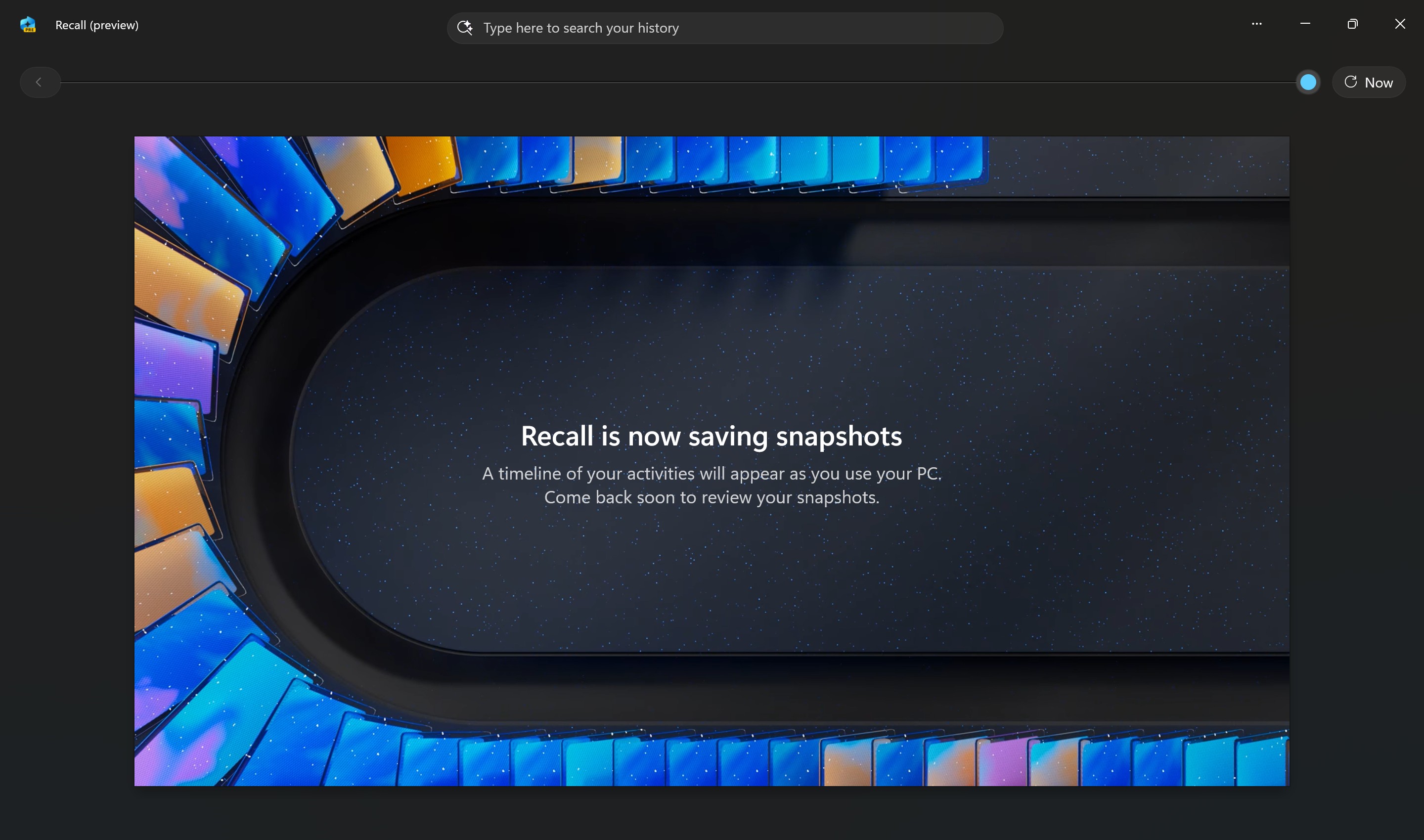
Microsoft is preparing to reintroduce Recall to Windows 11. A feature limited to Copilot+ PCs—a label that just a fraction of a fraction of Windows 11 systems even qualify for—Recall has been controversial in part because it builds an extensive database of text and screenshots that records almost everything you do on your PC.

But the main problem with the initial version of Recall—the one that was delayed at the last minute after a large-scale outcry from security researchers, reporters, and users—was not just that it recorded everything you did on your PC but that it was a rushed, enabled-by-default feature with gaping security holes that made it trivial for anyone with any kind of access to your PC to see your entire Recall database.

It made no efforts to automatically exclude sensitive data like bank information or credit card numbers, offering just a few mechanisms to users to manually exclude specific apps or websites. It had been built quickly, outside of the normal extensive Windows Insider preview and testing process. And all of this was happening at the same time that the company was pledging to prioritize security over all other considerations, following several serious and highly public breaches.

Any coverage of the current version of Recall should mention what has changed since then.

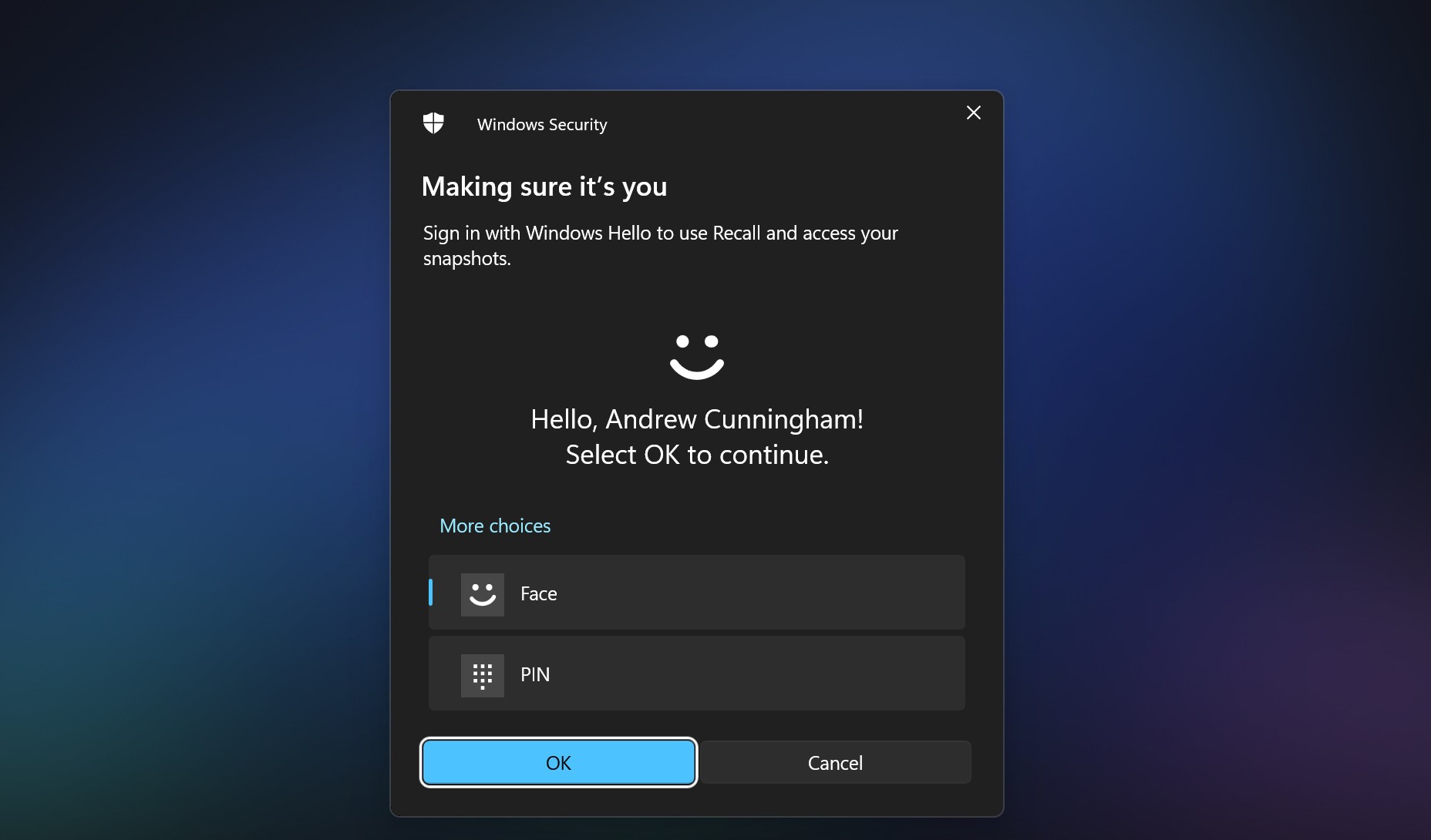
Recall is being rolled out to Microsoft’s Windows Insider Release Preview channel after months of testing in the more experimental and less-stable channels, just like most other Windows features. It’s turned off by default and can be removed from Windows root-and-branch by users and IT administrators who don’t want it there. Microsoft has overhauled the feature’s underlying security architecture, encrypting data at rest so it can’t be accessed by other users on the PC, adding automated filters to screen out sensitive information, and requiring frequent reauthentication with Windows Hello anytime a user accesses their own Recall database.

Testing how Recall works

I installed the Release Preview Windows 11 build with Recall on a Snapdragon X Elite version of the Surface Laptop and a couple of Ryzen AI PCs, which all have NPUs fast enough to support the Copilot+ features.

No Windows PCs without this NPU will offer Recall or any other Copilot+ features—that’s every single PC sold before mid-2024 and the vast majority of PCs since then. Users may come up with ways to run those features on unsupported hardware some other way. But by default, Recall isn’t something most of Windows’ current user base will have to worry about.

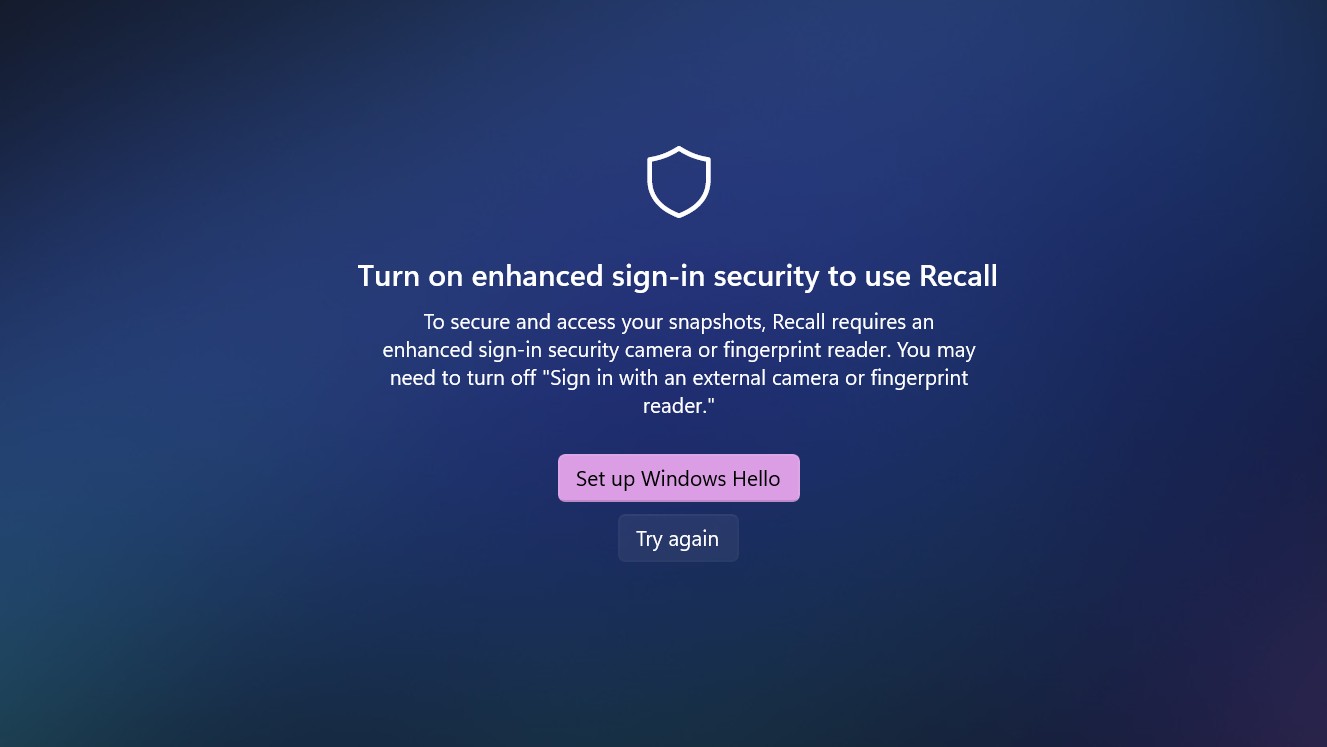
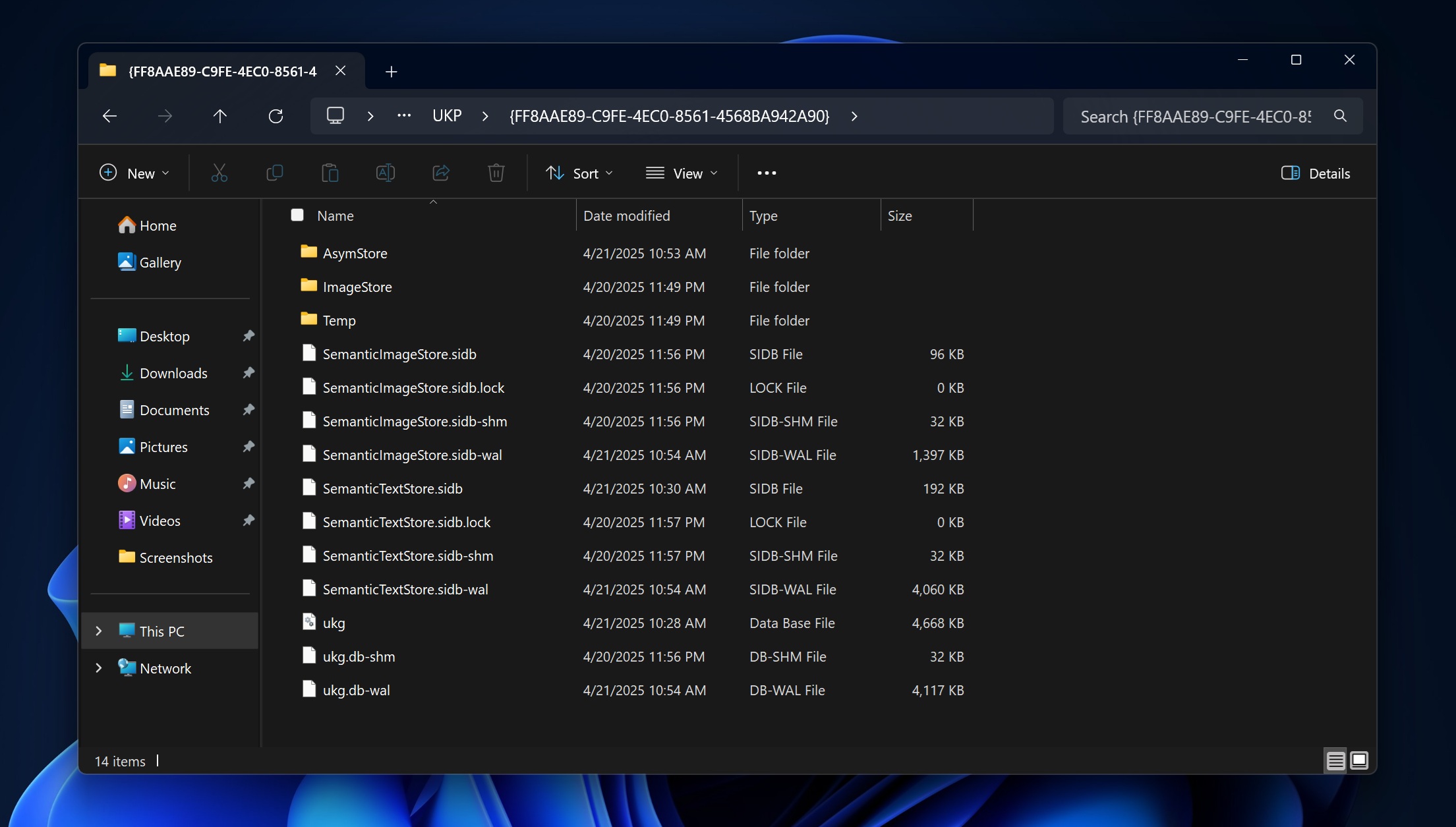
Microsoft is taking data protection more seriously this time around. If Windows Hello isn’t enabled or drive encryption isn’t turned on, Recall will refuse to start working until you fix the issues. Credit: Andrew Cunningham

After installing the update, you’ll see a single OOBE-style setup screen describing Recall and offering to turn it on; as promised, it is now off by default until you opt in. And even if you accept Recall on this screen, you have to opt in a second time as part of the Recall setup to actually turn the feature on. We’ll be on high alert for a bait-and-switch when Microsoft is ready to remove Recall’s “preview” label, whenever that happens, but at least for now, opt-in means opt-in.

Enable Recall, and the snapshotting begins. As before, it’s storing two things: actual screenshots of the active area of your screen, minus the taskbar, and a searchable database of text that it scrapes from those screenshots using OCR. Somewhat oddly, there are limits on what Recall will offer to OCR for you; even if you’re using multiple apps onscreen at the same time, only the active, currently-in-focus app seems to have its text scraped and stored.

This is also more or less how Recall handles multi-monitor support; only the active display has screenshots taken, and only the active window on the active display is OCR’d. This does prevent Recall from taking gigabytes and gigabytes of screenshots of static or empty monitors, though it means the app may miss capturing content that updates passively if you don’t interact with those windows periodically.

All of this OCR’d text is fully searchable and can be copied directly from Recall to be pasted somewhere else. Recall will also offer to open whatever app or website is visible in the screenshot, and it gives you the option to delete that specific screenshot and all screenshots from specific apps (handy, if you decide you want to add an entire app to your filtering settings and you want to get rid of all existing snapshots of it).

Here are some basic facts about how Recall works on a PC since there’s a lot of FUD circulating about this, and much of the information on the Internet is about the older, insecure version from last year:

  • Recall is per-user. Setting up Recall for one user account does not turn on Recall for all users of a PC.
  • Recall does not require a Microsoft account.
  • Recall does not require an Internet connection or any cloud-side processing to work.
  • Recall does require your local disk to be encrypted with Device Encryption/BitLocker.
  • Recall does require Windows Hello and either a fingerprint reader or face-scanning camera for setup, though once it’s set up, it can be unlocked with a Windows Hello PIN.
  • Windows Hello authentication happens every time you open the Recall app.
  • Enabling Recall and changing its settings does not require an administrator account.
  • Recall can be uninstalled entirely by unchecking it in the legacy Windows Features control panel (you can also search for “turn Windows features on and off”).

If you read our coverage of the initial version, there’s a whole lot about how Recall functions that’s essentially the same as it was before. In Settings, you can see how much storage the feature is using and limit the total amount of storage Recall can use. The amount of time a snapshot can be kept is normally determined by the amount of space available, not by the age of the snapshot, but you can optionally choose a second age-based expiration date for snapshots (options range from 30 to 180 days).

You can see Recall hit the system’s NPU periodically every time it takes a snapshot (this is on an AMD Ryzen AI system, but it should be the same for Qualcomm Snapdragon PCs and Intel Core Ultra/Lunar Lake systems). Browsing your Recall database doesn’t use the NPU. Credit: Andrew Cunningham

It’s also possible to delete the entire database or all recent snapshots (those from the past hour, past day, past week, or past month), toggle the automated filtering of sensitive content, or add specific apps and websites you’d like to have filtered. Recall can temporarily be paused by clicking the system tray icon (which is always visible when you have Recall turned on), and it can be turned off entirely in Settings. Neither of these options will delete existing snapshots; they just stop your PC from creating new ones.

The amount of space Recall needs to do its thing will depend on a bunch of factors, including how actively you use your PC and how many things you filter out. But in my experience, it can easily generate a couple of hundred megabytes per day of images. A Ryzen system with a 1TB SSD allocated 150GB of space to Recall snapshots by default, but even a smaller 25GB Recall database could easily store a few months of data.

Fixes: Improved filtering, encryption at rest

For apps and sites that you know you don’t want to end up in Recall, you can manually add them to the exclusion lists in the Settings app. As a rule, major browsers running in private or incognito modes are also generally not snapshotted.

If you have an app that’s being filtered onscreen for any reason—even if it’s onscreen at the same time as an app that’s not being filtered, Recall won’t take pictures of your desktop at all. I ran an InPrivate Microsoft Edge window next to a regular window, and Microsoft’s solution is just to avoid capturing and storing screenshots entirely rather than filtering or blanking out the filtered app or site in some way.

This is probably the best way to do it! It minimizes the risk of anything being captured accidentally just because it’s running in the background, for example. But it could mean you don’t end up capturing much in Recall at all if you’re frequently mixing filtered and unfiltered apps.

New to this version of Recall is an attempt at automated content filtering to address one of the major concerns about the original iteration of Recall—that it can capture and store sensitive information like credit card numbers and passwords. This filtering is based on the technology Microsoft uses for Microsoft Purview Information Protection, an enterprise feature used to tag sensitive information on business, healthcare, and government systems.

This automated content filtering is hit and miss. Recall wouldn’t take snapshots of a webpage with a visible credit card field, or my online banking site, or an image of my driver’s license, or a recent pay stub, or of the Bitwarden password manager while viewing credentials. But I managed to find edge cases in less than five minutes, and you’ll be able to find them, too; Recall saved snapshots showing a recent check, with the account holder’s name, address, and account and routing numbers visible, and others testing it have still caught it recording credit card information in some cases.

The automated filtering is still a big improvement from before, when it would capture this kind of information indiscriminately. But things will inevitably slip through, and the automated filtering won’t help at all with other kinds of data; Recall will take pictures of email and messaging apps without distinguishing between what’s sensitive (school information for my kid, emails about Microsoft’s own product embargoes) and what isn’t.

Recall can be removed entirely. If you take it out, it’s totally gone—the options to configure it won’t even appear in Settings anymore. Credit: Andrew Cunningham

The upshot is that if you capture months and months and gigabytes and gigabytes of Recall data on your PC, it’s inevitable that it will capture something you probably wouldn’t want to be preserved in an easily searchable database.

One issue is that there’s no easy way to check and confirm what Recall is and isn’t filtering without actually scrolling through the database and checking snapshots manually. The system tray status icon does change to display a small triangle and will show you a “some content is being filtered” status message when something is being filtered, but the system won’t tell you what it is; I have some kind of filtered app or browser tab open somewhere right now, and I have no idea which one it is because Windows won’t tell me. That any attempt at automated filtering is hit-and-miss should be expected, but more transparency would help instill trust and help users fine-tune their filtering settings.

Recall’s files are still clearly visible and trivial to access, but with one improvement: They’re all actually encrypted now. Credit: Andrew Cunningham

Microsoft also seems to have fixed the single largest problem with Recall: previously, all screenshots and the entire text database were stored in plaintext with zero encryption. It was technicallyusually encrypted, insofar as the entire SSD in a modern PC is encrypted when you sign into a Microsoft account or enable Bitlocker, but any user with any kind of access to your PC (either physical or remote) could easily grab those files and view them anywhere with no additional authentication necessary.

This is fixed now. Recall’s entire file structure is available for anyone to look at, stored away in the user’s AppData folder in a directory called CoreAIPlatform.00UKP. Other administrators on the same PC can still navigate to these folders from a different user account and move or copy the files. Encryption renders them (hypothetically) unreadable.

Microsoft has gone into some detail about exactly how it’s protecting and storing the encryption keys used to encrypt these files—the company says “all encryption keys [are] protected by a hypervisor or TPM.” Rate-limiting and “anti-hammering” protections are also in place to protect Recall data, though I kind of have to take Microsoft at its word on that one.

That said, I don’t love that it’s still possible to get at those files at all. It leaves open the possibility that someone could theoretically grab a few megabytes’ worth of data. But it’s now much harder to get at that data, and better filtering means what is in there should be slightly less all-encompassing.

Lingering technical issues

As we mentioned already, Microsoft’s automated content filtering is hit-and-miss. Certainly, there’s a lot of stuff that the original version of Recall would capture that the new one won’t, but I didn’t have to work hard to find corner-cases, and you probably won’t, either. Turning Recall on still means assuming risk and being comfortable with the data and authentication protections Microsoft has implemented.

We’d also like there to be a way for apps to tell Recall to exclude them by default, which would be useful for password managers, encrypted messaging apps, and any other software where privacy is meant to be the point. Yes, users can choose to exclude these apps from Recall backups themselves. But as with Recall itself, opting in to having that data collected would be preferable to needing to opt out.

You need a fingerprint reader or face-scanning camera to get Recall set up, but once it is set up, anyone with your PIN and access to your PC can get in and see all your stuff. Credit: Andrew Cunningham

Another issue is that, while Recall does require a fingerprint reader or face-scanning camera when you set it up the very first time, you can unlock it with a Windows Hello PIN after it’s already going.

Microsoft has said that this is meant to be a fallback option in case you need to access your Recall database and there’s some kind of hardware issue with your fingerprint sensor. But in practice, it feels like too easy a workaround for a domestic abuser or someone else with access to your PC and a reason to know your PIN (and note that the PIN also gets them into your PC in the first place, so encryption isn’t really a fix for this). It feels like too broad a solution for a relatively rare problem.

Security researcher Kevin Beaumont, whose testing helped call attention to the problems with the original version of Recall last year, identified this as one of Recall’s biggest outstanding technical problems in a blog post shared with Ars Technica shortly before its publication (as of this writing, it’s available here; he and I also exchanged multiple text over the weekend comparing our findings).

“In my opinion, requiring devices to have enhanced biometrics with Windows Hello  but then not requiring said biometrics to actually access Recall snapshots is a big problem,” Beaumont wrote. “It will create a false sense of security in customers and false downstream advertising about the security of Recall.”

Beaumont also noted that, while the encryption on the Recall snapshots and database made it a “much, much better design,” “all hell would break loose” if attackers ever worked out a way to bypass this encryption.

“Microsoft know this and have invested in trying to stop it by encrypting the database files, but given I live in the trenches where ransomware groups are running around with zero days in Windows on an almost monthly basis nowadays, where patches arrive months later… Lord, this could go wrong,” he wrote.

But most of what’s wrong with Recall is harder to fix

Microsoft has actually addressed many of the specific, substantive Recall complaints raised by security researchers and our own reporting. It’s gone through the standard Windows testing process and has been available in public preview in its current form since late November. And yet the knee-jerk reaction to Recall news is still generally to treat it as though it were the same botched, bug-riddled software that nearly shipped last summer.

Some of this is the asymmetrical nature of how news spreads on the Internet—without revealing traffic data, I’ll just say that articles about Recall having problems have been read many, many more times by many more people than pieces about the steps Microsoft has taken to fix Recall. The latter reports simply aren’t being encountered by many of the minds Microsoft needs to change.

But the other problem goes deeper than the technology itself and gets back to something I brought up in my first Recall preview nearly a year ago—regardless of how it is architected and regardless of how many privacy policies and reassurances the company publishes, people simply don’t trust Microsoft enough to be excited about “the feature that records and stores every single thing you do with your PC.”

Recall continues to demand an extraordinary level of trust that Microsoft hasn’t earned. However secure and private it is—and, again, the version people will actually get is much better than the version that caused the original controversy—it just feels creepy to open up the app and see confidential work materials and pictures of your kid. You’re already trusting Microsoft with those things any time you use your PC, but there’s something viscerally unsettling about actually seeing evidence that your computer is tracking you, even if you’re not doing anything you’re worried about hiding, even if you’ve excluded certain apps or sites, and even if you “know” that part of the reason why Recall requires a Copilot+ PC is because it’s processing everything locally rather than on a server somewhere.

This was a problem that Microsoft made exponentially worse by screwing up the Recall rollout so badly in the first place. Recall made the kind of ugly first impression that it’s hard to dig out from under, no matter how thoroughly you fix the underlying problems. It’s Windows Vista. It’s Apple Maps. It’s the Android tablet.

And in doing that kind of damage to Recall (and possibly also to the broader Copilot+ branding project), Microsoft has practically guaranteed that many users will refuse to turn it on or uninstall it entirely, no matter how it actually works or how well the initial problems have been addressed.

Unfortunately, those people probably have it right. I can see no signs that Recall data is as easily accessed or compromised as before or that Microsoft is sending any Recall data from my PC to anywhere else. But today’s Microsoft has earned itself distrust-by-default from many users, thanks not just to the sloppy Recall rollout but also to the endless ads and aggressive cross-promotion of its own products that dominate modern Windows versions. That’s the kind of problem you can’t patch your way out of.

Listing image: Andrew Cunningham

Photo of Andrew Cunningham

Andrew is a Senior Technology Reporter at Ars Technica, with a focus on consumer tech including computer hardware and in-depth reviews of operating systems like Windows and macOS. Andrew lives in Philadelphia and co-hosts a weekly book podcast called Overdue.

In depth with Windows 11 Recall—and what Microsoft has (and hasn’t) fixed Read More »

crime-and-punishment-#1

Crime and Punishment #1

This seemed like a good next topic to spin off from monthlies and make into its own occasional series. There’s certainly a lot to discuss regarding crime.

What I don’t include here, the same way I excluded it from the monthly, are the various crimes and other related activities that may or may not be taking place by the Trump administration or its allies. As I’ve said elsewhere, all of that is important, but I’ve made a decision not to cover it. This is about Ordinary Decent Crime.

  1. Perception Versus Reality.

  2. The Case Violent Crime is Up Actually.

  3. Threats of Punishment.

  4. Property Crime Enforcement is Broken.

  5. The Problem of Disorder.

  6. Extreme Speeding as Disorder.

  7. The Fall of Extralegal and Illegible Enforcement.

  8. In America You Can Usually Just Keep Their Money.

  9. Police.

  10. Probation.

  11. Genetic Databases.

  12. Marijuana.

  13. The Economics of Fentanyl.

  14. Enforcement and the Lack Thereof.

  15. Jails.

  16. Criminals.

  17. Causes of Crime.

  18. Causes of Violence.

  19. Homelessness.

  20. Yay Trivial Inconveniences.

  21. San Francisco.

  22. Closing Down San Francisco.

  23. A San Francisco Dispute.

  24. Cleaning Up San Francisco.

  25. Portland.

  26. Those Who Do Not Help Themselves.

  27. Solving for the Equilibrium (1).

  28. Solving for the Equilibrium (2).

  29. Lead.

  30. Law & Order.

  31. Look Out.

A lot of the impact of crime is based on the perception of crime.

The perception of crime is what drives personal and political reactions.

When people believe crime is high and they are in danger, they dramatically adjust how they live and perceive their lives. They also demand a political response.

Thus, it is important to notice, and fix, when impressions of crime are distorted.

And also to notice when people’s impressions are distorted. They have a mental idea that ‘crime is up’ and react in narrow non-sensible ways to that, but fail to react in other ways.

One thing that it turns out has very little to do with perceptions of crime is the murder rate, which in most places has gone dramatically down.

Hunter: Americans have a very distorted perception of how safe a city is.

If you go purely by state, if it counts then Washington DC is at the top, but 9 of the next 10 are red states. And of the 100 biggest cities, 5 of the 6 safest are in California.

Of course, there is a lot more to being safe than not being murdered. San Francisco has a very low murder rate, but what worries people are other crimes, especially property crime – things are bad enough there, and enough people in my circles pay attention to it, that it gets its own section. It’s definitely not ‘down at 6’ on the chart.

The thing is, property crime and other Ordinary Decent Crime went dramatically down too, in many ways, especially in these very blue areas. Crime used to be a huge portion of our cognitive focus in major cities.

You who carry a $1k iPhone around in your hand do not remember how insane that would have been when I was growing up in New York City. As Dennis Leary used to put it, have you ever played ‘good block, bad block’? And we took levels of risk, and perception of risk, unimaginable today, both for children and adults. I was warned not to have a hundred bucks in my wallet, and not to walk along Amsterdam Avenue, and I took the ‘safer’ last two block route back to our apartment on the Upper West Side.

Here’s some English data to go with the USA data.

Stefan Schubert: In contrast to some people’s perception, crime has fallen dramatically in England and Wales over time.

Thanks to @s8mb and @shashj for highlighting this important and encouraging fact.

Violent crime and physical assault has gone from being like car crashes, which are an actual danger you have to constantly worry about and that happens all the time (although with a lot fewer fatalities than they used to!), to something halfway to airplane crashes. A violent crime is often now news. Thefts can be news.

That’s not to say that in particular places property crime hasn’t been allowed to spiral out of control, especially in particular ways.

We forget how blessed we are. And it is very important to hold onto that. Trust is fraying in other ways, but that feeling of living in Batman’s Gotham, with violence around every corner even if you didn’t choose to get involved? Yeah, that’s gone. The whole trope of ‘vigilante hero fights crime in the streets’ feels like an anachronism.

Aporia magazine makes the case that crime rates are much higher than in the past, because health care improvements have greatly reduced the number of murders, and once you correct for that murder is sky high. It is an interesting argument, and certainly some adjustment is needed, but in terms of magnitude I flat out do not buy it in light of my lived experience, as discussed elsewhere.

The other half of the post is that our criminal justice system is no longer effective, due to rules that now prohibit us from locking the real and obvious repeat criminals up, and those criminals do most of the crime and are the reason the system is overloaded. The obvious response is, we have this huge prison population, we sure are locking up someone. And yet, yes, we do seem capable of identifying who is doing all the crime, including the repeated petty crime, yet incapable of then locking them up. That does seem eminently fixable.

George Carlin had a routine where everyone would get 12 chances to clean up their drug habits before being exiled (to Colorado, of course) and it seems like we could figure something out here, even if we think three strikes are insufficient?

Our legal system depends on threatening people with big punishments, because standard procedure is severely downgrading all punishments.

So when you try to make shoplifting a felony punishable by three years in jail, what you’re actually doing is allowing that to be bargained down, and ensuring the punishment is ‘anything at all’ rather than cops arresting you on a misdemeanor only to have you released with a stern talking to, which means cops won’t even bother.

Obviously it would be better to actually enforce laws and punishments, but while we’re not doing that, we need to understand how laws work in practice.

We used to basically be okay with using this to give police and prosecutors leverage and discretion, and to allow enforcement in cases like ‘we know this person keeps stealing stuff’ without having to prove each incident. Now, we’re not, but we don’t know what the replacement would be.

The most obvious types of crime that are up are organized property crimes.

Why?

I see two central highly related reasons.

  1. Our enforcement system is broken. That’s this section.

  2. We increasingly tolerate disorder. That’s the following section.

Problem one is largely caused by problem two, but let’s talk effects first, then causes.

Essentially, in terms of my four categories of legality, we have moved much of property crime from its rightful place in Category 3 – where it is actively illegal and risks real consequences but we don’t move mountains to catch you – into at least Category 2, where it is annoying and discouraged but super doable with no real consequences. And in many cases, it is now effectively Category 1, where it might as well be thought of as fully legal without frictions.

If you are an upstanding citizen and then decide to do a little property crime, as a treat, you risk your reputation, various unpleasant reactions, and getting an arrest record and dealing with the courts, and you don’t know how likely those outcomes are. Security can and will sometimes catch you, you have things to lose, and so on. So the deterrence works okay there.

If you do a lot of property crime, however, you quickly learn that most of the risks and costs are kind of fixed, and often non-existent. Security guards and employees mostly won’t take any risk to interfere, police usually won’t be called.

Even when police catch you, even repeatedly, they mostly let you go, often even after being caught an absurd number of times. The old ‘quietly use or threaten violence or to otherwise mess you up’ solution has also been taken largely off the table, for better and for worse.

In each individual case, this is wise in terms of outcomes. But if you do it too often, eventually the criminal element or those considering such actions notices, and the problem snowballs.

Dr. Lawrence Newport: Barrister gets burgled. Criminal leaves behind their OWN BAIL NOTICE – showing they had been released only HOURS previously.

No arrests. Nothing happens.

Of other crimes @paulpowlesland says “I didn’t even report them to police because what’s the point?”

We deserve better.

Izzy Lyons: New figures show that 38,030 residential burglaries were recorded by the Met in the year ending last March — 82.4 per cent of which were closed with no suspect identified. Only 3.2 per cent resulted in a charge or summons.

If even reported burglaries only result in a suspect at all 17.6% of the time, and only have a charge 3.2% of the time let alone a plea or conviction, and presumably most burglaries don’t even get reported, and you don’t even make a point to arrest someone when they leave behind their literal bail notice, then you’re saying burglary is de facto legal. You can just take stuff. That will only get worse over time.

The same goes for things closer to fraud, such as organized cargo theft. Ryan Peterson reports that cargo theft has grown by more than 10% each month YoY since Q4 2021. This will continue until people start actually getting punished.

The latest incidents are in the Chicago area, where organized crime has run or taken control of motor carriers and uses them to enable cargo theft and demand de facto ransom payments. Ryan reports that Flexport has used a machine learning based fraud prevention technology (nicknamed ‘CURVE’) to spot and avoid such pitfalls. Essentially the criminals have learned to spoof commonly used indicators of trust, so the arms race is ongoing there same as everywhere else, and like many other places trust is declining.

The costs of property crime, in terms of countermeasures, can get very high. Putting products behind locked display cases is a rather large cost, given two in three shoppers mostly won’t buy such products. I will still buy medications or other urgently needed items through a display case in an emergency, but yeah if it’s not an emergency I’m going to pull out my phone and use Amazon, and next time try a different store. The whole procedure is too annoying and feels terrible.

Eventually, we’ll have to react to all this.

We’ll need to figure out how to enforce the law sufficiently that crime no longer pays, and it is at least somewhat obvious to the criminals that it no longer pays.

At minimum, we should track when we arrest or otherwise identify criminals, or there are otherwise clearly related incidents, and do escalating enforcement against repeat offenders. The stories of ‘this person got arrested 35 times for [X] and was released each time’ should never, ever happen, nor should the ‘50 people are doing a huge percentage of the crime in [NYC/SF/etc].’

As noted in an earlier section, this makes one wonder, who are all the criminals we are locking up, in that case?

Charles Lehman convincingly generalizes what is happening as a problem with disorder. We have successfully kept violent crime down, but we have seen a steady rise in disorder and in public tolerance for disorder, which people correctly dislike and then interpret as a rise in crime. Some of it very much is a rise in crime, such as retail theft forcing stores to lock up merchandise, while other disorderly actions are anti-social but not strictly criminal.

I would draw a distinction between disorder in the sense of ‘not ordered’ versus antisocial disorder that degrades the overall sense of order or harms non-participants in the activity. All hail Discordia, hail Eris, but hands off my stuff, you know?

Our academics have essentially delegitimatized disliking antisocial disorder and especially using authority to enforce against it, including against things like outright theft, and we’ve broken many of the social systems that enforced the relevant norms.

If you do not enforce rules against antisocial disorder, especially laws against outright theft, while enforcing rules against insufficiently obedient and rigid order, you are not doing people any favors. People realize these rules against disorder are not enforced, norms erode, and you get increasing amounts of disorder.

In particular, antisocial disorder becomes The Way to Do Things and get resources.

If you can sell drugs openly without restriction, or organize a theft ring at little risk, but opening a legitimate business takes years of struggle and expenses and occupational licensing issues and so on, guess what the non-rich aspiring businesspeople are increasingly going to do?

As I discussed in my post on sports gambling, we impose increasingly stringent regulations and restrictions on productive and ordered activity, while effectively tolerating destructive and disordered activity, including when we do and don’t enforce the relevant laws.

We need to reverse this. We should apply the ‘let them cook’ and ‘don’t use force to stop people who aren’t harming others’ principles to productive and ordered activity, rather than to unproductive and disordered activity. At minimum, we should beware and track the balance of inconveniences, and ensure that we are throwing up more and more expensive barriers to antisocial disordered activities, versus pro-social or ordered activities.

YIMBY for housing construction and doing business and working. NIMBY for noise complaints and shoplifting and cargo theft.

Is this causal in the sense of broken windows theory, or is it merely a symptom?

Rob Henderson: “Today, if you so choose, you can drive through red lights at high speed with impunity—police have almost completely stopped issuing traffic citations”

Seems true in the Bay Area generally. Last summer found you could drive 110mph on the 505; no penalty.

The only other place where I’ve been able to drive that fast with that level of impunity is the German autobahn.

wayne: “The police stopped writing tickets” is another one of those things that sounds like right-wing hyperbole, but, no — they literally stopped writing tickets

Kelsey Piper: I know people who’ve driven in Oakland and SF for months with expired registration (by accident) and were stopped the first time they drove their car out of Oakland or SF into a jurisdiction that enforces traffic laws.

My presumption is it is both symptom and cause when it gets this extreme.

In the Before Times, if you were up to no good as they saw it, and especially if you were committing crimes or interfering with the good citizens of the land, the law might notice, and in various ways make it clear you should stop.

This often worked, and gave police leverage, but was illegal, and led to terrible abuses.

So we decided that this was bad, actually, and moved progressively to cut off this sort of behavior.

The problem is that this puts the system in a tricky position. It has only so many resources, and it is expensive and time consuming to actually enforce laws by the book, and often you don’t have the proof or there are technicalities so you can’t do it.

We cannot go back, nor do we want to. But over time everyone is adjusting to and solving for the new equilibrium, and norms, habits and skills are also adjusting. The system was designed for one way and now it is the other way. A lot of what has been protecting us is inertia, and the instinct that there are forces waiting to keep things in line, and various norms that grew up over time.

That will, over time, continue to fade, if don’t give it good reason not to. I worry about this. It is all the more reason that, now that we don’t have as much illegible enforcement, we need more legible enforcement, including for small offenses, for those things we want to actually prevent.

Story of a mostly homeless guy who scammed Isaac King out of $300. Isaac sued in small claims court on principle, did all the things, and none of it mattered.

Sarah Constantin: It really seems like “individuals using the court system to redress ordinary grievances” is no longer a realistic thing?

…and it seems pretty intuitive that the idea of “the People have legal rights against arbitrary monarchical power” would only arise in a culture where lots of people had the real-world experience that going to court was a practical way to reverse injustices (and get your $ back).

Oliver Habryka: Lightcone has filed like 8+ reports of people breaking into Lighthaven [which is in Berkeley] (especially early on before we upgraded our fences) and stealing stuff. A few of them lead to arrests, nothing ever had any real consequences on anyone beyond that.

My understanding is exactly Sarah’s. If someone simply keeps your money, or otherwise cheats you, what are you going to do about it? Even if you can prove it, it is definitely not worth going to court. Lawsuits are effectively nuclear weapons, the threat is far stronger than the execution unless scale is truly massive. Calling the cops for anything small is also not worth the effort and carries risk of backfire.

Personal example: Someone rich (or at least spending as if they were rich, could be broke, who knows) promised, in writing, as part of resolving the situation at a company, to pay me six figures. Then they didn’t pay, then once again in person affirmed this and promised to pay, then didn’t pay. What am I going to do, sue them? When they have a history of vindictive behavior? Money gone.

Mostly it works out fine. Credit cards are kind of an alternative to small claims court, and there are various reputational and other reasons that allow ordinary business to continue even if it is not in practice enforced by law. But also we all choose to avoid transactions that would depend on the threat of a small-stakes lawsuit.

If you’re wondering why we can’t go back? We’re not okay with things like this:

Son reports dad missing, police think son killed father, they psychologically torture him for 17 hours and threaten to kill his dog until he confesses. Father then found alive, son settles lawsuit $900k in damages.

I wonder how much of this is ‘we can’t do other things we’d prefer to do so instead we do other things that are even worse.’

Here’s an actually great idea from a (now defeated) presidential candidate who is also a former prosecutor, you can guess why we haven’t done it already.

Idejder: HOLY SHIT.

Harris, on “Breakfast Club,” just said there should be a database for police officers so they cannot commit wrongdoing and get away with it by being transferred to other districts or departments to conceal it.

I have never heard a politician say that so clearly.

Police training in alternative cognitive explanations of various phenomena and behaviors reduced use of force, discretionary arrests and arrests of Black civilians in the field, and reduced injuries, while ‘activity’ was unchanged. Odd to say activity did not decrease if discretionary arrests decreased. That is at the core of police activity. If you are making less arrests, then it stands to reason you would also use less force. We would like to think the training made police make better decisions, but we cannot differentiate that from the possibility that police got the message to find reasons to make fewer arrests.

A working paper says that police lower quantity of arrests but increase arrest quality near the end of their shifts, when arrests would require overtime work, and that this effect is stronger when the officer works a second job. File under ‘yes obviously but it is good that someone did the work to prove it, and to learn the magnitude of the effect.’ One could perhaps use this to figure out what makes arrests high quality?

In an ACX comments highlight post linked earlier, Performative Bafflement suggests more than 80% of American police hours are wasted not solving any crime at all, because most hours are spent writing traffic tickets. Which would explain why the police are so bad at solving crimes. I mention it because Scott finds this plausible. But that number seems absurd, and for example Free Think here puts the number directly spent on stops at 15%, even with additional paperwork that doesn’t get anything like 80%.

One should also note that the three hours a day on paperwork is quite a lot – that’s a huge tax on the ability to actually Do Things. Can AI plus body cameras help here? Seems like you should be able to cut that down a lot.

Here is the one and only Amanda Knox giving advice on how to deal with police.

If anything this seems advice rather willing to cooperate with the police?

Amanda Knox: You should never be in a room with police for more than an hour. If they read you your Miranda rights, you’re a suspect. Shut it down. Demand a lawyer. This is just some of the advice I got from a retired FBI Special Agent, and two renowned false confessions experts.

After talking with half a dozen exonerees who’d been coerced into making false confessions, and interviewing the world’s leading experts, I wanted to know what advice they’d give. Here’s what they said…

FBI Agent Steve Moore (@Gman_Moore): If they ever make an accusation against you, you’re no longer a witness. You say, I’m leaving. Get a lawyer.

If they say you’re not allowed to leave, to see a lawyer, or talk to a parent or spouse, get a piece of paper and write that down, write down the time, and ask them to sign it. If they won’t sign it, fold it up in your pocket.

Make a record of everything you do. They’re taking notes; you take notes. If you’re innocent, you’ve got nothing to lose.

Don’t repeat your story. When they say, Tell us what happened, tell them what happened. When they say, OK, let’s start over. Let’s go back to that room. You say, Nope, already asked and answered.

What they’re trying to do is manipulate and confuse you. Then when your stories don’t match up perfectly, they’ll say, But you said you went through the front door at 11, and now you’re saying 10: 30. What else could have you gotten wrong?

False confessions expert Steve Drizin (@SDrizin): Once they read you your Miranda warnings, you are a suspect. Do not sign a waiver to give them up. Those Miranda rights are precious. Don’t throw them away like garbage, no matter how much police try to get you to do that.

If you’re a witness, tell the truth and then shut up. When they start to try to change your truth to fit their truth, you shut it down. If they’re not accepting your truth, say, No more. I’m not going to talk until I have a lawyer.

False confessions expert Richard Leo: Insist on recording any statement. We all have smartphones. Once you start being accused, they’ve made up their mind and their goal is to get a confession.

Most people’s interactions with police are in automobiles. The police say, Do you know why I stopped you? It’s a trick question designed to get you to confess. And when the police stop you in your car, you’re not free to leave.

Remember, if you’re in custody and police seek to elicit incriminating statements, you’re entitled to Miranda warnings. But the Supreme Court, going back to the 80s, gaslighted Americans by saying that you’re not in custody when you’re pulled over.

So you’re not entitled to Miranda warnings. So the police just say, Do you know why I pulled you over? You might say, Well, maybe I was going 10 miles over the speed limit? You’ve just confessed. (Instead, say, I have no idea.)

Don’t ask police, Should I get a lawyer? Because they are your adversary if they are trying to get evidence against you of a crime and you may not even know it. Be instinctively distrustful. Be respectful, cooperate if it’s purely a witness role…

But once they start to accuse you or you feel accused, certainly if you’ve been read your Miranda warnings, there’s no percentage in talking to them. They are professional liars. They’re very good at it.

[thread continues, podcast link]

One can summarize that as ‘be respectful and comply with their physical demands, but if they treat you like a witness (and you didn’t do anything illegal) tell the truth, but if they ever accuse you of anything, try to get you to change your story or ask you to repeat yourself or act like you are a suspect get a lawyer and never ever confess to anything even speeding and of course never sign away Miranda.’

That seems like the bare minimum amount of wariness?

This section of ACX’s comments post on prisons discussed probation.

According to several commentators, probation is essentially a trap, or a scam.

In theory, probation says that you get let go early, but if you screw up, you go back. Screwing up means violating basically any law, or being one minute late to a probation meeting, or losing your job (including because the probation officer changed your meeting to be when you had to work and got you fired), or any number of other rules.

One can imagine a few ways this could work, on a spectrum.

  1. This is leverage, to be used for your own good and for police business, but everyone wants you to succeed. If the police need your cooperation, they can threaten to send you back. If the police think someone or some activity is trouble, they can tell you to not associate with or do them. And so on. The rules have to mean something, but if you’re clearly trying to turn your life around then they’ll cut you some slack.

  2. This is a test. The system is neither your friend nor your enemy, and actions have consequences. And yes, if we are pretty sure you’re up to no good we’ll go looking for a technical reason to violate you, but otherwise good luck.

  3. This is a backdoor and a trap, and the system will be actively attempting to send you back to prison as soon as possible.

The reports are that the point of probation is the third thing, that probation officers will actively seek to violate people and send them back to prison even if they’re not doing anything wrong. Thus probation is a substantial portion as bad as being in prison, and then you probably fail and go to prison anyway.

In this model, the entire system is in bad faith here, and they’re offering you probation to avoid a trial knowing they’ll then be able to screw you over later.

And that this is true to the extent that realistic criminals often turn down probation if the alternative is a shorter overall sentence.

My quick search said about 54% of those paroled fail and get sent back, but a commenter says parole is actually the first thing, they want you to succeed and not have to imprison you, whereas straight probation off a plea bargain is the third thing, where they want to avoid a trial then imprison you anyway.

This is offered as the reason people don’t accept GPS monitoring. If you have a GPS monitor, then it is easy to notice you’ve technically violated the terms, and since everyone involved wants to violate you, that means you’re doomed.

Scott Alexander interprets ‘someone on probation got two years for driving the speed limit because it was technically a violation in context’ as a outrageous strictness. Which it is, but the two years was really for the original crime the guy got probation for, not for the technical violation. So it’s more like the system lying and being evil, rather than it being too strict per se.

When Denmark expanded its database of genetic information, crime rates fell dramatically.

Cremieux: The magnitude of this effect is fairly staggering, too: the elasticity is -2.7, meaning that for every 1% increase in the number of criminals in the database, recidivist crime falls by 2.7%. That’s enormous (-42% to the 1-year recidivism rate), and that’s simply due to the fear that, if you commit a crime again, you’ll now be detected doing it.

This is insanely strong evidence that the prediction of being caught is a huge driver of recidivism rates. A 42% drop in 1-year recidivism is crazy. The rate of being caught went up, but it didn’t go up that dramatically.

America saw similar results, although smaller.

Cremieux: Several American states have mandated that prisoners need to provide their DNA to the authorities, and after those programs came into place, there was a large reduction in the odds of recidivism for affected criminals.

This result is highly significant for violent offenders, but less so for property offenders, with mandates reducing violent recidivism by a whopping 5.7pp over five years, or in percentage terms, they reduced violent criminal recidivism by 21%.

What we need to do is a study of criminals perceptions of likelihood of being caught with and without the DNA database, and in general, and how those perceptions predict their actions, so we can better establish the effect size here and what else impacts it.

There are obvious libertarian objections to a universal DNA database. But if the upside was a 42% overall drop in crime, potentially a lot more since this would then change norms and free up police for other cases? It is very hard for me to make the case for not doing it.

The Biden Administration attempted to move Marijuana to Schedule III. That would have helped somewhat with various legal and tax problems, but still have left everything a mess. It seems the clock will run out on them, instead, as per prediction markets.

I am libertarian on such matters, but also I am generally strongly anti-marijuana.

Matthew Yglesias: I like that “getting high a lot is probably a bad idea” has become a contrarian take.

Andrew Huberman: People have been experiencing the incredible benefits of reducing their alcohol intake & in some cases eliminating it altogether. I believe cannabis is next. For improving sleep and drive.

Note: I’m not anti-cannabis for people that maintain high productivity and mental health.

I don’t think marijuana is typically good for those that use it, especially for those that use it a lot. I believe you are probably better off using it never (or hardly ever but for humans never is easier) than trying to figure out the right times when you can get net benefits. There are of course exceptions, especially certain types of creatives, and also medical reasons to use it.

Similarly to what I concluded about sports gambling, I don’t think we should make it effectively criminal, but I believe that there needs to be some friction around marijuana use.

Another way to think about this is, you should ensure that your formerly illegal activities have at least as many regulatory barriers as your pro-social activities like selling food or building a house.

Steve Sailer points out that one important risk of legalizing vice is that legalization vastly increases the quality of marketing campaigns, the way that legalizing sports gambling made ads for it ubiquitous. In addition, it increases the reach and options available, grows the market and shifts norms.

So yes, I think some form of ‘soft illegal’ or semi-legal is the way to go here.

If you go fully legal, you get what we’ve been seeing in New York City. There is massive overuse, and a huge percentage of new leases on New York City storefronts have been illegal cannabis shops getting busted. They don’t cause trouble, but that leaves less room for everything else, and often the city actively smells of the stuff.

Brad Hargreaves: And so the process of shutting down all the unlicensed dispensaries in NYC begins. While they won’t be missed, it’s worth ruminating on the tremendous failure of governance that got us here.

Over the past ~three years, these weed shops were a big % of all retail leases in Chelsea.

This all started in 2021, when the State of NY legalized recreational marijuana. Per the law, weed could only be sold through state-licensed shops. A new regulatory agency was created.

These licenses would be provisioned through a complex process that prioritized (among other things) people with past drug convictions.

But the process of issuing these licenses was slow and the process onerous. It dragged on for years with no licenses issued.

In the meantime, cops stopped enforcing any laws around selling weed (among others). As enforcement waned, sneaky attempts to sell weed from bodegas transformed into full-blown unlicensed weed emporiums.

Entrepreneurs dumped 💰💰 into retail build-outs.

On a stretch of 8th Avenue in Chelsea, Manhattan, a majority of all new retail leases signed were for weed shops.

Some of them were really nice! The one at my corner – across from the PS 11 elementary school – looked like a candy store.

Of course, the entrepreneurs who had actually gone through the licensure process got hosed

Not only were they on the hook to pay 10x markups for retail build-outs to the state construction agency they were forced to use, they had huge, unfettered competitors.

So in the most recent (2024) state budget, the State finally gave New York City expanded enforcement powers and explicit instructions to shutter unlicensed dispensaries. Finally, it’s happening.

Now, all those new retail spaces that opened? Permanently closed.

Now there’s going to be a flood of new, vacant retail hitting the market in Manhattan, particularly in neighborhoods like Chelsea and the Village.

All just because the state couldn’t get its act together and police let the issue fester for three years.

Seriously, it was totally nuts. Still is, although I report things are improving, and Eric Adams did indeed shut down a lot of the illegal places, eventually. Nature is healing.

Here is a NYT article about New York’s disastrous legalization implementation. There is a tension between complaints about the botched implementation, of which there can be no doubt, versus worry that marijuana is too addictive and harmful to be fully legalized even if implemented well.

Similarly British Columbia is recriminalizing marijuana after a three year trial run amid growing reports of public drug use.

Alex Tabarrok does the math on an otherwise excellent Reuters exploration of Fentanyl production, and is suspicious of the profit margins. A gram of cocaine he says costs about $160 on the street and $13-$70 trafficked into the USA to sell, whereas Reuters claimed to have gotten precursors for 3 million tablets of Fentanyl for only $3607.18, which Alex estimates sells for $1.5 million. That’s crazy, although there are other costs of production, even if you assume they missed some ingredients.

One could model this as the cost of precursor goods being purely in risk of punishment during the process, with the dollar costs being essentially zero. Actually making the drug is dirt cheap, but the process of assembling and distributing it carries risks, and the street price (estimated at $0.50 per tablet) is almost entirely that risk plus time costs for distribution.

If you fully legalized Fentanyl, putting it into Category 1, the price would go to almost zero, which would not be pretty.

Here is some good news and also some bad news.

Matt Parlmer: There was just a fare compliance check on my bus in SF, they kicked off ~half the passengers, wild shit.

So the punishment if you are caught riding without paying is you get off the bus?

That doesn’t work. If I knew for sure that this is all that happens when you don’t pay, either you’re checking a huge portion of buses or I see no reason to pay the fare, given you’re not going to take this seriously.

New York City has the same problem with fare evasion. Suppose you get caught. What happens? Nothing. Their offer is nothing. All you get is a warning. Then the second time you are caught you owe $100 fine with a $50 OMNY credit, so a $50 fine if you then go back to paying. This gives you a very clear incentive to evade the fare until you’re caught at least twice. Most people will never get caught even once. The norms are rapidly shifting, with respectable-seeming people often openly not paying, to the point where I feel like the pact is broken and if I pay then I’m the sucker.

John Arnold rides along with the LAPD and offers thoughts. He is impressed by officer quality and training, notes they are short on manpower and the tech is out of date. He suggests most calls involve mental illness or substance abuse, often in a vicious cycle, and often involving fentanyl which is very different from previous drug epidemics.

One policy suggestion he makes is to devote more effort to solving non-fatal shootings, which he says are 50%+ less likely to get solved despite who survives being largely luck and shootings often leading to violence cycles of retaliation. Compared to what we pay for trials and prisons, the costs of investigation seem low, and the deterrence value of catching more suspects seems high. More strong evidence we are underinvesting in detective work.

If you believe you can hire more police and then they will spend their days solving capital-C crimes like shootings, then it’s hard to imagine failing a cost-benefit test.

How bad can non-enforcement get? London police do not consider a snatched phone, whose location services indicate it is six minutes from the police station, which is being actively used to buy things, is worth following up on.

I understand why the police in practice mostly ignore burglaries when they don’t have good leads, but when the case has essentially been pre-solved I find this rather baffling. It is impressive how long it is taking for criminals to solve for the equilibrium.

Your periodic reminder that some particular laws and methods of enforcement can be anti-poor, but not only is enforcing the law not anti-poor, the poor need us to enforce the law.

Sometimes I wonder how California still exists, after 6 years Scott Weiner finally ends the rule that to enforce the law against breaking into cars you have to ‘prove’ all the doors were locked. If the doors might not have been locked how does that make it okay? With crime this legal in so many ways we are fortunate that there are not (vastly more) organized bands going around taking all the things all the time.

Charging domestic abusers with crimes reduces likelihood of violent recidivism, whereas ‘the risk-assessment process’ had no discernable effect. It makes sense that criminal charges would be unusually effective here. Incentives and real punishments matter. They make future criminal threats credible. They weaken the abuser’s bargaining power. They give an opportunity to make changes, perhaps even end the relationship. There is also a distinction between most crimes, where putting someone in jail with other criminals leads to them networking on how to do more crime and forming obligations to do more crime, and domestic abuse, where that doesn’t make much sense.

It has always been very bizarre to me the things we tolerate in prisons, including letting them be effectively run by criminal gangs, and normalizing rape, but also commercial exploitations like the claim that some jails are preventing inmates from having visitors so Securus Technologies can charge over a dollar a minute for video calls instead.

Perhaps we should not have our prisons not be incubators of criminality, where inmates are isolated from any outside influences and left to largely govern themselves?

Even if prison isn’t purely rehabilitation, it shouldn’t be actively the opposite of that.

Abstract: Abstract: 45% of Americans have an immediate family member who has been incarcerated, and over $80 billion is spent each year on the public corrections system. Yet, the United States misses a major opportunity by focusing most rehabilitative programs right around the time that individuals are released from carceral facilities, instead of intervening throughout the period of incarceration. In this paper, we study an in-prison intervention targeting a costly aspect of life for incarcerated individuals—audio and video calls.

We evaluate the impact of free audio and video calls utilizing the staggered roll out of this technology across lowa’s nine state prisons between 2021 and 2022. We find evidence of a 30% reduction in in-prison misconduct, including a 45% decline in violent incidents and threats of violence. Our results indicate potentially large returns to prison communication policy reforms that are currently underway across the U.S.

Paul Novosad: These are billion dollar bills on the sidewalk. Crime and recidivism are so costly to communities. Just having the human decency to let incarcerated people talk to their relatives reduces violent behavior A LOT. It’s also just a basic human decency.

Gunnar Blix: The whole mindset switch from “punishment” to “rehabilitation” (for the 95% of cases where it makes sense) is huge. Growing up in Norway, I remember when the maximum sentence was reduced to 21 years (effectively 14). And “prison” in Norway is not what you see in American films.

As in, if you give prisoners free audio and video calls, which costs you approximately nothing, you see dramatic improvements in prisoner behavior, and a far less toxic environment. The direction makes sense, the magnitude of the change is stunning. I don’t want to trust a single study, but also there is little downside here – introduce this in a bunch more places, and take advantage of the natural experiment, then go from there.

If we want to do punishment for punishment’s sake, we have plenty of options for that. Cutting people off from the outside seems like one of the worst ones, especially since actual crime bosses can already get cell phones anyway. It also gives you powerful leverage – you default to calls for free, and have the power to take them away.

Instead, we do the exact opposite. Not only are calls not free, we actively limit contact with the outside, especially the influences that would be most positive, in the name of extracting tiny amounts of money.

Whenever I hear about such abuses, two things stick in my mind: The absurdly high amount we pay to keep people in prison, and the absurdly low amounts of money over which we torture the inmates and their families. I don’t ‘have a study’ but it seems obvious that allowing more outside communication would be good for rehabilitation, as well as being the right thing to do.

On a related note: Almost all prison rape jokes are pretty terrible. We have come a long way on so many related questions, yet somehow this is still considered acceptable by many who otherwise claim to champion exactly the reasons this is not okay. If we are going to ruin comedy, let’s do it where it is maximally justified.

Would criminals largely be unable to handle hypotheticals? If they were, asks River Tam, then how is it they can handle sports hypotheticals with no trouble, as you can demonstrate by asking them if LeBron would beat Jordan one-on-one. This seems entirely compatible with the same people being unable, in practice, to follow other hypotheticals that don’t match their own experiences. They have learned that such tactics are in practice often a trap In Their Culture, so they are having none of it. That doesn’t mean they can’t or don’t think about hypotheticals.

A well-known result is that releasing a Grand Theft Auto game, or other popular entertainment product, short term lowers crime as criminals consume the entertainment rather than commit crime (paper). Whereas Pokemon Go was deadly, since it encouraged people to go outside. This is of course a deep confusion of short run versus long run effects. What matters are the long run impacts, which this fails to measure. Presumably we all agree that ‘go for a walk’ is a healthy thing, not a deadly thing, even though today it would be ‘safer’ to stay home on a given day.

From Vital City, the case that violence tends to be a crime of passion, and jobs and transfer programs and prosperity help with property crime but have little impact on violence, versus the cast that investments in things like summer jobs, neighborhood improvements and services reduces crime, including violent crime.

My instinct is to believe the second result directionally, while strongly doubting the magnitude of the intervention studies quoted. There is not as big a contradiction here as one might think. Violent crimes are typically crimes of passion, but even among those incidents, the circumstances that cause that, and the cultural conditions that cause that, are not randomly distributed. You can alter that.

Unfortunately anti-poverty programs as such do not seem to move the needle on that in the short term. In the short term, my guess is that if you want to act at scale you must shift the social conditions more directly linked to violence triggers, or teach people various variations on CBT and help them alter their behavior.

As for the first result, I can believe that the correlations and intervention effects are smaller, but I find the general claim of ‘prosperity and employment do not decrease violence’ as obviously absurd, especially when stated as ‘poverty and unemployment do not lead to increased violence.’

How should we think about homelessness, and the fear of becoming homeless? Most of those who are long term homeless, as I understand it, have severe problems, but that doesn’t mean the threat of this isn’t hanging over a lot of people’s heads all the time, especially with the decreasing ability to turn to family and friends. Also people correctly treat the nightmare as starting with the threat becoming real and close, that’s already bad enough. I think this is part of why a lot of people are under the impression that a huge percentage of Americans live ‘paycheck to paycheck’ in ways that put them ‘one paycheck away’ from homelessness and total collapse, in a way that seems clearly untrue – a lot of people are one paycheck away from being too close to the edge and starting to panic, or having to tap resources and options they’d rather not tap, which sucks, but that’s different from actually falling over that edge.

From Scott Alexander’s report on the Progress Studies conference, it turns out forcing people to pay the fare instantly transformed SF’s BART trains to be safe and clean? Although there is skepticism given how few stations even have the new gates yet.

Tim Galebach: A big influencer, with a lot of online haters, once told me that gating any piece of content at > $1 screened out nearly all haters.

Visakan Veerasamy: and the haters who are willing to pay to show up are quite entertaining, they’re more high-effort haters who actually do the reading etc.

The government of San Francisco has historically been the epitome of the pattern of putting up (Category 2) barriers to productive and pro-social activities like doing business and building housing, but giving de facto (Category 1) carte blanche to a variety of activities we would like to see happen less often.

Thus, San Francisco has some issues with drugs and homelessness, an ongoing series.

Sam Padilla: Holy fucking shit.

I just walked from Soma to Hayes Valley through Market St and easily sketchiest walk of my life.

And dude I grew up in Brazil and Colombia. I’ve walked real sketchy shit before. Doesn’t even compare.

Felt like a scene straight out of the walking dead. Sad.

I walked by a corner where there were easily 100 people, many visibly high. Probably a shelter.

Right then, an unoccupied FSD Waymo car drove by. It was the first time I saw one without a human at the wheel.

And it just hit me. San Francisco is the epitome of a tech dystopia.

This can’t be the future of tech.

It’s not only crime. What if it’s me, too?

Noah Smith: It wasn’t until I moved to San Francisco that I realized that the reason rich people live on hills is only slightly about the views, and mostly about the fact that thieves don’t like to walk uphill.

When calculating crime in San Francisco, you also have to adjust for dramatically lower foot traffic, which in downtown is still 70% below 2019 levels. What matters in practice is how much a given person would be at risk, so the denominator matters.

Meanwhile, the city does enforce the law against things like hot dog venders, or those who violate building codes, while (at least until recently?) not enforcing it against venders of illegal drugs. The only businesses you can reasonably open are the illegal harmful ones. That does not seem likely to go well over time.

Many nonprofits in San Francisco seem increasingly inaccurately named.

Swann Marcus: lol this is like the third SF non-profit that got in trouble for this exact thing in the last three months.

SF District Attorney: The SF District Attorney’s Office announced today the arrest of Kyra Worthy, the former executive director of the nonprofit SF SAFE, on 34 felony charges related to misappropriation of public money, submitting fraudulent invoices to a City department, theft from SF SAFE, wage theft from its employees & failing to pay withheld employee taxes + writing checks w/ insufficient funds to defraud a bank.

Ms. Worthy is accused of illegally misusing over $700,000 during her tenure w/ SF SAFE.

Ms. Worthy was arrested today by SFDA Investigators.

Because of SF SAFE’s relationship w/ SFPD, SFPD asked the SFDA Office to undertake this investigation. The SFDA Office executed 25 search warrants, obtained hundreds of thousands of pages of financial & business records + interviewed more than two dozen witnesses.

These charges are a result of an on-going investigation by the San Francisco District Attorney’s Office Public Integrity Task Force.

Anyone with information is asked to call the Public Integrity Task Force tip line at 628-652-4444. You may remain anonymous.

I constantly hear that various nonprofit organizations working with the city of San Francisco are, rather than trying to help with social problems, very much criminal for-profit enterprises working to warp public policy to increase profits.

Is the underlying situation quite bad? Periodically I see people say yes.

Cold Healing: I thought “San Francisco is dangerous” was a fabrication before I went, paranoid tech bros being odd about homelessness. But there are streets where more than 50 percent of the people in public are homeless and actively using drugs. It is difficult to write about this without seeming cruel, but I have never seen anything like it in America.

Note Able: I was in San Francisco less than eight hours in 2017. Being from a small Southern town, I remember thinking, “I cannot believe this is a major city in a first-world country.” When I got home, I researched the city to see if my experience was anecdotal. It was not.

My experiences have not been this, but I haven’t been in the areas people claim this is happening. So yes, most of the city blocks were never like this, but that’s not good enough. The good news is things seem to be improving now.

One option is to arrest people who commit crimes. Another is to close stores?

SFist: Convenience stores in a 20-block area of the Tenderloin will not be allowed to stay open between midnight and 5 a.m. for the next two years, as City Hall says those corner stores “attract significant nighttime drug activity.”

Eoghan McCabe: Closing local family-owned businesses and reducing their income instead of policing the streets like a first-world city 🥲

Emmett Shear: Jane Jacobs is rolling in her grave. Eyes-on-the-ground, particularly merchants, are what keep cities safe and vibrant. Maybe try arresting the drug dealers instead of the shopkeepers?

Danielle Fong: Instead of stopping the actual problems—open drug sales, drug use, littering, petty and violent crime, encampments, and trash—they’re stopping legitimate businesses from operating.

OK, sure, maybe this will help a little bit. Just starve the addicts out! But, maybe, just maybe, you should think about what you’re doing.

This is the pure version of enforcing the law against pro-social legible activity because you refuse to do so against anti-social activity, and thinking you’re helping.

There was a dispute a while ago about cleaning up a particular street that happens to be were Twitter lives. Very confident people were saying it was safe and nice, others were very confident it is a cesspool. Both would know. What was up with that?

Jim Ausman: Elon Musk said he was leaving San Francisco because roving gangs of violent drug addicts in front of his business were terrifying him and his employees. This was alarming to me because the last time I had been there it was pretty nice. I decided to take a look myself.

I walked around the neighborhood and took some photos. I used to work around Square in the mid-10s so I am very familiar with the neighborhood. It was lively then and sort of emptied out during Covid, like many places. It’s actually coming back pretty nicely. All the empty spaces from a year ago have filled back up.

The Market – a posh grocery store – is still there and doesn’t really lock up its goods, which is what you might expect if you believed the doom loopers. Looks like there are fewer restaurants in the back than there used to be. Not as many people are coming into the office daily.

This post really triggered the Elon-stans. People told me all kinds of crazy stuff. “Go there at night” “go north a block” “go south a block”

Tyler Art: Come on Jim. Stop gaslighting.

Steady Drumbeat: I’m sorry man, but this just isn’t accurate. I lived there for a long time, walked this intersection multiple times a day. It’s a really messed up part of the city. Have you ever been chased around Berkeley by a guy with a 4×4? I was, right in the TL!

Danny X: I live on 9th at the avalon building, spitting distance from these photos. I saw a dead body IRL for the first time because I chose to live here. Show GoGo market. Show the parking garage entrance. This is as clean as it gets. As soon as the day begins to end, it turns into a nightmare.

Elon Musk: A couple I know finally moved from SF, because there was a dead body in front of their house. They called 911 and no one even showed up until the next day.

Squirtle: they’re actively moving the homeless away from market and 9th now, and cleaning it up.

This is 100% the city reacting to Elon tweets for reasons I won’t speculate on. This area isn’t safe and clean and it hasn’t been for over a YEAR. This is just fing APEC all over again.

The guy who posted images yesterday did it to with the intention of baiting people into saying BUT WHAT ABOUT THIS STREET AT NIGHT and by the time that comes around it’s empty and fucking clean and they get the nice shots to say “I TOLD YOU SO!”

Roon: I live 3 blocks from here it’s been safe for more than a year and a half and essentially clean since november. I straight up don’t believe the story about gangs violently doing drugs or whatever outside X or whatever.

Beff Jezos: Idk man the times I visited X HQ area it was pretty rough.

The good news is that this was ages ago. By ages I mean months. Everything escalates quickly now.

At this point, I’ve seen several claims that in a matter of months they’ve managed to clean up San Francisco. This includes that reported property crimes dropped by 45%, which of course has two potential causes that imply very different conclusions.

Here’s some actually hard evidence that the San Francisco cleanup is working, presented in the absolute funniest way possible.

Joey Politano: the headline is perhaps one of the greatest examples of media’s negativity bias in history.

Rohin Dhar: Auto glass repair companies in San Francisco are apparently seeing a drastic decline in business:

“We used to get 60 to 80 calls a day,” said Hank Wee, manager of In & Out Auto Glass

“Now we’re lucky to get 25”

Perfect. We now have a highly reliable car theft index. We used to get 70 calls a day, now we get about 20. Combining this with other sources from both auto shops and other crime stats, we are likely looking at about a 65% drop in car break-ins, although only a 12% decline in whole-car thefts.

This also can make us confident that other crime statistics are moving due to reduced actual crime, rather than due to reduced reporting of crime.

Michelle Tandler: Crime is down 46% in San Francisco compared to 2020.

In 2020, we had a Progressive DA and Board.

Now we have Moderate leaders. The results are astonishing.

Kelsey Piper: Notably SF produced a huge drop in crime and increase in city safety just by electing moderate Democrats focused on that, they did not have to resort to the extreme Trumpist measures I’m constantly told are our only choice.

Last night I took the BART to Civic Center and walked through the Tenderloin to go meet my wife for a D&D date. It was clean and safe; people were out and about. I remember being told that only right wing authoritarianism could achieve this and Democrats would never.

Ryan Moulton: I’m curious whether there was any meaningful policy change, or if it was just “when the police like the mayor they work harder.”

Kelsey Piper: partially that, partially ‘when the police expect people they arrest to be successfully convicted they work harder’, partially self-reinforcing cycles (once there are more people on the streets, that further drives down crime)

I also think fare gates that cannot be hopped are a huge deal for the safety of the train system. people who are disoriented, intoxicated, aggressive and violent are unwilling/unable to pay $3 so if they can’t hop the gates, boom, trains are completely safe and comfortable.

Deva Hazarika: I’m surprised how effective the fare gates seem to be given how easy it is for a person to run in behind someone (tho yeah obv that itself lot more friction than just hopping gate)

Kelsey Piper: yeah I wasn’t expecting such a big difference but it’s very notable!

Vanquez runs for Portland District Attorney on Law & Order. He won 54-46.

Sacramento warns Target it would face fines if it kept reporting thefts. That sounds absurd, but Jim Cooper, Sacramento County Sheriff, actually has a good response.

That response is: If you are not allowing the police to enforce the law, the least you can do is stop whining about it.

Jim Cooper (Sheriff of Sacramento) (Nov. 2023): I can’t make this up. Recently, we tried to help Target. Our property crimes detectives and a sergeant were contacted numerous times by Target to assist with shoplifters, mostly known transients. We coordinated with them and set up an operation with detectives and our North POP team.

At the briefing, their regional security head told us we could not contact suspects inside the store; we could not handcuff suspects in the store; and if we arrested someone, they wanted us to process them outside, behind the store, in the rain.

We were told they did not want to create a scene inside the store and have people film it and post it on social media. They did not want negative press. Unbelievable.

Our deputies observed a woman on camera bring her own shopping bags, go down the body wash aisle, and take a number of bottles of Native-brand body wash. Then she went to customer service and returned them! Target chose to do nothing and simply let it happen. Yet, somehow, locking up deodorant and raising prices on everyday necessities is their best response.

We do not dictate how big retailers should conduct their business; they should not dictate how we do ours.

This is so insane. How are you going to deter crime if you literally are afraid to have anyone spreading the word that those who rob your stores might face punishment?

I hope we have now reached the point where ‘shoplifters arrested in your store by police’ is seen as a good thing?

This is an interesting gambit, fine the shoplifters directly or else.

Bryan Caplan: From a reader:

Spotted this in Olive Young (a cosmetics store in Seoul).

Should this be normalised? I feel allowing Private businesses to ask for payment in exchange for non reporting criminals is something you’d love but the general public would dislike (as where does it end? Do you run CCTV blackmail schemes for muggers? Or is it only the victim who can ask for the payment?).

Also it is written in English, clearly the criminals are often not Korean, perhaps East Asia experiences more immigrant crime as the baseline is so low?

Jared Walczak: I fear it would increase casual (not organized) shoplifting because the stakes are substantially lowered. It becomes something more akin to deciding to “risk” going ten minutes over on a 2-hour meter rather than a stark line you simply can’t cross.

TakForDetElon: This policy wouldn’t work in San Francisco. Shoplifter would just say “call the police”.

Indeed, this only works if calling the police is worse than paying the fine. If the police wouldn’t do anything, then the threat is empty.

The bigger issue is that if the chance of being caught is under 20%, or people think it is, then all you are doing is minimizing their risk. And indeed, it is widely believed that 5% or less of shoplifting attempts are caught. One can even see people treating this as an invitation as noted above – shoplifting is now a game, win one or lose five, not a hard line.

Of course, they are not quite promising to make this offer to everyone, merely to do one action or the other.

The obvious ethical objection is that those who can pay and really should therefore have the police called will pay, and those who cannot pay and thus have some real need get the police called. And the worries about where does it end.

Where I do think this is good is as a way to use limited police resources to get full deterrence. You can’t call the police every time, it’s too expensive for everyone. But you can credibly threaten to call the police if the conditional means you rarely have to actually call them. The threat is stronger than its execution, but to make that work the threat needs to be credible.

The other equilibrium is that shoplifters are essentially not prosecuted at all because there are too many of them, and this seems to be a case of many jurisdictions fing around and finding out.

Lawrence Newport (talking about UK): Shoplifting is up in 97% of constituencies [since 2022]. Some have almost doubled in a year.

Reality is worse as most go unreported.

There’s been a complete collapse in the ability/availability of police to catch or stop this.

In many cases shoplifting has become essentially legal.

Then there’s the statistics on bike theft, which are even more dismal, and a rather clear test example.

Lawrence Newport: We left a bike with GPS trackers somewhere we assumed would be safe.

Right outside Scotland Yard.

It was quickly stolen.

Police did not check security camera footage, could not follow a “moving” GPS signal or one at an address.

The government has given up, and police cannot focus on the rampant theft.

This only changed when The Telegraph called the Metropolitan Police, and suddenly . . . they are now going to check the security camera footage.

Crush Crime: CSEW estimates 207,000 bikes were stolen last year.

Only 2 percent of cases resulted in a suspect being charged.

Theft is legal in Britain.

The government must be made to act, or else this will not stop.

Vinesh Patel: I owned a small chain of fast food outlets once, teenage gangs would steal thefts and even assault staff. We supplied cctv footage, never received a response. I wrote a letter of complaint to the Police Lambeth. They had lost the CCTV footage & asked for it again 6 months later.

A simple heuristic needs to be ‘if you provide me with video evidence of the crime I will at least then actually look into it.’ If not, well, we should be thankful it’s taking so long to solve for the other equilibrium.

Whereas this is your reminder that it seems in the UK the police claim they are actively not allowed to act on location data even for a stolen phone that is still on, let alone CCTV footage? Even with everything else I know, I can’t even at this point. It is perhaps amazing that London isn’t Batman’s Gotham.

Another solution to the equilibrium, San Francisco edition, since the previous solution clearly wouldn’t work:

Here’s another, via MR: staging armed robberies so the ‘victims’ can get immigration visas.

New meta-analysis finds (draft, final study) publication bias in studies that measure the effect of lead on crime, leading to large overstatement of effect sizes. Note that even if new result is true, lead is still a really big deal and a large part of the story.

Does lead pollution increase crime? We perform the first meta-analysis of the effect of lead on crime, pooling 542 estimates from 24 studies. The effect of lead is overstated in the literature due to publication bias. Our main estimates of the mean effect sizes are a partial correlation of 0.16, and an elasticity of 0.09. Our estimates suggest the abatement of lead pollution may be responsible for 7–28% of the fall in homicide in the US. Given the historically higher urban lead levels, reduced lead pollution accounted for 6–20% of the convergence in US urban and rural crime rates. Lead increases crime, but does not explain the majority of the fall in crime observed in some countries in the 20th century. Additional explanations are needed.

Do I feel this pain? Oh yes I feel this pain.

Jane Coaston: Law & Order when you actually know something about the legal subject at hand is a uniquely horrifying form of torture.

The entire premise of this episode would be moot because of Section 230, as I told both the television and my dog.

“We’re going to arrest the guy who runs this forum because people posted the address of a guy on that forum and a mentally ill woman went and killed that guy and charge him” this would last like ten seconds in court.

Billy Binion: This is how I feel watching Ozark!

Aella estimates (in rather noisy fashion) that 3.2% of active, in-person sex workers in America are actively being sex trafficked. As she notes, that is a lot. That probably would then translate to a lot more than 3.2% of encounters.

This seems like a strong argument that you have an ethical obligation, as a potential client, to ensure that this isn’t happening.

Story of a very well-executed scam about claiming you failed to appear for jury duty.

Discussion about this post

Crime and Punishment #1 Read More »

ghost-forests-are-growing-as-sea-levels-rise

Ghost forests are growing as sea levels rise

Like giant bones planted in the earth, clusters of tree trunks, stripped clean of bark, are appearing along the Chesapeake Bay on the United States’ mid-Atlantic coast. They are ghost forests: the haunting remains of what were once stands of cedar and pine. Since the late 19th century, an ever-widening swath of these trees have died along the shore. And they won’t be growing back.
These arboreal graveyards are showing up in places where the land slopes gently into the ocean and where salty water increasingly encroaches. Along the United States’ East Coast, in pockets of the West Coast, and elsewhere, saltier soils have killed hundreds of thousands of acres of trees, leaving behind woody skeletons typically surrounded by marsh.

What happens next? That depends. As these dead forests transition, some will become marshes that maintain vital ecosystem services, such as buffering against storms and storing carbon. Others may become home to invasive plants or support no plant life at all—and the ecosystem services will be lost. Researchers are working to understand how this growing shift toward marshes and ghost forests will, on balance, affect coastal ecosystems.

Many of the ghost forests are a consequence of sea level rise, says coastal ecologist Keryn Gedan of George Washington University in Washington, DC, coauthor of an article on the salinization of coastal ecosystems in the 2025 Annual Review of Marine Science. Rising sea levels can bring more intense storm surges that flood saltwater over the top of soil. Drought and sea level rise can shift the groundwater table along the coast, allowing saltwater to journey farther inland, beneath the forest floor. Trees, deprived of fresh water, are stressed as salt accumulates.

Yet the transition from living forest to marsh isn’t necessarily a tragedy, Gedan says. Marshes are important features of coastal ecosystems, too. And the shift from forest to marsh has happened throughout periods of sea level rise in the past, says Marcelo Ardón, an ecosystem ecologist and biogeochemist at North Carolina State University in Raleigh.

“You would think of these forests and marshes kind of dancing together up and down the coast,” he says.

Marshes provide many ecosystem benefits. They are habitats for birds and crustaceans, such as salt marsh sparrows, marsh wrens, crabs, and mussels. They are also a niche for native salt-tolerant plants, like rushes and certain grasses, which provide food and shelter for animals.

Ghost forests are growing as sea levels rise Read More »

nintendo-raises-planned-switch-2-accessory-prices-amid-tariff-“uncertainty”

Nintendo raises planned Switch 2 accessory prices amid tariff “uncertainty”

The Switch 2 hardware will still retail for its initially announced $449.99, alongside a $499.99 bundle including a digital download of Mario Kart World. Nintendo revealed Thursday that the Mario Kart bundle will only be produced “through Fall 2025,” though, and will only be available “while supplies last.” Mario Kart World will retail for $79.99 on its own, while Donkey Kong Bananza will launch in July for a $69.99 MSRP.

Most industry analysts expected Nintendo to hold the price for the Switch 2 hardware steady, even as Trump’s wide-ranging tariffs threatened to raise the cost the company incurred for systems built in China and Vietnam. “I believe it is now too late for Nintendo to drive up the price further, if that ever was an option in the first place,” Kantan Games’ Serkan Toto told GamesIndustry.biz. “As far as tariffs go, Nintendo was looking at a black box all the way until April 2, just like everybody else. As a hardware manufacturer, Nintendo most likely ran simulations to get to a price that would make them tariff-proof as much as possible.”

But that pricing calculus might not hold forever. “If the tariffs persist, I think a price increase in 2026 might be on the table,” Ampere Analysis’ Piers Harding-Rolls told GameSpot. “Nintendo will be treading very carefully considering the importance of the US market.”

Since the Switch 2 launch details were announced earlier this month, Nintendo’s official promotional livestreams have been inundated with messages begging the company to “DROP THE PRICE.”

Nintendo raises planned Switch 2 accessory prices amid tariff “uncertainty” Read More »