Welcome to the monthly roundup of things that don’t fit into other categories and don’t rise to the level of their own posts.
When people tell you who they are, believe them (with obvious exceptions). In particular, if they explicitly describe themselves as evil, or demonic, or uses other similar terms, definitely believe them.
Did you know 67% of all college students bet on sports? That’s a group that is majority female, so that statistic is wild. This is in the context of Ron Yorko developing a class in sports betting awareness from a neuroscience perspective for CMU freshman.
Cooking scales well, but for single people the economics are remarkably bad. Stop telling single people not to order delivery.
Chase Sapphire Reserve annual fee increases to $795 from $550, you get a $300 travel credit. That should cut down considerably the number of people who get value here.
Claim that AirBnB and Vrbo are headed downhill, which directionally matches my experiences, although it’s obviously not as bad as this portrays things. Revealed preference is that there was a period when I defaulted to an AirBnB, and I have definitely switched back to renting hotel rooms in most situations.
More cautionary tales of AirBnB, I continue to update towards using hotels unless I have strong need of something bigger.
Seb Krier: In case anyone is considering booking an @Airbnb_uk, make sure there are no flea/tick infestations in your room because you will only get a refund of 30% of the cost of the last night alone, and no compensation for replacing infested luggage, medication for bites etc. Absurd!
Update: after escalating further, got the trip refunded as a “one-time concession” (but no other compensation). 👍🏼
Peter Wildeford: AirBnB has absolutely no downside protection. AirCover is a lie. We had to move out because the building architect said that the roof was at risk of collapse. AirBnB refunded us just $300 out of $2900.
Covi: AirCover is totally deceptive. They make it sound like they have you covered, yet a host cancelled the day before check in and I called being like “so can you help me” and they’re like here’s a £20 voucher, best we can do.
That claim that chess grandmasters burn 6000 calories a day during intense play? Not only is it Obvious Nonsense, the story of how it got repeated a lot is even stupider than you think.
Adam Strandberg: To summarize: a grad student took physiological measurements of 11 ordinary chess players (not grandmasters). They reported in a summary in a chess magazine that the maximum chest movement rate they measured in a 10 second period was almost three times that of an average measurement from a different study.
Robert Sapolsky then cited this thesis in his popular book, dropping the distinction between maximum and average to give a 3X breathing rate. He later took the 3X number and multiplied that by 2000 calories per day to get the number 6000, adding the “grandmaster” rhetorical flourish along the way.
He spread this fact through his own talks at Stanford and through interviews with journalists, who accurately repeated him. When questioned about the source of the number, he then claimed on multiple occasions that the number actually came from someone else, and that journalists had distorted his argument.
Suffice it to say this is unbecoming of such an esteemed professor.
Europe’s war against air conditioning continues to be truly absurd. It’s even more absurd considering how well it lines up with solar power. If the solar panels can’t produce the energy to run the air conditioning, then you didn’t need to turn it on. It also is the obvious response any time someone says ‘their lived experiences are better.’
This does seem like a good heuristic:
caesararum: “oh you want to criticize veterans? why didn’t you sign up”
i did, two combat tours
anyway, do you want to keep arguing or should I just chalk this up as a W and move on
Alex Godofsky: whenever someone gives me this sort of “oh? do YOU have experience [with whatever]?” challenge I know they’re a fraud because approximately 0% of people concede when it turns out you do.
There are cases where the person is actually asking nicely and they clearly are hoping you tell them yes, as in ‘have you done this procedure before?’ or ‘are you familiar with [X] method?’ That’s different.
When someone says this in a way that clearly implies that they think the answer is no and they are using that to dismiss you, then yeah, doesn’t matter, it will change nothing, and you should likely write them off whether or not you can answer yes.
I am doing my best to avoid commenting on politics. As usual my lack of comment on other fronts should not be taken to mean I lack strong opinions on them. Yet sometimes, things reach a point where I cannot fail to point them out.
If you are looking to avoid such things, I have split out this section, so you can skip it.
FDA has a new pilot program that can slash FDA’s drug review time from 10-12 months to 1-2 months, by evaluating things along the way during clinical trials, which was what they did during Operation Warp Speed. That would straight up accelerate the deployment of such drugs by most of a year. It would also greatly encourage future investment, not only is the process faster the drug companies know where they are at throughout and can adjust accordingly. The term ‘AI’ does not once appear in the report.
Which demands the obvious question, why the hell are we only doing this now?
As per Levels of Friction, yes, you should have anticipated the results we got when moving things into Tier 1 where they are legal and ubiquitous without limiting principles:
John Arnold: I think legislators expected 10% THC weed and straightforward sports betting of money lines and over/unders when they legalized both but were quickly met with 30%+ THC products and props, parlays, and in-game wagers, each an order of magnitude more dangerous.
Zac Hill: This is exactly what happened and is also why we need more game designers working in policy.
It doesn’t have to be game designers. Ordinary capitalists should be fully equipped to reason this out.
Click-to-cancel, which I agree with Sheel Mohnot was by far the best thing Lina Khan did at the FTC, has been stopped by a panel of three Republican judges so the industry could get ‘more time and process’ to explain why they opposed the rule. The story here about his failure to cancel a gym membership is rage inducing and completely standard.
Martin Skrelli (replying to Lina Khan): Get a job.
Sir, when she had a job you complained, how you complain again, please make up your goddamned mind. Also offer me a click so I can cancel.
It seems the UK government literally got an injunction forbidding the press from talking about what the government was doing with respect to Afghan migrants? Regardless of what you think of what was being done, forbidding the press from discussing it feels like a Declaration of Independence, time-to-start-over-with-a-new-government level of violation of basic principles of freedom?
Balsa Research can’t keep up, as the House suddenly and overwhelmingly passed the American Cargo for American Ships Act that would require 100% of transportation project [DOT related] materials transported over oceans to go on US ships. So we’re going to make it a lot more expensive to use ships for projects that are ‘procured, furnished or financed by’ the DOT. No, this is not ‘worse than the Jones Act,’ the blast radius is far smaller and it only applies the flagging requirement, but this plus the Jones Act is worse than only the Jones Act.
That’s in addition the cataclysmic regulations we helped fight back against earlier.
Meanwhile, you know how the Jones Act was supposed to promote American shipbuilding?
Instead, the beneficiaries of the Jones Act, via owning existing Jones Act ships, have enlisted the government to actively sabotage American shipbuilding even further.
As in, and I quote: “Some Jones Act companies now expressing fear that building new ships could devalue their current fleets.”
I’d say ‘mask off moment,’ but it’s not. What mask?
John Konrad: BREAKING NEWS: Massive shipbuilding changes in DC. None of them good. @gCaptain has confirmed from a White House source that Trump has closed the shipbuilding office at the NSC.
Reuters reports that Ian Bennitt, the President’s Special Assistant for Shipbuilding at the White House, has been fired.
Favored candidates for Provost and Superintendent positions at the U.S. Merchant Marine Academy have received denial notices.
At a recent USNI shipbuilding conference, it became clear: major shipbuilding primes are actively fighting plans to expand commercial shipbuilding.
Sources inside the Pentagon say Admirals and SES are digging in their heels on several key shipbuilding objectives.
Some Jones Act companies now expressing fear that building new ships could devalue their current fleets.
Congressional sources say progress on the SHIPS Act is stalling in committee. It’s also unlikely the new Commandant will be confirmed before the August break.
We’ve confirmed that the French billionaire who offered to invest $20B in U.S. shipping sent a letter to Trump saying he’s not getting the support he needs to move forward.
The U.S. Coast Guard is slashing cutter orders left and right.
…
I spoke with half a dozen senior sources in DC—every single one is frustrated.
…
Zero follow-through on Trump’s State of the Union promise to open a dedicated White House shipbuilding office.
…
It’s been 252 days since the election, and not a single new ship has been ordered.
The smartest maritime policy guy I know sent me this: “Spot on that JA carriers do not want any newbuilding on grounds it devalues their assets and that primes don’t want it either. @WeAreHII & Crowley are acting poorly. I see this dynamic as a center of gravity of the mess.”
That’s right. We literally got an offer to invest $20 billion in US shipbuilding, and the Trump administration said no, we won’t support that. No non-US-built ships can be used, and also no US ships can be built. Also tariffs on things like steel.
So, no ships, then. Except the handful that exist, which get to profit.
The corruption is staggering. It can always get worse.
Chris Lakin: If you make >$300k/yr why aren’t you announcing random $1,000 prizes every Saturday for whatever you want to see happen in the world?
$1k prize for best blog post on X, $1k or best art like Y, $1k for best _____. High agency mindset.
near: is $1k a large enough prize to make things happen in sf?
Chris Lakin: Many of the https://franciscosan.org have been less than this.
Don’t view the money as “paying for time” — $1k isn’t enough for that. View it as “showing seriousness that someone cares enough to invest limited resources”
Gallabytes: I tried this for 10k + a job offer but the prize was too hard & nobody won it.
The answer is (as always) transaction costs.
At one point, I coordinated with Paul Christiano to put out an AI Alignment Prize. On a per dollar basis, I am confident we generated and highlighted excellent work. However, we also had to put in a ton of time evaluating all the entries. A lot of other would-be prizes will have a similar problem, and once you announce a prize people can get very persnickety about details.
Also you have to use part of your social bandwidth to communicate the prize.
However, yes, you should be doing it more. And I should be doing it more.
One cool variant is to create a Manifold market on ‘will [X] happen?’ where the [X] is something you want to happen and that someone can go make happen. The absolute value of the prize is low but in my experience this is highly motivating, and for example got my hands on a Switch 2. There is tons of alpha in offering a symbolic but real prize that shows you care at all.
Somehow you can still get 5 million views by posting that you were stupid enough to use Uber Eats in New York City instead of Caviar, then counting sales tax and the tip as part of the delivery fee and saying you paid $30 for delivery.
By comparison, on Caviar, I tested out a similar sized order, subtotal was $94, sales tax was over $8 and total charge was $109.03. I mean, you can be an idiot and press the Pay More button if you want, I suppose.
Explanation of why all airport restaurants get similar Yelp ratings, they’re all run by the same group of people. Except no, that still makes no sense, because the food still mostly tastes the same as it does on the outside. If you go to Shake Shack you still get a Shake Shack burger, you go to Dunkin Donuts you get their donuts, and so on. So yes, there is a bit of equalization in service, perhaps, but that doesn’t explain it? I know that I will almost always make the same choices at airport restaurants I would at a similar outside food court.
So I think this is still a mystery, that likely has more to do with how people rate restaurants when they are being charged a lot and are travelling? As in, you’re always happy to eat something at all, always frustrated by the price and options and conditions, so you end up around 2.5-3 star averages almost no matter what? I guess?
A ghost kitchen Xi’an Famous Foods is doing bonkers business in Alexandria. Xi’an Famous Foods is quite good, I recommend the Lamb Noodles like everyone else does, but you have to eat it right away (and also I made the mistake of looking, and it is a lot of calories, so I don’t do it often). This isn’t only me, they’ve been consistent about insisting on the eating right away part, which applies here way more than usual. I worry many customers aren’t getting the full experience.
Joe Weisenthal says all cities have good food now. Nate Silver calls out Boston as being somewhat lacking among the top metro areas as do many others, which he attributes to it being a college town, and many others question the premise.
My understanding can be summarized this way:
-
No matter where you go, average quality of food is way, way up.
-
No matter where you go, the best available food is way, way up.
-
No matter where you go, variety of available food or good food is way, way up.
-
The average place is still far behind the better places, almost everywhere.
-
You can eat fine basically everywhere there are people, at this point.
-
This is all true regardless of your price level.
-
The average and best available options still vary a lot from place to place.
-
This difference matters, and can matter a lot. NYC is awesome here.
Yes you can take a systematic approach to anything and very often you should do it.
Lonely: why don’t autistic people make behaving appropriately and predictably in social situations their special interest.
Hotistic: While you were studying the blade, autistic people were studying appropriate ways to laugh and when to laugh and why it’s ok to laugh just to not make normies uncomfortable.
Madeline Pendleton: In 4th grade I tried to teach myself “how to be human” by replicating the tv show Friends. I did a peer survey and asked my classmates who their favorite character was. Phoebe won, so I spent the entire summer studying her and entered 5th grade AS Phoebe.
For those wondering it worked pretty well, I definitely became more popular. If you’re struggling socially I can 10/10 recommend just becoming Phoebe Buffay from Friends for a while.
I did become very popular almost overnight so I’m going to say yes [it did work.]
Sasha: The best part about this is that if any character on Friends was autistic, it would 100% be Phoebe.
Madeline Pendleton: Oh my god.
Trash Panda: I’ve always struggled making friends so at one point in high school I decided to copy the personality of fictional characters I liked because if I liked them surely other people would like me if I acted like them, right?
The character I chose was fucking Deadpool 🤦🏻♀️🤣🤣
Perhaps the supposedly ‘normal’ humans should also be doing more systematic study of how to do you do, fellow humans? They seem to have skipped over some things.
Meghan Murphy: This is the saddest thing I’ve ever read.
Ok never mind this is the saddest thing I’ve ever read:
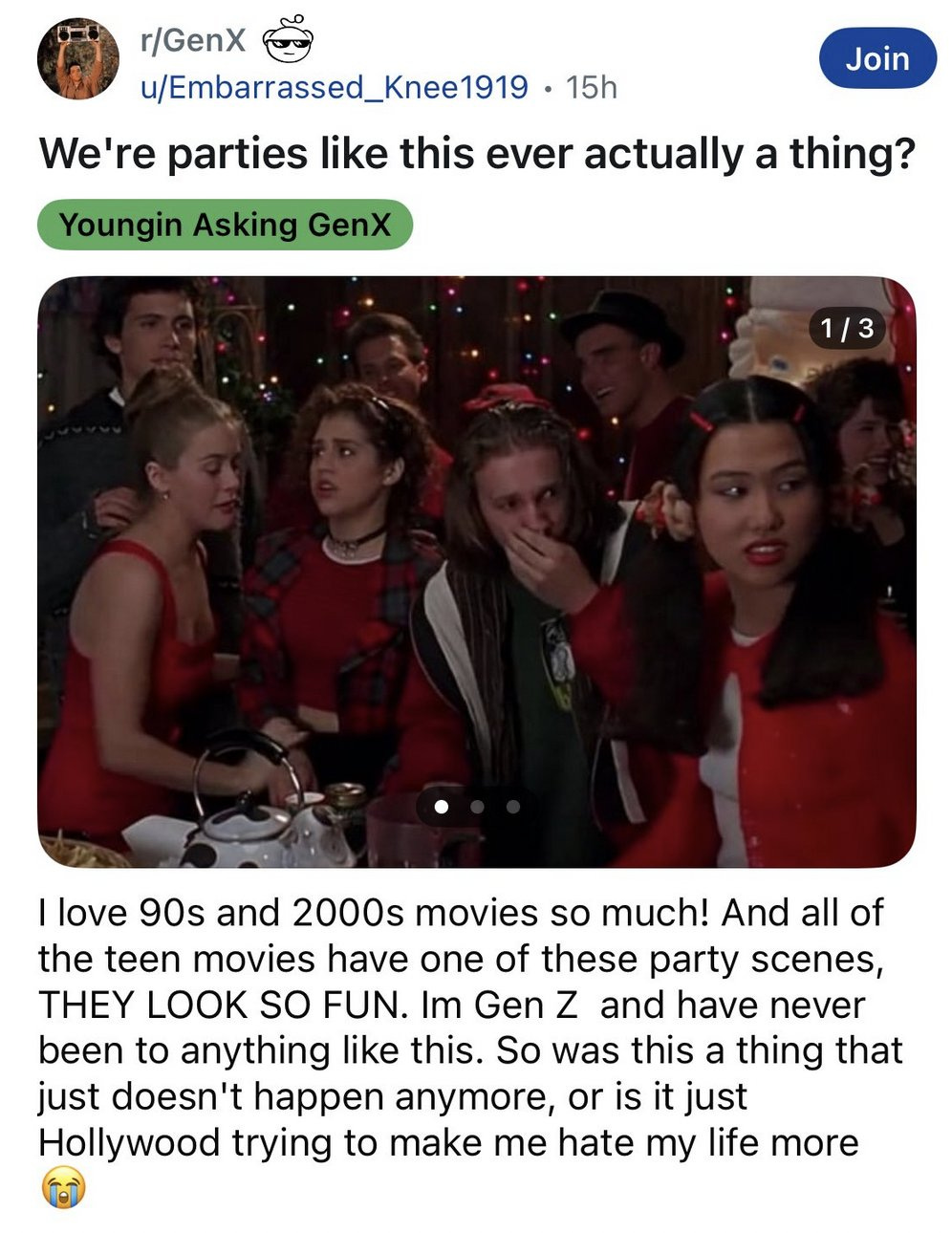
[Quotes Dark Hyacinth: Parties are boring. A bunch of people standing around drinking. What’s fun about that?]
The parties like this were taken from me at the time (in the 90s and early 00s) and I never experienced them, but I did understand they existed and I was sad about this.
Cate Hall comes out against the concept of willpower. I see this post as correctly attacking people who simply tell you to Use The Try Harder and think doing hard things through ‘sheer willpower’ is virtuous and those who don’t have it deserve to suffer or anything like that.
I strongly agree that the best way to get good results is to set things up to be easy, and that anyone who says any form of ‘you don’t need [X] you only need willpower’ is usually the asshole in a given situation. Engineering solutions are great.
I still think the post goes too far in treating willpower as a non-useful concept. Willpower is a highly useful handle for an important tool that one can and should cultivate and learn how to use wisely. You can also choose to call it something else, if you prefer.
Cate Hall asks ‘are you stuck in movie logic?’ in particular highlighting one form of Idiot Plot where the whole problem could be cleared up in five minutes if people would simply talk to each other and Say The Thing rather than repeatedly and conspicuously dancing around it and not Saying The Thing. As she says, there is a time and place for not Saying The Thing but on the margin you should say it.
Technically when you register for the LSAT you are representing and affirming that you are doing so for the sole purpose of seeking admission to law school, wait what?
Isaac King: I suppose I already knew this, but it’s striking how many of the people responding to this seem to legitimately not understand the difference between “did you lie” and “can anyone prove you lied”.
I’m against lying in general. If there’s no good way around it and I think the other party is expecting me to lie, then I’ll sometimes grudgingly do it, but I try to avoid it as much as feasible.
I too am strongly against lying but there are exceptions and this is one of them. Technical attestations with no legitimate purpose or ability to be enforced, and no person who is relying on them in any way to be accurate, don’t count.
What are protests actually for? Ben Landau-Taylor asserts that if you want your protest to exert any political pressure, this requires that you demonstrate the capacity for violence (ideally while carefully avoiding any actual violence). Otherwise, no the state won’t respect your demonstration of support, so the purpose of the protest is as a pep rally for the participants (and I would add a signal to others in other ways, which can then indirectly pressure the state in various ways), which can be worthwhile but should not be confused with political pressure.
I think this model goes too far but is essentially correct, with the caveat that you can also credibly threaten things other than violence, but you have to credibly threaten something.
Most of this Scott Sumner post is about underconfidence in monetary policy, where I find little to disagree with, but what I want to talk about here are ChatGPT’s examples of underconfidence:
I don’t keep up with the superhero genre, so I asked ChatGPT to find some examples of underconfidence:
After Peter Parker is bitten by a radioactive spider, he gains superhuman abilities—but at first, he doesn’t fully understand or control them.
Other characters with a similar arc include:
Clark Kent (Superman) in some origin stories (like Smallville), where he gradually learns to control his immense strength.
Eleven from Stranger Things, though not a traditional superhero, also fits the theme of discovering and misjudging her powers at first.
These are terrible examples.
Clark Kent does not have an underconfidence problem with his powers at any point that I can see. He has a lack of control problem, which is a very real issue. He does have regular person underconfidence problems as Clark Kent, but that’s different.
Peter Parker, in every example I have seen, is initially radically reckless and overconfident. He does things that risk getting him killed if he lacks Required Secondary Powers he has not yet verified.
Have appliances declined in durability? The answer is yes, but only modestly, this reflects consumer demand for more features and not caring much about durability, and also largely reflects government requirements for water and energy efficiency. Besides, prices have declined a lot, so it is fine.
Something to watch out for:
Danielle Fong: 💭if mansplaining is telling someone something they already know, chicksplaining is explaining a dilemma to someone, but she already knows what she wants to do
Yishan: I had this extremely agentic female friend in college and I figured out really quickly that whenever she asked me for advice on what to do, the best solution was to figure out what she already wanted to do, and then advise her to do that because mostly she just wanted validation/permission to do some slightly transgressive thing. Over time, it became “Yishan, you give the best advice! No one else understands, but you get it!” which I guess was technically true.
Dushyant: She won’t tell you what she prefers though
Danielle Fong: Yeah you have to figure it out.
Argentina grows at 7.6% YoY in Q2, exceeding expectations. Economists surveyed by Arentina’’s central bank in May expected 5.2% annual growth in 2025. Also note from March 31 that poverty has fallen sharply from 53% to 38%.
TSA stops requiring us to take off our shoes even if we didn’t pay for TSA Pre.
A fungus was discovered that can eat even hard to break down plastics, so you could plausibly throw it into a landfill and it would do the rest? It is rarely that simple and there are obvious things to check first, but yes we do get bailed out like this every so often. Also note that if you build superintelligence, things like this will tend to happen a lot more often in a variety of ways.
John Wentworth advises us to centrally seek wizard power, the ability and skills to do and create things yourself, rather than king power, which is dominance and bargaining power and directing others, mostly in ways that can only get you what money can buy and involves you marching in front of parades thinking you decide where the parade goes. This allowed him to reorient his own drives in this way.
He also highlights a comment from there noting that rationalist types can present depression very differently than others, in a comment I’m quoting in full:
John Wentworth: In response to the Wizard Power post, Garrett and David were like “Y’know, there’s this thing where rationalists get depression, but it doesn’t present like normal depression because they have the mental habits to e.g. notice that their emotions are not reality. It sounds like you have that.”
… and in hindsight I think they were totally correct.
Here I’m going to spell out what it felt/feels like from inside my head, my model of where it comes from, and some speculation about how this relates to more typical presentations of depression.
Core thing that’s going on: on a gut level, I systematically didn’t anticipate that things would be fun, or that things I did would work, etc. When my instinct-level plan-evaluator looked at my own plans, it expected poor results.
Some things which this is importantly different from:
… but importantly, the core thing is easy to confuse with all three of those. For instance, my intuitive plan-evaluator predicted that things which used to make me happy would not make me happy (like e.g. dancing), but if I actually did the things they still made me happy. (And of course I noticed that pattern and accounted for it, which is how “rationalist depression” ends up different from normal depression; the model here is that most people would not notice their own emotional-level predictor being systematically wrong.) Little felt promising or motivating, but I could still consciously evaluate that a plan was a good idea regardless of what it felt like, and then do it, overriding my broken intuitive-level plan-evaluator.
That immediately suggests a model of what causes this sort of problem.
The obvious way a brain would end up in such a state is if a bunch of very salient plans all fail around the same time, especially if one didn’t anticipate the failures and doesn’t understand why they happened. Then a natural update for the brain to make is “huh, looks like the things I do just systematically don’t work, don’t make me happy, etc; let’s update predictions on that going forward”. And indeed, around the time this depression kicked in, David and I had a couple of significant research projects which basically failed for reasons we still don’t understand, and I went through a breakup of a long relationship (and then dove into the dating market, which is itself an excellent source of things not working and not knowing why), and my multi-year investments in training new researchers failed to pay off for reasons I still don’t fully understand. All of these things were highly salient, and I didn’t have anything comparably-salient going on which went well.
So I guess some takeaways are:
-
If a bunch of salient plans fail around the same time for reasons you don’t understand, your instinctive plan-evaluator may end up with a global negative bias.
-
If you notice that, maybe try an antidepressant. Bupropion has been helpful for me so far, though it’s definitely not the right tool for everyone (especially bad if you’re a relatively anxious person; I am the opposite of anxious).
Scott Aaronson officially admits to being a rationalist.
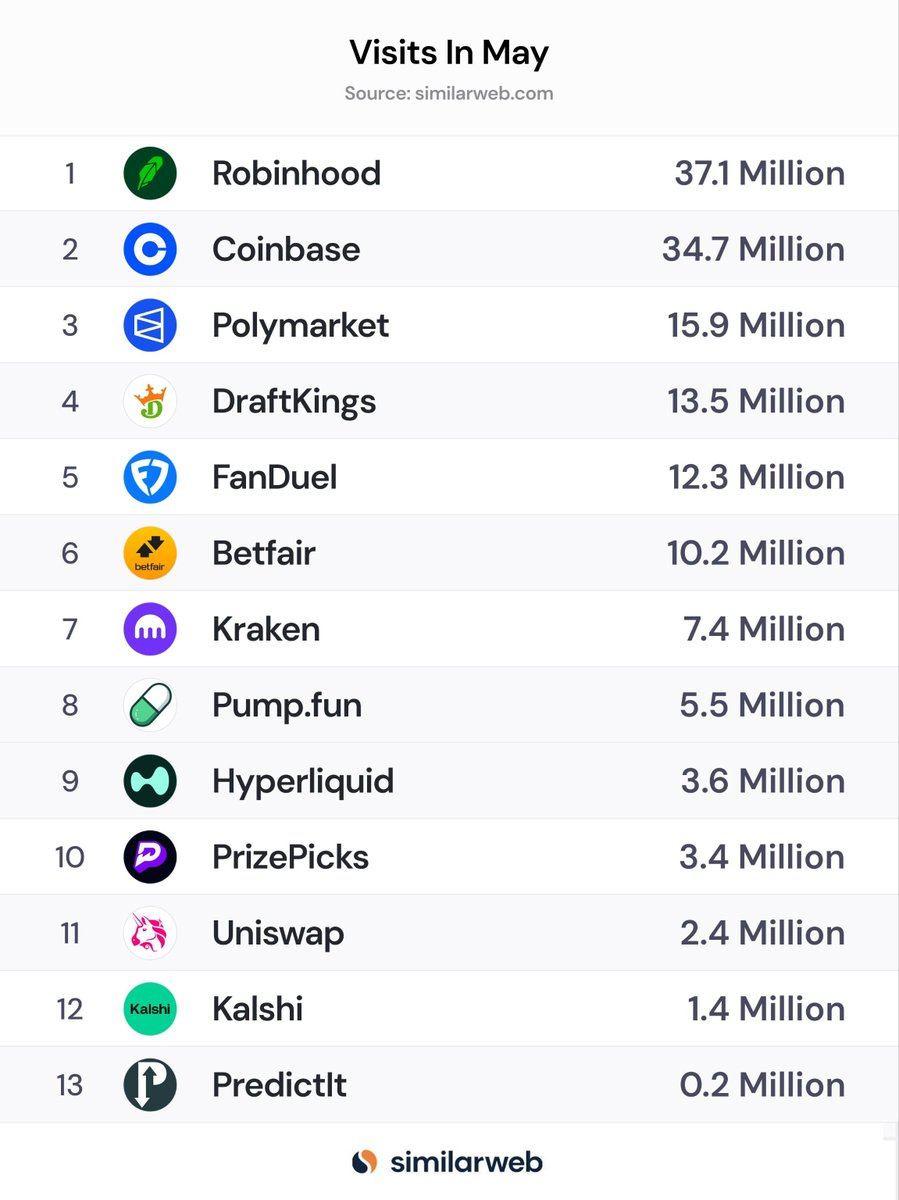
Polymarket is really hitting the big time, with more visits than FanDuel or DraftKings.
The true gambling kings do remain Robinhood and Coinbase.
Cracking down on alcohol in the USSR in the 1984-1990 period made big differences, and they mostly seem to be clear improvements. Note that divorce rates went up.
Derek Thompson looks back at how poor we were in 1776. We are, by comparison, unfathomably rich. George Washington spent $15k/year in today’s dollars on candles to keep the lights on. Heat was so expensive Jefferson couldn’t write in winter because his ink would freeze.
Religious attendance by the young is way up in the UK, as in by a factor of four or more, and France’s Catholic Church did more baptisms this year (17k) then they have in 20 years, in what some call The Quiet Revival. American bible sales are up 22%. I have seen similar statistics in a few places. What I have yet to see is an explanation of why this is happening, but also I have never seen a satisfying explanation of past cycles of religious revival.
OpenPhil is hiring, including for their new Abundance and Growth team (Generalist JD, Specialist JD).
I strongly endorse this, although I doubt we’ll get it. AI parsing for topics is a bonus.
Gallabytes: I want to be able to mute (person & topic) not just person OR topic. some people are broadly interesting but also have some pet issue they post a lot about upon which they are cursed with stupidity.
Indeed. I can think of a number of accounts where I highly value their opinions on [X], usually things like games or AI highly relevant to my interest, and very much do not value their comments on [Y], often political but sometimes simply something boring.
This is not a coincidence because nothing is ever a coincidence, also obviously, although the impact here is dramatically overstated of course:
Yung Marco: just spent ~3 hours reading
LessWrong/EA/MIRI deep lore
it is fascinating how in the 21st century 90% of variance in personal success can be explained by “did you find the right online communities or not.”
this will be increasingly so, post more…
“oh wow, you were an integral participant of the most important technological revolution of all time? you must have 7 sigma IQ and birthplace luck”
“nope, I just posted on the right forum”
One did not simply post to classic LessWrong. It was so intimidating that I at the time was worried to post there, which I shouldn’t have been, but if you weren’t ready the response was super harsh, you would be effectively shown the door. There was tons of filtering. Even if you weren’t shown the door, you wouldn’t get to be a true part of the community, although you could still have for example gotten an early line on Bitcoin.
There were also strong attractors. If you were the type of person who could be there, there was a substantial chance you ended up there. It’s true that there is a ‘invisible graveyard’ of other LessWrong people that would have been right at home and never found it, but I don’t think it is that much larger than the actual group. Same with MIRI.
Going forward, for future groups, I expect the effects will be similar, so long as it remains humans who are shaping our future. Let’s hope that lasts.
Similarweb says Threads now has slightly more monthly active users than Twitter? But it also says Twitter has about 35 times as much web traffic. I don’t buy this?
I wonder about this situation, and what is really going on.
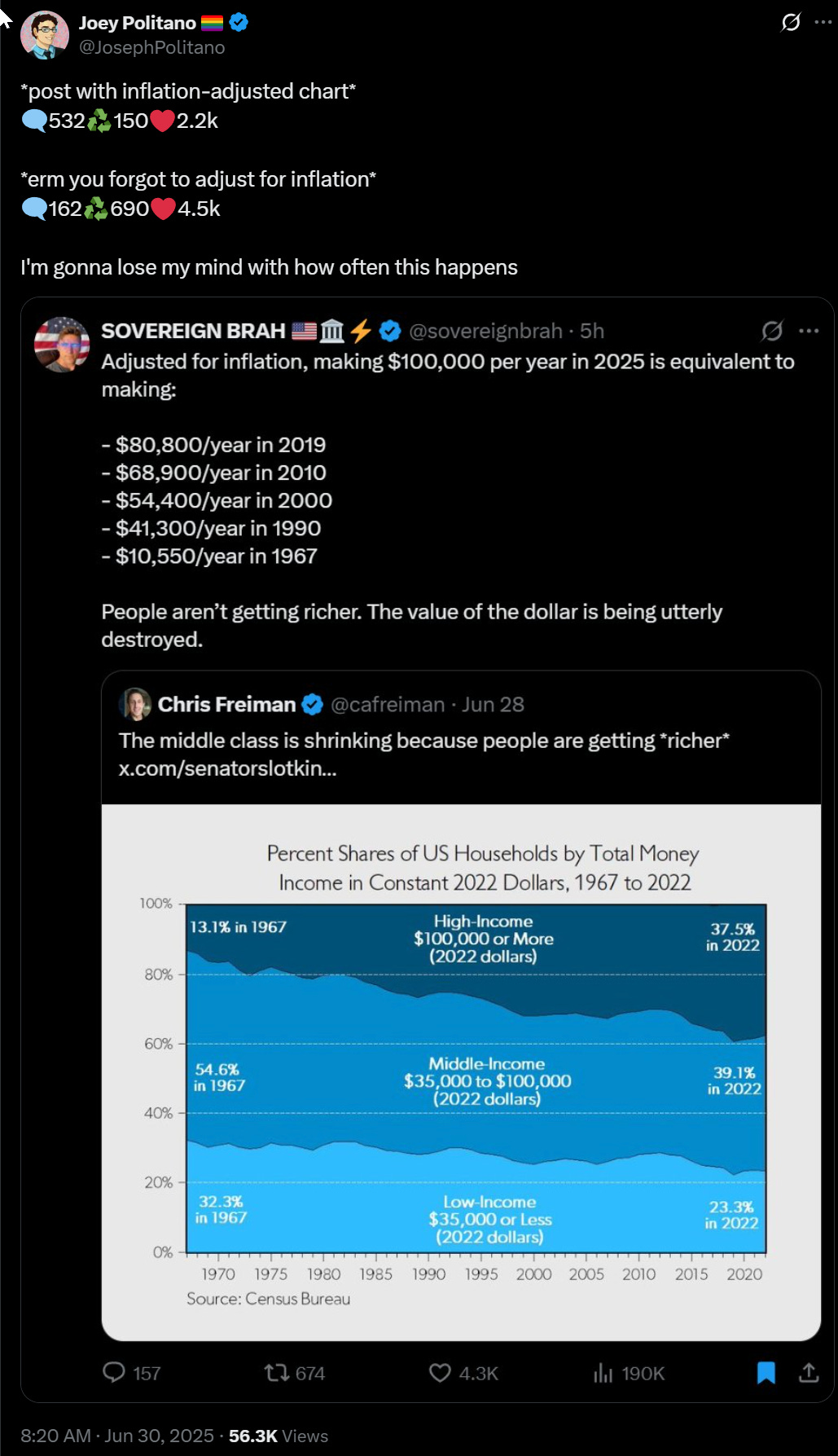
As in, a good portion of those who see Brah’s post are going to notice that Freiman’s post saying ‘constant 2022 dollars’ right there in large friendly letters. I do think the true situation is more complicated than the chart suggests, but yes people are getting richer by these measures.
Ryx Commar notes a problem, and correctly identifies it as a sorting problem, not an average quality issue:
Ryx: A phenomenon in internet discourse over the last 5 years is that the correlation between signals of textual quality (grammar, punctuation, social media likes, probability it shows up in my feed) and actual textual quality has completely broken down. And it’s driving me insane.
All the biggest idiots in the world now use grammar check and spell check on their phones. You also have LLMs spitting out garbage. The Twitter algorithm puts tons of slop in your feed now. You actually have to read and manually sort through so much more stupid content.
It’s not so much that people have gotten dumber, it’s that dumb people and dumb text now blend in more with smart people and smart text. So my brain actually engages with all this dumb text. This is one of the bigger reasons why the internet today feels more psychically damaging.
The solution is to rely instead on other markers. Stick almost entirely to curated following-or-listed-only feeds (did you know even YouTube, Facebook, Instagram and TikTok let you do this, if you dare go to all such places?), except where algorithms are very good.
Social media likes and views are still a very rich indicator, but you have to control for circumstances, starting with the account posting but also the subject and the way it is constructed. With enough skill you can still get benefit out of them but it’s tricky.
Apple made the stop button on the alarm small because if you don’t force people to wake up to find the button they oversleep 30% more, whereas an easy to find snooze button only buys you a few minutes.
In ‘it’s worse than you know’ news:
Shoshana Weissmann: “Yesterday the ABC reported the trial found face-scanning technologies “repeatedly misidentified” children as young as 15 as being in their 20s and 30s. These tools could only guess children’s ages “within an 18-month range in 85 percent of cases”. This means a 14-year-old child might gain access to a social media account, while a 17-year-old might be blocked.”
That is how badly it performs in a non-adversarial situation. This is how your age verification works when everyone is scanning their actual faces with no attempt to fool the system. If you’re facing kids who want to fool the system? I mean just give up, even if you mysteriously ruled out the ‘hey other kid can you do the verification for me’ strategy. Sonnet thought you could probably just literally use a fake mustache.
I do not understand this either: Why do all laptops, or at least all not-dirt-cheap ones, not have the same connectivity features as smartphones?
A Patrick McKenzie tale of how to allow kids to make phone calls on their Amazon Fire tablets, which for them required multiple non-intuitive steps.
I thought I had a lot of open tabs. I counted 139 including all my tab groups, of which probably half are actually necessary. I was incorrect, this does not appear to be ‘a lot of open tabs.’
Also, really, Safari?
Ryan Briggs: I asked my wife why she was in private browsing mode on her phone and she explained that Safari only allows 500 tabs in regular mode so she had to switch. You think you know a person.
William Eden: Oh my god I just asked my wife and she sent me a screenshot with 500 open tabs wtf
I have 13 tabs open on my phone and it’s too many. Less than 20 total across ALL of my devices.
Charles Neill: You need to create tab groups. You need to download more browsers. You need to be tab-maxxing.
I too have grown increasingly skeptical that meta-analysis in its typical form does anything all that useful.
Eliezer Yudkowsky: studies 1, 3, 5: objects fall down
studies 2, 4, 6: objects fall upward
sane people: at least half of these studies must be doing something terribly wrong; they’re not all reporting inside the same reality
journal papers: our meta-analysis shows that objects hover in place.
Tracing Woods here makes a similar argument for education meta-studies in particular, that the different studies have dramatically different setups and criteria, and you need to look at the studies individually if you want to learn anything. I buy it.
If you post a graph showing a small effect, but it is zoomed in, people get the wrong idea, so try not to do that when this would be a problem.
Firewood alone was supposedly 28% of GDP. Except wait, does that actually make any sense? A quarter of economic activity was firewood? We should believe that because a paper said so?
River Tam: Who would win, a PhD in natural resource economics doing detailed historical analysis of published firewood prices and consumption volumes over 300 years or one autodidact’s “I doubt it?”
Emmett Shear: You’d be surprised.
Actually, calling out absurd numbers as absurd is The Way.
Michael Vassar: The autodidact in this case, 100%. But @ben_r_hoffman has already addressed the most glaring flaws in this particular paper, the asymmetric treatment of non-market labor between numerator and denominator.
Eliezer Yudkowsky: Looks like it was just the very straightforward “firewood was informal economy, formal small by comparison, guy with an axe chops firewood for their house in more like 5-10% of annual labor”. This is the Way of having a sense of numbers and asking honest questions.
Tetraspace: Chopping firewood is 30% of GDP but the economy is 300% of GDP
Spending 10% of labor on firewood is still a lot. Firewood was a huge deal. But 10% is very different from 30%, and makes a lot more sense. If it was 30%, that would have it be approaching farming in terms of how much labor goes into it even directly for the farmers, and this simply does not intuitively make any sense.
In theory if any given necessity gets sufficiently difficult to obtain it can become an arbitrarily large cost. But that definitely was not the way to bet, and indeed we have an explanation for what was going on: They were valuing all firewood at market price (which is well above typical cost) and then comparing to GDP estimates that treat production very differently than that, and I think the problem goes at least one step deeper than Bernard identifies, they likely aren’t even including this type of measurement of firewood itself in the denominator, and also they are using urban firewood prices for what was mostly rural consumption.
Bernard Stanford: If you value all informal economy firewood production at market price, and then compare it to extant GDP estimates, you need to make sure ALL informal economic production is similarly valued, or you’ll massively overestimate firewood’s share of GDP. Seems to be what happened!
The approach seems to have a serious flaw in assuming that THIS sector of the informal economy was underestimated, but surely not any OTHER sector. Yudkowsky’s objection seems to be bang-on.
Halogen: Eliezer is just right here. The number is off by at least one half an order of magnitude, it has to be. This is how real science works, you put things together and think about things. It’s not about memorizing your favorite papers and having 100 econometrics tricks in your bag.
The question is then, why don’t we feel rich? The reason we don’t feel rich is that we are not permitted to live in between how we lived then and how we are supposed to live now.
And yet, we could do so much better. Which is all very good news.
Liz: people don’t internalize how desperately poor the world still is. Yes it’s gotten better, the world is unrecognizable compared to a generation or two ago. doesn’t change the fact that the world is deeply impoverished and operating at a tiny fraction of its potential.
The problem isn’t inequality it’s just raw productive capacity. It’s artificially constrained and even the most productive places on the planet are operating with hands behind their back.
Fully endorsed. I do not know of a single example of a too-large name on a badge.
Gwern: Conference/convention advice on nametags (this is aimed at ~5 different events):
The ideal nametag is a large double-sided placard on a lanyard, with a printed full name on both sides, in large font. No, larger than that. No—NO, THAT IS STILL NOT LARGE ENOUGH. KEEP GOING!
(No, that is still not large enough. But y’all aren’t ready for that conversation.)
If I can’t read it from across a large crowded room in <1s, then the nametag has failed.
Especially do not make it 1-sided! They always flip around and are unreadable for half the event.
(Also, do not add lots of art or logos or random text. No, attendees do not need to be reminded what event they are at. They can probably remember what they traveled halfway across the world for… Remember, the nametags are for them, not you or your designers.)
Oh no.
Netflix: Julia Garner and Anthony Boyle will portray Caroline Ellison and Sam Bankman-Fried in the new limited series The Altruists. Two hyper-smart young idealists try to remake the global financial system in the blink of an eye…only to seduce each other into stealing $8 billion.
enci: Can’t believe how much you fumbled this
We also would have accepted Jonah Hill, as per Atomic. This is not merely a technical historical accuracy thing, I think it’s actually important. Also, given this and the name The Altruists, and also the description I – I mean seriously, what, no, that’s not how any of this worked – I presume they have zero idea what they are doing.
How should we think about Warren Buffet’s $6 billion donation going entirely to other foundations, mostly to the Gates Foundation? This is definitely not first best, but he is getting quite old, so I don’t think asking him to manage the money himself is a reasonable ask, trying to force generic additional foundation into existence without his focused attention seems unlikely to work out, and at this scale there are few options available. Obviously I have some suggestions I think are much better places to put a good chunk of these funds, but I’m not mad at it.
NYT once again pulls the Kevin Bacon Game, as in ‘[X] is associated with [Y] which has a similar name to [A] which includes [Z] so obviously [X] is linked to [Y].’
Andy Masley: NYT piece today connecting Elon to longtermism and by extension EA. Nothing really new. I just don’t buy the basic implication that longtermism’s responsible for turning Elon crazy. If you’ve become unhinged, any big ideology is going to be a useful justification.
If Elon were actually being guided by longtermist ideas he would’ve tried to influence US AI and biosecurity and nuclear policy. He didn’t. He nuked USAID and some of the governments’ most effective and utilitarian programs for insane culture war reasons.
…
EA and longtermism are in the cultural water in tech spaces. You can use both to justify almost anything if you just engage with meme versions. If longtermism were more than an aesthetic fad for Elon I would’ve expected his behavior to be radically different.
Tetraspace: The problem with asking an actual EA what they think about Elon Musk would be that either they’d tone it down for the camera or it would be rude to elicit people saying that about a senior official.
Elon Musk is no longer a senior official. It would still be rather rude.
This is rapidly evolving into a generalized weapon against everything good.
As in:
-
Person [P] supports thing [X] that would be good in the long term.
-
Even worse, [P] is trying to figure out actions [Y] that accomplish [X]!
-
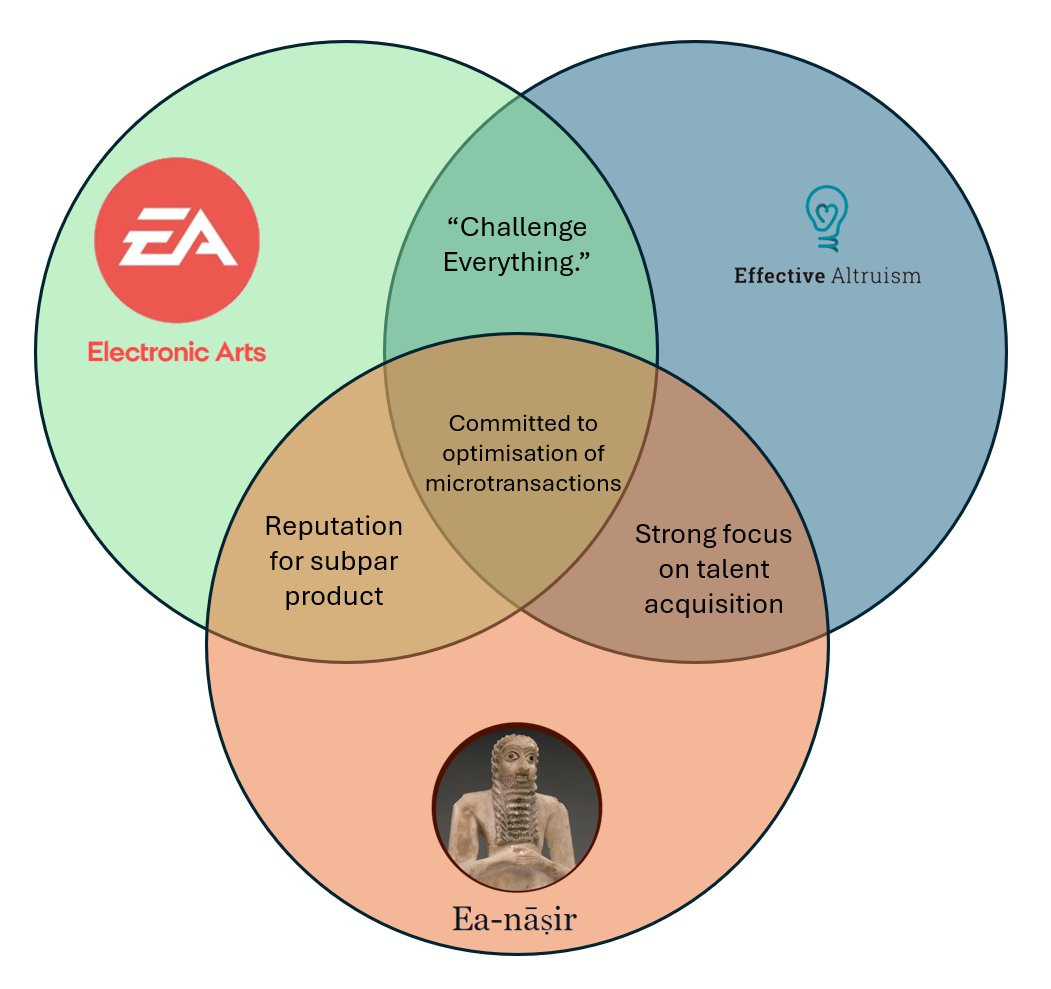
Effective Altruism!
-
Which means bad! Get it? It means bad! And so cringe.
We see this in its pure form with David Sacks, saying anyone opposed to anything he wants must be an EA in a mask, and that we have to ban states from passing laws about AI because all state laws about AI would of course be the result of a global conspiracy of evil EAs. But you can do the same thing about anything, anywhere.
As Henry Shevlin says, you have to know your EAs.
In a French experiment, they report that imposing a maximum donation increased likelihood and quantity of giving, at least as effectively as a suggested donation, but what they actually did was paid 10 Euros for completing a questionnaire and then offered people the chance to donate either 0-10, 0-10 (with a suggestion of 6) or 0-6 Euros. And yes, in this case 0-6 did better, but this obviously doesn’t either describe what they claim it does or generalize. It does suggest the important principle that you want to appear reasonable.
There are two distinct problems here: That on the margin there are huge rewards to learning to work the system, and that the intrinsic motivations have perhaps changed.
David Perell: Ten years ago, when YouTubers got together, they talked about editing and storytelling and how to make better videos. Now they talk about how to game the algorithm by increasing click-through rates.
Just about sums up social media right now.
This is not a critique of YouTubers. It’s the rational thing to do. To put numbers on this, all things being equal, when I publish a video with a 3% click-through rate, it’ll get ~3,000 views while a video with a 6% click-through rate will get north of ~100,000 views.
There was a time when you could simply make great content and people would watch (and in certain pockets, that’s still true) but just about every mega-YouTuber has devoted ungodly amounts of time and attention to title / thumbnail strategy.
Pratyush: Jimmy Iovine said that the number one reason music isn’t as good anymore is musicians want to be famous, not great. And nowadays, you can get famous without being great.
A lot of modern culture slop is downstream of this change in behavioral drive.
My money is on the problem being mostly about the reward systems rather than the motivation. Yes, some people primarily want to be famous and successful, but that has always been true. What changed is that if you pursue excellence, the excellence that gets rewarded and that you can measure is largely about working the system, whereas making the underlying products ‘better’ matters too but it is a slower process that on the margin doesn’t pay off for a long cycle. Success is so reliant on virality.
That’s one reason I am so grateful for Substack. It is one of the few places where virality is great when it happens, but it matters remarkably little for long term success.
The New York Times comes out with its best 100 movies of the 21st Century, as voted on by influential Hollywood people.
My main takeaway was, wow, there are a lot of movies and I have seen not many. My secondary takeaway was, well, this does explain a lot, I suppose.
My evaluation:
Have seen, excellent pick (definitely would have made my list): 14
Have seen, good pick (would be happy to have this on the list): 10
Have seen, questionable pick (I mean weird flex, not my pick): 8
Have seen, actively bad pick (no, seriously, no, don’t watch this): 2
Haven’t seen, probably good pick, but I because of reasons I never saw it: 11
Haven’t seen, can’t tell: 52
Haven’t seen, probably bad pick: 3
If we look only at the 34 that I’ve seen, that ratio isn’t that bad, but you have highly favorable selection working for you there.
Recent movie pickings have been slim. A lot of people liked Superman. I did not.
As a reverse experiment, I went through my Letterboxd diary list (as in, what have I watched since I started tracking, that was released in the 21st century.) The ones that 100% should be on the list are Anora, The Fall Guy and Looper. All three are missing, and I get that the other two are quirky opinions but I don’t think there’s any excuse for excluding Anora. The bubble for my list would be somewhere in the 4.5 range. Of my 4.5 star movies recorded, NONE of them made it either: Challengers, Poor Things, Megalopolis, Weird: The Weird Al Story, Deadpool and Wolverine, Predestination, You Hurt My Feelings and May/December. Some of that is that the list clearly has an anti-recency bias, there are literally zero movies from 2024 or 2025. Who knows.
I think a lot of the problem was that they only asked each person to vote for 10 movies rather than 100 movies. That introduces some odd distortions.
For better opinions, here are Scott Sumner’s latest movie reviews. There is also well-earned praise for Lighthaven and the events there. I have been seeing less movies lately in favor of watching more television shows, and because few movies this year have appealed to me. I do hope to turn that back around, especially now that (by the time you read this) Love Island USA is done for the year, but I also think going through phases of intense interests and jumping around is actually correct.
Here’s another example of ‘whatever you are doing, commit to the bit.’
Romy: Back in the winter i was depressed and speculated that if i got a hobby it would fix me, so i signed up for a ceramics class. I now spend 10-20 hours per week doing ceramics and am not depressed. It turns out you can actually just assign yourself a special interest.
Spent 2 hours designing and building most of this pentagonal planter today even tho i was hungry and had a headache
stef: hell yeah we’re always looking for complicated solutions and the answer is literally just use your hands to make/build/fix stuff
I don’t know how much this generalizes or how much it depends on it having been a physical skill like ceramics, but yeah. Get into something.
In one of the weirdest arguments I’ve seen in a long time, Tyler Cowen says people read less and perhaps have lower literacy skills but the ‘most likely culprit for our current problems’ is the decline of network television and people’s willingness to obey Walter Cronkite and be duller and more conformist. I suppose the point is that reading was already gone and mostly we’re substituting out of TV and there are some cultural downsides to that?
But that has nothing to do with the question about reading, and also that’s a different set of problems? Surely, if English Majors Can’t Read, that isn’t caused by their failure to watch a bunch of NBC. My read on the post covering the reading debate here is that it’s a mirage, reading hasn’t actually declined that much, we’re now constantly interacting via text, it’s more that attention spans for long texts have declined and this isn’t obviously wrong, and the reason students 100 years ago sound so much better is that they are a highly selected group.
To the extent there really is an issue, I say the problem was caused by… network television, which shifted a ton of consumption away from reading to video. After that, the recent changes didn’t make things worse (I think?) but substituted something else for the network television.
YouTube Shorts is now averaging over 200 billion daily views. There are only ~8 billion people on Earth, so that’s 25 per person. And then Reels and probably TikTok are both bigger than that. Yikes.
Kevin Roose: Need a phrase like “vanity metric” but for numbers you can’t disclose because they reveal your dominance and create existential malaise in all who hear them.
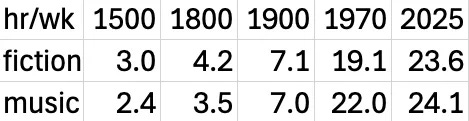
Robin Hanson points out our consumption of fiction and music is dramatically higher than it used to be, these are rough AI estimates, I note that o3-pro for me estimated 9-14 hours a week for all fiction rather than 24, although Opus was 15-20 hours:
Robin Hanson: Note the huge increase over time. As US adults now average ~21 hours a week at jobs, and ~14 at housework, adults now spend substantially more hours on both fiction and music than they do on either jobs or housework. So it seems fair to wonder: is this behavior adaptive?
The post doesn’t focus on music, and I would ignore it. There is no real sense in which we ‘spend’ three hours a day on music. o3-pro estimates 97% of our music consumption is passive, so active consumption may even have gone down. There’s no reason to presume this is or is not adaptive.
I consume far less because I find music reduces my productivity, but it brings me joy and I should probably consume more.
Fiction however is presumably being consumed as a primary activity. So this change, largely in response to vastly superior supply of both fiction and free time, is plausibly maladaptive. Certainly 24 sounds like a ton, although 14 seems a lot more sane to me.
One could decompose this change into leisure consumption over time, and the share of that consumption that is fiction or actively listening to music. It seems plausible that given the decision to consume so much leisure, it is not a mistake to consume this much fiction and music, or it is a much smaller mistake. So to the extent we worry about a cultural error here, the focus should be on our potentially maladaptive increase in total leisure.
A paper’s model of ‘inefficient bargaining’ puts a 2% lower bound on the chance a TV show is cancelled even if it would be efficient to continue, higher if there is asymmetric information. That’s the nature of any similar negotiation, if you’re not risking a 2% chance any given negotiation blows up you are not negotiating very hard.
I’ve talked about it before but I seriously can’t get over that the world works this way.
Tetraspace: China: [slams defect button] I win
America: I’d love to cooperate but the incentives, you see, my hand is forced…
Japan: The sign says to cooperate ?? why wouldn’t I cooperate ??
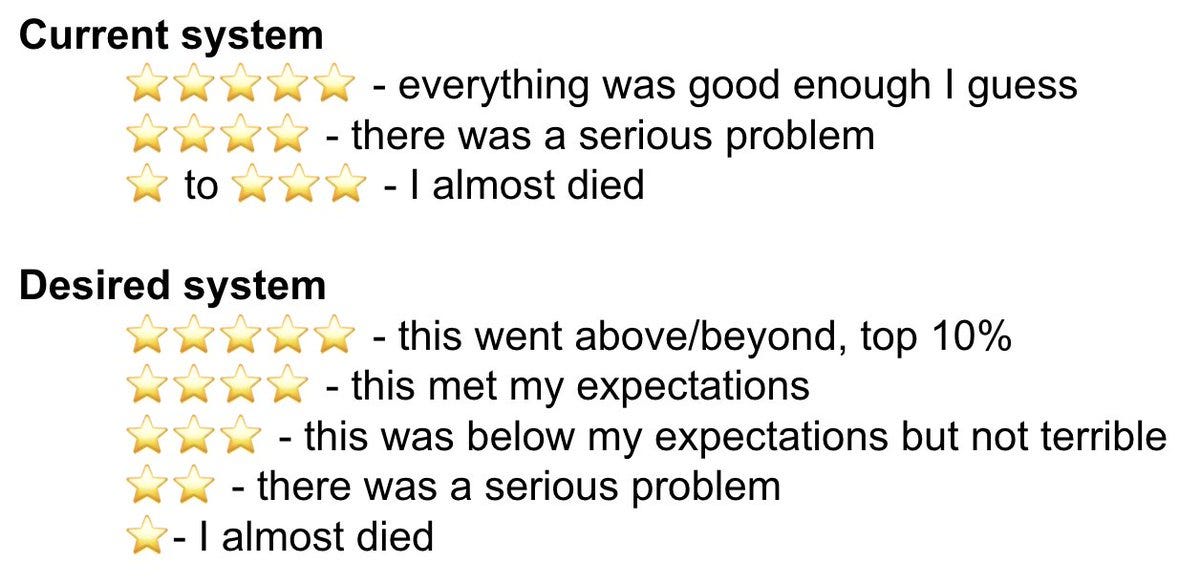
Peter Wildeford: The current way we do the 5 star system just sucks
Ryan Moulton: Game theory forces this. Using the ends of the range maximizes your power over the average.
Toucan: In japan they don’t have game theory, which is why 95% of restaurants get a 3.5 or below (correct)
If all you ever do is throw the number in the average, and all you care about is the average, then yes, rating something 3/5 is silly. But you don’t directly benefit that much from the average, so all you have to do is have the ratings also do something else, especially if they help you track things or help algorithms or AIs make predictions, or you get a reward for a reasonable distribution, or people are reading your reviews directly, and so on. Movie ratings do survive with a reasonable distribution for similar reasons, even in America.
The problem is that if you try to force calibration in various ways, that opens up other ways to cheat the system, so this would work if and only if people weren’t adjusting.
It was Monster Train 2 month. We’re back, baby.
I centrally describe Monster Train 2 as More Monster Train. Had fun the first time? Have fun again, with a bunch of cool new features, figure out the new clans, and climb. As before, the goal of Monster Train is to do Something Utterly Ludicrous, or more precisely something that wins the run, which means knowing exactly what does and does not win runs. There are particular battles that are run killers if you don’t realize the danger.
Ultimately I decided that I had fun for enough hours I was happy I bought and played the game, but that I’d had this experience before, I could keep going and achieve more things but my experience had peaked and I was done after 14 hours. Which is fine.
I am now on Clair Obscur Expedition 33. I agree with everyone else that, some frustrations with navigation aside it has been a great experience so far. I do have notes, especially that certain choices are not well balanced.
Recommendations for how to maximize your Clair Obscur Expedition 33 experience. The first is minimize spoilers. The others are out of your hands and are minor spoilers, so I’m not going to tell you, and you shouldn’t click the link until after you play.
If I am understanding this right, XBox is going to transition to a modular platform that will be fully compatible with PCs and basically be a way to play PC games on console and handheld formats? They lost to Sony so they’re going after Valve?
I agree with dCrusius that retro games both classic and new are pretty awesome, and it is not only nostalgia, and there’s a reason my kids like them so much. Restrictions breed creativity and I love being able to actually fully grok everything. There are still great modern games too, of course.
Reid Duke reports from PT: Final Fantasy. Sounds like old times. DI Goetschel also reports as well, the first part is highly particular but the second part involves universal principles that don’t require you know what the cards do.
There was a poker tournament where one player got a $1 million dollar extra payout if he won, which was much larger than all the other prizes. So the other finalist let him win. All Magic: The Gathering players and game theorists are unsurprised, but in poker this is a real problem, because poker depends on the ability of various players to do various insane prop bets and competitions and such that create weird incentives, and for the other players to not respond by coordinating to make the conditions happen, whether or not they then directly get (or negotiated for) a cut.
I do miss the original Railroad Tycoon.
David: 2000s tycoon games were deep strategy games that really forced you manage tradeoffs and balance budgets/spend/revenue 2020s tycoon games are almost all pay-to-win waiting/idle games.
Alan Cole: The fact that Railroad Tycoon 2, specifically, had a complete and coherent simulation of equity and debt finance for companies, M&A transactions, individuals who could short sell or purchase on margin, and similar, really makes me wonder about reverse Flynn effects.
Railroad Tycoon was great because it focused on actually interesting decisions, and simulated actually interesting things in ways that felt real and forced you to think and work with a variety of real concepts. Alas, yeah, these types of games seem to have gone very downhill, even though one could very easily make them great by making the retro version and then using modern tech to make it better. But no one does it.
A common risk and gaming pattern:
Noam Brown: AI researchers will literally negotiate $100 million comp packages by themselves but they won’t play poker for more than $50 buy-ins.
Meanwhile, I mentioned to a VC I lost 300 playing poker in Vegas and his response was “300 what?”
Steven Adler: How much did you lose in the high-roller Blood on the Clocktower game though.
The VC’s question seems highly valid, and there are at least two very distinct plausible answers, although one probably means he was flying a bit too high.
The thing about poker and gambling is that you only have to gamble enough to make you care. It can’t be $0, but if I can get excited by amounts of money that mean nothing to me, why not? The excitement is the point, I’m certainly not making my hourly. If I ever do get to play a major tournament, which is the only time I might plausibly play for stakes that actually matter to me at this point in real terms, it will be because of the competition and the title.
I do remember what it was like to be gambling actually important, life changing amounts of money on a daily basis. I never actually got to the point where I enjoyed that aspect, but I did it because that’s the only way to get the alpha.
By default, never tell a streamer any potentially new-to-them game information they aren’t explicitly asking for you to tell them, and wondering aloud does not count as asking. I am fully with Jorbs here.
DHS Is Considering Reality Show Where Immigrants Compete for Citizenship, from the producer and writer of Duck Dynasty. I would have tapped Mark Burnett, creator of Survivor and The Apprentice, because obviously.
To be clear, this is extremely funny, but also we should totally do this, because skill-based immigration rules as does wholesome family entertainment.
The challenges might need some work, though?
In a 36-page slide deck reviewed by the Journal, Worsoff’s team outlines a reality-style TV show where, in one-hour episodes, immigrants compete to prove they are the most American.
In one challenge set in San Francisco, for example, immigrants would compete in a gold rush competition where they are sent into a mine to retrieve the most gold.
In another episode, contestants would be divided into teams and placed on an auto assembly line in Detroit to reassemble the chassis of a model T.
An alternative pitch, of course, would be Green Card Marriage. Relationships on The Bachelor tend not to last, so let’s raise the stakes. If you don’t actually marry and make it two years we kick you back out of the country. Remember, you can’t be 4TWR when coming to America is always the right reason. So all bets are off.
Waymo expands, now so tantalizingly close to SFO.
Plus this area of course:
For now maybe a shuttle or quick taxi ride for the last mile into SFO?
Waymo’s speed disadvantage does add up on longer trips, like this comparison showing Waymo 50 minutes slower than an Uber if traversing the entire length of the covered area down to Burlingame, due the whole ‘always obey all the traffic laws and rules of the road and almost never have an accident’ thing.
A key question on self-driving cars is, are we going to use them to give children better freedom of movement, because now they can safely go anywhere without having to drive? Are we perhaps also going to let them walk around because the primary threat (other than police) was always cars and the self-driving cars are vastly safer for pedestrians? Or are we going to be totally crazy and not let them do any of it?
I also disagree that they will make traffic worse, because self-driving cars can coordinate traffic very well, even if humans would end up in a pointless jam that feeds on itself, and because the cars can coordinate their movements much better, also we could vastly improve parking issues. But yes, ultimately if we want to get optimal road use we need to charge to use the roads.
A cool thought experiment, 23 million autonomous vehicles could take care of all car rides, a 90%+ reduction in vehicles, by an o3 estimate. This seems right to me at least if you exclude isolated people’s vehicle needs.
For now, we’re a little short.
Joseph Carlson: Waymo plans to more than double it’s fleet from 1,500 to at least 3,000 by the end of next year [thanks to a new manufacturing facility in Arizona].
That’s one of those statistics that is both impressive and disappointing at the same time. It is great to double the size of the fleet, but why only double? Why not 10x, or 100x? I want my self-driving cars.
A bill was introduced in Washington, DC to allow fully self-driving cars. For the last few months Waymo has been forced to have dummy human drivers behind the wheel, with rides for customers in Washington DC, which will be their seventh city, only slated for 2026.
There is a new culturally important sport in town, which is Love Island USA. Make no mistake, this is a sport, and a rather excellent one. Season 7 was reportedly several times the size of the former peak of Season 6 by audience and size of online discussion, so chances are Season 8 is going to be huge next year. The best part is that there is still so much room for improvement in the format.
NIL Go is the new attempt to get a handle on payments to athletes in college sports, requiring all substantial payments to go through them so they can check the deal and approve it, with arbitration if you object. It seems likely this will fail and we’re simply going to face a full market for student athlete services, with extra steps, but at least they are trying once more.
An SMBC is very much not how any of this works, which was the joke, but the problem is that SMBC is too often actually describing how things do work, such that Eliezer felt compelled to point out all the ways this one was wrong, which only made the whole thing funnier.
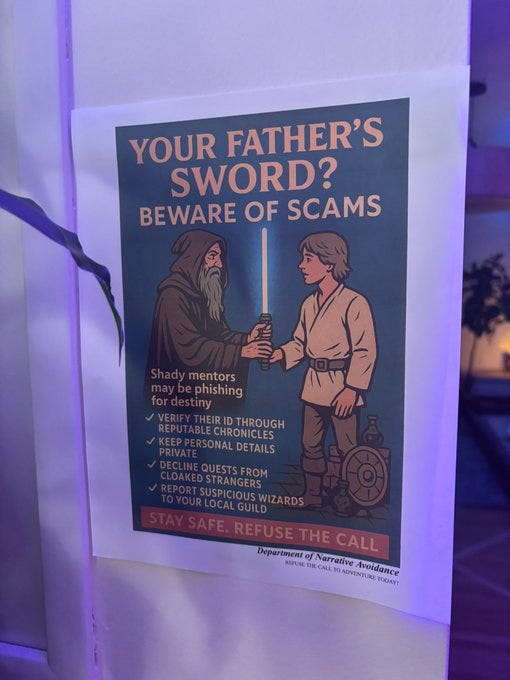
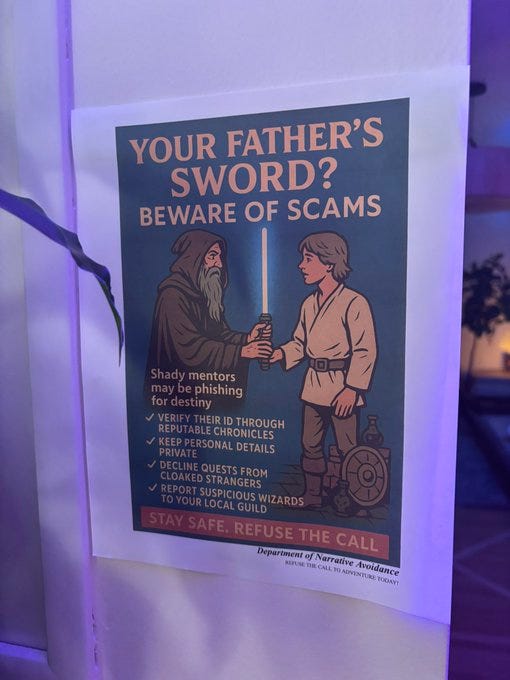
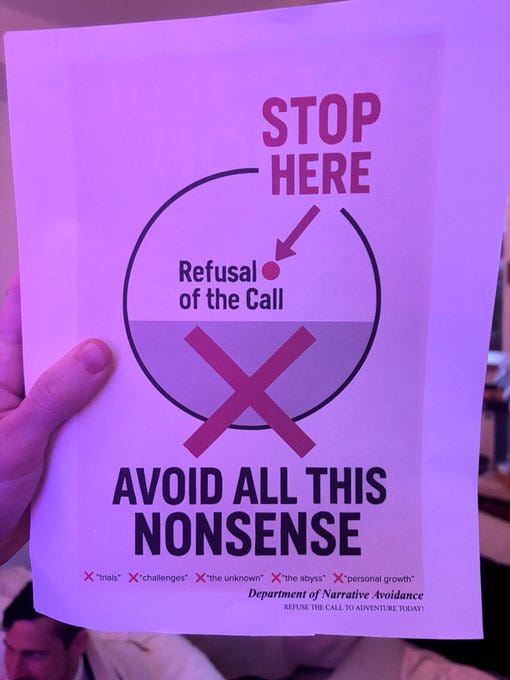
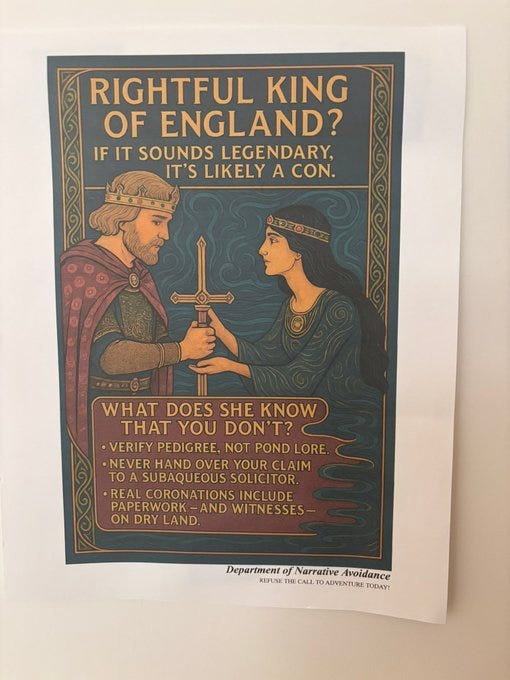
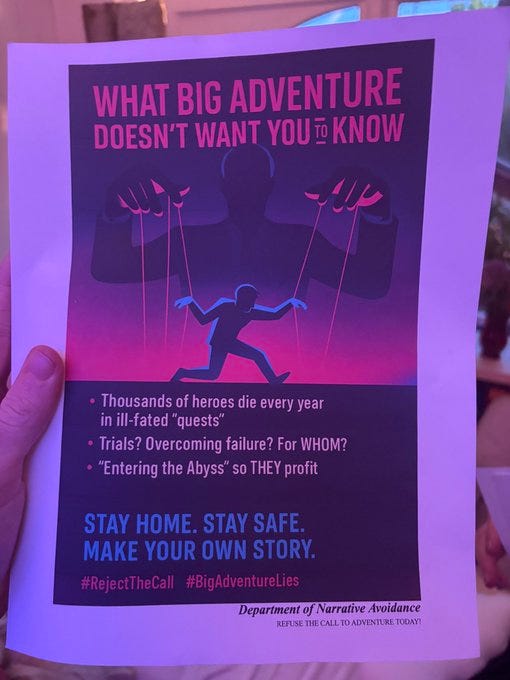
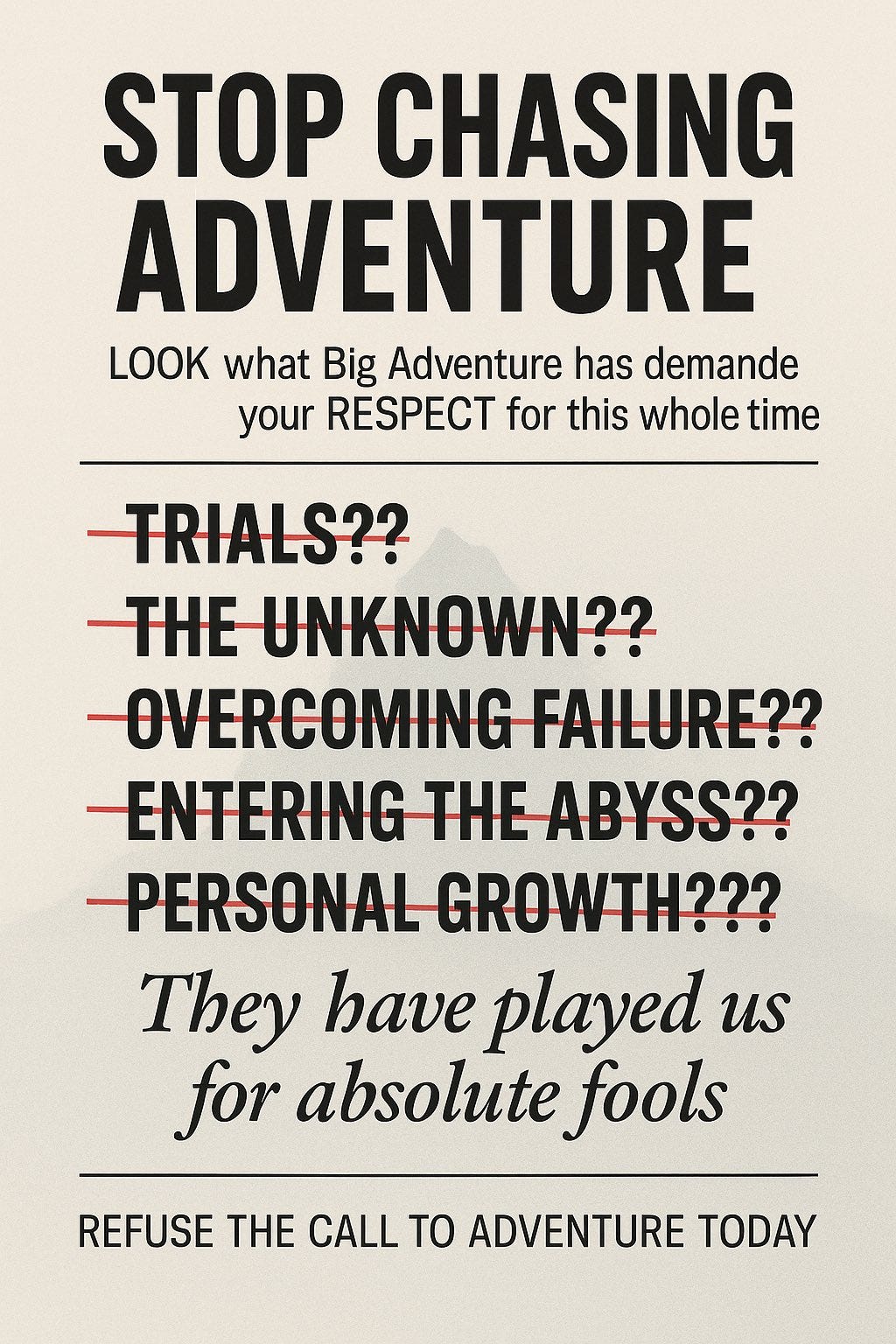
Refuse the call to adventure today!
Lydia Laurenson: Vibegala theme this year was “the hero’s journey” and I particularly loved the satirical guerrilla posters that Chelsea Sierra Voss made to discourage attendees from heeding the call of adventure 😹
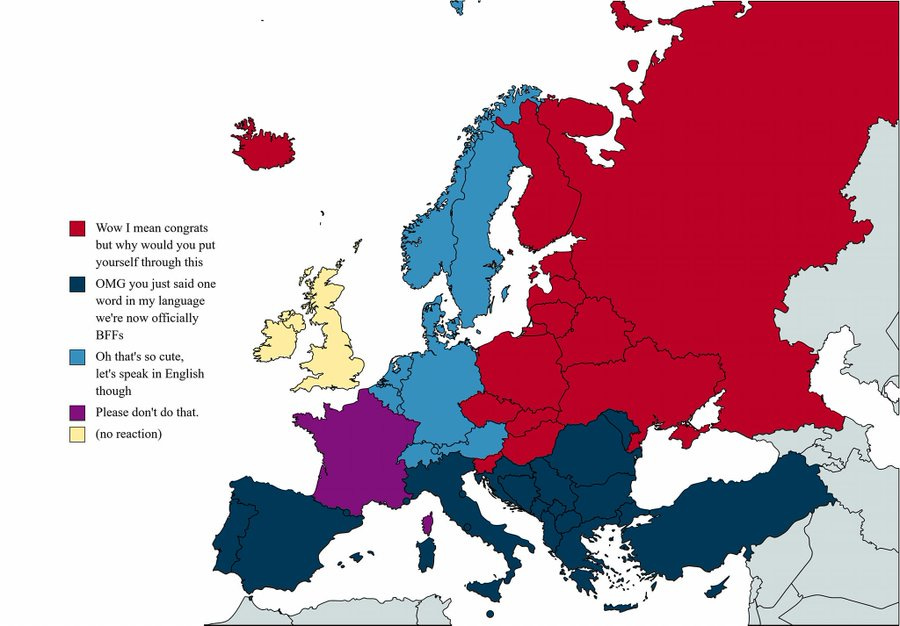
Maybe learn a foreign language instead?
Terrible Maps: How people react when you try to speak their language
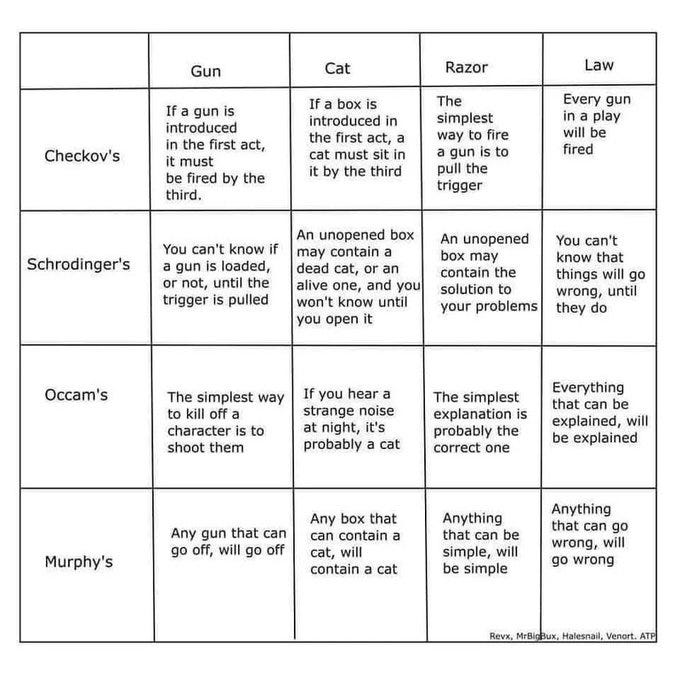
Or, if you must do more, here’s a handy guide.
Sarah-Jayne Blakemore: I was explaining to my Ukrainian colleague the phrase ‘There’s no such thing as a free lunch’. She told me the equivalent in Ukrainian is ‘The only free cheese is in the mousetrap’ – which is so much better