Author name: Paul Patrick

x-ray-spacecraft-launching-saturday-aims-to-unravel-the-universe’s-evolution

X-ray spacecraft launching Saturday aims to unravel the universe’s evolution

A new satellite designed to analyse X-ray light in space is set to launch on August 26.

The X-Ray Imaging and Spectroscopy Mission (XRISM — pronounced “crism”) brings together Nasa, the European Space Agency (ESA), and the Japan Aerospace Exploration Agency (JAXA). Together, they aim to resolve mysteries about the formation of the universe and the structure of spacetime. 

The X-rays released in the cosmos’ most energetic explosions and hottest places can reveal some of these secrets. One particularly powerful example involves galaxy clusters — the universe’s biggest building blocks. These groups of galaxies are enveloped by a super-hot gas. XRISM will detect X-ray light from this gas, which will be used to measure the mass of these clusters. The results will provide new evidence about the universe’s evolution. 

As the gas is a remnant of the birth and death of stars, the X-rays will also shine new light on the history of the universe’s chemical elements.

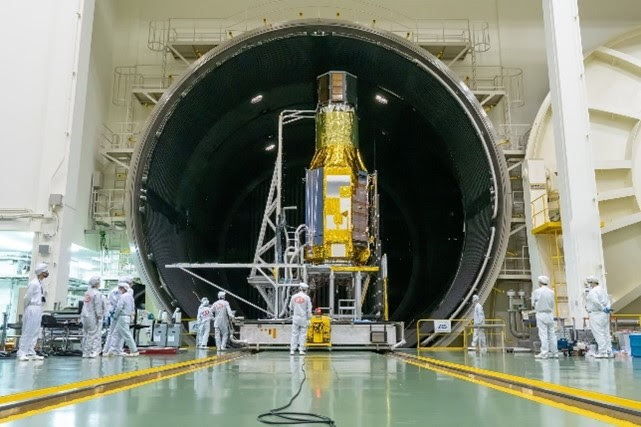
XRISM spacecraft in thermal vacuum test room
The XRISM spacecraft was tested in a thermal vacuum room. Credit: ESA

Another key task for XRISM is measuring X-ray light from incredibly dense objects, such as supermassive black holes at the centres of some galaxies. These results will provide clues about how objects warp the surrounding spacetime and influence their host galaxies.

The <3 of EU tech

The latest rumblings from the EU tech scene, a story from our wise ol’ founder Boris, and some questionable AI art. It’s free, every week, in your inbox. Sign up now!

“X-ray astronomy enables us to study the most energetic phenomena in the Universe,” Matteo Guainazzi, ESA project scientist for XRISM, said in a statement.

“It holds the key to answering important questions in modern astrophysics: how the largest structures in the Universe evolve, how the matter we are ultimately composed of was distributed through the cosmos, and how galaxies are shaped by massive black holes at their centres.”

JAXA is leading the mission, while ESA is providing hardware and scientific advice. In return, the European agency will be allocated 8% of XRISM’s available observing time.

Among ESA’s contributions are an optical telescope that will ensure  XRISM always knows where it is pointing, and two devices that will sense Earth’s magnetic field and move the spacecraft accordingly. 

ESA has also worked on XRISM’s Resolve instrument, which will measure the temperature and dynamics of X-ray emitting objects, The results will enhance assessments of temperatures and motions of hot X-ray emitting gas.

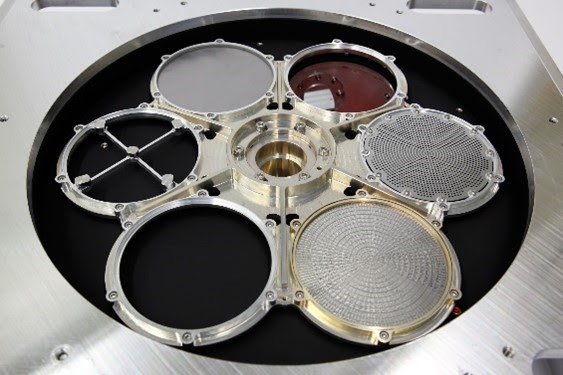
The Resolve filter wheel
The Resolve filter wheel was provided by SRON in the Netherlands. Credit: ESA

The second main XRISM instrument is Xtend, which enables the satellite to observe an area around 60% larger than the average size of the full Moon.

After testing on Earth, the contraptions will soon be off to work in space. XRISM is scheduled to launch on a H-IIA rocket from the Tanegashima Space Center in Japan at 02: 34 CEST on Saturday. You can watch the take-off live in English on JAXA’s YouTube channel.

X-ray spacecraft launching Saturday aims to unravel the universe’s evolution Read More »

vr’s-perennial-mech-sim-‘vox-machinae’-gets-more-immersive-battlefields-in-new-update

VR’s Perennial Mech Sim ‘Vox Machinae’ Gets More Immersive Battlefields in New Update

Vox Machinae, the cult-favorite VR mech sim that just keeps-on kickin’, has released a new update that will give players brand new conditions for battling with their hulking metal mechs.

Vox Machinae began its development journey as far back as 2014, and eventually found its way to an early access launch on PC VR in 2018. Nine years later, the team is still honing the game to be the best it can be.

Following last year’s largest-ever update for the game—which saw the simultaneous launch of a Quest 2 version and full campaign—the new and fittingly-named ‘Hostile Conditions’ update is focused on making the game’s battlefields more dynamic and immersive. The update has three big additions: weather conditions, time of day, and selectable map boundaries.

For weather, the studio has added an impressive seven different conditions to choose from:

  • Clear – Similar visibility to all levels prior to this update. The player can see quite far into the distance
  • Haze – This condition will make it trickier to tell friend from foe at a mid/far distance
  • Overcast – Medium density clouds cover higher altitudes, making navigation and identify high fliers trickier
  • Clouds – Narrow high density clouds occupy mid altitude. You see clearly when flying above or below.
  • Mist – A high density fog covers low altitudes, making low areas ideal to hide in and escape battle.
  • Smog – The whole level is enveloped in an even, medium density coat of smog.
  • Storm – The whole level is enveloped in a high density storm, only lower terrain is visible

The conditions are designed to do more than just add atmosphere; players will need to work harder to differentiate between friendly and enemy bots, making friendly fire more of a risk. Further, the position and density of the clouds can change the strategic landscape for mechs that use jump-jets for repositioning.

Working in conjunction with the new weather options is a time-of-day system that covers sunrise, day, dusk, and night, each which offer “unique colour palettes and visibility features, as well as background art and animated sunlight that changes as you cross between variable visibility,” the developers say. This also brings with it new headlights on mechs which illuminate the environment around the player. And yes, you can do both ‘Storm’ and ‘Night’, for truly low-visibility conditions.

Image courtesy Space Bullet

The final major addition in the update is selectable map boundaries. Now players can choose where they’d like to throw down among several regions on each map, and decide how large the battlefield should be.

Along with weather and time-of-day, this breathes new life into the game’s existing battlefields by changing the dynamics of the fight while making things more atmospheric.

VR’s Perennial Mech Sim ‘Vox Machinae’ Gets More Immersive Battlefields in New Update Read More »

the-20-best-rated-&-most-popular-quest-games-&-apps-–-august-2023

The 20 Best Rated & Most Popular Quest Games & Apps – August 2023

While Oculus doesn’t offer much publicly in the way of understanding how well individual games & apps are performing across its Quest 2 storefront, it’s possible to glean some insight by looking at apps relative to each other. Here’s a snapshot of the 20 best rated Oculus Quest games and apps as of August 2023.

Some quick qualifications before we get to the data:

  • Paid and free apps are separated
  • Only apps with more than 100 reviews are represented
  • App Lab apps are not represented (see our latest Quest App Lab report)
  • Rounded ratings may appear to show ‘ties’ in ratings for some applications, but the ranked order remains correct

Best Rated Oculus Quest 2 Games & Apps – Paid

The rating of each application is an aggregate of user reviews and a useful way to understand the general reception of each title by customers.

Rank Name Rating (# of ratings) Rank Change
#1 We Are One 4.92 (104) 0,”↑ “&abs(R[0]C[-7]),R[0]C[-7]<1,"↓ "&abs(R[0]C[-7])))" data-sheets-value="{"1":2,"2":"New"}">New
#2 The Room VR: A Dark Matter 4.89 (12,695) 0,”↑ “&abs(R[0]C[-7]),R[0]C[-7]<1,"↓ "&abs(R[0]C[-7])))" data-sheets-value="{"1":2,"2":"↓ 1"}">↓ 1
#3 Moss: Book II 4.88 (640) 0,”↑ “&abs(R[0]C[-7]),R[0]C[-7]<1,"↓ "&abs(R[0]C[-7])))" data-sheets-value="{"1":2,"2":"↓ 1"}">↓ 1
#4 Puzzling Places 4.86 (1,856) 0,”↑ “&abs(R[0]C[-7]),R[0]C[-7]<1,"↓ "&abs(R[0]C[-7])))" data-sheets-value="{"1":2,"2":"↓ 1"}">↓ 1
#5 Walkabout Mini Golf 4.85 (10,558) 0,”↑ “&abs(R[0]C[-7]),R[0]C[-7]<1,"↓ "&abs(R[0]C[-7])))" data-sheets-value="{"1":2,"2":"↓ 1"}">↓ 1
#6 I Expect You To Die 2 4.85 (2,895) 0,”↑ “&abs(R[0]C[-7]),R[0]C[-7]<1,"↓ "&abs(R[0]C[-7])))" data-sheets-value="{"1":2,"2":"↓ 1"}">↓ 1
#7 Swarm 4.81 (2,413) 0,”↑ “&abs(R[0]C[-7]),R[0]C[-7]<1,"↓ "&abs(R[0]C[-7])))" data-sheets-value="{"1":2,"2":"↑ 1"}">↑ 1
#8 Vermillion – VR Painting 4.81 (697) 0,”↑ “&abs(R[0]C[-7]),R[0]C[-7]<1,"↓ "&abs(R[0]C[-7])))" data-sheets-value="{"1":2,"2":"↓ 2"}">↓ 2
#9 I Expect You To Die 4.81 (5,410) 0,”↑ “&abs(R[0]C[-7]),R[0]C[-7]<1,"↓ "&abs(R[0]C[-7])))" data-sheets-value="{"1":2,"2":"≡"}">≡
#10 COMPOUND 4.8 (518) 0,”↑ “&abs(R[0]C[-7]),R[0]C[-7]<1,"↓ "&abs(R[0]C[-7])))" data-sheets-value="{"1":2,"2":"↑ 1"}">↑ 1
#11 ARK and ADE 4.8 (147) 0,”↑ “&abs(R[0]C[-7]),R[0]C[-7]<1,"↓ "&abs(R[0]C[-7])))" data-sheets-value="{"1":2,"2":"↓ 1"}">↓ 1
#12 Moss 4.8 (6,607) 0,”↑ “&abs(R[0]C[-7]),R[0]C[-7]<1,"↓ "&abs(R[0]C[-7])))" data-sheets-value="{"1":2,"2":"≡"}">≡
#13 GOLF+ 4.8 (22,152) 0,”↑ “&abs(R[0]C[-7]),R[0]C[-7]<1,"↓ "&abs(R[0]C[-7])))" data-sheets-value="{"1":2,"2":"↑ 1"}">↑ 1
#14 Cubism 4.8 (808) 0,”↑ “&abs(R[0]C[-7]),R[0]C[-7]<1,"↓ "&abs(R[0]C[-7])))" data-sheets-value="{"1":2,"2":"↑ 1"}">↑ 1
#15 Red Matter 2 4.8 (1,251) 0,”↑ “&abs(R[0]C[-7]),R[0]C[-7]<1,"↓ "&abs(R[0]C[-7])))" data-sheets-value="{"1":2,"2":"↓ 2"}">↓ 2
#16 Ragnarock 4.79 (1,315) 0,”↑ “&abs(R[0]C[-7]),R[0]C[-7]<1,"↓ "&abs(R[0]C[-7])))" data-sheets-value="{"1":2,"2":"↑ 1"}">↑ 1
#17 Ancient Dungeon 4.79 (1,005) 0,”↑ “&abs(R[0]C[-7]),R[0]C[-7]<1,"↓ "&abs(R[0]C[-7])))" data-sheets-value="{"1":2,"2":"↓ 1"}">↓ 1
#18 Pistol Whip 4.78 (9,674) 0,”↑ “&abs(R[0]C[-7]),R[0]C[-7]<1,"↓ "&abs(R[0]C[-7])))" data-sheets-value="{"1":2,"2":"≡"}">≡
#19 YUKI 4.78 (215) 0,”↑ “&abs(R[0]C[-7]),R[0]C[-7]<1,"↓ "&abs(R[0]C[-7])))" data-sheets-value="{"1":2,"2":"≡"}">≡
#20 Into the Radius 4.78 (4,707) 0,”↑ “&abs(R[0]C[-7]),R[0]C[-7]<1,"↓ "&abs(R[0]C[-7])))" data-sheets-value="{"1":2,"2":"≡"}">≡

Rank change & stats compared to July 2023

Dropouts:

Budget Cuts Ultimate

  • Among the 20 best rated Quest apps
    • Average rating (mean): 4.8 out of 5 (±0)
    • Average price (mean): $22 (−$1)
    • Most common price (mode): $20 (−$10)
  • Among all paid Quest apps
    • Average rating (mean): 4.2 out of 5 (±0)
    • Average price (mean): $20 (±$0)
    • Most common price (mode): $20 (±$0)

Continue on Page 2: Most Popular Paid Oculus Quest Apps »

The 20 Best Rated & Most Popular Quest Games & Apps – August 2023 Read More »

ai-could-fall-short-on-climate-change-due-to-biased-datasets,-study-finds

AI could fall short on climate change due to biased datasets, study finds

Among the many benefits of artificial intelligence touted by its proponents is the technology’s potential ability to help solve climate change. If this is indeed the case, the recent step changes in AI couldn’t have come any sooner. This summer, evidence has continued to mount that Earth is already transitioning from warming to boiling. 

However, as intense as the hype has been around AI over the past months, there is also a lengthy list of concerns accompanying it. Its prospective use in spreading disinformation for one, along with potential discrimination, privacy, and security issues.

Furthermore, researchers at the University of Cambridge, UK, have found that bias in the datasets used to train AI models could limit their application as a just tool in the fight against global warming and its impact on planetary and human health. 

As is often the case when it comes to global bias, it is a matter of Global North vs. South. With most data gathered by researchers and businesses with privileged access to technology, the effects of climate change will, invariably, be seen from a limited perspective. As such, biased AI has the potential to misrepresent climate information. Meaning, the most vulnerable will suffer the most dire consequences. 

Call for globally inclusive datasets

The <3 of EU tech

The latest rumblings from the EU tech scene, a story from our wise ol’ founder Boris, and some questionable AI art. It’s free, every week, in your inbox. Sign up now!

In a paper titled “Harnessing human and machine intelligence for planetary-level climate action” published in the prestigious journal Nature, the authors admit that “using AI to account for the continually changing factors of climate change allows us to generate better-informed predictions about environmental changes, allowing us to deploy mitigation strategies earlier.” 

This, they say, remains one of the most promising applications of AI in climate action planning. However, only if datasets used to train the systems are globally inclusive. 

“When the information on climate change is over-represented by the work of well-educated individuals at high-ranking institutions within the Global North, AI will only see climate change and climate solutions through their eyes,” said primary author and Cambridge Zero Fellow Dr Ramit Debnath. 

In contrast, those who have less access to technology and reporting mechanisms will be underrepresented in the digital sources AI developers rely upon. 

“No data is clean or without prejudice, and this is particularly problematic for AI which relies entirely on digital information,” the paper’s co-author Professor Emily Shuckburgh said. “Only with an active awareness of this data injustice can we begin to tackle it, and consequently, to build better and more trustworthy AI-led climate solutions.”

The authors advocate for human-in-the-loop AI designs that can contribute to a planetary epistemic web supporting climate action, directly enable mitigation and adaptation interventions, and reduce the data injustices associated with AI pretraining datasets. 

The need of the hour, the study concludes, is to be sensitive to digital inequalities and injustices within the machine intelligence community, especially when AI is used as an instrument for addressing planetary health challenges like climate change.

If we fail to address these issues, the authors argue, there could be catastrophic outcomes impacting societal collapse and planetary stability, including not fulfilling any climate mitigation pathways.

AI could fall short on climate change due to biased datasets, study finds Read More »

this-watermarking-tool-detects-piracy,-ip-theft,-and-deepfakes-from-a-single-photo

This watermarking tool detects piracy, IP theft, and deepfakes from a single photo

A new watermarking tool detects pirated content from a single smartphone photo or screenshot.

The system was developed by castLabs, a video software provider based in Berlin. The company says the tech can protect videos, images, documents, and designs from piracy and intellectual property theft. It can also spot media that’s been manipulated for disinformation.

To safeguard the content, an algorithm first embeds a hidden watermark within a digital asset. Detailed user data, including IDs, IP addresses, and session information, can be stored in the watermark. 

When a user takes a picture of the content, a cloud-based extractor scans the image to identify the watermarked data. CastLabs told TNW that the results arrive in seconds — even if there’s image distortion or obstruction. The system can also withstand multiple distortions and attacks, including camcording, screenshots, and screencasting.

Once the watermark is retrieved, content owners can identify unauthorized users and sources of leaks in the supply chain. They can then pursue immediate remedial actions — such as stream takedowns — or use the data as evidence in legal actions. 

“We’re empowering them to safeguard their intellectual property, protect their monetisation models, and enforce their rights in the digital landscape,” said Michael Stattman, co-founder of castLab.

That landscape is constantly evolving. The combination of a cost of living crisis, a proliferation of streaming services, and crackdowns on password sharing have sparked a surge in online piracy.

Consumers are also increasingly supportive of the practice.  A recent survey found that 23% of US internet households view piracy as acceptable — up from 14% in 2019.

Content owners, however, are getting hit hard in the pocket. According to the Global Innovation Policy Center, overall content piracy costs as much as $71bn (€65.3bn) annually in lost revenues.

Those losses have created a big opening for castLabs, which says its tech is unique in the market. While competing solutions typically require tens of seconds of footage to extract concealed data, the castLabs system only needs a single video frame.

The company’s ambitions extend beyond the entertainment industry. CastLabs also envisions media outlets using the watermarks to detect deepfakes and fake news, while governments can apply them to secret information.

This watermarking tool detects piracy, IP theft, and deepfakes from a single photo Read More »

waterless-hydro-tech-can-turn-hills-into-giant-batteries

Waterless hydro tech can turn hills into giant batteries

Thousands of hills across Britain could be transformed into renewable energy batteries thanks to a new ‘high-density’ hydropower system buried underground.

Developed by UK startup RheEnergise, the system puts a modern spin on pumped storage hydro, a centuries-old technology which accounts for 95% of today’s energy storage capacity. Pumped storage hydro uses surplus electricity to pump water into an uphill reservoir, later releasing it back downhill over a set of turbines and into the original lake, generating electricity on demand.

Except RheEnergise’s hydro system doesn’t use water at all, but a proprietary high-density fluid. Named R-19 it is 2.5 times denser than water. While the company is all hush-hush about the chemistry behind the gloop, it is said to be made from “ultra-cheap” materials and is non-toxic to the environment. 

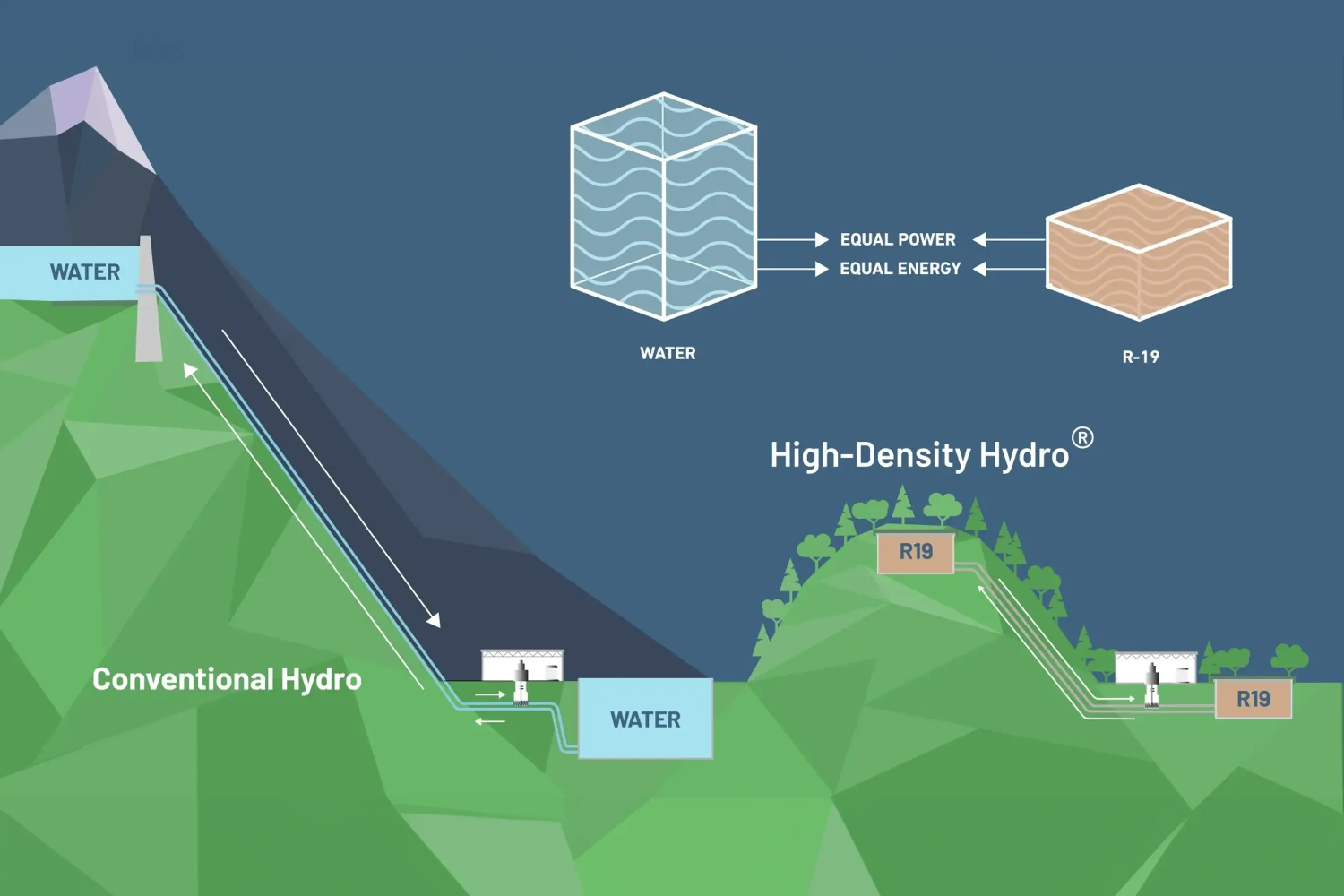
How high-density hydro works in comparison with regular pumped hydro. Credit: RheEnergise

The benefit of using this fluid instead of water is it generates the same amount of electricity from just 40% of the elevation change, using tanks 40% of the size — think hills and underground tanks instead of mountains and huge dams. This means a smaller system that can be deployed faster, at more sites, and with fewer costs, or at least that’s the idea. 

The high-density hydro system will pump R-19 uphill into underground storage tanks larger than an Olympic-size swimming pool, and then release the fluid on demand. Projects will range from 5MW to 100MW of power and can work with vertical elevations as low as 100 metres or less. 

RheEnergise commercial director Sophie Orme said that with the urgency to decarbonise the UK’s energy system, it is significant that their system can be built in “one to two years” and gain planning consent “in just months.”  

The company estimates that there are 6,500 potential sites in the UK alone and that its projects will be cheaper than equivalent lithium-ion batteries. 

We need long-term energy storage

As European countries decarbonise their energy systems, adopting energy storage solutions to balance the intermittent supply of renewable energy and increase energy security is becoming increasingly urgent. According to the European Association for Storage of Energy (EASE), the EU will need 200GW of energy storage by the end of the decade and 600GW by 2050.  

Proponents of alternative energy storage technologies argue that lithium-ion batteries will only get us so far. Their production relies on mining, they don’t have very long lifespans and are arguably not ideal for storing energy longer than several hours. Long-term storage solutions are critical.

“Our HD Hydro technology can provide medium and long-duration energy storage, which is becoming increasingly important as the UK’s energy system is increasingly reliant on intermittent renewables,” said Stephen Crosher, RheEnergise’s chief executive.  

This ‘slow-burn’ energy storage is essential to stabilise the grid when the wind isn’t blowing or the sun isn’t shining. Other startups working in this space include Scotland’s Gravitricity, which plans to create electricity by dropping weights down old mine shafts, and Finland’s Polar Night Energy which uses giant vats of sand to store energy in the form of heat. 

While these solutions sound really cool, RheEnergise has the advantage that its approach builds upon a tried and tested technology.

RheEnergise has just signed an agreement with UK company Mercia Power Response, aiming to deploy 100MW of energy storage by 2030 using Mercia’s existing grid connections. In November, the company also won a £8.25m grant from the UK government to build a small 250kW demonstrator at a mine in Devon within the next year.   

“We are also pursuing a number of project opportunities elsewhere in continental Europe and Canada,” said Crosher, following the announcement last year. “We expect to have our first 5MW grid-scale project in operation in 2026.”  

Waterless hydro tech can turn hills into giant batteries Read More »

competitive-psvr-2-shooter-‘firewall-ultra’-reveals-co-op-pve-mode,-live-service-ambitions

Competitive PSVR 2 Shooter ‘Firewall Ultra’ Reveals Co-op PvE Mode, Live Service Ambitions

Firewall Ultra, the next-gen sequel to the popular PSVR-exclusive shooter, launches next week and with it, a co-op PvE mode supporting up to four players.

Set to launch next week on August 24th on PSVR 2, Firewall Ultra is just around the corner. Today developer First Contact Entertainment revealed the game will go beyond its pure PvP roots with a co-op PvE mode. While it doesn’t sound anything like full-featured campaign, the studio claims it has been planning the mode from the start.

Called Exfil (short for Exfiltration), the new mode will see up to four players battling bots across the game’s array of maps as they seek to activate objectives and then return to an evac zone for extraction.

When you first load into a mission in Exfil, you’ll hack into one of two available access points to reveal the laptop locations and then make your plan of attack. Will you try to split up to cover more ground as a squad, or will you stick together to cover each other’s backs? Do you plan to sneak through corridors and try to remain undetected for as long as possible, or will you roll up guns blazing to wage war? The choice is yours since every level in Exfil is like a miniature playground with a wide assortment of options and possible scenarios.

First Contact says it has “designed each map to accommodate both PvE and PvP game modes so you’re always uncovering new pathways through levels and finding great flanking spots to take out enemies.”

The studio says it has spent time making sure the AI enemies are more than just cannon fodder.

“At the start of a mission the enemy units won’t know your location, so they’ll simply be preoccupied patrolling around the map. Once you initiate a hack and start firefights, that’s when things get more intense. Reinforcements equipped with various weapons will dynamically converge on your position from around the map in unique ways to keep you on your toes,” the studio says. “AI enemies also have an assortment of gadgets at their disposal, similar to players, with the ability to throw out grenades, lay traps, breach rooms by kicking down doors, and even deploy C4 charges. These aren’t your run of the mill AI bots that just run into the line of fire blindly—they take cover, flank you, and react to your moves intelligently.”

Co-op VR experiences are great, but the odds are low that many of your friends have their own PSVR 2 headset to play with you. Luckily First Contact says the PvE mode can be played privately with friends (or solo) and includes public matchmaking to join you up with other players.

Firewall Ultra’s Live Service Ambitions

While predecessor Firewall Zero Hour on PSVR eventually transformed into a live service game with regular seasons that brought new maps and other content, First Contact says Firewall Ultra is being designed as a live service title from the ground up.

Firewall Ultra is designed as the kind of game you can keep coming back to again and again over time on your PSVR 2 and consistently find something fresh and new to do and see. As a live service title, that means constant updates with new content such as maps, weapons, and contractors, as well as redesigns for locations like the shooting range and safehouse lobby environment,” the studio shares. “We want this to feel like a living, breathing world that evolves over time. Just like the world of Firewall Ultra is five years into the future from the previous Firewall title (Firewall Zero Hour), as time goes on, Firewall Ultra itself will also see changes.”

To that end players can almost certainly expect seasonal paid battle passes, just like the original game, which could offer new cosmetics and maybe even contractors for a fee.

– – — – –

Firewall Ultra launches on August 24th, 2023 at 8AM PT, exclusively on PSVR 2. The game is priced at $40 for the standard edition and $60 for the deluxe edition; pre-orders are available now.

Competitive PSVR 2 Shooter ‘Firewall Ultra’ Reveals Co-op PvE Mode, Live Service Ambitions Read More »

norwegian-wealth-fund-warns-of-ai-risks-while-reeling-in-billions-from-the-tech

Norwegian wealth fund warns of AI risks while reeling in billions from the tech

To say that Norway’s Sovereign Wealth Fund made a killing these past months would be an understatement. The world’s largest investor in the stock market earned 1,501 billion crowns (€131.1bn) in the first half of 2023, and much of it due to the recent boom in AI.

To a large extent, the profits came from the fund’s shares in tech companies such as Apple, Alphabet, Microsoft, and Nvidia that all saw a surge from the current AI craze. Meanwhile, the fund is telling the very same companies to get serious about the responsible deployment and risks of artificial intelligence

“As AI becomes ubiquitous across the economy, it is likely to bring great opportunities, but also severe and uncharted risks,” the €1.28 trillion fund said in a letter published this week.

It added that the technology continues to develop at a pace that makes it challenging to predict and manage risks in the form of regulatory and reputational risk to companies, as well as broader societal implications related to, for instance, discrimination and disinformation. 

In order to mitigate the threats posed by the technology, the letter suggested the fund’s 9,000+ portfolio companies develop their expertise on AI on the board. 

The <3 of EU tech

The latest rumblings from the EU tech scene, a story from our wise ol’ founder Boris, and some questionable AI art. It’s free, every week, in your inbox. Sign up now!

Boards “absolutely not on top” of AI, fund CEO says

In an interview with the Financial Times, the fund’s CEO, Nicolai Tangen, stated that “Boards are absolutely not on top of this.” He further added that the fund would vote against companies that failed to deliver on AI expertise at directorial level. 

The oil fund also wants companies to disclose and explain how they use AI, and how systems are designed and trained, so-called transparency and explainability. Furthermore, it is looking for robust risk management beyond a traditional business focus, adding human oversight and control to mitigate potential threats to privacy and discrimination. It did not go so far as to mention the doom of humankind

Meanwhile, Tangen is not shy in stating that, “If you don’t think there are opportunities with AI, then in my mind you are a complete moron.” 

In the letter, the fund also states that it supports the development of “a comprehensive and cohesive regulatory framework for AI that facilitates safe innovation and mitigation of adverse impacts.”

Yet, Tangen acknowledges that this will be “very hard” to achieve on a global scale, due to the technology’s near ubiquitous application in everything from education and military to cars and finance.

Norwegian wealth fund warns of AI risks while reeling in billions from the tech Read More »

this-pv-leaf-can-harness-more-power-than-standard-solar-panels

This PV-leaf can harness more power than standard solar panels

Scientists at Imperial College London have invented a leaf-inspired technology that captures solar energy and makes freshwater in the process. 

The design, known as PV-leaf, is made up of glass, photovoltiac cells, bamboo fibres, and hydrogel cells which combine to mimic a real leaf. Water can even move and distribute throughout the artificial leaf’s structure and evaporate from its surface, cooling it down.   

In hot and sunny conditions, solar panels can heat up to temperatures of 65°C or more, which takes a big knock on their efficiency. This is because the increased heat causes the electrons in the semiconductor material to move more energetically, leading to higher resistance and reduced electrical output.  

Simply by mimicking transpiration, the scientists found that the artificial leaf can generate over 10% more electricity compared to conventional solar panels. 

A diagram of a real lifes strucures side by side the artificial leaf design by researchers at Imperial College London
Left is the typical structure of a real leaf. Right is the artificial leaf designed by the scientists at ICL. Credit: Nature Communications

“This innovative design holds tremendous potential for significantly enhancing the performance of solar panels, while also ensuring cost-effectiveness and practicality,” said Dr Gan Huang, who co-authored the study.  

The <3 of EU tech

The latest rumblings from the EU tech scene, a story from our wise ol’ founder Boris, and some questionable AI art. It’s free, every week, in your inbox. Sign up now!

Huang said the leaf is also capable of utilising the recovered heat to produce additional thermal energy and freshwater simultaneously, within the same component. This could generate “billions of cubic metres of water annually” if scaled, he added. 

While still in its infancy, the research team has big hopes for their new invention.  

“Implementing this innovative leaf-like design could help expedite the global energy transition while addressing two pressing global challenges: the need for increased energy and freshwater,” added Professor Christos Markides, one of the authors. 

This is not the first time scientists have taken inspiration from plants to generate energy. In May, a team of scientists from the University of Cambridge developed another kind of artificial leaf that uses sunlight to convert water and carbon dioxide into ethanol and propanol — clean alternatives to petrol or diesel.

Published

Back to top

This PV-leaf can harness more power than standard solar panels Read More »

new-1b-fintech-fund-aims-to-plug-uk’s-2b-funding-gap

New £1B fintech fund aims to plug UK’s £2B funding gap

The UK has devised a novel solution for a funding gap: more funding.

In a bid to strengthen the country’s financial sector, up to £1bn (€1.2bn) has been allocated to a new investment vehicle for fintech firms.

Named the FinTech Growth Fund, the scheme will invest predominantly in companies between Series B and pre-IPO, with the aim of scaling them into global leaders. The first capital deployment is scheduled for the fourth quarter of this year.

The fund plans to make an average of four to eight investments every year, each between £10mn (£11.7mn) and £100mn (€117.1mn). All of them will be minority investments for equity and equity-linked securities.

The <3 of EU tech

The latest rumblings from the EU tech scene, a story from our wise ol’ founder Boris, and some questionable AI art. It’s free, every week, in your inbox. Sign up now!

As well as capital, the fund will provide strategic support for the portfolio companies. Barclays, NatWest, Mastercard, the London Stock Exchange Group, and Peel Hunt are backing the scheme, while former chancellor Phillip Hammond is heading the advisory board.

“I championed our vibrant fintech sector throughout my term as chancellor and have long believed its success is vital to maintaining the UK’s role as a global financial services centre through the early adoption of new technologies, products and services,” Hammond said in a statement.

The new fund was launched in response to the Kalifa Review, which the British government commissioned to report on the country’s fintech sector.

The review identified an annual funding gap for growth-stage fintech of around £2bn. It recommended creating a £1bn growth fund to fill the gap and sustain the ecosystem.

“This fund also helps address a key challenge facing our fintech scale-ups,” Nicholas Lyons, the Lord Mayor of London, said. “They frequently rely on financing from international investors which leads to domestic fintech listing in other countries, with IP and jobs leaving our shores.”

The venture launches at a tough time for UK fintech. Amid rising interest rates and inflation, total investment in the sector dropped from $39.1bn (€35.8bn) in 2021 to $17.4bn (€16bn) in 2022, according to KPMG. The new fund will hope to stimulate a rally for the industry — and the entire financial services ecosystem.

Published

Back to top

New £1B fintech fund aims to plug UK’s £2B funding gap Read More »

how-risc-v-can-usurp-arm-as-the-switzerland-of-computer-chips

How RISC-V can usurp Arm as the Switzerland of computer chips

In the divided world of semiconductors, Arm is frequently compared to Switzerland.

The UK-based business is built on a foundation of neutrality. Rather than build chips, Arm merely designs their blueprints. The company then licences the IP to almost every major semiconductor maker without directly competing against them.

That approach — as well as the energy-efficient architectures — has driven Arm’s designs into over 95% of smartphones, alongside cars, computers, and countless other applications. But the independence that underpins Arm has become contentious. Meanwhile, a budding contender has emerged with a promise of true impartiality: the RISC-V Foundation. 

The anxieties about Arm’s surged in 2020, when Nvidia agreed to buy the business for $40 billion (€36.7bn). The deal would give control of Arm to the most valuable semiconductor company in the US. Nvidia could gain early access to the architectures, licence them for free, and sell its Arm-based chips at lower prices. Suddenly, the Switzerland of semiconductors looked like a very different place.

“A privately-owned Arm would not only mean that the company’s future roadmap would change, influenced by the direction, funding, and presence of Nvidia,” Mark Lippett, the CEO of British semiconductor XMOS, tells TNW. “It would also mean that equal access to that technology might no longer be available.”

The <3 of EU tech

The latest rumblings from the EU tech scene, a story from our wise ol’ founder Boris, and some questionable AI art. It’s free, every week, in your inbox. Sign up now!

Arm’s customers weren’t the only people worrying. Around the world, regulators began probing the acquisition. In the US, the Federal Trade Commission sued to block the deal, arguing that Nvidia would become too dominant in the $500 billion (€459bn) chip market. Authorities in China, the EU, and the UK were also scrutinising the deal. As the regulatory headwinds swirled, the deal was blown into uncertainty.

Two years after the acquisition was announced, the transaction collapsed. Arm’s current owner, SoftBank, chose to pursue an initial public offering instead. With a target valuation of up to $70 billion (€64bn), the listing could be the world’s biggest IPO this year. Yet the new bidders could also be chipmakers with conflicting interests.

As the doubts about Arm’s neutrality whirled, attentions turned to RISC-V.

“It’s going to be a very credible implementation.

Founded in 2015, RISC-V produces low-cost, efficient, and flexible architecture that can be customised to specific use cases. Crucially, it’s also open source, which means no single entity controls it. As a result, clients could avoid partnering with Arm, and paying the provider to ensure compatibility.

The foundation also has a very different relationship with Switzerland. While Arm has a figurative link to the country, RISC-V’s connection is literal. In 2019, the organisation moved there from Delaware to avoid US trade curbs, which jeopardised free access to its tech. The relocation created another selling point for RISC-V, particularly in China — Arm’s biggest market.

In the US, the architecture is also attracting some eye-catching supporters. Among them is Android’s director of engineering, who wants RISC-V to become a “tier-1 platform” in the operating system — the same level as Arm. 

Earlier this month, backers of RISC-V formed a powerful new team. The chipmakers Qualcomm, NXP, Nordic Semiconductor, and Infeon, as well as Robert Bosch — the largest automotive supplier in the world — announced a new alliance to commercialise the architectures.

“It’s critical we maintain continuous access to efficient and powerful embedded microprocessors,” Svein-Egil Nielsen, chief technology officer of Nordic Semiconductor, said in a statement. “An open collaboration with like-minded companies to continually enhance innovative RISC-V microprocessor IP and ensure a robust and reliable supply of the technology is the ideal answer.”

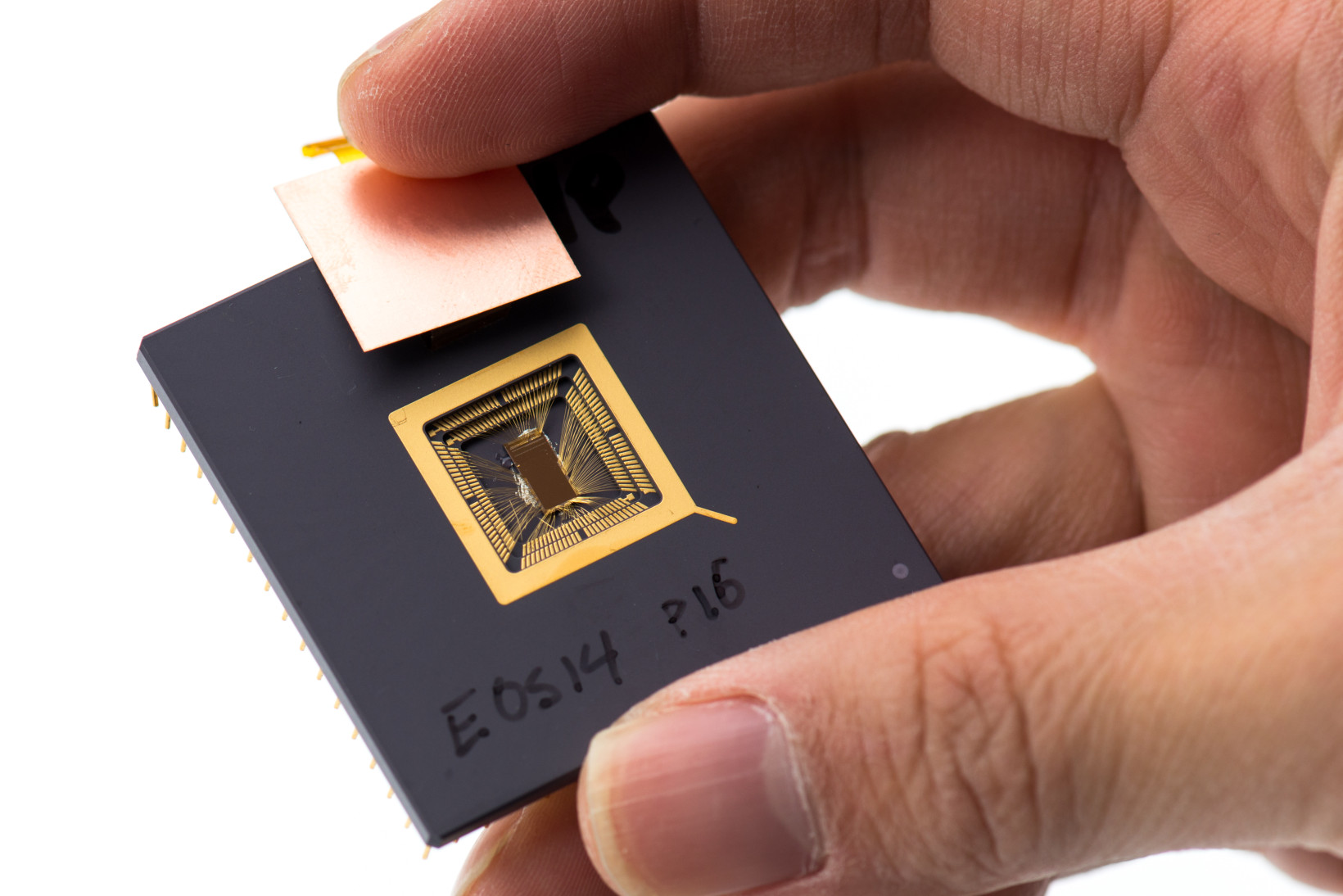
RISC V prototype chip.
Unlike most mainstream architectures, RISC-V is provided under royalty-free open-source licenses. Credit: Derrick Coetzee

The new venture elevates RISC-V as a rival to Arm. As Lippett notes, the buy-in from such established, wealthy, and knowledgeable companies should accelerate the uptake.

“You have to assume it’s going to be a very credible implementation of RISC-V, and a rising tide helps all boats,” he says.

The involvement of Qualcomm is particularly striking. The US chip giant is one of Arm’s biggest customers, but the two companies are now fighting a legal battle. 

Tensions between the partners emerged during the proposed Nvidia takeover. In May 2022, Qualcomm’s CEO said he wanted to buy a stake in Arm alongside its rivals — or even acquire it outright. A few months later, Arm sued Qualcomm. The lawsuit accuses the US business of using Arm IP without permission.

The conflict exposed the complex relationship that Arm has with clients — and the risks of them taking chip design in-house. The RISC-V venture has magnified both of these strains.

“We should be wary of any de facto standard.

Formed in Germany, the new company will initially focus on automotive applications —  a sector in which RISC-V already has a foothold.

“The key players in the venture — NXP and Qualcomm — are all big automotive chip providers, so they have the business relationships already,” Leo Charlton and James Falkiner, technology analysts at market research firm IDTechEx, tell TNW via email. “The biggest factor with automotive is dollar price, so if these RISC-V chips can be cheaper at the same performance level, then that’s a huge incentive.”

Automotive is merely the start of the ambitions. The new venture plans to later expand into mobile and IoT ecosystems. The group’s founders have also called for support from industry associations, leaders, and governments. They claim that the initiative will strengthen the broader semiconductor industry.

The plans create another headache for Arm, which has a core market that is running out of growth. In its latest financial quarter, the company posted an 11% decline in sales in dollar terms. 

Herman Hauser
Hermann Hauser, who co-founded Arm in 1990, is an abiding proponent of Swiss neutrality. “The whole point about Arm was always that it was the Switzerland of the semiconductor industry, dealing very even-handedly with all of its 500-plus licensees,” he said last year.

Nonetheless, Arm maintains several advantages over its emerging rival. The company offers proven performance, market ubiquity, extensive support, and a more reliable hardware and software ecosystem. To many potential clients, RISC-V will seem a far riskier proposition.

“If you have no intentions of modifying a processor core then you might as well just use Arm,” Leo Charlton and Falkiner say. “But the benefit of RISC-V is that you have the freedom to develop and extend it.”

The new company, however, evokes a similar concern to the one engulfing Arm. As Lippett notes, it too could be acquired by a single chip giant.

“We should be wary of any ‘de facto standard’ that may evolve, driven by this well-funded and powerfully backed entity, that diverges from RISC-V,” he says. “The open-source nature of RISC-V helps to mitigate that concern, to some extent.”

Despite the concerns, analysts expect the new venture to accelerate the adoption of RISC-V. Market dominance, however, remains a distant dream. For now, RISC-V seems unlikely to rival Arm as a global power. But it could become a truer emulation of Swiss neutrality.

How RISC-V can usurp Arm as the Switzerland of computer chips Read More »

gibby-presents:-road-testing-the-latest-location-based-vr-experiences

Gibby Presents: Road Testing the Latest Location-based VR Experiences

Location-based VR has bounced back since the pandemic. So let’s get some arcade action! The fastest-growing company, Sandbox VR, has just opened their 40th location worldwide. Gibby’s Guide went out and about to road test the best that the sector has to offer.

Gibby Presents

Gibby Zobel is an English-born journalist, filmmaker and radio broadcaster. Based in Brazil for over 20 years, he produces content for the BBC World Service, BBC News and China Global Television Network (CGTN). Currently on sabbatical in the UK, he writes and publishes Gibby’s Guide, a free independent VR digital magazine, launched in 2021.

As fans of Gibby’s work, we share a selection of the magazine’s feature articles, this one from the latest issue: Gibby’s Guide V23.

“I wanted an immersive experience with my friends, where they could reach out and touch each other and actually make a physical connection. I believed that the real magic of VR would begin when someone could totally lose themselves in the immersive experience. The game, the interface, the disbelief would all fall away and only Experience would be left.”

Steve Zhao, co-founder and CEO of Sandbox VR, outlined his vision of a ‘minimum viable matrix’. Then he built it.

WHAT IS LBVR?

Location-based Virtual Reality or LBVR refers to an out-of-home location where people can play unique VR games, usually as a team, that they can’t find on consumer headsets. Haptic vests and physical items like a gun can add to the experience, as can extras like fans, heaters, water spray and hydraulics. Games are purpose built in-house or by studios like Ubisoft.

It began with the opening of their first arena in June 2017 on the 16th floor of a back alley high rise in Hong Kong with leaky pipes, surrounded by private members clubs and other less salubrious neighbours.

Exactly six years later a premium location in downtown Seattle has just become Sandbox VR’s 40th location worldwide—they are present across the US, Europe and Asia—and they are the fastest growing company in the sector.

But it very nearly didn’t happen. Covid-19 threatened to strangle the fledgling LBVR industry at birth. The major player at the time, The Void, sank without trace. Some survived. A case in point is Zhao’s Sandbox VR. He relates the story on his Medium page.

“With a nationwide lockdown and all our retail locations mandated to close, our revenue plummeted by 100%. The year was traumatising for the team and myself: running a near-death startup during the worst crisis possible while undergoing an emotionally taxing bankruptcy process, with the team barely getting paid at all,” he says.

But through a drastic 80% staff cut, rent freezes, and financial contortions they pulled through.

Last month they launched their seventh LBVR title built in-house, Seekers of The Shard: Dragonfire, and have announced a deal with Netflix to bring Squid Game to VR later this year following on from a deal with CBS to make Star Trek Discovery.

While Sandbox VR is undoubtedly the shining beacon, selling upwards of 100,000 tickets a month, other LBVR companies are making headway.

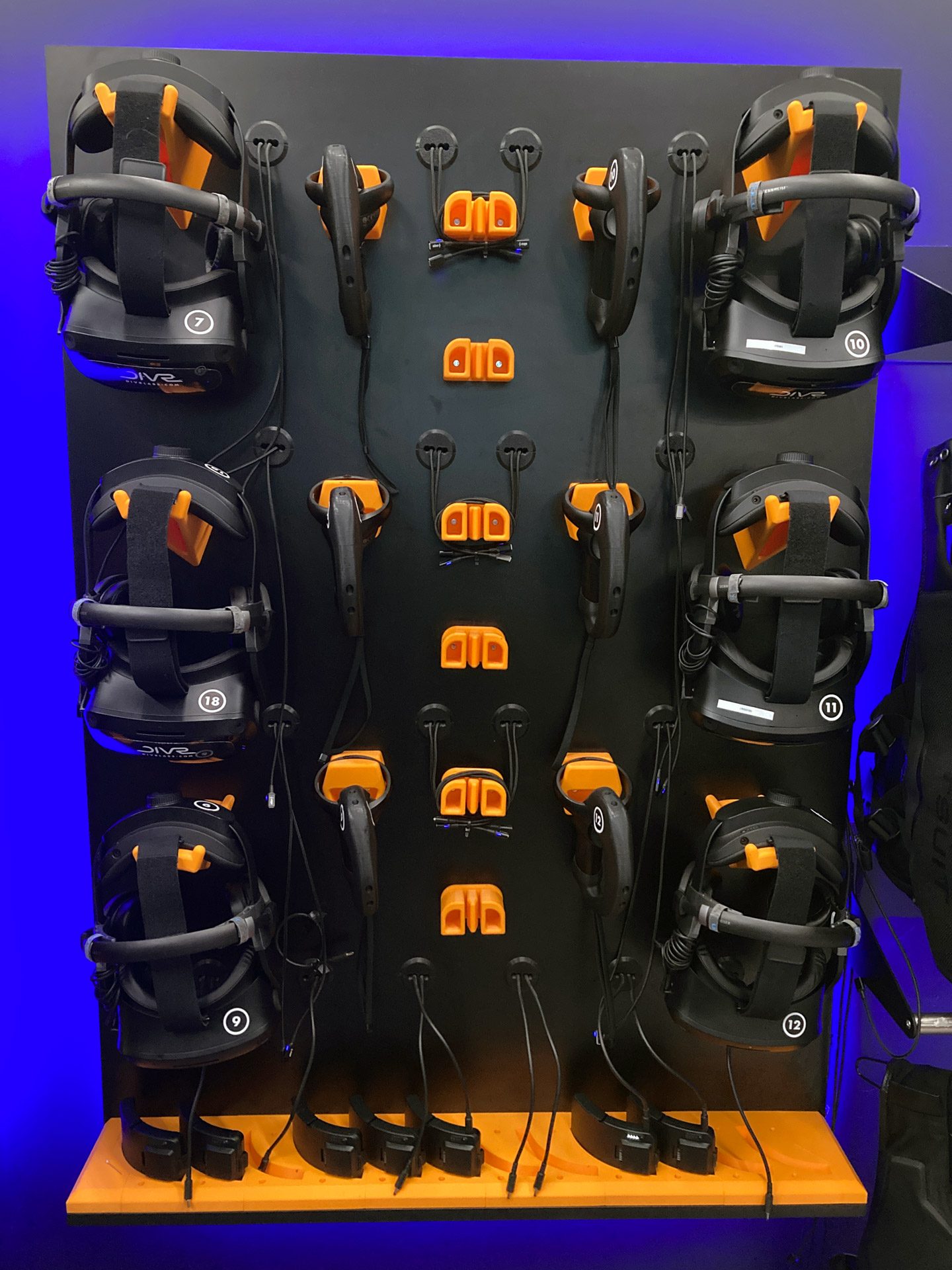
Czech start-up Divr Labs is backed by billionaire Daniel Kretinsky—known for his investment in West Ham United Football Club—and has opened in a prime location in West London inside Westfield, Europe’s largest shopping centre, in addition to venues in Stockholm and Prague.

Clever design means that Divr Labs can accommodate 48 people an hour inside its 150 square metre space. At full capacity that would equate to an income north of $4M a year in just that one retail area.

London’s first VR arcade, DNA VR, has expanded to three venues in the capital and one in Manchester while another UK venture, Meetspace VR has seven arcades across the country.

In the Guandong Province in China, the Lionsgate Entertainment World, which opened in July 2019, is the most technologically advanced theme park on the planet. It leverages popular film franchises like The Hunger Games and The Twilight Saga to create VR experiences including an indoor VR rollercoaster and motorbike sim.

ILMxLAB (now ILM Immersive) similarly held a limited run of Star Wars Tales From The Galaxy’s Edge at Disney World Orlando in 2022.

Back in London, Layered Reality also borrows from popular culture creating a two-hour spectacular with Jeff Wayne’s War Of The Worlds Immersive Experience.

Now in its fourth year, it takes place in a huge purpose-built set. It’s voted the number one immersive experience in the capital on Trip Advisor and has surpassed 175,000 customers.

But what are these experiences like? Do they justify the the hype?

Sometimes LBVR can be a terrible disappointment; recent examples include efforts at high profile arts centres like the Serpentine Galleries and Barbican Centre, which can be fatal to public interest, especially if it is their first time in a headset.

They also have to hold up against competing entertainment options. Traditional arcades have had a renaissance and retro places like NQ64, Arcade Club, and Pixel Bar are popular.

Then there’s the emerging trend of projection mapping with motion tracking.

Immersive Gamebox offers their non-VR version of Squid Game, Ghostbusters, and Angry Birds while Chaos Karts promises “an augmented reality experience without the need for headsets” on their illuminated race tracks.

An LBVR Road Trip

Gibby’s Guide—that’s me and a bunch of mates—set out to take the temperature of the industry, travelling to five different locations in the UK.
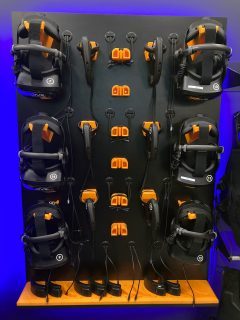
All of us had some level of experience playing with Quest 2 at home but none had been to a LBVR attraction.

Clearly this sample is geographically specific but some, like Sandbox VR, can be also found across the US and worldwide and many of the details are common to others.

None of the LBVR venues we visited used Quest 2; various iterations of the HTC Vive (usually the Focus 3) or PiMAX were the headsets of choice at the venues.

Prices varied between the equivalent of $40–$75 per person, and lasted between 25 minutes and two hours. The minimum age requirement began at 7 and went up to 16 depending on the game.

Sandbox VR

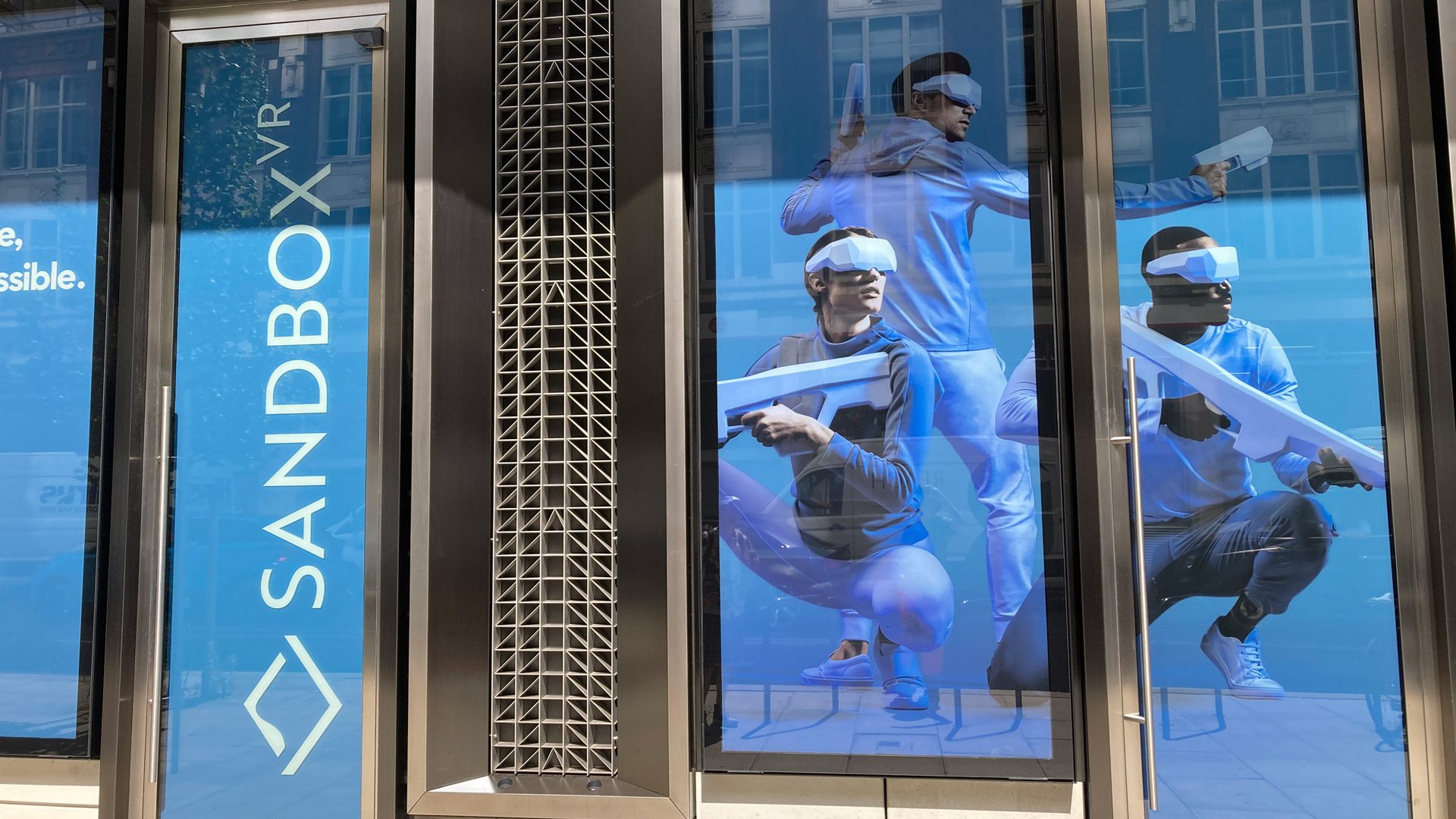
Sandbox VR knows the value of first impressions. The location is prime real estate in central London and the façade of the modern Post Building is unmissable, decked in giant posters of VR gamers with the brand’s logo.

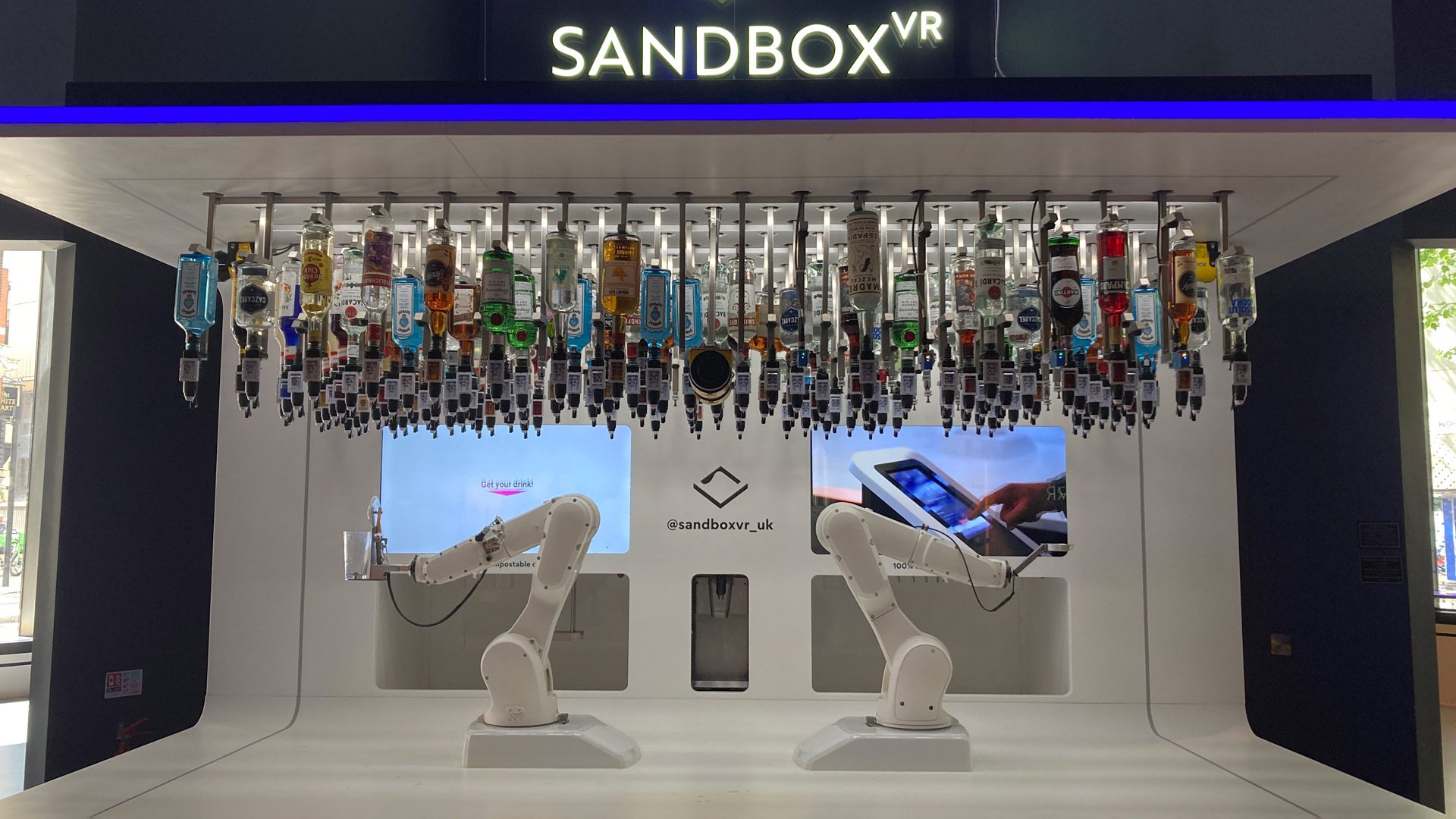
You are greeted by airport-style check-in terminals and a robot cocktail waiter to mix your drinks.
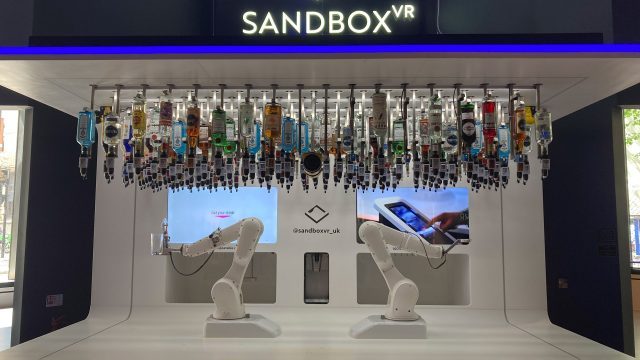
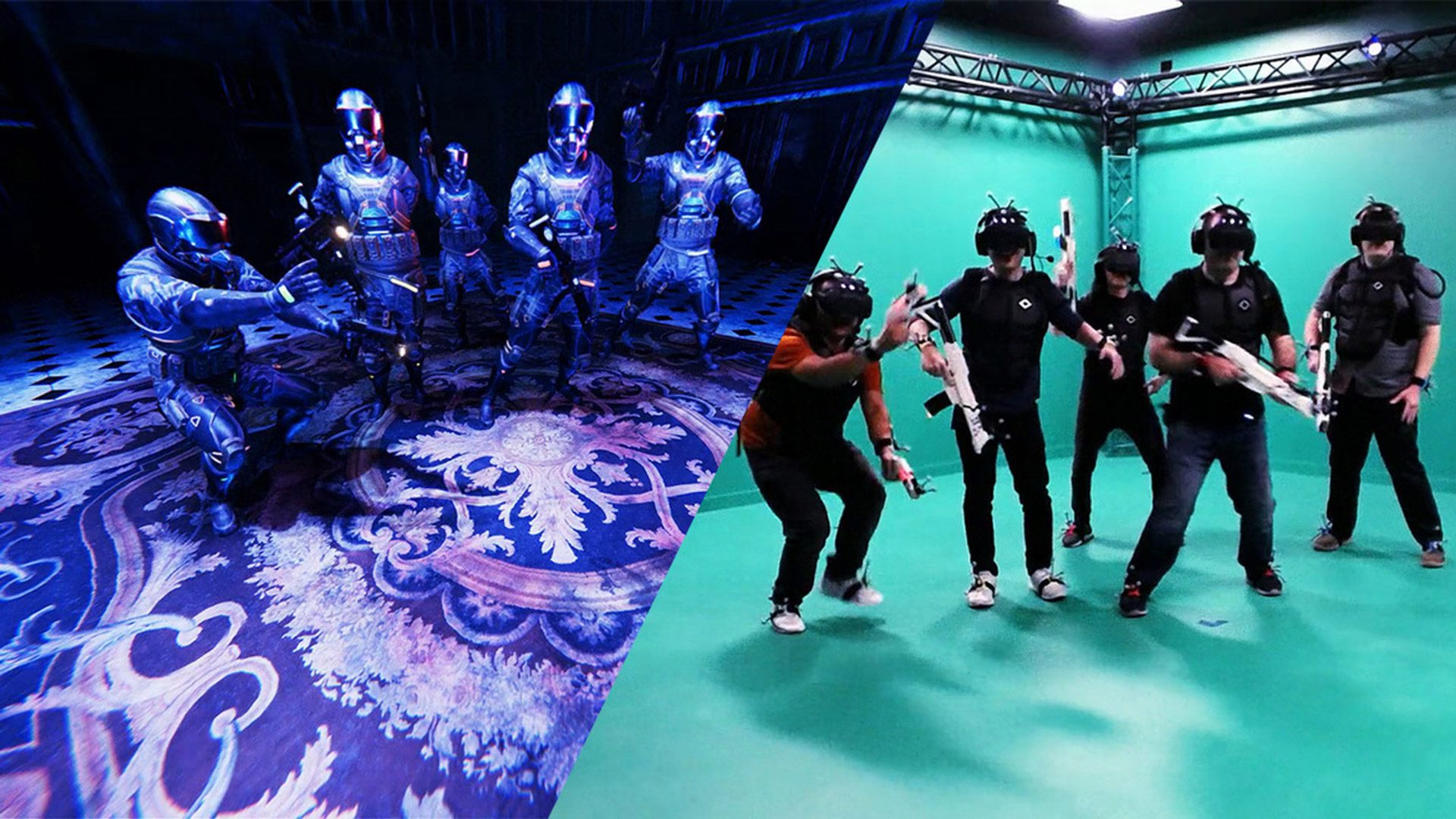
Attendants give you an iPad menu of weapons to chose from (you take the physical item into the arena), snap your photo and lead you in to a loading area. You put on a haptic vest and tie alien-looking velcro trackers that look like atoms around your wrists and ankles for full body real-time motion capture.

You carry a laptop in a backpack that sends movement coordinates to a server. It’s quite a bit of kit, not forgetting the headset itself, and you feel the weight.

I’m playing Dead Wood Valley with Jonny. We often play multiplayer games on Quest 2 from separate houses but this is our first co-location VR experience (ie: occupying the same physical playspace).

The street is filled with zombies and vultures. It’s loud. We can’t hear each other over the sound of our gunfire which starts from the get-go and only relents after we defeat the final boss.

25 minutes later. We’ve flown on a chopper, ridden on a truck and saved each other several times from certain death (you have to physically touch the shoulder of your teammate to revive them).

At the end of the experience it’s time to party on a lit up dancefloor to record one of a couple of videos ripe for social media that hot swap from you in the VR gear in the room to the virtual world.

“Overall I’m a little underwhelmed,” says Jonny. “The game itself looked good, sounded good, but what you actually do is quite limited.”

“You are just shooting, you don’t really have time to communicate, the room was quite small. It reminded me of one of those old arcade games where you’d have the gun and the foot pedal to duck down and hide behind things but upscaled into a VRscape.”

“I liked the haptic suit and the feedback on the gun. When I had to touch you on the shoulder it felt disorientating.”

“I guess for people who have never done VR before or in a group it’s something fun to do, like going bowling.”

“I’m glad I’ve done it, I would recommend that people have a go. It’s a little overpriced but then I’m notoriously tight-fisted!”

Continue on Page 2: Divr Labs & DNA VR »

Gibby Presents: Road Testing the Latest Location-based VR Experiences Read More »