
Drivers aren’t happy about energy management, and one team won’t finish the race.
Credit: Rudy Carezzevoli/Getty Images
Later this evening—Friday morning local time—the new 1.6 L V6 engines that power this year’s crop of Formula 1 machinery will roar into life as practice for the first race of the year gets underway in Melbourne, Australia. After several years in which the teams’ performances converged so much that the sport was determined by finer margins than ever, 2026 sees a comprehensive reset.
The cars are smaller and lighter, and they have different aerodynamic configurations for the corners and the straights. The hybrid systems are more powerful, and each runs on its own bespoke sustainable fuel. There’s even a new way to watch as F1 makes a $750 million move from ESPN to Apple. Over the offseason, throughout the preseason shakedown in Barcelona, and then two three-day tests in Bahrain, plenty of questions have arisen: Are the new technical regulations a mistake? Can we still watch F1TV? And just what the heck is going on, Aston Martin?
400 kW + 350 kW = headaches?
After more than a decade with the same power units—and the same few manufacturers—the sport wanted to attract some new blood. Drawing in more car companies, which have boards and shareholders to answer to, required acknowledging road relevance and some commitment to sustainability and decarbonization. Since OEMs are all about electrification, that meant a greater emphasis on the hybrid side of the power units. And the veneer of environmental responsibility arrives in the form of heavily audited, fully sustainable fuels.
The engines are still 1.6 L V6s and turbocharged, but those turbochargers no longer contain the hybrid system known as the MGU-H. (It was dropped for cost grounds and a lack of road applications, but Porsche has started selling cars using this technology, and boy, are they good.) There’s now a much more powerful MGU-K, the electric motor that lives between the V6 and the transmission, and a more powerful battery. The combustion engines now generate 400 kW (536 hp), with the MGU-K adding another 350 kW (469 hp).
The rules package succeeded in attracting new power unit makers to the sport. Ferrari and Mercedes have been joined by Audi, Honda, and Red Bull’s in-house engine program (with help from Ford), although it is true that Alpine (formerly Renault) ended its long-running engine operation at the end of 2025 as its team opts for Mercedes power instead, joining the other customer teams McLaren and Williams.
Cadillac signed up, too, and it takes to the grid in Australia as the sport’s 11th team, although it will use Ferrari power units (like Haas) for the next three years while it develops its own for 2029.
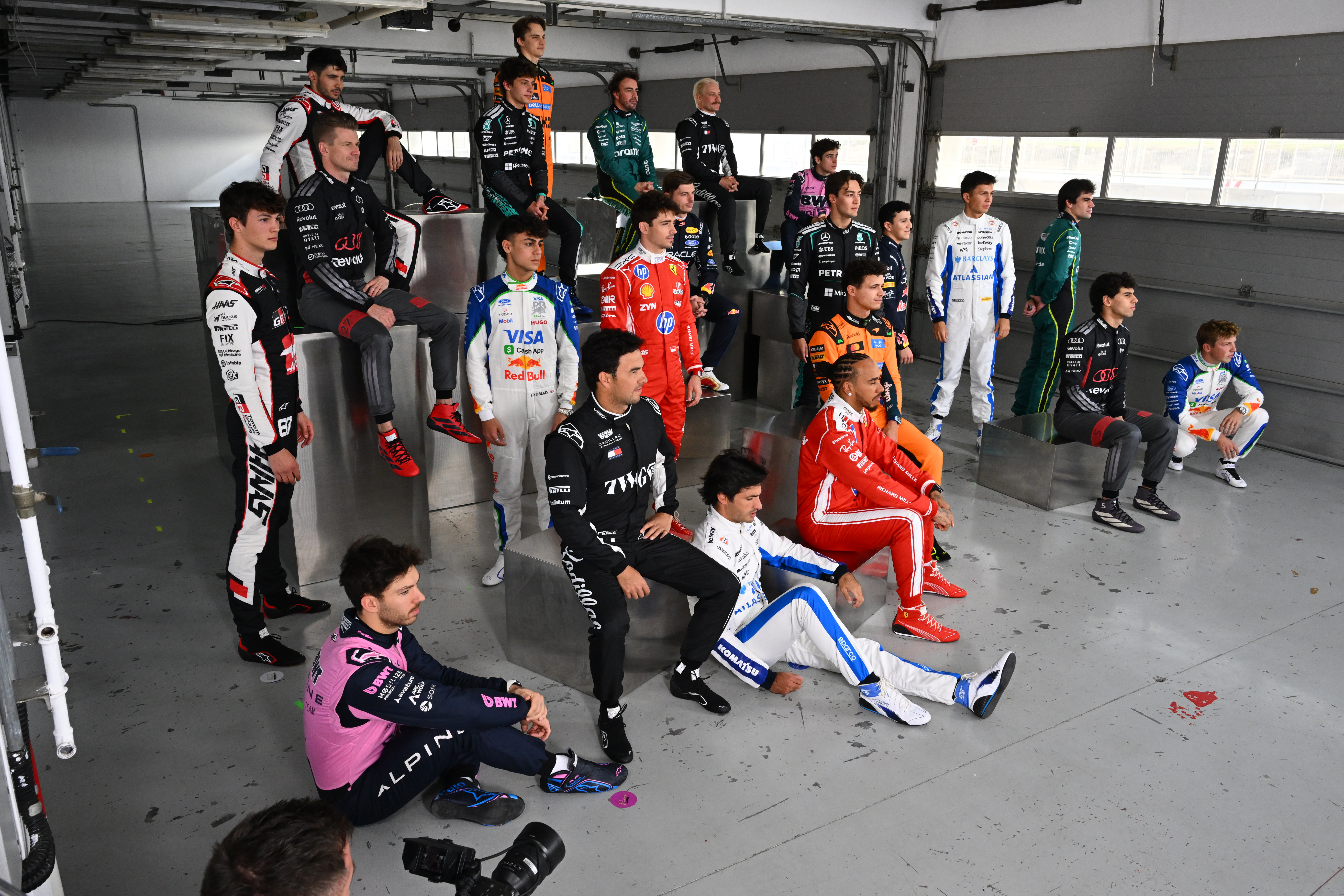
The 22 drivers who will compete in the 2026 season.
Credit: Mark Sutton – Formula 1/Formula 1 via Getty Images
The 22 drivers who will compete in the 2026 season. Credit: Mark Sutton – Formula 1/Formula 1 via Getty Images
On paper, 750 kW (1,006 hp) F1 cars should get everyone pretty excited. But they’ll only have that much power when the 4 MJ (1.1 kWh) battery is fully charged. That can happen in a couple of ways: regen via the rear wheels under braking and by siphoning power from the V6, which the sport calls “superclipping.” You’ll hear the engines continue to strain even as the cars lose speed at the end of long straights as horsepower is diverted into the battery and away from pushing the car through the air.
Each lap, each car is allowed to deploy up to 8.5 MJ (2.36 kWh), which means depleting and replenishing the battery more than once per lap. Because electrical energy is limited, drivers will have to use it intelligently. An optimal lap probably won’t be completely flat out the entire way; making up too much time in one corner using the full hybrid deployment might cost more on the following straight when there’s no more MGU-K contribution.
It’s fair to say some of F1’s biggest stars have not been entirely enthusiastic about having to adopt some of the same energy management techniques already used by their peers driving hybrid prototypes in the World Endurance Championship and all-electric single-seaters in Formula E.
After the first day of testing last month, four-time world champion Max Verstappen had some thoughts. “As a pure driver, I enjoy driving flat out,” he said. “And at the moment, you cannot drive like that. There’s a lot going on. A lot of what you do as a driver, in terms of inputs, has a massive effect on the energy side of things. For me, that’s just not Formula 1. Maybe it’s better to drive Formula E, right? Because that’s all about energy efficiency and management. That’s what they stand for.”
Not every track shares the same characteristics, however.
“Some tracks, you don’t have to do lift and coast for a single lap, and in some places, you have to do a lot of lift and coast for a qualifying lap,” driver Lewis Hamilton told reporters today. “There can be a big difference between deployment, of a second. If you don’t lift in one corner, for example Turn 6 and Turn 5 here [in Australia], if you take it flat or if you lift, it has a massive compound effect through the rest of the lap. You can do a good lap, but you could be a second down because the deployment is off.”
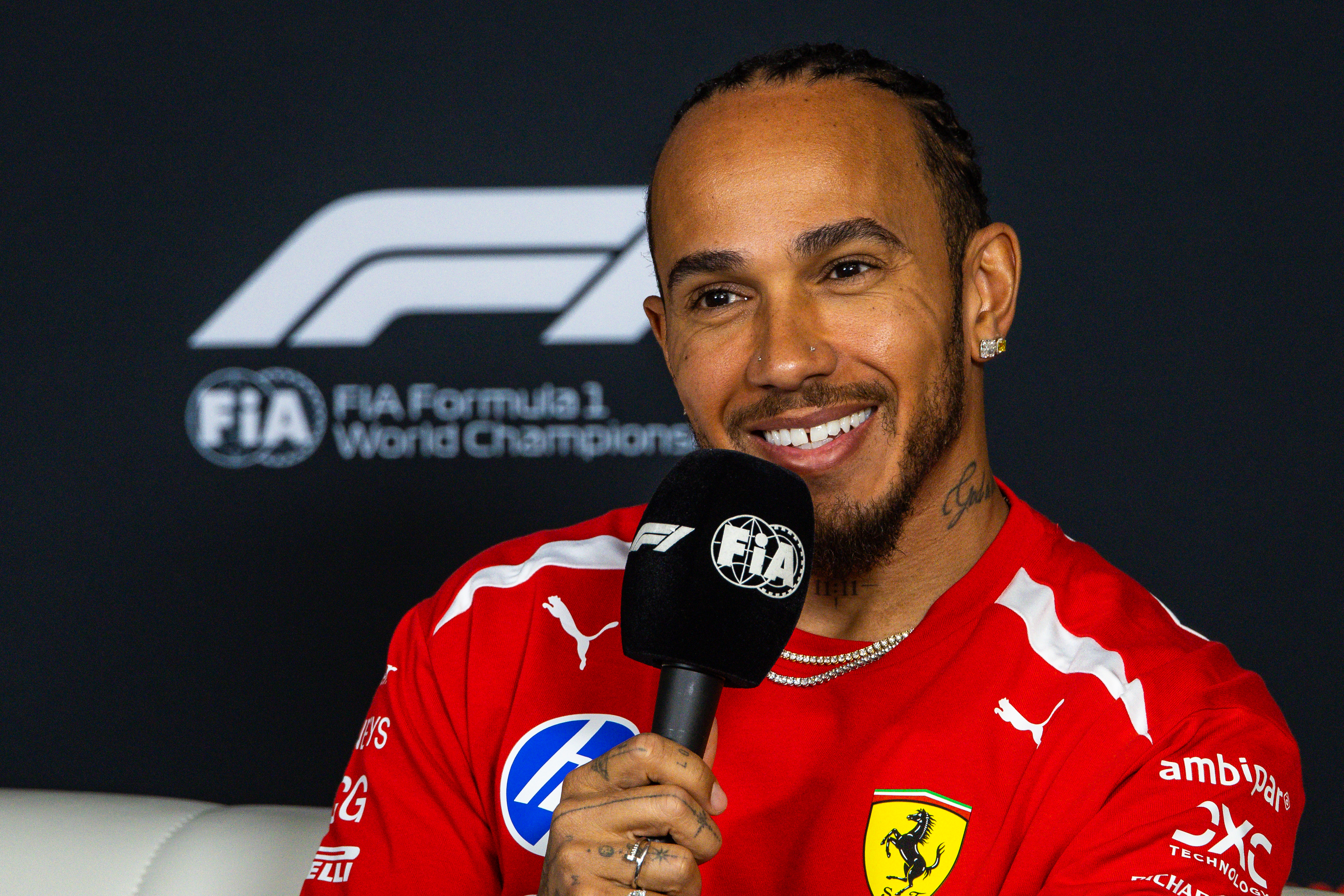
Will we see a smiling Lewis Hamilton more often this year? He might not love the new style of racing, but at least he’s much more comfortable with the way the cars handle.
Credit: Jayce Illman/Getty Images
Will we see a smiling Lewis Hamilton more often this year? He might not love the new style of racing, but at least he’s much more comfortable with the way the cars handle. Credit: Jayce Illman/Getty Images
An MGU-K on the front axle would have helped; about 60 percent of the braking is done by the front wheels, and that energy is lost as heat instead. But all-wheel drive was vehemently opposed by every other OEM during the planning stages out of fear of Audi’s experience with all-wheel-drive hybrids in WEC. And they probably did us a favor in that regard: Mark Hughes convincingly argues that adding a front motor would open the door to stability control in F1, something that was already prevented in 2008 and which would certainly ruin the sport if allowed.
An easier fix, albeit one that would slow lap times, would be to restrict the amount of energy the MGU-K could deploy, down to 250 or even 200 kW (335–268 hp). During testing in Bahrain, the sport’s organizing body, the FIA, had some teams try this out. Don’t expect any power restriction for the first few races, though; sensibly, the sport will give it some time to see how everything works in practice.
Six laps? All day??
F1 in 2026 will see much greater variability in performance between the teams than the ultra-tight gaps we saw last year. That, of course, was the result of several years of stable rules that didn’t allow much freedom due to factors like weight balance and suspension setup. Mercedes is a favorite going into this year, but Ferrari, Red Bull, and McLaren also look very strong. Haas, Alpine, and Racing Bulls head the midfield, with Audi impressing and Williams disappointing, and Cadillac certainly hasn’t embarrassed itself.
If only Aston Martin or its engine partner, Honda, could say the same. The team’s Canadian billionaire owner, Lawrence Stroll, has invested hundreds of millions into the UK-based team, building a state-of-the-art factory and wind tunnel and recently hiring Adrian Newey, the megastar designer and aerodynamicist whose cars have been responsible for 12 championships so far (Newey even has a stake in the team).
2026 is Aston Martin’s first year with a works engine supply, provided by Honda. The Japanese OEM has an on-off relationship with the sport, most recently deciding in 2020 to leave, then changing its mind again in 2024 due to the new rules. That four-year gap meant that the current program at Honda was effectively started from scratch, and it has been hard going.
In fact, as early as January last year, the head of Honda Motorsport, Koji Watanabe, told me that Honda was having problems. “Everything is new. [The] motor is new, [developing] 350 kW—it’s a very compact one that we need. And also the lightweight battery is not so easy to develop. Also the small engine with big power. So everything is very difficult, but we try our best,” Watanabe said.
Once the power unit was fitted to the car, things got much worse. Aston Martin was late to the Barcelona shakedown, and its drivers posted the slowest lap times in both the first and second Bahrain tests. The team also completed fewer laps than any other—just 206 during the first three-day test and a mere 128 laps during the second test. (For comparison, Mercedes, McLaren, and Ferrari each did more than 420 laps during the first test, and Mercedes, Racing Bulls, and Haas did more than 400 laps during the second test.)
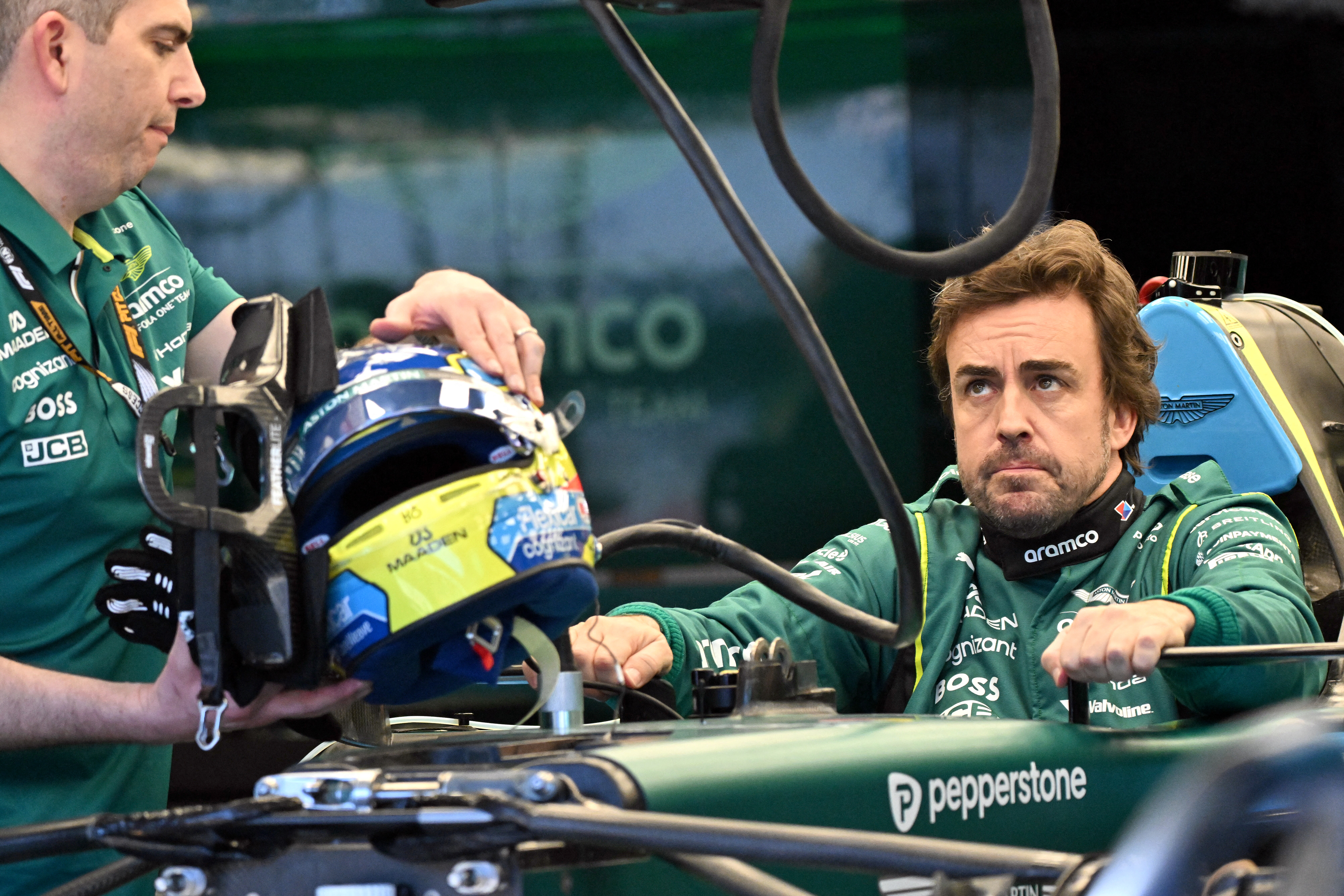
Alonso has already fallen out with Honda once during his career over engine problems.
Credit: Paul Crock / AFP via Getty Images
Alonso has already fallen out with Honda once during his career over engine problems. Credit: Paul Crock / AFP via Getty Images
The problems were myriad, affecting both the gearbox and the power unit. Chief among the issues was a vibration that shook apart components like the battery pack, destroying spares. So on the final day of testing, the team was limited to a mere six laps of the Bahrain circuit. With so little testing and so much to debug, the prospect of Aston Martin finishing in Australia—or any of the first few races—seems doubtful.
But wait, it gets worse. Earlier today, Newey held a press conference in Australia, where he explained that the team hadn’t made any progress in damping the vibration, which resonates through the carbon fiber tub. Having parts like mirrors shake off is less than ideal, but the vibration is also transmitted through the steering wheel, and the problem is so severe that both Fernando Alonso and Lance Stroll risk permanent nerve damage if they try to complete an entire race distance.
Asked to describe conditions in the car, Stroll (who suffered a hand injury last year) said, “I don’t know how you can compare it. I guess just electrocute yourself on a chair or something like that, not far off. It’s just… it’s very uncomfortable vibrations. It’s bad for the engine but also for the human inside the car. We need to get on top of it, but I think we will.”
Could this precipitate a driver move? Stroll Jr. is a permanent fixture as long as Stroll Sr. owns the team. But two-time champion Alonso already lost several years of his career to a poor Honda power unit and uncompetitive McLarens, and at 44, he’s now much closer to retiring. Rather than the Newey world-beater he thought he was getting, Alonso, who hasn’t won a race for 13 years, might well be looking at his old home Alpine a little wistfully. Alpine boss Flavio Briatore is also Alonso’s long-time manager, and Briatore certainly has no qualms when it comes to benching or replacing drivers. If I were Franco Colapinto or Pierre Gasly, I’d keep an eye on that.
Apple
If you had come into the #macintosh channel on the Ars IRC server in 2003 and told us that Apple would one day be the broadcast home of F1 in the US, you probably would have been asked where you got such good drugs. But last year, after producing a blockbuster movie about the sport, Apple snatched the US rights from ESPN.
Understandably, for existing ESPN customers who don’t have and don’t want an Apple TV subscription ($13 a month), this wasn’t great news. There was also a lot of confusion about F1’s standalone digital TV offering. After a rocky launch in 2018, F1TV has come into its own, offering a much less British-centric commentary feed than the UK’s Sky (which it includes as an alternate audio option), in-car feeds, and a comprehensive archive of races dating back decades.
If you were previously subscribed to both Apple TV and F1TV Premium, you have one less bill to pay. If you’re an Apple TV subscriber in the US, you now have access to F1TV Premium via its website and apps. I’m a subscriber to both, and my two accounts were tied together without any problems.
Whether you use the F1TV app or Apple’s, you’ll have the option for both the F1TV commentary of Alex Jacques and Joylon Palmer or the Sky audio feed of David Croft and Martin Brundle, plus Spanish-language audio. Apple says each Grand Prix will have up to 30 other feeds, including in-car from all 22 cars, a driver tracker, a telemetry feed, and more.
Here’s what F1’s multi view looks like in Apple’s TV app. Apple
The computer company is going all out, with integrations across its various services. Apple Music will offer live audio broadcasts of races and curated playlists from drivers, and F1 will feature in the Podcast and News apps. There are even enhanced maps for some circuits—if Monza makes the cut, I will report back on it later this year. For a non-Apple Maps map look at the sport, consider this interactive map created by an Ars reader, F1 fan, and geospatial expert that includes all the team factories and the 24 circuits.
Jonathan is the Automotive Editor at Ars Technica. He has a BSc and PhD in Pharmacology. In 2014 he decided to indulge his lifelong passion for the car by leaving the National Human Genome Research Institute and launching Ars Technica’s automotive coverage. He lives in Washington, DC.